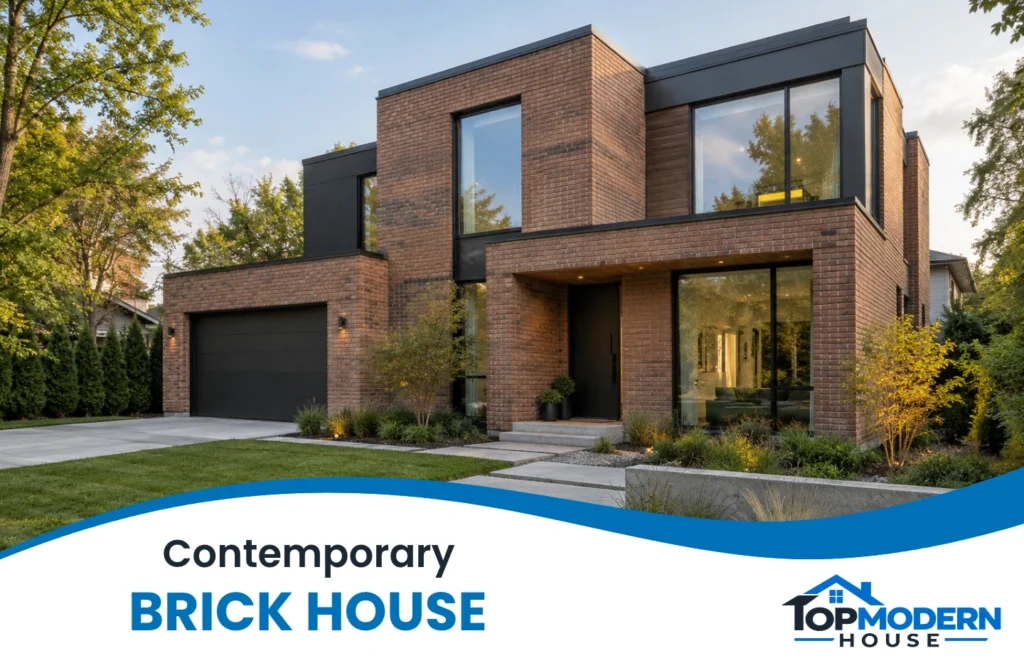
Brick has enough texture and character to make a house feel substantial, but the material alone doesn’t determine whether the exterior looks traditional or contemporary. A well-designed contemporary brick house usually feels modern because the brick works with clean proportions, deliberate window placement, restrained materials, and a carefully coordinated exterior palette.
That leaves plenty of room for different looks. Warm red brick can feel current without being painted. Charcoal brick can create a stronger architectural presence. White and light brick can keep a façade quiet and minimal. The key is understanding how the pieces work together rather than copying one attractive exterior photo element by element.
Short Definition
A contemporary brick house combines brick with clean architectural lines, coordinated materials, modern windows, thoughtful mortar choices, and restrained detailing to create a warm, durable exterior with a current look.
Topmodrenhouse Mission Statement
Topmodrenhouse helps homeowners, renters, and home lovers make practical, stylish, comfortable, and well-informed decisions for the spaces they live in and care for.
Quick Checklist
- Start with the home’s existing architecture and roof color.
- Choose brick and mortar as one visual combination.
- Keep the exterior material palette restrained.
- Coordinate windows, doors, garage doors, and trim.
- Use wood, metal, glass, or siding where they serve a clear purpose.
- View brick, mortar, and finish samples outdoors before deciding.
- Consider natural brick before committing to paint or another coating.
- Use lighting, landscaping, and hardscape to complete the exterior.
- Have significant cracking, moisture issues, or damaged masonry professionally assessed.
Contemporary Brick House Ideas by Color and Mood
Brick color sets the mood, but it should never be chosen in isolation. Mortar, roofing, windows, wood tones, metal finishes, and landscaping all affect how that color reads across a full elevation.
Warm Red and Brown Brick for a Modern, Inviting Exterior
Natural red and warm brown brick can work surprisingly well on contemporary homes. The easiest way to keep it from feeling overly traditional is to simplify everything around it.
Picture warm red brick paired with dark bronze window frames, a natural timber entry, restrained landscaping, and a roof that doesn’t compete for attention. The brick provides warmth while the cleaner architectural details move the home in a contemporary direction.
This approach is especially useful for an existing modern red brick house exterior because it doesn’t require hiding good masonry just to follow a trend.
Black and Charcoal Brick for a Bold Architectural Look
Charcoal, black, and dark ironspot-style brick create a more graphic exterior. They work particularly well with simple building forms, recessed entries, timber details, and large areas of glass.
Dark brick needs balance, though. A large façade finished entirely in deep tones can feel visually heavy if the windows are small or the landscaping is sparse. Wood, lighter paving, planting, or carefully placed lighting can soften the composition without weakening the architecture.
White and Light Brick for a Clean, Minimal Style
White, cream, and pale gray brick can create a quieter contemporary exterior. These colors tend to emphasize the house’s shape, window openings, shadows, and landscaping rather than the masonry itself.
A light-brick exterior often works best with a limited palette. Dark window frames can provide contrast, while natural wood or muted metal gives the elevation some warmth. Too many additional colors can quickly undermine the simplicity that makes the look successful.
What Makes a Contemporary Brick House Look Modern?
A brick house looks contemporary when its materials support clean architecture rather than relying on brick color alone. Simple massing, balanced proportions, purposeful windows, restrained detailing, coordinated mortar, and a limited material palette usually matter more than whether the brick is red, white, gray, or black.
Clean Lines, Simple Forms, and Balanced Proportions
Contemporary design tends to reduce unnecessary visual clutter. That doesn’t mean every house needs to be a flat-roofed box. A pitched or gable roof can still look contemporary when the proportions, openings, trim, and material transitions are handled simply.
The same principle applies to renovation. Replacing every feature isn’t always necessary. Removing competing colors, simplifying trim, and creating clearer focal points can change the feel of the exterior considerably.
Large Windows, Rooflines, and Architectural Openings
Window proportions have a strong effect on how brick architecture feels. Larger panes, grouped windows, dark frames, and deeper openings can give masonry more depth and create stronger shadow lines.
Roof design also shapes the final result. Flat roofs, low pitches, clean gables, and restrained overhangs can all work. What matters is whether the roof feels integrated with the building rather than visually disconnected from it.
How to Combine Brick With Wood, Metal, Glass, and Siding
Brick pairs well with other exterior materials because its texture can contrast with smoother, lighter, or warmer surfaces. The safest approach is usually to let one material dominate, use a second material to support it, and reserve smaller accents for details rather than introducing several equally strong finishes.
Brick and Wood for Natural Warmth
Wood is one of the easiest ways to soften a brick façade. It can work around an entry, beneath an overhang, on an upper volume, or as limited vertical cladding.
Warm brick and timber create an especially natural combination. Dark brick with lighter wood creates stronger contrast. In both cases, repeating the wood in just a few intentional areas usually feels more cohesive than scattering it across the exterior.
Brick With Metal and Glass for a Sharper Modern Look
Metal details and generous glazing can make masonry feel lighter and more architectural. Black or bronze window frames, slim metal canopies, standing-seam roofing, and simple railings can all complement brick.
Glass is particularly effective because it provides visual relief from large masonry surfaces. The contrast between solid brick and transparent openings can give a modern brick house much of its character.
Brick With Siding or Smooth Exterior Finishes
Siding, stucco, and other smooth finishes can break up a large brick elevation, but material placement matters.
Rather than dividing the façade into many unrelated patches, use the secondary material to clarify the architecture. It might define an upper floor, highlight an entry volume, or distinguish an addition from the original house.
Mortar Color and Brick Pattern Can Change the Entire Façade
Mortar isn’t just the material between bricks. Its color influences how strongly each brick stands out and whether the wall reads as a unified surface or a visible grid.
Matching vs. Contrasting Mortar
Mortar close to the brick color creates a more blended appearance. That can suit contemporary façades where the goal is a calm, monolithic surface.
Higher contrast makes the individual bricks and joints more obvious. This can add texture and rhythm, but it also makes the masonry pattern more visually active.
For a new build, brick and mortar should be considered together. Looking at a brick sample by itself gives an incomplete picture of the finished wall.
Running Bond, Stack Bond, and Feature Brickwork
Running bond is familiar and versatile. Stack bond aligns vertical joints more directly and can create a stronger geometric appearance. Feature brickwork can introduce screens, recessed courses, projections, or patterned areas.
More pattern isn’t automatically better. Contemporary masonry often benefits from restraint, using unusual brickwork at a focal point rather than across every wall.
Modern Brick Design Ideas for the Front of the House
The front elevation should feel coordinated rather than decorated one feature at a time. A strong modern brick design for the front of a house usually starts with a clear entrance, controlled material changes, and exterior elements that share the same visual language.
Create a Strong but Simple Entry
The entrance doesn’t need to be oversized to feel intentional. A recessed doorway, timber panel, simple canopy, large pivot-style appearance, or well-placed lighting can establish a clear focal point.
On a red brick home, for example, a natural wood front door and dark contemporary light fixtures may be enough to shift attention without changing the masonry.
Coordinate Windows, Garage Doors, Lighting, and Landscaping
Garage doors occupy a large amount of visual space on many U.S. homes. Their color and detailing should therefore be part of the exterior palette rather than an afterthought.
The same is true of lighting and landscaping. Simple fixtures, structured planting, ornamental grasses, low shrubs, and clean hardscape lines can help a brick house feel more current without requiring major structural work.
How Can You Modernize a Brick House Without Painting It?
You can modernize an existing brick house without painting the masonry by simplifying the surrounding color palette, updating the entrance and lighting, coordinating windows and garage doors, introducing a restrained secondary material, and improving landscaping. These changes preserve the character of natural brick while shifting the overall exterior toward a cleaner design.
Update the Materials Around the Brick
Start with the elements that compete most strongly with the existing masonry. Dated siding, mismatched trim, decorative shutters, busy railings, or an unrelated garage-door color may be doing more to age the house than the brick itself.
Natural red brick often becomes easier to appreciate once those competing details are simplified.
Use Doors, Lighting, Hardscape, and Landscaping for Visual Change
Smaller updates can have disproportionate visual impact. A cleaner front door, modern address numbers, simple sconces, a restrained walkway, and better planting can change how the brick is perceived.
This is also a sensible approach when painting isn’t desirable, isn’t permitted by an HOA, or would create more maintenance than the homeowner wants.
Should You Paint, Stain, Limewash, or Leave Brick Natural?
Painting, staining, limewashing, and leaving brick natural create different appearances and maintenance responsibilities. Natural brick preserves the original masonry, while coatings or color treatments can change the façade substantially. Before covering existing brick, its condition, moisture exposure, desired finish, and future maintenance should all be considered.
When Keeping Natural Brick Makes Sense
Good-quality brick with a color that works reasonably well with the house is often worth designing around before considering a coating.
Natural brick can be modernized through mortar repairs where needed, new trim colors, better windows, wood accents, contemporary lighting, and landscaping. This keeps future maintenance simpler than introducing a painted finish.
When a Color Treatment May Be Worth Considering
A color treatment can make sense when the existing brick genuinely conflicts with the architectural direction or when a more unified façade is a deliberate part of the renovation.
Paint, stain, limewash, and masonry-specific mineral finishes do not behave exactly the same way. Existing masonry should be evaluated before applying a coating, particularly where there are moisture problems, damaged brick, deteriorated mortar, or previous treatments.
How to Choose the Right Contemporary Brick Look for Your Home
Start with the architecture and the exterior elements you’re least likely to change. Then choose brick, mortar, secondary materials, and accents that work with those fixed conditions. This prevents an attractive inspiration image from pushing the project toward colors or materials that don’t suit the actual house.
Start With the Exterior Elements You Cannot Easily Change
Roofing, stone, existing brick, major windows, and sometimes garage doors can be expensive or impractical to replace.
Use those features as the starting point for the palette. A homeowner with warm red brick and a brown roof, for example, may get a more convincing result from wood, bronze, and muted dark accents than from forcing a stark black-and-white scheme onto the house.
New Build vs. Existing Brick Renovation
New construction gives you control over the brick, mortar, bond, window placement, roof form, and secondary cladding from the beginning.
Renovation requires a different mindset. The best result often comes from identifying what is already worth keeping and making the new work feel intentional around it.
For either project, review material samples outdoors. Brick, mortar, paint, and wood can look noticeably different in daylight than they do on a phone screen or under indoor lighting.
Choose a Dominant Material, Supporting Material, and Accent
A simple hierarchy helps prevent a mixed-material exterior from becoming cluttered.
For example:
- Brick as the dominant surface
- Natural wood as the supporting material
- Black metal as the accent
That usually feels more controlled than combining brick, stone, stucco, wood, three siding profiles, and multiple metal finishes across one elevation.
Contemporary Brick Exterior Mistakes to Avoid
A contemporary exterior can lose coherence through small decisions that accumulate. The most common problems usually come from treating every component separately instead of designing the house as one composition.
Watch for these mistakes:
- Choosing brick without considering mortar color.
- Assuming painting is necessary to modernize red brick.
- Adding several competing cladding materials.
- Copying dark contemporary homes without considering the existing roof and architecture.
- Treating black window frames as a guaranteed route to modern style.
- Ignoring large visual elements such as garage doors.
- Choosing permanent exterior finishes from small online images alone.
- Following current trends at the expense of the home’s proportions and character.
- Focusing on masonry while neglecting lighting, entry design, and landscaping.
The strongest contemporary brick house exteriors usually look deliberate rather than heavily decorated.
What Maintenance Does a Brick Exterior Need?
Brick exteriors are generally durable, but they still need periodic attention. Homeowners should watch for deteriorated mortar, persistent staining, damaged or spalling brick, moisture concerns, vegetation growing against masonry, and cracks that appear to be worsening rather than assuming the exterior never needs maintenance.
Cleaning should also be approached carefully. Aggressive methods can damage masonry or mortar.
Cosmetic design advice stops being enough when the exterior shows significant cracking, widespread mortar failure, moisture problems, movement around openings, or damaged masonry. Those conditions are better assessed by a qualified masonry or building professional before painting, covering, or altering the affected area.
Frequently Asked Questions
Can a contemporary brick house have a pitched roof?
Yes. Contemporary design doesn’t require a flat roof. A pitched or gable roof can work well with brick when its shape is simple and the windows, trim, materials, and proportions support the same architectural direction. Contemporary character comes from the overall composition rather than one prescribed roof type.
Can red brick look modern without being painted?
Yes. Natural red brick can feel modern when competing exterior colors are reduced and the surrounding details are updated. Dark or bronze window accents, a simple wood entry, restrained siding, contemporary lighting, and cleaner landscaping can change the character of the house while keeping the original masonry visible.
What colors work well with a modern red brick exterior?
The best colors depend on the specific brick, mortar, roof, and other fixed finishes. Warm neutrals, muted dark tones, natural wood, bronze, charcoal, and some soft off-whites can work well. Rather than choosing a color by name alone, compare samples against the actual brick outdoors.
What materials pair well with brick?
Wood, metal, glass, siding, stucco, and other smooth cladding can all pair effectively with brick. The combination works best when materials have clear roles. Brick can remain the dominant surface, while another material defines an entry, upper story, addition, or architectural feature.
Does mortar color change how exterior brick looks?
Yes. Mortar can noticeably change the overall appearance of brickwork. A similar brick-and-mortar color creates a quieter, more unified surface, while contrasting mortar emphasizes each brick and the bond pattern. For new construction, mortar should be selected alongside the brick rather than as a separate finishing decision.
What is the difference between brick veneer and solid masonry?
Brick veneer is generally an exterior masonry layer attached to a separate structural wall system, while solid masonry relies more directly on masonry within the wall construction. The distinction involves more than appearance, so structural changes, openings, or significant masonry work should be planned with appropriately qualified professionals.
Bringing the Contemporary Brick Look Together
A successful contemporary brick exterior rarely depends on one dramatic feature. Brick color, mortar, window proportions, roof form, secondary materials, entry details, lighting, and landscaping all need to support the same idea.
Start with the architecture you actually have, keep the material palette disciplined, and preserve good brick when it already contributes something worthwhile. That approach produces a home that feels considered and current without relying on a short-lived exterior trend.
Disclaimer
This content is for general informational purposes only. Every home, budget, preference, and situation is different. For safety-sensitive work, major repairs, installations, structural changes, or legal, electrical, plumbing, HVAC, and property decisions, consult an appropriately qualified professional.