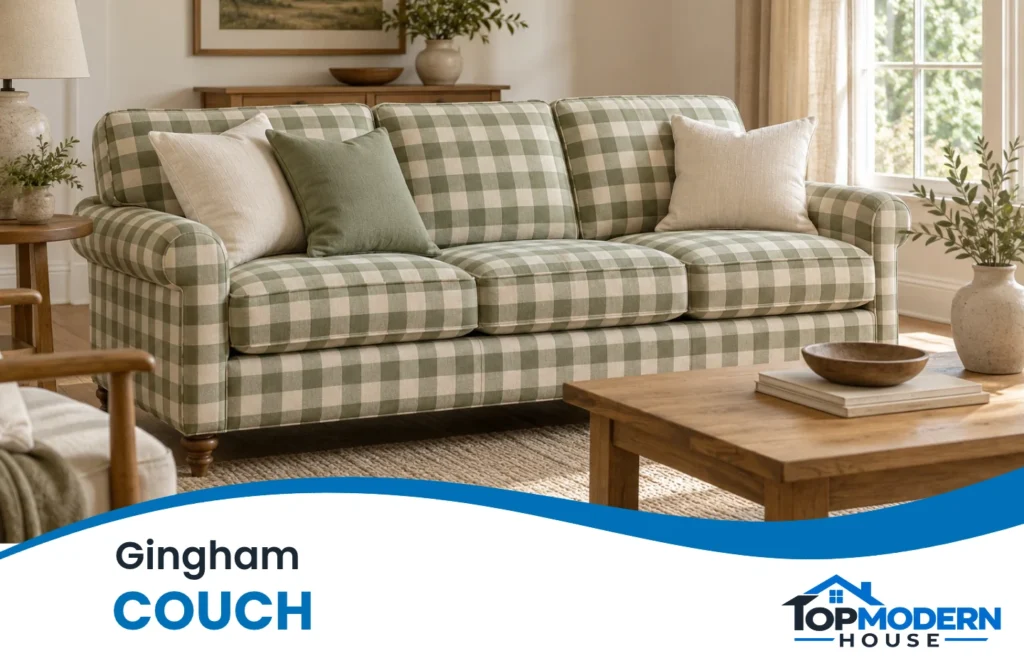

A room can have a cream sofa, a wood coffee table, and carefully arranged pottery yet still feel unfinished. Warmth comes from how the colors, shapes, textures, and lighting work together—and how comfortably the space supports everyday life.
Organic modern interior design brings natural character to simple, uncluttered rooms. You can build that balance around furniture you already own. Understanding what to keep, where to introduce contrast, and which materials suit your household makes the process more manageable.
Short Definition
Organic modern interior design combines clean lines and simple furnishings with natural materials, earthy colors, and layered textures. It adds warmth and character to modern spaces while keeping rooms comfortable and uncluttered.
Topmodrenhouse Mission Statement
Topmodrenhouse helps homeowners and renters make thoughtful, practical choices for comfortable, stylish homes that fit everyday life.
Quick Decorating Checklist
- Identify furniture and fixed finishes worth keeping.
- Compare color samples beside flooring and upholstery.
- Balance light tones with deeper accents.
- Check material care requirements before buying.
- Measure furniture footprints and walking routes.
- Combine useful lighting with personal artwork and practical storage.
What Is Organic Modern Interior Design?
Organic modern design combines clean-lined furniture and restrained styling with natural materials, tactile textures, and earthy colors. Wood grain, woven fabrics, ceramics, and softly rounded forms give modern rooms warmth. The balance is flexible: a space can include color, personal belongings, and practical furnishings while still feeling cohesive.
Picture a straight-lined sofa beside an oval wood table, with textured curtains and a ceramic lamp. Each element contributes something different:
- The sofa’s simple shape gives the arrangement structure.
- The wood grain adds natural variation.
- The oval table softens the surrounding straight edges.
- The curtains and lamp bring texture and gentle light.
These relationships matter more than owning a particular chair or choosing an exact shade of beige.
Start With What Your Home Already Has
Before shopping, identify the features that will stay. Flooring, cabinets, countertops, and large furniture influence the room more than small accessories.
Walk through the space and sort possible changes into three groups:
| Keep | Change | Defer |
| Comfortable furniture, useful storage, meaningful objects | Items that don’t fit, function poorly, or disrupt the palette | Expensive replacements that aren’t necessary for comfort or cohesion |
Then identify the biggest obstacle. A room with harsh overhead lighting may benefit more from lamps than new cushions. A crowded layout may need rearranging before another furniture purchase.
Consider daily routines, too. Leave somewhere for charging devices, storing blankets, and setting down drinks. An uncluttered room needs enough storage to support that appearance.
For a limited budget, address one clear problem at a time. Keep a sturdy dining table and try different textiles or lighting before replacing the entire dining set.
Choose Colors That Bring Warmth and Depth
An organic modern color palette often includes cream, taupe, brown, muted green, and clay. The goal is to create a relationship between the colors already present and those you introduce.
Start beside the largest fixed surface. Compare paint and fabric samples against your flooring or cabinets, then check them in daylight and under evening lighting. A color that looks neutral on a screen may appear pink, yellow, or green in your room.
Add Color Beyond Beige and White
Organic modern interiors can include color. Earthy greens, rusty reds, muted blues, and deeper browns can sit comfortably alongside natural materials. Repeating a color in a few places helps connect the room; varying its depth keeps the result from feeling overly matched.
These illustrative combinations offer starting points:
- Cream walls, walnut furniture, and olive textiles.
- Soft taupe upholstery, oak furniture, and clay-colored accents.
- Warm white walls, a muted blue rug, and medium-brown wood.
Include some difference between light and dark elements. This is tonal contrast: a darker table or frame can give definition to an otherwise pale arrangement.
Work With Gray Floors and Existing Upholstery
Gray floors or a gray sofa don’t automatically require replacement. Look at their undertones—the subtle blue, green, brown, or purple cast that affects how neighboring colors appear.
For example, try samples of an ivory-and-gray rug beside a retained gray sofa, then introduce wood through a side table. A textile containing both warm and cool tones may help connect the pieces.
Avoid selecting a strongly yellow cream simply because it is labeled “warm.” View the whole combination together before committing.
Layer Materials With Comfort and Care in Mind
Texture adds interest, but every surface doesn’t need to compete for attention. A visible wood grain, a woven textile, and a smoother ceramic surface can provide enough variation within one seating area.
Choose materials according to where they’ll be used and how much maintenance you’re comfortable doing.
Choose Upholstery and Rugs for Everyday Use
Before buying upholstery, check the fiber content, cleaning instructions, and whether removable covers are actually washable. A zippered cover alone doesn’t establish that it can go into a washing machine.
Bouclé describes a looped yarn or textured fabric, rather than one specific fiber. Check the product’s composition and care information instead of assuming every bouclé chair has the same qualities.
For rugs, consider softness underfoot, cleaning requirements, door clearance, and whether dining chairs move easily across the surface. Request a sample where possible.
A household with pets or frequent spills may reasonably prioritize a suitable easy-care fabric over an all-natural composition. The room can still express the style through color, form, and other materials.
Match Wood and Stone Finishes to Their Purpose
Visible wood grain adds character without requiring every wood piece to match. Compare the tones together and repeat a finish elsewhere when an individual piece feels disconnected.
Natural stone also needs context. A decorative bowl has different demands from a kitchen countertop. The Natural Stone Institute notes that acidic cleaners can etch calcareous stones, and impregnating sealers act as repellents rather than making stone impervious. Follow stone-specific care advice.
Ask about the actual finish and intended use. A natural-looking surface doesn’t need to be raw or unfinished to suit an organic modern home.
Balance Clean Lines, Soft Shapes, and Usable Space
Rounded furniture can soften a room, but comfort and fit should guide the purchase. A curved sofa may occupy space differently from a rectangular one, even when their listed widths are similar.
Mark the proposed footprint on the floor with painter’s tape. Check walking routes, cabinet access, and room for pulling out chairs. Confirm delivery access as well as the furniture’s final position.
You can introduce softness through smaller choices:
- An oval coffee table beside a straight sofa.
- A rounded lampshade above a rectangular console.
- Curved-back dining chairs around an existing table.
Keep some clear, straight lines in the arrangement. Repeating curves across every piece can make the room feel visually busy.
When choosing seating, consider seat depth, back support, and how easily household members can sit down and stand up. A fashionable profile is only useful when it’s comfortable.
Bring the Room Together With Lighting and Natural Details
Plan lighting around activities. A reading chair needs useful light nearby; a dining area needs comfortable illumination over the table; a living room benefits from light beyond a single ceiling fixture.
Fabric shades and shaded lamps can help create a softer appearance. Test bulb color in the room before buying several, since it affects how wall colors and textiles look. Check fixture and dimmer compatibility, and use a qualified electrician for wiring changes.
Window treatments should support privacy and comfort. Light-filtering curtains can soften daytime light, while bedrooms may also need shades or blackout lining.
Choose greenery according to available light, mature size, and care requirements. Verify pet suitability where relevant. A view of outdoor planting, botanical artwork, or a natural material can also provide a connection to nature without adding another plant to maintain.
Apply Organic Modern Design Room by Room
The same principles can run through the home, but each room should respond to its own purpose.
Living and Dining Rooms
For an organic modern living room, begin with comfortable seating and a usable layout. Place tables where people can reach them, then use a rug, lighting, and artwork to connect the arrangement.
Include closed storage for items that otherwise collect on surfaces. Leave accessible space for the books, games, or blankets you actually use.
In adjoining dining and living areas, repeat a few colors or materials rather than buying matching sets. An existing wood dining table might relate to a living room through similar wood picture frames and shared textile colors.
Bedrooms
An organic modern bedroom should support rest and easy daily routines. Start with bedding you enjoy using, accessible bedside surfaces, and lighting that works from the bed.
For an illustrative update, retain a simple bed frame, introduce textured bedding, and add curtains in a related tone. Pair daytime light filtering with the privacy and darkness you need at night.
Avoid filling every corner. Space to open drawers, make the bed, and move around it contributes more to comfort than another decorative chair.
Kitchens and Bathrooms
In kitchens, work with cabinets and countertops before choosing decorative finishes. A wood tray, restrained ceramic display, or coordinated textiles can introduce warmth without a remodel.
Keep food-preparation surfaces useful. Open shelves should hold items you use or are willing to clean regularly.
Bathrooms need materials and finishes suited to their actual moisture exposure. Don’t assume a decorative plaster, wood finish, or stone product is appropriate for a wet area because it appears in an inspiration photograph. Confirm suitability with the manufacturer and a qualified installer before permanent changes.
Avoid a Flat, Impersonal Look
A cohesive room still needs variation and evidence of the people who live there. When something feels wrong, make a targeted adjustment before adding more objects.
| What feels wrong | What to try |
| Everything blends into one pale tone | Introduce a deeper wood, artwork, or textile |
| Several textures compete for attention | Keep the strongest texture and simplify nearby surfaces |
| Furniture makes the room awkward to use | Reassess placement and scale before styling |
| Surfaces stay crowded | Add useful storage and reduce what remains on display |
| The room resembles a showroom | Include meaningful art, books, or a familiar object |
Personal pieces don’t need to match the palette perfectly. A colorful painting or inherited chair can become a focal point when the surrounding arrangement gives it room.
Avoid buying generic pottery simply to fill shelves. An object you value gives the room a more convincing sense of character.
Frequently Asked Questions
How Is Organic Modern Different From Japandi and Modern Farmhouse?
These styles overlap, but their emphases differ. Organic modern centers on modern forms softened by natural materials and texture. Japandi combines Japanese and Scandinavian influences, often emphasizing restraint and craftsmanship. Modern farmhouse draws more visibly on rural forms and familiar farmhouse details. Individual rooms can borrow from more than one approach.
Can Organic Modern Design Work in a Small Rental Apartment?
Yes. Use appropriately scaled furniture, useful storage, textiles, and portable lighting to establish the look. Rounded accents can provide softness without taking up the footprint of a large curved sofa. Work with existing finishes, and check your lease before painting, drilling, or making other permanent changes.
What Kind of Art Works in an Organic Modern Home?
Abstract shapes, landscapes, botanical studies, photography, and textured pieces can all work. Choose art you enjoy, then consider its scale and relationship to nearby colors. “Organic modern art” is a loose decorating description; you don’t need a particular subject or an entirely neutral piece to make the room cohesive.
Does Organic Modern Mean Environmentally Sustainable?
No. Organic modern describes an aesthetic; it doesn’t certify how a product was sourced, manufactured, or transported. Assess environmental claims separately and look for specific supporting information. Keeping useful furniture, considering repairability, and choosing pieces suited to long-term use can inform purchasing decisions without relying on a style label.
Create a Home That Feels Warm and Personal
Start with the room’s most useful pieces and its clearest problem. Adjust the lighting, test a better color combination, or introduce one material that connects what you already own.
A warm, natural home develops through choices that look good together and remain comfortable to live with. Give each change time to prove useful before making the next one.
Disclaimer
This content is for general informational purposes only. Homes, needs, preferences, budgets, and circumstances vary. Seek qualified professional advice for safety concerns, installation, repairs, structural changes, electrical, plumbing or HVAC work, and legal or major property decisions.