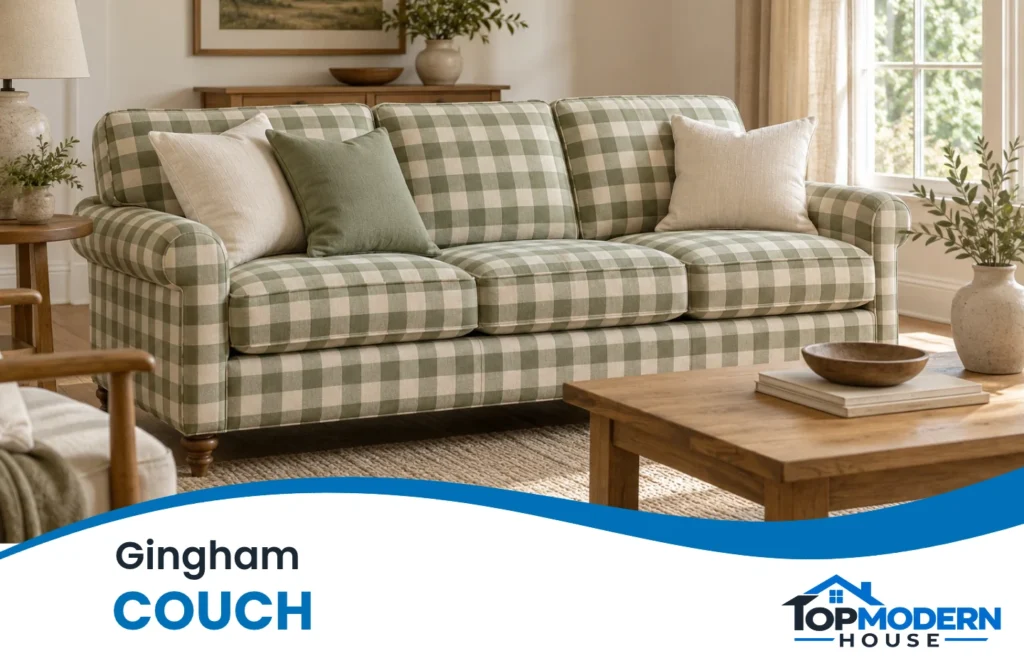

A brown cloud couch can look inviting in a photograph and still be the wrong fit for your home. Deep cushions might suit movie nights but feel awkward for upright conversation. A chocolate shade you love online might blend into your dark flooring. And removable covers may come with cleaning restrictions you didn’t expect.
Start with how you’ll use the couch, then check its dimensions, construction, upholstery, and purchase terms. Those details help you choose seating that feels comfortable, works with your room, and asks for an amount of upkeep you’re happy to provide.
Short Definition
A brown cloud couch is a brown-upholstered sofa marketed for plush, relaxed seating. Buyers choose the style for comfortable lounging and a cozy appearance, but construction, support, dimensions, and maintenance vary by model.
Topmodrenhouse Mission Statement
Topmodrenhouse helps homeowners, renters, and home lovers make informed choices for practical, comfortable, and stylish living spaces.
Start With These Quick Buying Checks
Before comparing styles, write down your priorities:
- Comfort: Do you prefer sitting upright, stretching out, or a mixture of both?
- Room fit: What footprint leaves room for doors, tables, and everyday movement?
- Color: Does the brown work with your flooring and walls under your own lighting?
- Care: Are you willing to fluff cushions or arrange professional upholstery cleaning?
- Total cost: What will the complete configuration cost after delivery, setup, and any extras?
Use these priorities to eliminate unsuitable options early. A couch that exceeds your available space or requires cleaning you can’t manage doesn’t become a better choice because it’s discounted.
What Are You Buying When You Choose a Cloud Couch?
“Cloud couch” can refer to RH’s branded Cloud collection or to sofas marketed for a similarly soft, relaxed appearance. The name alone doesn’t establish cushion filling, frame construction, seat depth, or comfort. Compare the specifications of the exact model rather than assuming every cloud-style sofa is built alike.
RH identifies Timothy Oulton as the designer of its Cloud Sofa and describes the referenced model as using feather-and-down cushioning around a foam core. That construction shouldn’t be assumed for other products using cloud-related names.
Cloud-style alternatives include framed sofas and products described as boneless or frameless. One may use separate cushions on a supporting frame; another may rely on shaped foam components. Ask what supports the seat and whether cushions or covers can be replaced.
Treat “cloud” as a starting point for your search, not a quality rating.
Choose Comfort That Suits How You Sit
A soft first impression tells you only part of the story. Your couch also needs to work when you’re talking with guests, reading, or getting up to answer the door.
Where possible, try the sofa in the positions you normally use. Sit back, stretch out, and stand up again. For shared seating, have household members with different heights or comfort preferences try it too.
Check Seat Depth, Seat Height, and Back Support
Usable seat depth is the space available between the front of the seat and the back cushion. Overall sofa depth also includes the back structure and other parts, so it isn’t a substitute for this measurement.
For upright sitting, check whether you can rest against the back cushion with your feet comfortably supported. For lounging, check whether you have enough space to curl up without moving every pillow.
Seat height also deserves attention. A couch can feel lower once you settle into its cushions than its listed measurement suggests.
Imagine two equally wide sofas: one has bulky arms and thick back pillows, while the other has slimmer arms and shallower cushions. Their usable sitting space could feel quite different despite matching overall widths.
Compare Cushion Fill and Fluffing Needs
Look for a specific description of the seat and back cushions. Foam, feather/down blends, and down-alternative fills aren’t interchangeable descriptions, and different combinations can feel different.
Ask:
- Does the seat have a foam core or another supporting structure?
- Can cushions be rotated or flipped?
- What maintenance does the manufacturer recommend?
- Are replacement inserts available?
Some owners describe regular fluffing as part of keeping loose cushions looking tidy, while others accept a more relaxed appearance. These experiences vary by model and household; they don’t prove that every cloud-style couch needs the same upkeep.
Find the Right Size and Layout for Your Room
Measure the complete arrangement you intend to buy, including the chaise and ottoman. Then mark its footprint on the floor with painter’s tape suitable for your flooring.
Walk through the room as you normally would. Open nearby doors, approach the seating from different directions, and check whether the coffee table remains within comfortable reach.
A sectional can technically fit while leaving the room difficult to use.
Compare a Straight Sofa, L-Shape, and U-Shape
| Layout | Useful when | What to check |
| Straight sofa | You want flexibility for separate chairs or tables | Usable sitting width and space for occasional lounging |
| L-shaped sectional | You want a chaise or seating along two sides | Chaise orientation and whether it interrupts a walkway |
| U-shaped sectional | You want seating around a shared central area | Overall footprint and access to the middle seats |
Confirm orientation using the seller’s diagram. Don’t rely on your interpretation of “left-facing” or “right-facing.”
For modular seating, check which arrangements the supplied pieces actually allow. A movable ottoman doesn’t necessarily mean the entire sectional is reversible. Also verify how modules connect and whether the required hardware is included.
Measure the Room, Doorways, and Delivery Route
Check packaged dimensions as well as assembled dimensions. Include entry doors, hallway turns, stair landings, and elevators along the delivery route.
Ask the seller whether individual modules arrive separately and which parts, if any, can be removed according to the assembly instructions. An apartment building may also have delivery scheduling requirements worth checking beforehand.
For heavy components or difficult access, consider professional delivery. Confirm what the service includes rather than assuming “white-glove” covers every handling or assembly task.
Choose a Brown Shade That Works With Your Space
Choose the shade by testing it against your room’s existing finishes, not by its name alone. Light brown, coffee, walnut, and chocolate can describe different-looking colors across brands. A physical swatch gives you a better basis for judging compatibility than an isolated product photograph.
Place the sample beside your flooring, wall paint, curtains, and rug. Check it during the day and under the lamps you use at night.
Look for whether the brown appears reddish, golden, grayish, or relatively neutral in that setting. You don’t need every finish to match, but you should like the relationship between them.
A dark brown cloud sofa can work with dark floors; the question is whether you want the pieces to blend or stand apart. A lighter rug or cushions may provide contrast. A light brown option may offer that separation without changing other furnishings.
Also consider texture. A smooth fabric and a plush fabric in similar shades can look different as the light changes. Acanva, for example, specifically cautions that photography, screens, and production batches can affect perceived color.
Pick Upholstery You Can Comfortably Maintain
Choose upholstery around the household that will use it. Think about snacks, pets, children, and how often you’re willing to clean—not just how soft a sample feels.
Brown isn’t a substitute for a practical care routine. Check the exact material, cleaning instructions, and whether replacement covers are available.
Compare Chenille, Corduroy, Velvet, and Leather Options
Use fabric names to guide inspection, then look deeper:
- Chenille: Examine the texture, fiber content, and approved cleaning method.
- Corduroy: Decide whether you like the visible ribbing and check how the manufacturer recommends cleaning it.
- Velvet or plush upholstery: View the sample from different directions and check whether surface marks bother you.
- Leather: Confirm the type and finish, along with the recommended care products.
- Faux leather: Verify the composition and care requirements; don’t assume it behaves like genuine leather.
Terms such as “pet-friendly,” “performance,” and “easy-clean” need supporting details. Ask what the seller means, what testing or documentation is available, and which kinds of damage the warranty excludes.
Check Whether Removable Covers Are Washable
A zipper doesn’t establish that a cover can go into a washing machine. It may provide access for assembly or replacement.
Read the instructions for the exact fabric and component. Cushion covers, the main slipcover, and cushion inserts may have different requirements.
Even washable products can specify different temperatures and drying restrictions, as IKEA’s US cover-care instructions demonstrate. Follow the product label rather than a general sofa-cleaning method.
Compare the Full Cost and Verify the Listing
A useful price comparison includes everything needed to receive and use the sofa. Record the complete configuration, delivery charge, assembly fee, and any necessary extra pieces.
Then read the return terms. Find out who arranges pickup, whether original packaging is required, and whether shipping or restocking charges apply.
Compare Equivalent Configurations and Included Pieces
A starting price may describe one module rather than the sectional shown in the main photograph. Confirm the number of seats, corner pieces, arms, ottomans, and included covers.
For example, a lower-priced sofa with paid delivery and an extra-cost ottoman may finish close to a more expensive package that includes both. Compare the final totals before deciding which offers better value.
A simpler, lower-cost option may be enough for occasional use when it meets your comfort and care needs. For heavily used seating, give more weight to documented construction, replacement options, and service terms—not price alone.
Resolve Conflicting Details Before You Order
Cross-check the description, dimension diagram, specification table, and assembly documents. When they disagree, ask the seller to confirm the correct information in writing.
This isn’t just theoretical: one Target marketplace listing reviewed for this guide contained inconsistent seating-capacity and seat-height fields. Those figures should be clarified rather than treated as reliable measurements.
Also confirm who sells and ships the item. The marketplace hosting the listing and the company responsible for product support may be different.
Read warranty coverage separately from the return policy. Ask which components are covered and how claims are handled. Keep the product details and purchase documents for reference.
Frequently Asked Questions
What Are the Downsides of Cloud Couches?
Possible drawbacks include deep or low seating that doesn’t suit everyone, cushions that need regular reshaping, a large footprint, and modules that move without suitable connections. These issues depend on the model. Check the couch’s construction, care instructions, and everyday sitting comfort rather than assuming the whole category behaves alike.
Are Cloud Couches Worth the Money?
They can be worthwhile when their comfort, size, and upkeep suit your household. Judge value by the complete purchase cost, documented construction, service options, and how you’ll use the couch. A higher price doesn’t automatically make a sofa more comfortable for you, and a lower price doesn’t remove the need for verification.
How Do You Choose a Brown Cloud Couch Dupe?
Choose a brown cloud couch dupe by deciding which qualities you want to reproduce: the relaxed appearance, deep seating, modular layout, or cushion feel. Compare those features individually, then verify upholstery, dimensions, and return terms. Visual resemblance alone doesn’t establish equivalent comfort, construction, or durability.
Does a No-Assembly Couch Need Time to Expand?
Sometimes. “No assembly” may mean that no tools or frame construction are needed, while compressed cushions still require time to recover after unpacking. Follow the exact product instructions. Walker Edison’s referenced plush modular sofa, for example, specifies a two-to-seven-day expansion period; that timing should not be applied to other models.
Make Your Final Choice Based on Everyday Use
Narrow your shortlist to couches that pass five checks: comfortable sitting, workable room dimensions, a brown shade you’ve evaluated, manageable care, and clear purchase terms.
Choose the one whose trade-offs you can comfortably live with. A sofa earns its place through everyday use: settling in after dinner, sharing space with family, and fitting naturally into the room around it.
Disclaimer
This content is for general informational purposes only. Homes, needs, preferences, budgets, and circumstances vary. Follow product-specific instructions and seek qualified professional advice for safety, installation, repairs, legal matters, structural work, electrical systems, plumbing, HVAC, or major property decisions.