A brick exterior can feel tired even when the brick itself is worth keeping. Faded trim, crowded shrubs, undersized shutters, or competing colors may be distracting from the features that give the house its appeal.
The most useful updates to brick colonial homes start with a coordinated plan: preserve the details that work, build colors around existing materials, and address repairs before decorative changes. A different front door color, better-proportioned lighting, and more thoughtful planting may be enough. Larger changes deserve closer scrutiny, especially when they alter original masonry or the entrance.
Short Definition
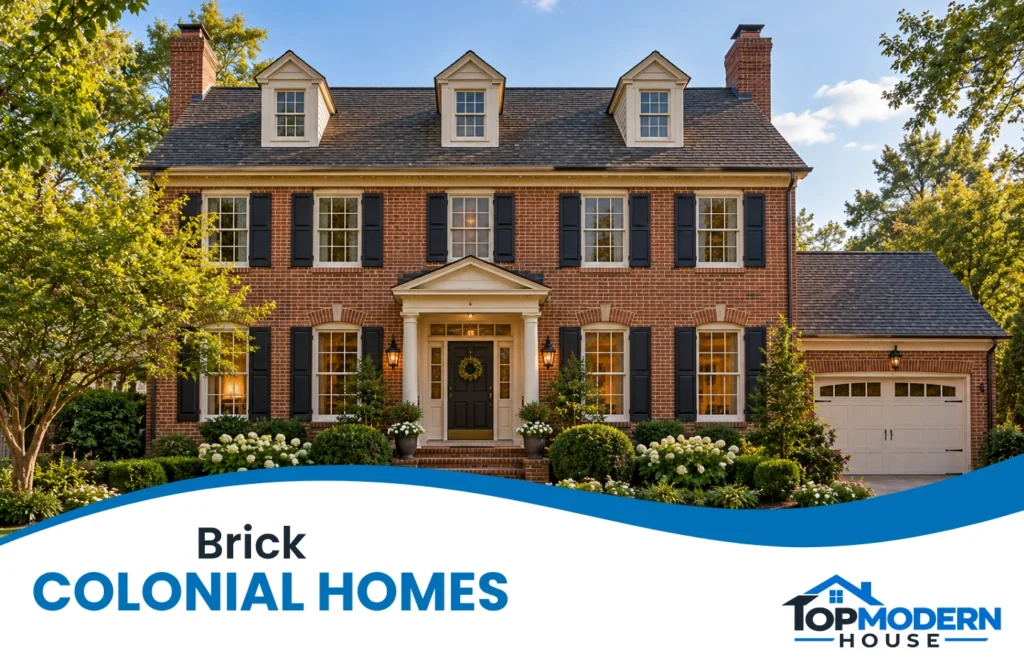
Brick colonial homes are houses with brick exteriors and colonial-inspired features, often including balanced façades, centered entrances, and regularly spaced windows. Their classic proportions offer a starting point for coordinated exterior updates.
Topmodrenhouse Mission Statement
Topmodrenhouse helps homeowners, renters, and home lovers make informed, practical choices for spaces that feel comfortable, welcoming, and personal.
Exterior Refresh Checklist
- Identify the brick, roof, windows, and other features you’ll keep.
- Assess repair needs before choosing cosmetic updates.
- Test trim and door colors beside existing materials outdoors.
- Check shutter proportions and entrance lighting.
- Choose planting for mature size, local conditions, and maintenance.
- Compare brick finishes for compatibility and ongoing upkeep.
- Plan improvements in stages and confirm applicable approvals.
Exterior Refresh Ideas for Brick Colonial Homes
Choose a general direction before selecting individual finishes. These three approaches offer different ways to refresh a classic exterior without assuming every component needs replacing.
Classic Contrast With Light Trim and Dark Accents
Light trim with deeper-colored shutters and a coordinated front door can emphasize the windows and centered entrance. Black is one option, but charcoal, deep green, and muted navy are also worth sampling.
For a hypothetical red-brick house with white windows and a gray roof, start by testing dark shutter colors beside all three materials. The goal is a combination that feels connected, rather than a door or shutter color chosen in isolation.
Softer Colors With Wood Tones and Greenery
A gentler palette may suit brick with warm orange or brown tones. Consider subdued trim, a wood-toned entrance, and planting that softens the transition between the house and lawn.
On a mixed brick-and-siding exterior, test a siding color that relates to the mortar or a quieter shade within the brick. Avoid adding several unrelated finishes simply because each looks attractive on its own.
A Simpler Look With Fewer Decorative Details
A small brick colonial house may benefit from restraint: fewer competing accents, clearer planting, and an entrance that is easy to see.
Before removing shutters or decorative trim, compare photographs with those elements digitally concealed. Keep the window sizes, roof, and brick color unchanged so the preview shows the effect of the actual proposal.
Keep the Features That Make Your Home Feel Colonial
Balanced proportions, repeated window patterns, and a clearly defined entrance often contribute more to colonial character than individual accessories. Look at the whole façade before changing its parts.
A house can have colonial styling without dating from the colonial period. Colonial Revival homes reinterpret earlier designs, and later suburban houses may borrow selected features. Exact symmetry, matching chimneys, and one particular roof shape aren’t universal requirements.
Identify the details you want to retain: perhaps a paneled door, brick arches, window divisions, or a modest portico. Window grilles create the appearance of divided panes; muntins traditionally separate individual panes. Either can influence the visual rhythm of the exterior.
Preserving that rhythm helps new finishes feel intentional.
Build Your Color Palette Around the Brick and Roof
Choose exterior colors around materials you’re keeping. Brick, mortar, roof shingles, and window frames establish the starting palette; trim and accents should connect those features.
View the brick from both the sidewalk and close range. Individual bricks may contain several colors, while the mortar changes how the wall reads from a distance.
Choose Trim and Door Colors Together
Treat trim as the frame and the front door as a possible focal point. They don’t have to match, but their relationship should make sense beside the masonry.
Test a small group of combinations:
- A lighter trim color with a deeper door color.
- Softer neutral trim with a muted green or blue entrance.
- Restrained painted trim with a wood-finished door.
Place samples beside the brick and view them in sun and shade. Include the roof in your sightline. A color that looks balanced on a sample board may feel too stark across an entire façade.
Work With Existing White Windows and Mixed Siding
White windows don’t prevent a fresh-looking exterior. Repeating a compatible light tone elsewhere can make them feel integrated.
Remember that the window frame and surrounding trim are separate elements. Darkening the trim won’t turn a white frame—or white grilles between glass panes—into a black window.
For mixed siding, consider the entire elevation, including the garage and side walls. Before painting manufactured windows or siding, check the specific manufacturer’s instructions and warranty conditions rather than assuming any coating or color is suitable.
Update the Details That Shape Your Curb Appeal
Smaller elements work best when they share a clear design direction. Decide which feature should draw attention, then let the others support it.
Give the Front Door and Lighting a Cohesive Look
A sound door may need refinishing, compatible paint, or new hardware rather than replacement. Evaluate its condition and proportions before shopping.
Choose exterior lighting that suits the available wall space and entrance size. A paper template can help you judge a fixture’s dimensions before ordering. Check how far it projects and whether it conflicts with the door swing.
Use fixtures rated for their intended exposure, and have a qualified electrician handle new wiring or relocated connections.
Decide Whether to Keep, Resize, or Remove Shutters
Keep shutters when their proportions and placement support the windows. Consider changing them when they look noticeably undersized, crowd adjacent openings, or obscure trim. Removal may simplify the façade, but it can also reveal attachment holes or differences in the brick’s weathering.
For a traditional paired arrangement, shutters should look capable of covering the opening when closed. Wide grouped windows may not suit that arrangement.
Compare both options from the street. Don’t assume that removing every shutter—or adding one beside every window—will improve the house.
Coordinate Garage Doors, Gutters, and Hardware
A prominent garage can compete with the front entrance. A quieter finish may help it recede; a contrasting wood tone may deliberately draw attention. Choose according to the effect you want.
Gutters and downspouts also influence the composition. Their color can relate to the surfaces behind them, but appearance should never interfere with drainage or maintenance.
Hardware finishes need a sensible relationship, not necessarily an exact match across every item.
Make the Entrance and Front Yard More Welcoming
Landscaping can reveal architectural details that already exist. Before adding plants or enlarging the porch, look for anything that hides the door, crowds the path, or makes the approach feel disconnected.
Frame the House With Planting and a Clear Walkway
Select plants for their mature size, local climate, sunlight, and upkeep—not just their size at purchase. A shrub that fits beneath a window now may eventually obscure it.
Use planting to reinforce the entrance without covering the lower façade. Leave access for inspecting and maintaining the wall, and avoid designs that obstruct drainage.
A balanced front yard doesn’t require identical plants on both sides. Similar visual weight can work around an existing tree, driveway, or uneven site.
Refresh an Existing Porch—or Consider a Portico
An existing porch may need repairs, better lighting, or simpler furnishings more than reconstruction. Assess those options first.
A portico—a small roofed entrance—can give a plain doorway greater presence and shelter. Its width, roof shape, columns, and relationship to upper windows need to suit the house.
Adding one involves more than styling. Have an appropriate professional assess support, attachment, flashing, and applicable approvals before treating a rendering as a buildable plan.
Should You Leave the Brick Natural or Change Its Finish?
Keep sound natural brick when you like its texture and can achieve the desired refresh through surrounding details. Consider a new finish only after assessing the masonry, existing coatings, moisture conditions, and future upkeep. Paint, limewash, and stain are different treatments, and none is automatically suitable for every brick surface.
| Option | Visual effect | Main consideration |
| Natural brick | Retains existing color variation and texture | Still needs appropriate inspection and maintenance |
| Masonry paint | Can create a more uniform color | Requires a compatible system and future coating maintenance |
| Limewash | Can produce a softer, varied appearance | Suitability and coverage depend on the product and substrate |
| Brick stain | May change color while retaining visible texture | Results depend on absorption, existing treatments, and formulation |
Don’t assume that a product described as “breathable” resolves an underlying moisture problem. Equally, avoid blanket claims that every painted brick wall will fail.
National Park Service guidance emphasizes assessment and testing when treating historic masonry. Removing an unsuitable coating can be difficult or damaging, so a finish change deserves more thought than repainting a door.
Already-painted brick needs its own assessment. Stripping it back to bare masonry isn’t automatically the safest or most practical choice.
Plan the Work in Stages and Avoid Costly Mistakes
A coordinated plan doesn’t require completing everything at once. It does require understanding which jobs depend on others—and which problems need attention before money goes toward appearance.
Address Repairs and Check Requirements Before Cosmetic Work
Look for deteriorated mortar, damaged brick, failing painted surfaces, and drainage concerns. These observations help identify where assessment is needed; they don’t establish the cause.
Repointing replaces deteriorated mortar in masonry joints. The replacement mortar must be compatible with the existing masonry rather than simply being the strongest available mix. Historic brick deserves particular care.
Avoid treating aggressive pressure washing or abrasive cleaning as a routine refresh for older brick. NPS guidance recommends selecting and testing appropriate cleaning methods to reduce the risk of damage.
Before disturbing painted surfaces on a pre-1978 home, consider possible lead paint. The EPA recommends lead-safe certified contractors for renovation work that may create hazardous lead dust.
Check applicable municipal, historic-district, and HOA requirements before committing to exterior alterations.
Prioritize Smaller Updates Before Major Alterations
Use three practical stages:
- Repair and maintain: Address assessed defects, drainage issues, and deteriorating finishes.
- Coordinate smaller changes: Refresh appropriate painted surfaces, lighting, hardware, and planting.
- Plan larger work: Consider windows, garage-door replacement, porch alterations, or masonry finishes when their benefits justify the scope.
Access, preparation, hidden damage, material choice, and local labor all affect cost. Ask contractors to separate essential repairs from optional appearance changes so you can compare equivalent scopes.
Avoid finishing work that a planned construction project will later disturb.
Check Samples and Mockups Against Your Actual House
Renderings are useful for comparing directions, but they can quietly change the conditions that make a design look successful.
Check whether the preview preserves:
- The actual roof and brick colors.
- Existing window frames and grille patterns.
- Door and window dimensions.
- Realistic planting sizes and available space.
A mockup that makes the brick cooler, replaces white windows, and widens the entrance is showing a different project. Use it for discussion, then confirm colors with physical samples and construction details with the relevant professional.
Frequently Asked Questions
Can a Small Brick Colonial Look Fresh Without Adding a Porch?
Yes. A small colonial can gain a more welcoming entrance through a coordinated door color, appropriately scaled lighting, a clearer walkway, and planting that reveals the façade. A porch isn’t essential to a successful refresh, especially when its footprint or roof would crowd the existing entrance and windows.
Do I Need Black Windows to Modernize a Brick Colonial?
No. White windows can work well in a refreshed exterior when the trim, brick, and surrounding colors feel coordinated. Black frames are a design option, not a requirement. Consider the condition of your existing windows and the overall palette before taking on replacement solely for a different appearance.
How Can I Coordinate Updates When I Cannot Replace Everything at Once?
Create a simple finish plan listing what stays and the intended colors or materials for future work. Keep physical samples and photos together. Complete necessary repairs first, then choose projects that work with both the current exterior and the eventual design, reducing the likelihood of paying to redo finished work.
Choose a Refresh That Works With Your Home
Start with the features worth keeping: the brick, a sound roof, well-proportioned windows, or an inviting entrance. Choose one design direction, test it against those fixed elements, and address repair needs before making permanent changes.
Disclaimer
This content is for general informational purposes only. Homes, needs, preferences, budgets, and circumstances vary. Seek qualified professional advice for safety concerns, installation or repair work, structural, electrical, plumbing, or HVAC changes, and legal or major property decisions.