
A sage green house with black trim can feel soft and welcoming or crisp and contemporary. The difference often comes down to the details: the green’s undertone, the width of the dark trim, and the roof or masonry already in place.
You don’t need to replace every exterior feature to make the combination work. These 17 ideas offer different ways to coordinate sage siding, black accents, and supporting colors—followed by practical guidance for choosing and testing your own palette.
Short Definition
A sage green house with black trim combines muted green exterior walls with dark architectural details. Homeowners choose this palette to define windows, doors, and rooflines while coordinating with existing materials.
Topmodrenhouse Mission Statement
Topmodrenhouse helps homeowners, renters, and home lovers make informed choices that bring comfort, style, and everyday practicality to their living spaces.
Does Sage Green Look Good With Black Trim?
Yes, sage green and black can work well together because muted green provides a softer backdrop for dark architectural details. The balance depends on the shade of sage, the amount of black, and surrounding materials. Wood, brick, stone, or lighter porch details can give the combination additional warmth or contrast.
Think about what the black will emphasize. Narrow window surrounds create a different effect from broad corner boards, dark porch columns, and a large black garage door.
17 Sage Green House With Black Trim Ideas and Color Pairings
Each combination below offers a different starting point. Choose one that suits the features you’re keeping, then adapt the accents to your home.
1. Pale Sage With Slim Black Window Trim
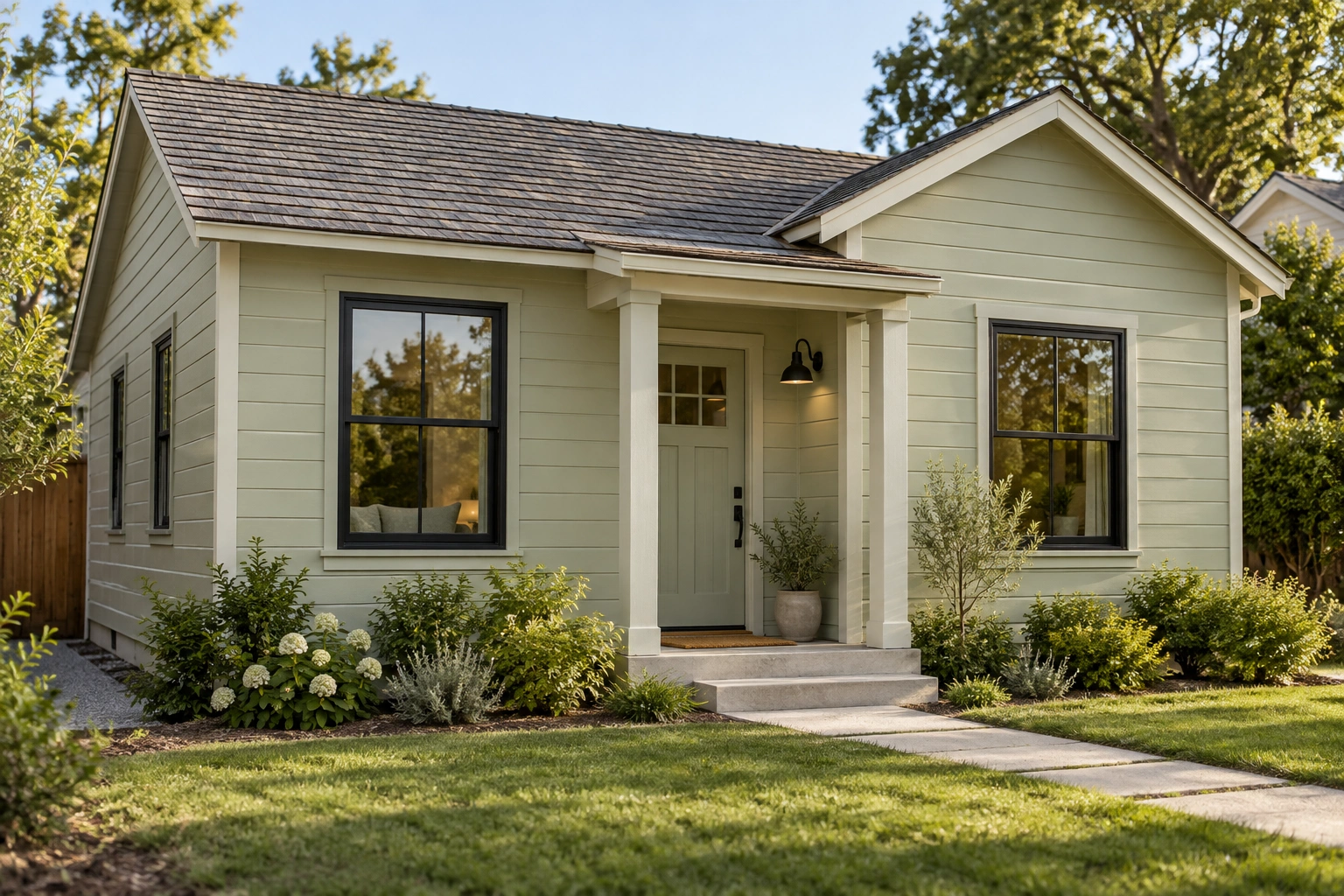
Pale sage siding with narrow black window trim creates a light exterior with clearly defined openings. Consider it for a small cottage or compact ranch where you want contrast without outlining every edge.
Keep additional dark accents selective. A black porch light and door handle may provide enough repetition without adding black corner boards or columns.
2. Gray-Sage With Charcoal Roofing
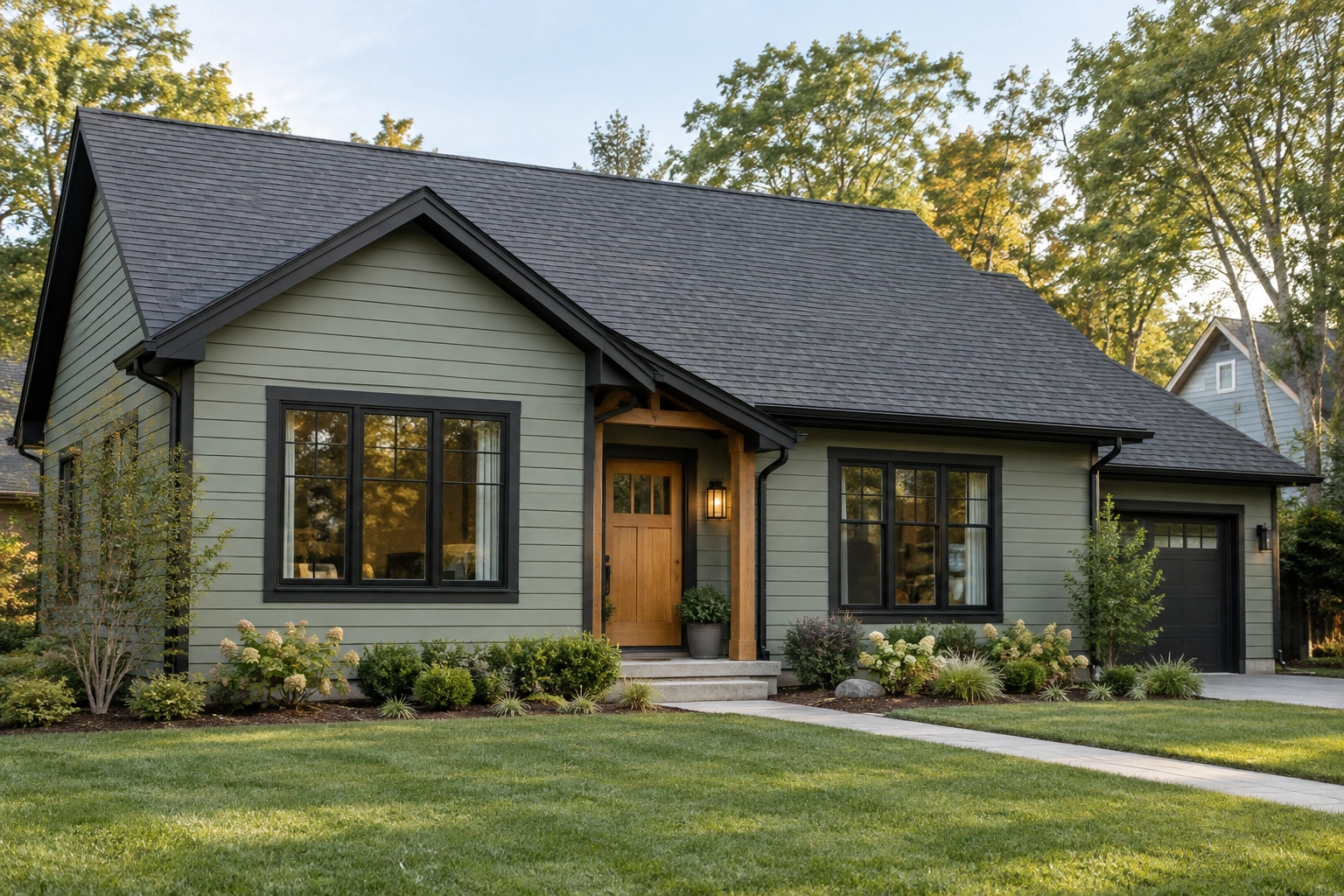
A gray-leaning sage can connect visually with charcoal shingles, while black trim gives the windows more definition. A wood door offers a warmer focal point within this restrained palette.
Compare the green against the actual roof. Shingles that appear neutral from the driveway may reveal brown, blue, or green notes up close.
3. Warm Sage With a Brown Shingle Roof

A brown roof can remain part of a sage-and-black exterior. Start by sampling warmer greens alongside the shingles and any brickwork, then compare neutral black with softer dark options.
Keep a supporting brown element, such as a stained door, where it suits the house. This gives the roof color a visible connection to the entrance.
4. Sage Siding With Black Trim and Unpainted Red Brick

Use sage on the siding, retain the brick, and place black around selected windows or the entry. This approach gives a mixed-material ranch a coordinated palette without assuming the masonry needs covering.
Look at the mortar as well as the brick. Its gray, cream, or tan color can help guide smaller details.
5. Sage and Black With Warm Beige Stone

Muted sage, beige stone, and black trim create a palette with both warm and cool elements. Let the stone remain prominent, with black defining openings rather than surrounding every material change.
Check whether the stone reads golden, pinkish, or gray. Those differences matter more than its general description as “beige.”
6. Sage Lap Siding With a Natural Wood Front Door

Horizontal sage siding and black window trim provide a simple setting for a wood entrance door. The door becomes the warm focal point without introducing another painted accent.
Choose the wood tone alongside existing flooring, brick, or porch posts. Before committing to natural wood, consider exposure and the finish manufacturer’s maintenance guidance.
7. Sage Board-and-Batten With Black Gable Trim

Sage board-and-batten adds vertical texture, while black gable trim draws attention to the roof shape. This combination can suit a modern farmhouse or a simpler home with a prominent front gable.
Keep the battens sage so the siding reads as one surface. Painting every strip black would create a much busier pattern.
8. Sage Shingles With Black Trim and Cedar Porch Posts
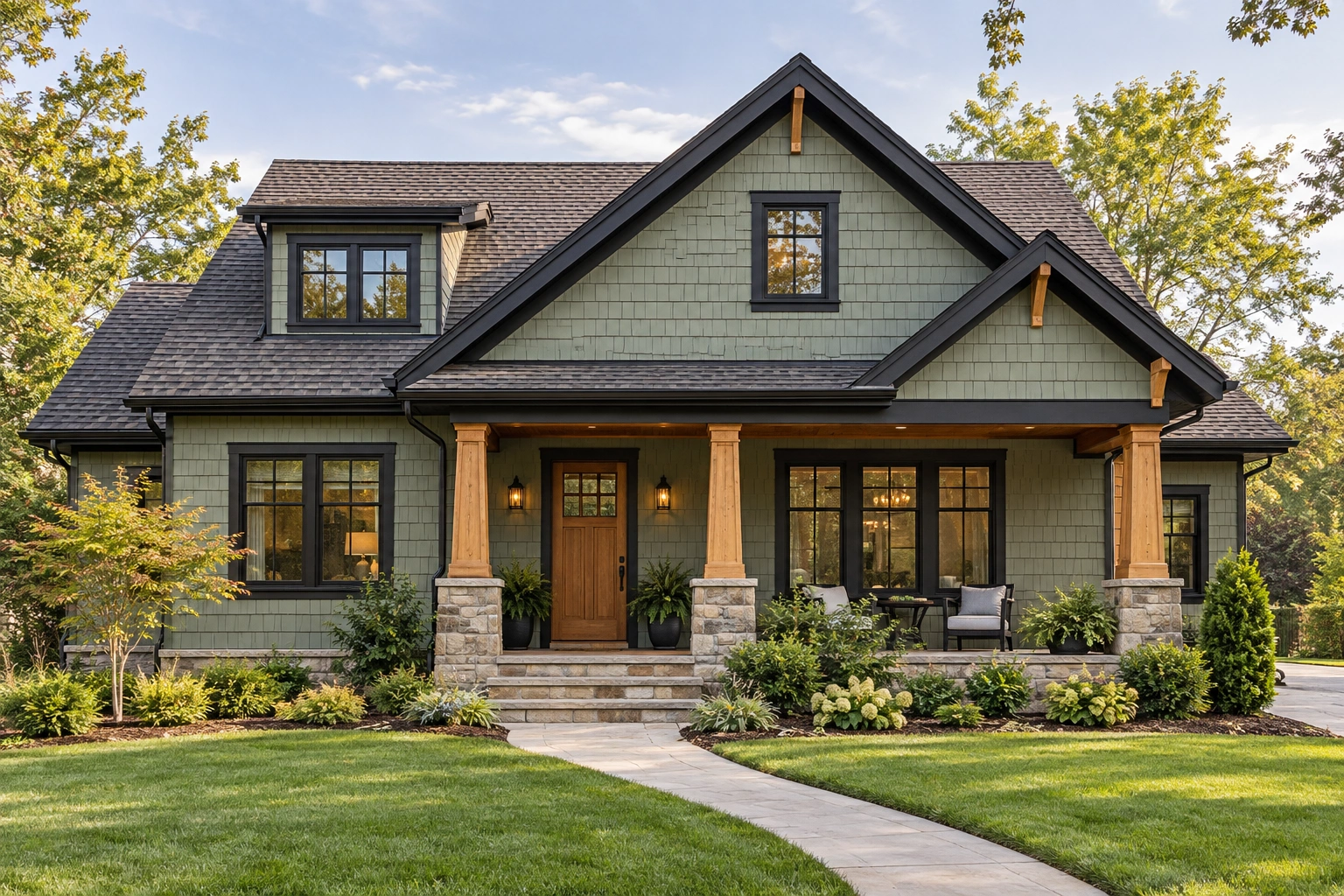
Textured sage shingles, dark window surrounds, and cedar posts offer a layered option for a cottage or Craftsman-inspired exterior.
Let the wood posts provide the main material accent. Adding several unrelated wood stains across doors, shutters, and railings can make the palette harder to coordinate.
9. Soft Sage Stucco With Black Window Surrounds

Soft sage stucco with black window surrounds creates broad areas of color interrupted by clean dark shapes. Restrained lighting and door hardware can continue the black without crowding the facade.
Judge the color on a surface resembling your stucco texture when possible. A smooth digital mockup won’t show how the wall’s texture affects its appearance.
10. Sage With White Windows and Black Outer Trim

White window frames can remain inside black exterior surrounds. The result is a three-color arrangement: sage walls, dark outer trim, and a lighter window unit.
Check the proportions before painting. Broad black surrounds around small white windows create a stronger graphic effect than narrow trim, particularly when several windows sit close together.
11. Sage and Black With a Light Porch Ceiling

Use sage siding and black trim around the porch entrance, then choose a light ceiling color to break up the darker overhead area.
Carry that lighter shade into an existing detail, such as window frames, where appropriate. View the sample from beneath the porch, where shade may make it appear different from a sunlit wall.
12. Sage With Black Shutters and Light Window Casings

Black shutters, light casings, and sage siding offer a more traditional interpretation. Repeat black at the front door or selected trim to connect the shutters with the wider exterior.
Check that shutters suit the window shapes and available wall space. Windows squeezed against corners may look better without an additional decorative layer.
13. Deep Sage With Restrained Black Accents

Deeper sage with black trim produces a quieter contrast than pale green against black. It may appeal to readers who prefer a darker exterior with less pronounced window outlines.
Look at the combination from the street and in shade. Where the colors merge too much, a lighter entry surround or wood door can provide a focal point.
14. Sage and Black With a Muted Rust Front Door
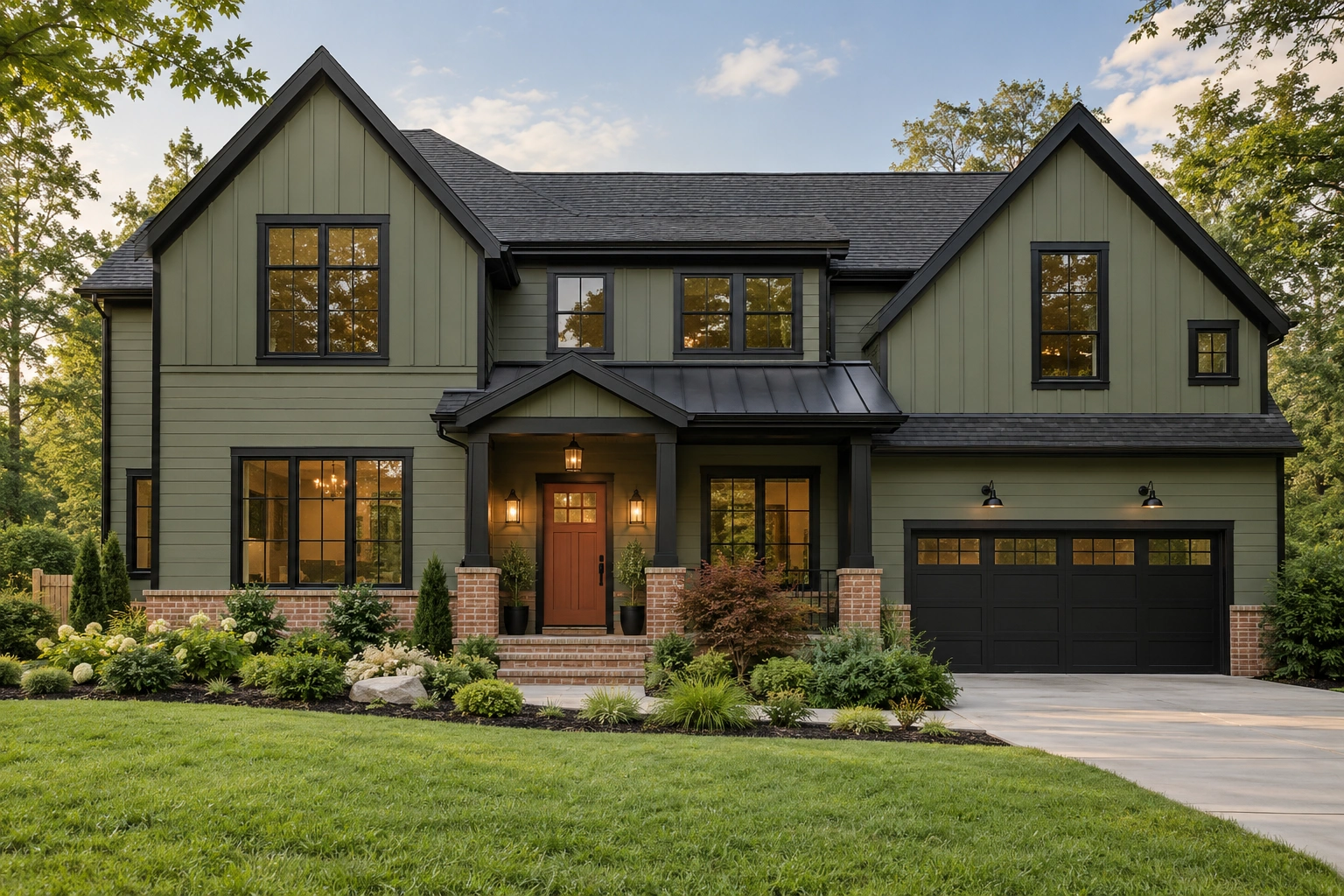
A muted rust door introduces a warm accent against sage siding and black trim. It can also connect with reddish brick or terracotta details already nearby.
Keep the rust concentrated at the entrance while you assess the combination. Repeating it on shutters and garage doors may give the accent more prominence than intended.
15. Sage With Black Trim and a Wood-Tone Garage Door

A wood-tone garage door becomes a substantial feature on a garage-forward house. Sage siding and black trim frame it while keeping the palette relatively contained.
Compare the door’s finish with the front door before selecting either. Where the garage occupies much of the facade, its color may influence the overall appearance more than the entry.
16. A Sage Garage Door With Black Trim Around the Entry
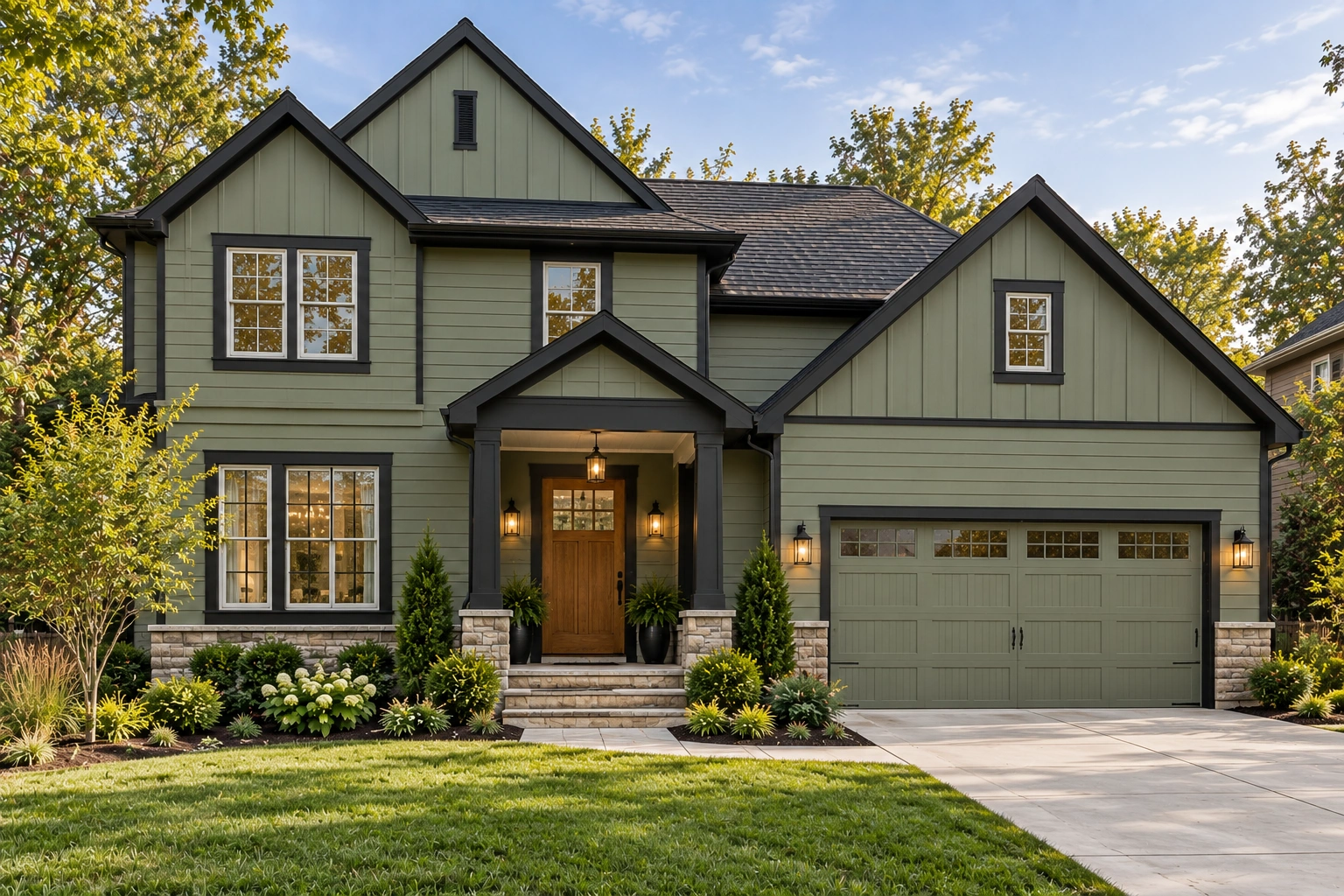
Painting an eligible garage door close to the siding color can reduce its contrast with the surrounding wall. Black trim around the front entrance then provides a clearer point of emphasis.
This is worth considering when you’d rather draw attention to the doorway than the garage. Confirm the door manufacturer’s coating and color requirements first.
17. Two Sage Tones Connected by Black Trim
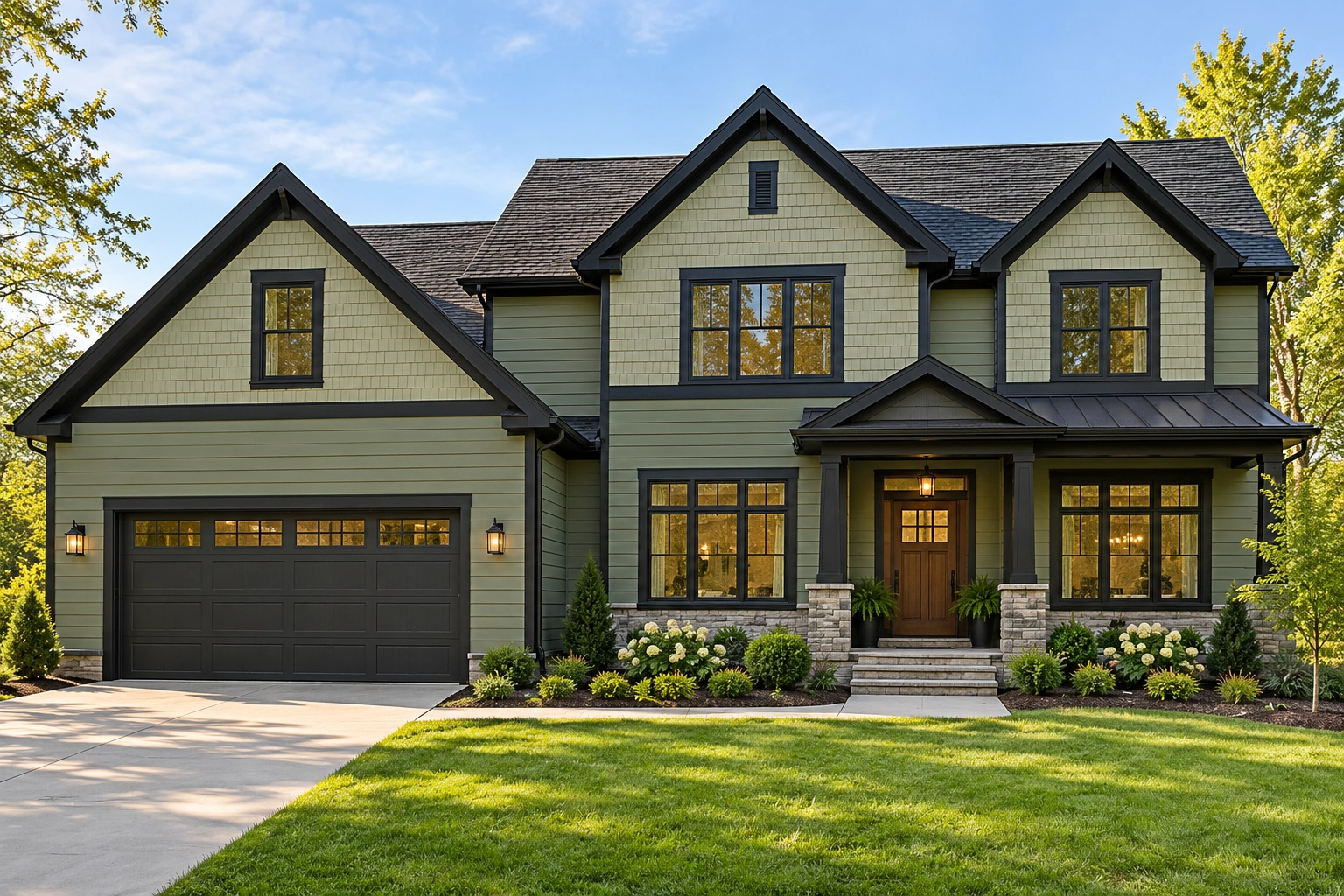
Use two related sage shades where the house already has a clear material or architectural division, such as lap siding below and shingles in a gable. Repeat black around selected openings to connect the areas.
Follow existing boundaries. An arbitrary color change across an uninterrupted wall can make the treatment feel disconnected from the architecture.
How to Choose a Combination for Your Home
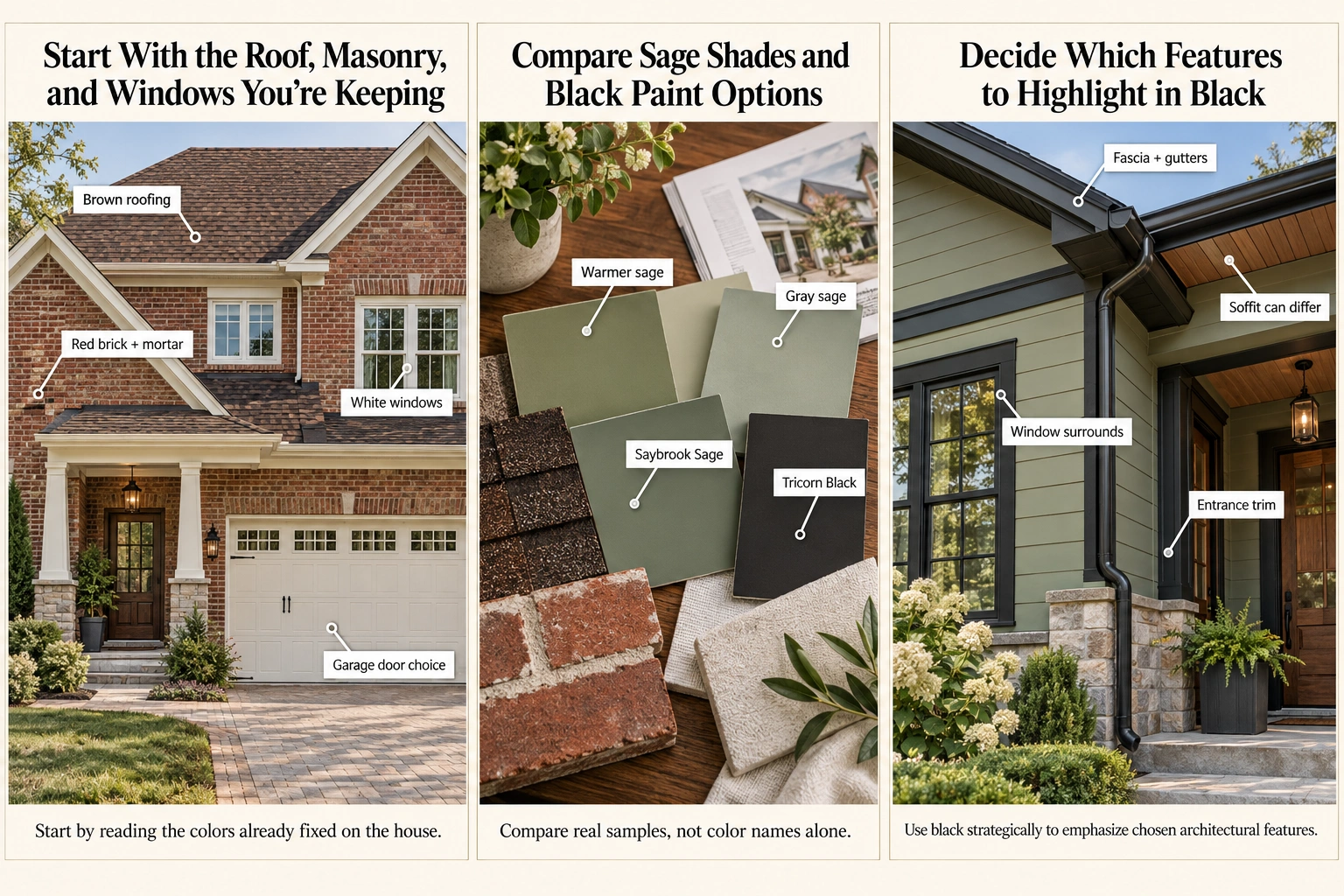
Start with the ideas that fit your existing house and project scope. A paint-focused refresh has different possibilities from a renovation that already includes new windows or siding.
Start With the Roof, Masonry, and Windows You’re Keeping
List the visible colors that will remain: roofing, brick, stone, window frames, paving, and permanent metal finishes. Benjamin Moore’s exterior guidance recommends considering these existing materials and checking how light affects the proposed palette.
Use that information to narrow your options:
| Existing feature | Useful starting point |
| Brown roofing | Compare warmer sage shades alongside the shingles |
| Red brick | Test sage against both the brick and mortar |
| White windows | Compare light casings with black outer surrounds |
| Large front-facing garage | Decide whether its door should stand out or blend |
| Detailed porch or gables | Choose which details deserve dark emphasis |
Retaining compatible features can keep a color project from expanding into unnecessary replacement work.
Compare Sage Shades and Black Paint Options
“Sage” covers a range of muted greens. Some look more gray; others lean warmer or slightly blue. Compare actual samples instead of choosing by the color name alone.
Benjamin Moore Saybrook Sage HC-114 is one candidate to sample. Its current US listing gives an LRV of 45.46 and cautions that screen colors may differ from actual paint.
For black, Sherwin-Williams describes Tricorn Black SW 6258 as a neutral option with little apparent undertone. Its guidance also distinguishes warmer and cooler blacks. A Saybrook Sage–Tricorn Black combination is an editorial sampling suggestion, not a verified match to a photographed project.
Decide Which Features to Highlight in Black
Black attracts attention through contrast, so place it deliberately.
Window surrounds and entrance trim can emphasize openings. Fascia—the board along the roof edge—can outline the roof. Gutters may follow that line, while downspouts can either stand out or coordinate more closely with the wall.
Soffits, the undersides of roof overhangs, don’t automatically need to match the fascia. Treat each component according to the appearance you want, rather than assuming every trim surface must be black.
Test Your Palette and Avoid Common Color Mistakes

Test sage and black together, beside the materials they’ll meet, and view them in different outdoor conditions. A green that looks suitable on its own may feel different next to brick, roofing, or an existing black window finish.
- Prepare sample boards. Follow the sample product’s instructions rather than assuming it is suitable for direct exterior application.
- Show the supporting colors together. Include the proposed door or light trim shade where relevant.
- Move the boards around the house. Compare sunlit walls, shaded elevations, and the covered entry.
- Step back. Check the combination from the sidewalk or driveway as well as close up.
Benjamin Moore recommends outdoor viewing of sample boards throughout the day and notes that its brush-on color samples are formulated for interior use, not direct application to exterior surfaces.
LRV, or light reflectance value, describes how much visible light a surface reflects. It helps compare relative lightness, but it doesn’t tell you the undertone or guarantee how a color will look on your house. There is no universal LRV cutoff that makes every sage-and-black palette successful.
Avoid making the final choice from a phone image or one small chip. Also compare new black paint with any factory-finished black components you’re retaining; they may not look identical.
Check Your Materials Before Painting
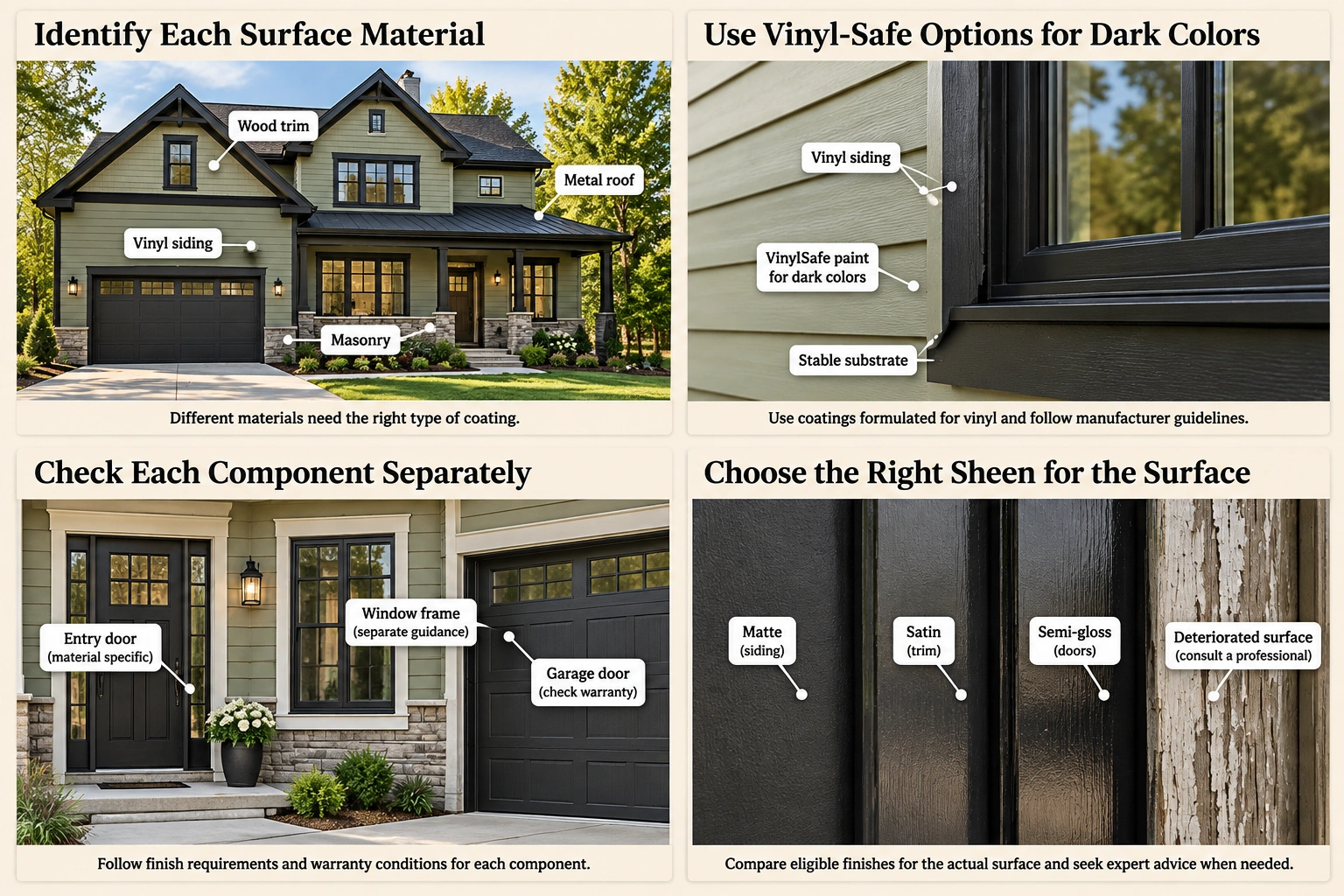
A suitable color still needs a suitable coating. Identify whether each surface is wood, metal, masonry, vinyl, or another material before choosing products.
Dark-color choices need particular care on vinyl. Sherwin-Williams describes its VinylSafe collection as specially formulated options for sound, stable vinyl substrates; that does not mean any dark paint is appropriate for every vinyl component. Follow both the component manufacturer’s and coating manufacturer’s instructions.
Don’t assume guidance for vinyl siding also applies to window frames or garage doors. Check finish requirements and warranty conditions separately.
Sheen also affects the finished appearance. Compare eligible finishes for the actual surface rather than automatically choosing gloss for every black detail. For deteriorated surfaces, uncertain existing coatings, or difficult-access trim, ask a qualified painting professional to assess the work.
Frequently Asked Questions
Is Black or White Trim Better With Sage Green?
Black trim gives sage siding a stronger outline, while white trim creates lighter contrast. The better choice depends on your windows, roof, and architectural details. A mixed scheme can work too—for example, white window frames with black outer surrounds—provided the placement feels consistent across the house.
What Colors Can Clash With Sage Green?
No color is automatically incompatible with sage. Problems are more likely when undertones, brightness, or saturation compete. A vivid accent may overpower a muted green, while two almost-matching neutrals may look accidental. Compare the complete palette beside fixed materials before ruling a color in or out.
How Is Sage Green Different From Olive Green?
Sage generally describes a muted, gray-influenced green, while olive often has a stronger yellow or brown influence. Paint names overlap, so the label alone is unreliable. Compare samples directly: an olive-leaning option may look warmer beside brick, while a grayer sage may relate more closely to charcoal roofing.
Will Sage Green With Black Trim Look Dated?
No exterior palette is guaranteed to stay fashionable. A combination chosen around the home’s architecture, permanent materials, and your preferences is less dependent on copying a particular trend. Keep expensive components in mind and use smaller, more easily changed accents to express preferences that may evolve.
Choose a Palette That Fits Your Home
Choose two or three combinations that suit the roof, windows, and masonry you plan to keep. Decide where black should draw attention, then compare the complete palettes outdoors. That gives you a practical basis for selecting a sage exterior you’ll enjoy seeing every day.
Disclaimer
This content is for general informational purposes only. Homes, needs, preferences, budgets, and circumstances vary. Follow applicable manufacturer instructions and seek qualified professional advice for safety, installation, repairs, structural, electrical, plumbing, HVAC, legal, or major property decisions.