
A tan house with black trim can have crisp definition without losing its warmth. The key is deciding which features deserve attention: narrow window surrounds create a different effect from a broad black garage door or a dark porch.
Your existing roof, masonry, and windows should help shape those decisions. You don’t need to turn every exterior detail black—or replace sound materials—to make the combination feel connected. These 15 ideas offer different ways to work with what your home already has.
Short Definition
A tan house with black trim pairs tan exterior walls with dark borders around windows, doors, or rooflines. The combination adds contrast and highlights architectural details while retaining a warm base color.
Topmodrenhouse Mission Statement
Topmodrenhouse helps homeowners, renters, and home lovers make informed, practical choices for stylish, comfortable living spaces.
15 Ways to Give a Tan Exterior Definition With Black Trim
1. Frame Light Tan Siding With Slim Black Window Trim

Narrow black casing—the trim surrounding a window—gives pale tan siding a clear outline without covering much of the facade. It’s a useful starting point for homes with simple, evenly spaced windows.
Consider the existing trim width before changing its color. A broad surround painted black will make a stronger statement than a slim border.
2. Pair Black Trim With a Natural Wood Front Door

A wood front door adds another warm material to a tan-and-black palette. Black casing can frame the entry while the wood grain gives the eye something softer to settle on.
Compare the wood finish with nearby stone or brick. A strongly orange stain may introduce more color than you want beside already golden siding.
3. Keep White Windows and Add Selected Black Surrounds

White window frames can remain part of the design. Black outer casing creates a layered border, with the white frame visible between the dark surround and the glass.
This works best as a deliberate treatment repeated across similar windows. Preview it on a photograph first; small windows with broad surrounds may look busier than expected.
4. Highlight Tan Brick With Black Trim and an Unpainted Facade

Tan brick already brings variation through its individual bricks and mortar joints. Selected black window or door trim can define openings while leaving that texture intact.
Look at the entire wall before choosing the black. A brick sample alone may miss the pink, yellow, or gray notes that become noticeable across the facade.
5. Contrast Textured Tan Stucco With Simple Black Detailing

Simple black borders can give textured stucco a clean edge. This approach suits an exterior where the wall finish already supplies plenty of visual interest.
Keep additional accents restrained. Window trim and a related entry detail may provide enough contrast without outlining every wall corner or decorative band.
6. Define Tan Board-and-Batten With Black Gable Trim
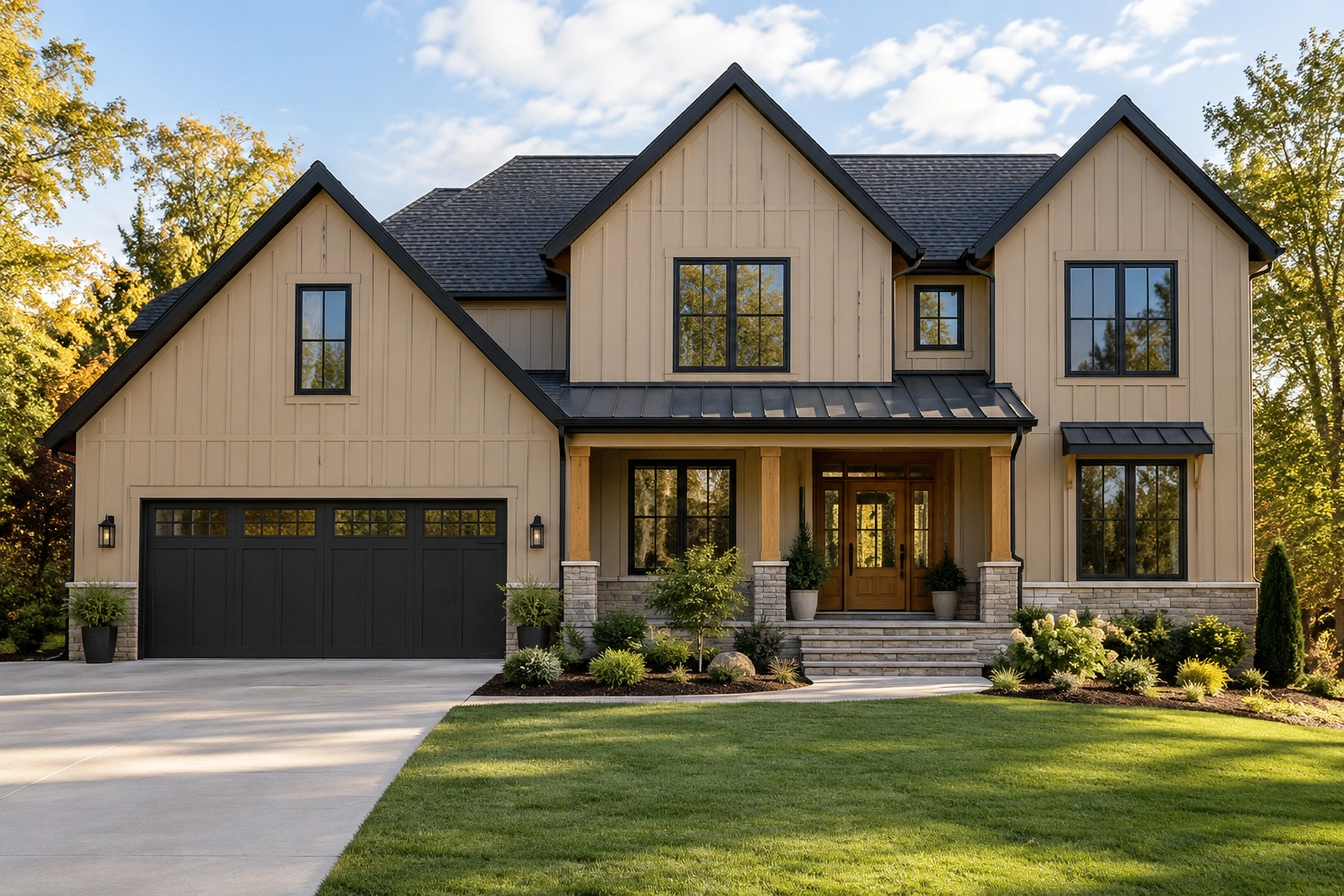
Board-and-batten siding has raised vertical strips that create their own pattern. Black trim along the sloping edges of a gable can frame that pattern without interrupting it.
Keeping the battens tan allows the siding to read as one surface. Painting every strip black produces a much busier effect and changes the character of the design.
7. Balance Dark Tan Siding With a Lighter Porch Ceiling
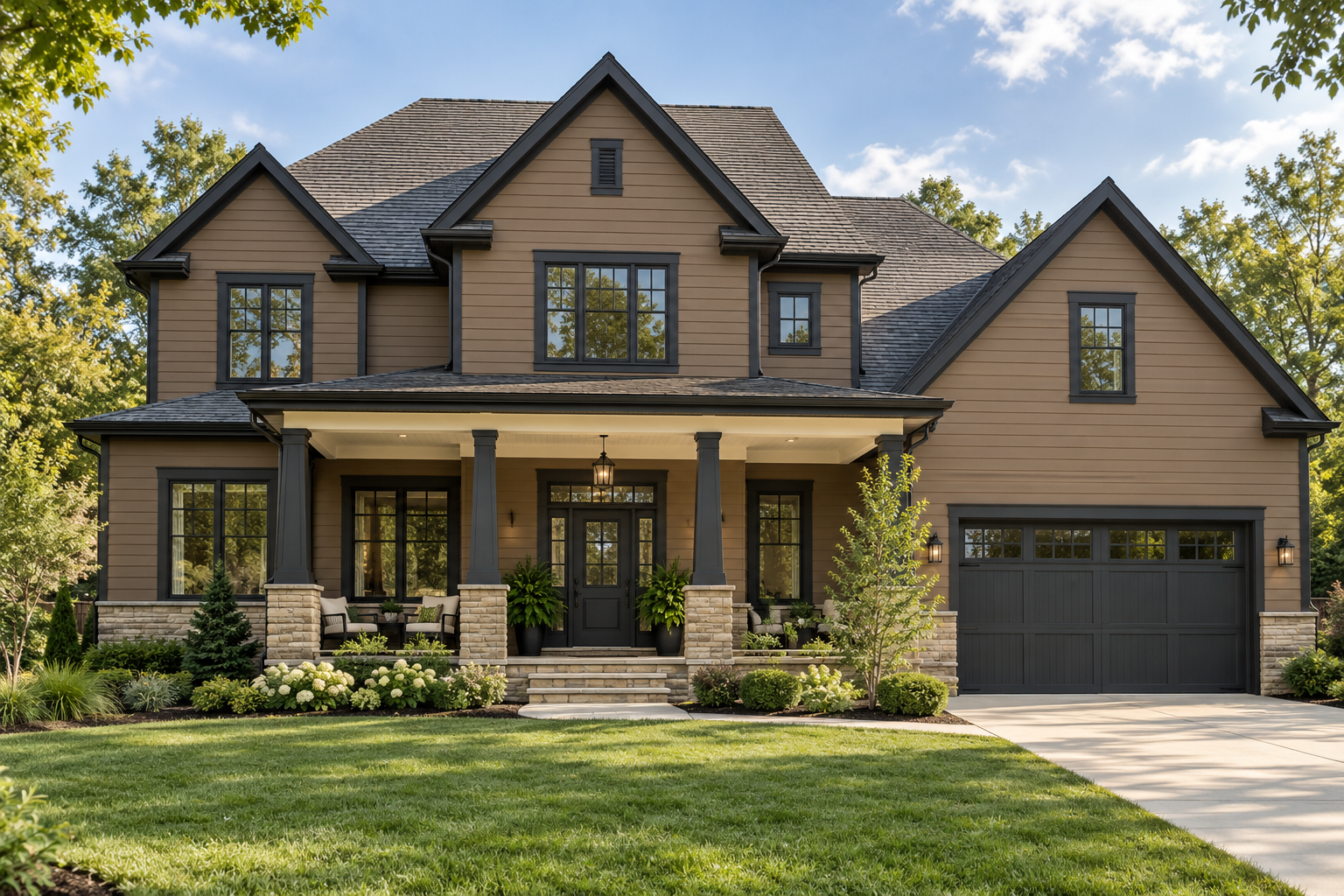
Dark tan siding and black trim can feel especially deep beneath a covered porch. A lighter ceiling offers a contrasting surface while allowing dark details to remain around the entry.
Try a warm off-white beside the siding rather than assuming bright white is the best choice. Check the sample under the porch, where it will actually be seen.
8. Combine Black Shutters and Door Trim on a Traditional Home
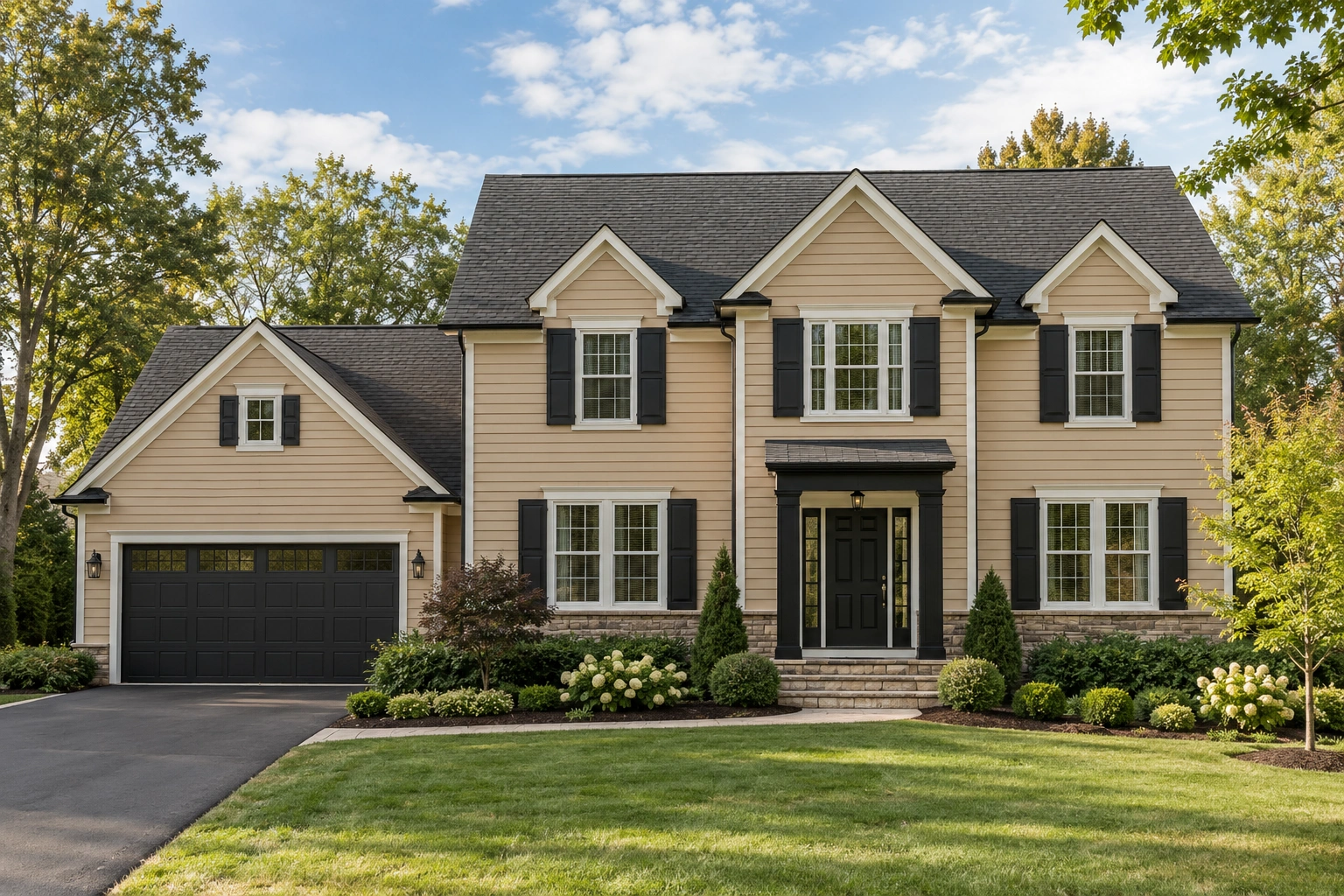
Tan siding with black shutters creates a familiar traditional palette. Repeating black around the front door helps connect the entrance with the windows.
Pay attention to shutter proportions and placement. Adding shutters wherever there’s spare wall space can look less convincing than using them only on windows where they fit comfortably.
9. Outline a Craftsman Porch While Keeping Its Wood Accents
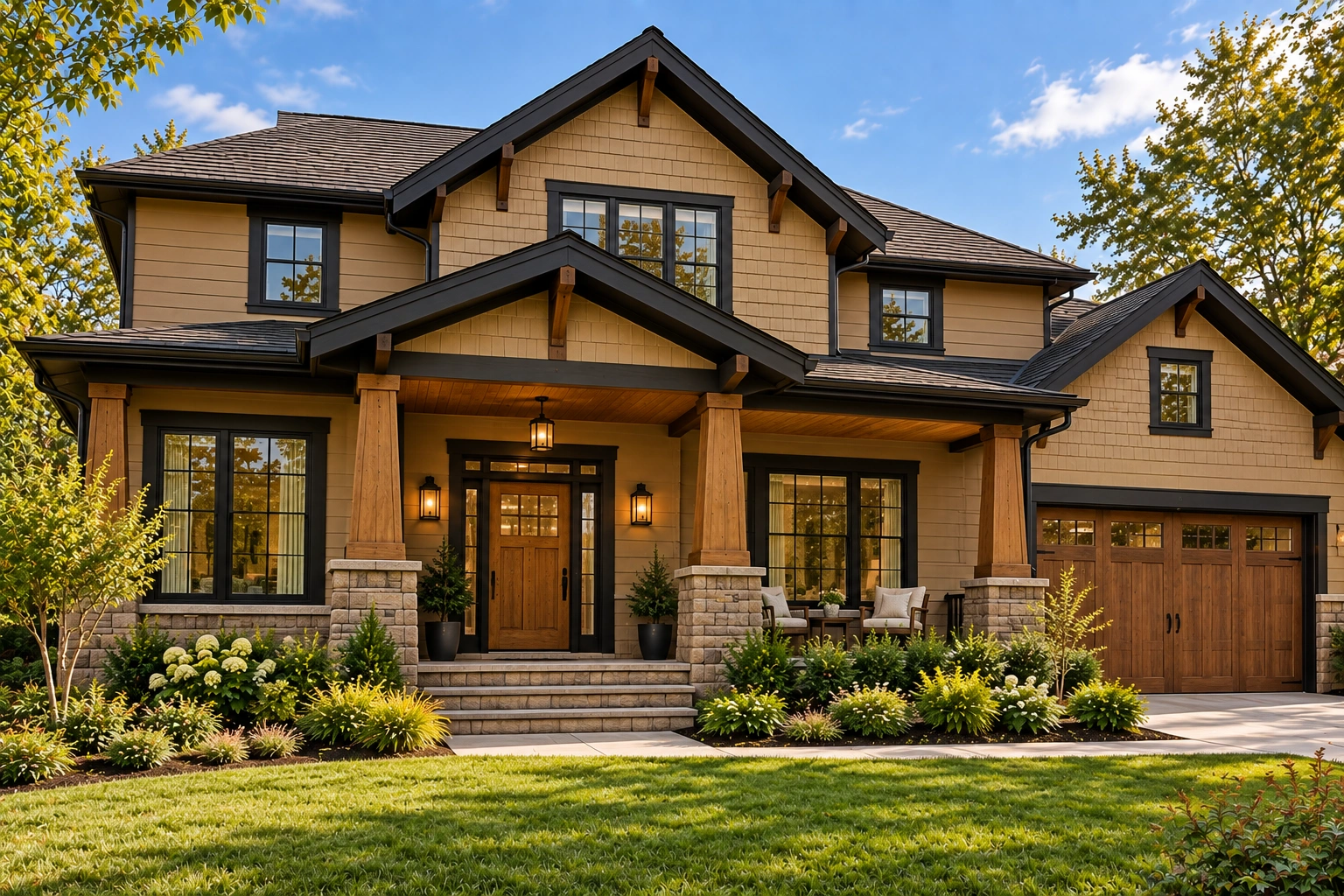
On a Craftsman-style home, black can define selected porch trim while wood columns, brackets, or the front door retain their character.
Choose the painted details carefully. Existing wood and masonry may already provide enough contrast, so there’s little reason to cover them simply to repeat black across the entire porch.
10. Give a Tan Ranch a Continuous Black Fascia Line

Fascia is the board along the roof edge. Painting suitable fascia black can emphasize the long horizontal shape of a tan ranch.
View the roofline from the street before committing. Numerous changes in roof height, gutters, and projecting sections may make a dark outline appear more fragmented than a close-up sample suggests.
11. Repeat Black Trim in Simple Porch Railings

Black railings can carry the window or door trim color toward the steps, connecting the entry with the facade.
Consider how much railing is visible. Slender balusters create a different impression from solid dark panels. Let tan siding, a wood door, or lighter porch surfaces remain visible so the entrance doesn’t become one large dark area.
12. Keep the Garage Tan to Let Black Entry Trim Stand Out

A garage door close to the siding color can remain visually quiet while black trim emphasizes the entrance.
This is worth considering on homes where a wide garage faces the street. You can repeat black in nearby window casing or a light fixture without making the garage the strongest feature.
13. Pair a Black Garage Door With Restrained Trim Elsewhere

A black garage door can work as a deliberate feature, particularly when its design complements the house. Because it occupies a large surface, it deserves its own color test.
Keep nearby accents simpler and assess the whole front elevation. Check the door manufacturer’s refinishing guidance before changing the color.
14. Connect Black Trim With Warm Stone Around the Entry
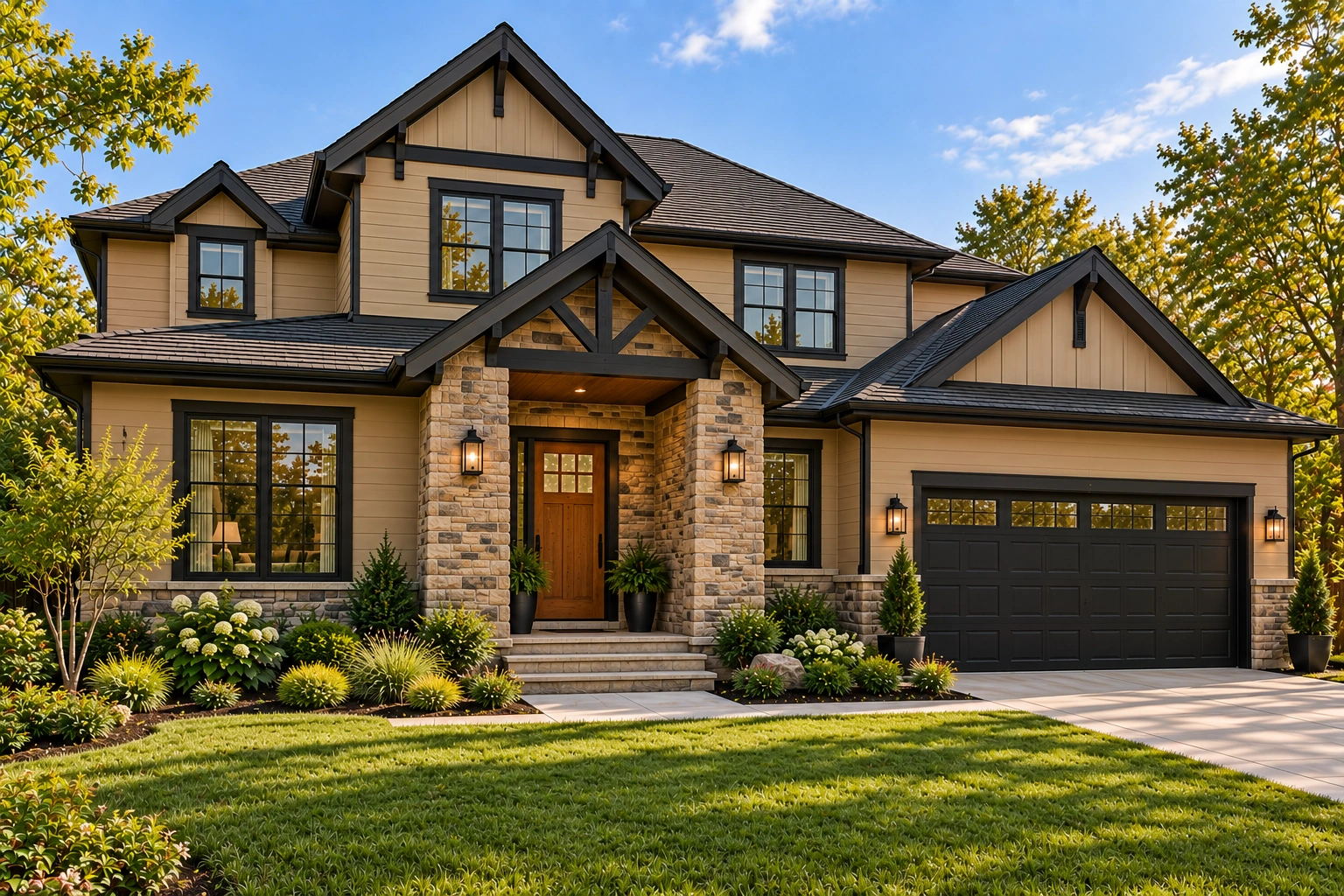
Stone around the entrance can bridge tan siding and black details when its colors relate to both.
Compare samples beside several stones, including the mortar. Selecting trim to match one unusually dark piece may overlook the warmer overall appearance of the entry.
15. Keep a Brown Roof and Introduce Soft Black Trim

A brown roof doesn’t automatically rule out black accents. A muted near-black or charcoal is worth comparing with a stronger black beside the existing shingles and siding.
Make the choice from the complete combination. Reddish-brown roofing, golden tan siding, and gray-brown masonry each introduce different considerations; one dark shade won’t suit every version.
Choose a Look That Fits the Home You Already Have
Start with the features you intend to keep. Roofs, windows, masonry, and sound siding provide the framework for the palette.
Then match the project to your actual goal:
| Your situation | A useful starting point |
| The exterior feels flat | Test black on one repeated detail, such as window casing. |
| White windows are staying | Compare black surrounds with black shutters and lighter casing. |
| The garage dominates the front | Keep its color close to the siding and emphasize the entry. |
| Wood or stone is a favorite feature | Use black to frame it while retaining the natural material. |
| Improvements will happen in stages | Choose accents that work with both retained and planned finishes. |
An entry refresh is a different project from window replacement. Decide which scope makes sense before choosing inspiration that depends on major alterations.
Coordinate the Tan, Black, and Colors That Are Staying

Start With the Roof, Brick, Stone, and Mortar
Gather samples beside the fixed finishes rather than selecting each color separately. Include the roof in your assessment from a distance, even when you can’t place a sample directly beside it.
Check the mortar, too. Its color contributes to the overall appearance of a masonry wall and may be easier to overlook than the brick itself.
Compare Black and Charcoal Beside Your Tan Exterior
Black paint shades can carry warm or cool undertones, and those differences affect the combination. Sherwin-Williams describes both warm and cool blacks and recommends testing samples in the intended setting.
Compare a stronger black with a softer charcoal. Neither is automatically better: the decision is whether you prefer a pronounced outline or a quieter transition beside your siding.
Coordinate Doors, Wood Accents, and Deck Finishes
The front door doesn’t have to match every dark detail. Black, stained wood, or a restrained accent color can each provide a different focal point.
For a deck, consider the boards and railings separately. Wood-toned boards with black railings may connect the outdoor space to the house without extending black across the entire walking surface. Use finishes approved for each application.
Where Should Black Stand Out—and Where Should It Blend In?
Use black where you want clear definition, such as around an entry, selected windows, or a simple roofline. Let less attractive or visually dominant features blend with nearby surfaces. The right placement depends on the size and arrangement of those features, not a fixed percentage of black.
A downspout illustrates the choice. Black makes its route noticeable against tan siding; a compatible siding-colored finish can make it less prominent.
Look from the sidewalk as well as the driveway. Close up, a trim sample may seem modest. Repeated across every opening and edge, it can become a much stronger pattern.
Mistakes to Avoid Before Committing to Black Trim

Choosing From a Photo Without Testing Samples
Photographs are useful for selecting a direction, but they aren’t reliable paint matches. Lighting, editing, and your screen can change how colors appear.
View physical samples beside the house in sun and shade. Where possible, include a sample in the intended finish: a small flat color chip won’t show the complete effect of a reflective painted surface.
Making Every Exterior Feature a Focal Point
Black windows, shutters, fascia, columns, and garage doors can compete for attention when all receive equal emphasis.
Pick the feature you most want noticed, then judge the supporting details around it. On a home with a recessed entrance, for example, a large dark garage may attract more attention than the front door.
Assuming Every Window or Trim Material Can Be Painted Black
Wood, vinyl, fiber cement, composites, and factory-finished metal require different checks. Identify the material and consult both the component manufacturer and coating instructions before painting.
Sherwin-Williams identifies darker repainting as a possible cause of vinyl-siding warping and specifies compatible color-system guidance. That guidance isn’t blanket approval to paint vinyl windows or other components black.
Plan for access and upkeep as well. High fascia, window replacement, and roof-related work may need professional help. Avoid treating difficult exterior work as an incidental part of a color refresh.
Frequently Asked Questions
Do All the Black Exterior Finishes Need to Match Exactly?
No. Painted wood, coated metal, and factory-finished windows may look different even when each is called black. Aim for a compatible overall appearance rather than a perfect match across materials. Compare neighboring finishes outdoors, especially where differences in undertone or sheen will be easy to see.
What Front Door Color Works With Tan Siding and Black Shutters?
Black offers continuity with the shutters, while stained wood adds another warm element. A muted green or blue can provide a separate entry accent. Test the door choice beside the siding, masonry, and roof colors, and check it in the shade of the actual doorway.
Should Black Exterior Trim Be Matte, Satin, or Semi-Gloss?
Satin is a useful starting point for a restrained sheen; semi-gloss gives details more shine. Matte offers a quieter appearance where a suitable exterior product permits it. Choose an approved coating for the surface, then compare finish samples. Manufacturer sheen names and available options vary by paint line.
Can You Get This Look Without Repainting the Tan Siding?
Yes. Retaining sound tan siding and changing suitable trim, shutters, or entry details can establish the palette. First check that the proposed black works with the existing tan and that each component can be refinished. Replacing serviceable windows isn’t a prerequisite for introducing coordinated dark accents.
Choose the Details That Make Your Exterior Feel Balanced
A successful tan house with black trim begins with the home’s existing character. Choose one of these approaches that suits your architecture, decide which features should stand out, and test the colors beside the materials that are staying. A few well-placed dark details may be all the definition your exterior needs.
Disclaimer
This content is for general informational purposes only. Homes, needs, preferences, budgets, and situations vary. Follow manufacturer instructions and seek qualified advice for safety, installation, repairs, legal matters, structural work, electrical or plumbing systems, HVAC, and major property decisions.