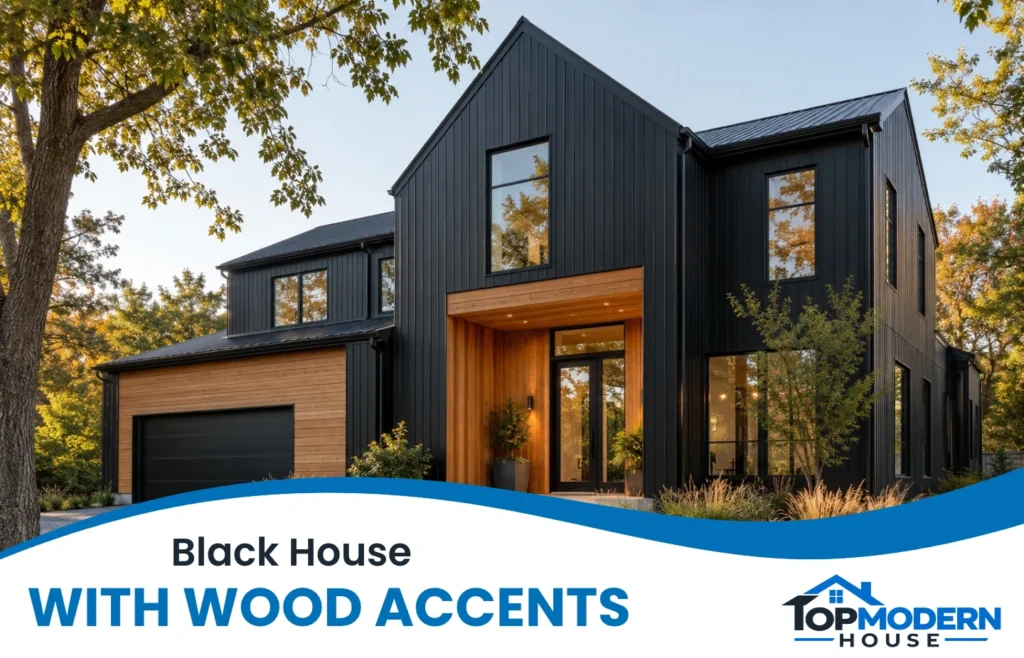
A black exterior can give a home crisp definition and a strong architectural presence, but large uninterrupted dark surfaces can also feel heavy. Natural wood changes that balance. It introduces warmth, grain, and texture while drawing attention to entrances, rooflines, porches, and other features that deserve to stand out.
The most successful black house with wood accents usually doesn’t cover every available surface in timber. Wood works better when it has a clear purpose—framing an entry, warming a porch, breaking up a tall wall, or repeating an accent across a few carefully chosen areas. The ideas below show how to create that balance while keeping real materials, proportions, maintenance, and existing exterior features in mind.
Short Definition
A black house with wood accents pairs dark exterior finishes with natural timber details to add warmth, texture, contrast, and architectural definition without making the façade feel overly heavy.
Topmodrenhouse Mission Statement
Topmodrenhouse helps homeowners, renters, and home lovers make practical, stylish, comfortable, and well-informed choices for better living spaces.
Quick Exterior Planning Checklist
- Choose one main area for the wood focal point.
- Match wood undertones with the roof, stone, brick, and windows.
- Use lighter wood for stronger contrast and darker wood for a subtler look.
- View paint, stain, and material samples outdoors before deciding.
- Consider weathering and maintenance for exposed natural wood.
- Keep wood placement tied to real architectural features such as entries, soffits, gables, porches, or garage doors.
- Use landscaping and lighter hardscape to balance large dark surfaces.
17 Black House With Wood Accents Ideas
1. Black Board-and-Batten With a Cedar Front Door
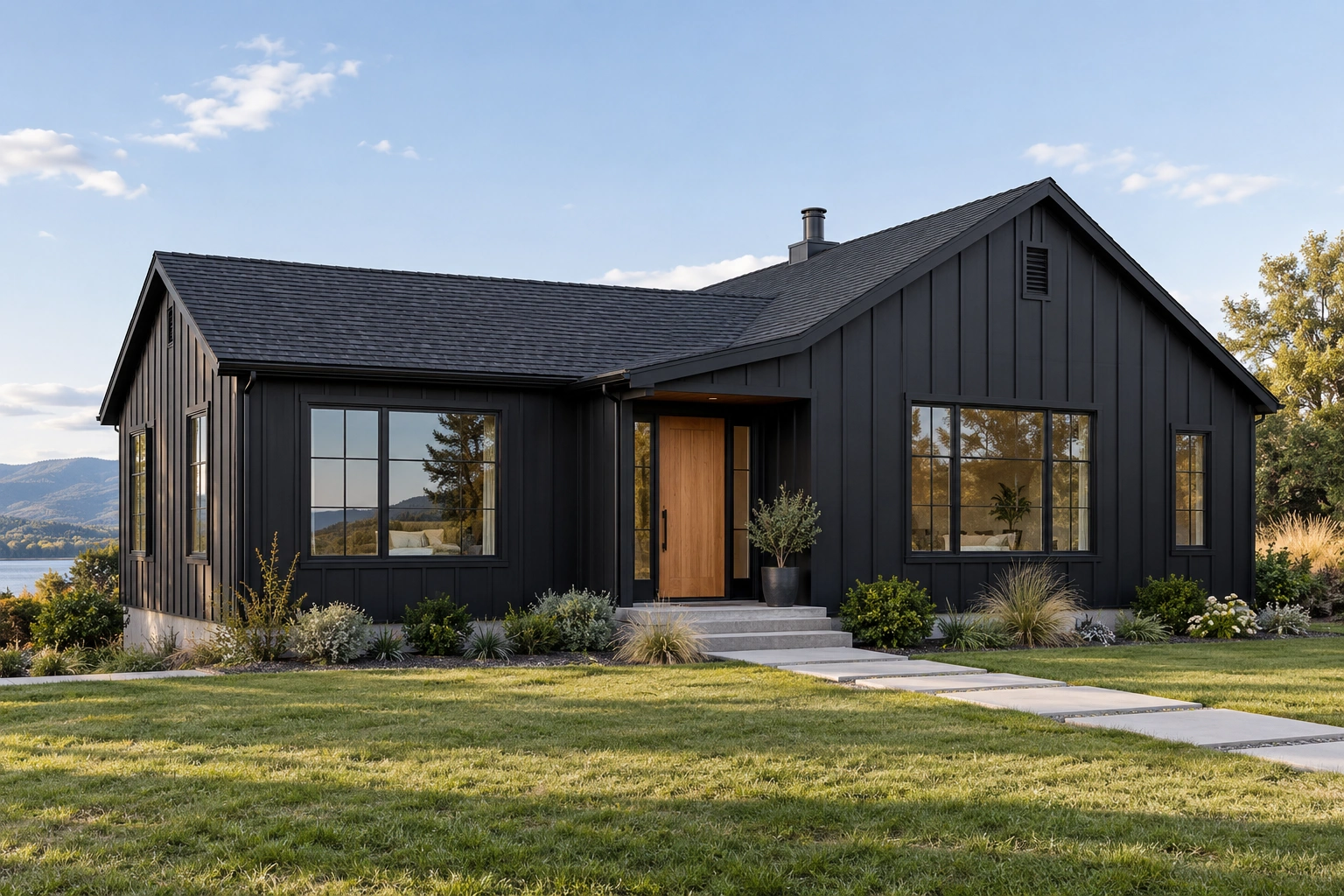
A natural cedar door creates an easy focal point against black board-and-batten siding. The vertical siding keeps the exterior clean and structured, while the visible wood grain prevents the entrance from disappearing into the darker façade.
This is also one of the more manageable ways to introduce wood. You don’t need to reclad a large wall to get meaningful contrast.
2. Black Siding With a Wood-Framed Entry
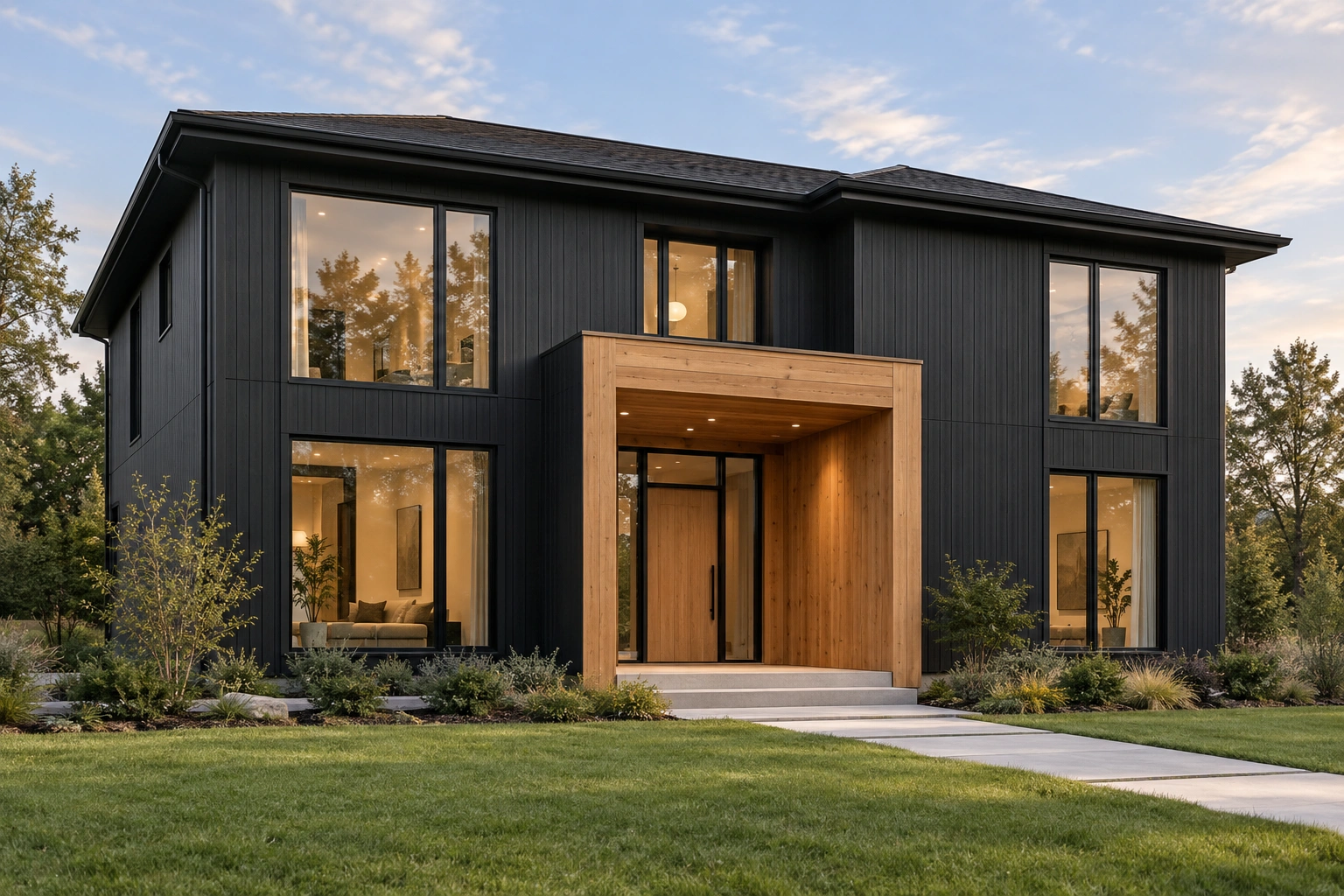
Instead of limiting wood to the door itself, extend it around a recessed entryway. A timber surround or wood-clad recess can visually pull the entrance forward and make a large black exterior feel more welcoming.
It works especially well on contemporary homes where the main façade has few decorative details.
3. Black House With Cedar Garage Doors
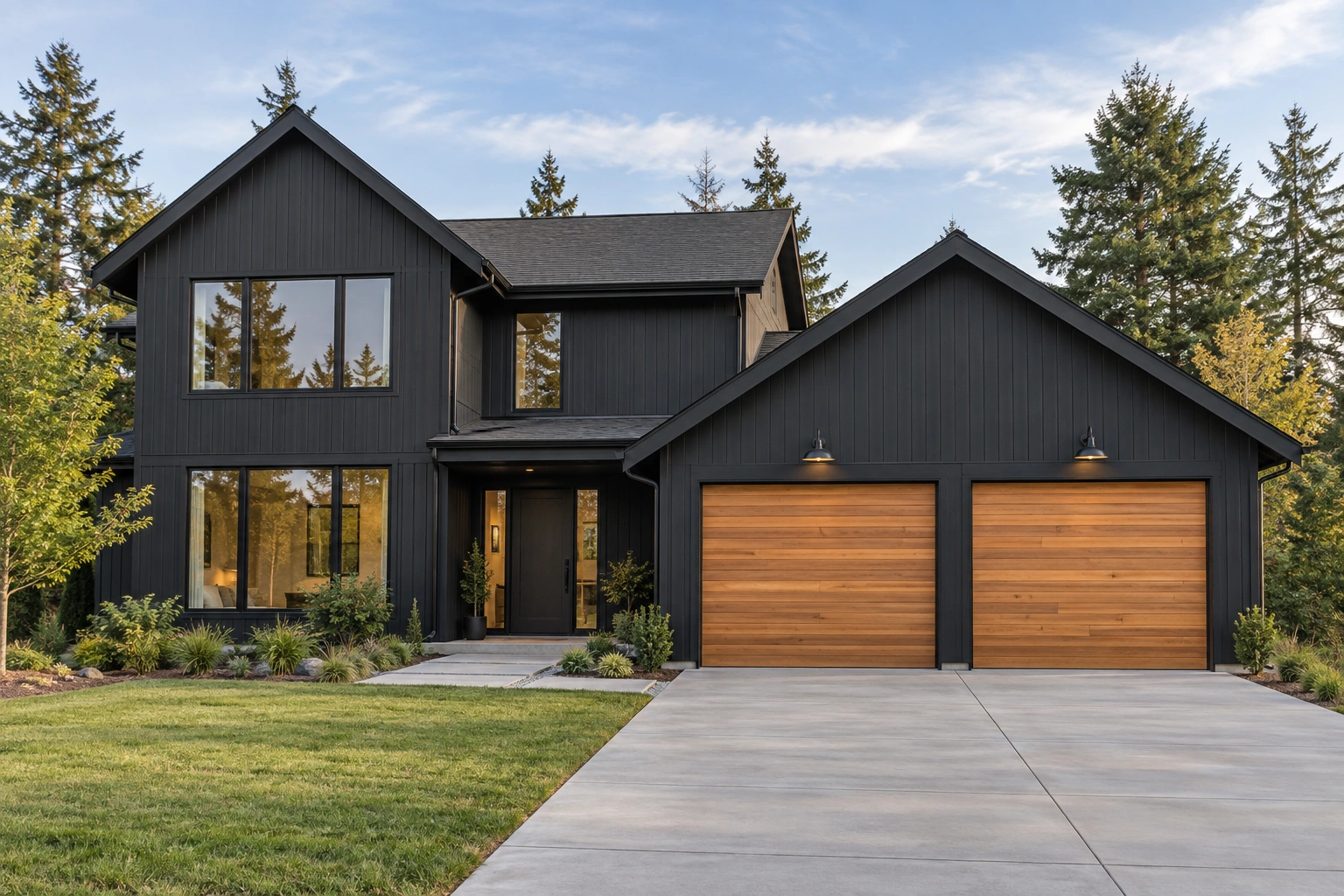
Garage doors occupy a large portion of many front elevations, so changing their material or finish can reshape the whole exterior.
Warm cedar-toned doors against charcoal or matte black siding create strong contrast without requiring wood across the rest of the house. Keep nearby accents restrained so the garage doesn’t compete with several other focal points.
4. Black Exterior With Warm Wood Soffits
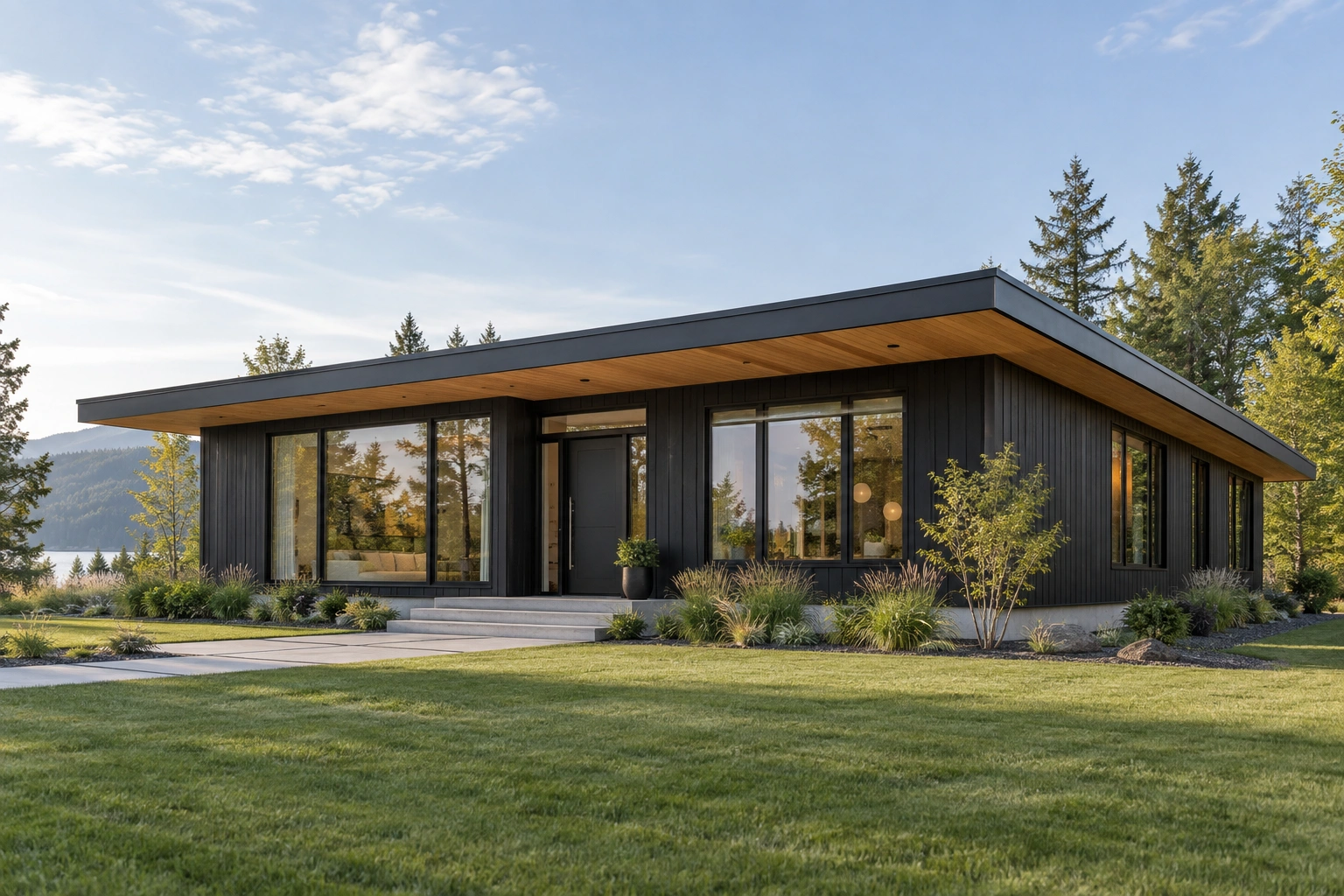
A soffit is the finished underside of a roof overhang. Covering this area in wood creates warmth in a place that is noticeable from below but doesn’t dominate the façade.
This approach works particularly well beneath deep roof overhangs on modern homes. It also allows the wood to repeat along the roofline rather than appearing as an isolated patch.
5. Black Modern Farmhouse With Wood Porch Posts
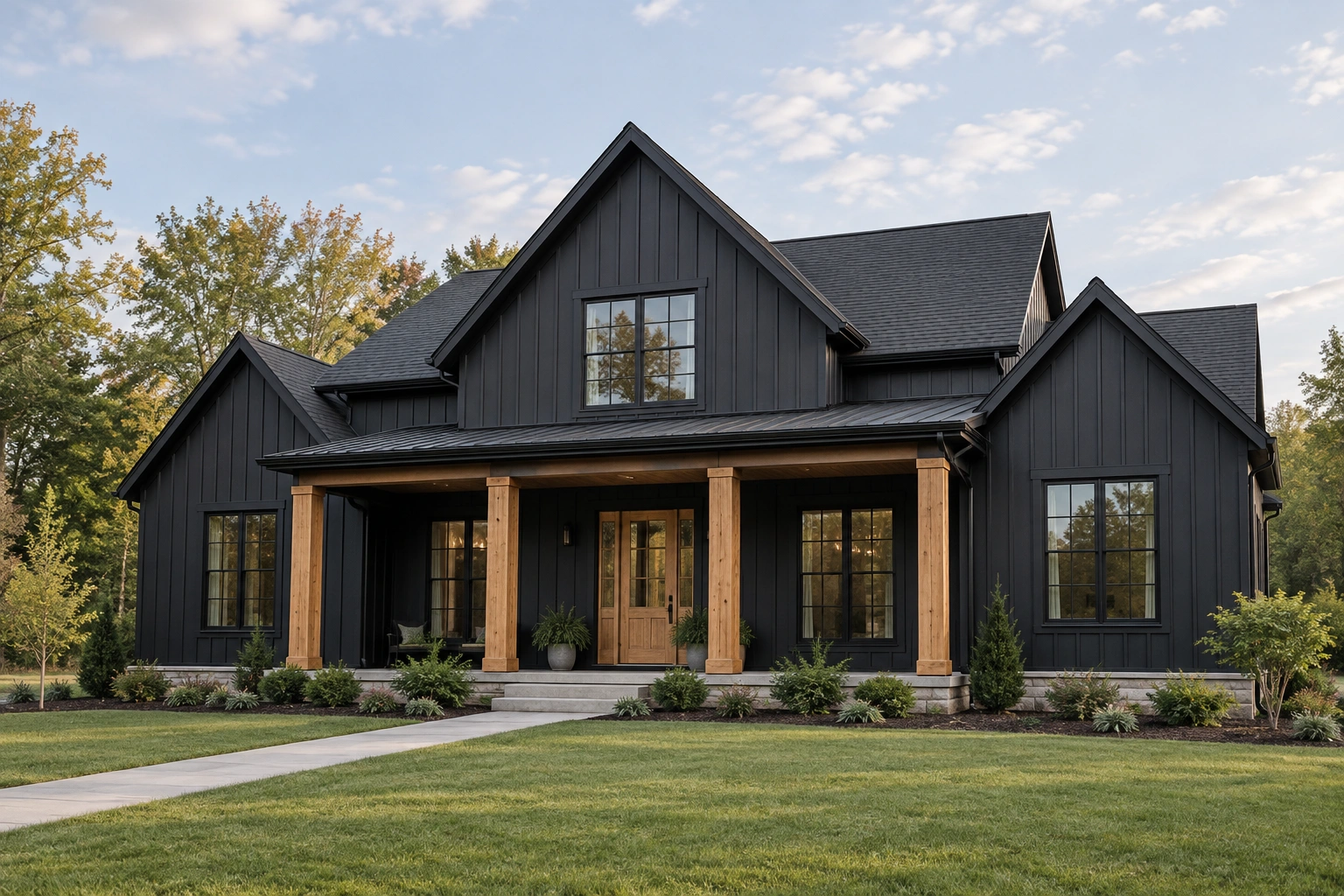
Black siding can give a modern farmhouse a cleaner, less predictable appearance. Natural wood porch posts soften that darker base and make the entrance easier to read from the street.
Repeating the same or a closely related wood tone on the front door can create continuity without turning every trim detail into an accent.
6. Black Ranch House With a Cedar Entry
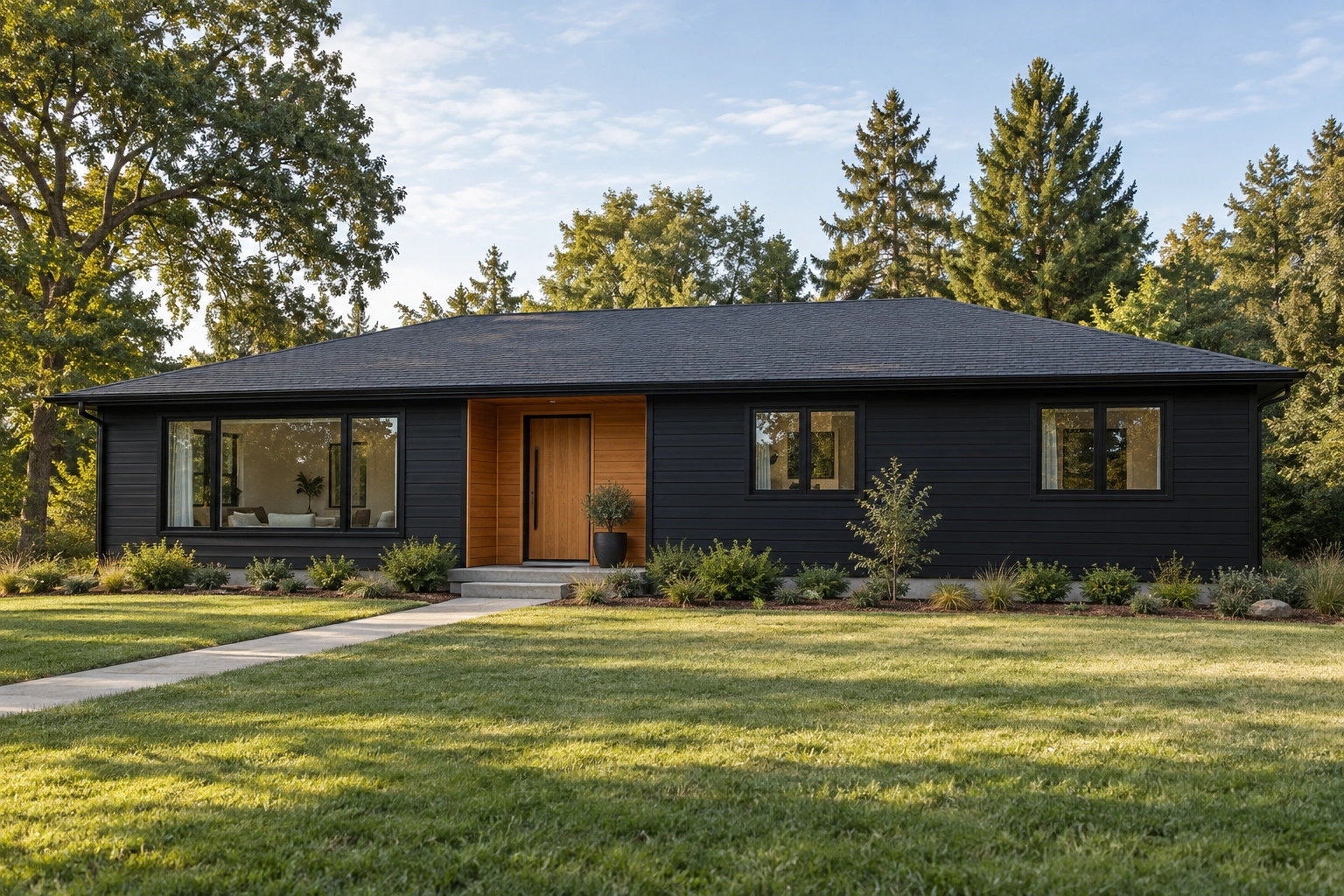
Low, horizontal ranch homes often benefit from one strong focal point rather than wood scattered across the entire elevation.
A cedar-clad entry, wood door, or compact timber surround can interrupt a long run of black siding and guide attention toward the front door. Keeping the wood concentrated also preserves the ranch home’s simple lines.
7. Small Black House With a Natural Wood Door and Deck
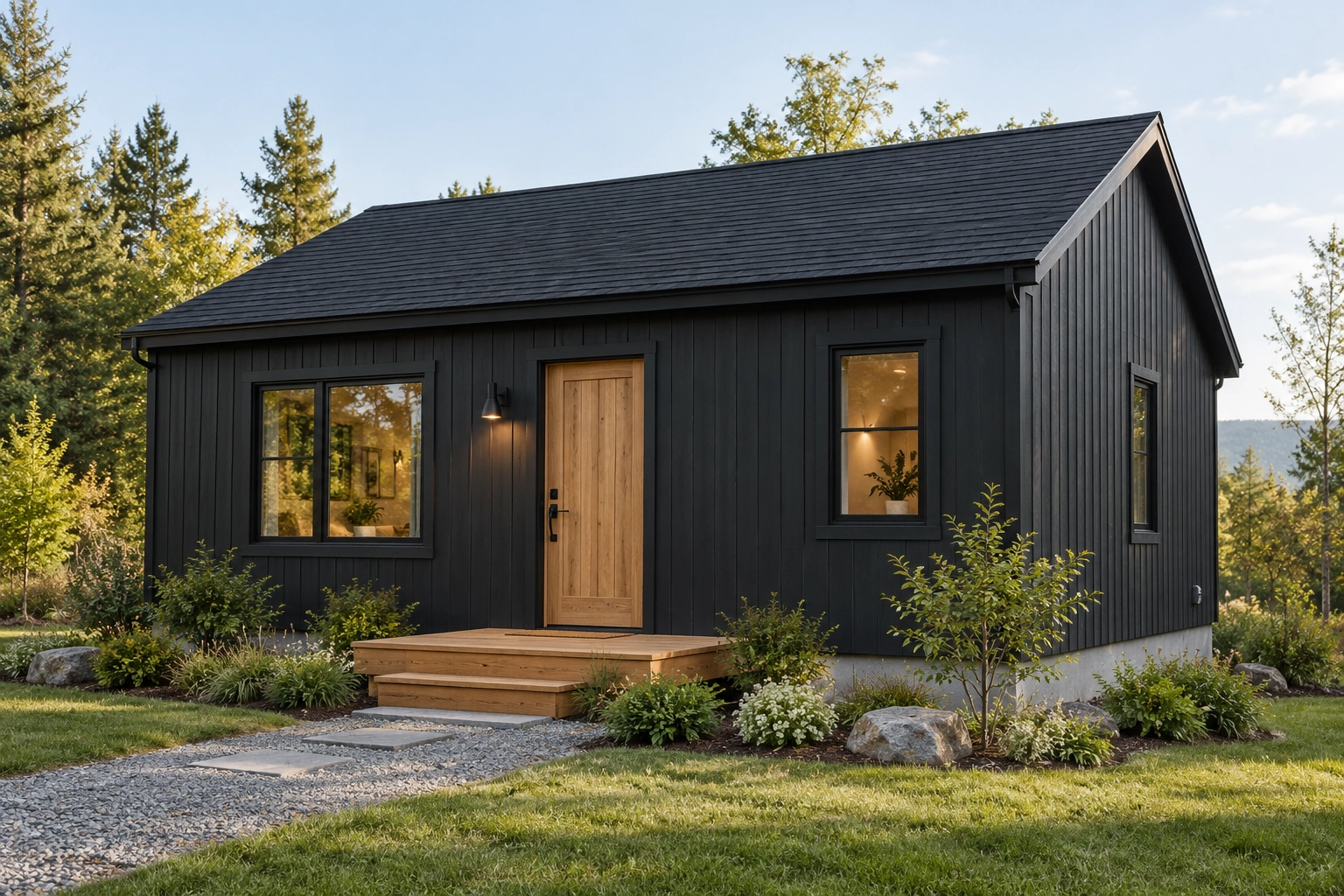
A smaller home doesn’t necessarily need a large wood-clad wall. A natural wood door paired with a compact deck or landing may provide enough warmth.
This approach keeps the exterior from becoming visually crowded while still establishing a clear relationship between the house and the outdoor living area.
8. Black House With Vertical Cedar Accent Siding
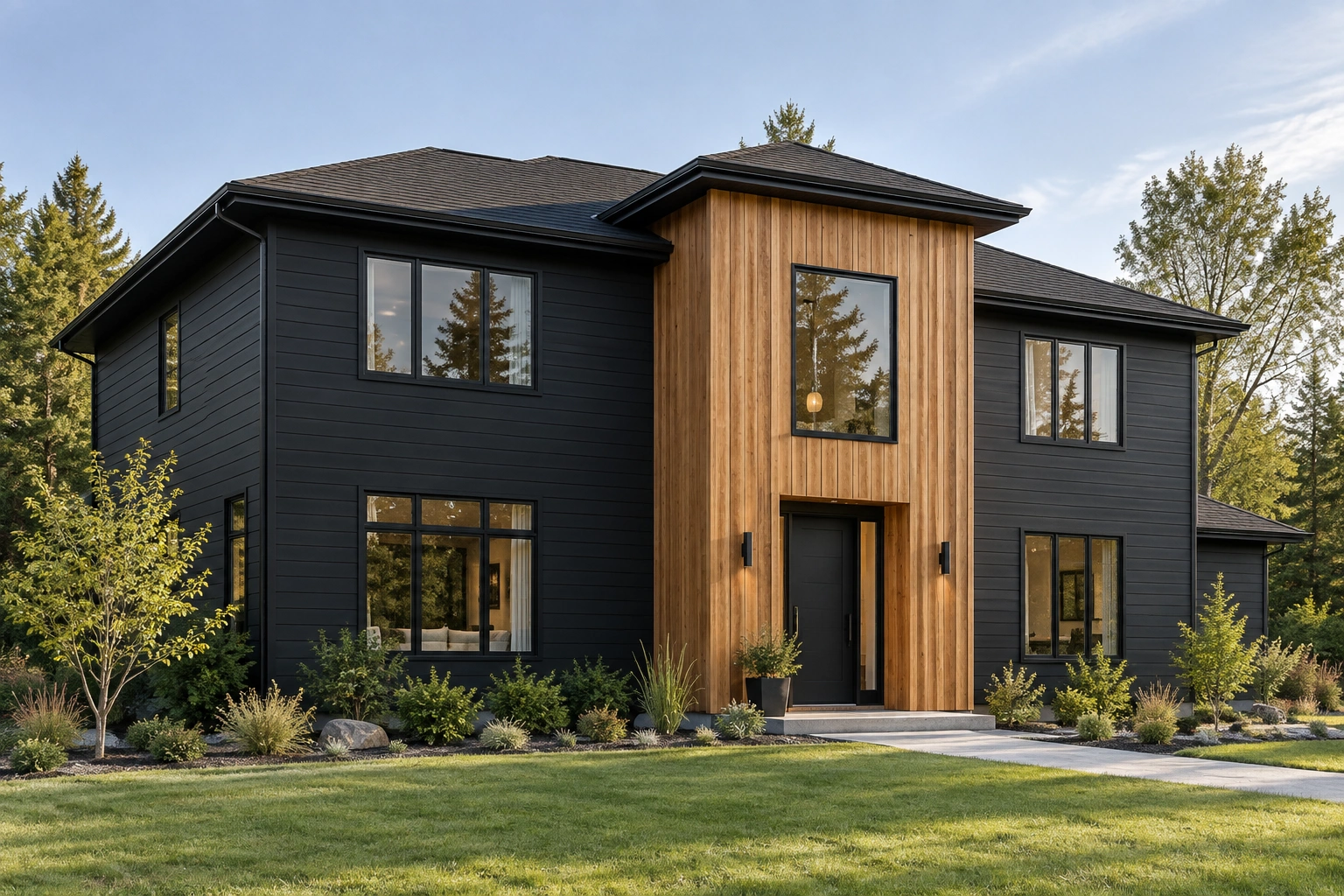
Vertical cedar boards can be used on one selected portion of the house, such as an entrance volume or upper-story section.
Against black horizontal or board-and-batten siding, the shift in both color and orientation helps divide the façade into readable sections. On larger homes, that can prevent broad dark walls from looking like one continuous block.
9. Black Exterior With Horizontal Wood Slats
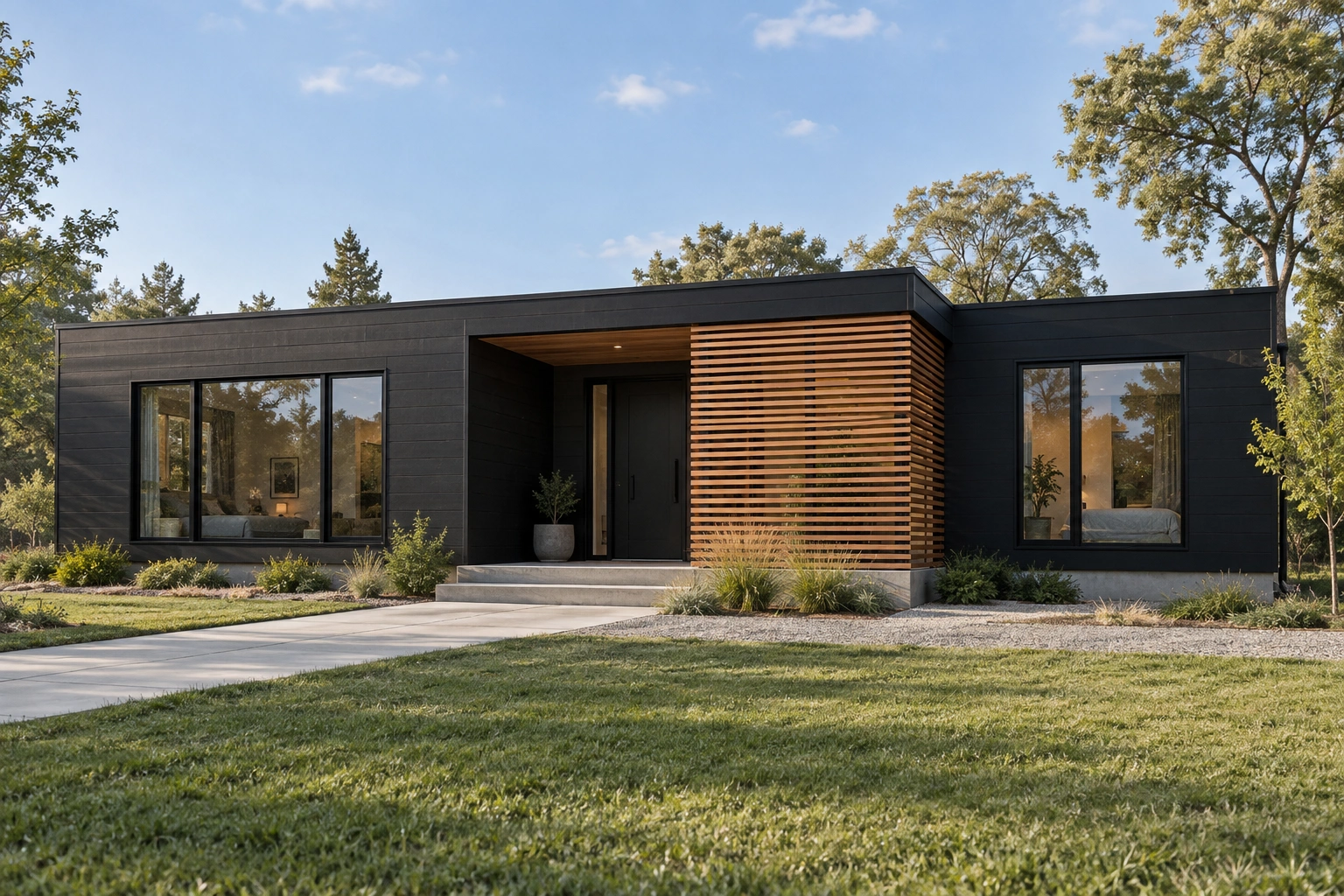
Horizontal timber slats have a lighter visual presence than full wood siding. They can work around an entry, privacy screen, porch, or selected wall section while allowing the black exterior to remain dominant.
They’re particularly effective on minimalist homes where too much traditional trim would conflict with the architecture.
10. Black House With Wood Gable Accents

A gable—the triangular wall area beneath a pitched roof—is a natural place to introduce a different material.
Using wood within one or two gables adds warmth higher on the façade and can emphasize the roof shape. Avoid automatically filling every gable with wood; repetition works best when it supports the overall composition rather than becoming a pattern for its own sake.
11. Black House With Wood and Stone
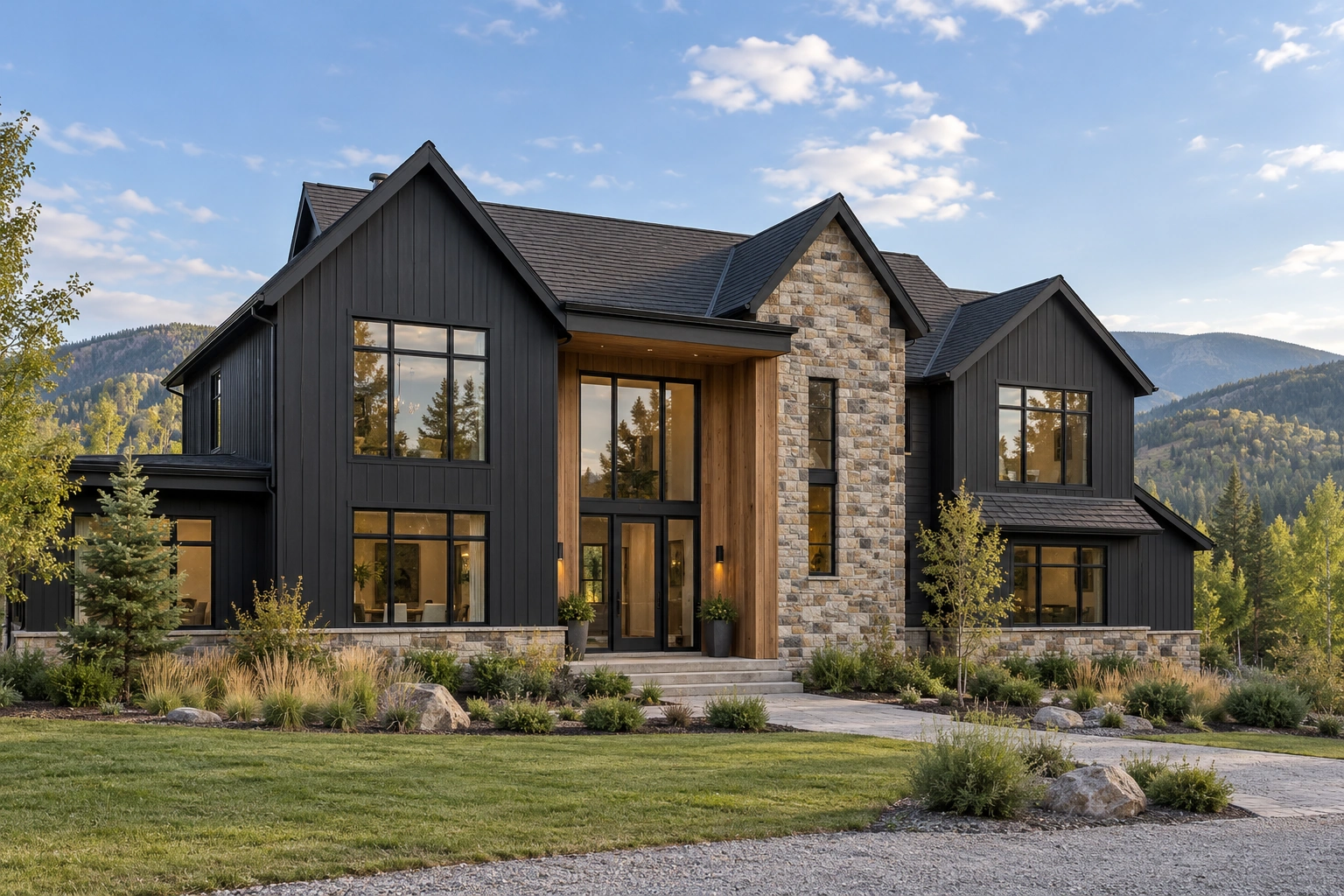
Stone introduces another layer of texture between dark siding and natural timber. The combination can suit contemporary, mountain-modern, farmhouse, and rustic-influenced homes.
The key is coordination. A wood tone with similar warm or neutral undertones to the stone usually feels more connected than an unrelated orange or red stain.
12. Black House With a Natural Wood Pergola
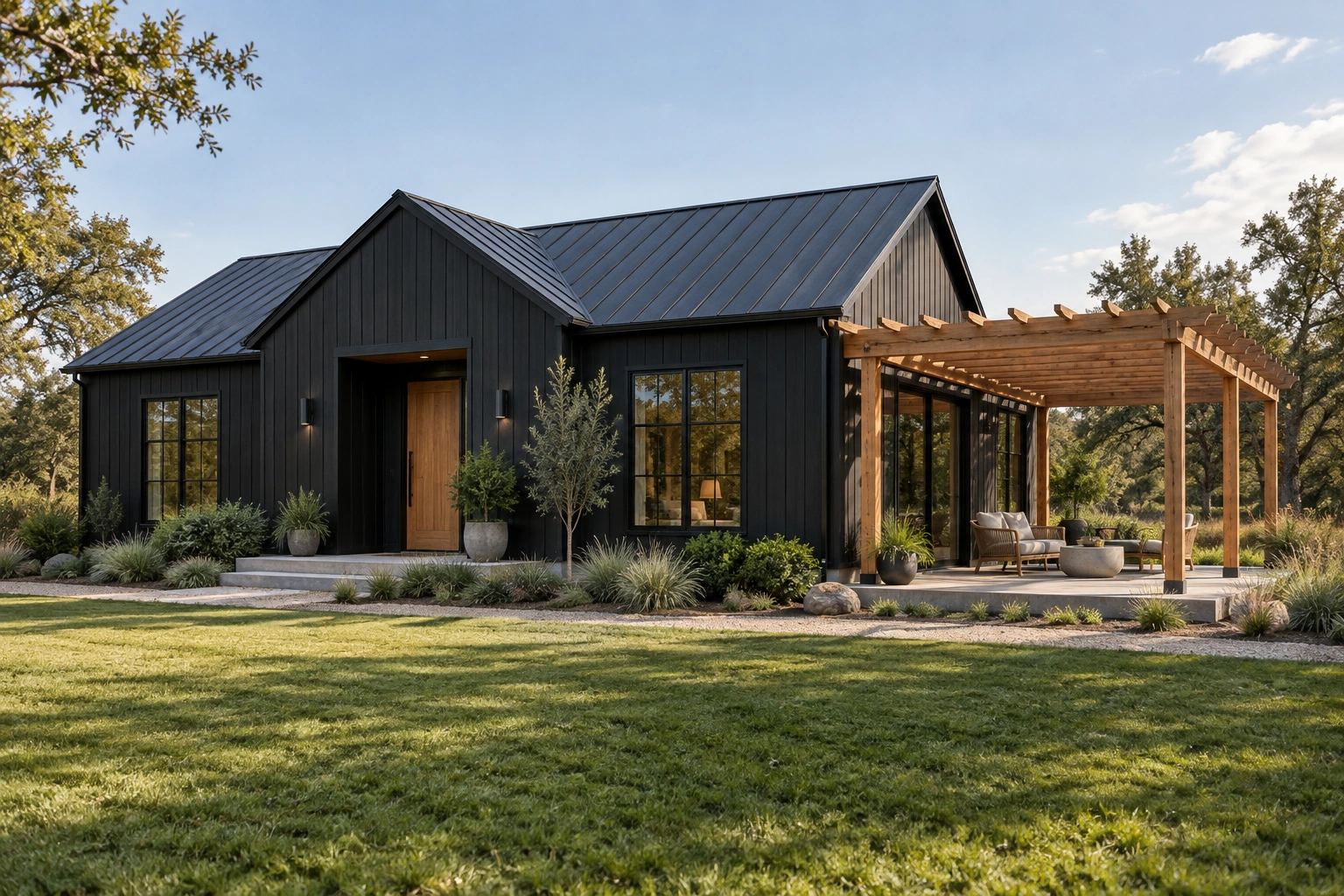
A pergola can introduce wood through the outdoor structure rather than the siding itself. Against a black house, the beams create depth and help connect the architecture with a patio or garden.
Because a pergola is a substantial exterior feature, it should feel proportionate to the house rather than added solely for color contrast.
13. Black A-Frame With Exposed Wood Beams

The strong roof geometry of an A-frame gives wood accents an obvious architectural role. Timber beams, entry details, decking, or selected soffits can reinforce the triangular form while warming the black cladding.
Keeping the timber placement aligned with the structure generally feels more convincing than adding unrelated decorative strips.
14. Scandinavian Black House With Light Wood Accents
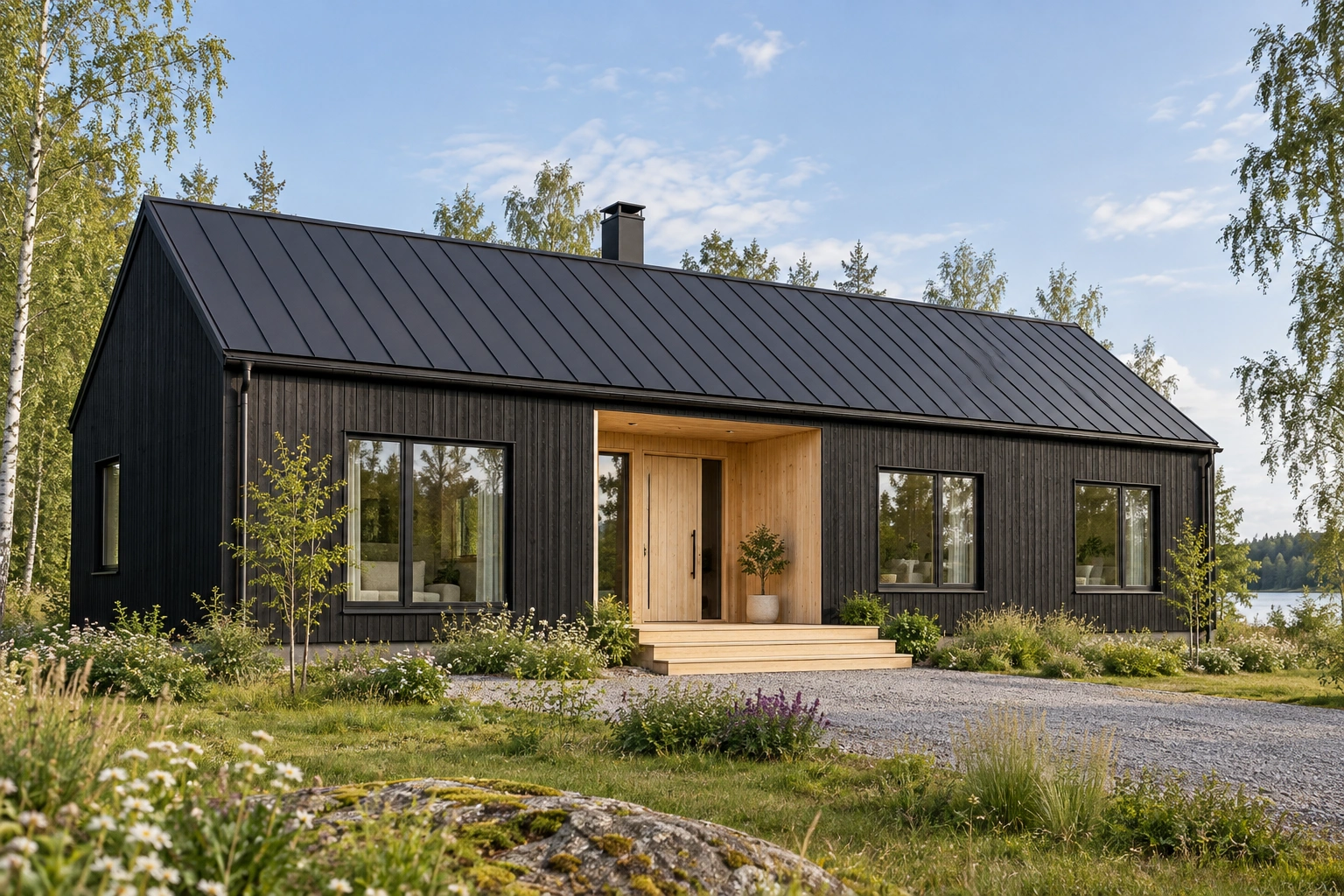
A black-and-light-wood palette fits naturally with simple Scandinavian-inspired forms. Pale or honey-toned wood around an entrance, terrace, or protected wall creates a clearer contrast than darker brown timber.
The result is strongest when the material palette remains limited and the surrounding landscaping is allowed to contribute color and softness.
15. Black Metal-Clad House With a Cedar Recessed Entry
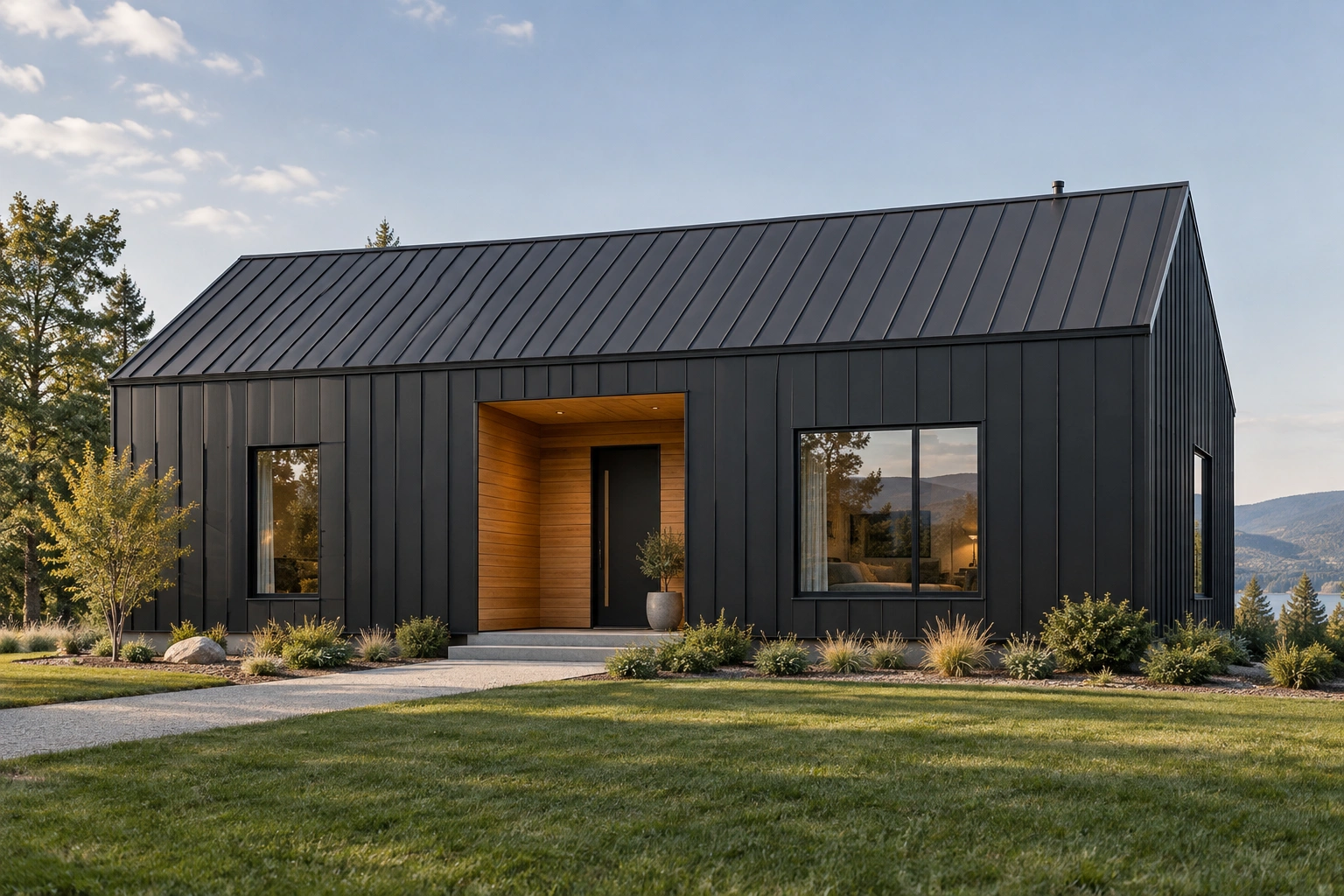
Black metal siding can look sharp and highly uniform. A cedar-lined recessed entrance introduces a completely different texture precisely where people approach the home.
Because the wood is concentrated inside the recess, it creates warmth without weakening the clean appearance of the larger metal surfaces.
16. Black House With a Wood Balcony or Deck
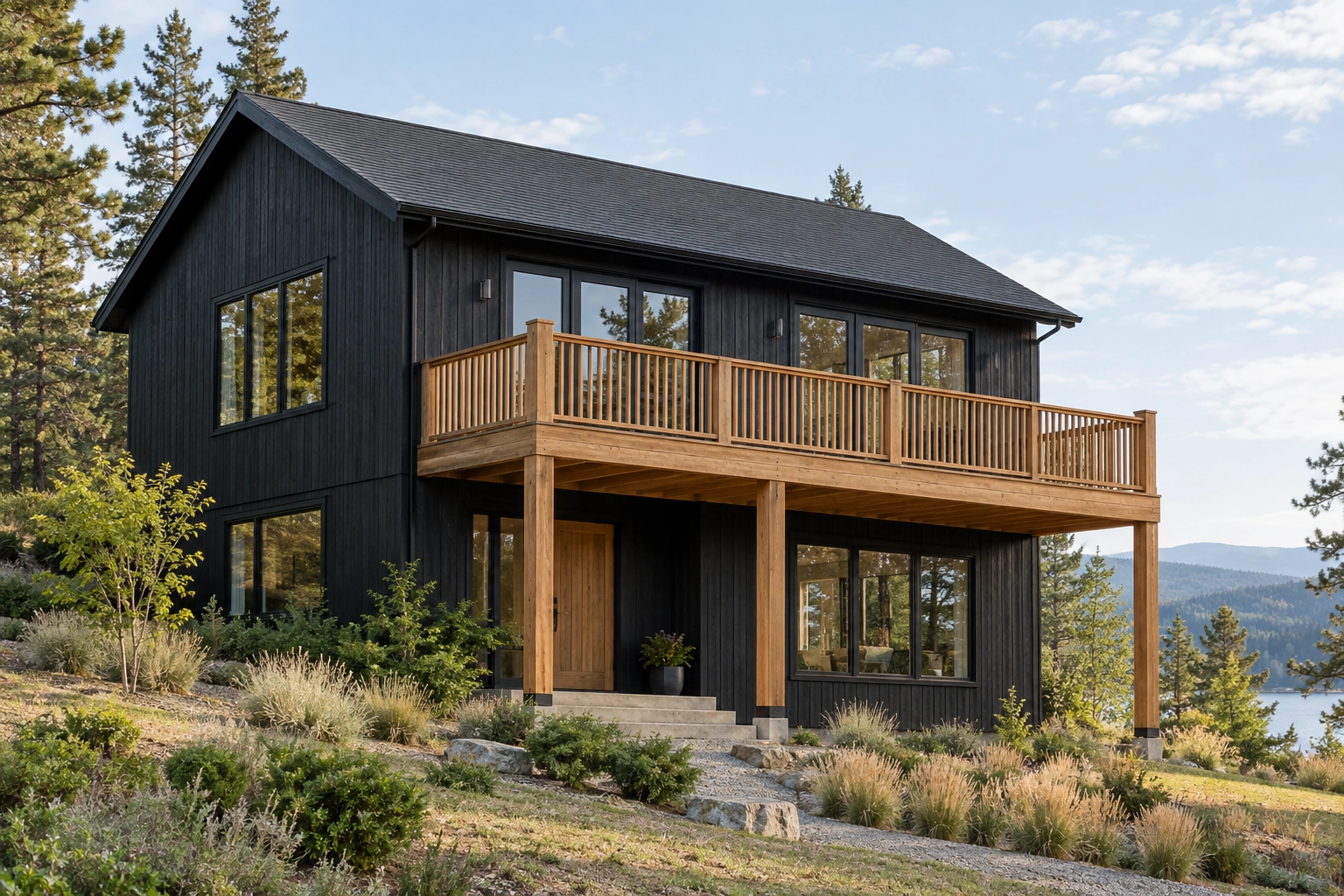
A timber balcony or deck provides both a functional and visual break from dark cladding. This works especially well on sloped sites, cabins, and two-story homes where the wood structure can become part of the elevation.
Choose a tone that connects with other exterior elements rather than introducing an entirely separate wood color.
17. Black House With Wood Accents and Green Landscaping
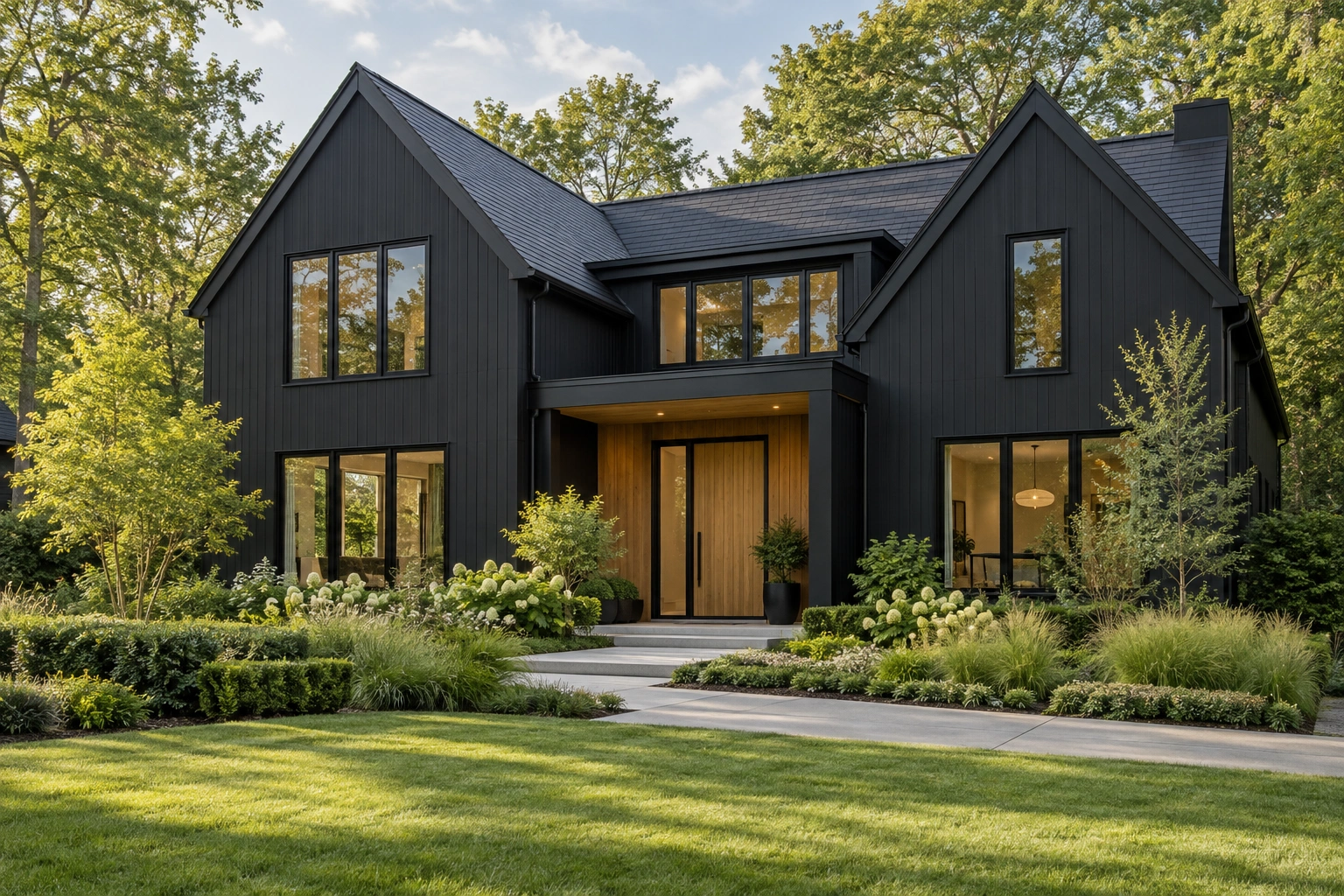
Sometimes the missing element isn’t another building material. Green shrubs, ornamental grasses, trees, and lighter hardscape can keep a black-and-wood exterior from feeling too severe.
This is particularly useful when the siding, roof, and window frames are all dark. Landscaping adds contrast across a much larger area and lets the wood remain a controlled architectural accent.
Where Should You Use Wood Accents on a Black House?
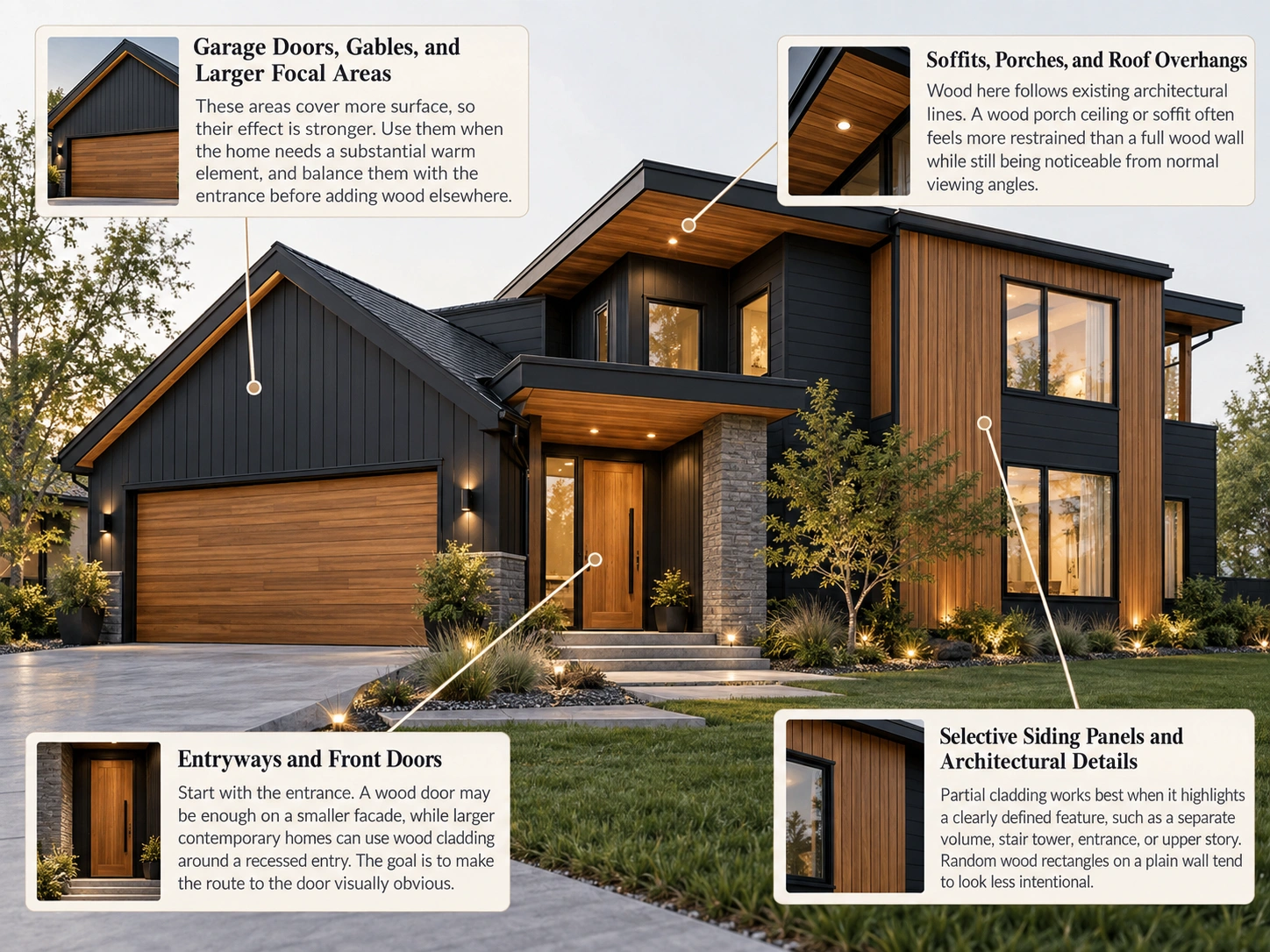
Wood accents usually work best where they highlight a feature that already matters architecturally. Entrances, garage openings, soffits, porches, gables, and selected siding sections are strong candidates because the wood helps explain the structure rather than simply decorating an empty wall.
Entryways and Front Doors
The front entrance is often the easiest place to begin. A wood door can be enough on a smaller façade, while larger contemporary homes may benefit from wood cladding around the entire recessed entry.
The goal is to make the route to the door visually obvious.
Garage Doors, Gables, and Larger Focal Areas
Garage doors and gables cover more surface area, so their effect is stronger. Use them when the home needs a substantial warm element, but check how they balance with the entrance before adding wood elsewhere.
Soffits, Porches, and Roof Overhangs
These areas allow wood to follow existing architectural lines. A wood porch ceiling or soffit can also feel more restrained than a full wood wall while still being noticeable from normal viewing angles.
Selective Siding Panels and Architectural Details
Partial cladding works best when there is a reason for the material change—a separate volume, stair tower, entrance, upper story, or other clearly defined feature.
Random rectangles of wood placed on an otherwise plain wall tend to look less intentional.
How Much Wood Is Enough on a Black Exterior?
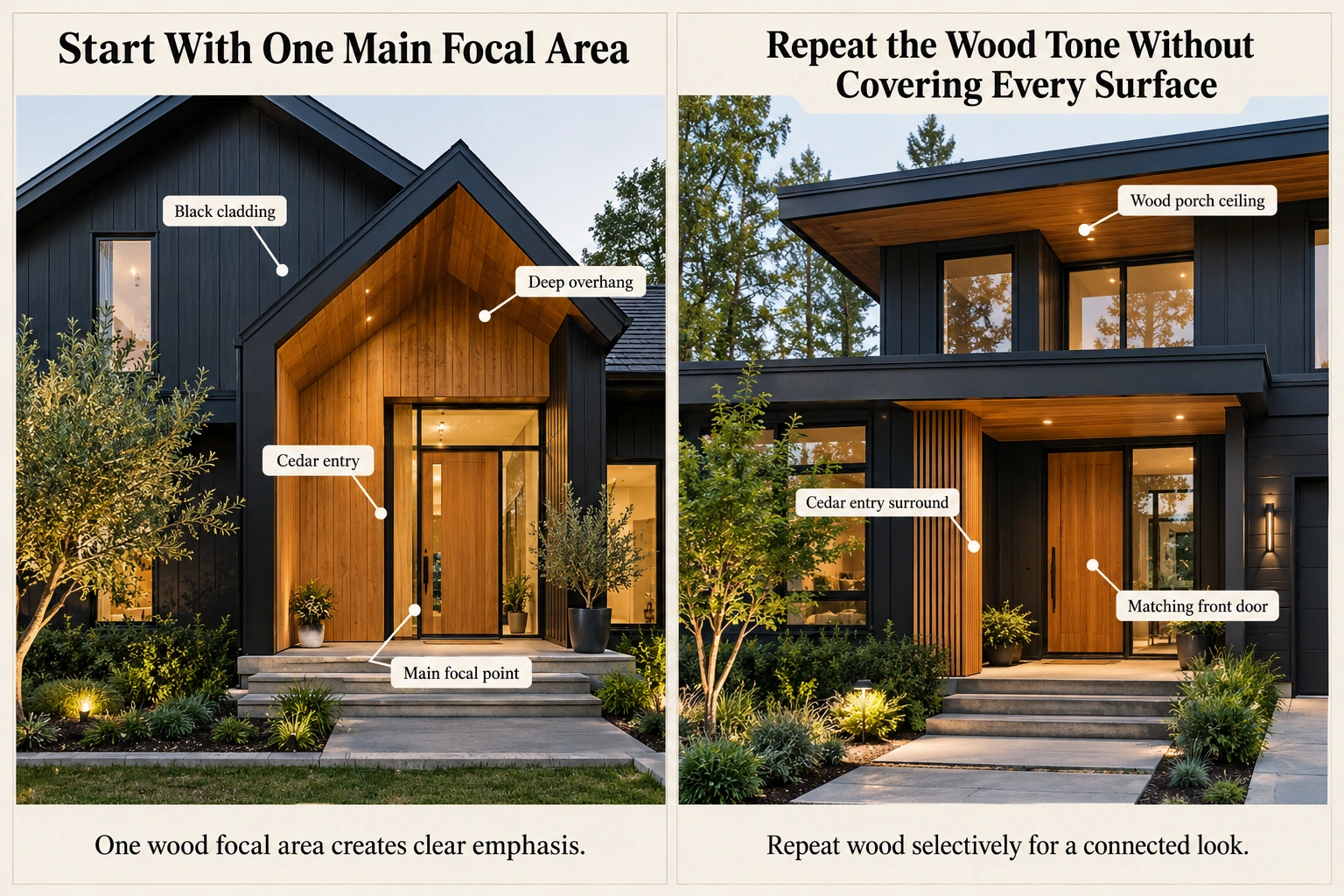
There is no universal percentage that works for every house. A better approach is to give the wood a clear focal role and then repeat it sparingly where needed. The size, architecture, roofline, existing stone or brick, and amount of black surface all affect how much wood feels balanced.
Start With One Main Focal Area
Choose the area that most needs emphasis. On one house that may be the entrance; on another, it may be a garage door or deep roof overhang.
Starting with one major feature makes it easier to judge whether another wood element would improve the design or simply create competition.
Repeat the Wood Tone Without Covering Every Surface
A cedar entry might be echoed on a porch ceiling or front door, for example. Repeating a related tone two or three times can make the design feel connected without turning the exterior into a patchwork of materials.
Choosing the Right Wood Tone and Material

The right wood should work with the black finish as well as the permanent features already on the property. Roof shingles, stone, brick, windows, paving, and surrounding landscape all influence how a wood tone reads.
Light and Honey-Toned Wood for Strong Contrast
Light woods and warm honey or cedar tones stand out clearly against black. They work well when the design needs a noticeable warm focal point, particularly around an entrance or under a roof overhang.
Medium and Dark Wood for a More Subtle Look
Deeper brown wood creates less contrast and can suit homes where the goal is a quieter, more tonal exterior. It may also coordinate more easily with brown-gray masonry or an existing dark roof.
Always compare samples outdoors. Black, charcoal, wood stain, and masonry can look noticeably different in direct sun, shade, and overcast light.
Cedar and Other Exterior Wood Options
Cedar is popular because of its visible grain and warm color, but it isn’t the only option. Fir, pine, thermally modified wood, and other exterior-suitable products can create different appearances.
Material selection should consider where the wood will be installed, how exposed it will be, the intended finish, and the amount of maintenance the homeowner is comfortable with.
Match the Black and Wood to the Rest of the Exterior
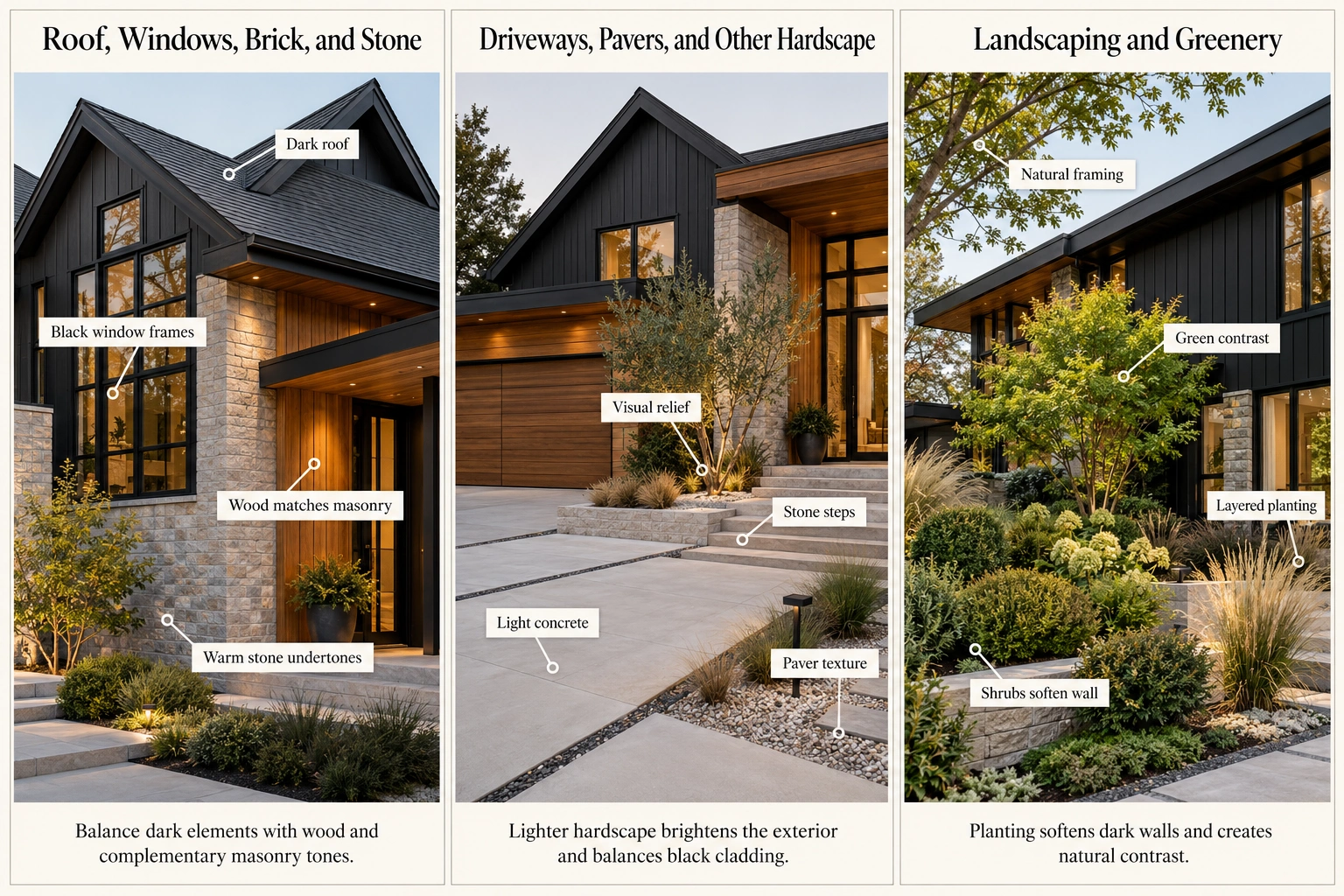
A black-and-wood palette should work with the house you already have, not against it. Features that are expensive or difficult to change deserve attention before siding or stain colors are finalized.
Roof, Windows, Brick, and Stone
A house with black windows and a dark roof already contains a considerable amount of dark material. Wood, masonry, or lighter details may therefore need to carry more of the contrast.
With existing brick or stone, look closely at its undertones before selecting a stain. Wood that relates to those warm, cool, or neutral notes usually produces a more cohesive result.
Driveways, Pavers, and Other Hardscape
Concrete, pale gravel, stone steps, and pavers influence the overall color balance. Lighter surfaces near a dark house can provide visual relief without requiring additional siding colors.
Landscaping and Greenery
Green foliage provides natural contrast to both black siding and warm timber. Layered planting also softens large wall surfaces and helps a dark house sit more comfortably within its surroundings.
Practical Things to Consider Before Choosing a Black Exterior
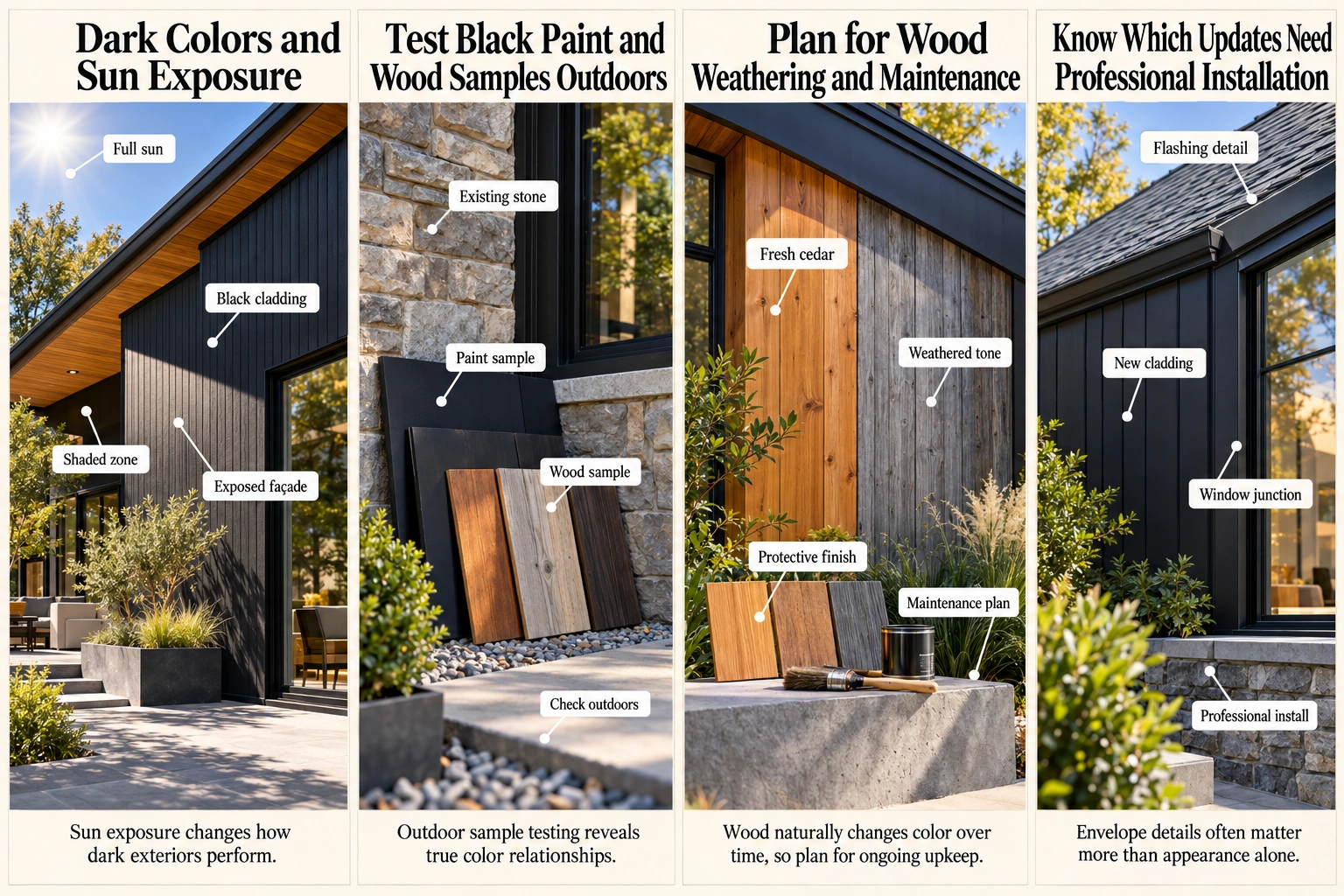
Black siding is a design decision, but it’s also an exterior material decision. Sun exposure, existing construction, finish performance, and future maintenance should be considered alongside appearance.
Dark Colors and Sun Exposure
Dark surfaces generally absorb more solar energy than lighter ones. What that means for a specific house depends on climate, orientation, shading, insulation, the wall assembly, and the type of cladding.
For a highly exposed façade in a hot climate, material and finish choices deserve more attention than they might on a shaded elevation.
Test Black Paint and Wood Samples Outdoors
A small paint chip viewed indoors isn’t enough to judge an exterior combination.
Place larger samples near the existing roof, stone, brick, or windows and look at them at different times of day. A black that appears neutral in one setting may read warmer, cooler, softer, or more charcoal outdoors.
Plan for Wood Weathering and Maintenance
Natural exterior wood changes with exposure. Unfinished cedar, for example, will not necessarily keep the fresh honey or reddish tone seen immediately after installation.
If retaining a particular wood color matters to the design, choose the finishing approach with future maintenance in mind rather than treating the original color as permanent.
Know Which Updates Need Professional Installation
Changing a front door finish is very different from installing new siding or structural-looking beams. Work involving exterior cladding, flashing, waterproofing, windows, roof intersections, or structural components should be planned and installed appropriately.
The appearance matters, but keeping the building envelope properly detailed matters more.
Common Black-and-Wood Exterior Mistakes to Avoid
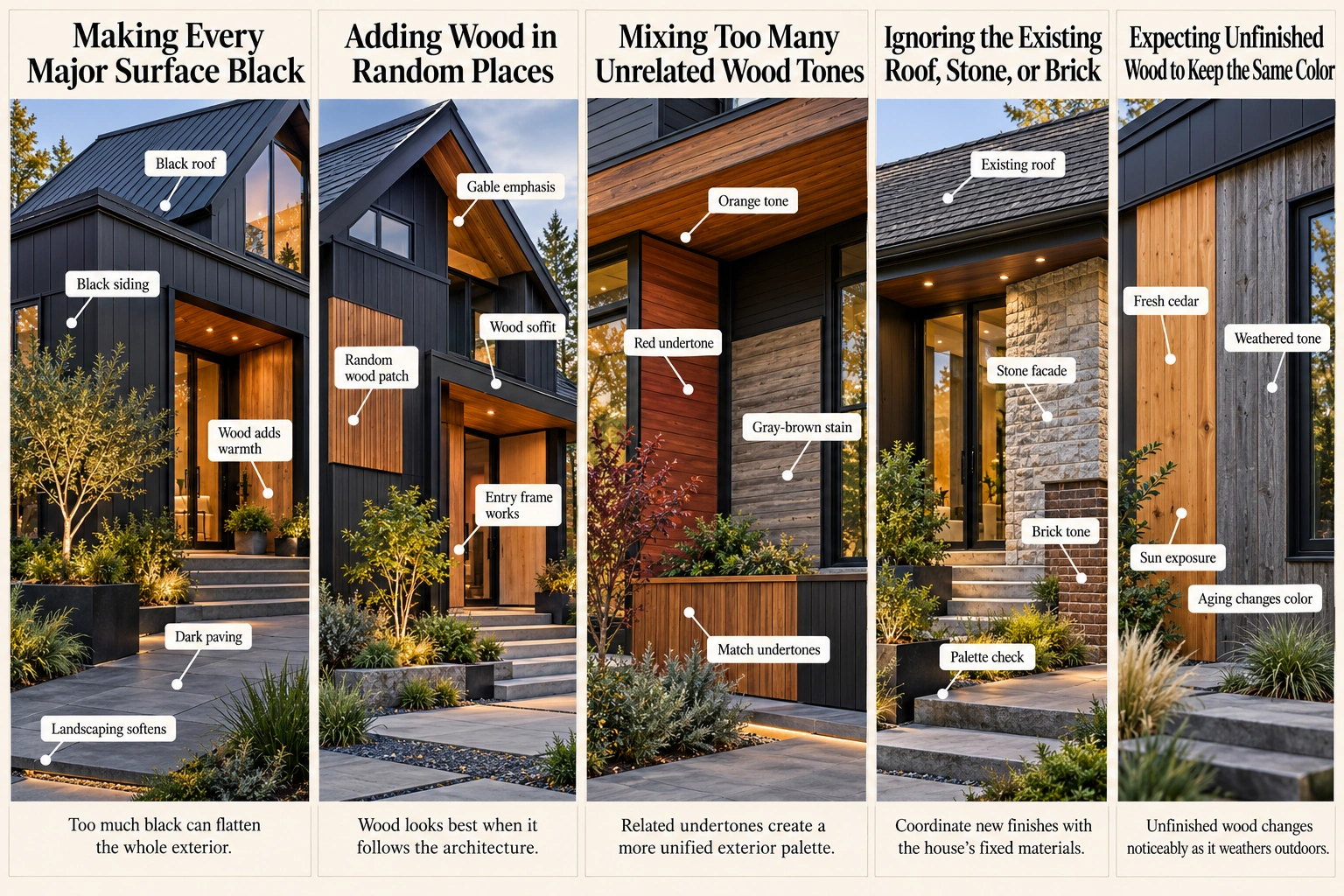
Making Every Major Surface Black
Black siding, black roofing, black trim, black windows, and dark paving can merge into one heavy composition. That doesn’t automatically make the combination wrong, but the home may need wood, masonry, glass, landscaping, or lighter ground surfaces to maintain definition.
Adding Wood in Random Places
Wood usually looks more convincing when it follows architecture. Use it to frame an entry, line a soffit, emphasize a gable, or distinguish another logical feature rather than filling an arbitrary empty section.
Mixing Too Many Unrelated Wood Tones
One wood doesn’t need to match another perfectly, but several noticeably different orange, red, gray, and brown finishes can make the exterior feel disconnected.
Aim for related undertones, especially where the accents can be seen together.
Ignoring the Existing Roof, Stone, or Brick
An inspiration photo may show the right siding but completely different fixed materials. Treat the photo as a starting point, then make the palette work with the actual house.
Expecting Unfinished Wood to Keep the Same Color
Fresh cedar and naturally weathered cedar can look very different. Decide whether aging and color change are acceptable before using the original wood tone as an essential part of the design.
Small Design Details That Make Black and Wood Exteriors Feel Finished
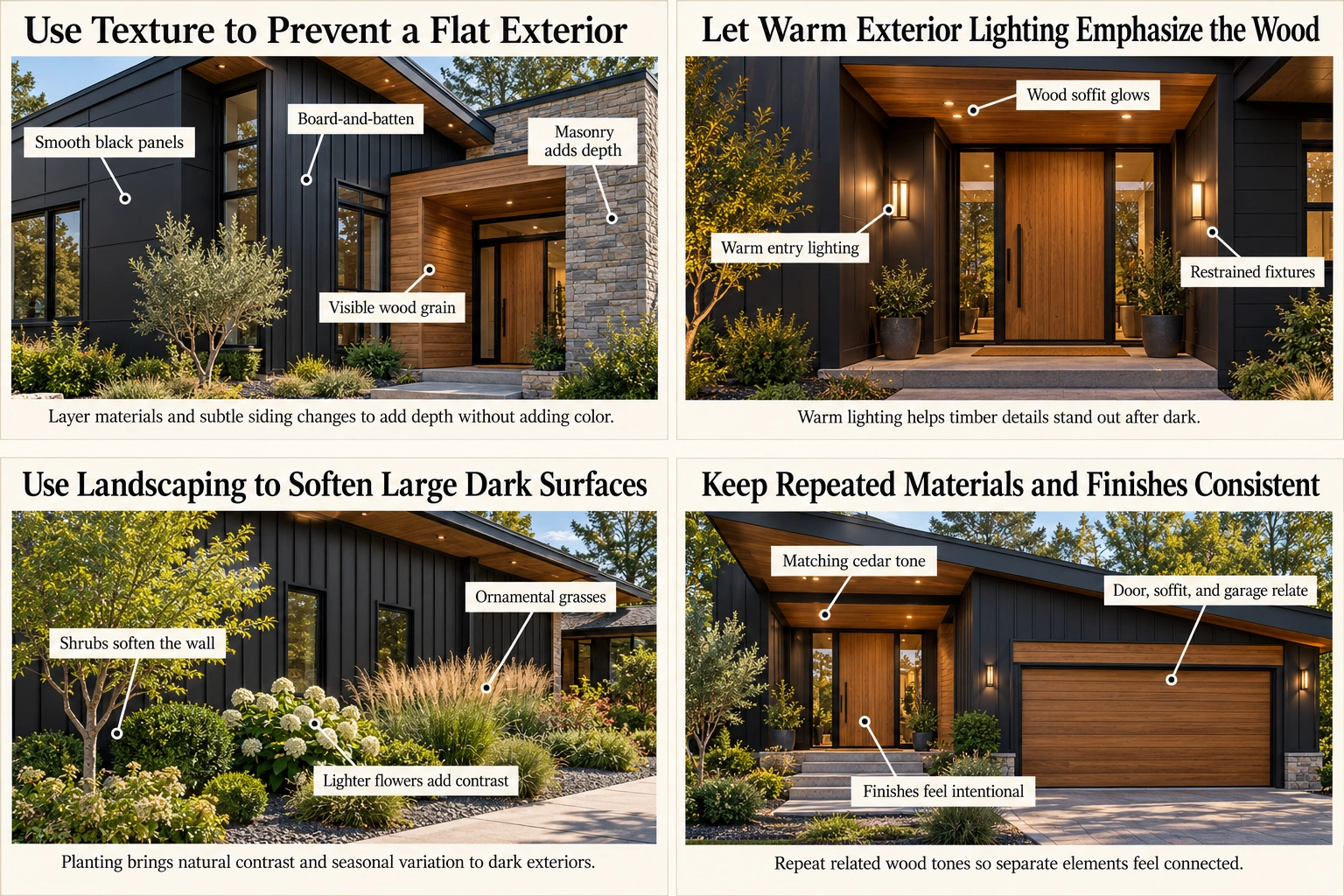
Use Texture to Prevent a Flat Exterior
Combining smooth black panels, board-and-batten siding, visible wood grain, masonry, or subtle changes in siding orientation can give the façade more depth without adding extra colors.
Let Warm Exterior Lighting Emphasize the Wood
Warm-looking porch and entry lighting can make timber details more visible after dark, particularly inside recessed entrances and beneath wood soffits.
Keep fixtures restrained so the lighting supports the architecture rather than becoming another competing feature.
Use Landscaping to Soften Large Dark Surfaces
Shrubs, grasses, trees, and lighter flowers are particularly useful beside long black walls. They provide seasonal variation and natural contrast without changing the core black-and-wood palette.
Keep Repeated Materials and Finishes Consistent
A repeated cedar tone on the front door, soffit, and garage can make separate areas feel connected. That doesn’t mean every surface needs an exact match, but the finishes should look intentionally related.
FAQs
What Wood Looks Best With a Black House?
Warm woods such as cedar are commonly paired with black because their natural brown, honey, or reddish tones create clear contrast. Lighter wood gives a stronger contrast, while medium or dark brown wood produces a more restrained appearance. The best choice also depends on the roof, masonry, exposure, architecture, and desired maintenance level.
Does Cedar Look Good With Black Siding?
Yes. Cedar can work particularly well with black siding because its visible grain and warm coloring soften large dark surfaces. It’s most effective when used on purposeful architectural features such as an entry, garage door, soffit, porch, or selected wall section rather than scattered randomly across the façade.
What Stain Color Works With a Black Exterior?
Natural, honey, medium brown, and deeper warm-brown stains can all work with black. A lighter stain creates stronger contrast; darker brown creates a quieter effect. Test the stain beside the actual black siding and existing roof or masonry before deciding because outdoor light can change both colors.
Does Cedar Turn Gray Outside?
Unfinished cedar can gradually weather toward gray as it is exposed outdoors. The appearance may also vary according to sun and moisture exposure. Homeowners who want to preserve more of the original warm cedar color should consider an appropriate exterior finish and understand that maintaining a particular appearance may require future upkeep.
Can You Add Wood Accents Without Replacing All the Siding?
Yes. A wood front door, porch ceiling, soffit, garage door, small gable, entry surround, or selective section of cladding can introduce the black-and-wood look without replacing every wall surface. These smaller changes can be especially practical when the existing siding is still in good condition.
Do All Exterior Wood Accents Need to Match?
They don’t need to be identical, but they should usually relate in color and undertone. A front door and soffit can vary slightly while still looking coordinated. Problems tend to appear when several unrelated red, orange, gray, and dark-brown woods are visible at the same time.
Are Black House Exteriors Practical in Hot Climates?
They can be, but dark exterior surfaces absorb more solar energy than lighter ones. The actual effect on a home depends on factors including sun exposure, orientation, shading, insulation, wall construction, and cladding. In hot, highly exposed conditions, those factors should be considered before choosing a very dark finish.
Final Thoughts
A black exterior and natural wood work best as a partnership rather than a formula. Black gives the house definition and depth; wood can warm the areas that deserve attention and make the architecture easier to read.
Start with the house itself—its roofline, entrance, windows, masonry, proportions, and surroundings. Then choose one meaningful place for wood and build the rest of the palette around it. That usually creates a more convincing black house with wood accents than simply adding timber wherever there happens to be space.
Disclaimer
This content is for general informational and inspiration purposes only. Every home, budget, preference, climate, and project is different. For structural changes, major installations, repairs, electrical, plumbing, HVAC, legal, or other safety-related work, consult an appropriately qualified professional.