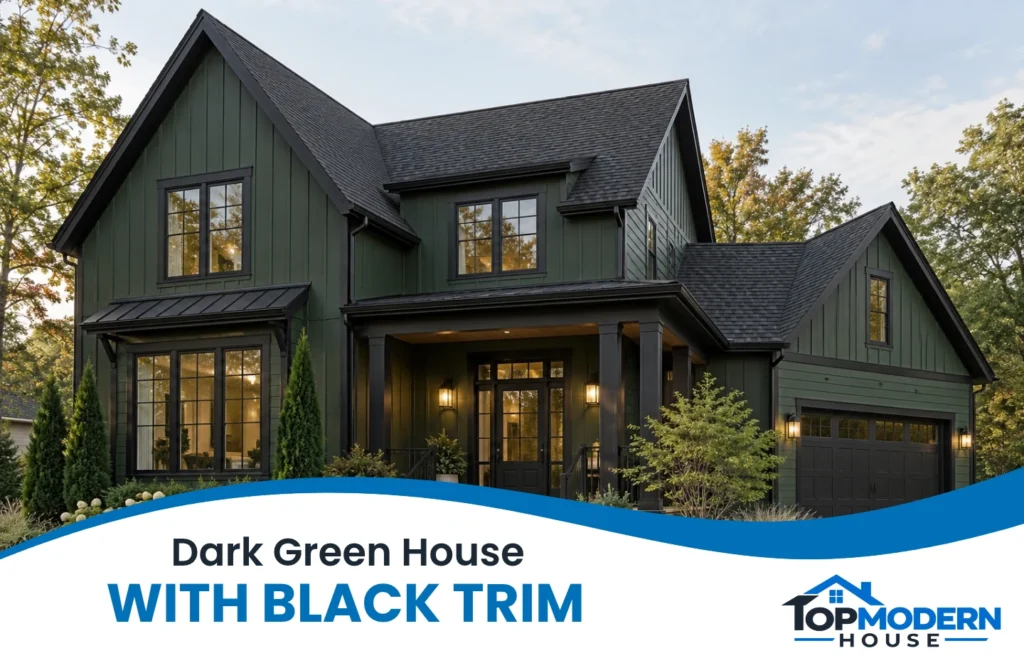
A dark green house with black trim can look rich, grounded, and sharply defined, but the palette works best when the darker colors don’t compete for attention. The green should usually carry the exterior, while black gives structure to windows, doors, rooflines, railings, or selected trim.
The details around those colors matter just as much. An existing roof, brick foundation, stonework, black-framed windows, natural daylight, and even a large garage door can change how the combination reads from the street.
These 15 ideas show different ways to use the palette while keeping the exterior balanced rather than simply making every surface darker.
Short Definition
A dark green house with black trim pairs deep green siding with black architectural accents to create contrast and definition while using materials, lighting, and landscaping to keep the exterior balanced.
Topmodrenhouse Mission Statement
Topmodrenhouse helps homeowners, renters, and home lovers make practical, stylish, and informed choices that create more comfortable and functional living spaces.
Quick Exterior Planning Checklist
- Check the green against your existing roof, brick, and stone.
- Compare forest, hunter, olive, and deeper green undertones.
- Decide which features genuinely need black accents.
- Avoid making every trim element black by default.
- Use wood, stone, or lighter surfaces to balance dark colors.
- Consider how the façade looks in both sun and shade.
- Make sure the front entry remains visually distinct.
- Test physical color samples on the actual exterior before committing.
- Check manufacturer requirements before applying very dark paint to manufactured siding or trim.
15 Dark Green House With Black Trim Ideas
1. Forest Green Siding With Matte Black Windows
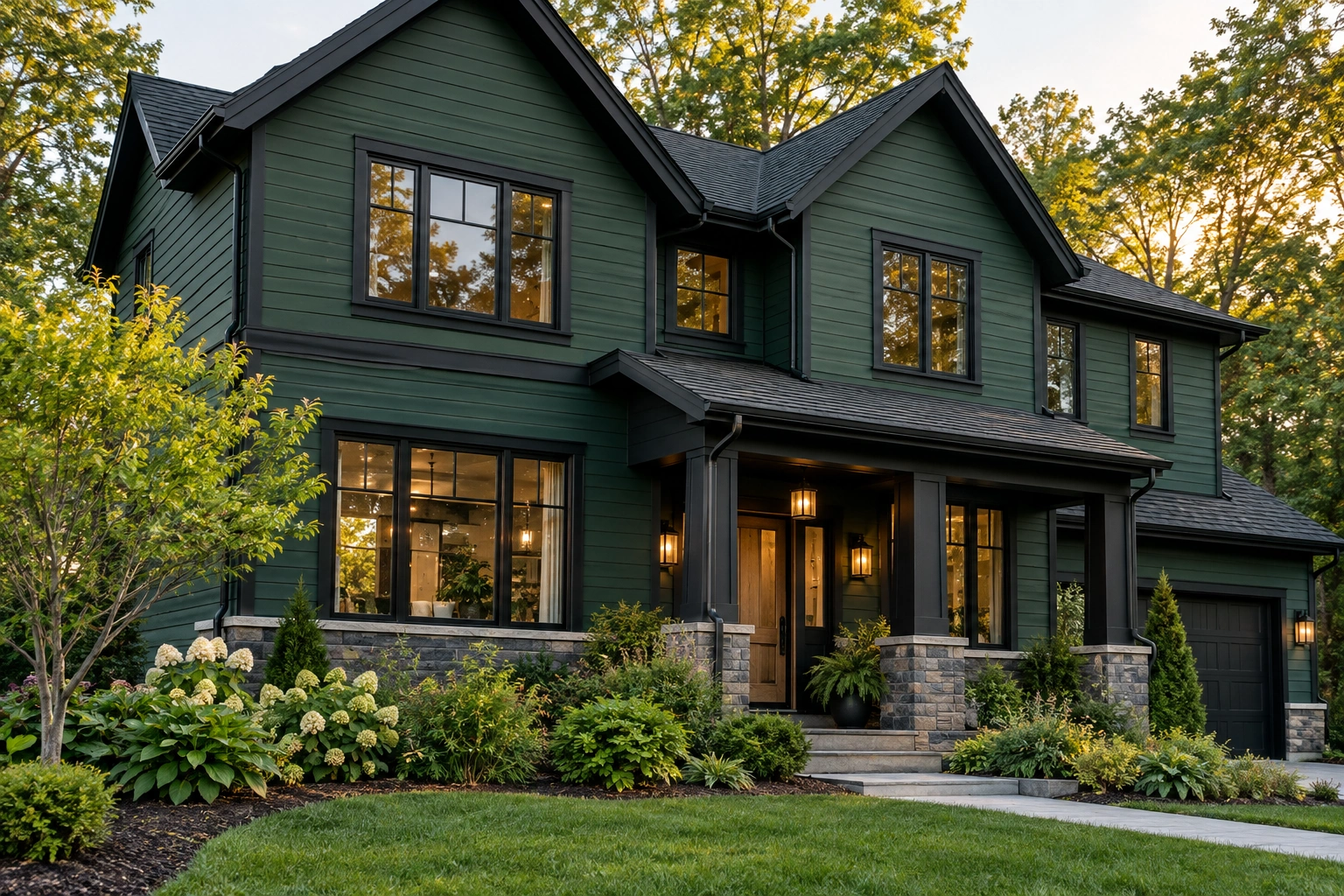
Forest green siding and black-framed windows create one of the cleanest versions of this color scheme. The green still has enough color to separate itself from the window frames, while black gives each opening a crisp outline.
This combination works especially well when the rest of the exterior stays restrained. A wood door, pale concrete steps, or modest stonework can provide just enough warmth without distracting from the green-and-black pairing.
2. Dark Olive Green With Black Trim and Warm Wood

Dark olive has warmer, earthier undertones than many forest greens, which makes it a natural partner for cedar, stained timber, or a wood front door.
Black trim keeps the combination from leaning too rustic. Use the wood selectively around the entrance, porch, beams, or garage rather than adding it everywhere. That gives the exterior three clear roles: olive as the main color, black for definition, and wood for warmth.
3. Hunter Green With Black Shutters
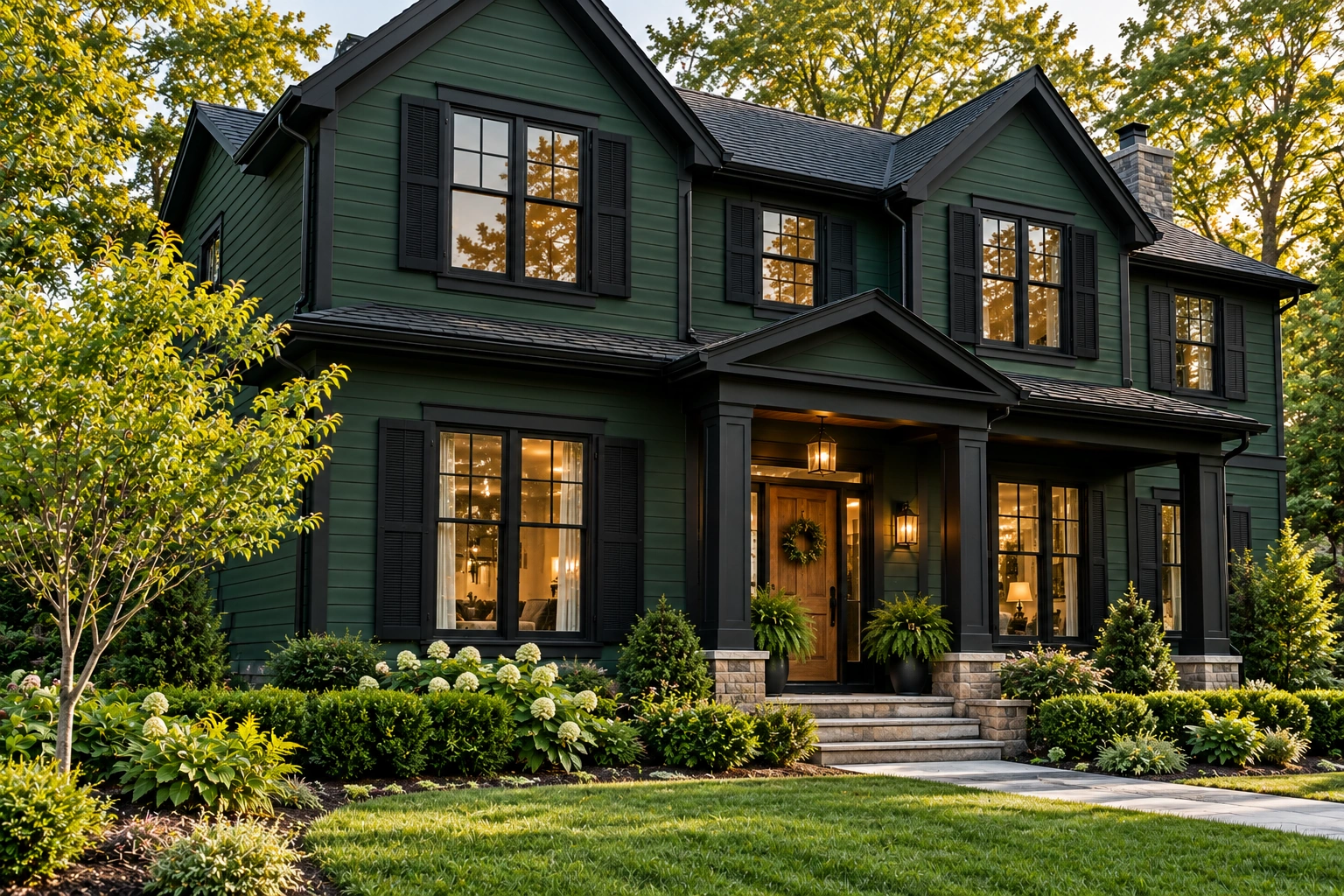
Hunter green already has a traditional character, so black shutters can give it more structure without completely modernizing the house.
This works particularly well on façades where shutters are meaningful architectural features rather than decorative pieces added to every window. Keep the surrounding trim simpler so the shutters remain intentional focal points.
4. Dark Green Board-and-Batten With Black Trim
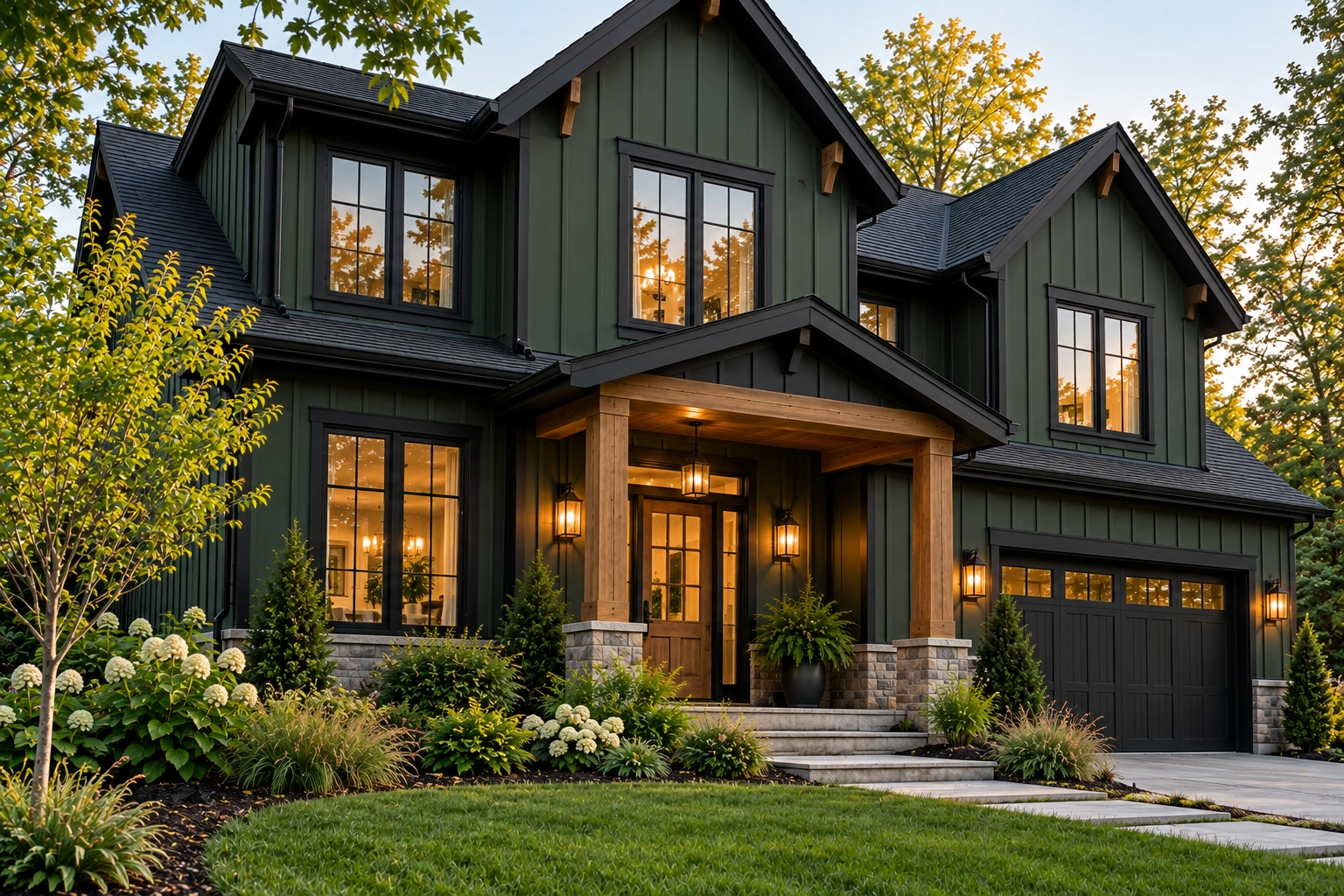
Vertical board-and-batten siding naturally emphasizes height. Black windows, lighting, or fascia can reinforce that geometry without requiring every trim board to be black.
On a modern farmhouse or contemporary home, this creates a cleaner result than adding several contrasting colors. A lighter porch floor or natural wood entry can prevent the lower part of the façade from feeling too dense.
5. Dark Green House With a Black Metal Roof
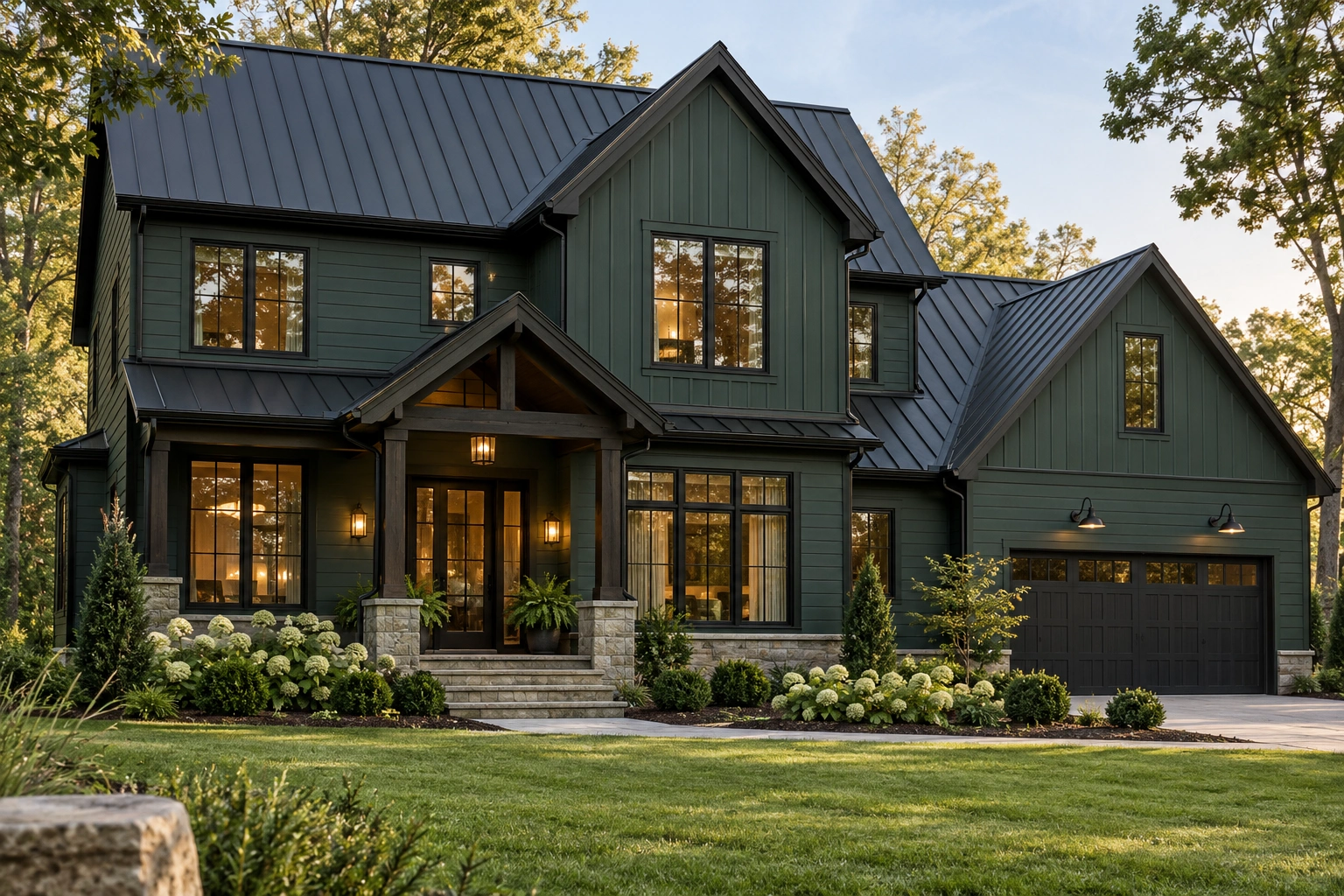
A black metal roof can make dark green siding feel especially cohesive because the roof and trim read as related elements.
The key is watching the total amount of darkness. On a home with a large visible roof, black roofing already carries significant visual weight. Keeping the door, porch floor, masonry, or landscaping lighter can help the siding remain distinct.
6. Dark Green and Black With Light Stone Accents
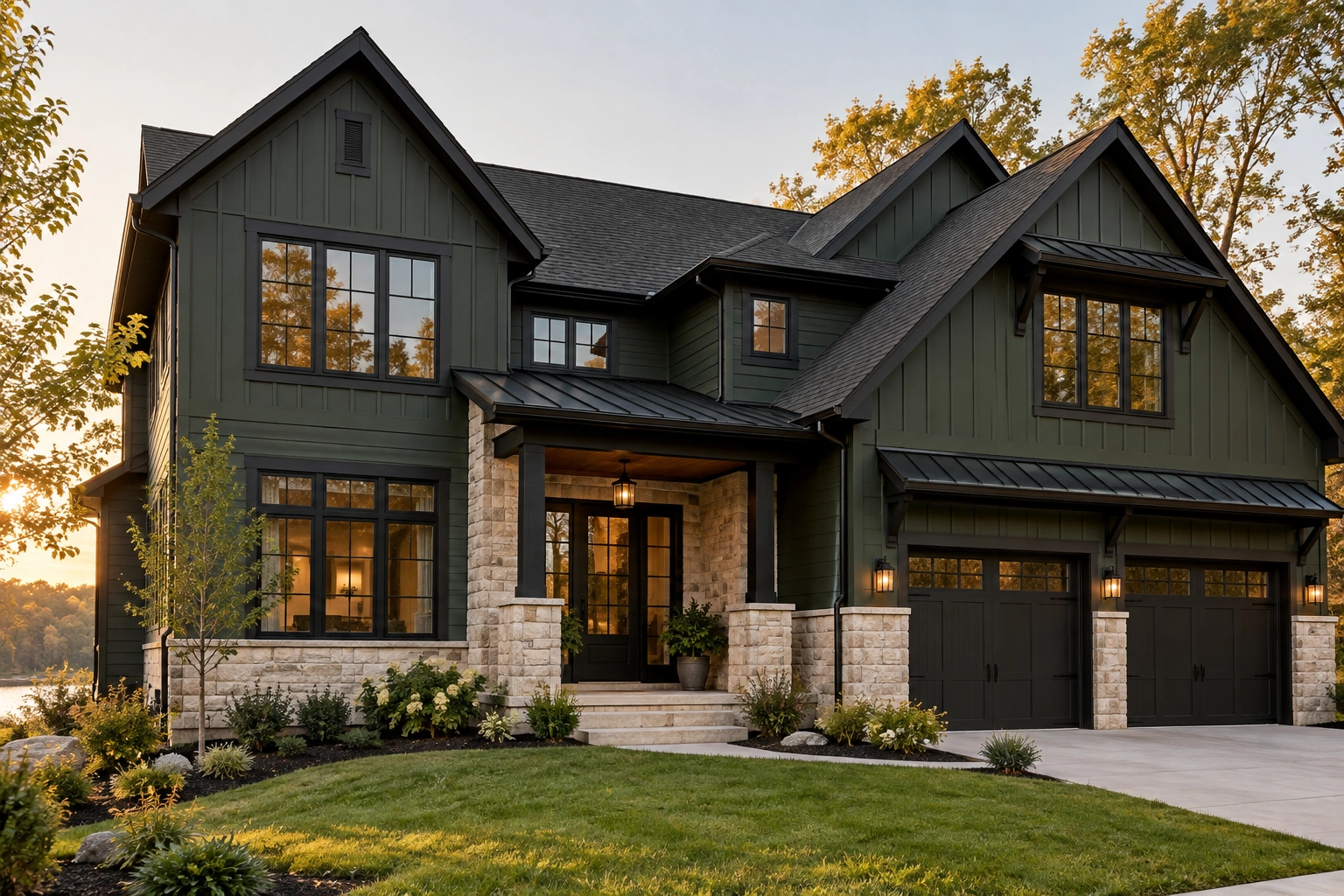
Light or medium-toned stone is useful when green siding and black trim need more separation.
Instead of introducing another strong painted color, stone adds natural variation through texture. Cream, beige, taupe, and some soft gray stones can all work, but the undertones should relate to the chosen green rather than being selected independently.
7. Dark Green With Black Trim and Natural Brick

Existing brick doesn’t have to be painted simply because the siding changes.
Red, brown, tan, or muted brick can provide useful warmth beside deep green and black. Before choosing the green, compare samples directly against the brick. A green that looks balanced on a paint card may appear noticeably cooler or warmer once it sits beside masonry.
8. Dark Green Craftsman With Black Architectural Details
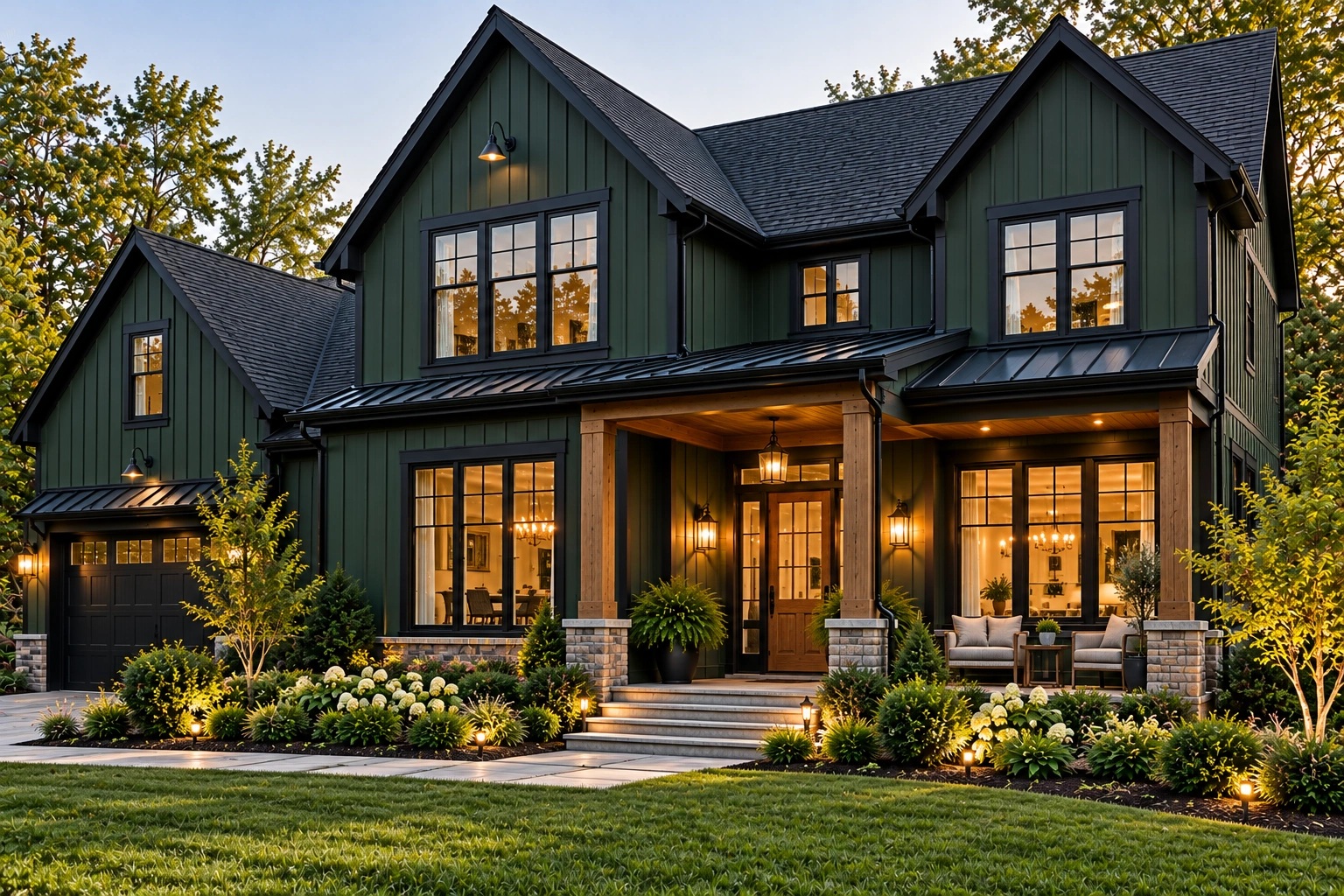
Craftsman homes usually have enough visible structure that black can be used selectively rather than across every edge.
Black railings, windows, lighting, or small roof details can frame the architecture while allowing porch columns, stone piers, woodwork, and green siding to keep their own identities.
This approach tends to feel more considered than outlining every fascia board, window, and porch component in the same dark color.
9. Dark Green Modern Farmhouse With Black Windows
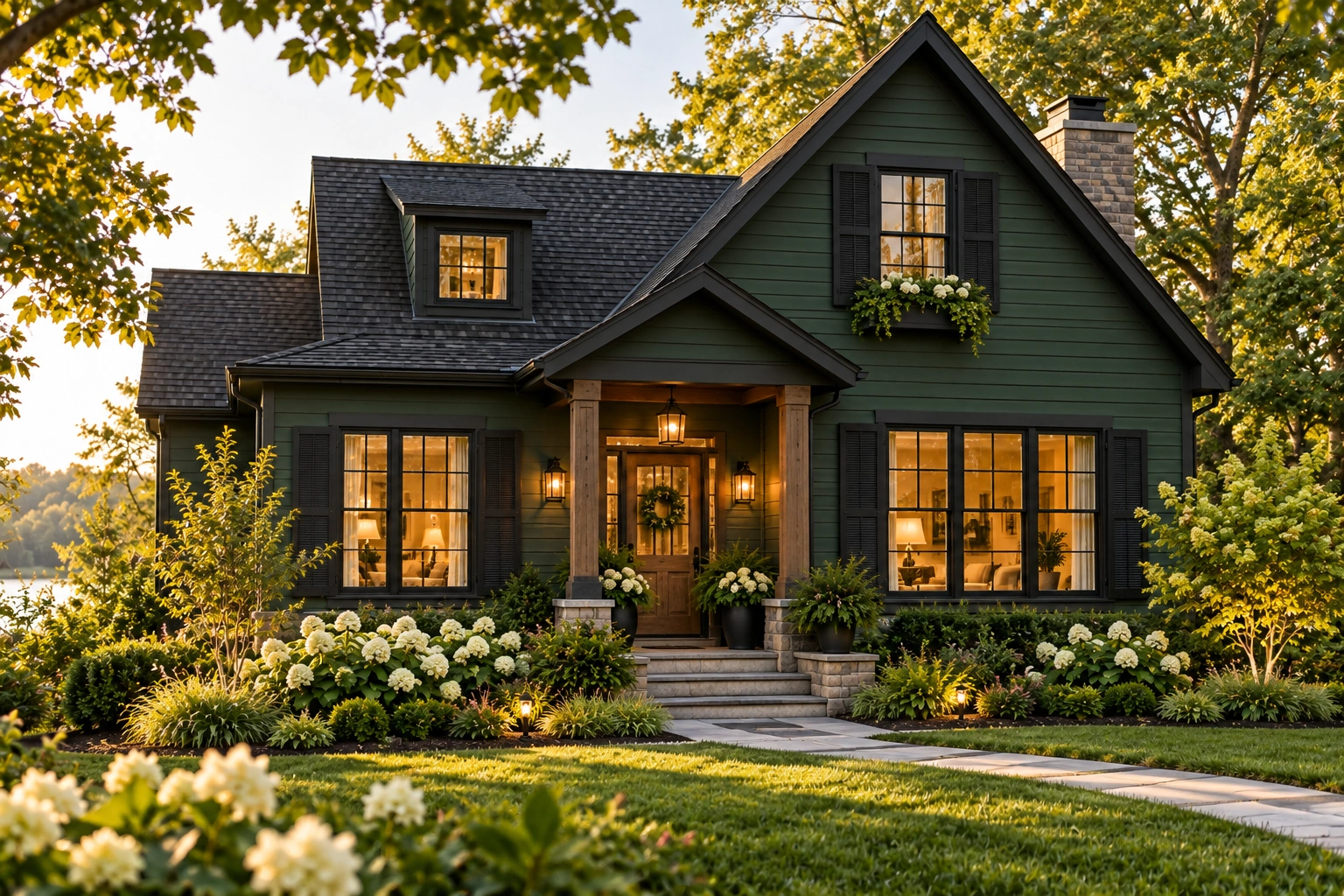
Black-framed windows pair naturally with the simple lines of a modern farmhouse, and dark green gives the exterior more depth than a typical light neutral.
Use the black windows as the main dark accent before adding more black elsewhere. If the windows already create strong contrast, the porch columns, soffits, or entry door may not need the same treatment.
10. Dark Green Cottage With Black Shutters
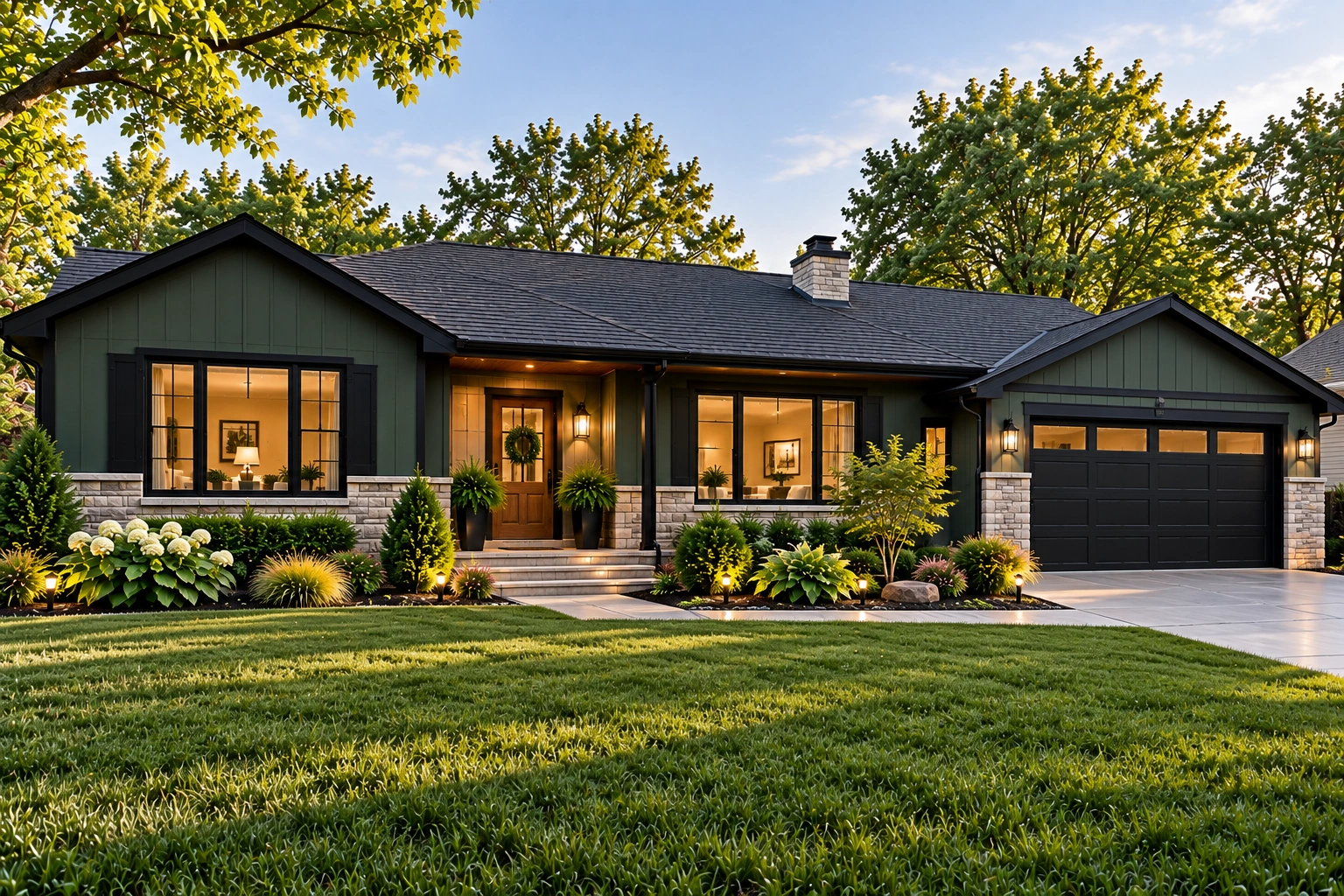
A cottage can handle a dark palette without losing its softer character when the black accents are limited.
Dark green siding, simple black shutters, warm exterior lighting, and a natural or muted front door can feel grounded without becoming severe. Garden planting also matters here; flowers and lighter foliage can create welcome contrast along the lower façade.
11. Dark Green Ranch With Selective Black Accents
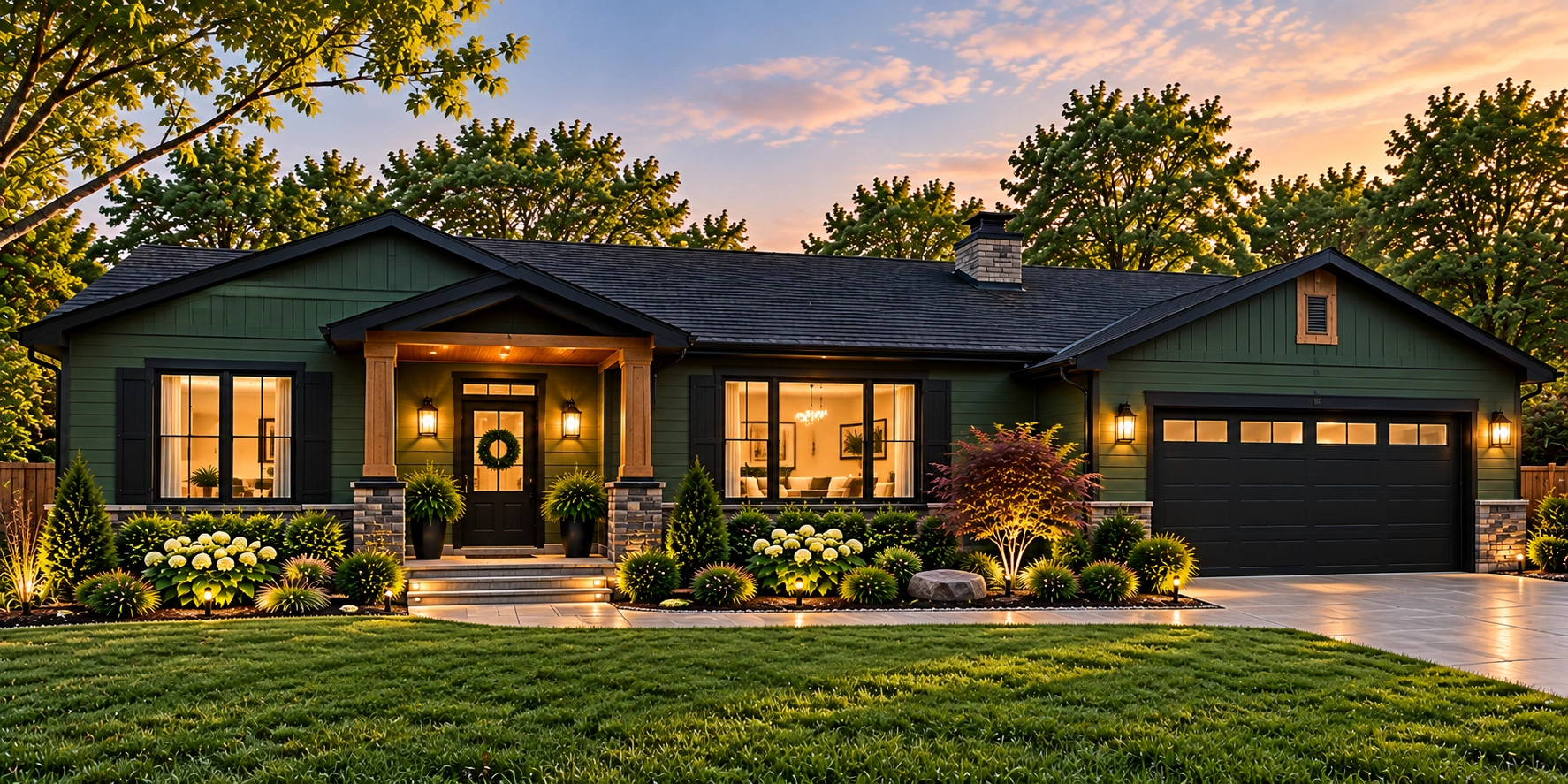
Ranch homes often have long horizontal elevations, so painting every trim element black can create heavy continuous lines.
A better approach may be to reserve black for the window frames, lighting, gutters, and perhaps the front door. Let the green carry the horizontal siding while masonry, wood, or lighter concrete breaks up the façade.
12. Dark Green Stucco With Black Window Frames
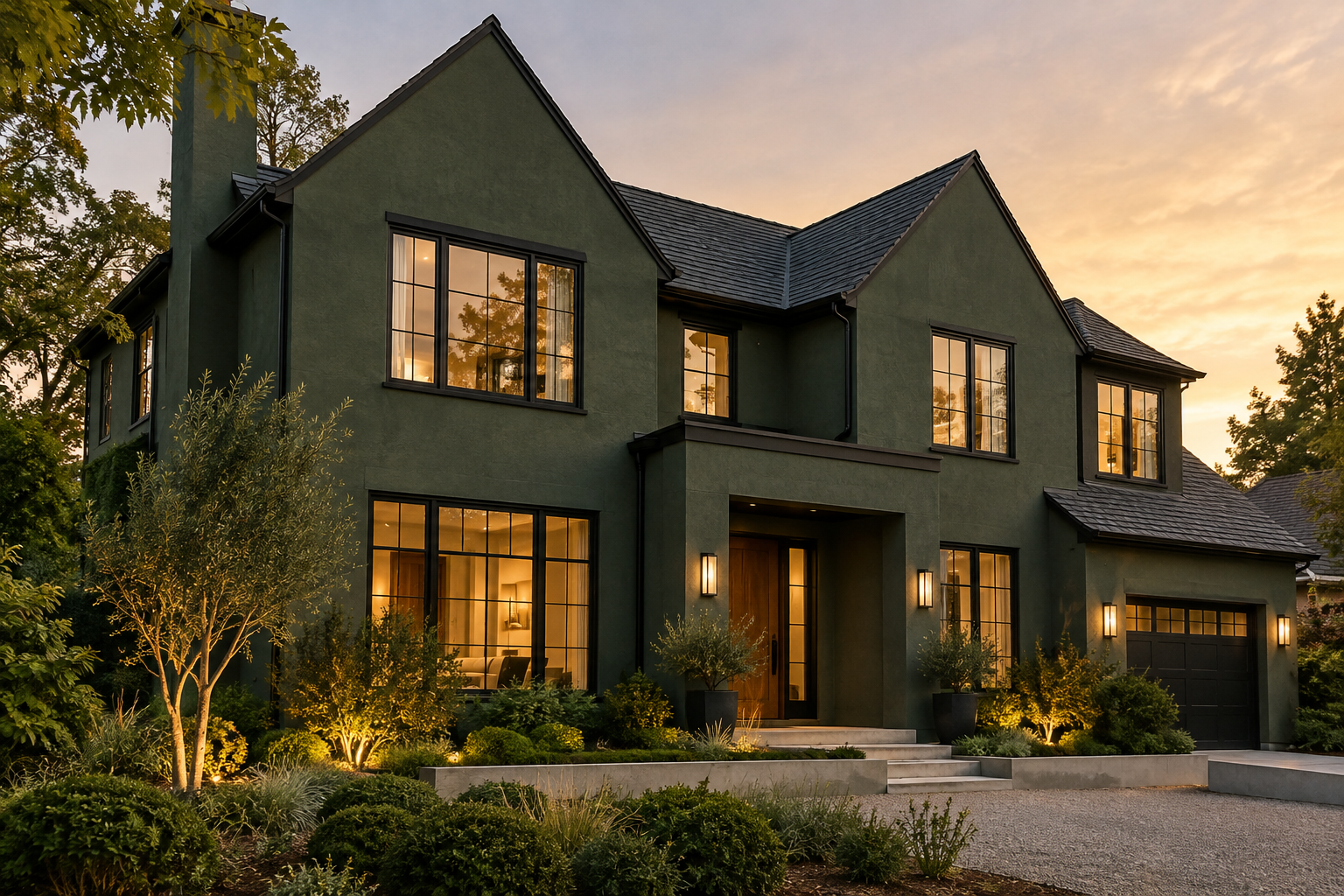
Stucco has fewer visual joints than siding, which makes black-framed windows particularly noticeable.
Because the wall surface is broad and uninterrupted, choose the green carefully. Very deep green stucco combined with large black windows can appear considerably darker in shade than it does in a bright inspiration photo.
Simple landscaping and a warm door can add enough contrast without cluttering the smooth exterior.
13. Dark Green With Black Railings and Warm Porch Lighting
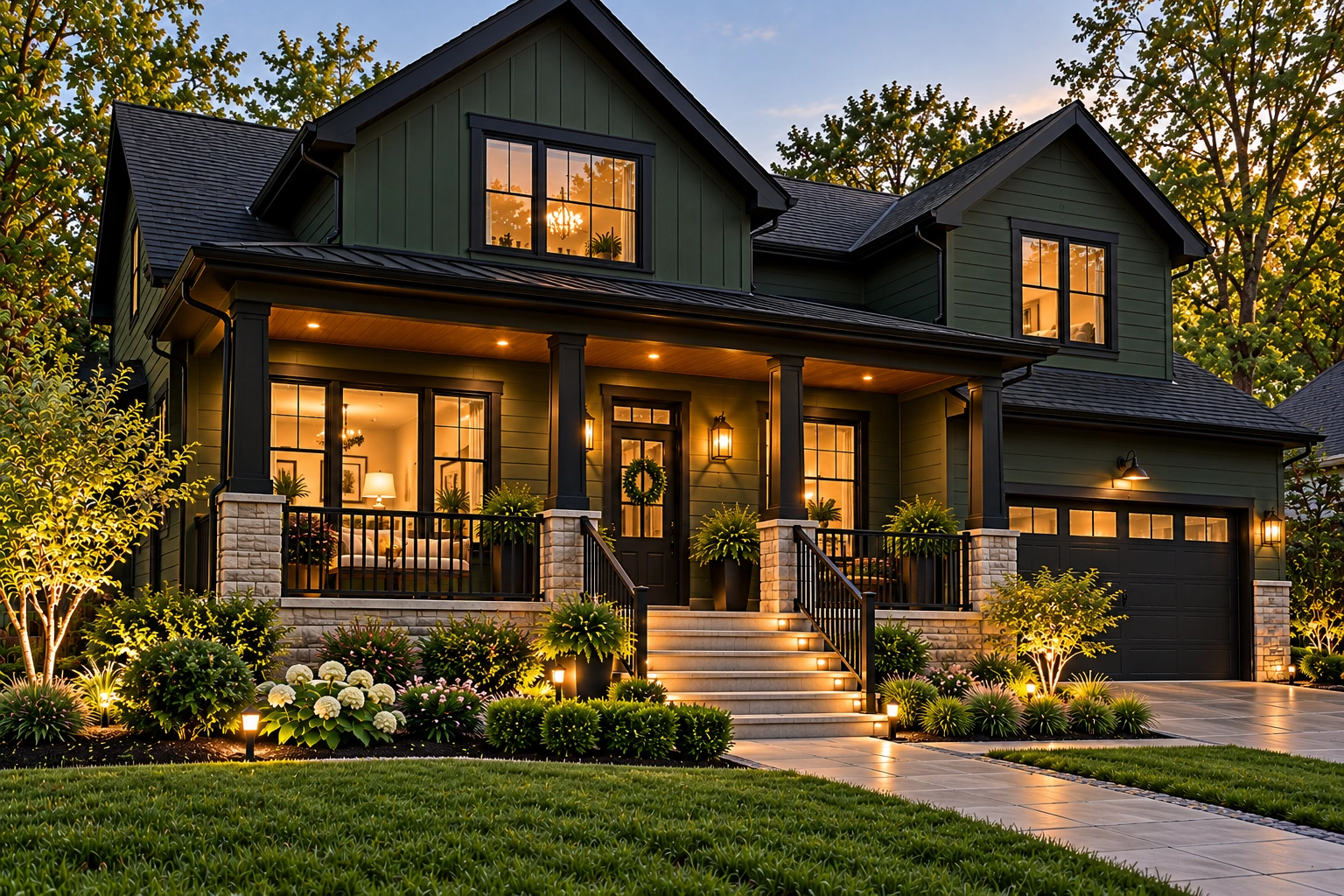
Black railings are a practical way to introduce the accent color without outlining the entire house.
They work especially well with green siding around porches, balconies, and entry steps. At night, warm-looking exterior lighting can keep a deeply colored entry from visually disappearing.
Light-colored steps or porch flooring can provide another useful break between the dark surfaces.
14. Dark Green and Black With a Natural Wood Front Door
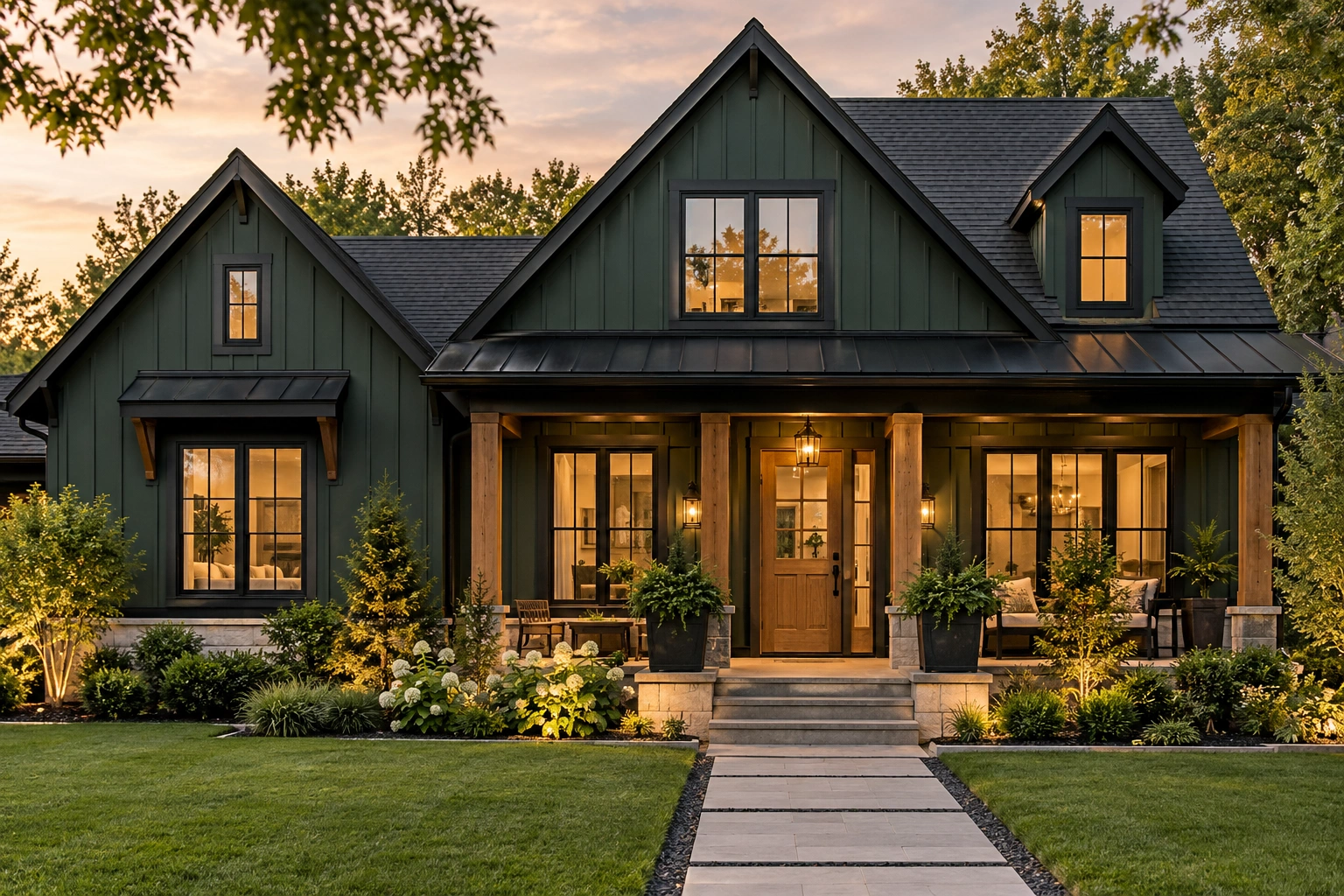
A natural wood front door gives the eye a clear destination on a dark façade.
This is particularly useful when the siding, windows, gutters, and roofing already contain deep tones. Rather than adding another painted accent color, wood introduces warmth and texture while preserving a restrained exterior palette.
15. Dark Green and Black Framed by Lighter Landscaping
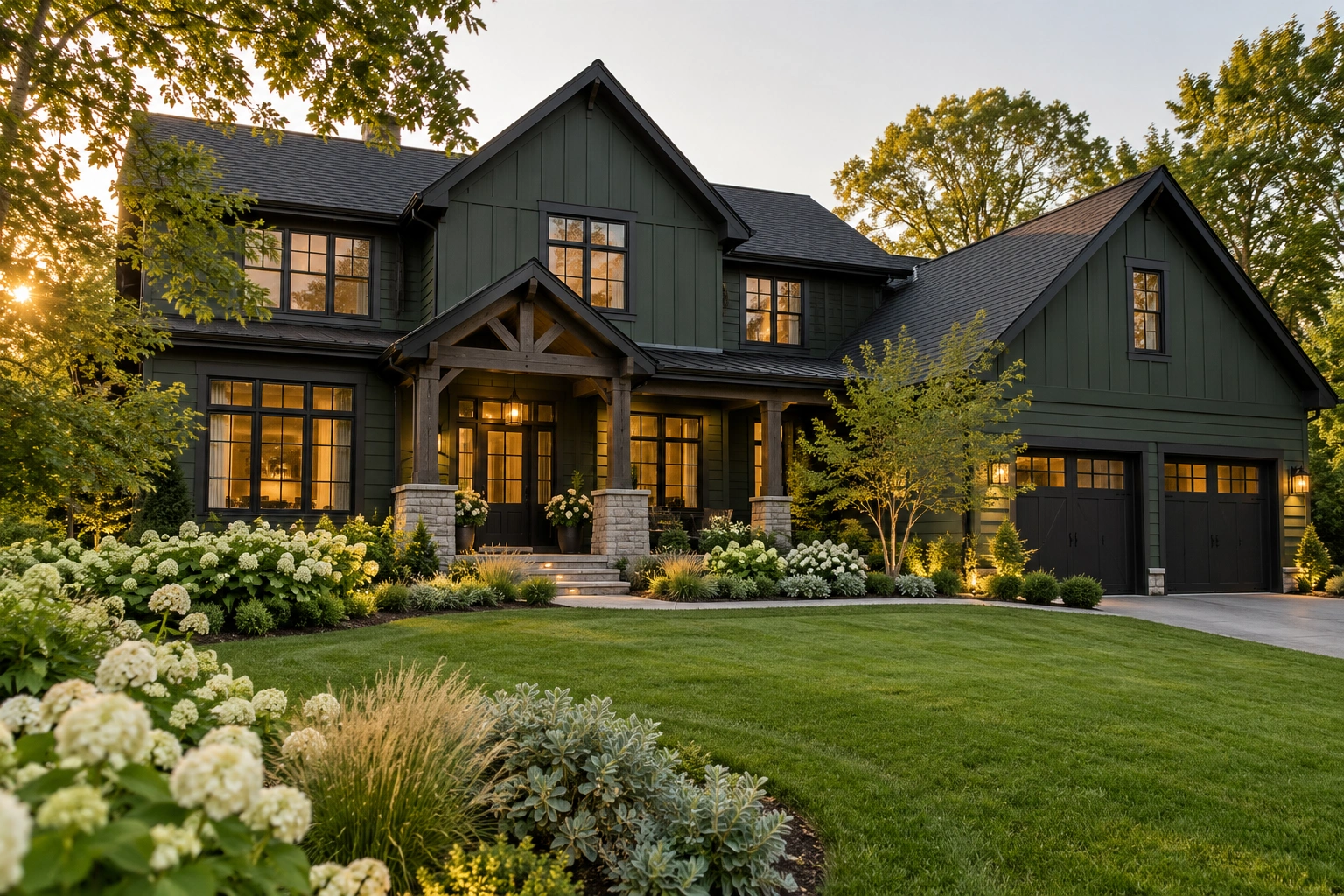
Landscaping is part of the exterior color scheme whether it’s planned that way or not.
On a dark green house with black trim, medium and bright greens, ornamental grasses, pale flowers, gravel, or lighter pathways can create separation from the façade. This matters even more on wooded properties, where dark siding can visually merge with heavy shade and dense vegetation.
Which Dark Green Shade Works Best With Black Trim?
There isn’t one dark green that works best on every house. The right shade depends on its undertone, the amount of daylight the façade receives, and permanent materials such as the roof, brick, stone, and windows. Forest and hunter greens usually create clearer green-to-black contrast, while olive and near-black greens produce softer or more dramatic effects.
Forest and Hunter Green for a Rich, Classic Look
Forest and hunter greens are good starting points when you want the house to read clearly as green rather than nearly black.
They can work with traditional, Craftsman, farmhouse, and contemporary architecture. Compare several options, because one forest green may lean cool while another carries warmer undertones.
Dark Olive Green for a Warmer, Earthier Exterior
Dark olive works particularly well with natural wood, brown roofing, warm brick, and beige or cream stone.
Its muted quality makes black accents feel less stark, which can be useful if true forest green seems too cool for the materials already on the house.
Near-Black Green for a More Dramatic Modern Finish
Very deep green can appear almost black from a distance or under shade.
That can suit simple contemporary forms, but contrast becomes more important. Lighter stone, wood, concrete, or restrained landscaping can help stop the siding and black trim from visually merging into one dark mass.
Where Should You Use Black on a Dark Green House?
Black works best when it emphasizes the parts of the house that deserve definition. Windows, doors, shutters, railings, gutters, and selected roofline elements are common choices, but they don’t all need to be black at once. Start with the strongest existing black feature, then decide whether the façade genuinely needs more.
Black Windows and Window Trim
Factory-finished black window frames already create a strong graphic element. They often need less additional black trim than standard windows that are simply surrounded by dark-painted casing.
Look at the windows from the street before deciding whether the fascia, shutters, door, and gutters also need to match.
Black Doors, Shutters, Gutters, and Railings
Small repeated black elements can tie an exterior together without dominating it.
For example, gutters, railings, porch lights, and shutters can repeat the window color. A large garage door or oversized front door deserves more caution because a big black surface carries far more visual weight than small hardware.
When Selective Black Works Better Than All-Black Trim
Not every edge needs outlining.
Selective black is often useful on homes with detailed façades, deep porches, large roofs, or extensive dark masonry. Leaving some trim green, wood-toned, cream, or another compatible neutral can preserve depth and make the architecture easier to read.
How to Keep a Dark Green and Black Exterior From Looking Too Dark
The easiest way to balance dark green and black is to introduce contrast through material, texture, or a lighter supporting surface rather than adding several unrelated colors. Wood, stone, brick, porch flooring, landscaping, and a clearly defined entrance can all keep the exterior from becoming visually heavy.
Add Natural Wood for Warmth
Wood works because it adds warmth without fighting the green.
A front door, porch ceiling, posts, or small section of cedar siding is usually enough. Repeating wood everywhere can dilute the simple two-color concept, so use it where it has a clear architectural purpose.
Use Stone or Brick to Break Up Dark Surfaces
Masonry creates texture and naturally breaks large painted areas into smaller visual zones.
If the house already has brick or stone, treat it as part of the starting palette. Don’t choose the green and black first and hope the masonry fits afterward.
Give the Entry a Clear Focal Point
A very dark front door can disappear against deep siding.
Natural wood, a slightly lighter door color, visible house numbers, contrasting steps, or well-placed lighting can make the entrance easier to identify without turning it into an unrelated color statement.
Use Landscaping and Exterior Lighting for Contrast
Dense dark foliage can make deep siding look even heavier.
Use a mix of foliage tones and leave some visual breathing room around the house. Exterior lighting should also make important architectural areas, especially entrances and walkways, legible after sunset rather than leaving the whole façade as one dark plane.
Match Dark Green and Black to the Features Your House Already Has
Exterior colors should be selected around the features that are hardest or most expensive to change. Roofs, masonry, windows, and major garage doors influence the final palette far more than small accessories.
Roof Color and Roofing Material
Black and charcoal roofs can create a cohesive green-and-black exterior, but they also add another large dark surface.
Brown or warmer roofing may push the green selection toward olive or another warmer shade. Gray roofing can work with several greens, but its undertone still matters.
Existing Brick and Stone
Place green samples directly beside the masonry.
Warm red brick, cool gray stone, creamy limestone, and brown fieldstone will each change how the same green appears. The goal isn’t exact matching; it’s avoiding undertones that make neighboring materials look unintentionally mismatched.
Window Frames and Garage Doors
Windows are often permanent, so their finish should influence the paint plan from the beginning.
Garage doors deserve similar attention because of their size. A large black garage door may become the dominant feature on a front-facing garage, while green or a quieter neutral can keep attention closer to the entrance.
How to Test Dark Green Exterior Colors Before You Commit
Test real color samples on the house and view them beside the roof, masonry, windows, and trim throughout the day. Exterior greens can look noticeably different in direct sun, overcast conditions, deep shade, and evening light. A screen image or small indoor paint chip can’t show those changes reliably.
Compare Physical Samples in Sun and Shade
Use samples large enough to judge from several yards away.
Check them in the morning, midday, and later afternoon. A green that looks clearly green in strong light may appear nearly black on a shaded elevation.
View the Green Beside Your Roof, Masonry, and Black Accents
Don’t judge the siding color by itself.
Place it near the black element you plan to use and close to existing brick, stone, roofing, or concrete. The relationship between these materials matters more than whether the individual paint color looks attractive alone.
Common Mistakes to Avoid With Dark Green and Black Exteriors
Using Black on Every Exterior Detail
More black doesn’t automatically create a more cohesive house.
Too many dark edges can flatten the façade by giving every feature equal emphasis. Decide which architectural lines actually deserve attention and let quieter elements recede.
Ignoring Green Undertones and Existing Materials
A warm olive and a cooler forest green can produce very different results beside the same roof or brick.
Treat color names as a starting point, not a guarantee. Look at the actual sample against the actual house.
Choosing Colors From a Screen Alone
Online photos are useful for inspiration but unreliable for final color selection.
Lighting, camera settings, editing, monitor displays, and surrounding materials all change how a color appears. Physical samples are the safer basis for a large exterior decision.
Adding Too Many Competing Accent Colors
Green, black, wood, brick, stone, roofing, landscaping, and the front door can quickly become a crowded palette.
Not everything needs to make a statement. Pick a clear dominant color, a controlled dark accent, and one or two supporting materials.
Before painting vinyl, composite, cellular PVC, or another manufactured exterior material a substantially darker color, check the manufacturer’s coating requirements. Some products have specific restrictions or approved paint systems. Multi-story painting or damaged exterior surfaces may also be better handled by a qualified contractor.
When a Softer Alternative May Work Better
A full dark green-and-black scheme isn’t the only way to achieve strong contrast.
A house that receives little direct light, has a large black roof, sits beneath dense trees, or already contains substantial dark masonry may benefit from a lighter forest green or from charcoal rather than stark black.
You can also keep black only on windows, railings, lights, and gutters while using a softer neutral on other trim. The goal is not to use as much black as possible; it’s to give the house enough definition without losing depth.
Frequently Asked Questions
Do Dark Green and Black Go Together on a House?
Yes. Dark green and black can work well together because green provides the main body color while black creates definition around architectural features. The combination tends to look most balanced when there is still enough contrast between the two colors and when wood, masonry, landscaping, or lighter surfaces prevent the façade from becoming uniformly dark.
What Trim Color Goes With a Dark Green House?
Black is a strong option for dark green siding, but it isn’t the only one. Charcoal gives a softer version of the same idea, while cream or warm white creates stronger separation. Natural wood can also function as an accent around doors or porch details rather than as conventional trim.
Is Dark Green a Good Exterior House Color?
Dark green can be a practical exterior choice when it complements the home’s architecture and permanent materials. It works across several styles, but the shade should be tested against the roof, brick, stone, windows, and actual daylight before making a final decision.
What Roof Color Works With a Dark Green House and Black Trim?
Black and charcoal roofs can create a unified palette, while gray or brown roofs may provide softer contrast depending on the green’s undertone. The existing roof should usually influence the siding color rather than the other way around, especially when replacing the roof isn’t part of the project.
What Front Door Color Works With Dark Green Siding?
Natural wood is one of the easiest ways to warm up dark green and black. Black can work where the entrance is already well defined, while cream, muted red, or another restrained accent may suit certain homes. The door should relate to the roof, masonry, and other exterior materials rather than act as an isolated color.
Should Black Exterior Trim Be Matte, Satin, or Gloss?
There’s no universal sheen that works for every exterior product. Lower-sheen black often appears quieter, while glossier finishes reflect more light and draw more attention to surface details. Follow the paint or material manufacturer’s recommendations for the substrate, exposure, and specific coating system being used.
Final Thoughts
A successful dark green and black exterior is less about finding one perfect paint combination and more about controlling contrast.
Let green remain the dominant color, use black where it strengthens the architecture, and judge both against the roof, masonry, windows, daylight, and surrounding landscape. Add warmth or relief where the façade needs it, and test the colors on the actual house before committing.
Done well, the result feels bold without becoming heavy—and distinctive without depending on unnecessary extra colors.
Disclaimer
This content is for general informational and inspiration purposes only. Every home, budget, material, preference, and project is different. For structural, electrical, plumbing, HVAC, installation, repair, legal, safety, or other major property decisions, consult an appropriately qualified professional.