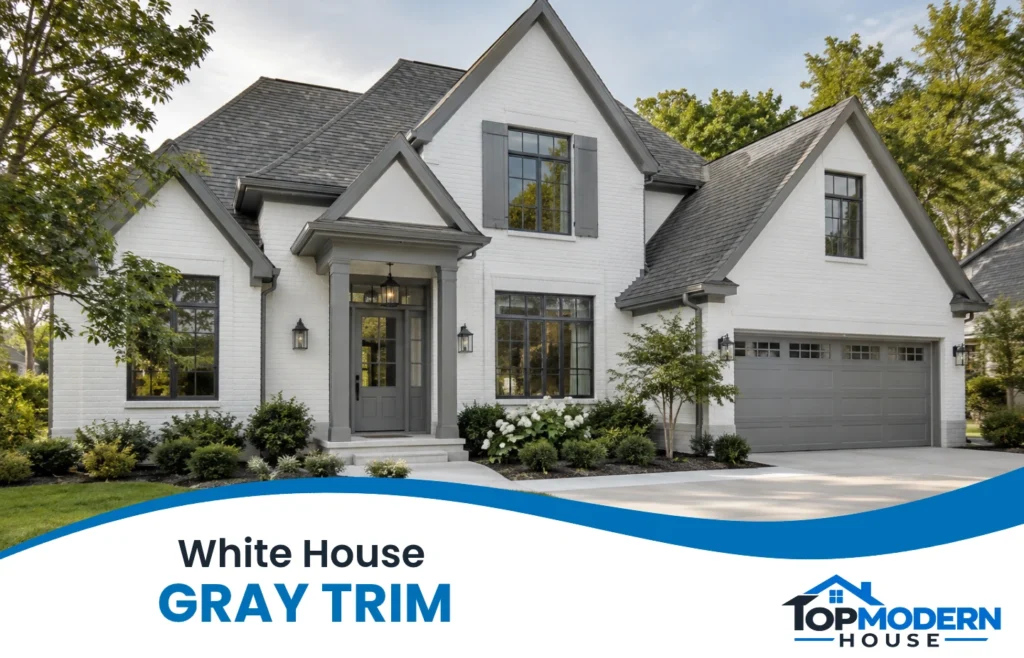
A white house with gray trim can look crisp, relaxed, traditional, or distinctly modern depending on one decision: which gray you use and where you put it.
That’s also where this seemingly simple exterior palette becomes tricky. A soft gray may nearly disappear beside bright white siding, while charcoal can turn windows, fascia, or a large garage door into the dominant feature. Roof color, brick, stone, existing windows, and outdoor light can shift the result even further.
The best approach is to treat white and gray as part of the entire exterior rather than two isolated paint colors. These ideas show how different combinations work, followed by practical guidance for choosing one that suits your own home.
Short Definition
White house gray trim is an exterior color scheme that pairs a white façade with light, medium, or charcoal gray accents to add architectural definition while maintaining softer contrast than black.
Topmodrenhouse Mission Statement
Topmodrenhouse helps homeowners, renters, and home lovers make practical, stylish, comfortable, and informed decisions for better living spaces.
Mini Decision Guide
- Choose light gray for subtle definition and a softer transition from white.
- Choose medium gray when you want clearer architectural contrast without a very dark look.
- Choose charcoal gray for stronger emphasis on windows, shutters, fascia, or selected accents.
- Check undertones first: warm whites often pair more naturally with warm gray or greige, while cooler whites may suit cooler grays.
- Work around fixed materials: compare gray samples with your roof, brick, stone, windows, and other permanent finishes.
- Test outdoors: view samples in sun and shade before making the final decision.
Why Gray Trim Works So Well With a White Exterior
Gray gives a white exterior definition without always creating the sharp contrast of black. Light gray produces a quiet transition, medium gray outlines architectural details more clearly, and charcoal can create stronger framing around windows, rooflines, shutters, and other features.
The combination is also flexible. It can work with white siding, painted brick, stucco, farmhouse exteriors, traditional homes, cottages, and contemporary architecture.
The key is proportion. Gray usually looks most intentional when it emphasizes parts of the house that already deserve attention instead of outlining every edge simply because trim exists there.
12 White House With Gray Trim Ideas
1. Soft Light Gray Trim for Subtle Contrast
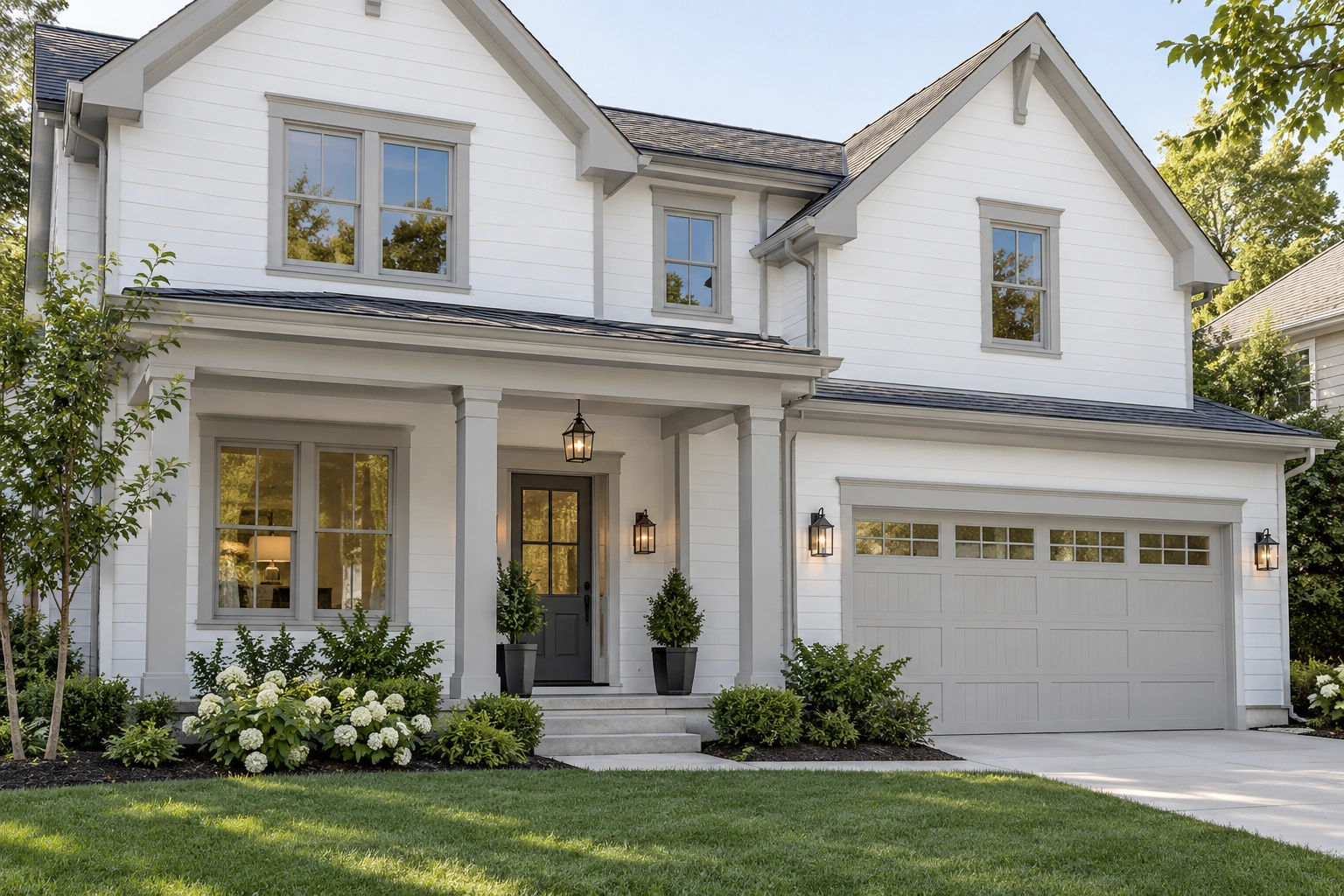
Light gray is a good starting point when you want the house to remain primarily white.
Use it around windows, porch details, fascia, or selected architectural trim to create definition without breaking the exterior into obvious blocks of color.
This works especially well when the white is slightly softened rather than extremely bright. Just make sure the gray is different enough from the body color to be visible in full daylight. Two colors that look distinct on indoor samples can appear much closer together outside.
2. Warm Greige Trim With a Creamy White Exterior
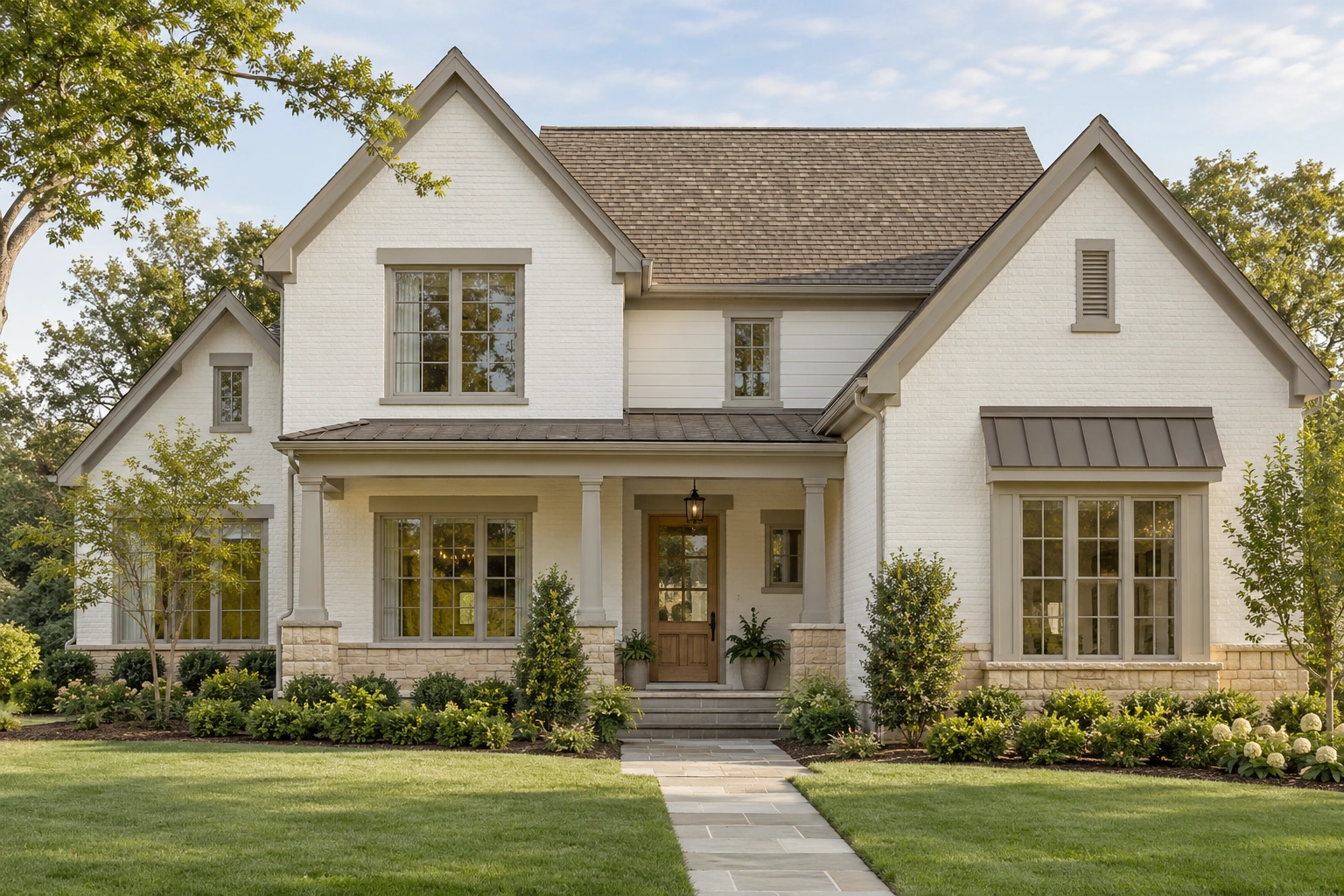
A creamy or warm white often pairs more naturally with greige than with an icy blue-gray.
Greige sits between gray and beige, so it can help connect white siding to warm elements such as brown roofing, tan stone, brick, or a natural wood front door.
The balance matters. A gray that looks comfortably warm beside one white may look noticeably beige next to a cooler white, so evaluate the two colors together rather than choosing them separately.
3. Medium Gray Trim for Balanced Definition
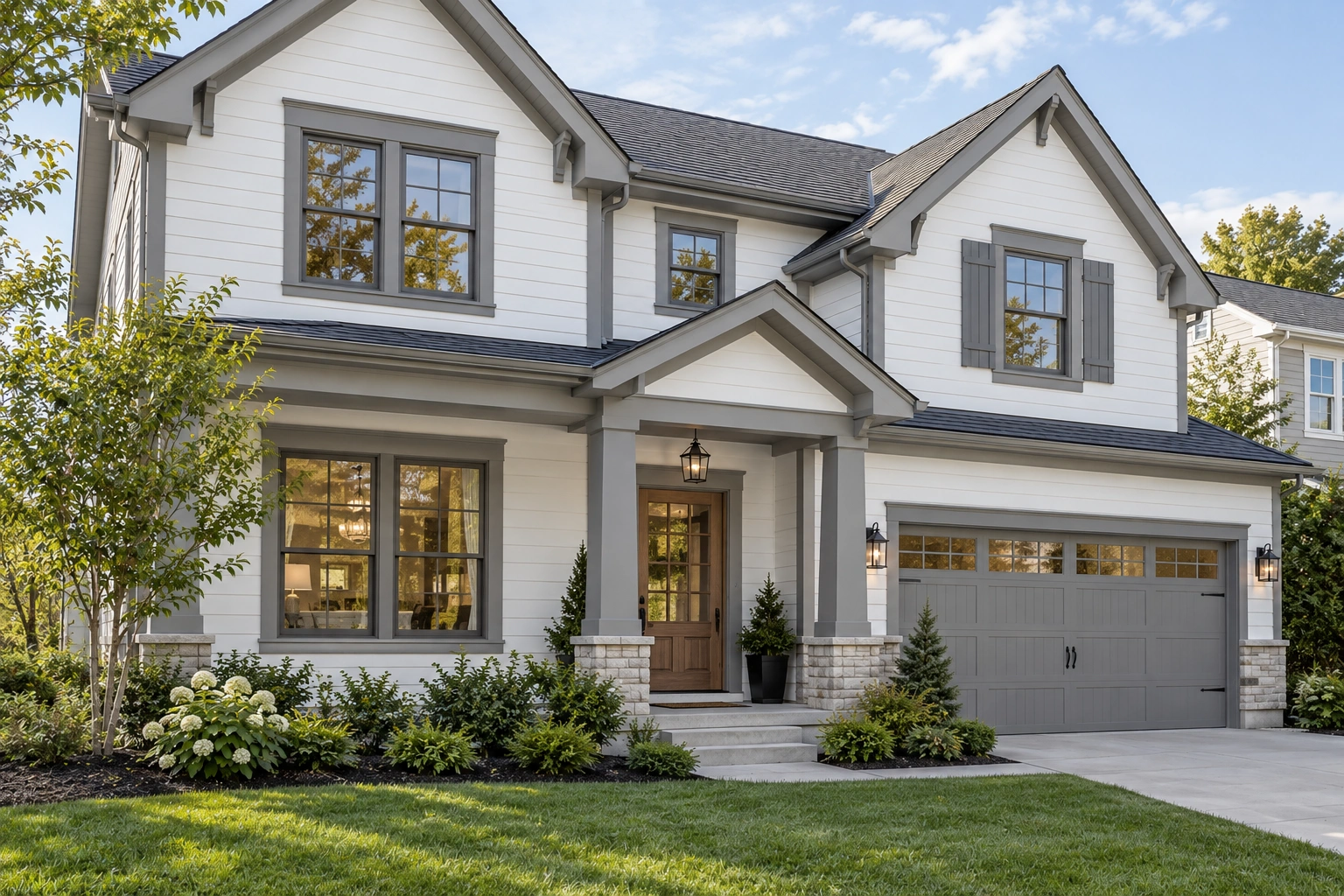
Medium gray gives architectural details more presence without reaching the near-black appearance of some charcoals.
It can work well around windows, porch posts, gables, shutters, and roofline details on homes where very pale trim would disappear.
Medium gray is also where undertones start becoming easier to notice. A cool gray may reveal blue or green notes outdoors, while a warmer gray may lean taupe. Looking at a large sample beside the white exterior is far more useful than judging the paint chip by itself.
4. Charcoal Gray Trim for a Stronger Modern Look
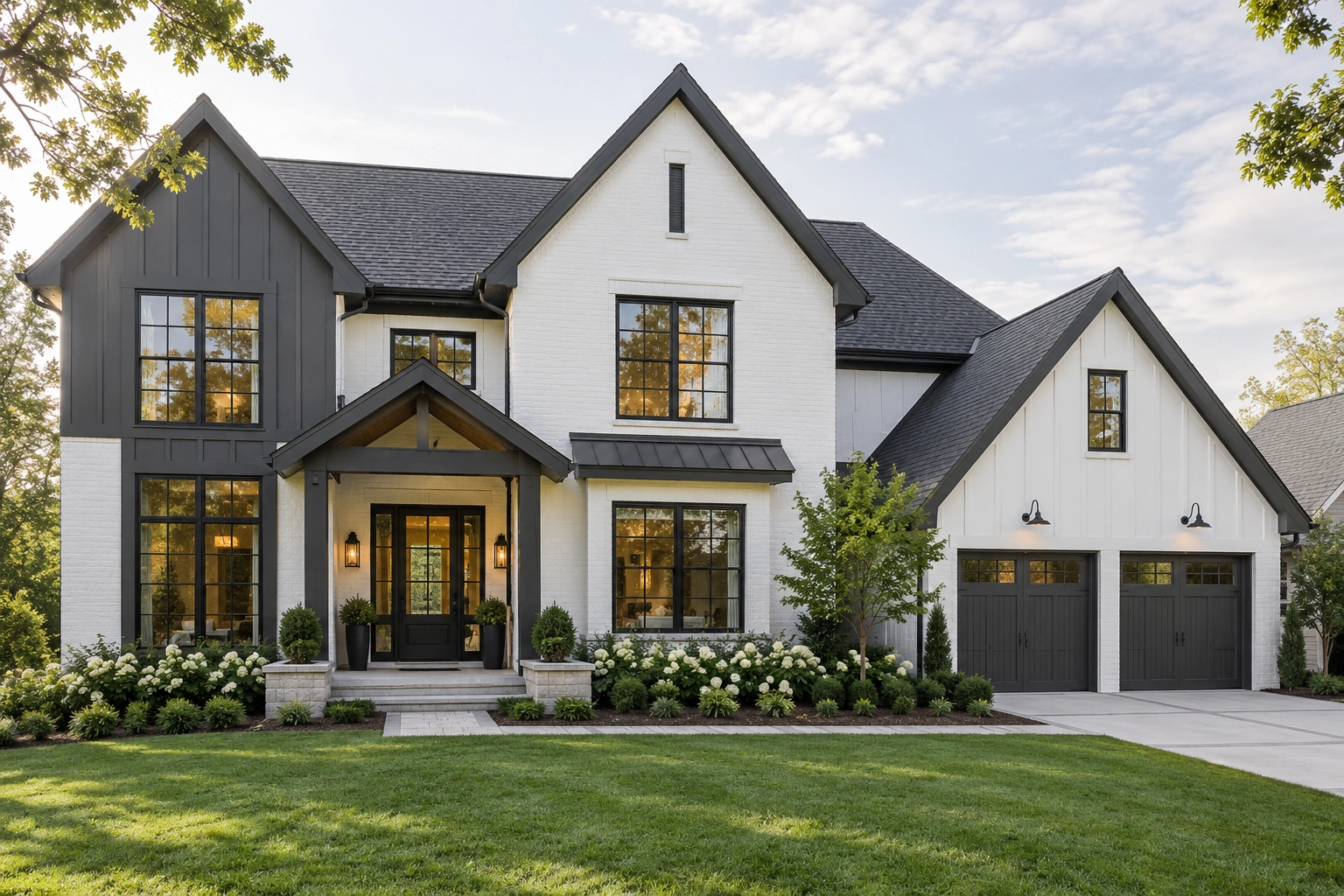
A white house with charcoal gray trim creates a more graphic exterior.
Charcoal can emphasize window frames, gables, fascia, or selected board-and-batten sections while keeping the contrast slightly softer than true black.
Use it selectively. A narrow charcoal window surround and a full charcoal garage door don’t carry the same visual weight. On a small house, several large dark surfaces can quickly overpower the white.
Charcoal tends to work best when another dark element, such as roofing or metal detailing, helps repeat the color elsewhere.
5. White House With Gray Shutters
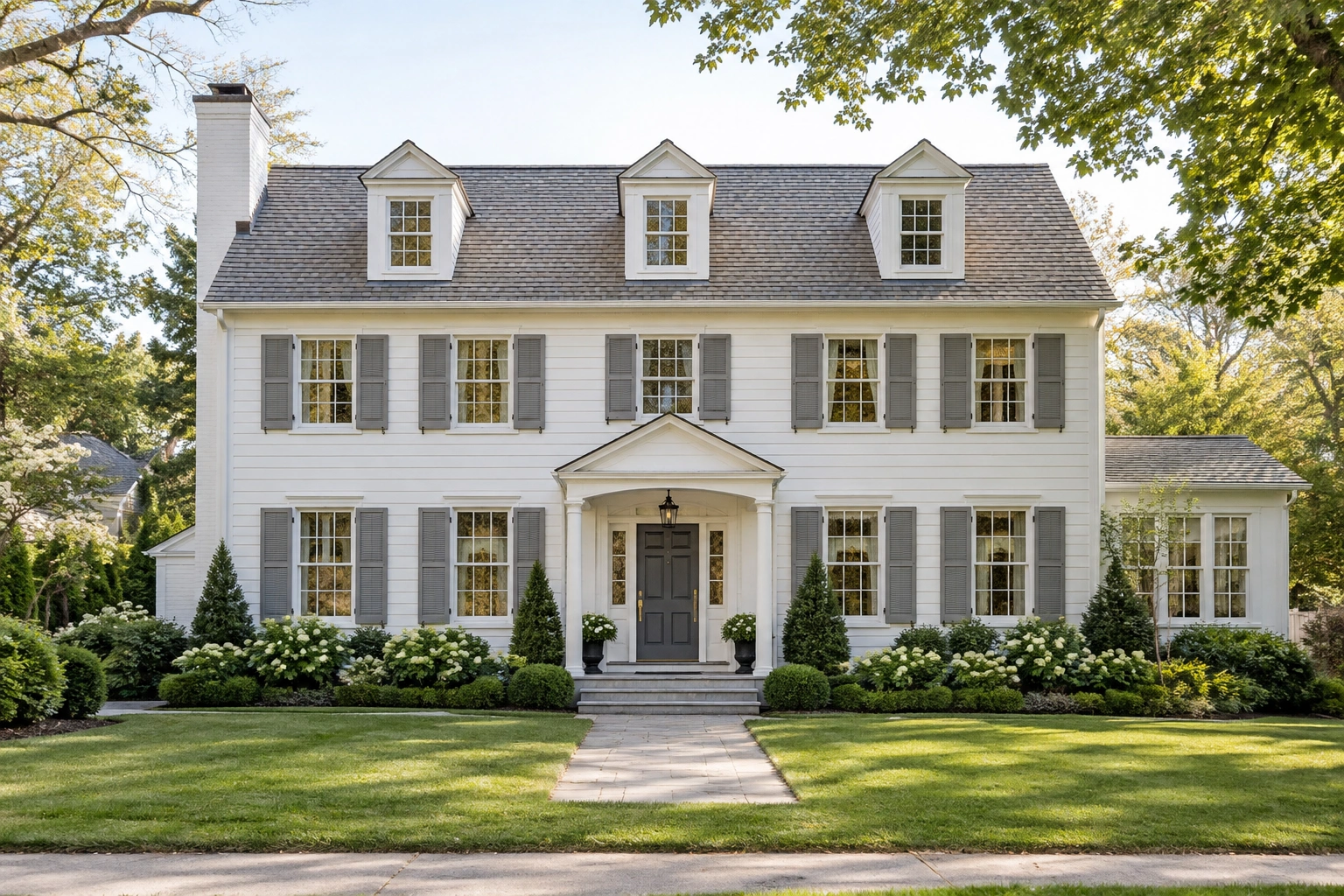
Gray shutters are an easy way to introduce the color without committing every piece of trim to gray.
Soft or medium gray can keep a traditional white exterior understated, while darker shutters create a more obvious focal point around the windows.
This approach suits Colonial and other symmetrical façades particularly well because the repeated shutters reinforce the existing architecture.
Keep the rest of the palette controlled. If the shutters are already a strong medium or charcoal gray, you may not need equally dark fascia, garage doors, and porch columns.
6. White House With a Gray Garage Door
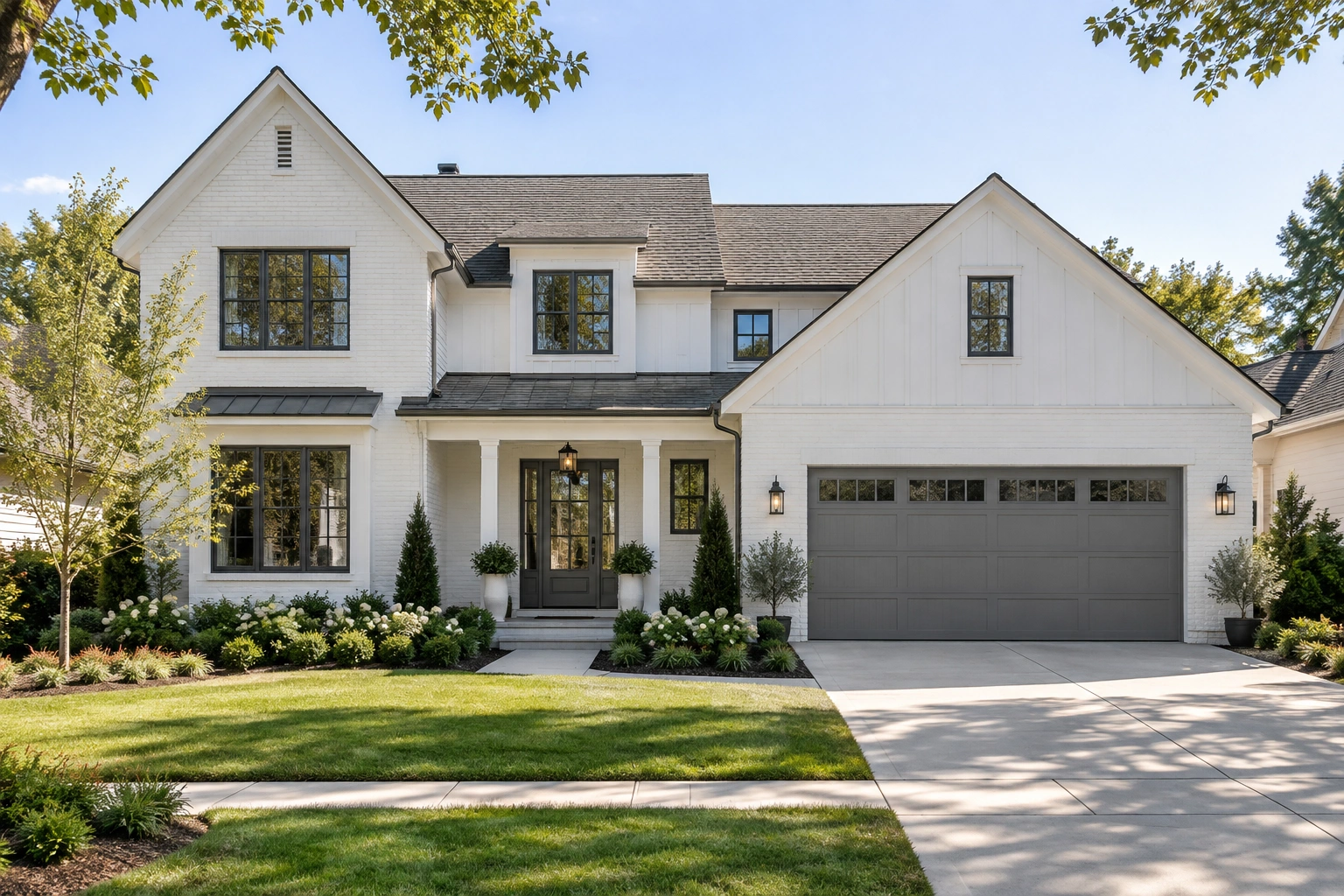
Painting or specifying a garage door in gray can connect it to the rest of a white-and-gray palette, but scale matters.
Garage doors often occupy a large percentage of the front elevation. A dark charcoal door therefore has much more impact than charcoal around a few windows.
Where the goal is to make the garage visually quieter, a gray closer in value to the white body color may work better. Where the garage is intentionally part of the architecture, a stronger gray can make sense.
Judge the door from the street rather than focusing only on the color sample.
7. White Brick House With Gray Trim
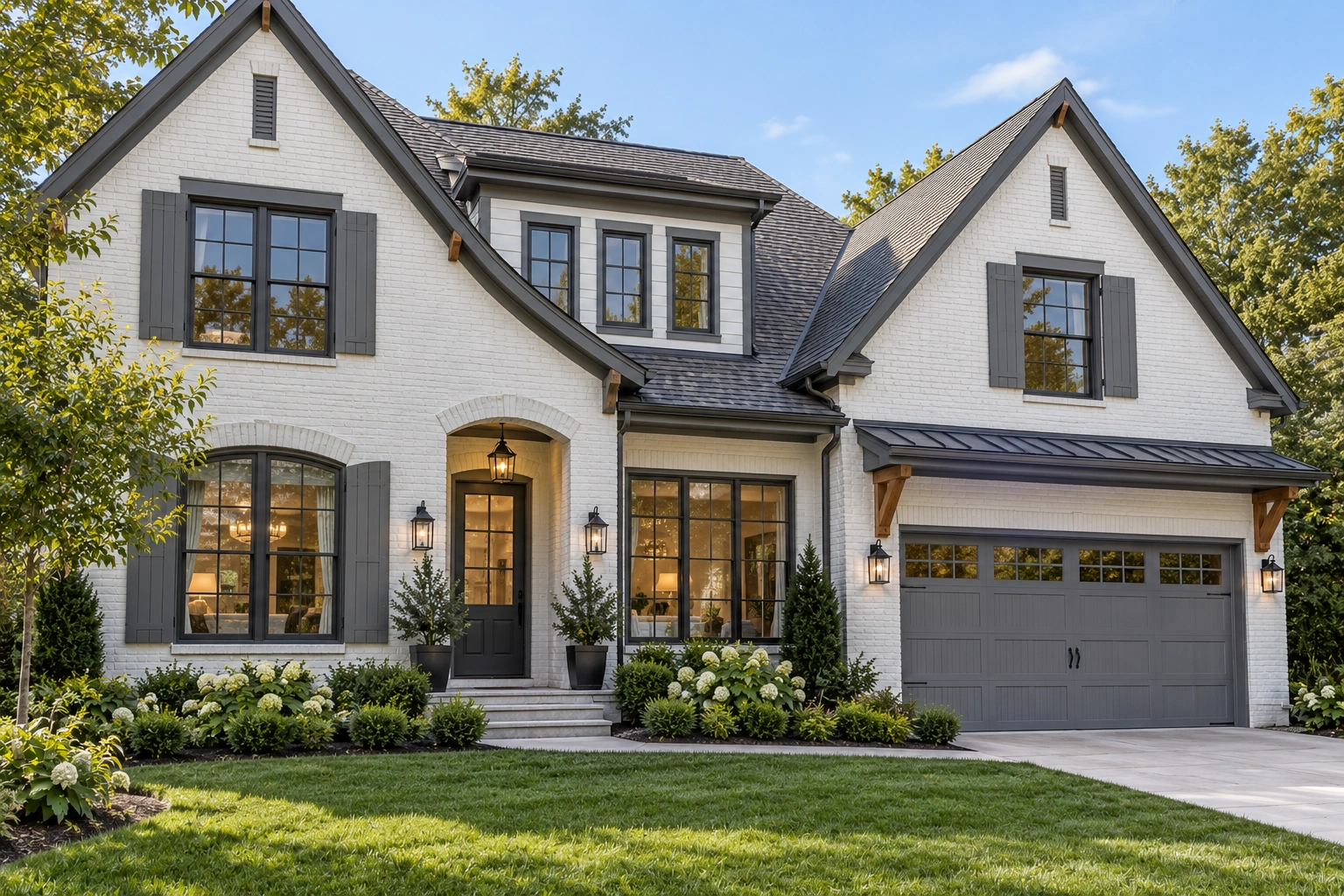
Painted white brick already has texture, shadow lines, and variation that smooth siding doesn’t.
Medium gray shutters, window details, or porch features can provide contrast without competing with that texture. Charcoal can work too, particularly when the roof already contains dark gray or black tones.
Avoid choosing gray in isolation from the masonry. Any visible unpainted brick, foundation material, steps, chimney, or stonework should remain part of the color decision.
8. White Stucco With Warm Gray Details
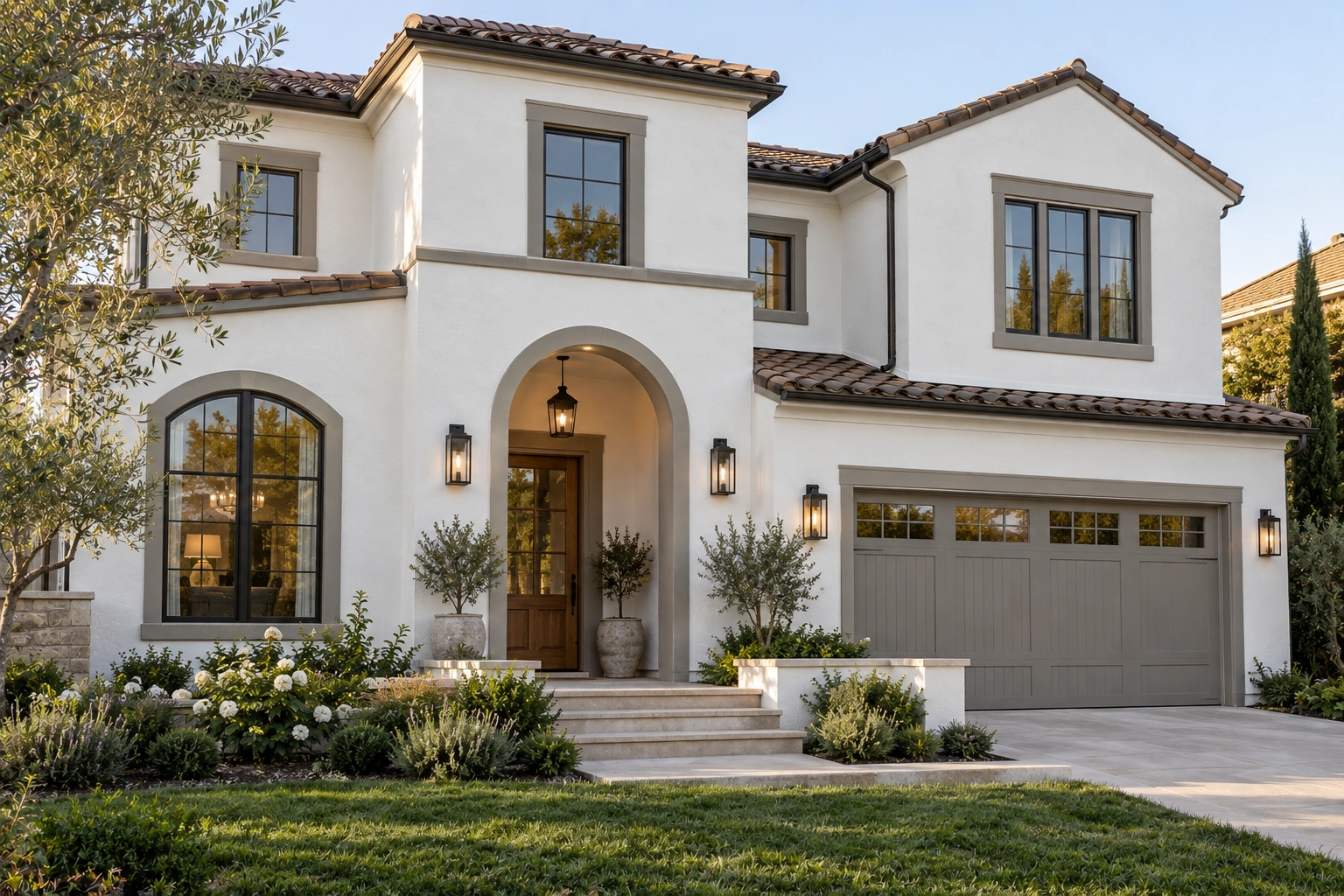
Stucco creates broad, relatively uninterrupted surfaces, so even small color differences can feel noticeable.
Warm gray around windows, doors, parapets, or architectural bands can soften a white stucco exterior, especially where nearby stone, tile, or landscaping carries warm earthy tones.
Cooler gray can produce a cleaner contemporary effect, but check it carefully under direct sun. Exterior light can make subtle undertones much more obvious than they appeared indoors.
9. Modern Farmhouse With Charcoal Accents
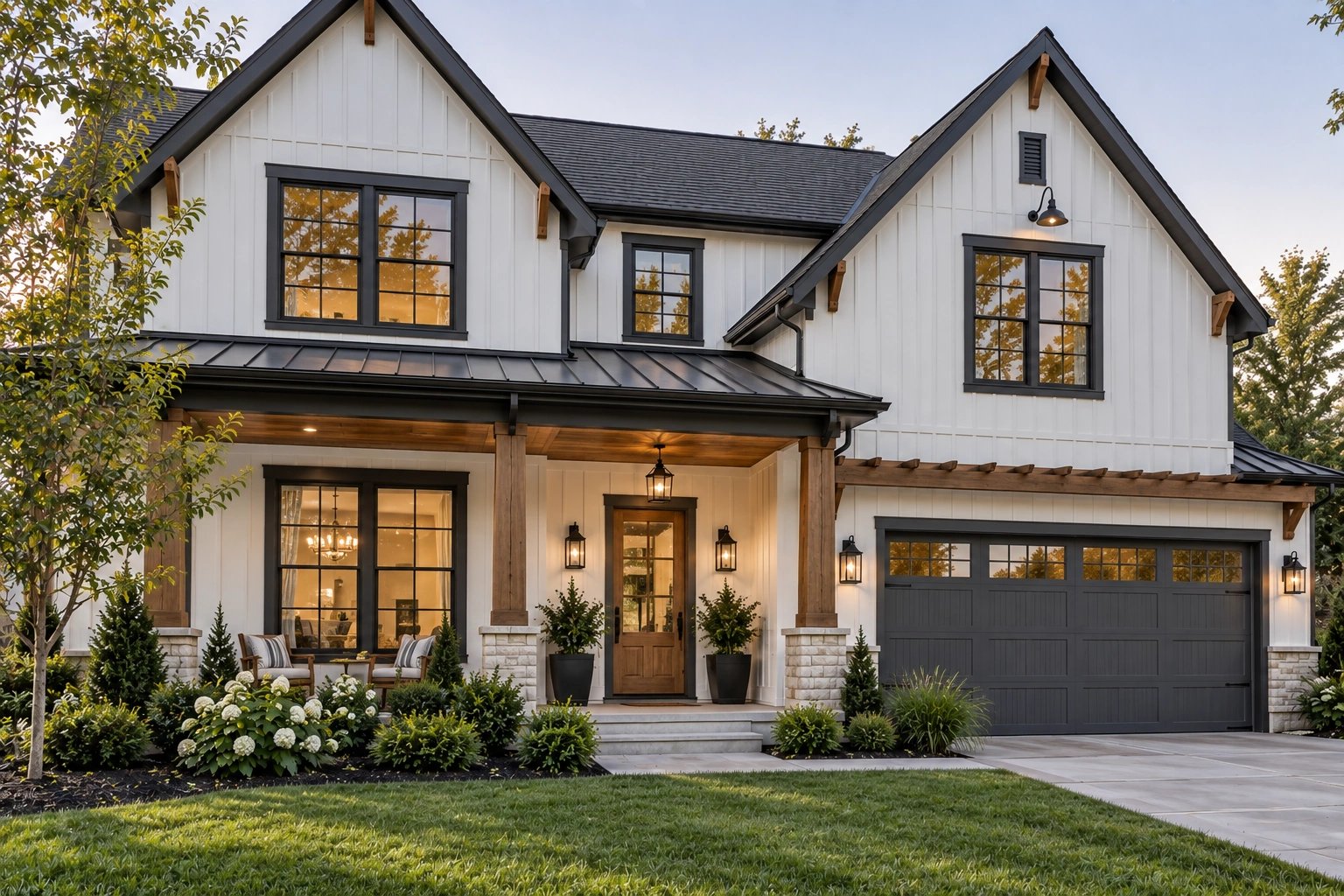
A modern farmhouse doesn’t require every trim element to be black.Charcoal fascia, window details, or selected board-and-batten sections can create the familiar light-and-dark contrast while reducing some of the harshness that comes with pure black.
Natural wood can help keep the palette from feeling overly cold. A wood front door, porch ceiling, or restrained timber detail gives the eye a warmer material to connect with.
The strongest versions usually rely on a few deliberate dark elements rather than outlining the entire façade.
10. Traditional or Colonial White House With Soft Gray Trim
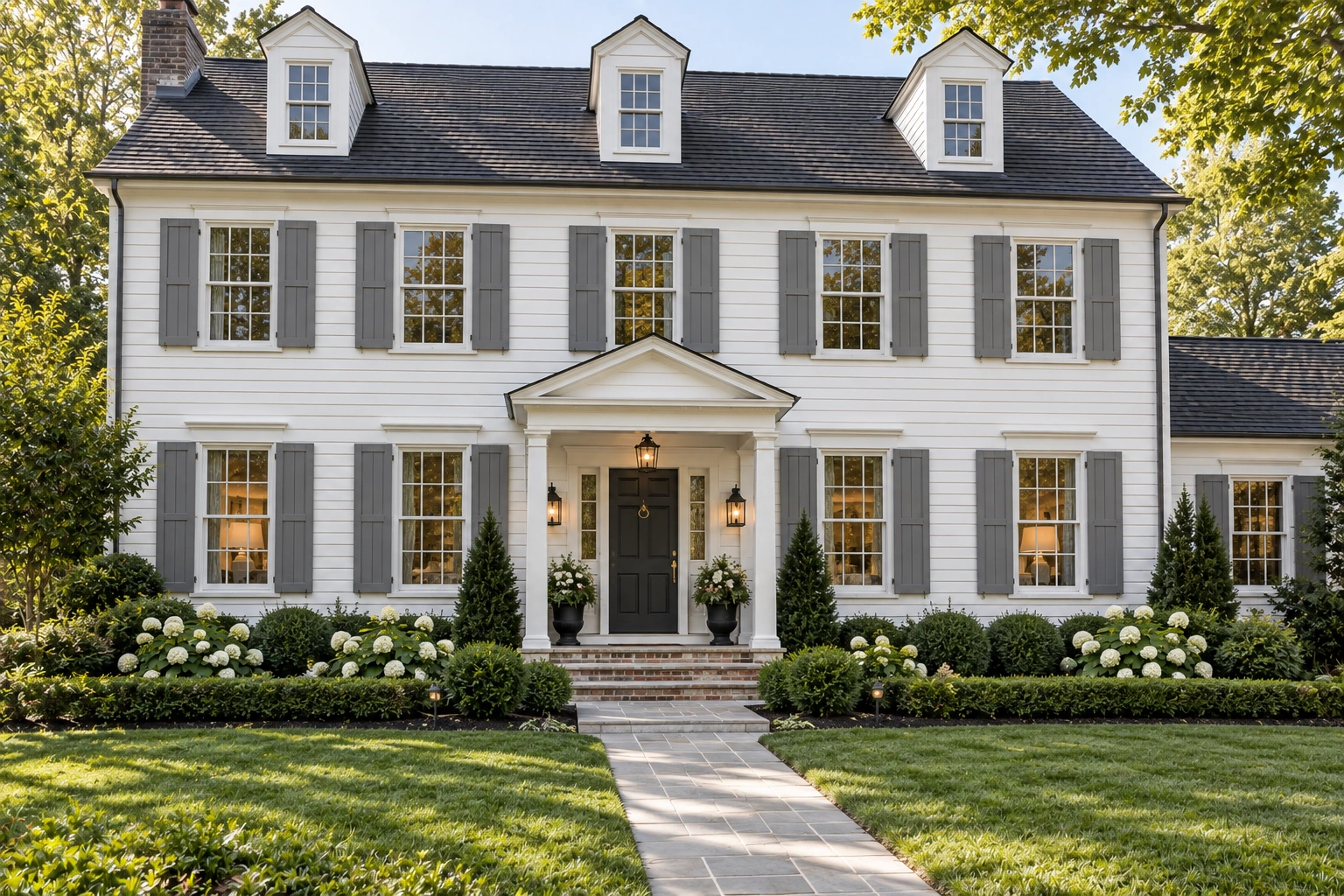
Traditional architecture often benefits from more restrained contrast.Soft or medium gray shutters, door surrounds, and selected trim can support symmetry without making every architectural line visually loud.
On a Colonial-style home, for example, gray shutters can frame evenly spaced windows while the white body remains dominant. A darker front door can then serve as the main focal point.
This approach works because the color follows the architecture instead of trying to modernize it unnecessarily.
11. Small Ranch or Cottage With Restrained Gray Accents
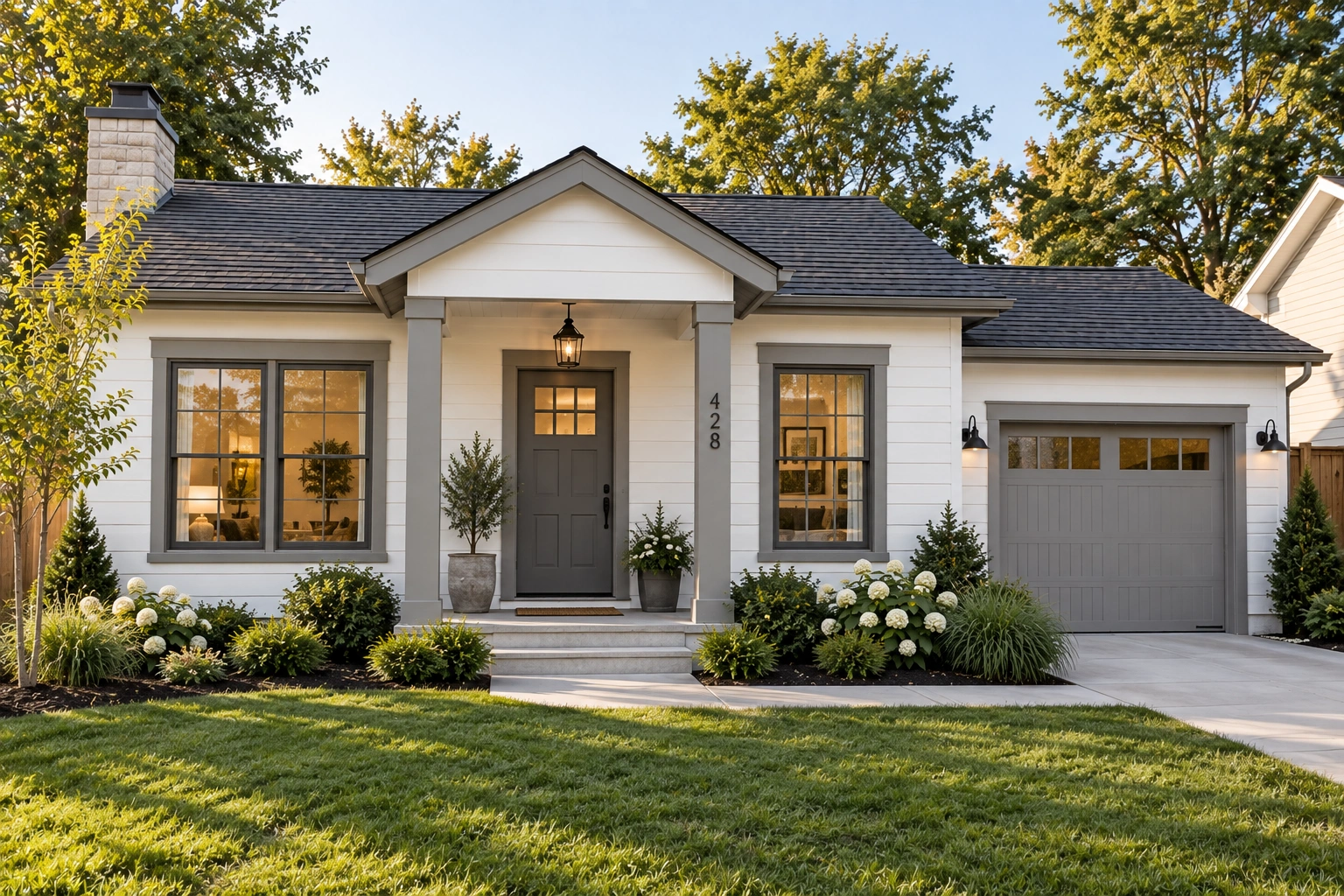
Smaller homes can handle dark gray, but placement becomes especially important.
Rather than applying charcoal to the windows, garage, fascia, porch, and shutters all at once, choose one or two areas to emphasize. A medium-gray front door and window trim, for example, may provide enough definition.
Keeping larger surfaces lighter can also help a compact façade feel less visually segmented.The goal isn’t to avoid contrast. It’s to make sure the contrast has somewhere useful to go.
12. White and Gray Exterior With Natural Wood or Stone
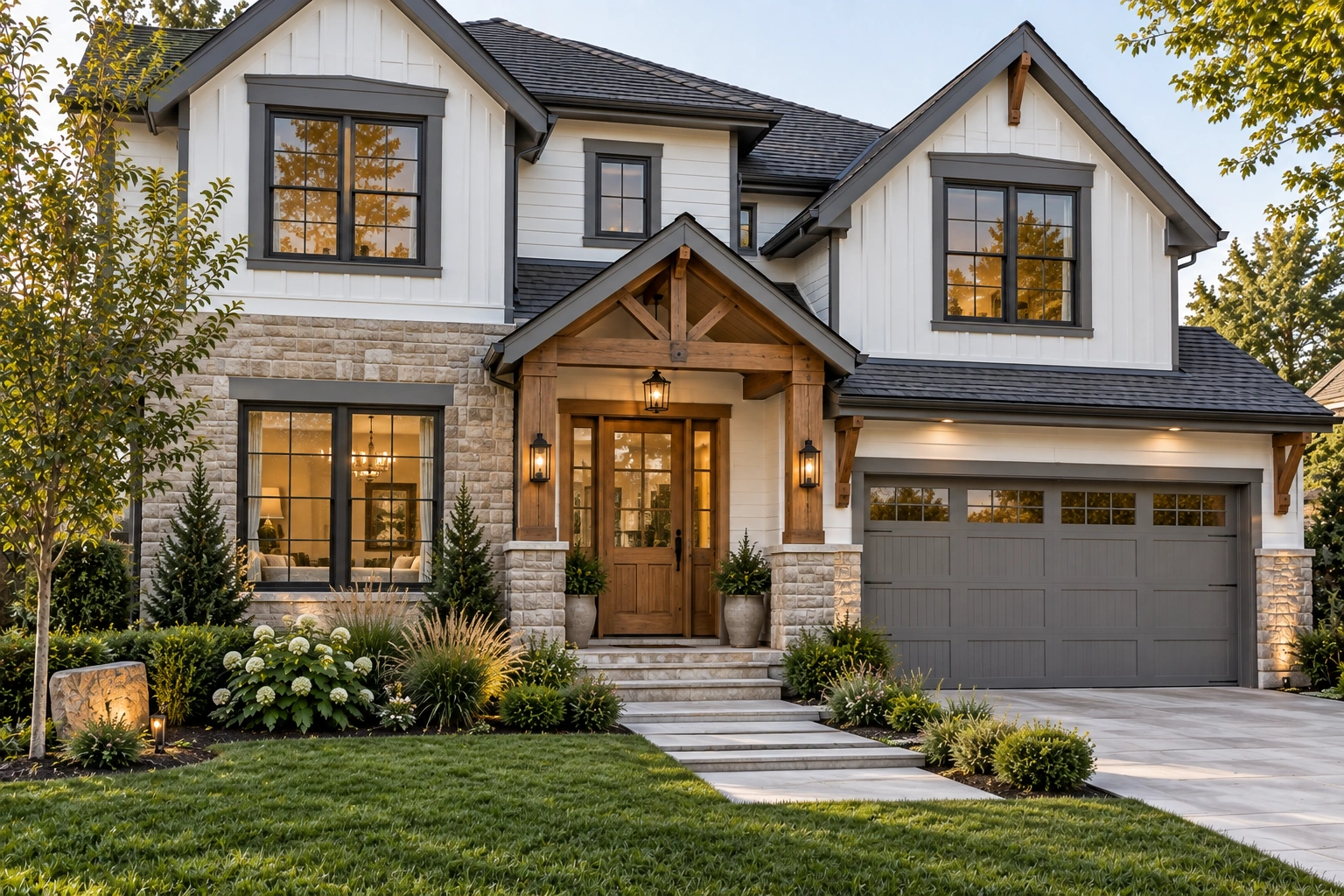
White and gray can occasionally feel cool when they are the only visible colors.
Natural wood, stone, brick, or warm landscaping can add variation without requiring another paint color. A white exterior with medium gray trim and a wood door is a simple example: the gray defines the architecture while the wood introduces warmth.
Use the existing materials as part of the palette rather than treating them as background. Their undertones can help determine whether your gray should lean warm, cool, or more neutral.
How to Choose the Right Gray for a White House
The right gray is the one that works with your particular white, permanent exterior materials, architecture, and desired level of contrast. Start with what can’t easily change—roofing, brick, stone, windows, and major hardscape—then compare gray samples against those elements outdoors.
Start With the Undertone of the White
“White” covers a wide range of colors.Some whites feel crisp and cool. Others carry cream, beige, gray, or other subtle undertones. Putting a cool blue-gray beside a warm creamy white may exaggerate the difference between them, while a warmer gray or greige can produce a more connected palette.
You don’t need advanced color theory. Simply compare the colors side by side and look for any undertone that suddenly becomes distracting.
Check the Roof, Brick, Stone, and Windows
Paint is usually easier to change than roofing, masonry, stone, or factory-finished windows.
That makes those fixed elements the logical place to start.A warm brown roof may push you toward a warmer gray. Bluish stone may relate more comfortably to a cooler gray. Bright white vinyl windows also need consideration: charcoal casing around them creates a deliberate layered contrast, while a pale gray casing will read much more quietly.
Decide How Much Contrast You Want
Think in terms of three broad levels:
- Light gray: subtle separation and a softer look
- Medium gray: noticeable definition without extreme contrast
- Charcoal: bold framing and stronger architectural emphasis
This decision is often more useful than starting with individual paint names.
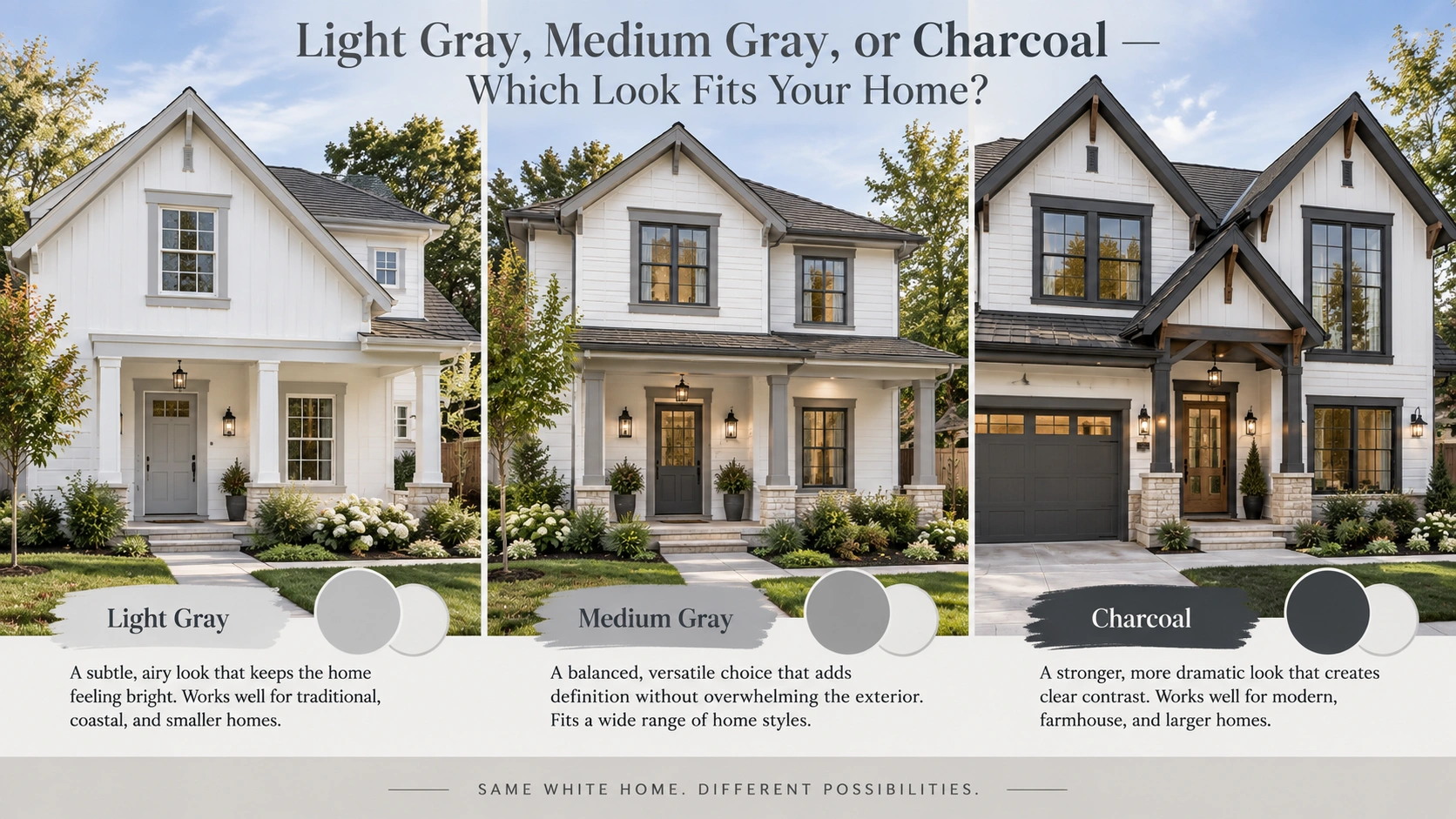
Light Gray, Medium Gray, or Charcoal—Which Look Fits Your Home?
Light Gray for a Softer, Layered Look
Light gray works when you want the white body to remain dominant. It can add depth around windows and rooflines without making the trim the first thing you notice.
Its main drawback is that very pale gray may disappear beside bright white in strong sunlight.
Medium Gray for Clear but Balanced Contrast
Medium gray is a useful middle ground. It defines architectural elements clearly while remaining softer than charcoal.
Because there is more visible color, however, warm, blue, green, or violet undertones may become easier to notice.
Charcoal for Strong Architectural Definition
Charcoal works best where strong contrast serves the architecture: window frames, gables, shutters, fascia, or selected accent surfaces.
Use it more carefully on large garage doors, broad siding sections, or small homes, where its visual weight can become dominant.
Where Should You Use Gray on a White House?
Gray doesn’t have to cover every item technically classified as trim. Selective placement usually produces a more controlled exterior.
Window Trim, Corners, Fascia, and Rooflines
These areas can define the basic structure of the house. Light or medium gray keeps the effect quiet; charcoal makes those lines more graphic.
Existing white window frames don’t necessarily prevent you from using gray. A gray outer casing with a white inner frame can work when the layered look is intentional.
Shutters, Porch Columns, and Entry Details
These are useful places to repeat gray without covering large parts of the façade.
Shutters can reinforce window rhythm, while gray porch or entry details can help frame the front door.
Garage Doors and Other Large Accent Areas
Large surfaces deserve extra caution.
A charcoal garage door may become one of the first things you see. If that isn’t the goal, a lighter gray—or even the main white body color—may help it blend into the elevation.
How to Coordinate Gray Trim With the Roof, Windows, Brick, and Stone
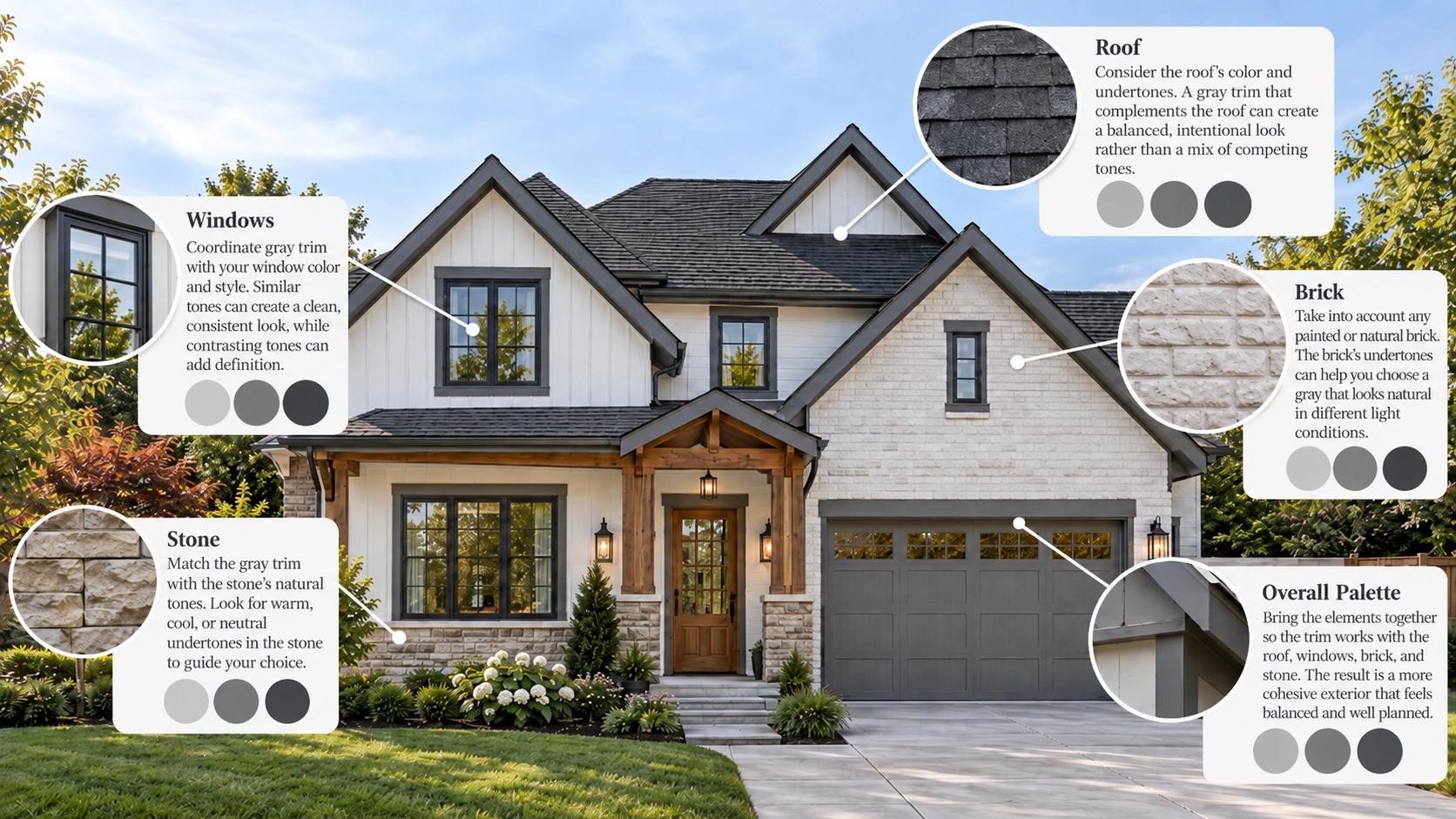
A successful palette usually begins with the materials that are staying.
Warm roofs, cream stone, reddish brick, and natural wood often point toward warmer grays or greiges. Slate, cool stone, black roofing, and dark metal can support cooler or deeper grays.
Don’t rely only on labels such as “warm” and “cool,” though. Put the actual samples beside the real materials. Nearby colors can reveal undertones that were barely visible on the paint card.
Existing windows matter too. White frames surrounded by charcoal casing create a noticeably different effect from dark-framed windows sitting inside matching gray trim.
What Front Door and Accent Colors Work With White and Gray?
White and gray already provide a controlled neutral base, so the front door can either reinforce that restraint or become the main color accent.
Natural Wood for Warmth
Wood is especially useful when a white-and-gray exterior feels too cool. It works well alongside stone, warm roofing, and landscaping with earthy tones.
Navy or Muted Green for Controlled Color
A muted navy or green can introduce personality without overpowering the neutral palette. Check the undertones carefully so the new accent doesn’t fight the gray.
Black, Charcoal, or Gray for a Restrained Palette
Keeping the door dark and neutral gives the exterior a more limited color scheme. This can work particularly well when roofing, hardware, or window frames already repeat similar dark tones.
How White and Gray Look Different on Siding, Brick, and Stucco
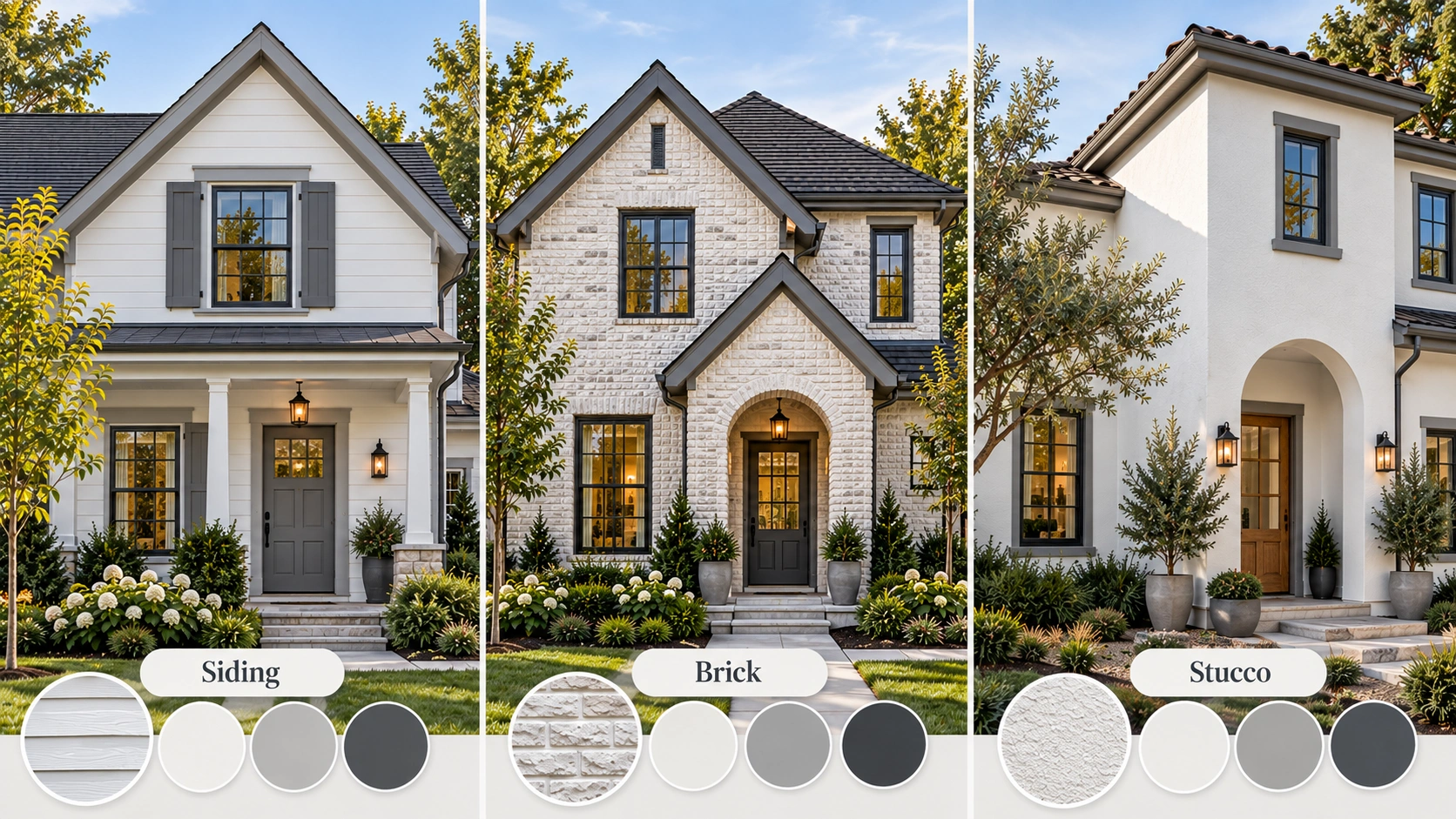
Surface texture affects how exterior colors read.
White Siding
Lap siding naturally creates horizontal shadows, which can give plain white more depth. Gray trim can then define windows, corners, gables, or rooflines without needing a dramatic color difference.
Painted White Brick
Brick adds texture and shadow on its own. Because the surface is already visually active, restrained gray accents are often enough to create definition.
Painting masonry is a separate project from simply choosing a color palette, so existing condition and suitable preparation or coating systems should be assessed before work begins.
White Stucco and Mixed-Material Exteriors
Smooth stucco can make color differences appear more continuous and obvious. On mixed-material homes, gray can also act as a visual bridge between white surfaces, stone, metal, and wood.
How to Test White and Gray Exterior Colors Before You Commit
Exterior colors should be judged on the house, not just on a screen or indoor paint card.
Use real samples large enough to compare beside your siding, roof, brick, stone, and windows. Check them in direct sun, shade, and at different times of day.
A useful process is:
- Narrow the choice to a few grays based on undertone and contrast.
- Place the samples beside the actual white exterior.
- Compare them near permanent materials such as roofing or stone.
- Look again in morning, midday, and later-day light.
- Step back far enough to judge the whole elevation.
Light Reflectance Value, or LRV, can help you compare how light or dark paint colors are, but it shouldn’t replace testing. Two grays with similar lightness can still have very different undertones.
Common White House and Gray Trim Mistakes to Avoid
Choosing Gray From an Online Photo Alone
Screens, photography, editing, weather, and sunlight all change how paint appears. Use photos to find a direction, not to make the final color decision.
Ignoring Undertones in the Roof or Stone
A gray may look neutral by itself and suddenly read blue, green, violet, or beige once placed beside another material.
Always compare colors together.
Using Dark Gray on Too Many Large Features
Charcoal on the windows, shutters, garage, fascia, porch, and siding accents can turn a white exterior into a mostly dark composition.
Choose where strong contrast actually helps.
Assuming Every Gray Is Truly Neutral
Gray paint is rarely just a mixture of black and white. Subtle undertones matter outdoors, where strong daylight can reveal them clearly.
A Few Details That Can Make the Exterior Feel More Finished
A cohesive exterior isn’t only about finding two attractive paint colors.
Repeat accent colors intentionally. If charcoal appears on the roof and window trim, another small charcoal detail may help connect the palette. If natural wood is used at the front door, repeating a similar tone elsewhere can make it feel deliberate.
Let architecture guide emphasis as well. A distinctive entry, balanced shutters, a gable, or attractive porch is usually a better candidate for contrast than an arbitrary corner.
Finally, pay attention to visual weight. A three-inch trim board and a double garage door cannot be treated as equivalent just because both are gray.
FAQs
Should exterior trim be lighter or darker than the house?
Either can work. Traditional schemes often use lighter trim, but darker gray on a white house can emphasize windows, rooflines, shutters, and other architectural features. The better choice depends on how much contrast you want and which parts of the façade deserve attention.
Does gray trim work with white brick?
Yes. Gray can provide useful contrast against painted white brick, particularly on shutters, windows, porch details, or doors. Consider the roof, remaining masonry, foundation, and other fixed materials before deciding whether the gray should lean warm, cool, light, or charcoal.
What color front door works with a white house and gray trim?
Natural wood, navy, muted green, charcoal, black, and coordinated gray can all work. Choose the door color based on whether you want warmth, a restrained neutral palette, or a deliberate focal point.
Is charcoal gray trim softer than black trim?
Usually, yes. Charcoal can create strong contrast while appearing slightly less severe than true black. The difference depends on the particular charcoal, its undertones, surrounding colors, and the amount of the exterior covered by it.
Can a small white house handle dark gray trim?
Yes, but use it selectively. Dark gray around a few windows, on shutters, or at the entry can give a small home useful definition. Covering several large elements in charcoal may make the façade feel more segmented or visually heavy.
Final Thoughts
The most successful white house gray trim combinations aren’t built around a single fashionable paint color. They work because the gray relates to the white, roof, masonry, windows, architecture, and amount of contrast the house can comfortably support.
Use inspiration to narrow the direction, then test the actual colors on your own exterior. Once the undertones and fixed materials agree, the choice between soft gray, medium gray, and charcoal becomes much easier to make.
Disclaimer
Topmodrenhouse content is provided for general informational purposes only. Every home, budget, preference, and situation is different. For work involving safety, installation, repairs, structural concerns, electrical, plumbing, HVAC, legal matters, or major property decisions, consult an appropriately qualified professional.