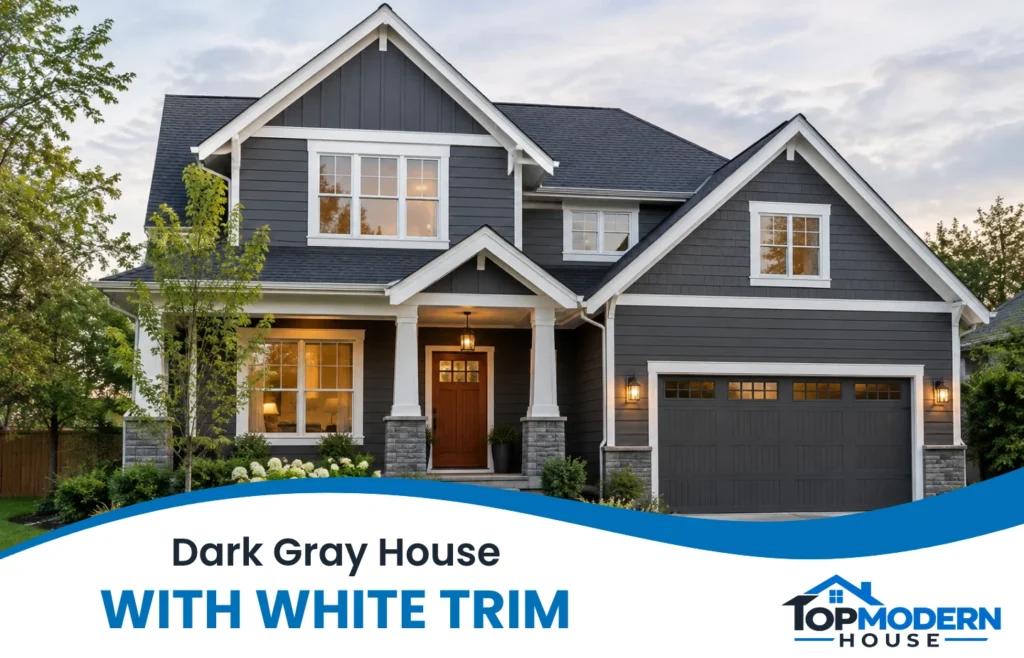
A dark gray house with white trim gets its character from the balance between bold walls and lighter details. White can draw attention to an entrance, frame a window, or outline a roofline. Wood, stone, and greenery add the warmth that keeps the exterior from feeling stark.
The right combination also needs to work with what’s already there. Your roof, window frames, and brickwork may influence the result more than a paint swatch suggests. These twelve ideas offer different ways to approach the look, followed by practical guidance for adapting it to your home.
Short Definition
A dark gray house with white trim pairs deep gray exterior walls with white architectural details. The contrast defines windows, doors, and rooflines, providing a starting point for coordinating accents and materials.
Topmodrenhouse Mission Statement
Topmodrenhouse helps homeowners, renters, and home lovers make informed, practical choices for comfortable, stylish living spaces.
Quick Exterior Color Checklist
- Compare gray and white samples together outdoors.
- Check both colors beside existing window frames.
- Coordinate with the roof, brick, and stone.
- Decide whether the garage should blend in or stand out.
- Check the palette in sunlight and shade.
- Confirm siding compatibility before choosing a dark repaint.
12 Welcoming Exterior Ideas to Make Your Own
1. Warm Charcoal Siding With a Natural Wood Door
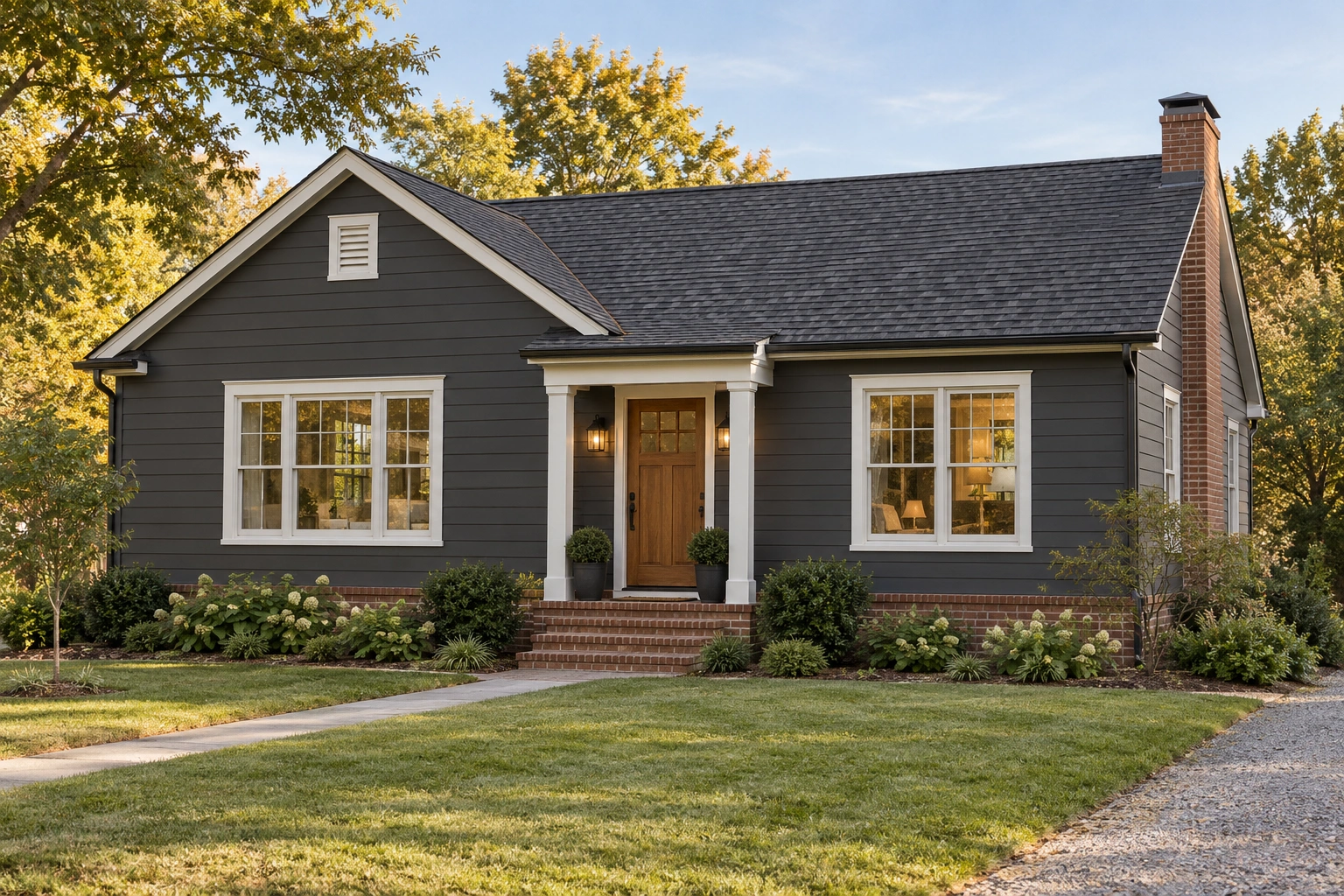
A wood front door creates a welcoming focal point against charcoal siding. Its grain brings texture to an otherwise simple palette, while white door trim gives the entrance definition.
Choose the stain beside your existing materials. A strongly orange finish could compete with red brick, while a quieter brown may sit more comfortably alongside it. For an existing wood door, check its condition before deciding whether refinishing is enough.
2. Soft White Trim for a Gentler Contrast

Soft white offers a less abrupt transition from dark walls to lighter details. It’s a useful option to sample beside warm stone, weathered brick, or a brown roof.
Pay attention to nearby window frames. Creamy trim beside a bright factory-white frame can make the difference between the two whites conspicuous. Compare them directly rather than choosing the trim from an isolated color card.
3. A White-Framed Porch That Welcomes You In

White columns and doorway trim can help a recessed porch stand out from dark siding. Add a wood bench or a pair of planters to give the entrance a comfortable, lived-in quality.
Keep the emphasis near the door. Painting every beam, railing, and decorative piece white can create too many competing lines, particularly on a small porch. Look from the sidewalk to see which details actually deserve attention.
4. Dark Gray Lap Siding on a Simple Ranch

Horizontal lap siding follows the long proportions of a ranch. Dark gray provides a consistent backdrop, with white window trim breaking up the wall surfaces.
For a ranch with a prominent garage, consider a garage-door color close to the siding. A wood or colored front door can then become the main accent. This approach changes the visual emphasis without adding architectural features.
5. Charcoal Board-and-Batten With Understated White Trim
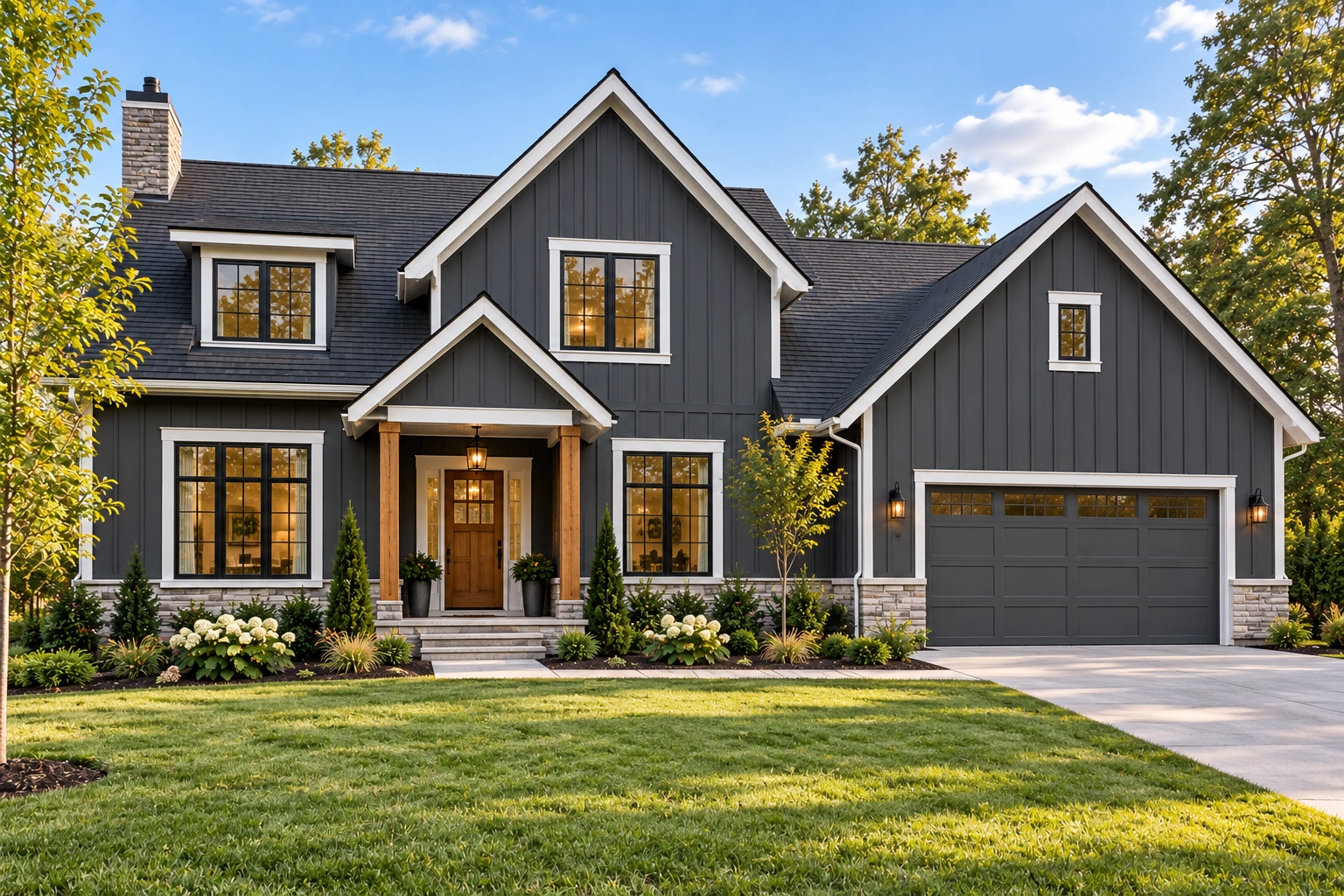
Board-and-batten siding adds vertical texture to a contemporary or modern farmhouse exterior. Charcoal keeps that texture subtle, while white around windows and selected roof edges provides contrast.
Keep the boards and battens the same gray when you want a calmer appearance. Their shadows already create detail; outlining every batten in white can make the elevation feel much busier.
6. Dark Gray Shingles With Cottage Character

Dark shingles bring texture and a smaller-scale pattern to a cottage exterior. Simple white casings help windows remain distinct against the varied surface.
Let the siding supply most of the detail. A modest porch, an uncluttered doorway, and a few well-placed plants can complement the texture without competing with it. This idea works particularly well when the house already has shingle siding worth retaining.
7. White Gable Details on a Craftsman Home

A Craftsman exterior often has details worth highlighting: substantial window surrounds, gable outlines, and porch elements. White trim can make selected features more noticeable against charcoal walls.
Avoid emphasizing everything equally. Leaving some brackets or beams in the body color gives the eye somewhere to rest. Existing masonry and a wood door can provide additional character without introducing several accent paints.
8. Dark Gray Siding Paired With Existing Red Brick

Retained red brick brings warmth to dark gray siding, whether it appears around the foundation, chimney, or entrance. It also gives the palette an existing material to relate to.
Study the mortar and darker flecks as well as the dominant brick color. Those quieter tones may provide a better connection to gray. Test actual samples nearby instead of assuming all red brick needs the same warm-gray shade.
9. Pale Stone Accents Against Charcoal Walls
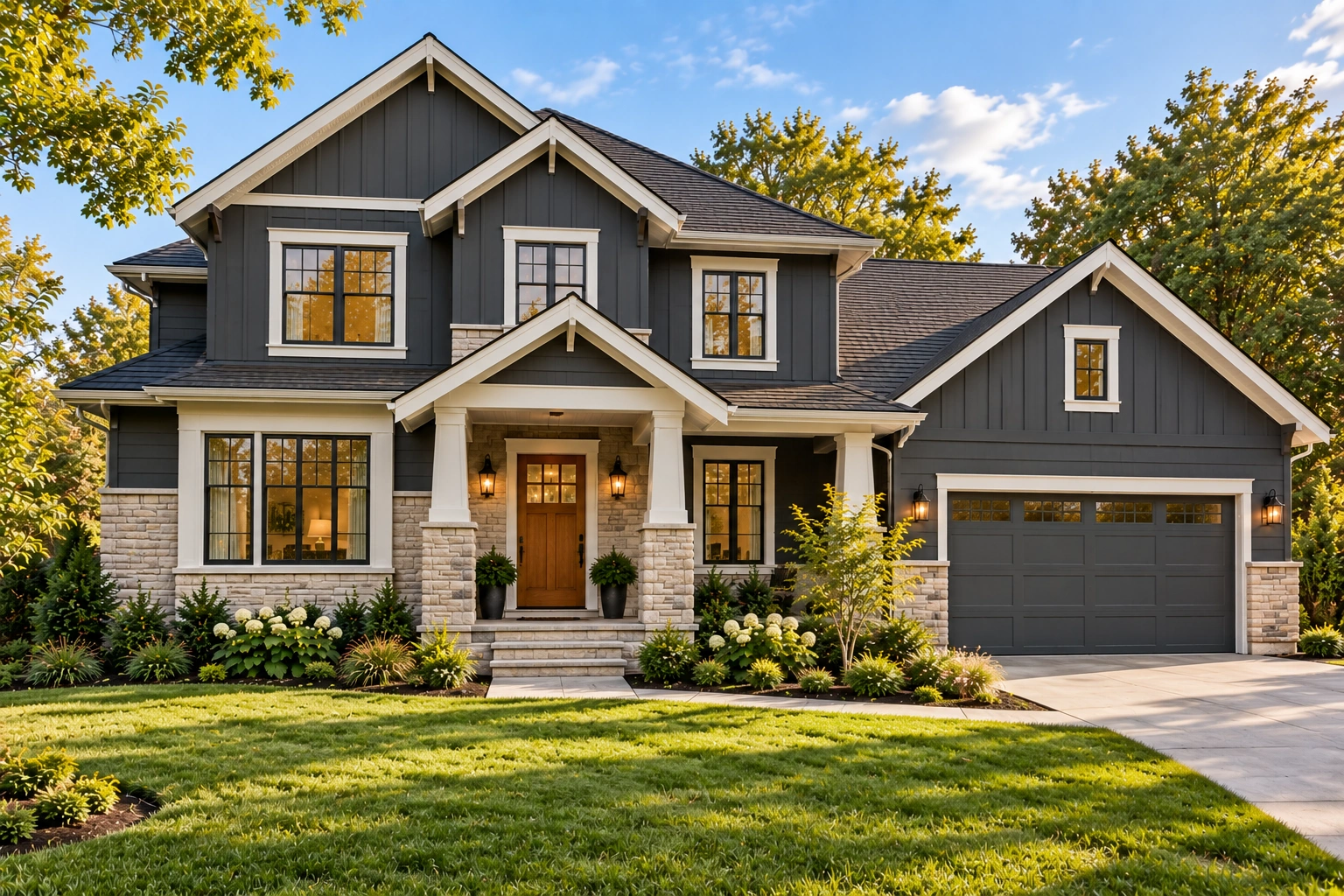
Pale stone can break up a substantial dark wall with a broader area of lightness than trim alone. An existing stone porch base or lower facade offers a natural starting point.
Choose the white alongside the stone. Cream-colored masonry and brilliant white trim may feel disconnected, even when each looks attractive separately. Before adding stonework, check how much would remain visible behind mature shrubs.
10. A Muted Green Front Door for a Softer Focal Point
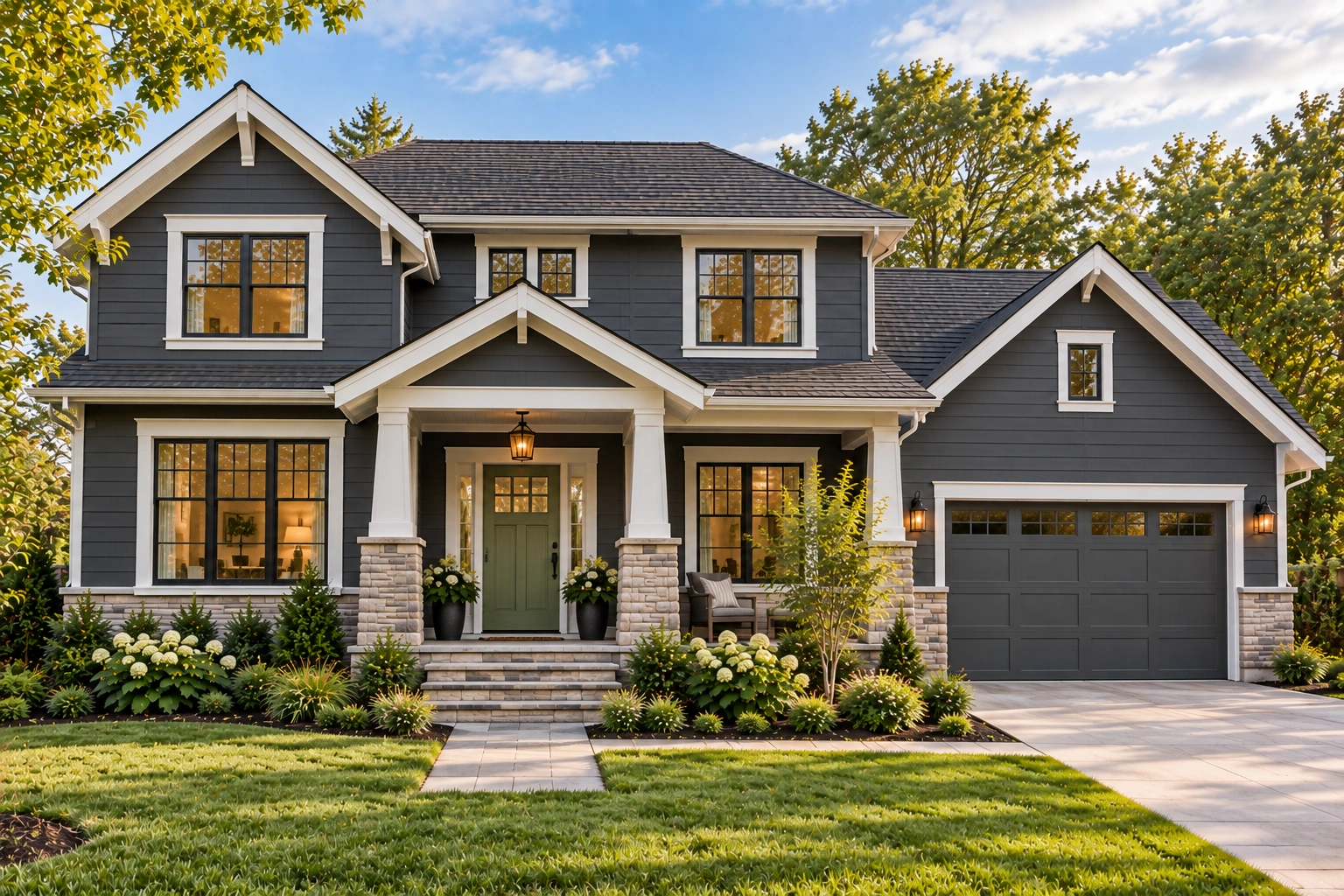
Muted green adds color while keeping the exterior relatively restrained. An olive-leaning green and a blue-green will create different relationships with the siding, so compare both with your fixed materials.
Consider the entrance’s lighting. A very dark green door may blend into charcoal walls beneath a deep porch. A lighter sample could give the doorway enough separation without becoming a bright accent.
11. Black Window Frames Within White Trim
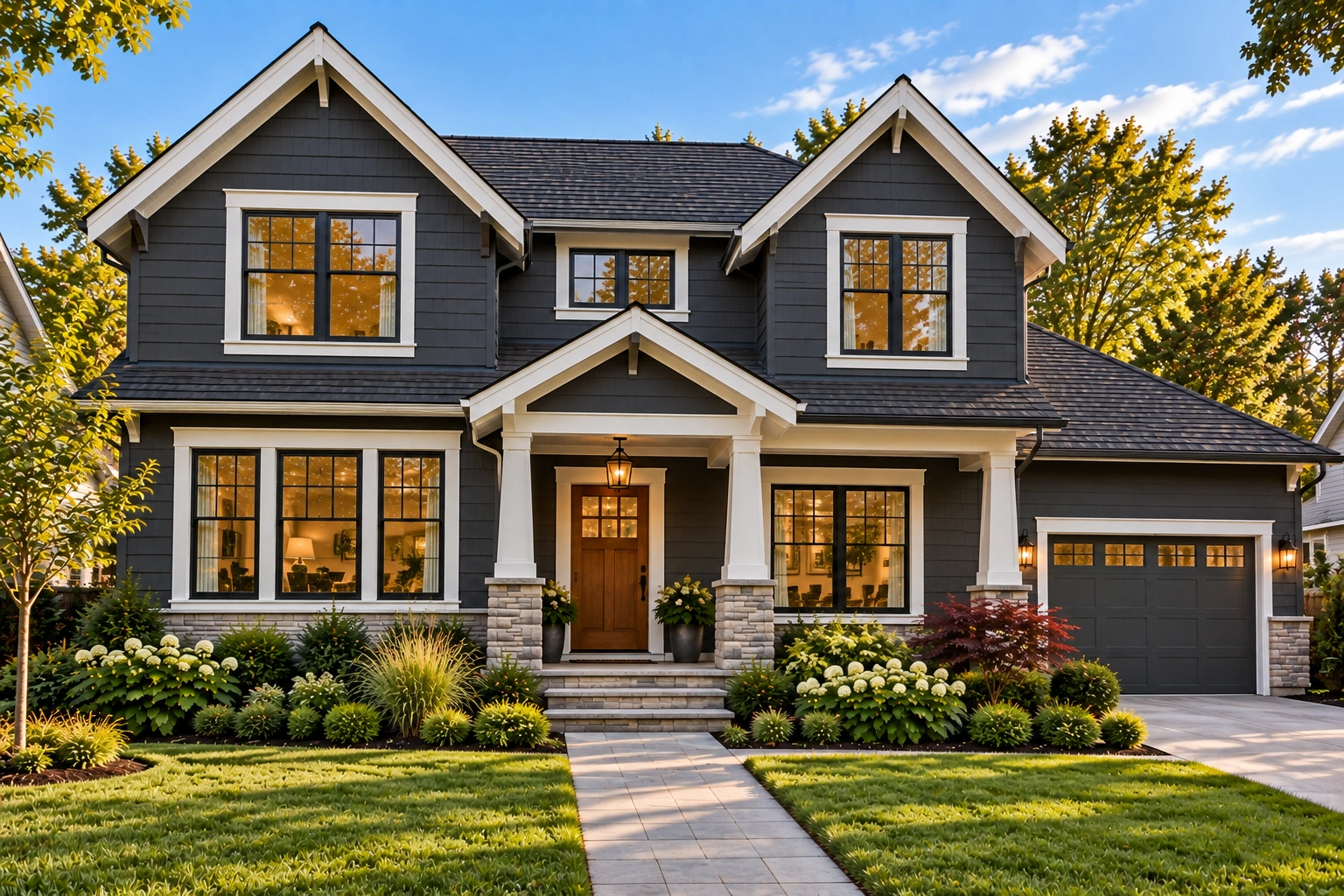
Black window frames surrounded by white casings create a layered transition to dark siding. The white border helps distinguish the opening from the wall.
This is especially useful when black frames already exist. Window frames and surrounding trim are separate components, so changing the casing color doesn’t require replacing the window. Sound windows don’t need replacement just to follow an inspiration image.
12. Layered Greenery and a Light Walkway
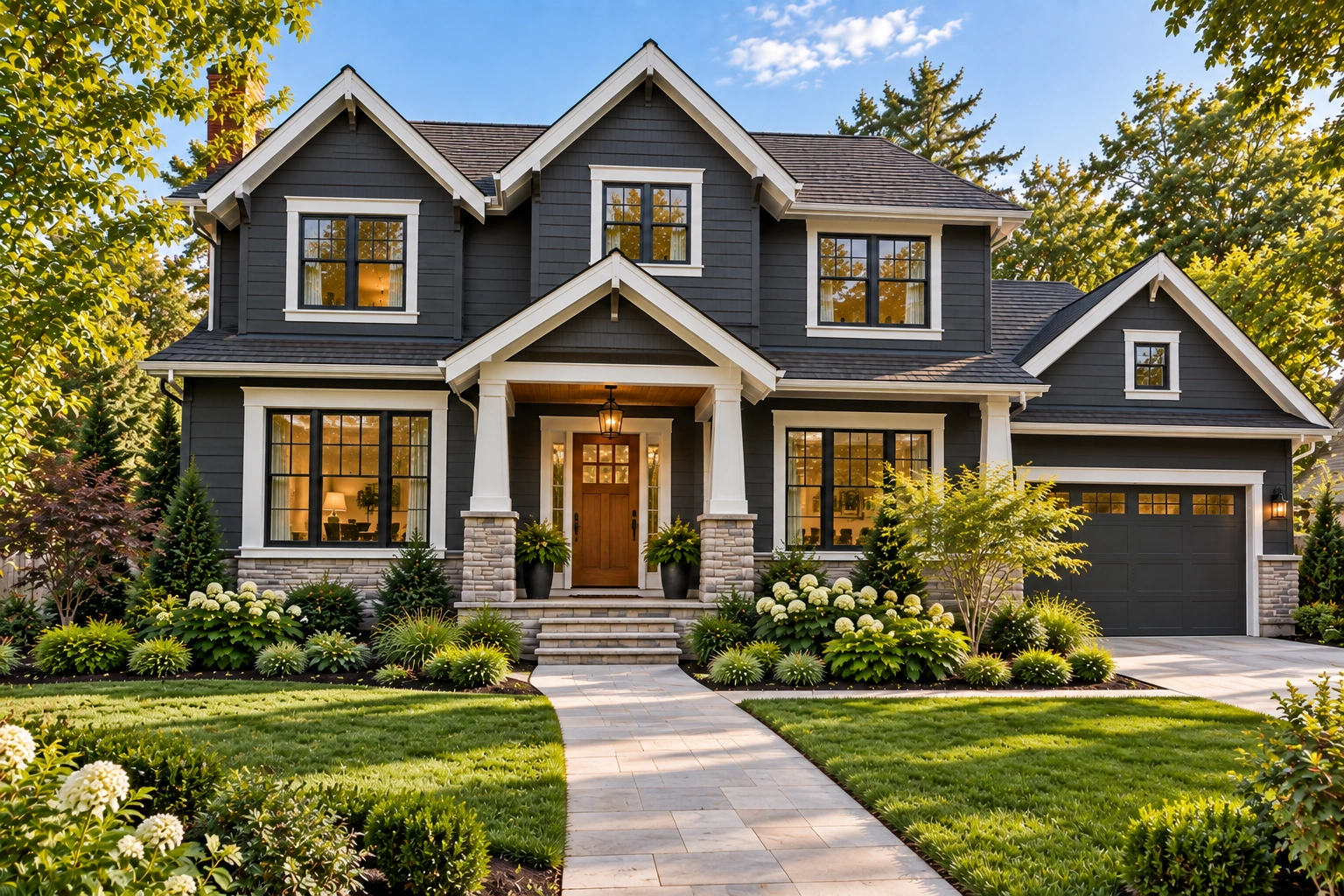
Green foliage softens the edges of a dark exterior, while a pale walkway creates a clear approach to the entrance. Together, they can make a restrained gray-and-white palette feel more welcoming.
Choose plants for the site’s conditions and their mature size. Keep windows, steps, and distinctive porch details visible. A few appropriately sized plants usually create a clearer composition than a crowded foundation bed.
How to Choose the Right Gray and White Pairing
Choose the two colors together, with your roof, windows, and masonry nearby. The goal is a combination that connects the exterior’s existing elements and gives you the amount of contrast you prefer.
Warm Gray, Cool Gray, or Deep Charcoal?
An undertone is the subtle color beneath a paint’s main appearance. Gray can lean toward brown, blue, green, or violet. Charcoal describes a dark shade, but it doesn’t identify one consistent undertone.
Use the house’s permanent materials to narrow the choices:
| Existing feature | Useful comparison |
| Brown roofing or warm stone | Sample grays with warmer character |
| Cooler gray shingles | Compare neutral and cooler grays |
| Mixed-color brick | Look for a relationship with mortar or quieter brick tones |
| A deeply shaded porch | Compare several depths before choosing the darkest gray |
These comparisons are starting points rather than rules. A color that works on the sunny front elevation still needs checking along shaded walls.
Crisp White or Soft White Beside Your Windows?
Crisp white creates a sharper outline against dark siding, while soft white offers a gentler contrast. The better choice depends on your existing windows, roof, and masonry. Compare whites beside those finishes before choosing; an attractive white on its own may feel mismatched once applied around a window.
For one named combination to sample, Benjamin Moore lists Kendall Charcoal HC-166 among the coordinating colors for White Dove OC-17. That makes it a useful candidate, not a guaranteed match for every exterior.
Coordinate the Palette With the Rest of Your Exterior
A cohesive exterior needs a clear relationship between its colors and materials. It doesn’t require every surface to match or every architectural detail to stand out.
Work With the Roof, Brick, and Stone You Have
Begin with the elements you aren’t changing. A broad roof slope or substantial brick wall influences the palette more than a small accessory.
Place samples where the siding meets those materials. A gray that seems balanced beside a white chip may look unrelated to reddish shingles or yellow-toned stone.
Consider the proportions, too. A small stone accent can support a palette, while a large masonry facade may need to lead it. Choose around the surfaces that dominate the street view.
Coordinate Front Doors, Garage Doors, and Gutters
Give each feature a deliberate role:
- Front door: Use wood or a distinct color when you want the entrance to attract attention.
- Garage door: A shade close to the siding reduces contrast; white or wood-look finishes make it more noticeable.
- Gutters: A finish close to the fascia can create continuity along the roof edge.
- Downspouts: Matching the surface behind them can help them recede where appropriate.
A repeated hardware finish on the front door and nearby lighting may provide enough connection. Adding dark accents everywhere can weaken the entrance’s emphasis.
Test Your Colors and Avoid Costly Mismatches
Photographs help you identify a direction. Samples help establish whether that direction works with your home’s materials and light.
Compare Samples Together in Sun and Shade
View the proposed gray and white together rather than testing each separately. Benjamin Moore recommends applying exterior color samples to white foam board for outdoor viewing and explains that shade and direct sunlight affect a color’s appearance.
Use a simple process:
- Shortlist a few complete gray-and-white combinations.
- Prepare samples according to the product instructions.
- Compare them beside existing windows and masonry.
- Check sunny and shaded elevations at different times.
- Step back to assess the whole house from the street.
Treat digital renderings as tools for exploring placement, not exact color predictions. Confirm the intended paint finish with the supplier before buying the final coating.
Check Your Siding Before Choosing a Dark Repaint
Installing new dark siding and repainting existing siding are different decisions. Identify the current material and check its condition, coating requirements, and applicable manufacturer guidance.
Vinyl needs particular care. Sherwin-Williams offers a designated VinylSafe palette with a limited selection of darker colors formulated for sound, stable vinyl. This is not blanket approval to apply any charcoal paint to any vinyl siding. Check both the siding requirements and the proposed paint system.
A qualified painting contractor can help assess uncertain materials or coating problems. For a smaller update, changing a compatible door finish, simplifying accents, or refreshing the planting may be enough to improve the overall appearance.
Frequently Asked Questions
Will Dark Gray Make a Small House Look Smaller?
Dark gray doesn’t automatically make a small house look smaller. The impression depends on proportions, light, landscaping, and contrast. White trim can define windows and doors, but excessive contrasting details may make a compact facade feel busy. Assess the proposed palette from the street rather than judging a close-up sample alone.
Why Does Gray Exterior Paint Sometimes Look Blue?
Gray may appear blue because of its undertones, outdoor lighting, and neighboring colors. A sample that seems neutral indoors can look cooler on the exterior. Compare it with the planned trim and permanent materials under different lighting conditions before deciding whether to try a warmer or more neutral shade.
Can Dark Gray Siding Work With a Brown Roof?
Dark gray can work with a brown roof when the colors relate well. Brown shingles may contain red, gold, or gray tones, so the general color name isn’t enough to guide the choice. Compare siding samples with the actual roofing and any masonry that will remain.
Does Dark Gray Siding Need More Maintenance?
Maintenance depends on the siding material, finish, condition, and exposure—not color alone. A dark surface may make some dust or finish changes more noticeable, but it doesn’t establish a universal maintenance schedule. Follow the specific siding and coating manufacturer’s care guidance rather than assuming dark gray is automatically easier or harder to maintain.
Bring the Look Together
A welcoming dark gray house with white trim starts with a clear focal point and materials that work together. Choose the idea closest to your home’s character, then compare the palette beside its roof, windows, and masonry. Thoughtful trim placement, an inviting entrance, and a few well-chosen accents can bring the look together without replacing everything.
Disclaimer
This content is for general informational purposes only. Homes, needs, preferences, budgets, and situations vary. Seek qualified professional advice for safety, installation, repairs, structural, electrical, plumbing, HVAC, legal, or major property decisions.