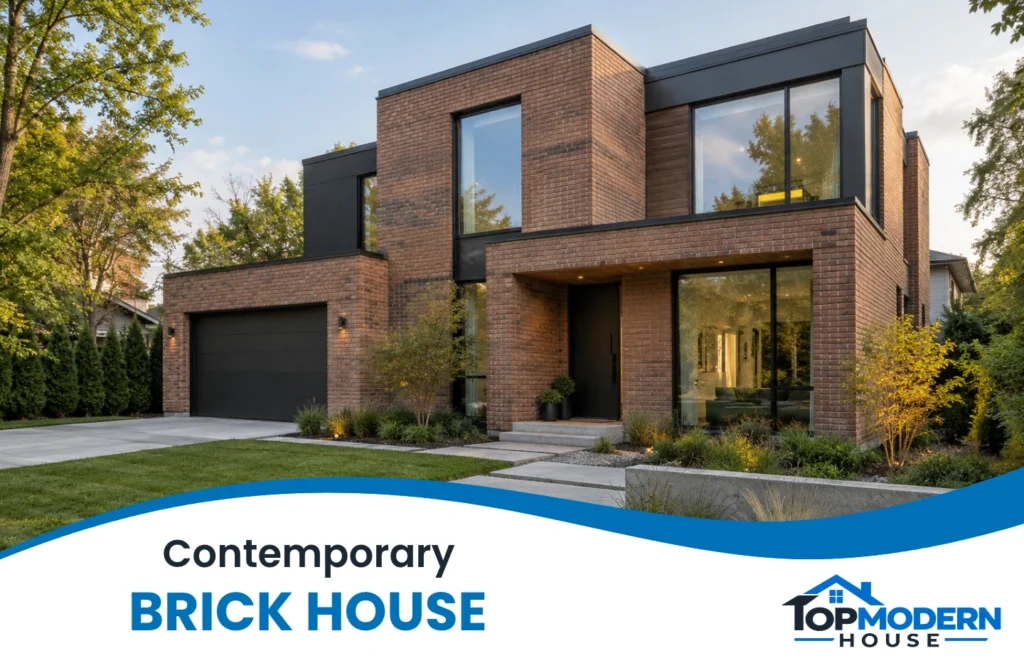
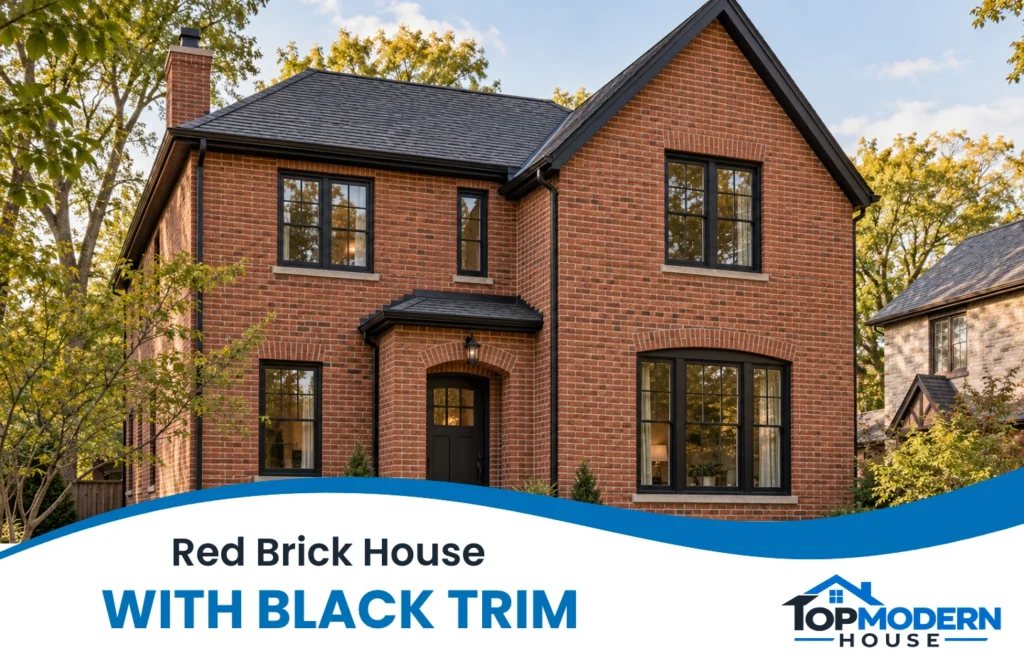
A red brick house with black trim can look crisp and welcoming—or heavier than expected. The difference often comes down to placement: a narrow window surround creates a different effect from an entire black garage door.
You don’t need to darken every detail to make the combination work. These twelve ideas show how to coordinate black with the brick, windows, and roof you already have, while keeping the entrance inviting and the exterior balanced.
Short Definition
A red brick house with black trim pairs red brick walls with dark details around windows, doors, or roof edges. Homeowners choose this combination to define architectural features and refresh the exterior while retaining the brick.
Topmodrenhouse Mission Statement
Topmodrenhouse helps homeowners, renters, and home lovers make informed, practical choices that bring comfort, style, and everyday usefulness to their spaces.
Does Black Trim Work With Red Brick?
Black trim can work well with red brick when its shade and placement relate to the rest of the exterior. Consider the brick and mortar colors, roof, window finishes, and existing shadows together. Selective black accents offer definition, while wider dark coverage creates a stronger, more dramatic appearance.
Black also isn’t one uniform color. Charcoal, brown-black, and cooler near-black shades can look quite different beside the same masonry. The most useful starting point is deciding which features you want to emphasize.
12 Ideas for a Balanced Red Brick House With Black Trim
1. Keep White Windows and Repeat Black on Nearby Accents
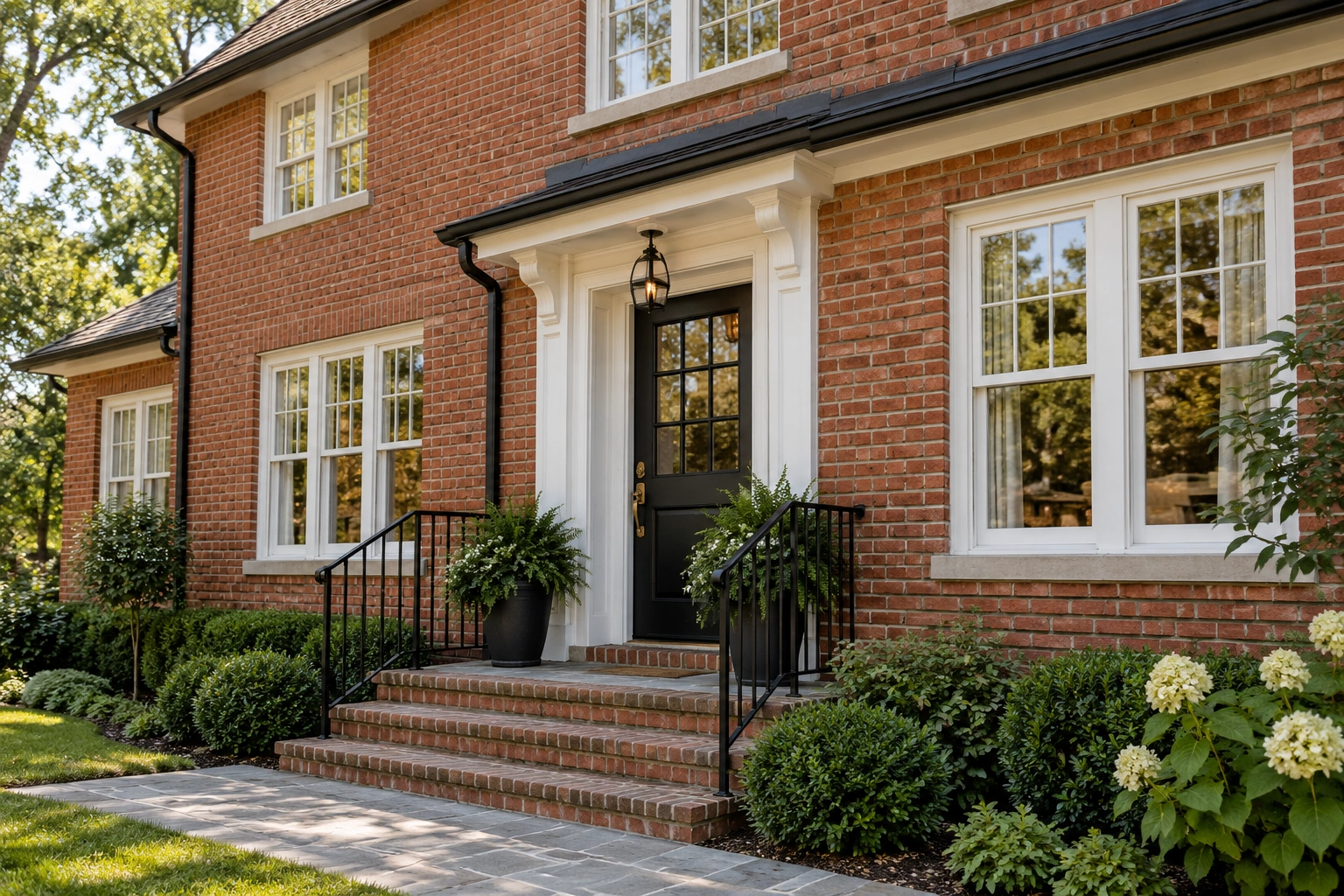
White windows can stay part of the design. Keep their surrounding casings—the trim bordering the window opening—light, then repeat black on the front door, railings, or roof edge.
This gives an existing home a coordinated refresh without making window replacement part of the project. Check the width of the white frame before adding black directly around it; several contrasting borders can make a small window look busy.
2. Pair Black Door Trim With a Natural Wood Front Door
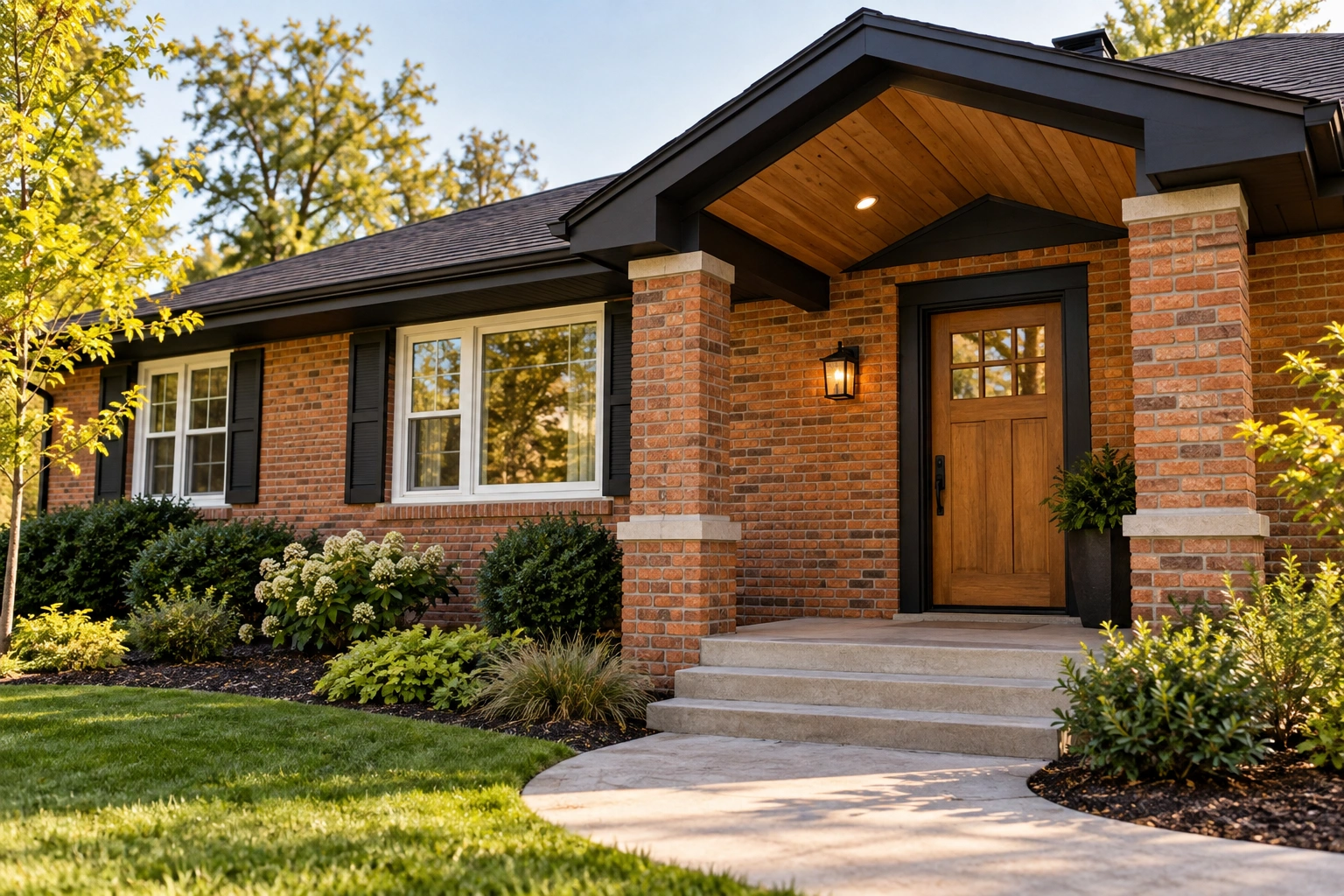
A wood door introduces another warm material beside the brick, while black trim gives the entrance a defined outline. This combination can suit a simple ranch entry or a porch with substantial brick columns.
Compare the wood finish with the masonry. A strongly orange stain might intensify orange-red brick more than you want. A quieter brown finish is another option to sample, with exterior suitability checked before refinishing.
3. Frame Colonial Windows With Black Shutters and Light Casings
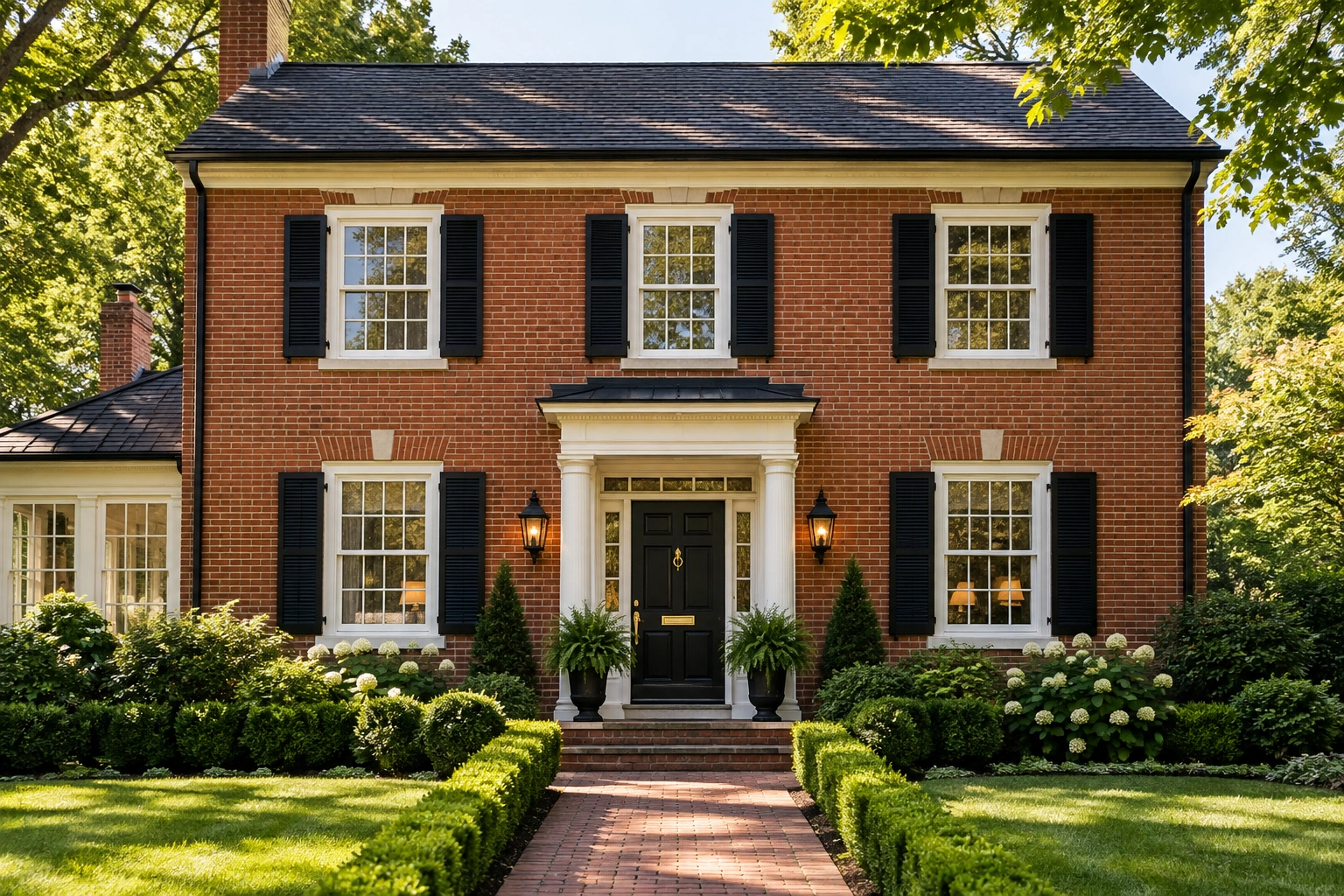
Black shutters, light window casings, and a dark front door create a repeating pattern across a symmetrical Colonial façade. The light trim separates the dark shutters from the windows, keeping each opening easy to read.
Pay attention to shutter proportions. Very narrow shutters beside broad windows can look like unrelated strips. Choose shapes and sizes that relate convincingly to the openings rather than adding shutters wherever space allows.
4. Give a Brick Ranch Definition With Slim Black Window Frames

On a low, wide ranch, restrained dark window frames can provide definition while leaving generous areas of brick visible. Keeping the surrounding trim simple avoids adding heavy borders across an already horizontal façade.
This approach is especially relevant when dark windows already exist or replacement is planned. Don’t assume painting existing frames is suitable; their material and factory finish determine what changes are possible.
5. Try Soft Charcoal With Pale Red Brick
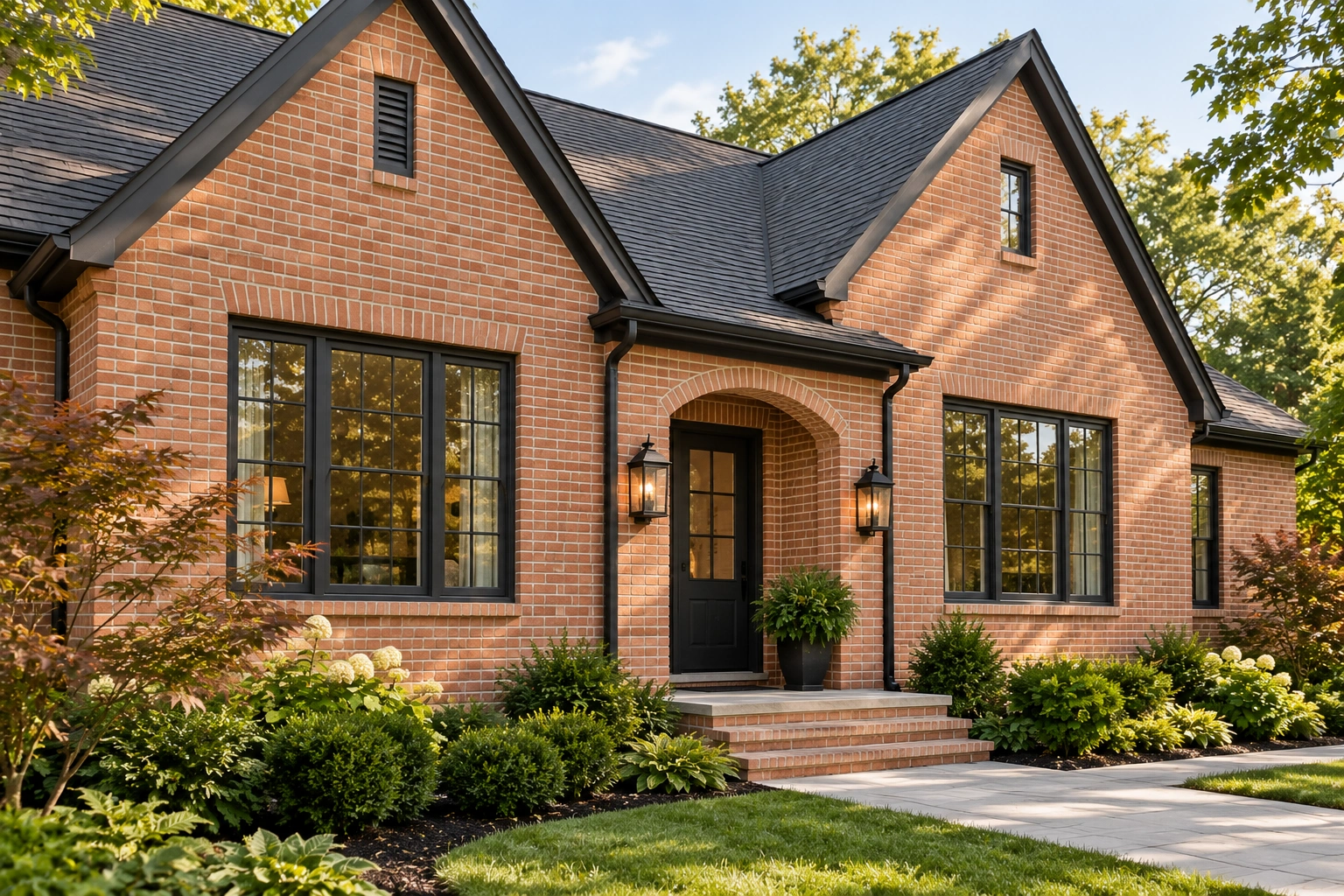
Charcoal offers a near-black alternative for salmon, faded red, or lighter brick. It can create a gentler transition than a deeper black, particularly where the mortar is prominent.
Compare both colors on large samples rather than assuming charcoal will always be softer. Some shades show noticeable blue or green undertones outdoors. Include the roof in the comparison so the trim doesn’t introduce an unexpected additional color.
6. Keep a Light Surround Around a Shaded Black Front Door
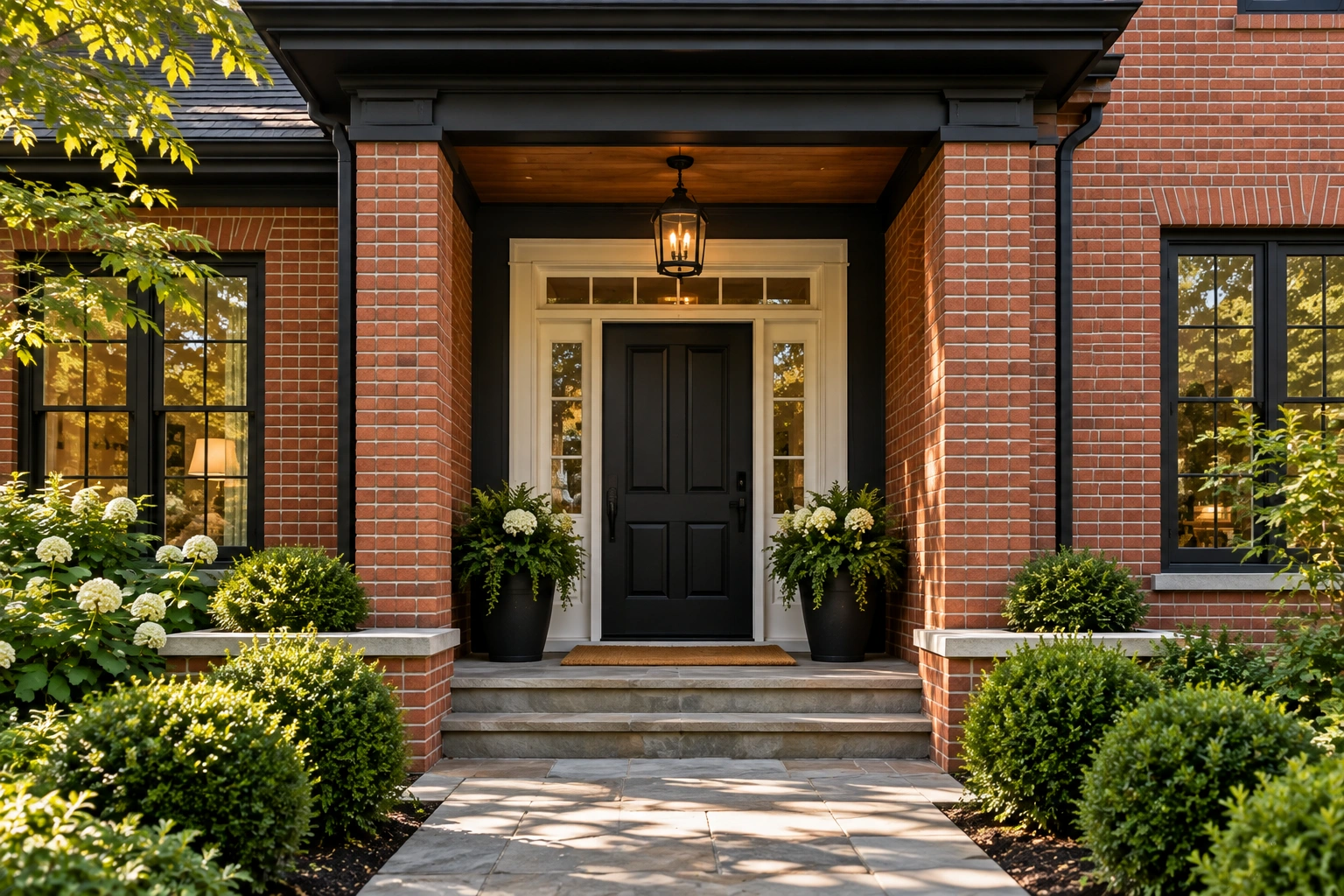
A recessed porch already contains shadows. Pairing a black door with a light surround can help distinguish the entrance without darkening the entire recess.
Warm white, pale gray, or a mortar-related neutral are possible starting points. Choose beside the existing windows and brick, not in isolation. View the doorway from the sidewalk: the contrast should make the entrance easier to identify within the porch.
7. Balance Large Black-Framed Windows With Simple Trim
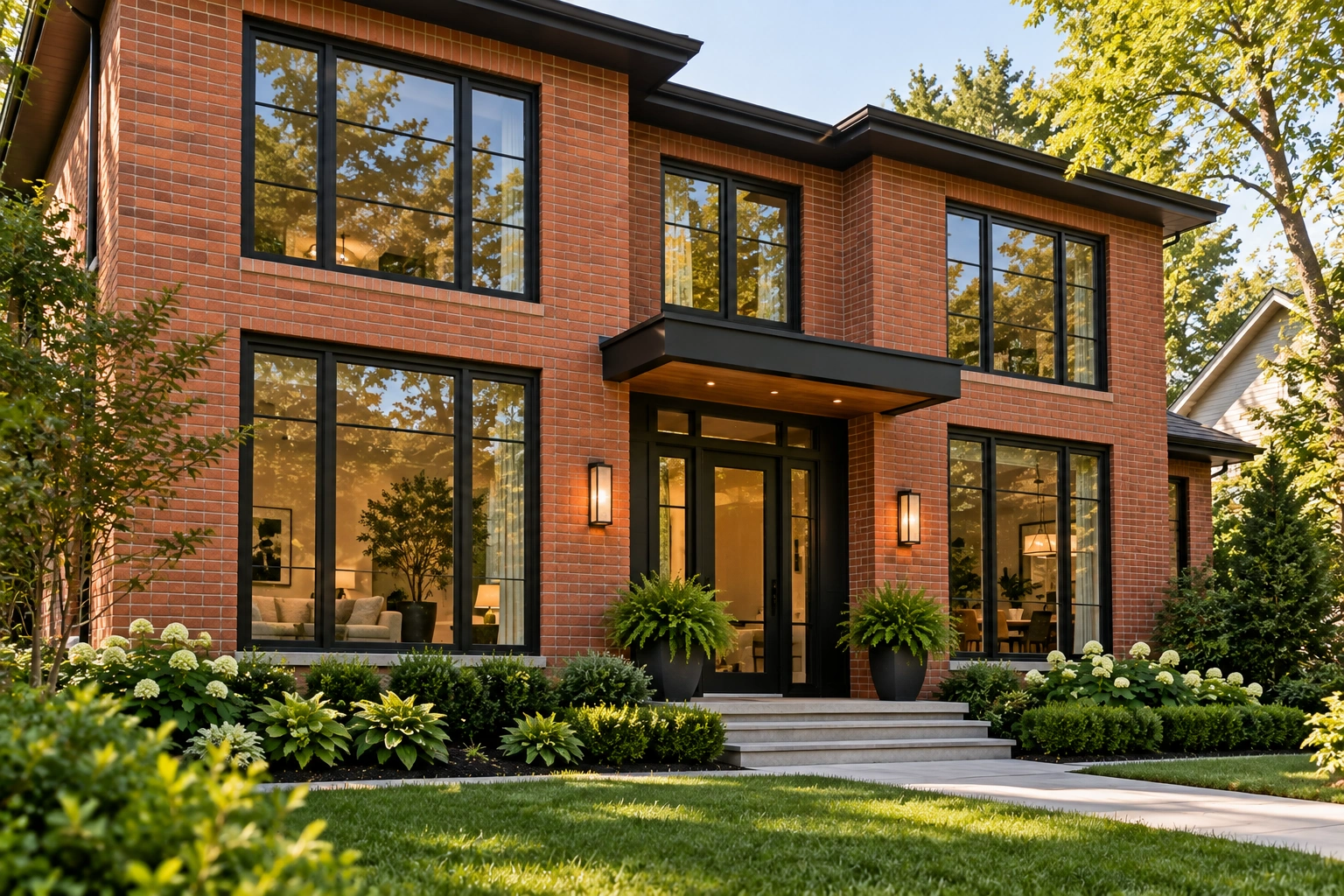
Large windows can supply most of the dark detailing on a modern brick home. Plain surrounding trim allows the glazing and masonry to remain the main features.
Adding thick black borders, shutters, and decorative brackets around those same windows may create competing lines. Where the frames already make a strong statement, repeat black sparingly on an entry canopy or door surround. Changes to window openings belong in a professionally planned renovation.
8. Outline a Light Garage Door With Black Trim

A front-facing garage occupies a substantial part of some façades. Keeping the door light and using black around its opening introduces contrast without turning the whole surface into a dark focal point.
Relate the garage color to existing siding, window trim, or mortar. Check the result alongside the front entrance; a wide, dark garage border can still attract more attention than intended.
9. Connect Black Fascia and Gutters With a Matching Entry

Black fascia—the board along the roof edge—and matching gutters can establish a continuous upper line. Repeating the color at the front door gives it a connection lower on the house.
The soffits, which form the underside of the roof overhang, don’t automatically need to match. Leaving them lighter may suit a deeply shaded elevation. Consider downspouts separately, since dark vertical runs can draw attention to their locations.
10. Pair Light Siding With Red Brick and Black Trim

For a split-level or partially bricked house, light siding can provide a larger balancing area beside dark trim. Repeating black around selected openings helps connect the different wall materials.
Compare the siding color with the mortar and fixed windows. A creamy siding beside bright white windows may produce a contrast you didn’t notice on a small sample. Assess the materials together before committing to the palette.
11. Follow Existing Tudor Details With Dark Trim
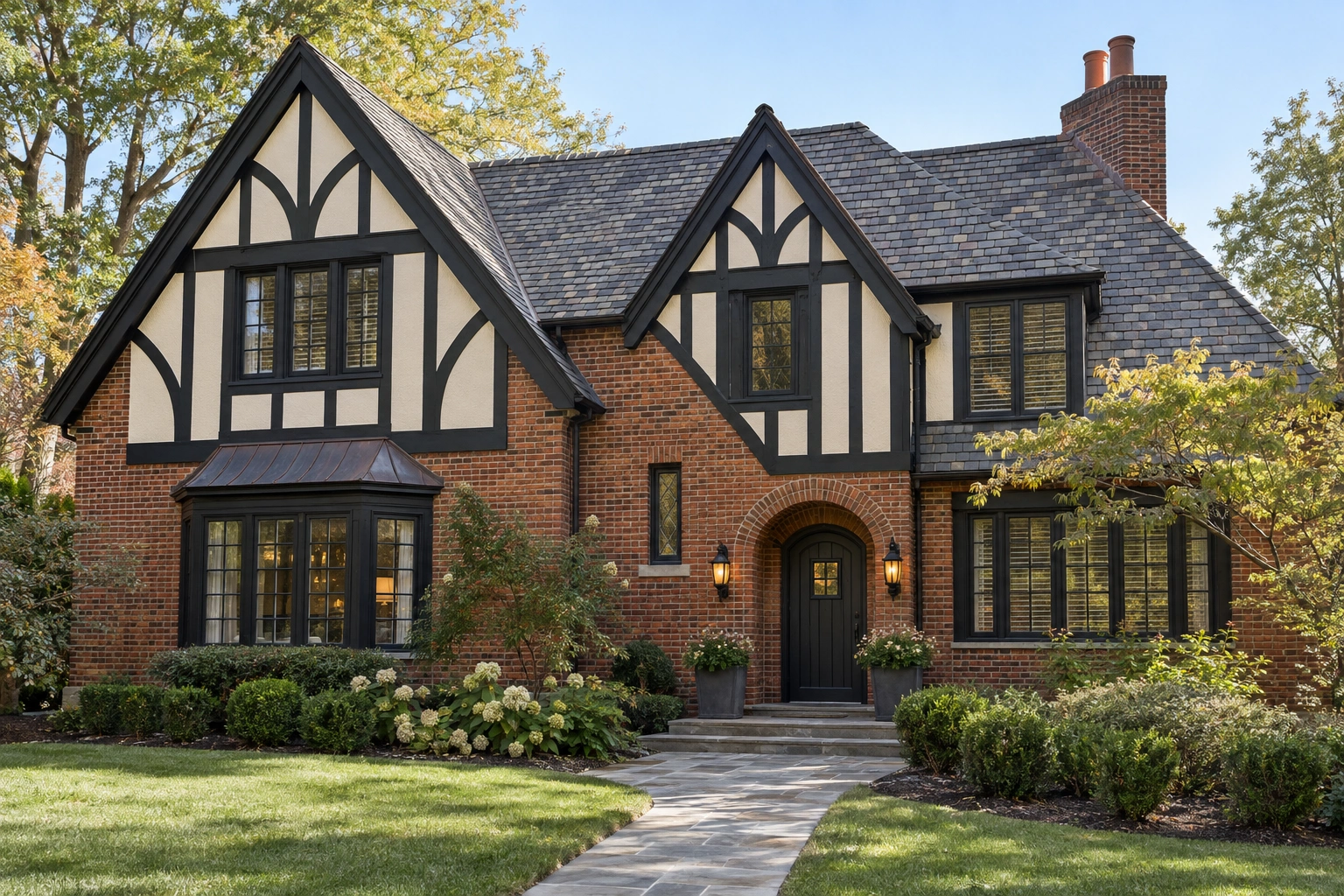
On a Tudor-style home, existing decorative timber patterns provide a logical place for black or near-black accents. Light infill panels can keep the pattern visible alongside red brick.
Follow the architecture already present rather than adding dark lines solely to imitate the style. Ornate details also deserve a closer look: a very dark finish may make some profiles less visible in shade.
12. Add a Colored Front Door Within a Black-Trimmed Entry

A muted green or blue door can become the focal point within a black surround. This gives the entry its own identity while black continues elsewhere on the exterior.
Keep the surrounding palette restrained so the door has room to stand out. Test it beside both the brick and the proposed black; a color that works with one may feel disconnected from the other.
Choose the Right Look for Your Brick, Roof, and House Style
The most useful idea is one that fits your existing house and project scope. Separate features that will remain from those you intend to repaint or replace before choosing a scheme.
Read the Brick and Mortar Together
Look at the wall from several feet away. Is its overall appearance orange-red, brown-red, burgundy, or pale pink? Then move closer to examine the mortar and color variation within individual bricks.
Don’t select trim from one unusual dark fleck alone. A sample should work with the overall wall, including the mortar that outlines every brick.
Compare Black and Near-Black Samples With Your Roof and Windows
There’s no single best trim color for all red brick homes. Use a small comparison set:
| Existing feature | Useful sample comparison |
| Brown roof | Black beside a warmer brown-black or dark bronze |
| Charcoal roof | Deep black beside softer charcoal |
| Bright white windows | Black accents with retained light casings |
| Dark factory-finished windows | Proposed trim beside the actual window finish |
These are starting points, not fixed pairing rules. Roof weathering and surrounding materials can change the result. Don’t replace a serviceable roof simply to reproduce an inspiration photo.
Decide Where Black Should Draw Attention
Choose a main feature: the entrance, window pattern, or architectural trim. Then decide where smaller repetitions support it.
A black garage door and a black front door may use identical paint but have very different visual effects because of their size. There’s no required percentage of black; judge the distribution from the street.
Check Your Materials and Test the Color Before Painting
Identify What Can Be Painted—and What Should Stay Unchanged
Window frames, surrounding wood trim, PVC boards, and metal gutters don’t necessarily accept the same coating. Identify each material and check the exact manufacturer’s finishing instructions.
For example, Andersen documentation warns against painting certain vinyl components. AZEK also publishes product-specific coating requirements, including different guidance for its PaintPro trim. A general recommendation to “paint everything black” overlooks these distinctions.
Check preparation, approved colors, finish requirements, and warranty conditions before buying paint. Choose sheen as part of that decision; matte and satin can look different, but appearance alone shouldn’t determine the coating system.
Use qualified help for window replacement, work at unsafe heights, or electrical changes associated with new lighting.
Check Samples in Sun, Shade, and From the Street
Paint sample boards using the proposed color and sheen, following the coating instructions. Position them beside the brick, mortar, windows, and other relevant finishes.
Then:
- Compare samples in direct light and shade.
- Revisit them at different times of day.
- Check more than one side of the house.
- Step back to judge the overall relationship.
- Compare your preferred color with a lighter or warmer alternative.
A digital mockup is useful for testing where black goes. Treat its color as approximate; screen settings, image exposure, and editing can change what you see.
Common Mistakes That Make Black Trim Look Unbalanced
- Matching every surface automatically. Gutters, soffits, porch columns, and doors can have different roles. Decide on each deliberately.
- Ignoring trim width. A narrow black outline and a broad black casing won’t produce the same effect.
- Choosing from one photograph. Attractive lighting can conceal shadows or alter apparent colors.
- Making the garage the strongest feature unintentionally. Compare its dark area with the entrance before painting the full door.
- Adding too many accent colors. Black trim, a colored door, contrasting siding, and several metal finishes can compete.
- Overlooking existing wear. Peeling coatings, damaged trim, or deteriorated joints need assessment before a color update.
A useful final check is to identify the first feature your eye notices from the street. Decide whether that’s where you want attention to go.
Frequently Asked Questions
Do I Need to Paint the Brick to Modernize My House?
No. You can update a red brick exterior through coordinated trim, an improved entry, suitable lighting, and simpler detailing while retaining the masonry. Start with the surrounding features that feel disconnected. Painting the brick is a separate material and maintenance decision, not a prerequisite for a more current appearance.
Is Black Exterior Trim Harder to Maintain Than White Trim?
Neither color is automatically easier to maintain. Surface condition, coating quality, exposure, and cleaning requirements matter. Contrasting deposits or marks may be noticeable on either finish, so don’t choose black on the assumption that it hides dirt. Follow the coating or component manufacturer’s care instructions.
Can I Add Black Trim in Stages Without a Full Exterior Makeover?
Yes. Plan the complete palette first, then begin with a defined area such as the entry or existing shutters, provided those surfaces are suitable for painting. Record the paint product, color, and sheen for later work. Keep future replacements in mind so early choices won’t depend on changing them immediately.
Bring the Look Together With a Few Deliberate Choices
Choose the example closest to your home’s architecture and existing finishes. Identify where black will appear, what will balance it, and which materials need checking before work begins.
A few coordinated changes may achieve the look you want. Test them against the actual brick, view the result from the street, and let that comparison guide how far you take the scheme.
Disclaimer
This content is for general informational purposes only. Homes, needs, preferences, budgets, and circumstances vary. Follow product instructions and seek qualified professional advice for safety, installation, repairs, legal matters, structural work, electrical systems, plumbing, HVAC, or major property decisions.