
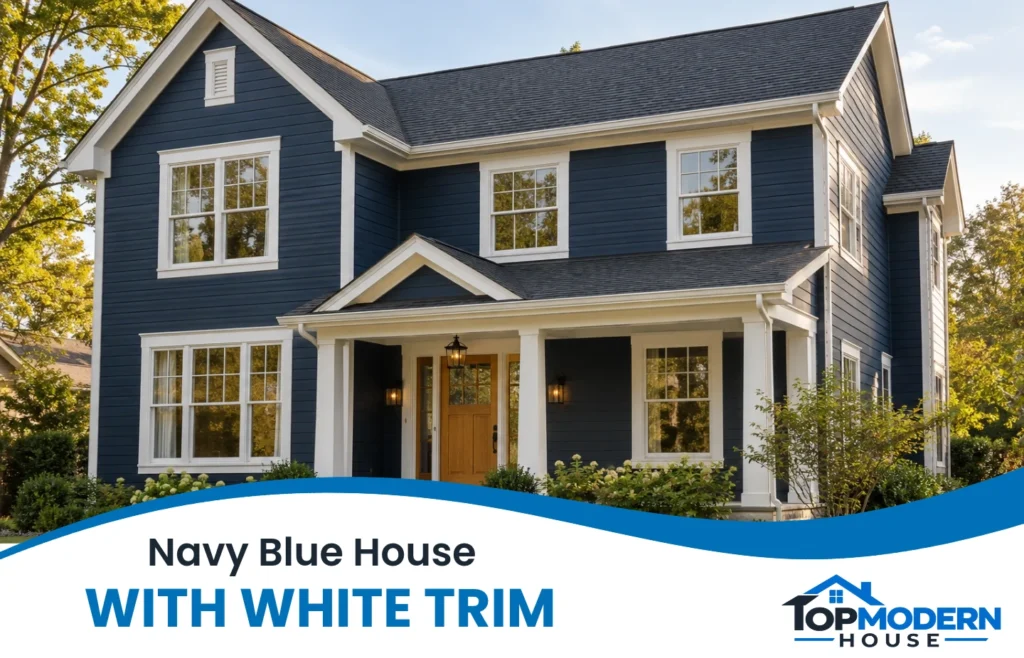
A navy blue house with white trim gets its character from the details: the warmth of a wood door, the width of the window surrounds, and the roof color sitting above it all. The same basic combination can feel coastal, traditional, or distinctly modern.
The strongest palette starts with what your home already has. A navy that looks appealing beside gray stone may need a different white when paired with red brick or cream-colored windows. These twelve ideas offer starting points, followed by guidance for choosing colors that work together on your exterior.
Short Definition
A navy blue house with white trim pairs dark blue exterior walls or siding with white architectural details. The contrast defines windows, doors, and rooflines, offering a starting point for coordinating the home’s exterior colors.
Topmodrenhouse Mission Statement
Topmodrenhouse helps homeowners, renters, and home lovers make informed, practical choices that bring style, comfort, and everyday usefulness to their living spaces.
Quick Color-Selection Checklist
- Identify the roof, masonry, and window colors you’ll keep.
- Compare navy and white samples together beside those finishes.
- Choose a door accent that complements the overall palette.
- Decide whether the garage should stand out or blend in.
- Evaluate samples in sun, shade, and from the street.
- Confirm coating and color compatibility with your siding material.
12 Navy-and-White Exterior Ideas for Your Home
1. A Navy Colonial With Crisp White Architectural Details

Pair navy lap siding with crisp white window surrounds, corner boards, and an entrance surround to emphasize a Colonial home’s symmetry. A charcoal roof can keep the palette restrained, leaving the architecture as the main feature.
Be selective about decorative accents. Where white trim already outlines every window, adding contrasting shutters can make the facade feel busier. Keep them only where they suit the window proportions and the home’s character.
2. A Navy Shingle Cottage With White Window Surrounds
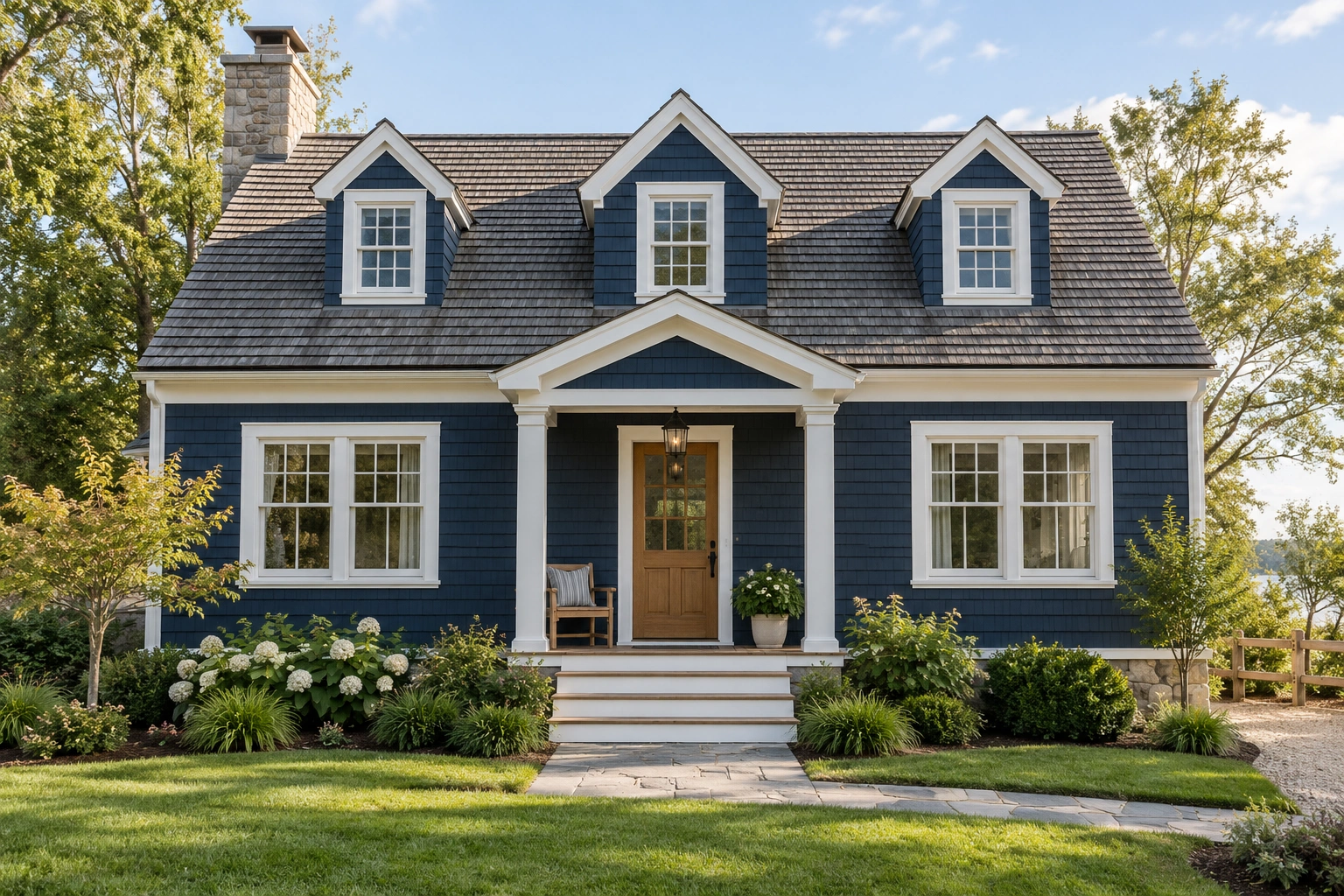
Navy shingle siding brings texture to a small cottage, while white window surrounds keep individual openings clearly defined. A white porch railing or door surround can repeat that contrast without introducing another color.
For a quieter look, keep the palette simple and let the shingles provide interest. A natural wood bench and modest planting can complete the entrance without competing with the siding.
3. Navy Board-and-Batten With a Warm Wood Entry

Vertical board-and-batten siding gives a modern navy exterior a clear rhythm. White trim outlines the openings, while a wood front door provides a warmer focal point.
Choose the wood tone alongside the roof and any existing porch flooring. A strongly orange finish deserves particular attention beside reddish brick. You don’t need matching wood everywhere; a single well-placed door may provide enough warmth.
4. A Navy Ranch With White Trim and Light Stone
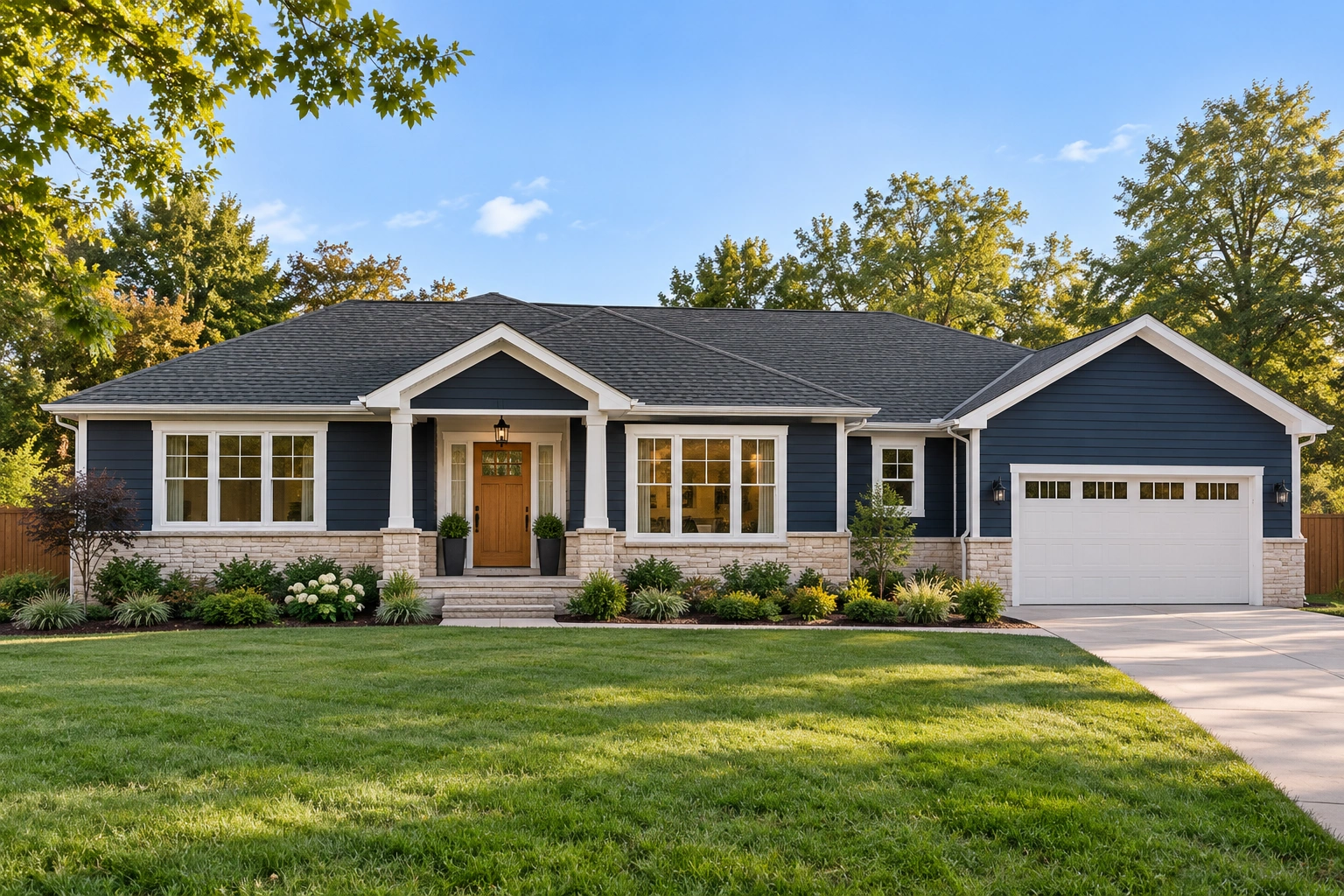
On a ranch house, navy siding can sit above or beside a light stone base, with white trim defining windows along the low facade. The stone provides a visual break across a broad exterior.
Use the existing stone as your starting point. Examine its dominant colors and mortar before selecting trim. A cool white may feel disconnected from creamy stone even when both look attractive separately.
5. A Navy Craftsman With White Porch Columns
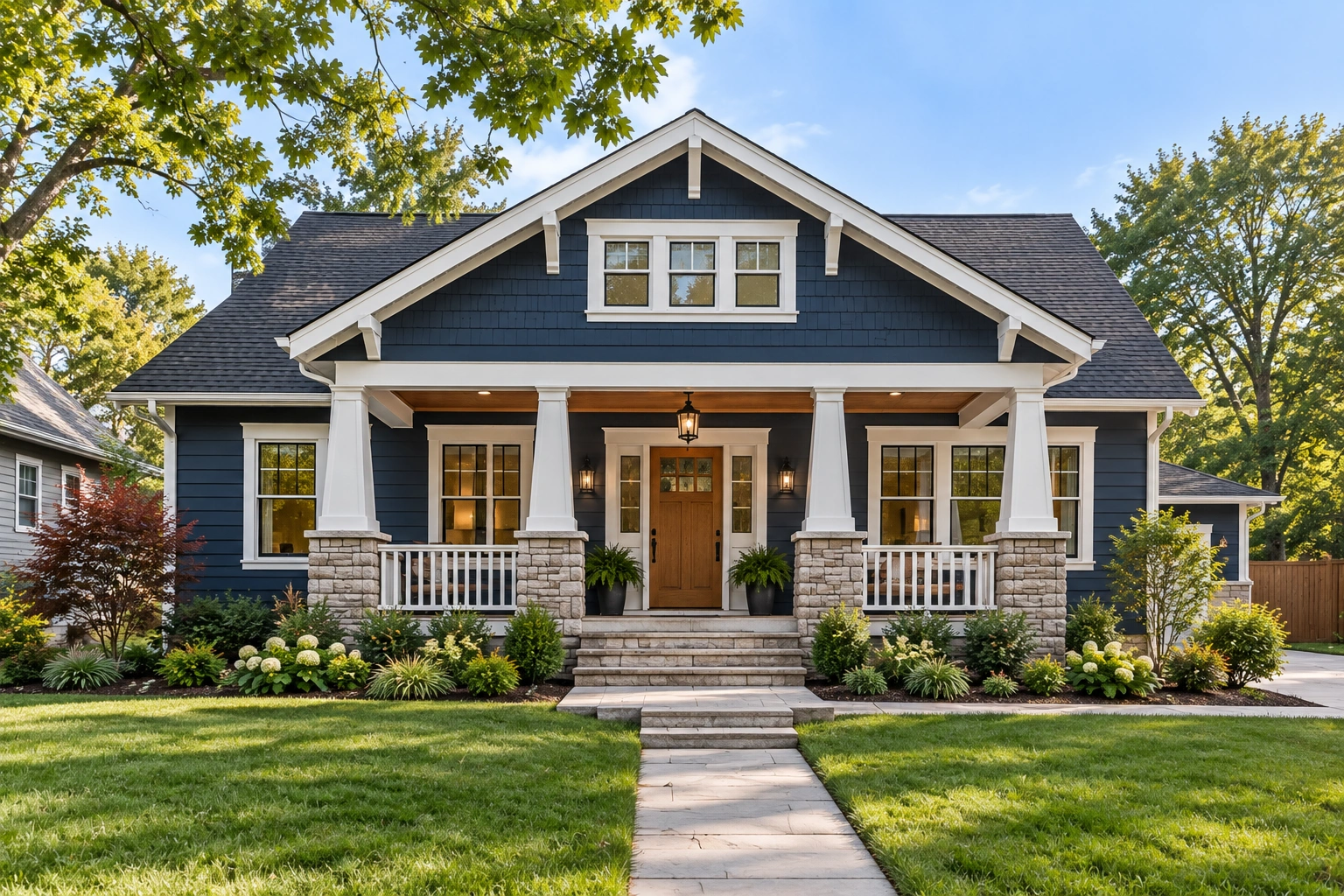
White porch columns can give a navy Craftsman a welcoming entrance, particularly when they rise from brick or stone bases. Carry the white into selected window and door trim to connect the porch with the rest of the house.
Avoid highlighting every bracket, beam, railing, and fascia board automatically. Choose the details you want to emphasize so the porch remains readable as a whole.
6. Navy Siding and Soft White Trim Beside Red Brick

Retained red brick can become part of the palette rather than something to cover. Navy siding provides a contrasting color, while a softer white is worth testing around windows and roof edges.
Look beyond the brick’s overall redness. Individual bricks may contain brown, orange, or purple tones, and mortar adds another color. Compare samples beside both before choosing the white.
7. A Yellow Front Door Against Navy and White
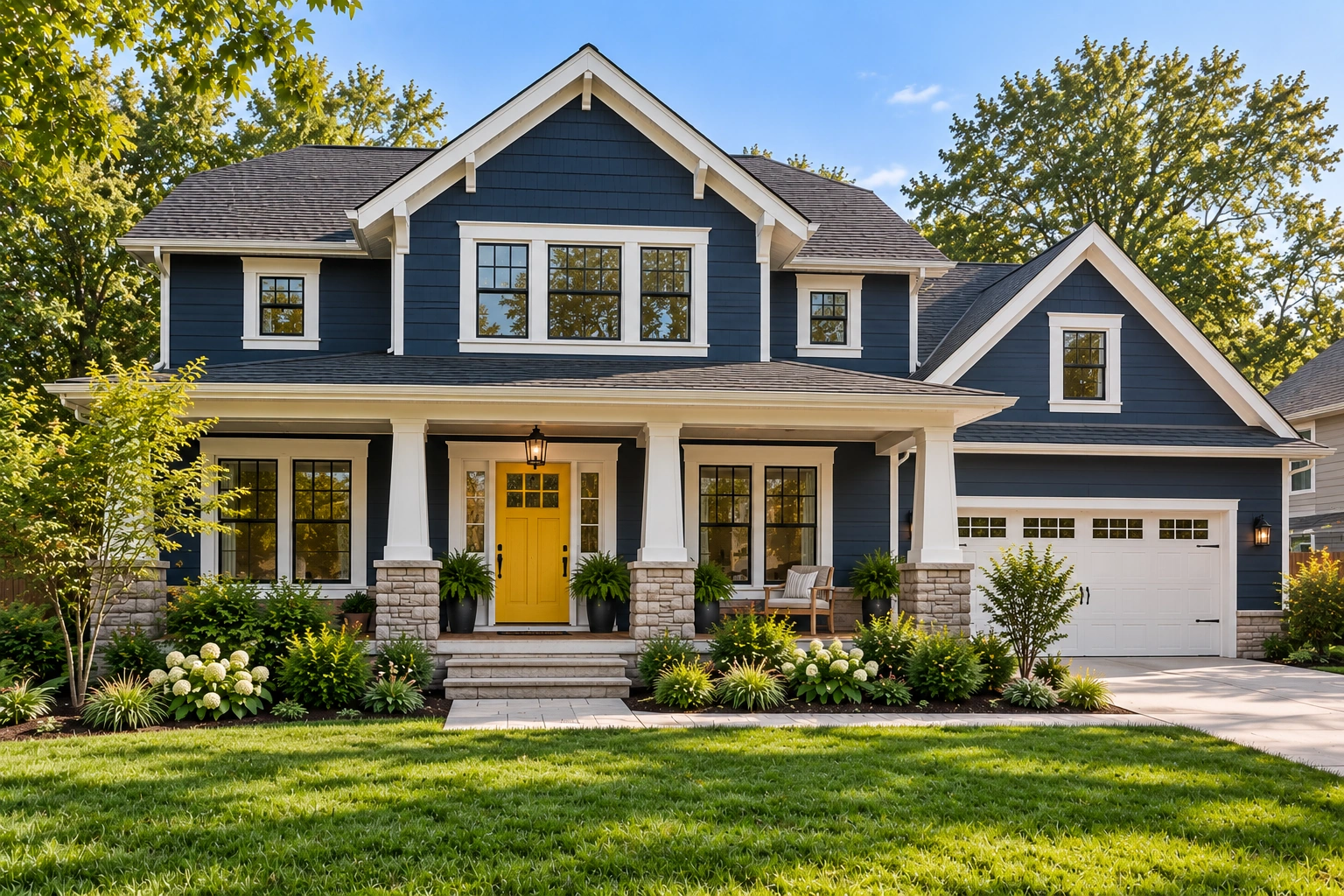
A yellow door creates a clear focal point against navy siding and white trim. Try an ochre or muted mustard for a restrained accent, or a clearer yellow for a more playful entrance.
Check the sample beneath the actual porch overhang. A yellow chosen in bright light may look quite different at a recessed doorway. Keep nearby accessories simple so the entrance doesn’t become crowded with competing accents.
8. A Red Front Door With Restrained White Accents
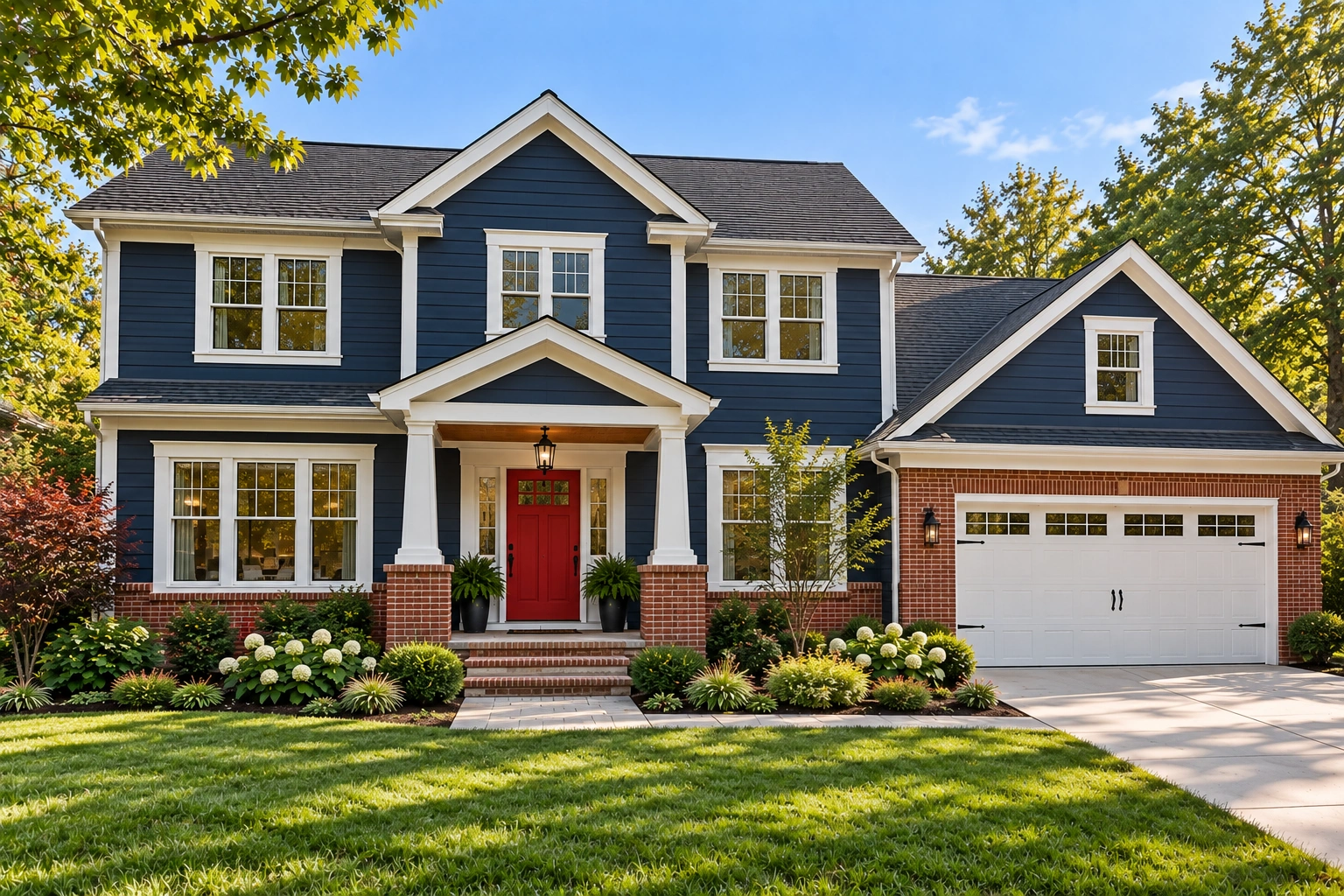
A red door gives navy siding a strong, traditional accent. White around the doorway and windows keeps the three colors clearly separated.
Compare a deeper red with a brighter version before deciding. The deeper option may suit a quieter palette, while a vivid red creates a more pronounced red-white-and-blue effect. Existing red brick should be part of that comparison.
9. A Muted Coral Door on a Coastal Navy Exterior

Muted coral offers a softer warm accent for a navy cottage or coastal-style house. Pair it with white trim and simple natural textures, such as a wood seat or woven outdoor accessories.
Keep coral concentrated at the entrance. Repeating it across shutters, furniture, and planters may overwhelm a small facade. A digital mockup can help assess placement, but the actual paint still needs outdoor testing.
10. A Matching Navy Door Framed in White

A navy door close to the siding color creates a restrained entrance. The white surround provides definition, making this useful where you want the architecture to attract attention rather than a contrasting door.
Consider visibility from the walkway. Beneath a deep porch, a dark door may recede more than intended. Glass panels, a clearly defined surround, or a lighter nearby porch surface can help distinguish the entry.
11. Black Window Frames Within White Exterior Trim

Black window frames and white surrounding trim can coexist on a navy exterior. The narrow dark frames define the glass, while the white casing separates the entire opening from the siding.
Keep those components distinct when planning colors. Existing black frames don’t require black outer trim. Assess the actual casing width, too: a broad white surround creates a much stronger contrast than a narrow border.
12. A Wood-Tone Garage Door on a Navy-and-White Home
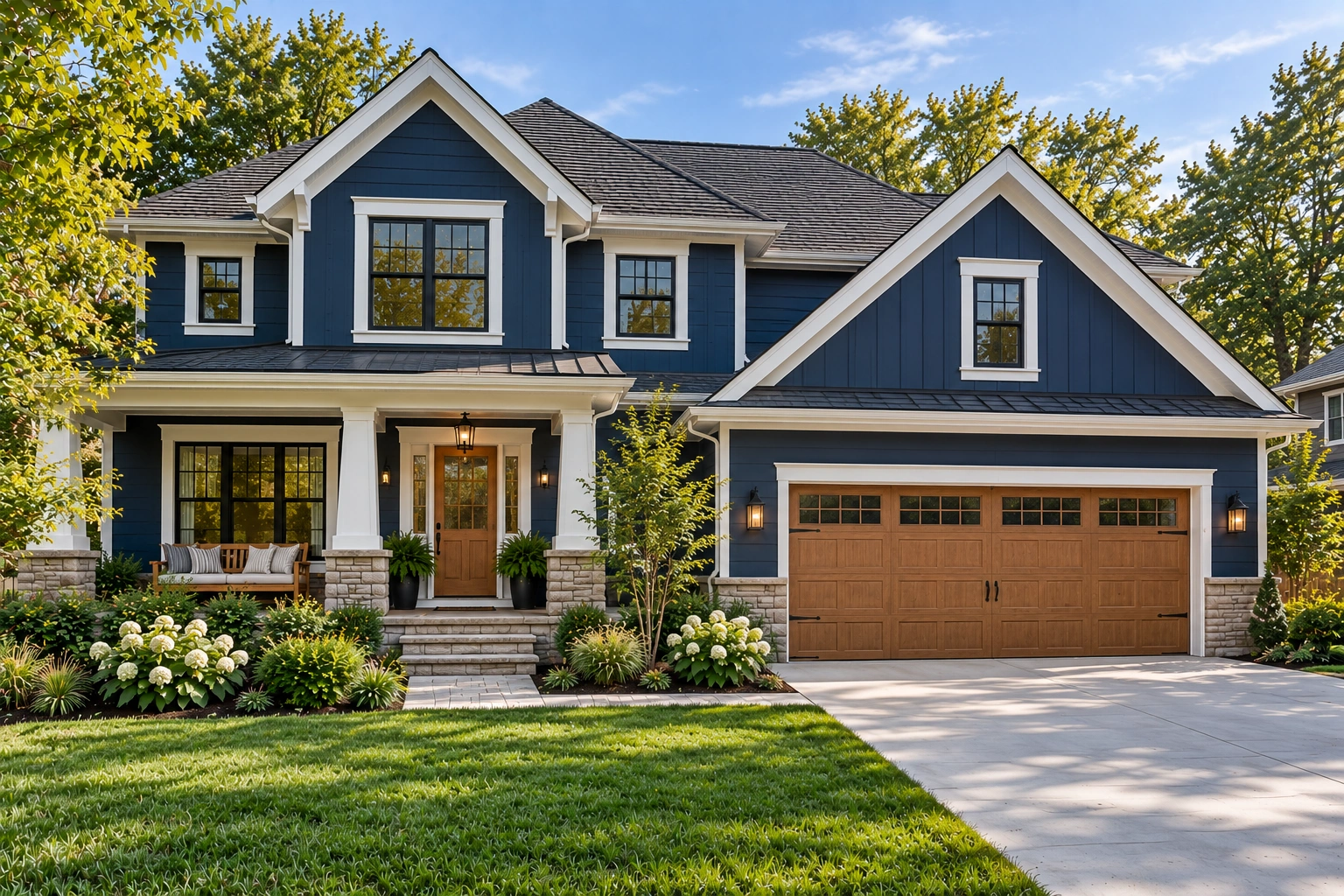
A wood-tone garage door adds warmth where the garage occupies a large portion of the front elevation. Navy siding and white trim provide a restrained background for its grain or finish.
Repeat a related wood tone near the front entrance to connect the two areas. Before choosing real wood or a wood-look product, compare the manufacturer’s care requirements and finish options. Appearance alone doesn’t determine maintenance needs.
How to Choose Your Navy Paint and White Trim

Choose navy and white together, using your roof, masonry, and existing windows as reference points. Begin with a small shortlist rather than dozens of swatches. The aim is to find a combination that remains appealing in your home’s light, not simply the darkest navy or brightest white available.
Compare Navy Shades in Your Home’s Light
Benjamin Moore Hale Navy HC-154 and Sherwin-Williams Naval SW 6244 are two named colors to consider sampling. They are starting points, not interchangeable shades or guaranteed matches for an inspiration image.
Benjamin Moore lists Hale Navy’s light reflectance value, or LRV, as 8.36. LRV describes visible-light reflectance; it doesn’t tell you the undertone or predict exactly how a color will look beside your roof.
Compare samples at the front entrance and another elevation with different exposure. Look for the effect you want: distinctly blue, subdued, or very dark. Don’t assume the appearance on one sunny wall represents the entire house.
Choose Between Crisp White and Softer White Trim
Crisp white creates a sharper outline; softer white can produce a gentler transition. Neither is automatically correct for every navy exterior.
For a practical comparison, sample Benjamin Moore Chantilly Lace OC-65 alongside White Dove OC-17. Benjamin Moore includes White Dove among its coordinating colors for Hale Navy. Treat that as a useful shortlist, then check both against your retained finishes.
Existing white windows deserve special attention. A trim sample that looks neutral on its own may appear noticeably creamy or cool beside the factory finish. Hold samples directly against the frame before approving the combination.
Coordinate the Palette With the Exterior You Already Have
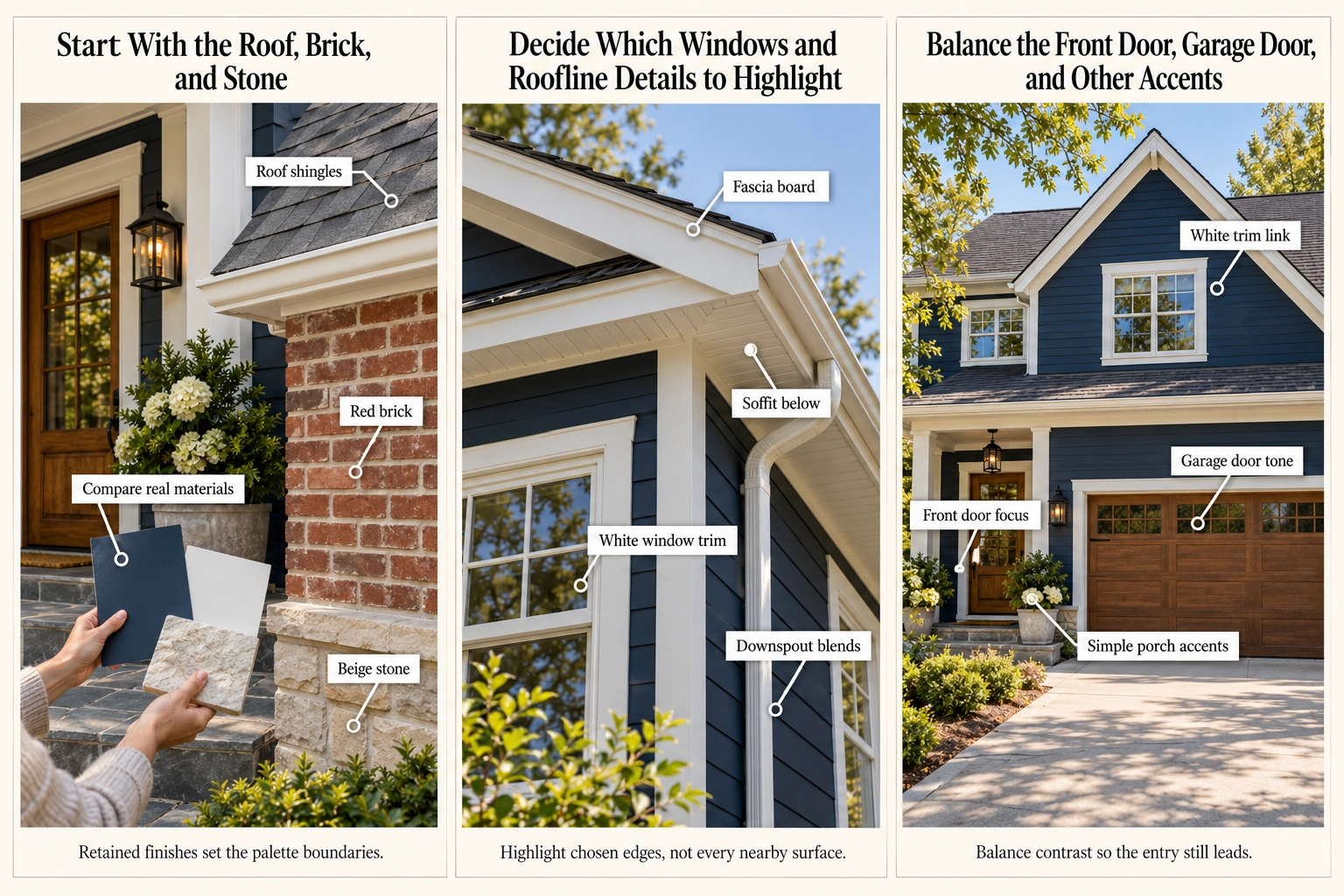
Start With the Roof, Brick, and Stone
Treat finishes you intend to keep as the boundaries of your color scheme. Roof shingles, masonry, mortar, and porch flooring all contribute visible color.
Use these situations to narrow your choices:
| Existing feature | Useful direction to test | What to watch |
| Charcoal or gray roof | Navy with crisp or softened white | A roof that reveals green, brown, or blue tones outdoors |
| Brown roof | Navy with softer white and a warm accent | Whether the proposed white feels disconnected from the roof |
| Red brick | Navy siding with restrained white trim | Competing door reds and strongly orange wood finishes |
| Cream or beige stone | Navy with an off-white sample | A white that makes the stone look unexpectedly yellow |
These are testing directions, not fixed design rules. Compare the actual materials rather than relying on broad labels such as “gray roof.”
Decide Which Windows and Roofline Details to Highlight
White trim draws attention to edges. Use it deliberately around attractive windows, porch openings, and selected roofline details.
The fascia is the board along the roof edge; the soffit is the underside of the overhang. They don’t have to receive identical treatment. Consider how a white roof edge would frame the house before extending that color to every nearby surface.
Gutters can follow the roofline treatment, while downspouts can relate to the surface behind them. The useful question is whether each component should stand out or blend in.
Balance the Front Door, Garage Door, and Other Accents
Decide where you want attention to land first. A large white garage door creates a substantial light area against navy siding, which may compete with a smaller front entrance.
A siding-related garage color can reduce contrast; white can connect it to other trim; wood tones can add warmth. None is universally best.
Where the siding and trim are already in good condition, changing a permitted door finish or a few porch accessories may be enough to adjust the look. There’s no need to replace sound materials solely to reproduce a photograph.
Test the Colors Together Before You Commit

Test the complete palette outdoors before ordering the full quantity. Benjamin Moore recommends applying exterior color samples to boards for evaluation and notes that sample paint is not intended to withstand outdoor weather as a finish coat.
- Prepare separate navy, white, and accent samples. Follow the sample product’s instructions and allow them to dry.
- Place the colors together. Compare them beside the roof, masonry, windows, and porch floor.
- Move them around the house. Include a shaded area and a more exposed wall.
- Check at different times. Observe the colors in morning and afternoon light and under overcast conditions when possible.
- Step back toward the street. Assess the overall balance as well as the close-up color.
- Confirm the finish product. Verify that the chosen coating and color are suitable for the siding or trim material.
Avoid comparing small chips against the old siding color alone; the surrounding color can distract from the proposed combination. Also resist approving each color separately—the relationship between them is the point of the test.
Photographs and renderings help with placement, but screen colors can differ from actual paint. Keep physical samples as the final reference.
Frequently Asked Questions
Will Navy Blue Make a Small House Look Too Dark?
A small house can carry navy well, but the result depends on light, roof color, and how much of the exterior is dark. White window surrounds and a clearly defined entrance can break up the facade. Evaluate the palette from the street, especially where trees or deep overhangs shade the front.
Keep decorative accents selective. Adding white to every small feature can make the exterior feel busy rather than balanced.
Does Navy Exterior Paint Fade Quickly?
Navy can fade, but the color name alone doesn’t establish how quickly. Coating formulation, pigment selection, sunlight exposure, and surface conditions affect color retention. Sherwin-Williams also notes that chalking—a powdery change at the paint surface—can make a finish appear lighter. There’s no reliable repainting interval that applies to every navy exterior.
Choose a suitable exterior coating and follow its care guidance. Have unexplained discoloration assessed before assuming another coat will solve it.
Can You Paint Existing Vinyl Siding Navy Blue?
Sometimes, but only after confirming that the siding manufacturer permits painting and that the selected coating and color formula are approved for the application. Sherwin-Williams offers a limited selection of darker VinylSafe colors with compatible products; that does not mean every navy shade is suitable for existing vinyl.
Check the siding requirements and paint specifications together. Ask the manufacturer or a qualified painting professional when compatibility or siding condition is uncertain.
Choose a Navy-and-White Look That Fits Your Home
A navy blue house with white trim works best when the roof, windows, masonry, and accents feel considered together. Shortlist two or three ideas that resemble your home, identify the finishes you’ll keep, and test the complete palette outdoors. The right choice should suit your actual facade as well as it suits your taste.
Disclaimer
This content is for general informational purposes only. Homes, needs, preferences, budgets, and conditions vary. Seek qualified professional advice for safety, installation, repairs, structural work, electrical, plumbing, HVAC, legal matters, or major property decisions.