Black window frames can give a house crisp definition, but the surrounding finishes decide whether that contrast feels balanced or overpowering. The same frames look very different against white siding, red brick, warm cedar, or charcoal stucco.
The most useful houses with black windows offer more than an attractive color combination. Their window proportions, trim, roof, and entry details work together.
Start with examples that resemble your home, then consider which finishes you’ll keep. You don’t need to recreate an entire exterior to borrow a good idea.
Short Definition
Houses with black windows feature black window frames, rather than black glass. Readers explore these homes for exterior inspiration and guidance on coordinating frames with siding, masonry, trim, and architectural details.
Topmodrenhouse Mission Statement
Topmodrenhouse helps homeowners, renters, and home lovers make informed choices that bring comfort, style, and practical value to their living spaces.
Exterior Ideas for Houses With Black Windows
Black frames can become a focal point or blend into the facade. Light backgrounds emphasize their outlines; darker backgrounds make the difference more subtle.
The following combinations are illustrative design scenarios, rather than descriptions of completed projects.
White, Cream, and Light Gray Exteriors
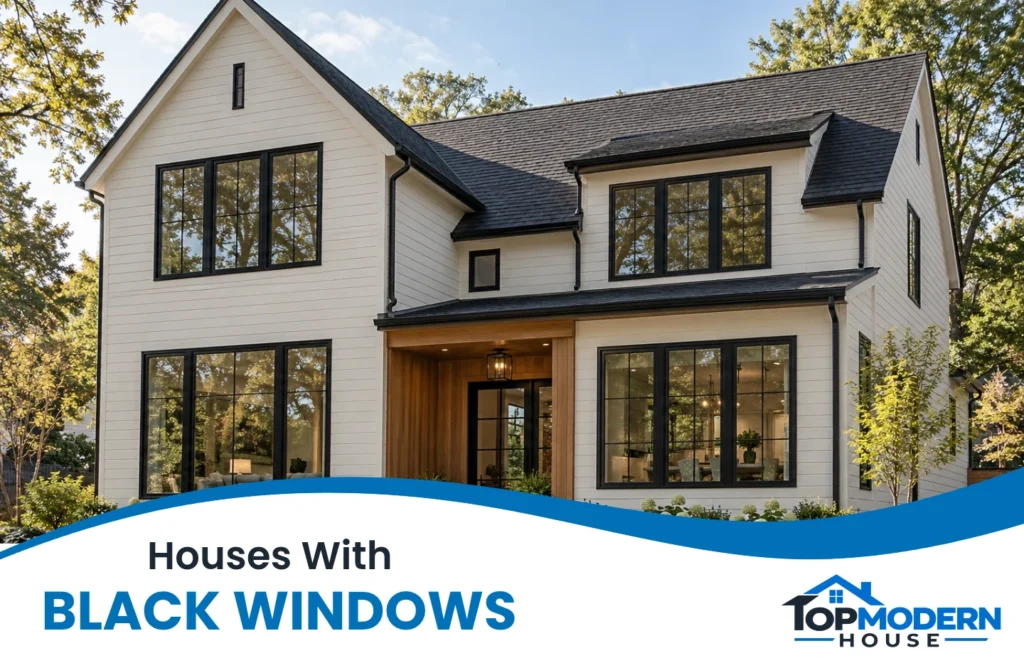
White siding on a modern farmhouse

White board-and-batten siding gives black frames a clearly defined background. A wood front door or porch ceiling can introduce warmth without adding another paint color.
Watch the grille pattern—the bars that create a divided-pane appearance. Dense black grids, broad black casing, and numerous small windows can produce a busier facade than the simple farmhouse image you have in mind.
Cream siding on a cottage
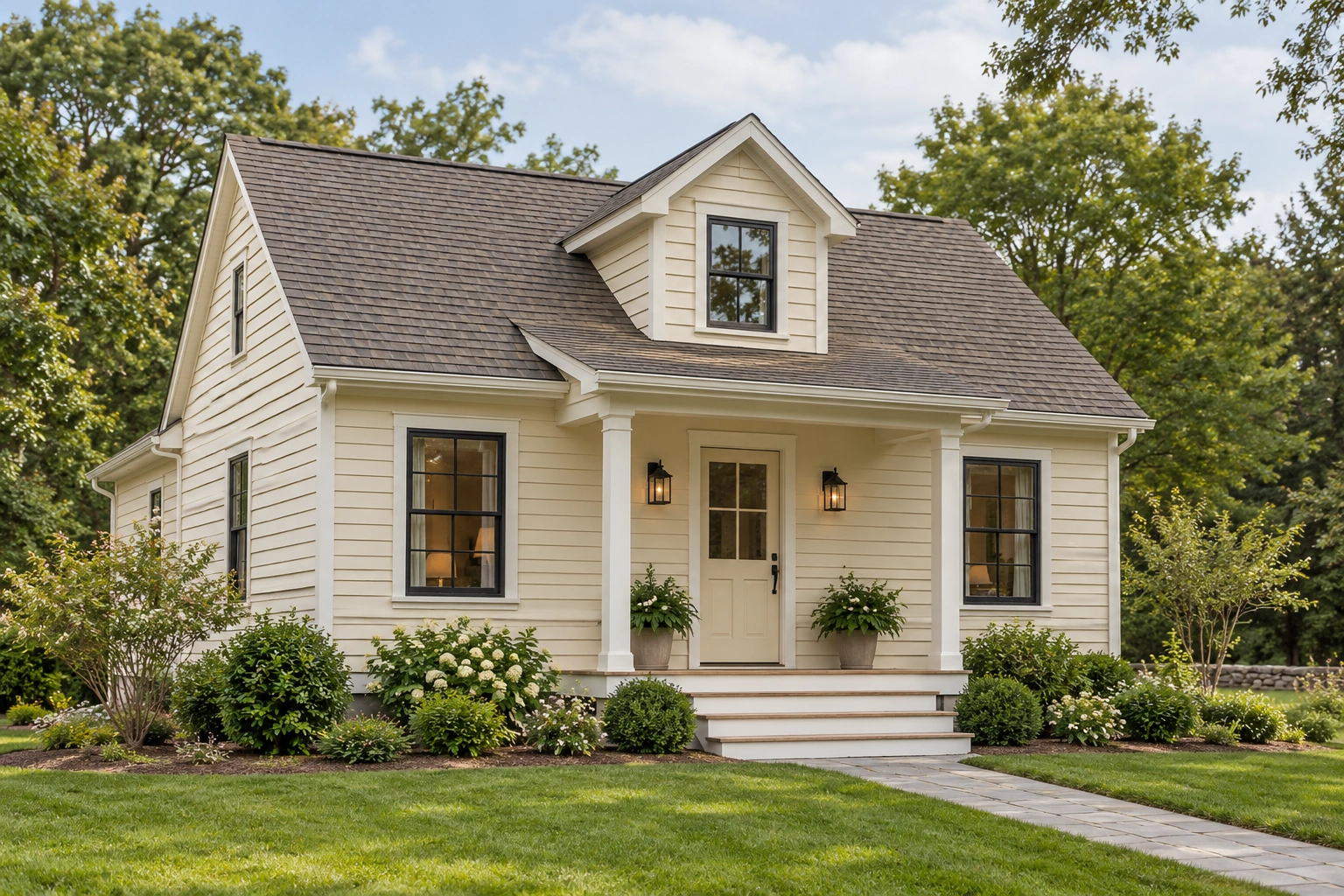
Cream offers a warmer alternative to bright white. Black frames with white or cream exterior casing can suit a cottage with lap siding, modest windows, and a welcoming porch.
Compare the siding and trim samples together. Two similar off-whites may look coordinated on separate paint cards but noticeably different when placed side by side.
Light gray siding on a ranch

Gray houses with black windows can have a quieter contrast than white-and-black schemes. On a ranch, a wood entry door can provide a focal point while the windows give definition to the longer facade.
Check the gray against the existing roof. A siding sample that looks neutral indoors may reveal a blue, green, or violet undertone outside.
Natural Brick, Stone, and Wood Exteriors
Red brick on a Colonial

A brick house with black windows doesn’t need white-painted masonry to make the combination work. Dark frames can sit comfortably alongside natural red brick, lighter casing, and a restrained front-door color.
Include the mortar in your assessment. Pale mortar creates a different overall impression from dark mortar, even when the brick itself is similar.
Stone and painted siding on a Craftsman home
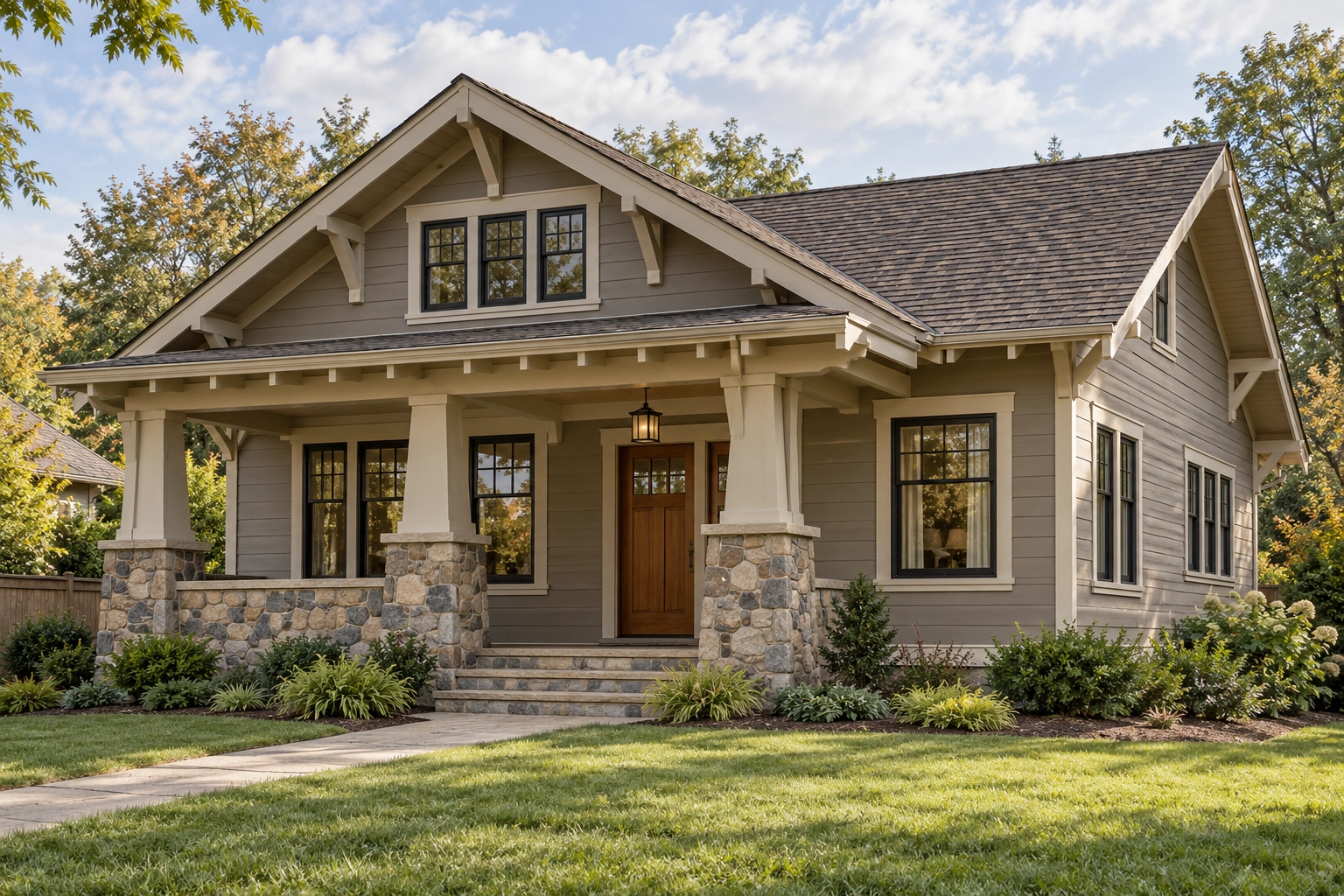
A Craftsman exterior might combine stone porch supports, painted siding, substantial trim, and black window sashes. The sash is the part of the window that holds the glass.
For this combination, choose siding and trim samples alongside the stone. A color drawn from its quieter background tones may be easier to coordinate than one based on its most prominent fleck.
Cedar or wood accents on a contemporary home
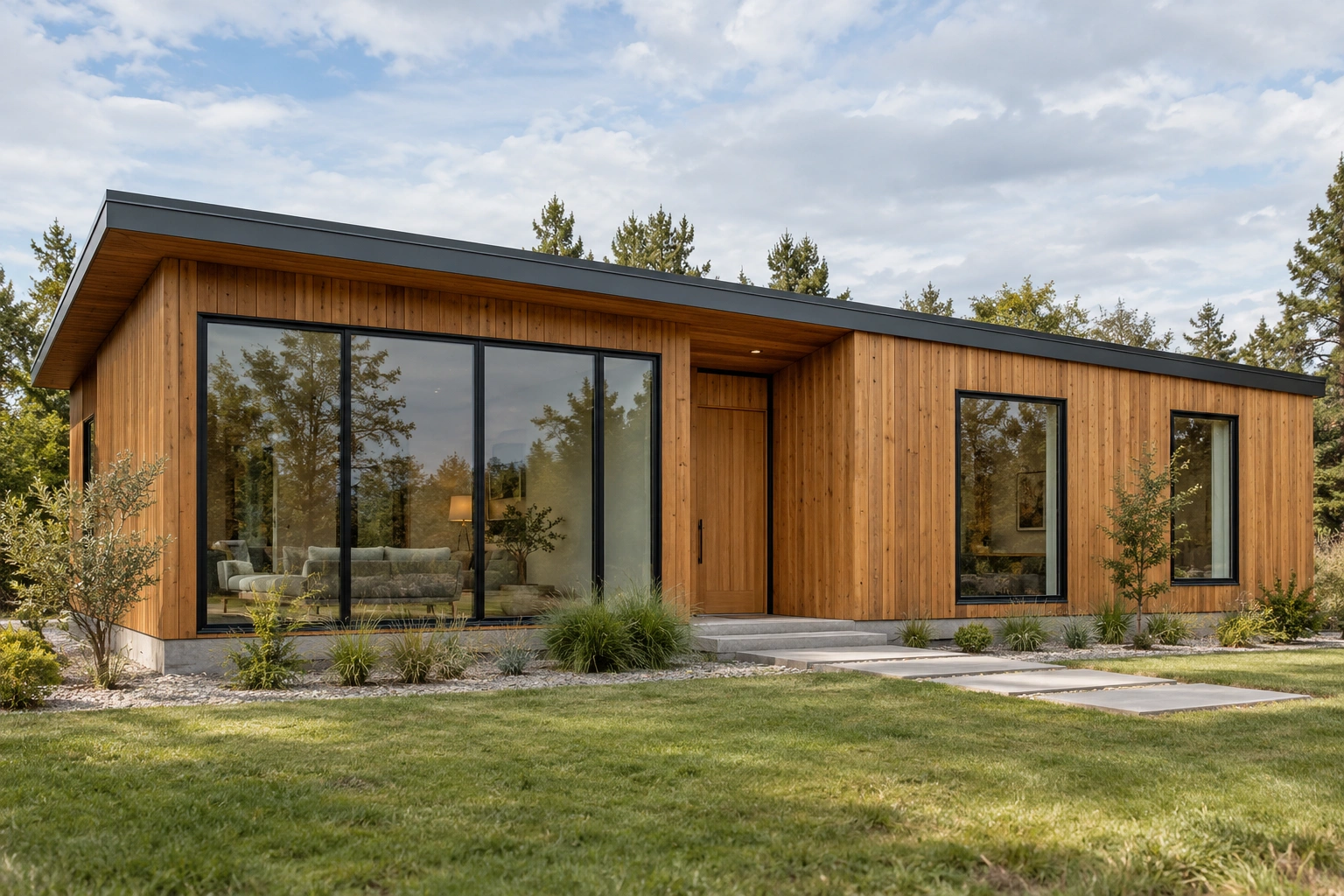
Natural wood introduces texture beside dark frames and large glass areas. The wood might cover the main facade or appear only around the entrance.
Consider the intended wood finish and its maintenance requirements before using a fresh, richly colored photograph as your reference. Ask how that specific finish should be cared for and what appearance changes to expect.
Muted Colors and Dark Exterior Schemes
Muted green on a bungalow
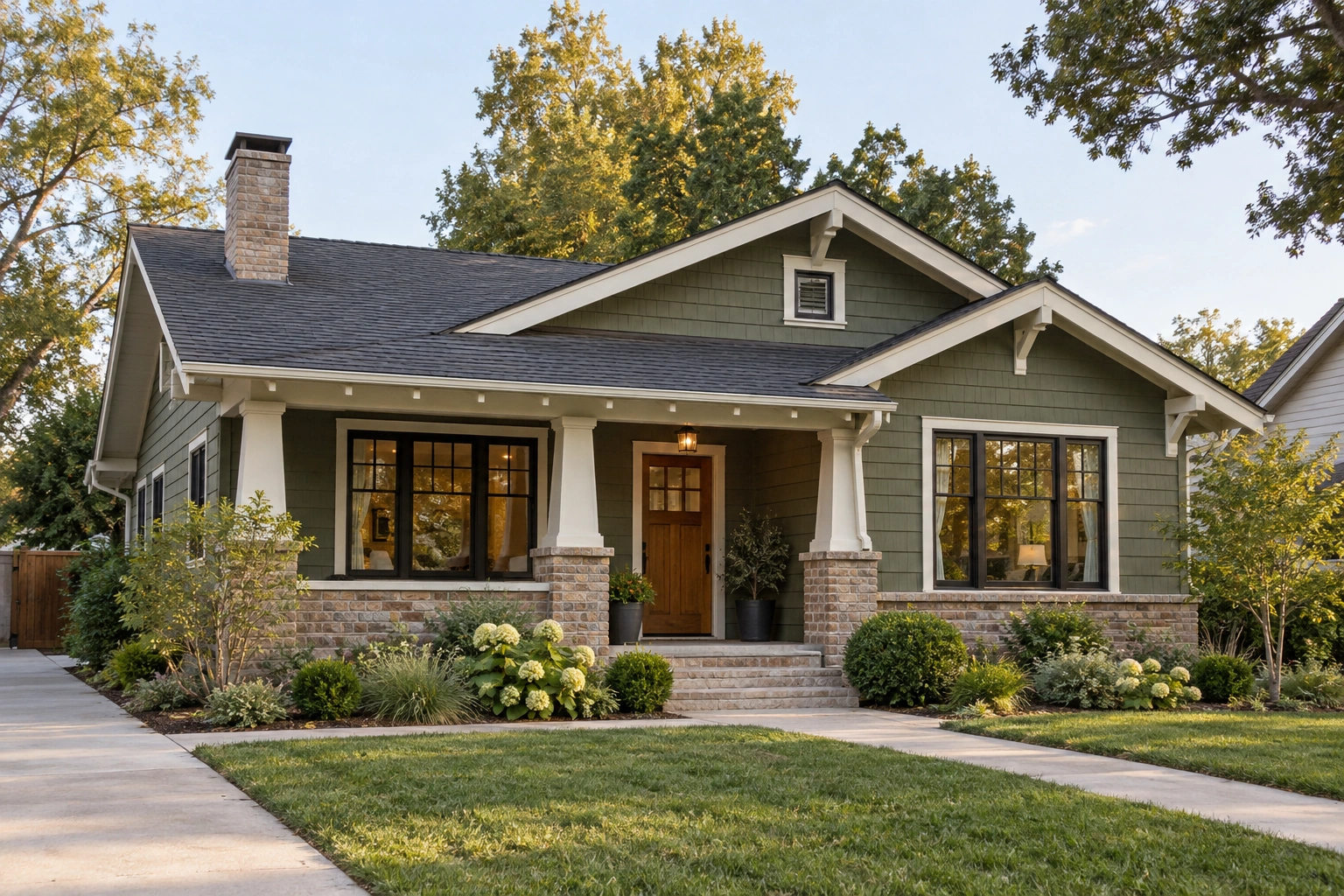
Sage, olive, or deeper green siding offers an alternative to the familiar white farmhouse. Black frames, lighter porch details, and a wood door can create a composed palette without requiring every accent to match.
Test the green against any retained brick or stone. The surrounding materials should influence which shade you choose.
Blue-gray on a traditional home
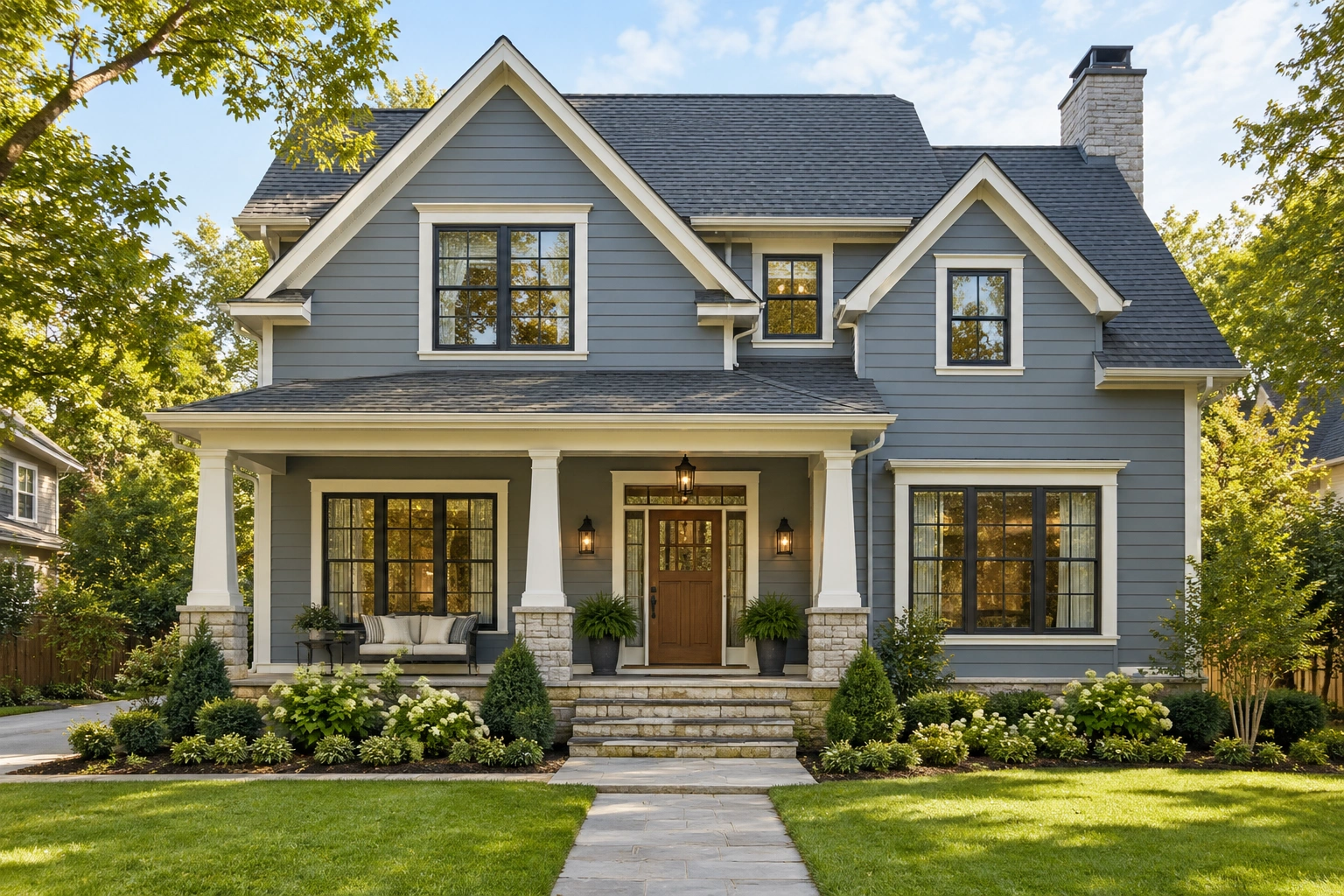
Blue-gray siding with black frames and light trim can preserve a traditional exterior’s definition. The lighter casing separates the dark window from the colored wall.
Use the roof as a reference: compare the siding sample beside it rather than choosing blue-gray solely because it looked appealing on another house.
Charcoal on a contemporary exterior
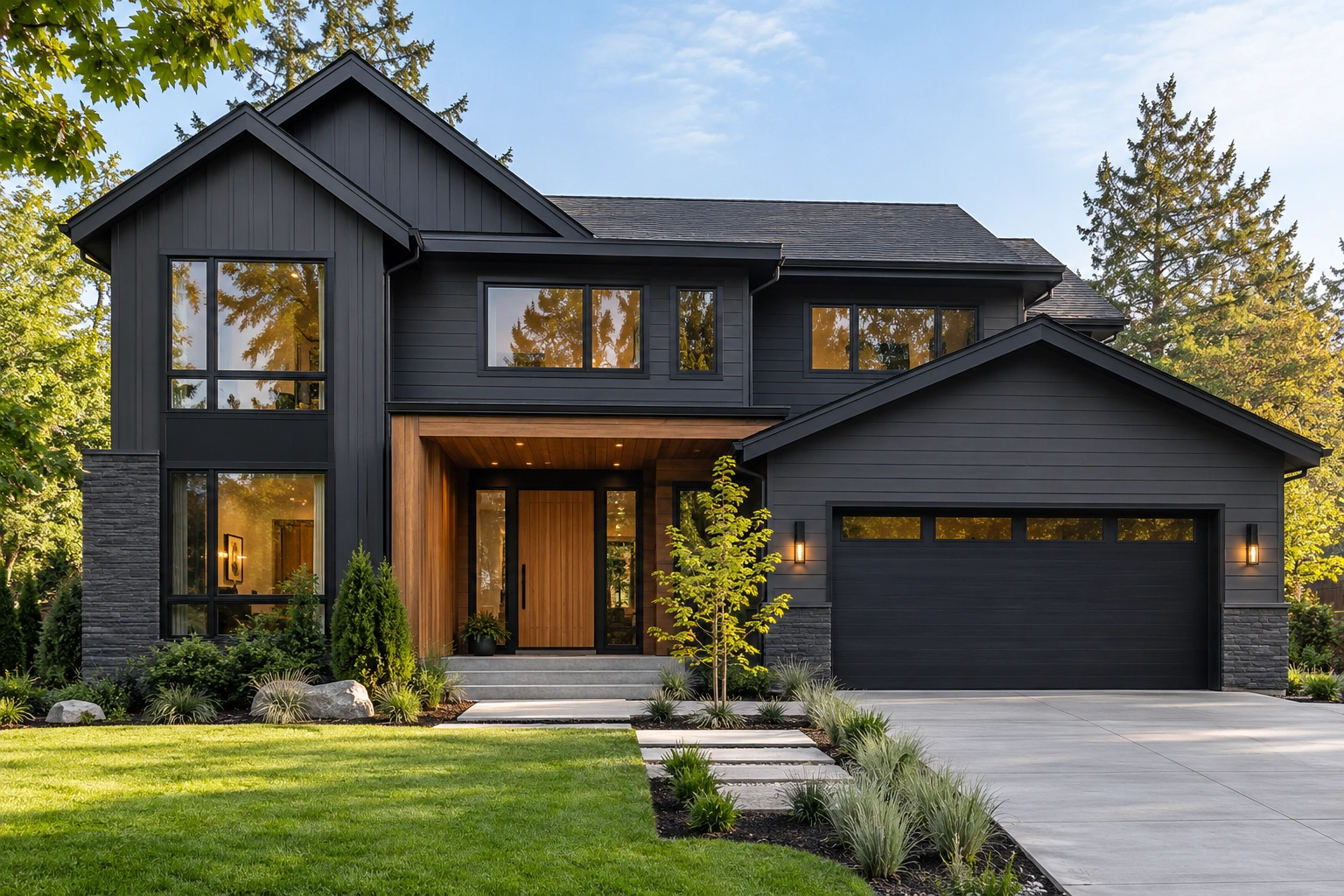
Dark siding and black frames create a tonal combination, with less emphasis on individual window outlines. Wood accents or contrasting entry materials can help distinguish the entrance.
Compare the actual black and charcoal finishes together. Differences in sheen and undertone can remain visible even when both samples initially look almost black.
Choose Color Pairings Around Your Existing Exterior
White, cream, gray, muted green, blue, and dark charcoal are all options for exterior house colors with black windows. The useful choice depends on your retained materials and the amount of contrast you want.
Use this table to narrow the possibilities:
| Existing exterior feature | Pairing worth testing | What to check |
| Warm red or orange brick | Cream, warm neutral, or muted green accents | Brick variation and mortar color |
| Gray stone | Off-white, gray, or muted blue-gray siding | Warm and cool tones within the stone |
| Brown or tan roofing | Cream, beige-gray, or earthy siding | Whether the siding looks too cool beside the roof |
| Natural wood | Soft white, muted color, or charcoal | Actual stain color and finish |
| Light gray siding | White casing or siding-colored trim | How much additional contrast the windows need |
| Dark siding | Matching trim or a lighter entry accent | Whether windows and entrance remain visually distinct |
These are starting points for sampling, not guaranteed combinations.
Begin with what won’t change: roofing, masonry, hardscaping, and retained doors. Then choose the main siding color, followed by trim and smaller accents. Andersen’s exterior-color guidance similarly recommends using fixed features to narrow the palette.
An undertone is the subtle color beneath a shade’s main appearance. A gray may lean blue; a cream may lean yellow. You don’t need to identify every undertone precisely, but you should notice when adjoining samples feel disconnected.
Should Exterior Trim Match Black Window Frames?
Exterior trim doesn’t have to match black window frames. White trim creates a contrasting border, black trim makes the surround more continuous, and siding-colored trim reduces the extra outline. Choose according to the home’s architecture, the width of the casing, and how strongly you want the windows to stand out.
The frame belongs to the window assembly. Casing is the visible trim surrounding the opening. Treating them as separate elements gives you more options.
White trim can retain familiar detailing on cottages, Colonials, and transitional homes. Houses with black windows and white trim may therefore be a sensible reference when you want dark frames without darkening all the woodwork.
Black trim joins the casing visually to the frame. It can also make the whole surround appear broader, so inspect the effect on smaller windows.
Siding-colored trim allows the casing to recede while leaving the black frame visible. This can be useful when an exterior already has prominent porch columns, decorative brackets, or mixed materials.
Adapt the Look to Your Home’s Architecture

A color combination is only part of the design. Window shape, spacing, and surrounding details determine how naturally it fits the house.
Borrow ideas from homes with similar proportions before copying finishes from a very different building.
Frame Width, Window Shape, and Grille Patterns
Modern houses with black windows often feature large openings and relatively simple frame layouts. Traditional houses may have smaller, vertically proportioned windows and divided-light patterns.
Neither approach requires a particular color, but the configuration matters.
When comparing products or pictures, look for:
- Visible frame width: Don’t assume every black window has the narrow profile shown in your reference.
- Grille density: More divisions introduce more dark lines across the glass.
- Window shape: Tall, narrow openings create a different rhythm from broad picture windows.
- Consistency: Related grille patterns can help windows of different sizes feel coordinated.
Ask to see the proposed window configuration, not just a color sample. A black finish on a different frame or grille layout may produce a noticeably different result.
Coordinating Doors, Accents, and Retained Windows
Black windows and doors can create continuity, but a matching black garage door may become the largest dark element on the facade. Decide whether that emphasis is desirable before repeating the color everywhere.
A wood or painted front door can remain distinct. Exterior lighting, railings, or house numbers can repeat black more selectively.
For a phased renovation, include retained windows in the plan. A white bay window alongside new black frames may benefit from consistent casing or other connecting details, but evaluate the complete elevation first.
A photograph-based mockup is useful here because it shows the combination across the whole house, rather than one opening at a time.
Check Samples and Window Details Before Committing
Screen images help you choose a direction. Physical samples help you confirm it.
Compare the window finish with siding, trim, and masonry samples outdoors. View them in sun and shade, and from both close range and the street. Use large paint samples where practical; a small chip cannot show the full effect across a facade.
Keep these product checks separate from the styling decision:
- Interior color: Confirm whether your selected window offers different interior and exterior finishes.
- Material and finish: Ask for care instructions and the applicable finish warranty.
- Appearance: Review frame profiles, grilles, screens, and hardware.
- Performance: Check certified ratings and suitability for your climate.
- Price: Compare quotes with equivalent sizes, glass, operating styles, installation scope, and trim work.
Black exterior and white interior combinations are available in some product lines, including options documented by Andersen, but availability must be confirmed for the window you’re ordering.
For energy performance, look beyond color. ENERGY STAR uses NFRC-certified ratings and climate-specific criteria. U-factor describes heat transfer, while solar heat gain coefficient concerns admitted solar heat; the appropriate combination depends on climate and exposure.
For replacement work, have a qualified installer assess the openings and explain installation and finishing requirements. A design mockup cannot establish whether a particular installation is suitable.
Design Mistakes to Avoid With Black Windows

Several choices can make an otherwise appealing palette feel disconnected:
- Ignoring retained finishes. New siding paint still needs to relate to the roof, brick, stone, and mortar.
- Matching every accent automatically. Black gutters, casing, shutters, doors, and railings can compete for attention.
- Copying proportions from another house. A broad black surround may suit a large opening but dominate a smaller one.
- Choosing from an edited photograph alone. Lighting, processing, and screen settings can change perceived color.
- Assuming color provides performance benefits. Black frames are not a privacy treatment or proof of energy efficiency.
- Treating masonry painting as a necessary styling step. First explore combinations that retain the existing brick or stone.
Check the design from normal viewing distance. Details that seem restrained on a sample board may become prominent when repeated across an entire facade.
Frequently Asked Questions
Are Black Windows a Good Choice for Every Home?
Black windows can suit many architectural styles, but they aren’t automatically the best choice for every exterior. Consider the desired contrast, window proportions, surrounding trim, and retained materials. Compare a mockup with alternatives such as white or bronze before deciding, particularly when replacing only some windows.
Are Black Windows Still Popular?
Black remains a current option in manufacturer offerings and design guides, including Pella and MI Windows. That establishes continued availability and use, rather than predicting how long a trend will last. A stronger basis for choosing the finish is whether it suits your house and your preferences.
Can Windows Be Black Outside and White Inside?
Yes, some manufacturers offer separate exterior and interior colors. Confirm availability for the exact product, operating style, and configuration you want. This option allows a dark exterior appearance while retaining lighter interior frames, but it should be specified clearly in the order rather than assumed from a showroom example.
Do Black Window Frames Fade or Need Extra Maintenance?
Fading and maintenance depend on the material, finish, exposure, and manufacturer’s care requirements. Review the warranty for your selected product, including its coverage and exclusions. Don’t assume all black frames are maintenance-free, and use approved cleaning methods rather than choosing cleaners solely because they suit the glass.
Can Existing Window Frames Be Painted Black?
Some window surfaces can be painted, while others have restrictions. Identify the product and material before proceeding, then follow its manufacturer’s finishing instructions. Andersen, for example, warns against certain dark finishes on sun-exposed surfaces. Check warranty implications and avoid treating general paint advice as approval for your specific windows.
Choose a Look That Fits Your Home
The most useful exterior idea is one you can adapt to the house you already have. Shortlist combinations with similar architecture, then compare their siding, casing, roof, and entry details with your retained finishes.
Confirm the palette with physical samples and the window choice with product information. Those checks turn an appealing reference into a considered plan for your home.
Disclaimer
This content is for general informational purposes only. Individual homes, needs, preferences, budgets, and circumstances vary. Seek qualified professional advice for safety concerns, installation, repairs, structural work, electrical or plumbing systems, HVAC, legal matters, or major property decisions.