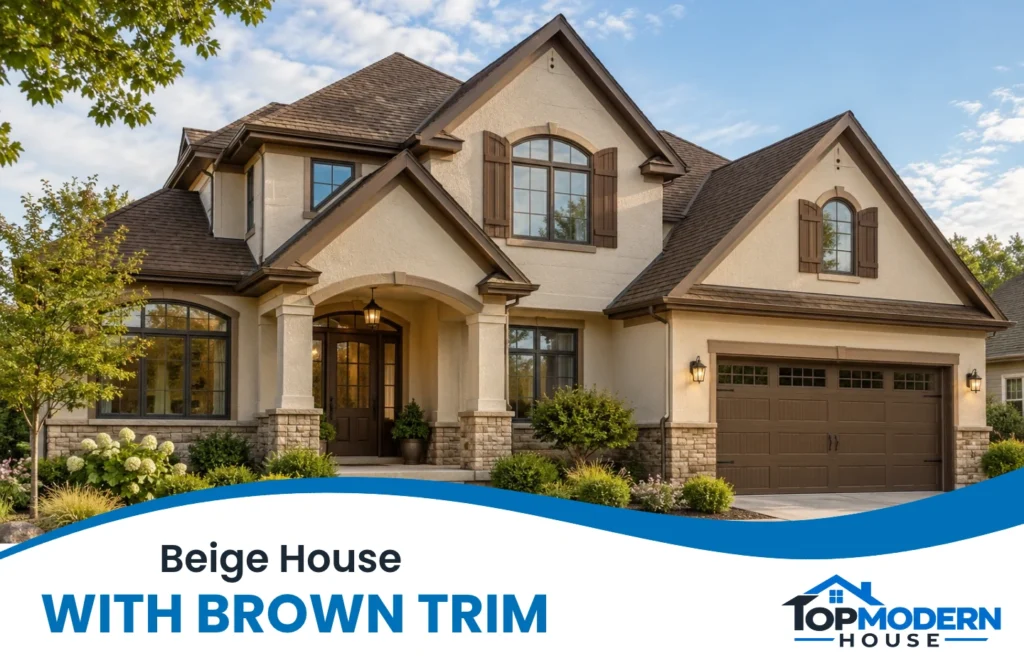
A beige house with brown trim can feel warm and well defined, but the balance matters. A broad dark roof, heavy window outlines, and a matching garage door can leave the exterior feeling dominated by brown. Too little contrast can make the architectural details disappear.
A fresh look starts with deciding what should stand out. Pale siding, selective brown trim, and a considered front-door color can give the house a clearer focal point without replacing every finish.
The twelve ideas below offer different ways to approach the combination, followed by guidance for choosing colors that work with your actual home.
Short Definition
A beige house with brown trim pairs beige exterior walls with brown architectural details, such as window casings and fascia. Homeowners explore this combination for neutral color inspiration and help coordinating existing finishes.
Topmodrenhouse Mission Statement
Topmodrenhouse helps homeowners, renters, and home lovers make informed choices for practical, stylish, and comfortable living spaces.
SERP Enhancement Elements
- Compare beige and brown samples beside your existing roof, brick, and stone.
- Choose subtle or stronger contrast according to the features you want to highlight.
- Decide whether the front door or garage should attract attention.
- Check samples in sun and shade before selecting compatible exterior coatings.
12 Ideas to Refresh a Beige House With Brown Trim
1. Frame Pale Beige Siding With Espresso Trim

Pale beige walls and deep espresso trim create a noticeable light–dark contrast. Try the darker shade around windows and the entrance, leaving the siding as the dominant color.
This approach suits a house whose window arrangement you want to emphasize. On a facade with numerous small windows, however, dark outlines can make the elevation feel busy. Compare a version with dark window casings against one that reserves espresso for the entry and roof-edge trim.
2. Soften Sandy Beige With Medium-Brown Accents

Medium brown offers a gentler outline than near-black espresso. Against sandy beige siding, it creates an earthy palette with less pronounced contrast.
Consider this combination when a prominent brown roof already supplies plenty of dark color. The trim can connect the walls to the roof without competing with it.
Check that the siding and trim remain distinguishable from the street. Two shades that look different on small chips may appear very similar across the house.
3. Pair Greige Walls With Muted Brown Trim
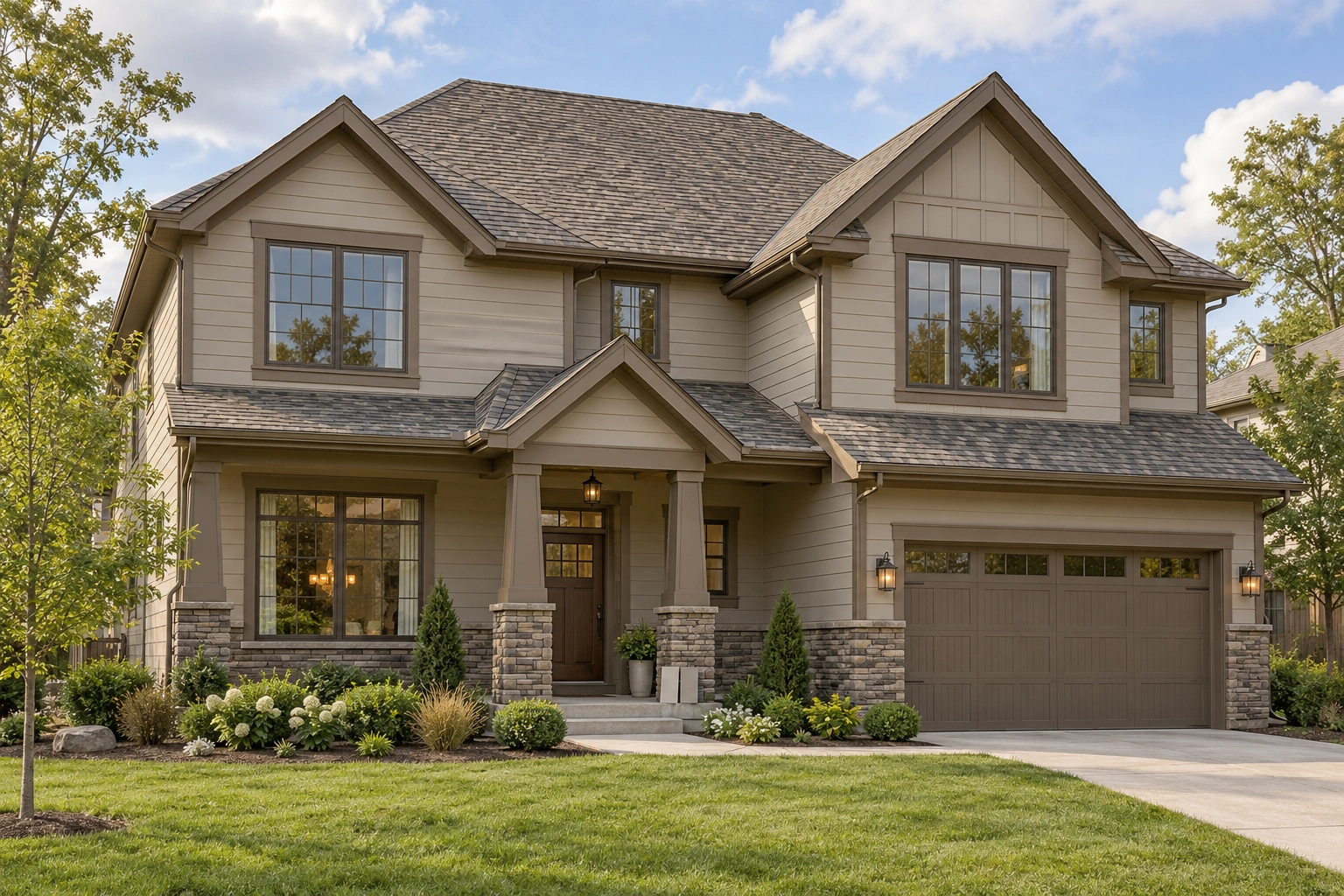
Greige combines gray and beige, offering an alternative to a noticeably golden exterior. Muted brown trim can continue that restrained appearance without introducing stark black outlines.
Consider this direction alongside gray-brown stone or weathered-looking roofing. It’s a palette to test rather than an automatic match: a gray-influenced beige can look disconnected from strongly orange or reddish-brown details.
Compare the samples beside existing finishes before deciding that a cooler-looking wall color will solve the problem.
4. Highlight Craftsman Porch Details in Brown
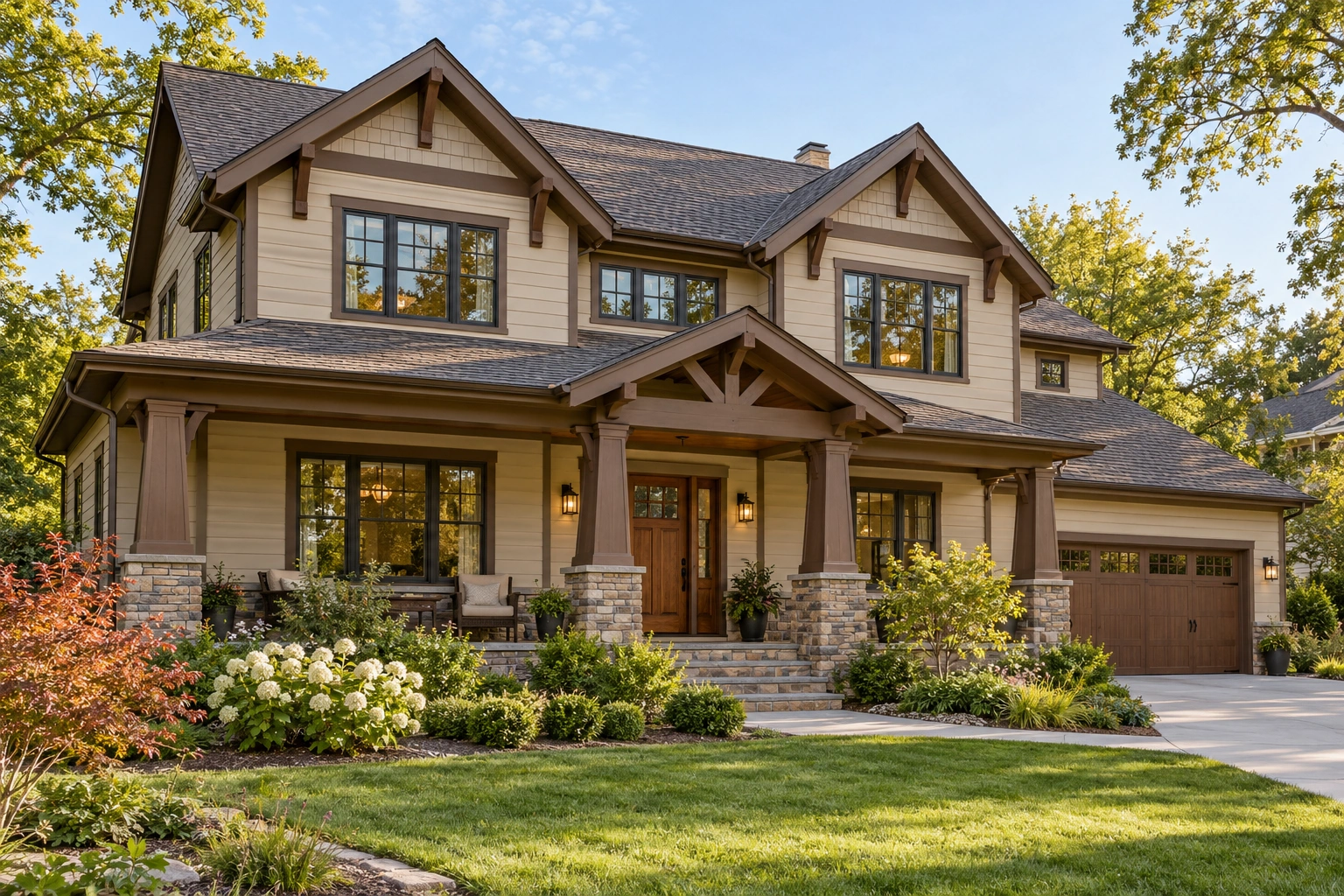
On a Craftsman home, brown can draw attention to existing porch posts, brackets, and gable details. Keep the beige siding quieter so the architectural features remain easy to read.
Choose a few connected elements to emphasize. Painting every horizontal band, corner board, and decorative piece brown can create more outlines than the facade needs.
A stained-wood entrance door can support this approach, but it doesn’t have to match the painted trim exactly. Compare both finishes together.
5. Define Beige Stucco With Brown Framing
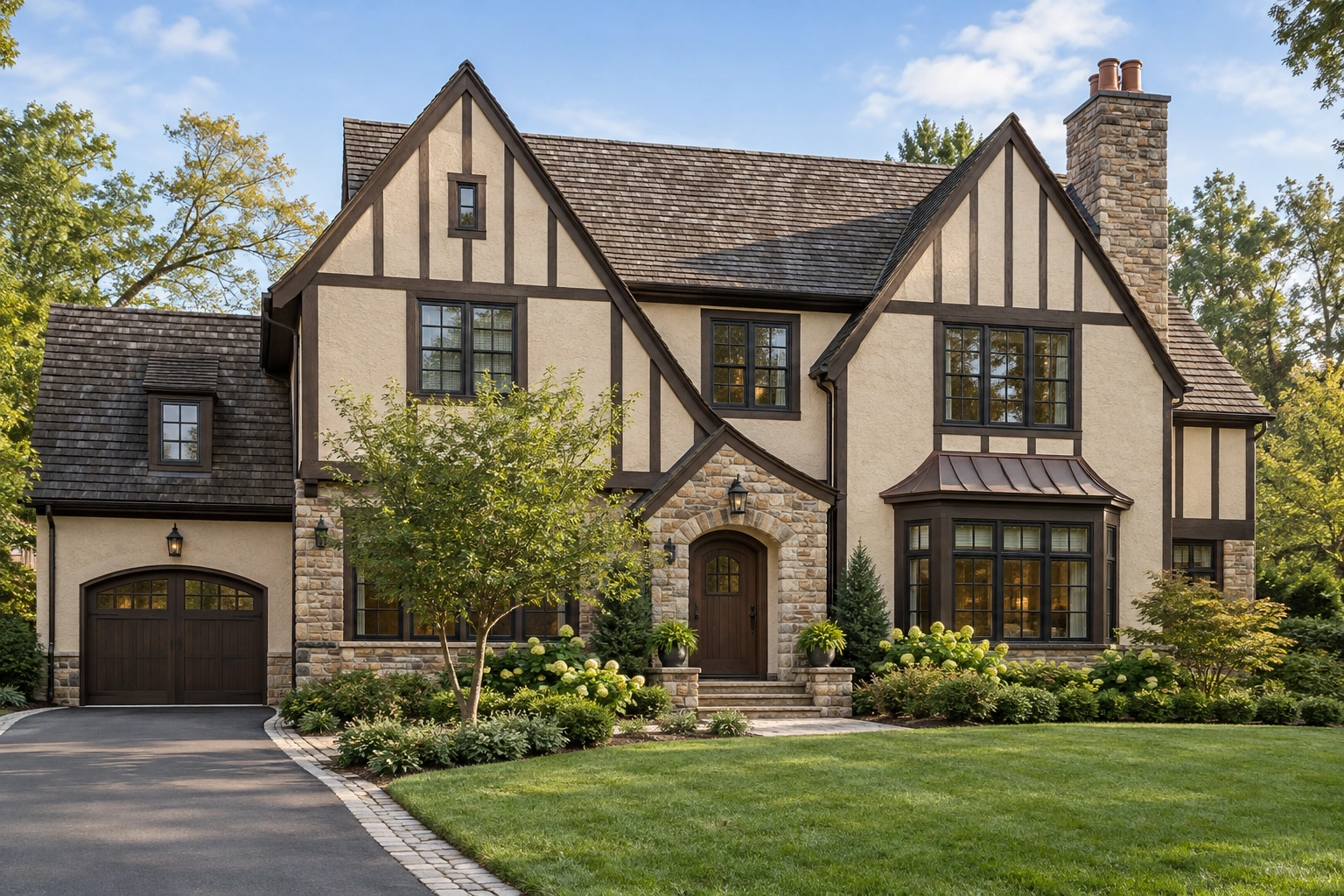
Beige stucco provides a broad backdrop for brown window surrounds and entry details. On a Tudor-style house, existing timber-like framing offers another place to repeat the darker color.
Work with the features already present. Adding decorative framing simply to introduce more brown changes the project’s scope and may not suit the architecture.
Where the facade includes brick or stone, keep those colors in the comparison. Beige stucco and brown trim form only part of the visible palette.
6. Use Selective Brown Accents on a Ranch Exterior
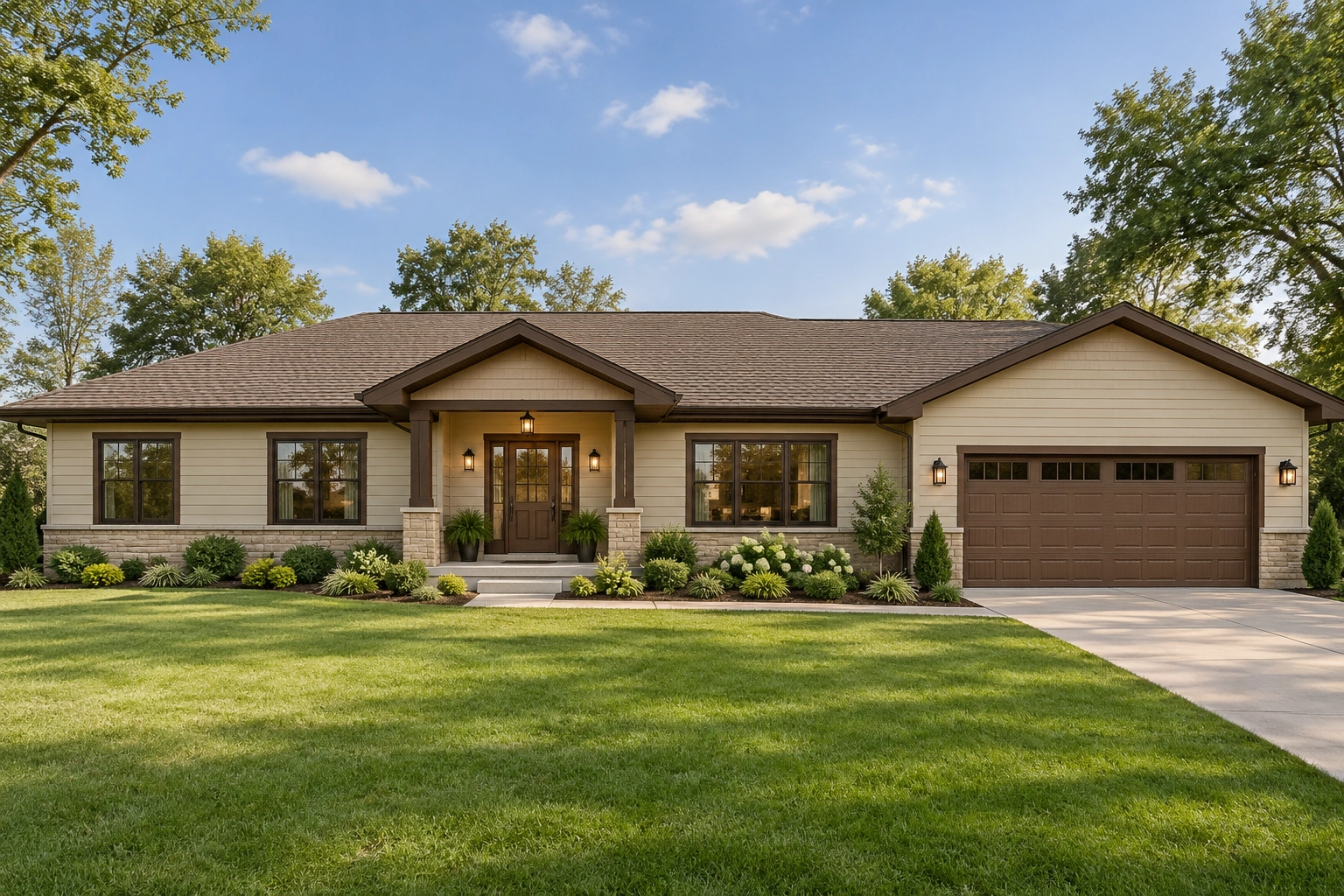
A ranch house often has a long facade and a substantial roof presence. Selective brown accents can define the entrance without outlining every section of wall.
For example, retain brown fascia—the board along the roof edge—and window casings, while keeping other paintable surfaces close to the beige siding color.
Step back to assess the complete elevation. A roof-edge treatment that looks balanced beside the porch may feel heavy when it stretches across the garage and bedroom wing.
7. Balance Brown Window Casings With White Frames
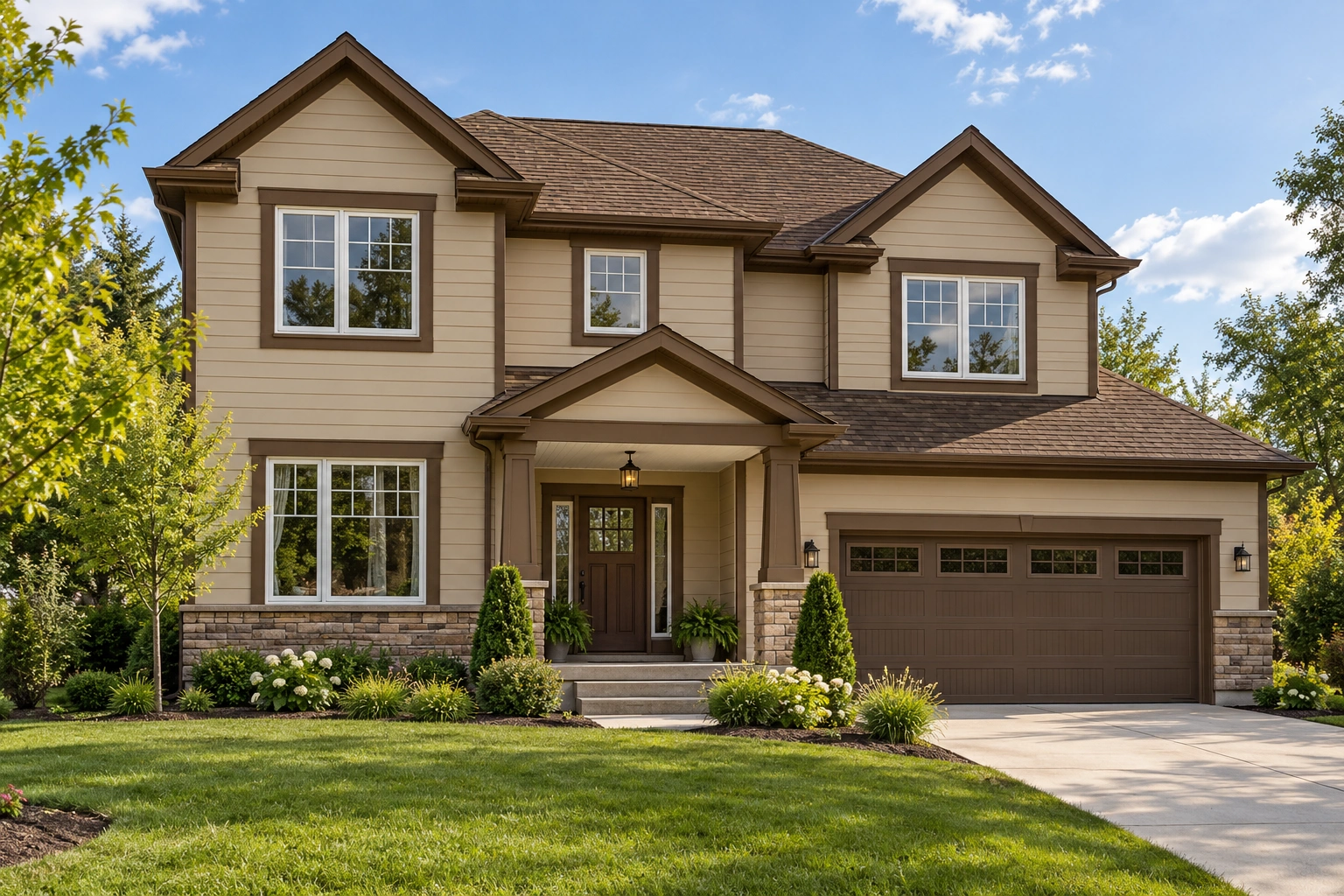
White window frames don’t need to derail a beige-and-brown scheme. The frame belongs to the window unit; the casing is the surrounding exterior trim. Keeping the frames white and the casings brown creates a layered treatment.
Repeat the white selectively, perhaps on a suitable porch-ceiling surface, to make it feel intentional.
Before changing factory-finished window components, check the manufacturer’s guidance. Retaining their existing finish may be the more practical choice.
8. Brighten the Entry With a Cream Front Door

A cream door offers a lighter focal point within a beige-and-brown palette. Brown casing around the entrance can separate the door from similarly colored walls.
This is worth considering for a recessed entry where another dark surface might be difficult to distinguish. Choose a cream that remains visibly different from the siding rather than assuming any off-white will work.
Test the sample at the entrance itself. Lighting beneath the porch can produce a different impression from the open driveway.
9. Add a Muted Green Door to the Neutral Palette
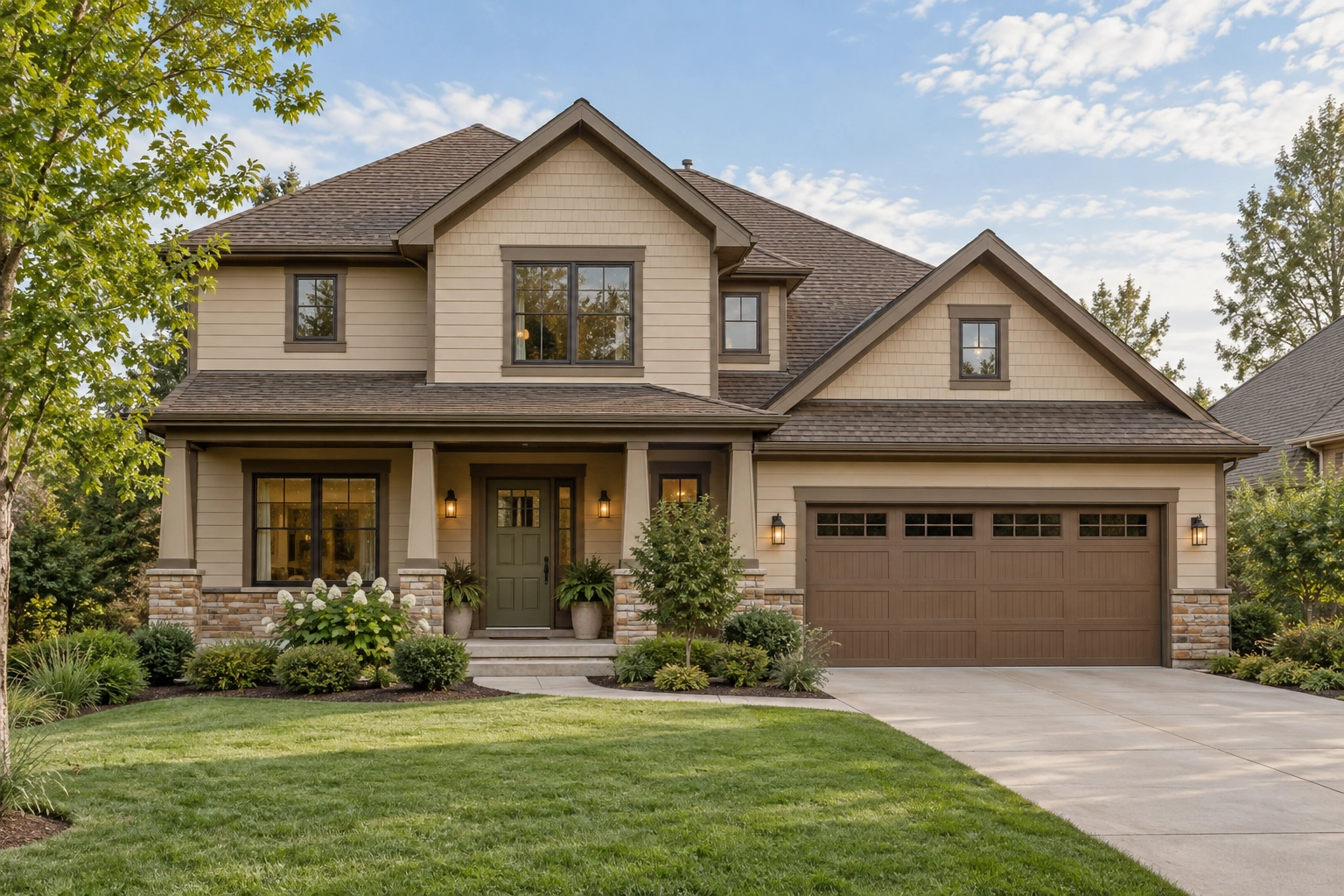
A muted green door introduces color while keeping the exterior relatively restrained. Sage, olive, and deeper green candidates offer different levels of contrast.
Try sage for a softer accent or a deeper green when you want the entrance to be more prominent. Neither is universally compatible with beige: the specific wall, trim, and masonry colors still matter.
Keep other accents limited while comparing samples. A green door, colorful shutters, and a contrasting garage can compete for attention.
10. Make a Navy Front Door the Focal Point
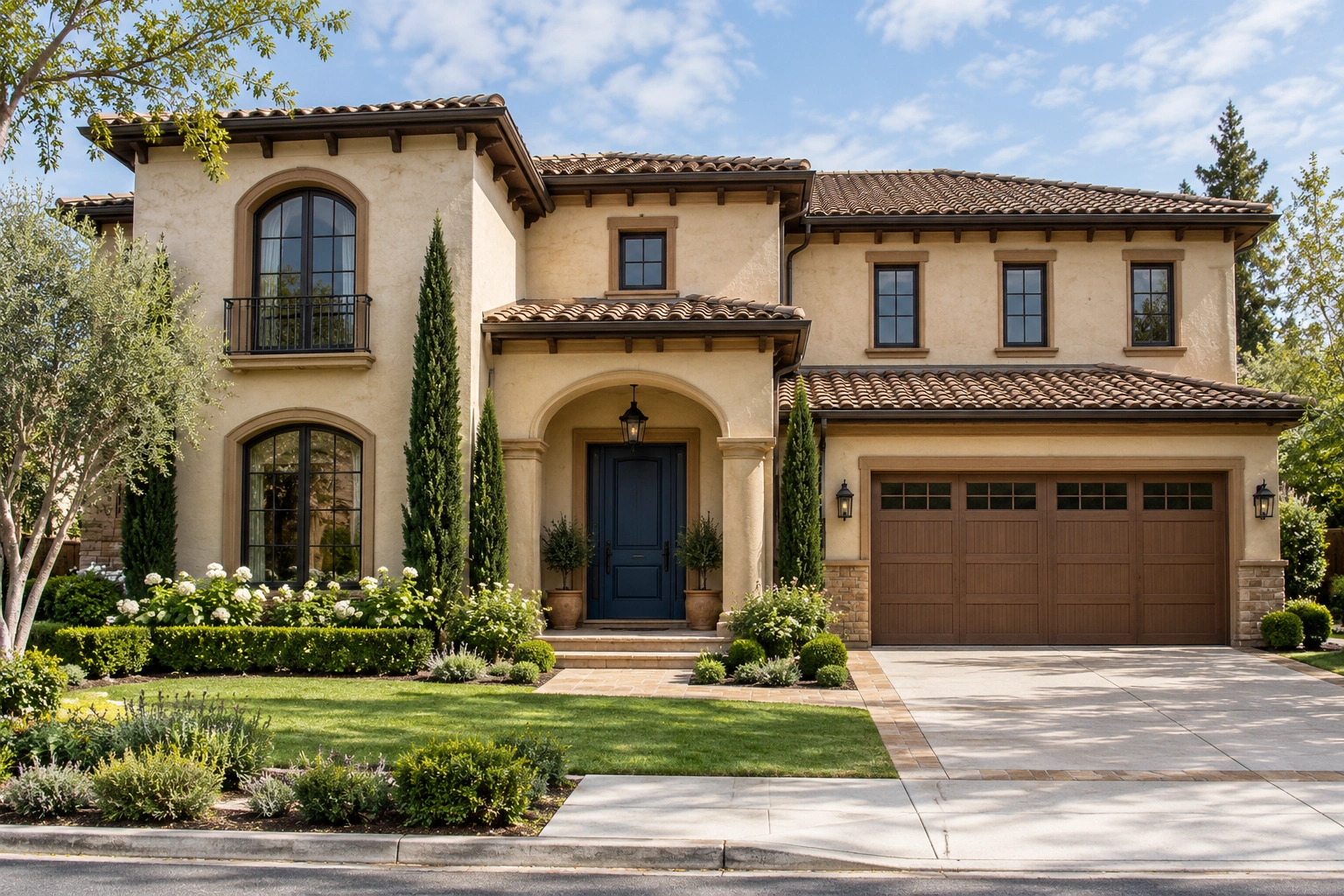
Navy gives the entrance a stronger color accent without changing the beige siding or brown trim.
It can be a useful candidate when the facade needs a clearer entry point. Check it beside the actual trim, especially when the brown has a noticeable red or orange influence.
A shaded navy door may appear almost black. Compare it with a slightly lighter blue sample before choosing, particularly when the doorway sits deep beneath a porch.
11. Connect Brown Trim With a Stained-Wood Door

A stained-wood door introduces grain and material variation within the neutral palette. Its brown tones can relate to the trim without creating another identical painted surface.
Look for a compatible overall tone rather than an exact match. Several unrelated wood finishes across the door, shutters, and posts can complicate the scheme.
Treat the door as a maintenance decision as well as a styling choice. Check the finish manufacturer’s exterior-use and care instructions before selecting a stain.
12. Blend the Garage Door Into the Beige Siding

A large garage door can dominate the street view, particularly when it’s painted much darker than the walls. Choosing a compatible beige can reduce its contrast and leave the entrance more prominent.
Keep brown on selected surrounding details, then use the front door as the main accent.
This approach is useful when the garage occupies much of the facade. It’s less necessary when the garage sits to the side or already has architectural details you want to emphasize.
How to Choose the Right Beige-and-Brown Combination
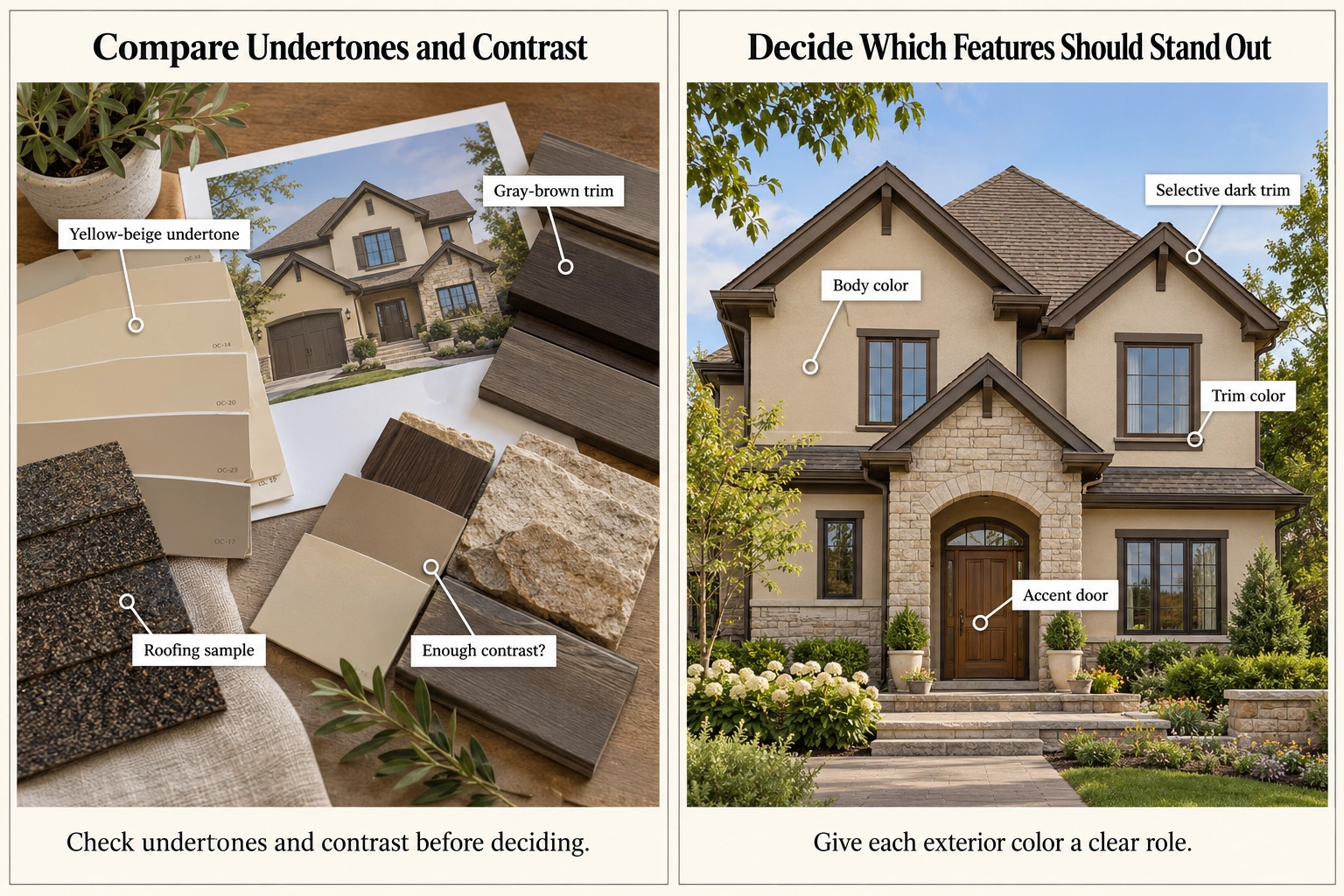
Choose the combination by comparing undertones, contrast, architecture, and the finishes you’ll retain. Start with the actual brown trim rather than a generic image of “brown.” Then decide whether the exterior needs stronger definition, softer outlines, or a clearer focal point. Confirm the result with physical samples.
Compare Undertones and Contrast
An undertone is the subtle color influence within a shade. Beige may lean yellow, pink, gray, or green; brown can also carry different color influences. Undertone compatibility is separate from how light or dark the paint appears.
Build a small shortlist rather than collecting dozens of nearly identical chips. Sherwin-Williams Accessible Beige SW 7036 and Benjamin Moore Shaker Beige HC-45 are named options to compare, but neither is a guaranteed match for existing brown trim.
Assess two questions independently: do the colors look comfortable together, and is there enough contrast for the details you want to show?
Decide Which Features Should Stand Out
Assign each color a purpose:
- Body color: The main siding or stucco.
- Trim color: Selected casings, roof-edge boards, and architectural details.
- Accent color: The entrance door or another deliberate focal point.
A beige-and-brown house exterior doesn’t need every surface outlined. Compare selective dark trim with broader coverage before committing.
Manufacturer guidance also recommends considering architecture, roofing, stone, landscaping, and undertones together when choosing exterior colors.
Work With the Exterior Features You Plan to Keep

Retained roofing, brick, stone, and windows should guide the new palette. They remain visible after painting and contribute their own colors. Gather samples beside those finishes before narrowing the siding, trim, and accent choices; manufacturer guidance specifically includes existing roof and masonry colors in exterior planning.
With a prominent brown roof, compare a lighter wall color and selective brown details. With gray roofing, check whether the brown trim and beige siding form a comfortable transition to the roof.
Brick and stone deserve equal attention. Consider their overall appearance from the street as well as individual colors viewed close up.
Keeping serviceable trim can leave room for a smaller refresh: repainting a suitable front door, coordinating house numbers, or rearranging entry containers. Choose planting for local growing conditions, available sunlight, and mature size.
Changing hardwired exterior lighting calls for a qualified electrician. Also check any applicable HOA or historic-district approval process before buying paint or altering exterior features.
Test Your Colors and Check the Materials Before Painting

Compare Samples in Sun, Shade, and Different Daylight
Test siding, trim, and accent samples together beside the finishes you’re keeping. Examine them in direct sun, porch shade, and at different times of day. Benjamin Moore notes that lighting and house orientation affect exterior color appearance, while Sherwin-Williams recommends physical samples alongside digital visualization.
Use this simple process:
- Narrow the choices to a few complete combinations.
- Follow the sample product’s instructions for preparing and applying it.
- Position the samples beside roofing, masonry, or existing trim.
- Compare them close up and from the street.
- Revisit them under different daylight conditions.
Beige paint that looks unexpectedly yellow or pink deserves another comparison before purchase. Don’t assume the color name or a screen image predicts its appearance on your house.
Check Paint Compatibility and Surface Condition
Color selection doesn’t establish whether a coating suits the surface. Painted wood, stained wood, vinyl, masonry, and factory-finished metal can require different products and preparation.
For vinyl siding, check the siding manufacturer’s guidelines and the paint’s technical data sheet before proceeding. Benjamin Moore specifically recommends those checks.
Sheen—the finish’s degree of shine—also deserves attention. Select it according to the coating, substrate, condition, and desired appearance rather than treating glossy trim as mandatory.
Repair deteriorated surfaces before treating repainting as the solution. For preparation that disturbs old paint on a pre-1978 US home, follow EPA lead-safety guidance; EPA recommends hiring a lead-safe certified contractor.
Frequently Asked Questions
Is Brown Trim Outdated on a Beige House?
Brown trim isn’t inherently outdated. Its effect depends on the shade, placement, surrounding materials, and condition. A heavy-looking exterior may benefit from lighter walls or fewer dark outlines, while existing brown details can remain. Assess the complete house before deciding that the trim color itself needs replacing.
Should Shutters Match the Brown Trim?
Shutters can match the brown trim when you want a restrained palette. They can also carry an accent color, provided it works with the siding, roof, and entrance. Decide whether the shutters or front door should attract attention before introducing another contrasting shade.
Should Gutters and Downspouts Match the Siding or Trim?
Choose according to what you want to emphasize. Gutters can follow the roof-edge trim, while downspouts against beige walls can use a compatible wall color to reduce contrast. Check the material’s painting requirements first, and consider existing factory finishes before planning a color change.
Can Black Hardware Work With Brown Trim?
Black hardware can be a candidate alongside brown trim, particularly as a limited accent on the door, house numbers, or fixtures. Compare the finishes together before purchasing. Repeating black selectively may create a clearer scheme than combining several unrelated metal colors.
Choose a Look That Fits Your Home
Start with the idea that suits your house’s architecture and the features you’re keeping. Decide where you want contrast, give the entrance a clear role, and compare the complete palette outdoors.
A fresh beige-and-brown exterior can come from a few considered changes. The useful choice is the one that works with your home, your preferred style, and the upkeep you’re prepared to manage.
Disclaimer
This content is for general informational purposes only. Homes, needs, preferences, budgets, and situations vary. Seek qualified professional advice for safety, installation, repairs, structural, electrical, plumbing, HVAC, legal matters, or major property decisions.