
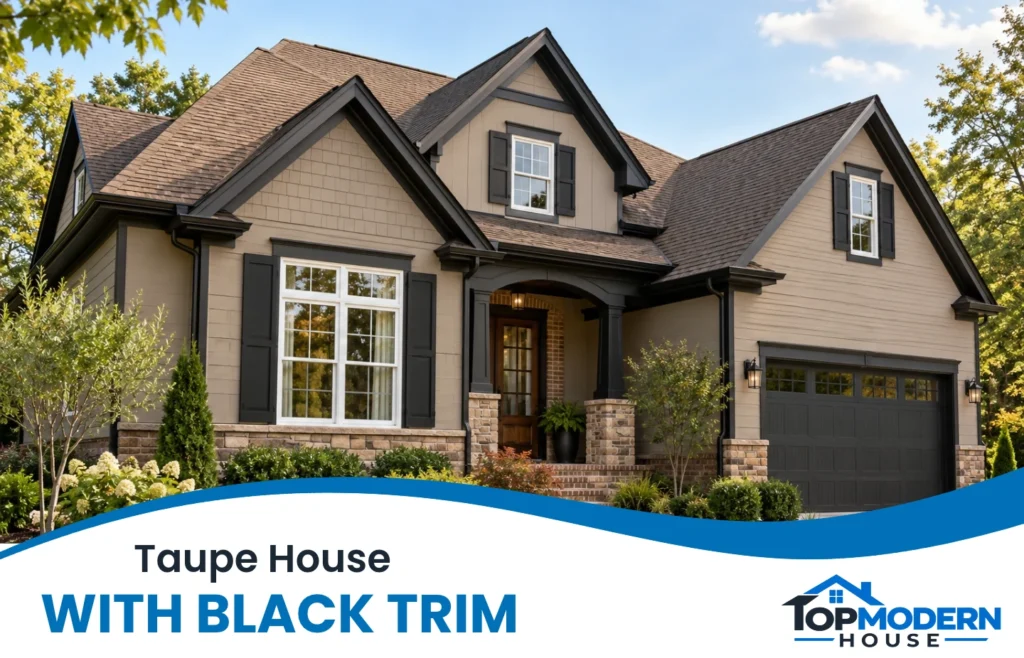
A taupe house with black trim can feel warm and clearly defined, but the result depends on more than those two colors. A brown roof, white window frames, or reddish brick can change which taupe shade looks right—and how much black the exterior needs.
The most useful starting point is your home’s existing finishes. Choose an exterior idea that suits them, then compare siding shades, trim placement, and entry accents. These 12 combinations offer different ways to build a coordinated palette without assuming everything needs replacing.
Short Definition
A taupe house with black trim combines gray-brown exterior walls or siding with dark architectural accents. Homeowners explore this pairing for visual inspiration and help coordinating siding, windows, rooflines, and entry details.
Topmodrenhouse Mission Statement
Topmodrenhouse helps homeowners, renters, and home lovers make informed, practical choices for stylish, comfortable living spaces.
Quick Color-Selection Checklist
- Start with the roof, masonry, and windows you’ll keep.
- Compare light, medium, and dark taupe samples.
- Choose where black should highlight architectural details.
- Test body, trim, and door colors together outside.
- Check material compatibility before applying dark paint.
12 Taupe House With Black Trim Ideas
1. Light Taupe Siding With Crisp Black Window Trim

Light taupe lap siding gives black window casings a clear outline. This is a useful direction for a simple facade where the windows provide much of the architectural detail.
Keep the surrounding palette restrained: a coordinating roof, a wood or black front door, and minimal additional accents. Check the window frames themselves before deciding how their surrounding trim should look.
2. Dark Taupe With Black Trim and a Pale Stone Entry
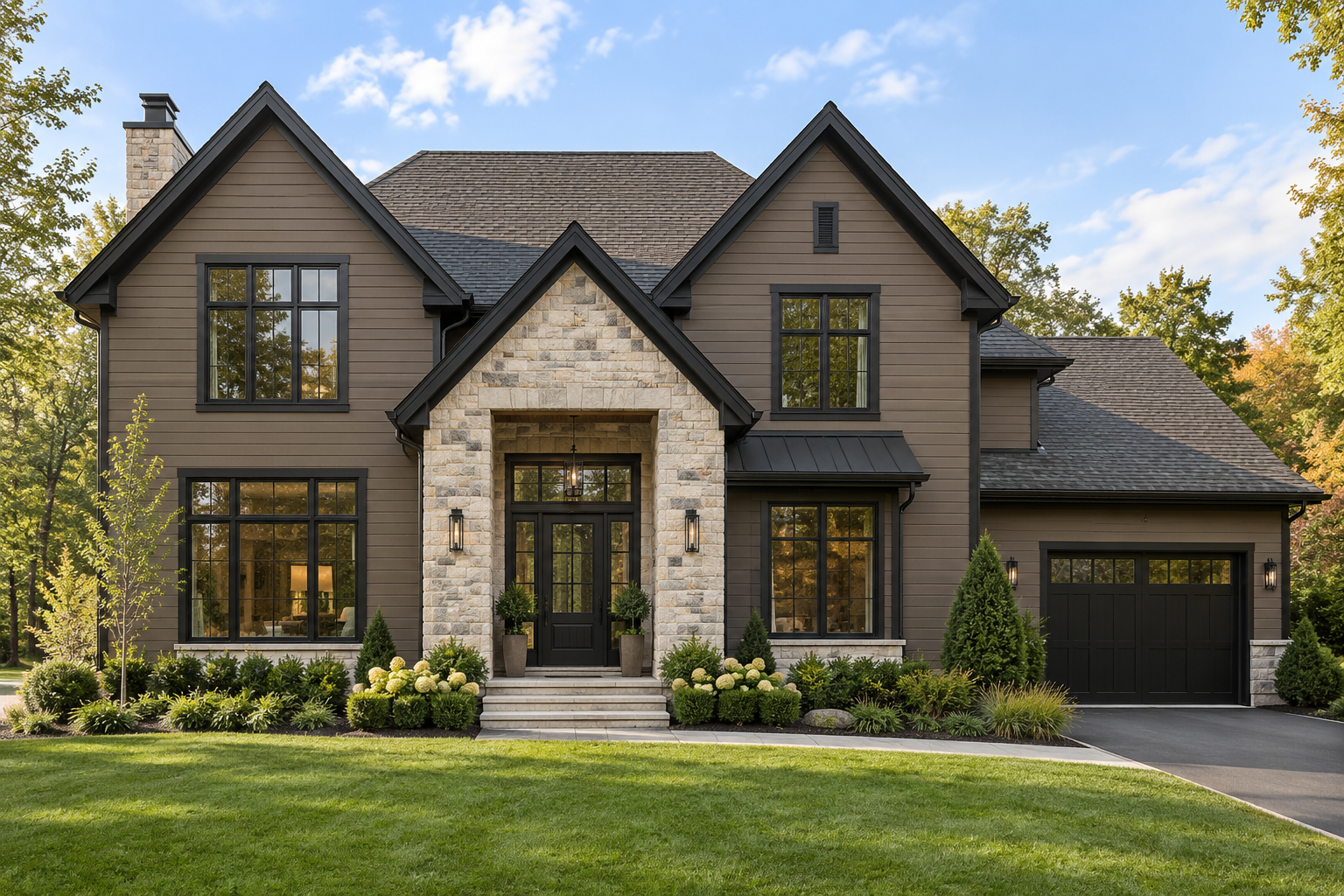
A dark taupe exterior creates a closer relationship with black trim. Pale stone around the entrance can introduce a lighter focal point without adding another painted color.
Compare the siding sample with both the stone and mortar. A stone blend that looks beige from a distance may contain gray, pink, or yellow tones that influence your choice.
3. Medium Taupe With Softer Black Accents

Medium taupe paired with a softer black or deep charcoal offers a less pronounced contrast than pale siding and a strong black.
Try this direction when crisp black feels too assertive beside existing roofing or masonry. Compare the dark samples directly with any factory-finished windows; two dark colors may look noticeably different when placed together.
4. A Taupe Farmhouse With Black Trim and Wood Porch Posts

Taupe board-and-batten, black trim, and wood porch posts create a palette with vertical texture and a warmer entry.
Let the wood be a deliberate accent rather than repeating it across every surface. Its finish matters: compare an actual wood or stain sample with the siding before choosing, especially when the wood has a pronounced orange or reddish appearance.
5. A Taupe Craftsman With Black Details and Stone Columns
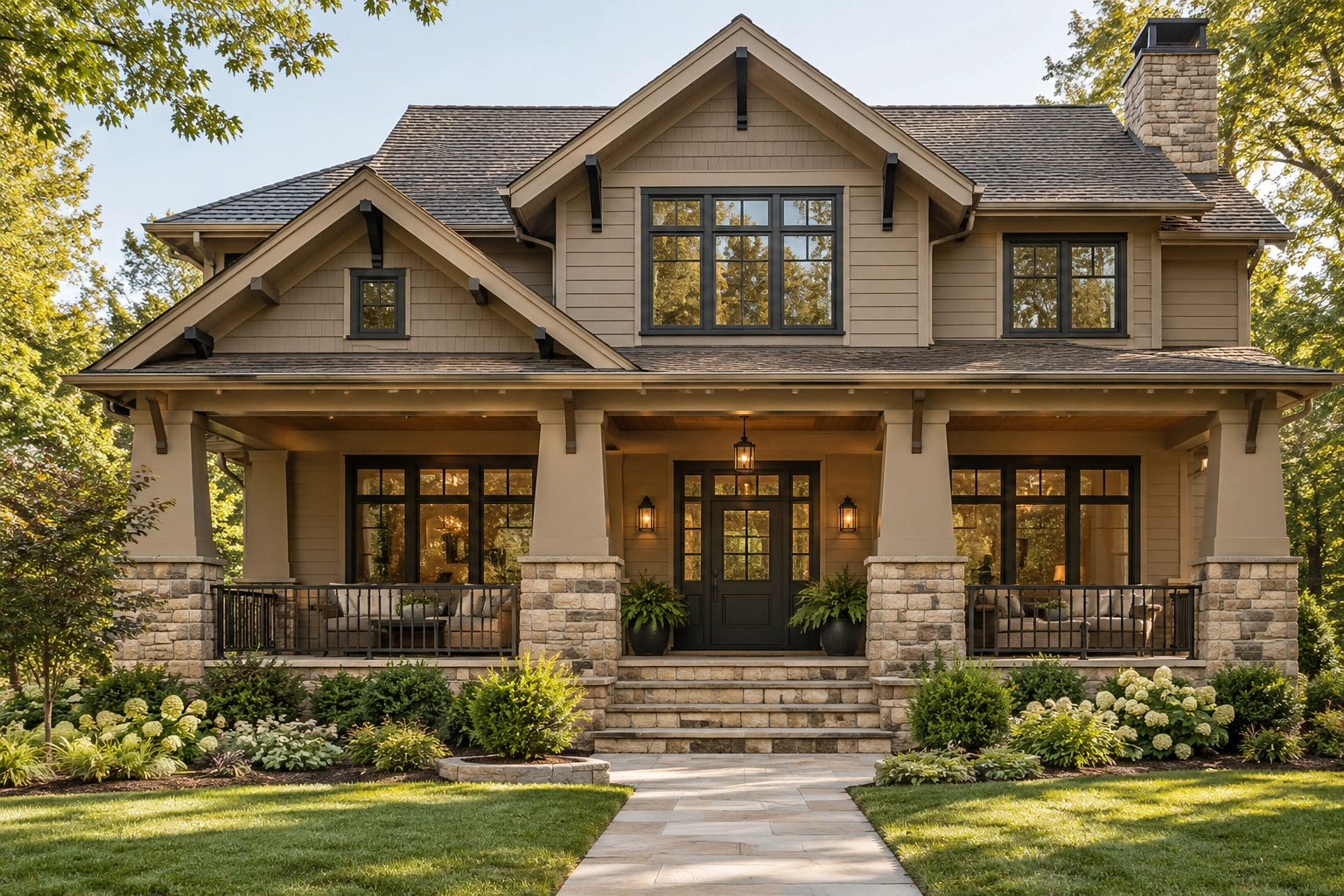
On a Craftsman home, use taupe to connect the siding with existing stone column bases. Reserve black for selected details, such as window casings, brackets, or the entrance.
Keep the porch’s proportions visible. Painting every post, beam, railing, and ceiling dark can reduce the distinction between features that give the house its character.
6. A Ranch With Black Fascia and a Wood Front Door
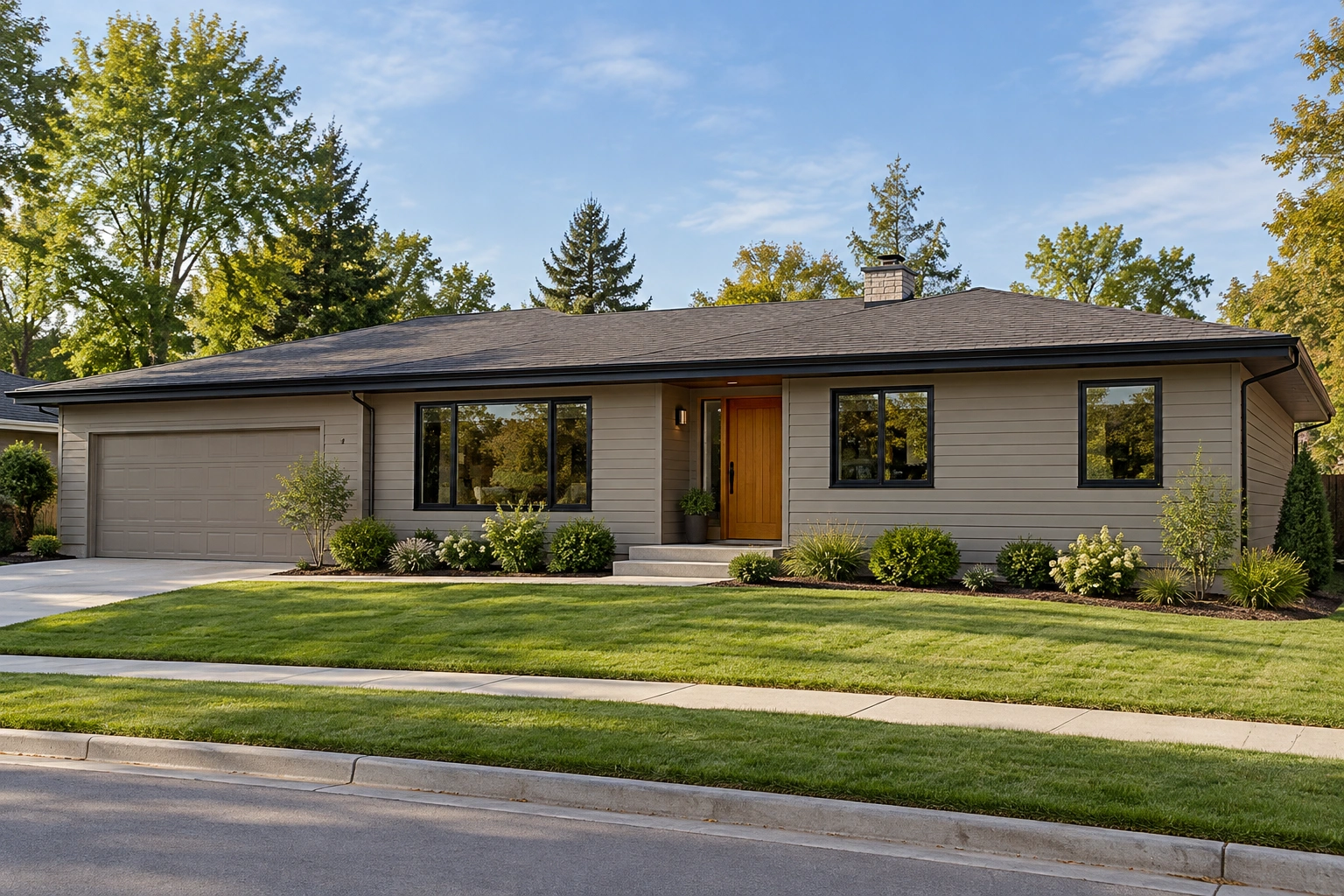
Black fascia—the board along the roof edge—can emphasize a ranch’s long, low profile. Taupe siding and a wood front door add variation within that horizontal shape.
Consider keeping downspouts close to the body color so they don’t become competing vertical lines. View the proposed arrangement from the street, where the roof edge reads differently than it does up close.
7. A Small Cottage With Selective Black Trim

A compact cottage may need only a few dark accents: window trim, the front door surround, and a porch railing, for example.
Leave some secondary features taupe to keep the facade from becoming a collection of black outlines. Repeating a dark accent at the entry and windows can create enough connection without painting every edge.
8. Smooth Taupe Stucco With Narrow Black Outlines

For a contemporary exterior, smooth taupe stucco can work with narrow black window surrounds and a restrained dark entry.
Keep the trim scale consistent with the building’s simple forms. The recessed entrance deserves particular attention during sampling: its shade may make the same taupe look different from the sunlit main wall.
9. Taupe Siding and Black Trim Beside Existing Brick

Retained brick can become part of the palette rather than something to conceal. Compare taupe samples with the brick’s overall appearance, its darker variations, and the mortar.
Use black to define selected painted details while allowing the brick to remain visible. You don’t need to paint sound masonry simply to recreate a color scheme from another house.
10. Black Exterior Trim Around Retained White Windows

White window frames can remain part of a taupe-and-black exterior. One option is black surrounding casings with white frames inside; another is lighter window trim and black accents elsewhere.
The first creates more contrast around each opening. Test the arrangement on a photo of your house before committing, particularly when the windows are small or closely spaced.
11. Taupe and Black With an Existing Brown Roof

A brown roof doesn’t automatically rule out black trim. Start by comparing taupe samples with the roof’s visible brown, gray, and other color variations.
Keep black selective if the roof already occupies a large part of the street view. A wood entrance or coordinating masonry can provide a connection between the roof and the painted body.
12. Two Taupe Shades With Black Trim and a Matching Garage
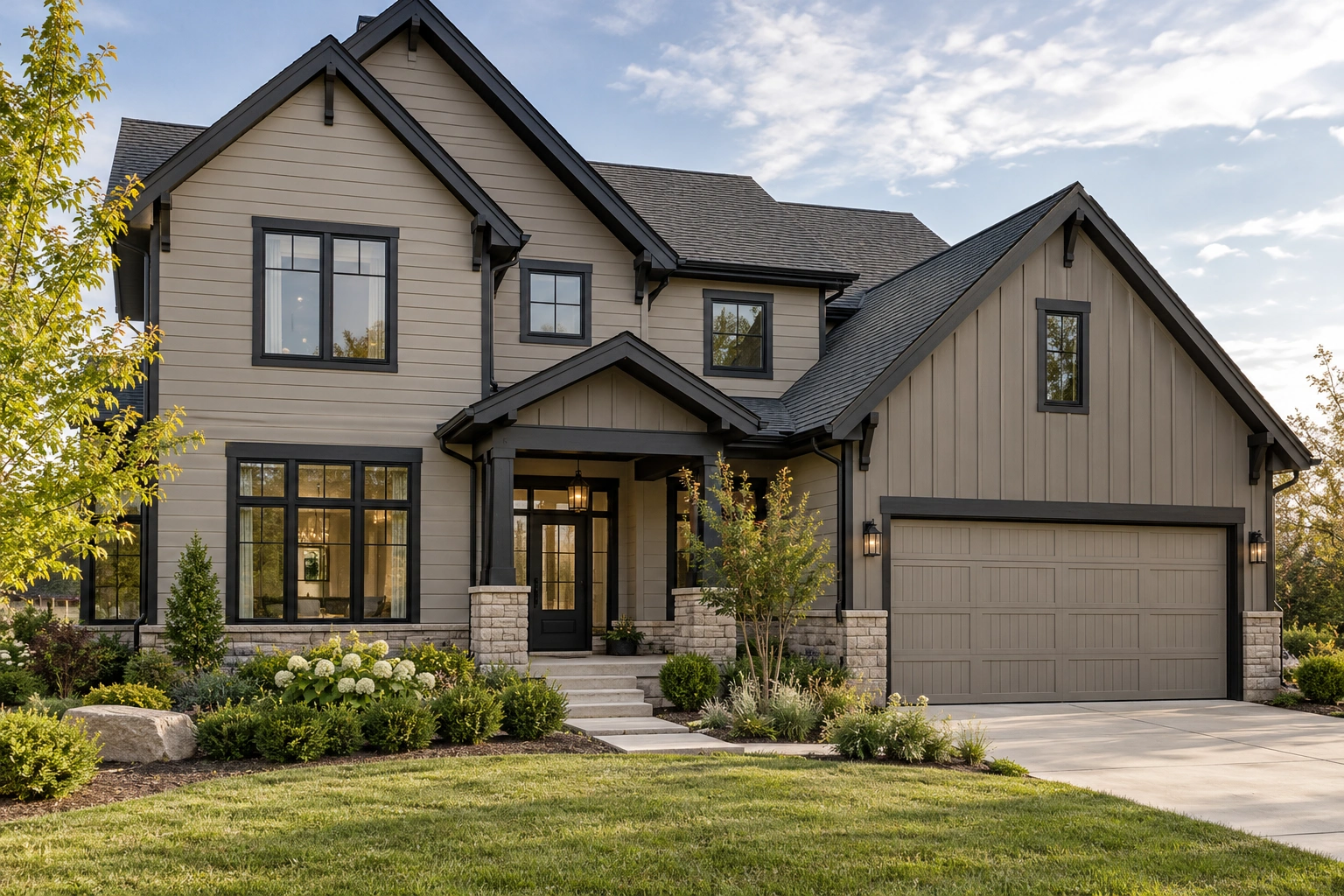
Use a lighter taupe on the main siding and a deeper shade on a clearly defined gable or secondary wall. Black trim can connect the two areas.
A garage door matched to its surrounding body color helps reduce its visual prominence. This approach can suit a front-facing garage where you want the pedestrian entrance to receive more attention.
How to Choose Your Taupe and Black Paint Colors
Start with the finishes you’ll keep: roofing, windows, brick, stone, and paving. Then compare a small selection of taupes against them.
Taupe generally describes a gray-brown neutral, but paint names don’t establish a precise appearance. Colors sold as taupe, greige, beige, or mushroom can overlap. The actual sample matters more than the label.
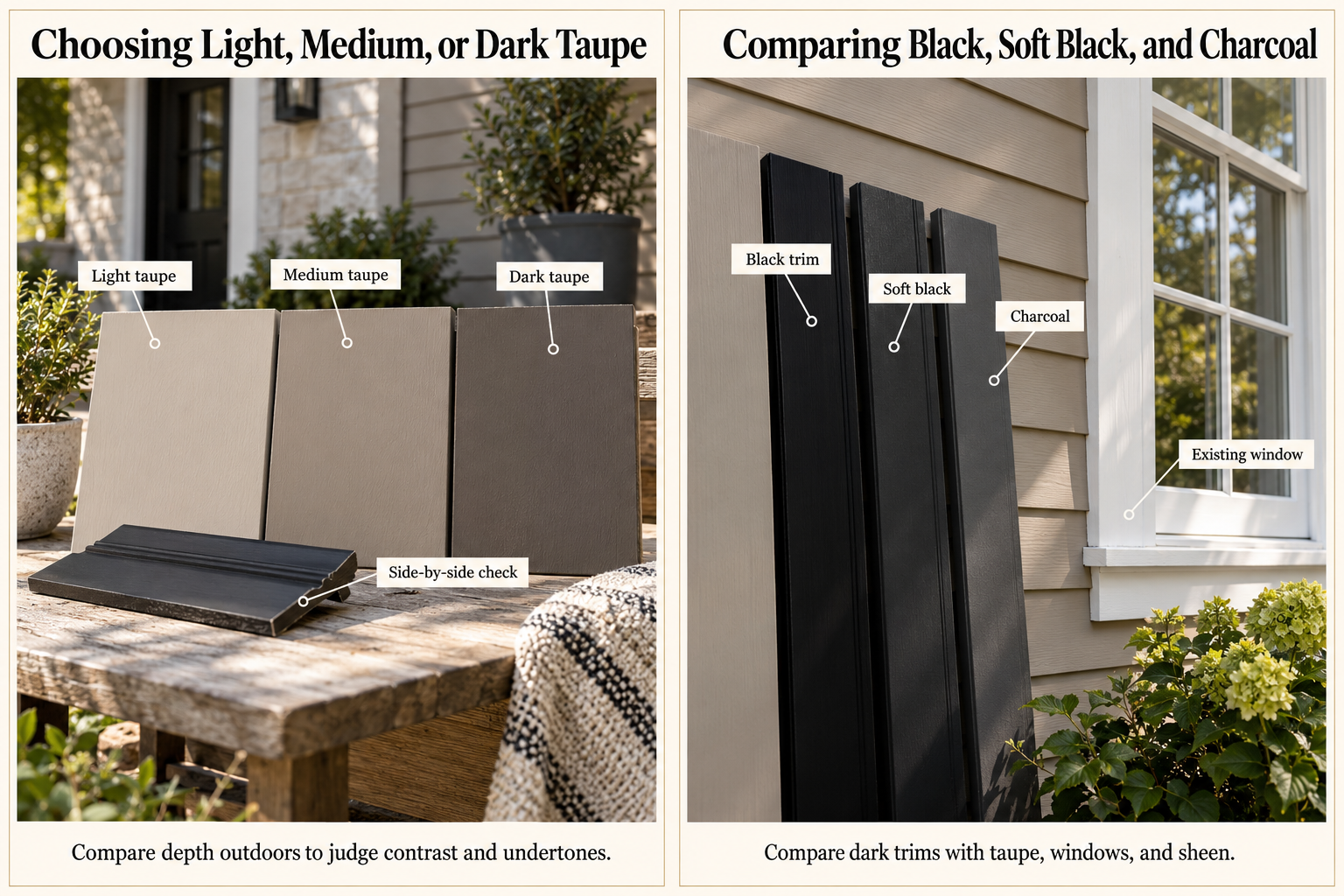
Choosing Light, Medium, or Dark Taupe
Choose depth according to the contrast you want:
| Taupe depth | Relationship with black trim | What to check |
| Light | More distinct outlining | Whether the contrast feels too strong around numerous windows |
| Medium | A middle ground between separation and blending | Whether undertones coordinate with retained finishes |
| Dark | Less separation between body and trim | Whether entrances and architectural details remain distinguishable |
A taupe that looks neutral indoors may show an unwanted undertone outside. Compare candidates side by side rather than assessing each one alone.
These verified color names offer a starting shortlist:
- Sherwin-Williams Tony Taupe SW 7038
- Benjamin Moore Smokey Taupe 983
- BEHR Perfect Taupe PPU18-13
- Sherwin-Williams Tricorn Black SW 6258 for comparison as a dark accent
Treat them as candidates to sample. Tony Taupe appears in a Sherwin-Williams exterior palette, and Perfect Taupe features in BEHR’s farmhouse inspiration palette; neither establishes the right choice for every house.
Comparing Black, Soft Black, and Charcoal
Compare dark trim colors beside your chosen taupe and existing windows. A stronger black gives a more graphic outline; a softer dark color may create a quieter transition.
These descriptions aren’t standardized across brands. Examine physical samples, and remember that sheen is a separate choice that can influence how the color appears.
Where Should You Use Black Trim?
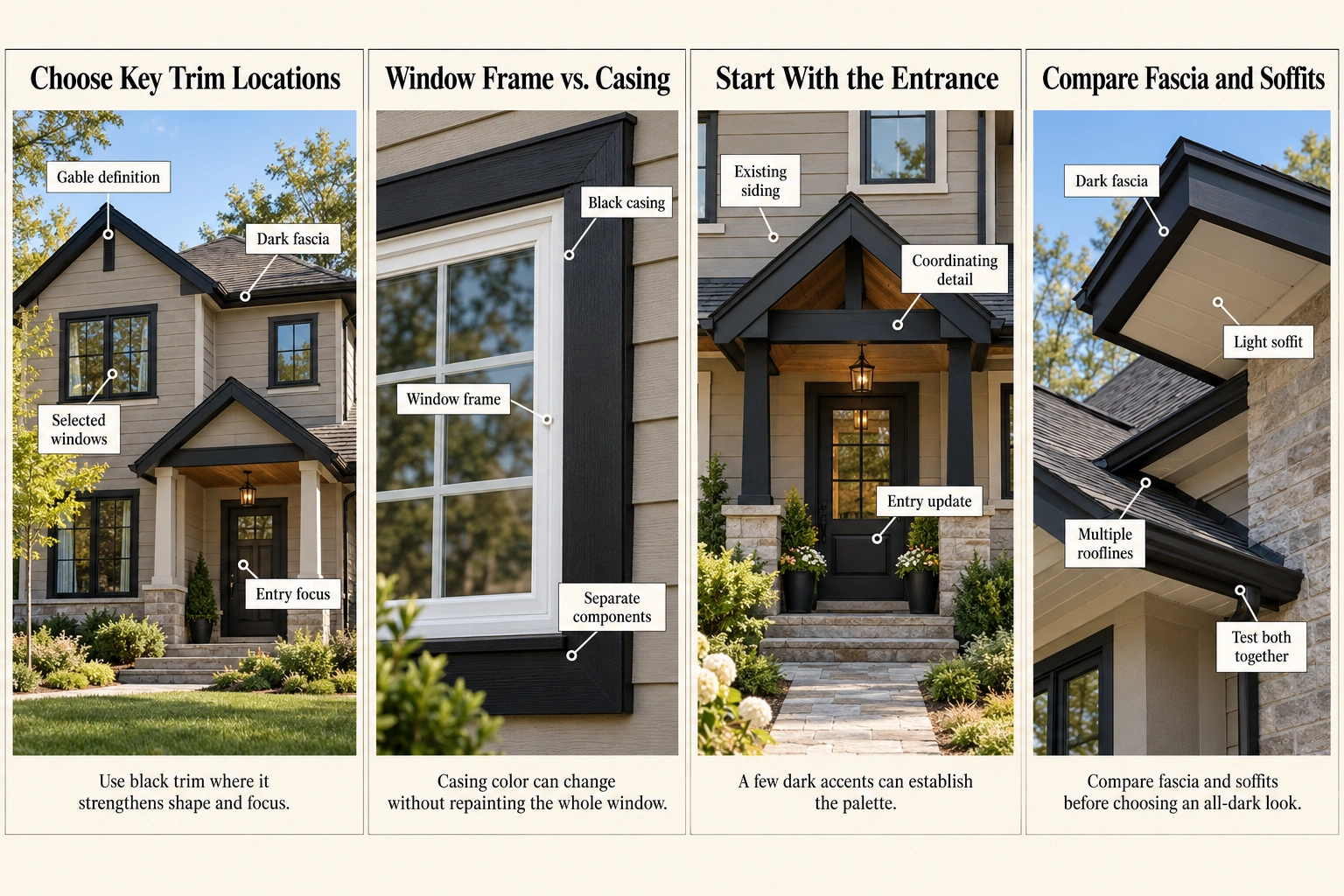
Use black trim where you want architectural definition: around selected windows, along fascia, at gables, or around the entrance. Choose locations that support the house’s shape and focal point. You don’t need to outline every corner, downspout, and porch component for the palette to feel connected.
Distinguish window frames from window casings. The frame belongs to the window unit; the casing is the surrounding trim. Changing the casing color doesn’t necessarily mean repainting the frame.
For a limited update, concentrate on the entrance and a few coordinating details. This can establish the palette while retaining siding, roofing, and window finishes.
On a house with several rooflines, compare selective dark fascia with lighter soffits—the undersides of the eaves—before choosing an all-dark arrangement.
Pair the Colors With Your Roof, Masonry, and Front Door

The roof and masonry occupy large areas, so include them in the palette from the beginning. A roof described as “brown” may contain several shades, while stone can combine warm and cool colors.
Hold siding and trim samples beside those finishes. Look for a relationship with the material as a whole rather than matching one isolated fleck.
For the entrance, consider:
- A black door: Repeats the trim and keeps the palette restrained.
- A wood door: Adds grain and another natural color.
- A muted painted door: Introduces a focal accent, provided its sample works with the remaining palette.
The garage requires a separate decision. A contrasting black garage door attracts attention; a body-matched door can be quieter. Neither is automatically better. Choose according to the garage’s size, position, and relationship with the front entrance.
Test the Complete Palette Before You Paint
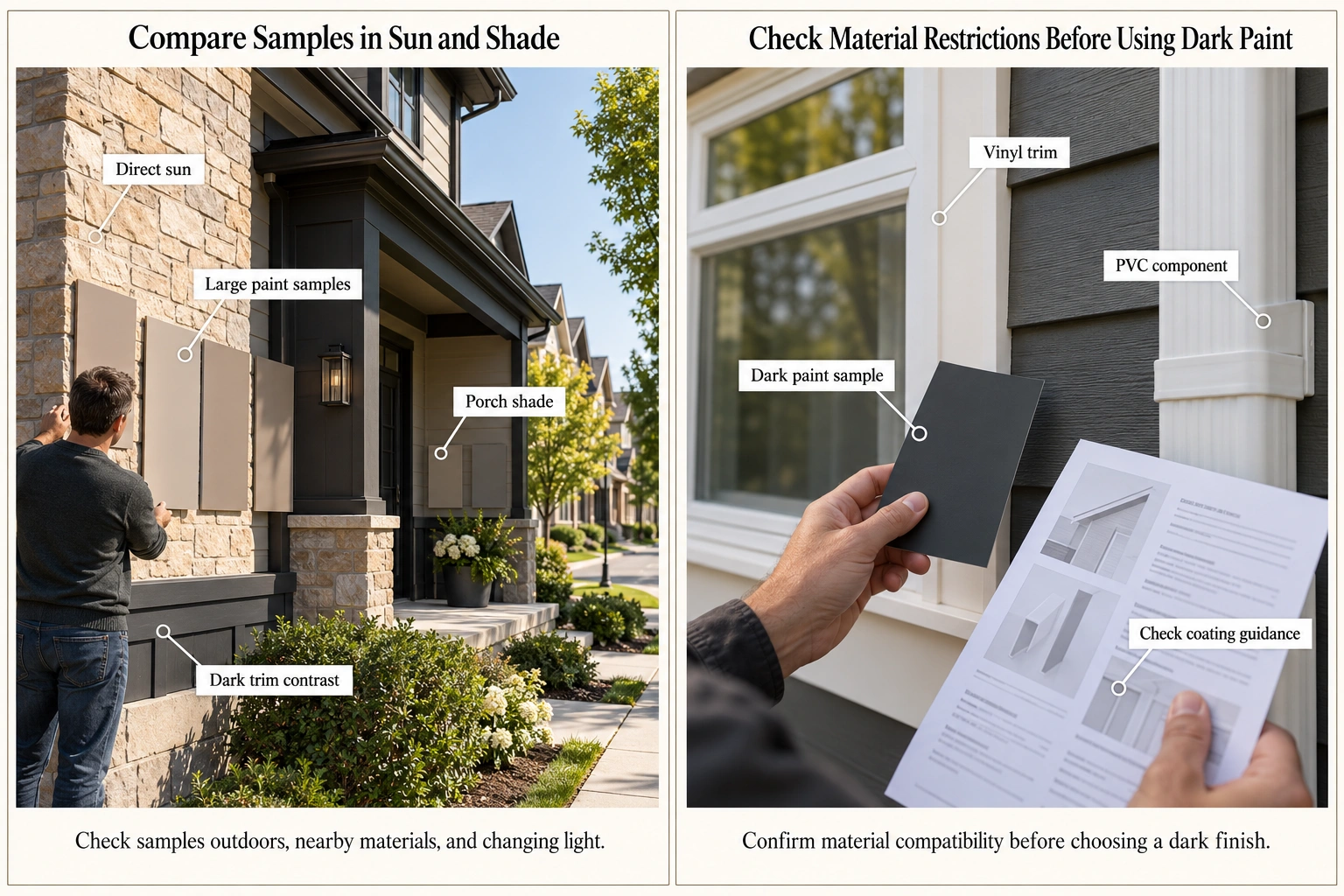
Test the body, trim, and entry colors together. A taupe sample viewed alone won’t show the full relationship between those surfaces.
Manufacturer guidance recommends assessing exterior samples alongside siding, roofing, and landscaping throughout changing daylight. Digital visualizers can help explore placement, but physical samples remain necessary for evaluating color.
Compare Samples in Sun and Shade
Use sufficiently large samples to judge the colors comfortably. Prepare sample surfaces according to the sample product’s instructions, and position them near retained materials.
Check the palette:
- On the front elevation and another exposed wall.
- In direct light and under porch shade.
- At different times of day.
- From close range and the sidewalk.
Make sure the sample arrangement includes enough dark trim color to assess contrast. Once you’ve narrowed the palette, confirm the intended coating and sheen with the paint supplier or painter.
Check Material Restrictions Before Using Dark Paint
Can vinyl or PVC trim be painted black? The answer depends on the exact material and approved coating system.
Sherwin-Williams warns that darker paint can cause vinyl siding to warp or buckle and provides a specific VinylSafe palette for suitable applications. A general exterior paint label alone doesn’t establish compatibility.
PVC products can also have specific restrictions. AZEK, for example, publishes approved-color and coating guidance that must be followed for its products. Check the current instructions for your exact material, including any light reflectance value requirements, and consult the manufacturer or a qualified painter when uncertain.
Common Mistakes That Make the Palette Feel Mismatched

Choosing paint from a photograph. Lighting, editing, and screens affect appearance. Use photos to choose a direction, then evaluate actual samples.
Ignoring an unwanted undertone. A pinkish or purplish appearance may become more noticeable beside surrounding colors. Compare another taupe candidate instead of assuming black trim will correct it.
Making every feature dark. Numerous outlines can compete with the entrance and architecture. Decide which details deserve emphasis.
Treating the garage and front door equally. A large contrasting garage may dominate a smaller entrance.
Assuming every component is paintable. Identify the siding, trim, and window materials before planning color changes.
Frequently Asked Questions
What Color Trim Goes With a Taupe House?
Black, charcoal, white, and cream can all be options for a taupe exterior. The choice depends on the taupe’s undertones, existing windows, roof, and desired contrast. Black gives stronger definition against lighter siding, while lighter trim creates a different balance around doors and windows.
Is Taupe the Same as Greige or Beige?
Taupe, greige, and beige are related neutral color descriptions, but they aren’t interchangeable. Taupe generally suggests gray-brown, while greige suggests gray mixed with beige. Brand terminology overlaps, so compare physical samples for their undertones and depth rather than choosing by the color name alone.
Does Black Trim Work on Traditional Homes?
Black trim can work on traditional homes when its placement respects the architecture. Window surrounds, an entrance, or selected decorative details may provide enough contrast. Consider existing shutters, porch columns, and rooflines before applying the same dark treatment throughout; the amount of black matters as much as the color.
Can I Update the Trim Without Repainting the Taupe Siding?
Yes, a trim-only update can be an option when the existing siding color suits your retained finishes. Test the new trim beside the actual siding and window frames first. Check surface condition and coating compatibility, then focus changes where they’ll create the most useful visual connection.
Choose a Palette That Fits Your House
Choose the idea closest to your home’s architecture and existing finishes. Decide where contrast will help, keep the entry’s role clear, and compare the complete palette outside. A coordinated result comes from making those choices together—and confirming them before painting.
Disclaimer
This content is for general informational purposes only. Individual homes, needs, preferences, budgets, and situations vary. Consult a qualified professional for safety, installation, repair, structural, electrical, plumbing, HVAC, legal, or major property decisions, and follow applicable manufacturer guidance.