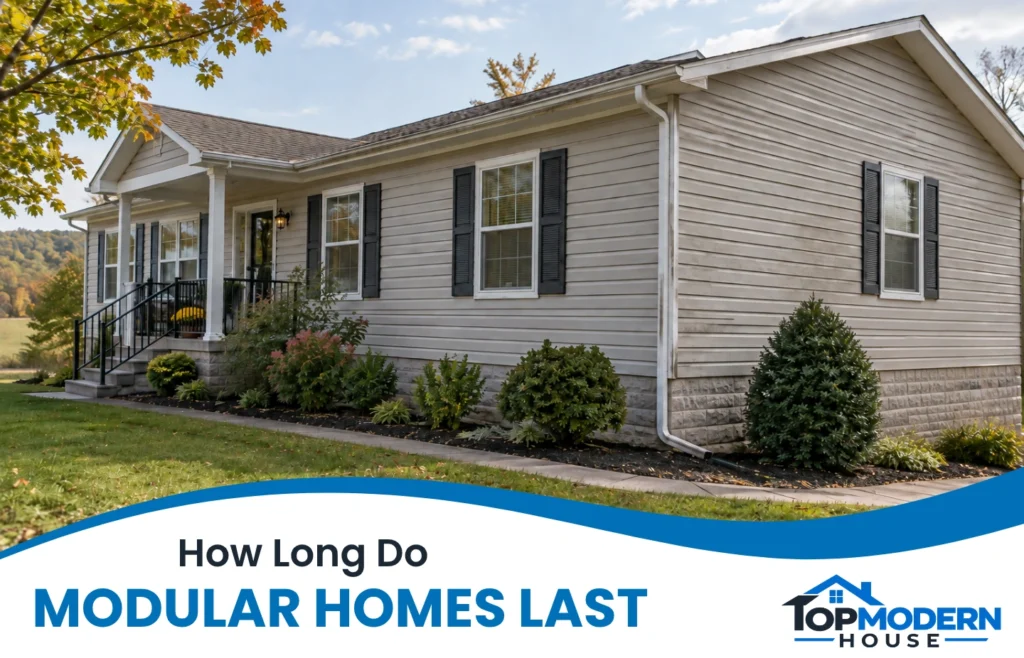
A modular home isn’t designed to be temporary housing. Once its sections are assembled on the property, it functions much like a conventional house, and its long-term condition depends on familiar things: construction quality, the foundation, water management, climate, maintenance, and how well problems are repaired as they appear.
So, how long do modular homes last? A well-built and properly maintained modular home can remain useful for many decades. A 50- to 100-year-or-longer range is commonly cited within the modular-home industry, but it shouldn’t be treated as a guaranteed expiration date. Actual lifespan varies considerably from one property to another.
Age alone tells you surprisingly little. A 35-year-old modular home with a dry foundation, maintained roof, good drainage, and updated systems may be in better condition than a much newer home that has suffered repeated water intrusion.
Short Definition
Modular home lifespan refers to how long a factory-built, permanently installed home remains structurally sound and usable, based on construction quality, foundation, installation, climate, maintenance, and repairs.
Topmodrenhouse Mission Statement
Topmodrenhouse helps homeowners, renters, and home lovers make practical, informed choices for more comfortable, functional, and stylish living spaces.
Quick Modular Home Longevity Checklist
- Check the foundation for movement, cracking, and moisture problems.
- Make sure grading and drainage direct water away from the home.
- Inspect the roof, siding, windows, seals, and other exterior components.
- Look for recurring leaks, water stains, or unexplained moisture.
- Review the condition and maintenance history of HVAC, plumbing, and electrical systems.
- Consider how local heat, humidity, snow, storms, or coastal exposure affect maintenance needs.
- Don’t judge an older modular home by age alone; evaluate its current condition and repair history.
- Have significant cracks, structural movement, or persistent moisture evaluated by an appropriate qualified professional.
How Long Do Modular Homes Last?
A properly constructed modular home can have a lifespan comparable to a traditional site-built house. The commonly cited 50 to 100 years or more is best understood as a broad expectation for well-built, well-maintained homes—not a fixed service-life rating that applies to every modular property.
There isn’t a single age at which a modular home suddenly becomes unusable. Homes age gradually, and different parts wear at different rates.
A sound structural frame and foundation may remain serviceable while the house goes through several rounds of roof work, HVAC replacement, exterior maintenance, plumbing repairs, new flooring, and other updates.
That makes condition more useful than age when you’re evaluating a particular home.
What Determines the Lifespan of a Modular Home?
The word “modular” describes how much of the home is constructed—not how long it will survive. Long-term performance depends on the complete building, including the factory-built modules and the work completed at the property.
Construction Quality and Materials
Good framing, properly installed sheathing, roofing, siding, windows, flashing, plumbing, and other components all contribute to modular home durability.
Factory construction can offer useful quality-control advantages because much of the building work happens in a controlled environment. But factory-built doesn’t automatically mean flawless. Material quality, workmanship, design, inspections, and the manufacturer’s quality-control process still matter.
Foundation and Site Preparation
A durable module placed on a poorly prepared site can still develop problems.
The foundation needs to suit the home and local site conditions, while grading and drainage should move water away from the building instead of allowing it to collect around the foundation.
Soil movement, persistent standing water, poor drainage, or foundation settlement can affect doors, windows, finishes, connections, and eventually structural performance.
Installation and Module Connections
The modules are only part of the finished house. They still need to be transported, placed, joined, weather-sealed, connected to utilities, and integrated with the foundation.
That makes the quality of the set and site-completion work important. Factory quality can’t compensate indefinitely for poorly completed connections or unresolved site problems.
Climate, Moisture, and Drainage
Water is one of the conditions worth watching most closely in any house.
A small roof leak, failed exterior seal, plumbing leak, or drainage problem may seem minor at first. Left unresolved, moisture can damage finishes, insulation, wood components, and other parts of the building envelope.
Climate also changes the stresses a house faces. High humidity, coastal exposure, repeated freeze-thaw cycles, heavy snow, strong sun, and severe storms can all affect maintenance needs.
Maintenance and Timely Repairs
A modular house needs the same basic attention you’d give another permanent home.
Small defects are usually easier and less expensive to manage before they spread. Keeping water out, maintaining the roof and exterior, servicing mechanical systems, and investigating unusual movement all help protect the home’s useful life.
Do Modular Homes Last as Long as Site-Built Homes?
Yes, they can. In the United States, modular homes are generally constructed to applicable state and local building codes rather than the federal HUD Code used for manufactured homes. Official HUD guidance describes modular homes as factory-built housing constructed to applicable state and local codes in a manner similar to traditional site-built homes.
That doesn’t mean every modular home and every site-built home will age identically. Two houses built under similar standards can perform very differently after decades of weather, maintenance, renovations, drainage conditions, and repairs.
How Factory Construction Can Affect Quality
Building indoors can reduce exposure to rain and other weather during portions of construction. Factory processes may also allow more consistent sequencing and quality checks.
Those are meaningful advantages, but they shouldn’t be stretched into the claim that every modular house is stronger or longer-lasting than every stick-built house.
Why Neither Construction Method Guarantees Longevity
A carefully built site-built house can perform extremely well for generations. A modular house can too.
Poor workmanship, neglected maintenance, water damage, foundation movement, and inappropriate repairs can shorten the useful life of either one.
For a homeowner, the better question is often not “modular or stick-built?” but “How well was this particular house built, installed, and maintained?”
Modular vs. Manufactured Homes: Why the Difference Matters
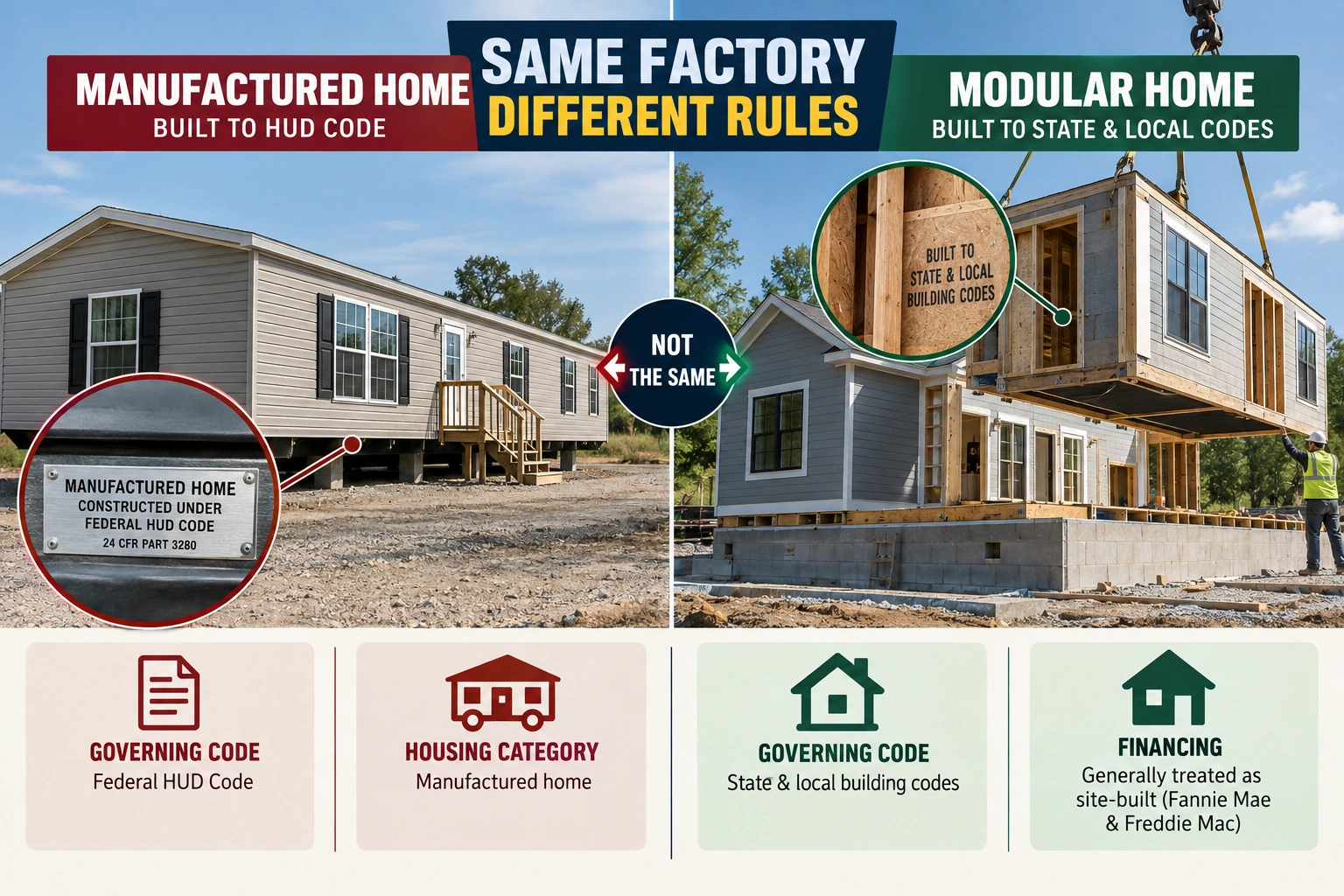
Modular and manufactured homes are often grouped together because both involve factory construction, but they aren’t the same housing category.
HUD guidance states that manufactured homes are constructed under the federal HUD Code. Modular homes instead follow applicable state and local building codes, similar to site-built houses.
That distinction matters because assumptions about mobile or manufactured housing shouldn’t automatically be applied to modular homes.
It also affects financing discussions. Freddie Mac states that modular homes are generally treated as site-built single-family homes for financing purposes, while Fannie Mae says qualifying modular, prefabricated, panelized, and sectional housing receives the same treatment as site-built housing under its guidance.
What Can Shorten a Modular Home’s Lifespan?
Long-term deterioration usually comes from specific problems rather than from modular construction itself.
Poor Drainage and Water Intrusion
Watch for recurring roof leaks, wet crawlspaces or basements, overflowing gutters, deteriorated exterior seals, plumbing leaks, and water that regularly pools near the foundation.
Persistent moisture can quietly cause much more damage than a cosmetic issue suggests.
Foundation or Installation Problems
Settlement or movement can sometimes show up as recurring cracks, doors or windows becoming difficult to operate, uneven areas, or gaps that continue to change.
One minor crack doesn’t diagnose a foundation problem. A pattern that grows, returns after repair, or appears alongside other movement deserves closer attention.
Delayed Roof, Exterior, or System Repairs
Putting off repairs tends to turn localized defects into larger ones. A failing roof covering is much easier to deal with before water reaches framing, insulation, ceilings, or walls.
The same principle applies to plumbing, siding, windows, and mechanical equipment.
Harsh Climate and Local Environmental Exposure
A house near the coast faces different conditions than one in a dry inland area. Likewise, a northern home with repeated snow and freeze-thaw exposure has different maintenance demands from one in a hot, humid climate.
Good design and maintenance should respond to those local conditions.
How Can You Help a Modular Home Last Longer?
The most useful longevity strategy isn’t complicated: keep water controlled, maintain the exterior, service building systems, and investigate significant changes instead of ignoring them.
Keep Water Away From the Home
Maintain gutters and drainage paths, correct obvious pooling near the foundation, and deal with roof or plumbing leaks promptly.
Good grading should help direct surface water away from the building rather than toward it.
Inspect the Roof, Siding, Seals, and Openings
Look periodically for loose or damaged roofing, deteriorated siding, failed caulk or sealant, damaged flashing, and gaps around windows and doors.
The goal isn’t to make the house maintenance-free. It’s to catch small openings before weather turns them into larger repairs.
Maintain Plumbing, HVAC, and Other Home Systems
Mechanical equipment and plumbing won’t necessarily last as long as the house itself.
Routine servicing and prompt repair of leaks or equipment problems protects both the systems and the surrounding building.
Address Movement, Cracks, and Leaks Early
Don’t panic over every hairline drywall crack, but don’t automatically dismiss changing conditions either.
A crack that continues to grow, recurring water intrusion, visible foundation movement, or doors and windows suddenly going out of alignment can justify a closer professional evaluation.
The House Can Outlast Many of Its Individual Parts
One of the easiest mistakes to make is treating the house and every component inside it as though they share one lifespan.
Structural Life vs. Component Replacement
A house may remain fundamentally sound while owners replace or repair:
- roofing materials
- HVAC equipment
- water heaters
- plumbing fixtures
- flooring
- exterior finishes
- sealants
- windows or doors
- appliances
These are normal cycles of homeownership.
Replacing an aging HVAC system in a 30-year-old modular house doesn’t mean the structure itself is worn out any more than replacing the roof on a conventional house does.
Why Repairs Don’t Mean the Home Has Reached the End of Its Life
Long-lived houses are maintained, repaired, and updated.
What matters is whether deterioration is manageable and localized or whether major structural, foundation, or moisture problems have become widespread.
That distinction is especially useful when evaluating an older property.
What Should You Check Before Buying an Older Modular Home?
Don’t reject a modular home simply because it’s 20, 30, or 40 years old. Evaluate what condition those years have left behind.
A qualified home inspection is especially useful because age, renovations, climate, and maintenance history can create problems that aren’t obvious during a quick showing.
Foundation, Drainage, and Signs of Movement
Look for visible evidence of persistent moisture, poor drainage, substantial cracking, uneven movement, or repairs that deserve further investigation.
The condition of the foundation and surrounding site can tell you more than the date the modules left the factory.
Roof, Exterior, and Water-Damage History
Check the age and visible condition of the roof and exterior finishes.
Water staining, recurring leaks, soft or damaged materials, musty areas, or repeated patching should be investigated rather than dismissed as ordinary aging.
Plumbing, HVAC, Electrical, and Other Major Systems
A structurally sound older house may still need significant system updates.
Have the condition of major equipment and systems considered as part of the overall purchase decision instead of assuming the original components should have lasted as long as the building.
Permits, Inspection Records, and Maintenance History
Where available, documentation can help clarify additions, renovations, repairs, and major replacements.
A well-documented maintenance history can be more reassuring than a younger property with obvious deferred maintenance and little information about previous work.
When Should Cracks, Movement, or Moisture Be Professionally Inspected?
Cracks, leaks, or sticking doors don’t automatically mean a modular home is structurally failing. The pattern matters.
Professional evaluation becomes more sensible when you see large or worsening cracks, repeated movement, persistent water intrusion, obvious foundation deterioration, unexplained changes around module connections, or several symptoms appearing together.
A qualified home inspector is a practical starting point for a purchase. Depending on the issue, further evaluation may be needed from a structural engineer, foundation specialist, roofer, plumber, electrician, HVAC professional, or other appropriately qualified contractor.
Avoid trying to diagnose significant structural or water-damage concerns from appearance alone.
How Does Location Affect Modular Home Longevity?
Location doesn’t give a modular home a fixed expiration date. It changes the environmental stresses the house must handle and the maintenance required to control them.
Hot, Humid, and Coastal Conditions
Humidity and frequent rainfall make moisture control particularly important. Coastal locations can add salt exposure, wind, and storm-related demands.
Exterior seals, roofing, drainage, ventilation, and corrosion-prone components may need closer attention than they would in a mild inland climate.
Cold, Snowy, and Freeze-Thaw Climates
Cold climates can put more emphasis on roof loads, drainage, foundations, exterior materials, and the effects of repeated freezing and thawing.
The relevant issue isn’t whether modular construction works in cold regions; it’s whether the home and site were designed and maintained appropriately for local conditions.
Severe Weather, Soil, and Local Site Conditions
Wind exposure, flooding potential, expansive or unstable soils, slopes, and drainage patterns can all affect a home’s long-term performance.
This is why broad searches such as “how long do modular homes last in Florida?” or “in Texas?” can’t be answered responsibly with one state-specific number. The home’s design, location, site conditions, construction, and maintenance matter more.
Frequently Asked Questions
Can a Modular Home Last 100 Years?
Yes, a well-built modular home can potentially remain serviceable for 100 years or longer, but that shouldn’t be interpreted as a guarantee. Industry sources commonly use lifespan ranges extending to 100 years, while actual longevity depends on construction quality, foundation performance, environment, maintenance, repairs, and renovation over time.
Do Modular Homes Require More Maintenance Than Regular Houses?
Not inherently. A permanent modular home has many of the same components as a comparable site-built house, so routine needs such as roof care, drainage, exterior maintenance, HVAC servicing, plumbing repairs, and moisture control are broadly similar.
The home’s materials, design, age, and climate matter more than whether the sections were assembled in a factory.
Do Modular Homes Depreciate Over Time?
Modular construction by itself doesn’t mean a home will automatically depreciate.
Property value can be affected by location, land, condition, maintenance, local supply and demand, renovations, comparable sales, and buyer perception. Because modular homes are sometimes confused with manufactured homes, confirming the property’s classification is useful when buying, financing, or selling.
Do Modular Homes Hold Their Value?
They can, but no construction method guarantees appreciation.
For qualifying properties, major mortgage-market guidance treats modular housing similarly to site-built housing rather than automatically placing it in the manufactured-home category.
Actual resale performance still depends heavily on the specific property and local market.
How Long Do Modular Homes Last in Florida?
There isn’t a reliable universal Florida lifespan. A well-designed and properly maintained modular home can provide long-term housing, but humidity, wind, heavy rain, coastal exposure, flooding risk, drainage, and site conditions can influence how the property ages.
Judge the particular home’s construction, location, maintenance, and condition rather than relying on a state-wide number.
How Long Do Modular Homes Last in Texas?
There isn’t one Texas-specific lifespan either.
Heat, severe storms, local soil behavior, drainage, moisture conditions, and maintenance can vary greatly across the state. The condition of the foundation, exterior envelope, roof, and major systems is more useful than assuming all Texas modular homes age at the same rate.
Does a Modular Home Warranty Tell You How Long the House Will Last?
No. A warranty is a contractual promise covering specified defects or components for a defined period. It isn’t an expiration date for the house.
A modular home may remain serviceable for decades after the original warranty ends, just as major components may require maintenance or replacement while the overall building remains sound.
The Bottom Line on Modular Home Lifespan
A well-built modular home can be a permanent, long-term house with durability comparable to a conventional site-built home. The often-cited 50- to 100-year-or-more lifespan is useful as a broad reference, but it isn’t a countdown clock.
The condition of the foundation, quality of installation, construction materials, drainage, moisture control, local climate, maintenance, and timely repairs tell you much more about how long a particular home is likely to remain useful.
For an existing property, especially an older one, don’t judge it by the modular label or its age alone. Look at how the house has actually aged. A sound foundation, dry structure, maintained exterior, functional systems, and a history of sensible repairs are far stronger signs of long-term durability.
Disclaimer
This content is for general informational purposes only. Every home, budget, property, and situation is different. For structural, electrical, plumbing, HVAC, roofing, installation, legal, safety, or major property decisions, consult an appropriately qualified professional who can evaluate your specific circumstances.