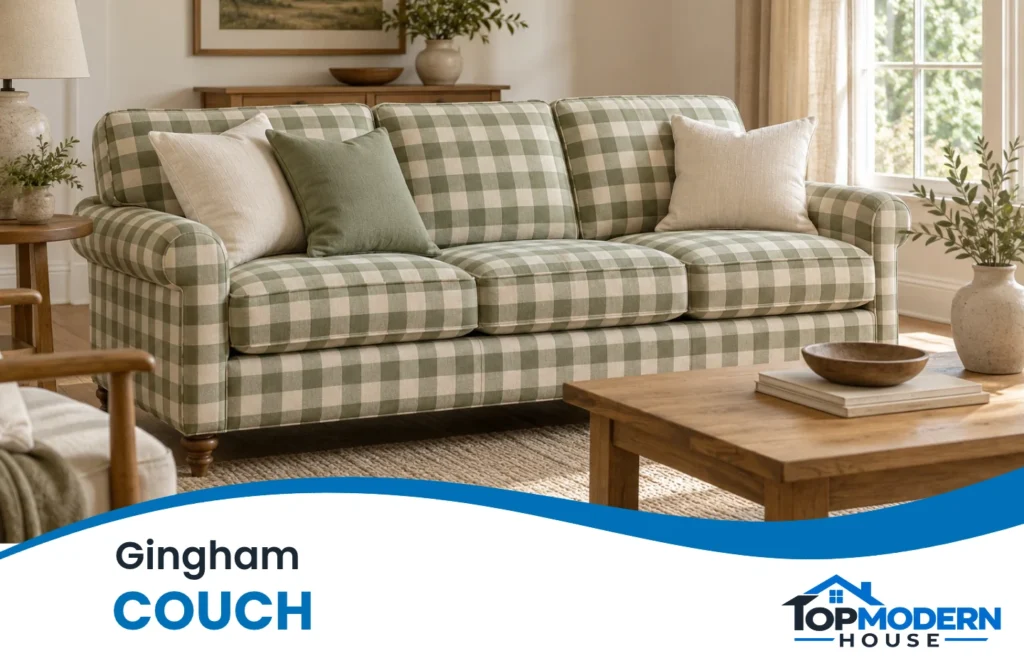
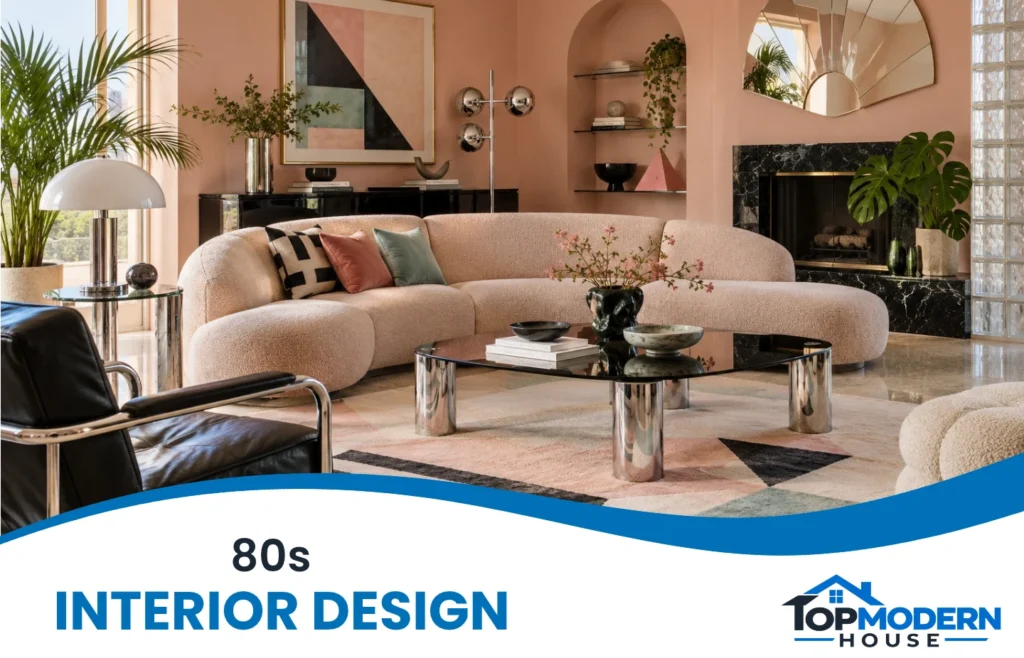
A peach bedroom with floral curtains and a black-and-chrome living room can both look unmistakably ’80s. That range is what makes the decade interesting—and sometimes confusing to decorate around.
80s interior design includes several overlapping looks: playful Memphis pieces, pastel Deco influences, restrained modern rooms, layered traditional interiors, and Southwestern-inspired schemes. Understanding those differences helps you choose colors and furnishings that belong together.
You don’t need to replace a comfortable sofa or recreate an entire period room. Start by identifying the look you enjoy, then decide which details fit your space, budget, and daily routine.
Short Definition
80s interior design encompasses several decorating styles, including Memphis, pastel Deco, sleek modernism, and traditional floral interiors. Recognizing their colors, shapes, and materials helps you bring period character into a comfortable, practical home.
Topmodrenhouse Mission Statement
Topmodrenhouse helps homeowners, renters, and home lovers make informed choices for comfortable, practical spaces that reflect their style.
Explore the Different Looks of ’80s Interiors
These styles offer useful starting points, rather than strict categories. A room might combine traditional wood furniture with contemporary lighting or pastel upholstery with reflective tables.
When collecting inspiration, check whether each photograph shows an original interior or a recent interpretation. Both can help, but they answer different questions about the decade.
Playful Memphis Shapes and Graphic Patterns
Memphis brought expressive color, unexpected geometry, and patterned laminates into furniture and decorative objects. The group formed around Ettore Sottsass in 1980–81 and presented its first collection in Milan in September 1981. Its work challenged conventional ideas about function and taste.
Picture an angular shelving unit, contrasting colored surfaces, or a lamp assembled from simple geometric forms. The recognizable Bacterio motif is a squiggled surface pattern associated with Sottsass—not a name for curved furniture.
For a manageable interpretation, try graphic artwork or a patterned rug beside plain upholstery. An original collectible isn’t necessary to explore the combination of shape, color, and pattern.
Pastel Deco Curves and Glossy Finishes
The decade’s Deco-inspired interiors drew on rounded forms, decorative geometry, and glamorous surfaces. Circular mirrors, lacquered furniture, glass block, and pastel accents help distinguish this look from Memphis’s more angular compositions.
Imagine a peach chair beside a glass-topped table, with a rounded mirror above it. That combination provides a clear direction without requiring every surface to shine.
To adapt it, pair a curved piece with a restrained selection of reflective accents. Check what a mirror reflects before positioning it: a pleasant view or artwork contributes more than a reflection of everyday clutter.
Sleek Modern Rooms With Glass and Chrome
Some ’80s interiors were spare and architectural. Clean-lined furniture, gray or white backgrounds, glass, chrome, and carefully positioned artwork created a quieter alternative to heavily patterned rooms.
This direction can suit a home that already has simple furniture. A chrome-framed chair, glass table, or geometric lamp can introduce a period reference while leaving the room visually open.
Choose pieces for their proportions as well as their finish. A transparent coffee table still occupies floor space, even when it looks less visually substantial.
Traditional Rooms With Florals and Country Details
Floral textiles, wood furniture, layered curtains, and comfortable upholstery represent another side of the decade. Designer Mario Buatta’s association with richly layered floral interiors earned him the nickname “Prince of Chintz.”
In decorating, chintz commonly refers to glazed printed cotton, often featuring flowers; a floral pattern alone doesn’t establish that a fabric is chintz. Smithsonian textile records document floral cotton examples with glazed finishes.
Try floral cushions with an existing wood dresser or a patterned armchair beside a plain sofa. English country decoration and shabby chic overlap in some details, but aren’t interchangeable labels. Rachel Ashwell’s Shabby Chic business began in 1989.
Southwestern-Inspired Colors and Natural Textures
Southwestern-inspired rooms offered combinations of peach, mauve, turquoise, wood, and stone, sometimes with stepped shapes and patterned textiles. These features could overlap with the decade’s Deco-inspired interiors.
For a contemporary interpretation, begin with warm wood furniture and a muted peach or cream background. Add turquoise through a ceramic object or textile rather than assuming the whole room needs a themed makeover.
Describe decorative patterns accurately. A broadly Southwestern-inspired print shouldn’t be attributed to a specific Indigenous tradition without reliable information about its maker and origin.
Colors, Furniture, and Materials That Shape the Look
A useful palette starts with a preferred style and the finishes already in your room. Mauve beside chrome creates a different effect from mauve beside dark wood and floral fabric.
The combinations below are decorating suggestions, not historical formulas.
| Preferred look | Colors to explore | Furniture and finishes | A manageable starting point |
| Memphis-inspired | Strong accents with black and white | Geometric forms, patterned surfaces, sculptural lighting | Graphic artwork or a small accent table |
| Pastel Deco | Peach, mauve, seafoam green | Rounded seating, mirrors, lacquer, glass | A curved chair and coordinated lamp |
| Sleek modern | White, gray, black, selected color accents | Clean-lined seating, chrome, glass | A geometric lamp beside existing furniture |
| Traditional country | Cream, floral colors, deeper greens or reds | Wood furniture, upholstered seating, layered textiles | Floral bedding or an upholstered chair |
| Southwestern-inspired | Peach, sand, turquoise, muted earth tones | Wood, stone, ceramics, textured fabrics | A rug or ceramic piece that connects existing colors |
Look beyond color when choosing furniture. A curved sofa may suggest a Deco direction, while its depth, back height, and footprint determine whether it suits your household.
Lighting should also serve the room. A sculptural lamp can provide character, but its shade and position still need to support reading or conversation comfortably.
Test paint and fabric samples beside your flooring, curtains, and upholstery. View them in daylight and under the lighting you normally use before committing to a larger purchase.
Bring ’80s Character Into Your Living Room or Bedroom
The most useful 80s interior design ideas work with the room you have. Keep furniture that fits and functions well, then choose a visible change that establishes your preferred direction.
Build a Living Room Around One Retro Focal Point
Consider a living room with a beige sofa, wood flooring, and a television that needs to stay. A graphic rug and a sculptural table lamp could introduce a Postmodern influence without changing the seating.
Choose an accent color from the rug and repeat it in an existing frame, cushion, or decorative object. This gives the new addition a connection to the rest of the room.
For a softer scheme, retain the sofa and introduce a mauve chair with a rounded side table. You don’t need the rug, chair, lamp, and artwork to compete for attention.
Before buying seating, mark its footprint on the floor with removable tape suitable for the surface. Check access to doors, storage, and adjoining seats. Include the space needed to recline or swivel where relevant.
In a small apartment, a distinctive lamp or compact side table may deliver the character you want with less disruption than a large sectional.
Give a Bedroom Character Through Color and Fabric
Bedrooms offer several opportunities for a modest update: bedding, curtains, lamps, and upholstered headboards all influence the room without requiring permanent changes.
For a traditional-inspired scheme, combine floral bedding with plain curtains in one color drawn from the print. Keep a useful wood dresser and let its finish contribute warmth.
A pastel Deco interpretation might use a rounded headboard, a peach or seafoam textile, and a simple reflective accent. Check that bedside furniture still provides enough space for the items you actually use.
On a limited budget, start with the most visible textile. You may find that new bedding makes additional purchases unnecessary. Renters can prioritize movable furnishings and check lease conditions before painting or changing fixtures.
How Do You Mix ’80s Decor With What You Already Own?
Mix ’80s decor with existing furniture by choosing a shared color, shape, or finish, then letting the pieces serve different roles. A graphic rug can connect a plain sofa to a colorful lamp, while a rounded mirror can echo a curved chair. Judge the combination by appearance, comfort, and usable space.
Start with what must stay. Flooring, cabinetry, a substantial sofa, or inherited furniture usually has more influence than a small accessory.
Next, identify a connection. A brass lamp might relate to warm tones in a wood cabinet; a geometric print could repeat the black frame of an existing chair. The pieces don’t need to come from the same decade.
Watch for three common problems:
- Several equally strong focal points: A busy rug, large floral curtains, and patterned seating can make it difficult to read the room. Let one element lead, or connect the patterns through a limited palette.
- Matching without considering function: Coordinated furniture can still be uncomfortable or poorly sized. Assess each piece individually.
- Copying a photograph too literally: Your daylight, ceiling height, storage needs, and room layout may differ substantially.
A fuller period-inspired interior is a valid choice, too. The goal is a room you enjoy using, whether the reference is subtle or immediately recognizable.
What to Check Before Buying Vintage or Making Permanent Changes
Before buying vintage furniture, check its condition, measurements, delivery requirements, and likely repair costs. Before making permanent changes, establish what installation involves and whether professional assessment is needed. A piece that looks right can still be unsuitable if it won’t fit, needs extensive work, or adds maintenance you don’t want.
For secondhand purchases, ask for clear photographs of the underside, joints, labels, upholstery, and any damage. Confirm what the seller knows about repairs and materials rather than relying on “vintage” as a quality description.
Consider the whole purchase:
- Fit: Measure the intended position and the route through entrances, stairs, and elevators.
- Condition: Look for loose joints, damaged surfaces, uneven cushions, odors, and signs of previous repairs.
- Total cost: Include transport, cleaning, and any necessary restoration.
- Attribution: Treat designer names and dates as unverified unless supported by credible documentation.
- Care: Identify the material and finish before choosing a cleaner or polishing product.
An older lamp deserves attention beyond its appearance. Have questionable wiring or components assessed by a qualified repair professional before use. Hardwired lighting changes should be handled by an appropriately qualified electrician.
Glass-block partitions and glazing changes also need project-specific assessment. Their suitability depends on the location, construction, and installation system. Explore the decorative effect first; don’t treat permanent building work as equivalent to adding a mirror or table.
Frequently Asked Questions
What Is ’80s Decor Style Called?
There isn’t one name for all ’80s decor. Depending on the room, useful labels include Memphis, Postmodern, Deco revival, contemporary, traditional, English country, or Southwestern-inspired. Identify the shapes, patterns, materials, and furniture together before choosing a label; an individual brass lamp or pastel wall isn’t enough.
Can an ’80s-Inspired Room Be Minimalist?
Yes. Restrained modern interiors were part of the decade alongside more decorative styles. A room with simple seating, a limited palette, a glass or chrome accent, and carefully chosen artwork can express that direction. Keep enough furniture and storage to make the space comfortable rather than leaving it sparse merely for appearance.
How Is ’80s Interior Design Different From ’90s Decor?
There’s considerable overlap, so a single feature rarely settles the question. Furniture and finishes remained in homes across both decades, and styles developed gradually. For accurate dating, use documented photographs, catalogs, or furniture records. For decorating inspiration, the overall combination matters more than assigning every piece to a strict decade.
Do You Need Original Vintage Pieces to Create an ’80s Look?
No. Contemporary furniture can suggest the era through its proportions, colors, patterns, and finishes. Original pieces may provide a stronger period connection, but condition and suitability still matter. Choose reproductions or inspired designs honestly, and don’t describe a newly furnished room as an authentic historical interior.
Choose an ’80s Look That Works for Your Home
Choose the room you want to improve and the version of ’80s style that appeals to you. Keep what works, identify one useful change, and check how it affects the whole space before adding more.
A well-chosen textile, lamp, chair, or table can establish the direction. Build from there at a pace that suits your home and budget.
Disclaimer
This content is for general informational purposes only. Homes, needs, preferences, budgets, and circumstances vary. Seek qualified professional advice for safety, installation, repairs, structural or electrical work, plumbing, HVAC, legal matters, and major property decisions.