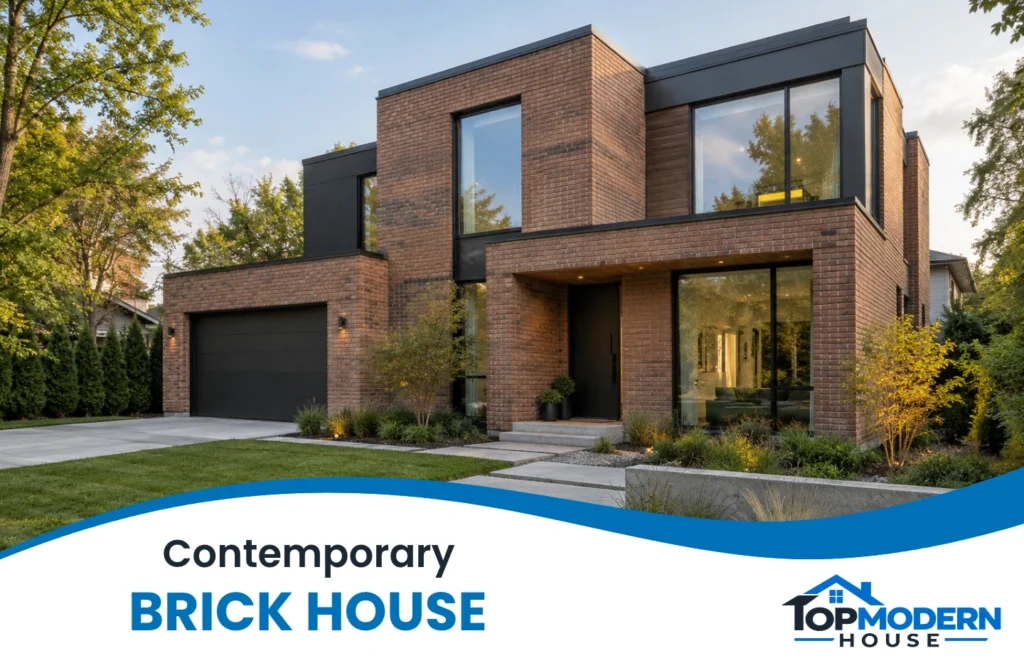

A black trim brick house can look crisp, grounded, and contemporary without losing the warmth that makes brick appealing in the first place. The challenge is getting the balance right. Black creates strong contrast, so the details you darken—and the ones you leave alone—matter just as much as the color itself.
Before choosing black windows, shutters, gutters, or fascia, look at the whole exterior. Brick undertones, mortar, roof color, existing windows, garage doors, and architectural style all affect the result.
The best approach usually isn’t to paint every exterior detail black. It’s to use dark accents where they strengthen the architecture and let the brick remain the main material.
Short Definition
A black trim brick house pairs brick masonry with dark exterior details such as windows, doors, shutters, fascia, or gutters to create contrast and highlight architectural features.
Topmodrenhouse Mission Statement
Topmodrenhouse helps homeowners, renters, and home lovers make practical, stylish, comfortable, and well-informed decisions for the spaces they live in.
Quick Exterior Planning Checklist
- Check the brick color and undertones.
- Look at the mortar as part of the overall palette.
- Consider the roof and existing window colors first.
- Decide whether you want selective black accents or broader dark trim.
- Compare true black with charcoal or dark bronze.
- Watch the visual weight of large features such as garage doors.
- Repeat dark accents in a few intentional places.
- Test large color samples in sun and shade.
- Mock up the full facade before making permanent changes.
- Confirm manufacturer guidance before painting prefinished window components.
12 Black Trim Brick House Ideas
1. Classic Red Brick With Black Windows
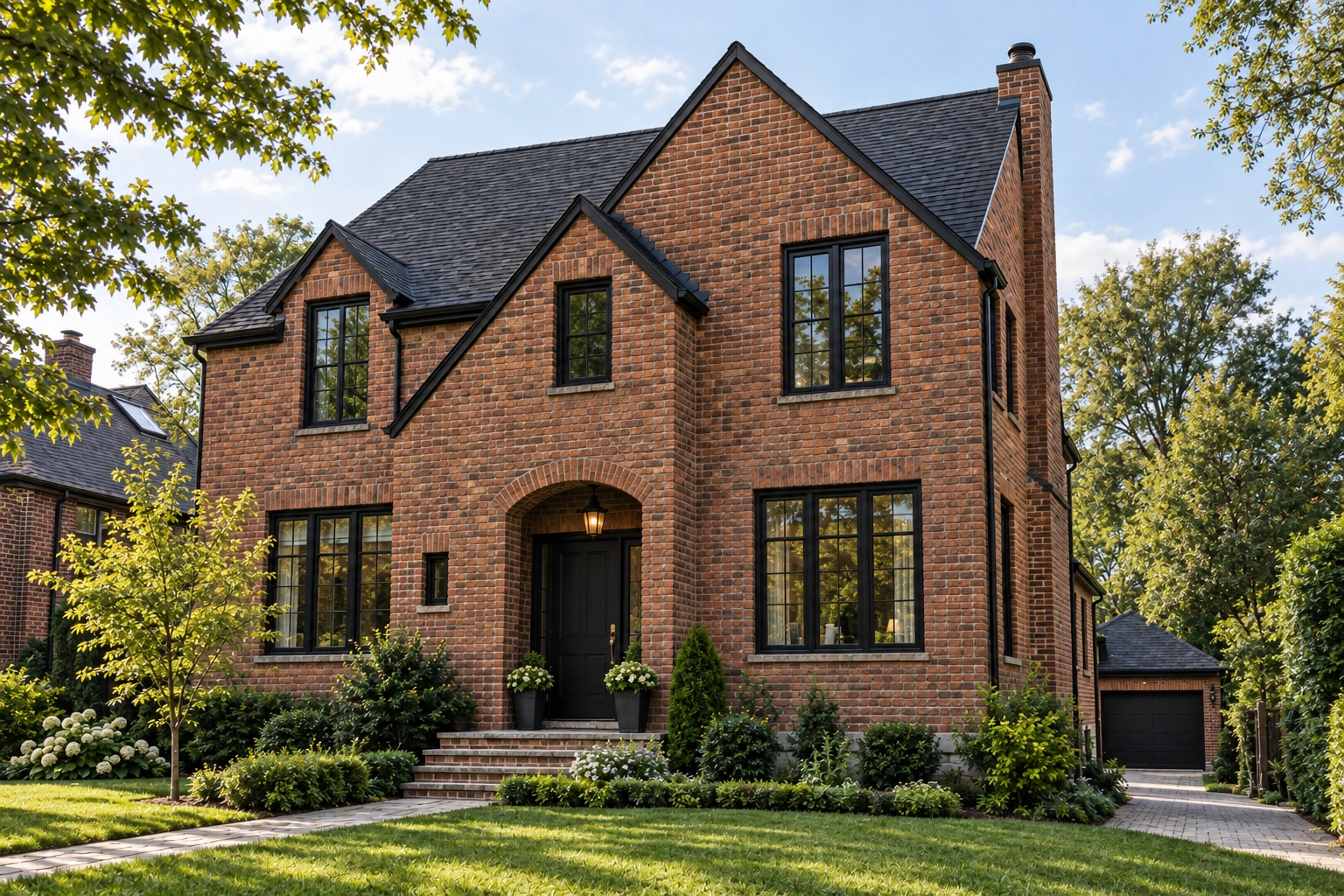
Black window frames can give traditional red brick sharper definition without changing the masonry itself. The contrast works especially well when the roof or another exterior feature already has a dark tone that the windows can relate to.
Pay attention to the brick before committing. Deep red or brown-red brick can usually carry stronger contrast more easily than very bright orange brick, where a softer dark color may feel more balanced.
Keep the rest of the facade fairly restrained so the windows don’t compete with shutters, trim, railings, and other dark details all at once.
2. Red Brick With Black Shutters and a Black Front Door
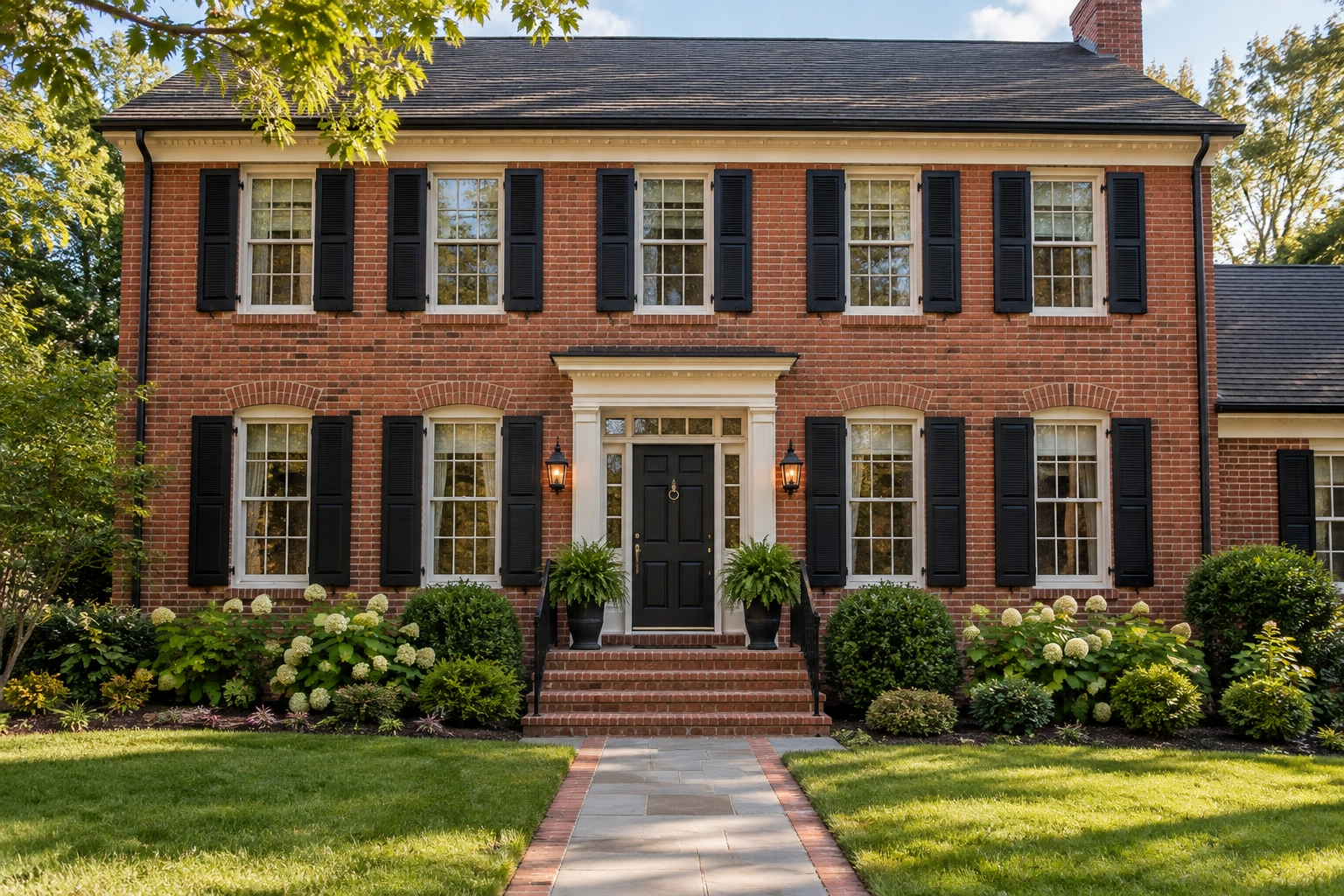
For homeowners who want a noticeable change without replacing windows, black shutters and a black front door are a practical place to start.
This works particularly well on Colonial and other symmetrical facades because the dark shutters reinforce the window rhythm while the door creates a clear focal point.
There’s also less visual weight than you’d get from darkening every window casing, fascia board, and gutter. That makes this approach useful when you want contrast without making the exterior feel heavily outlined.
3. Red Brick With Black Trim and Existing White Windows
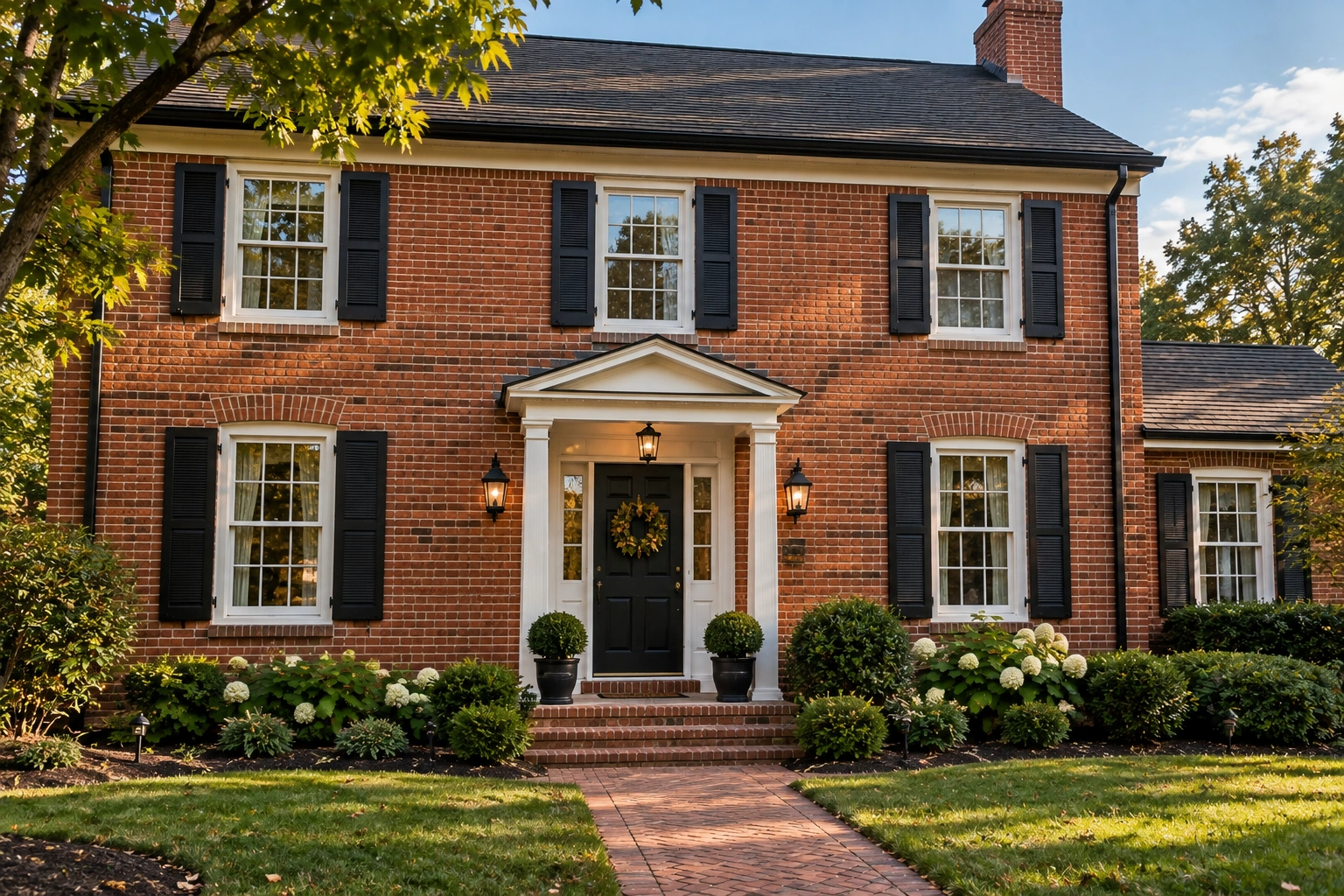
Existing white windows don’t automatically rule out black exterior accents.
The key is understanding that the window itself and the trim around it are separate visual elements. On some homes, keeping the immediate window casing light while using black on shutters, the front door, gutters, or other features creates a more natural transition.
Painting a thick black border around a bright white window can sometimes create a layered black-white-dark-glass effect that feels busier than expected. Mocking up that combination before painting is worth the effort.
And before painting factory-finished window frames, check the manufacturer’s guidance for that specific material and finish.
4. Warm Orange-Red Brick With Charcoal or Dark Bronze Trim
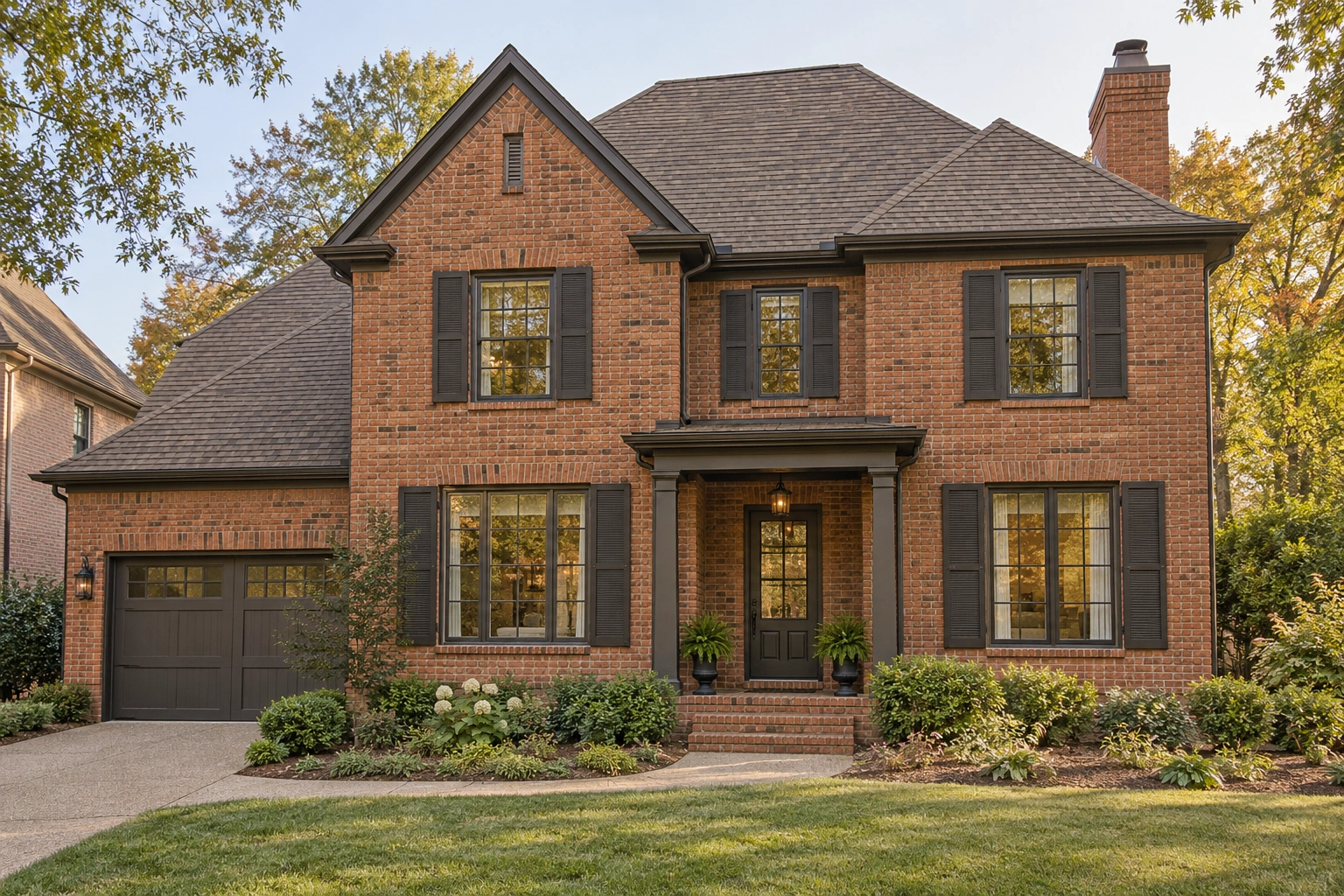
Pure black isn’t the only way to create a strong dark accent.
Warm orange-red brick can sometimes pair more comfortably with charcoal, dark bronze, or black-brown. These colors still provide definition but may create a softer transition than a very cool, deep black.
This is especially useful when the roof, mortar, or other fixed materials already lean warm. Rather than forcing the darkest possible contrast, choose a dark tone that feels connected to the colors already on the house.
5. Pale Red Brick With Dark Trim and a Coordinated Roofline
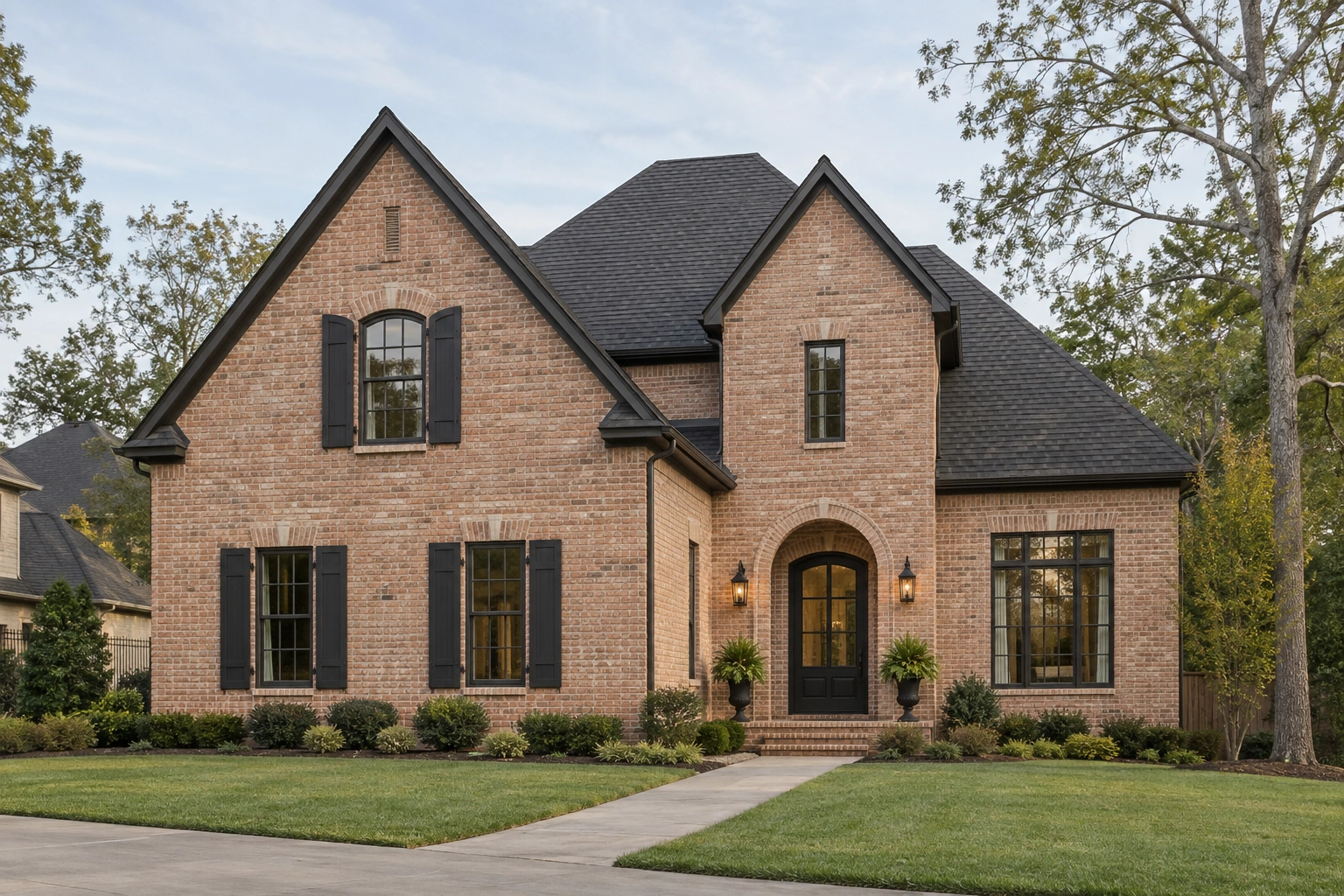
Pale brick gives dark trim plenty of contrast, so a little can go a long way.
Black or charcoal around selected windows, fascia, or gutters can create a clean outline while a darker roof helps repeat the color higher on the house. The goal is to make the dark elements feel related rather than scattered.
Avoid automatically darkening every architectural feature. On a pale facade, large amounts of black can become visually dominant quickly.
6. Light or Tan Brick With Slim Black Window Frames
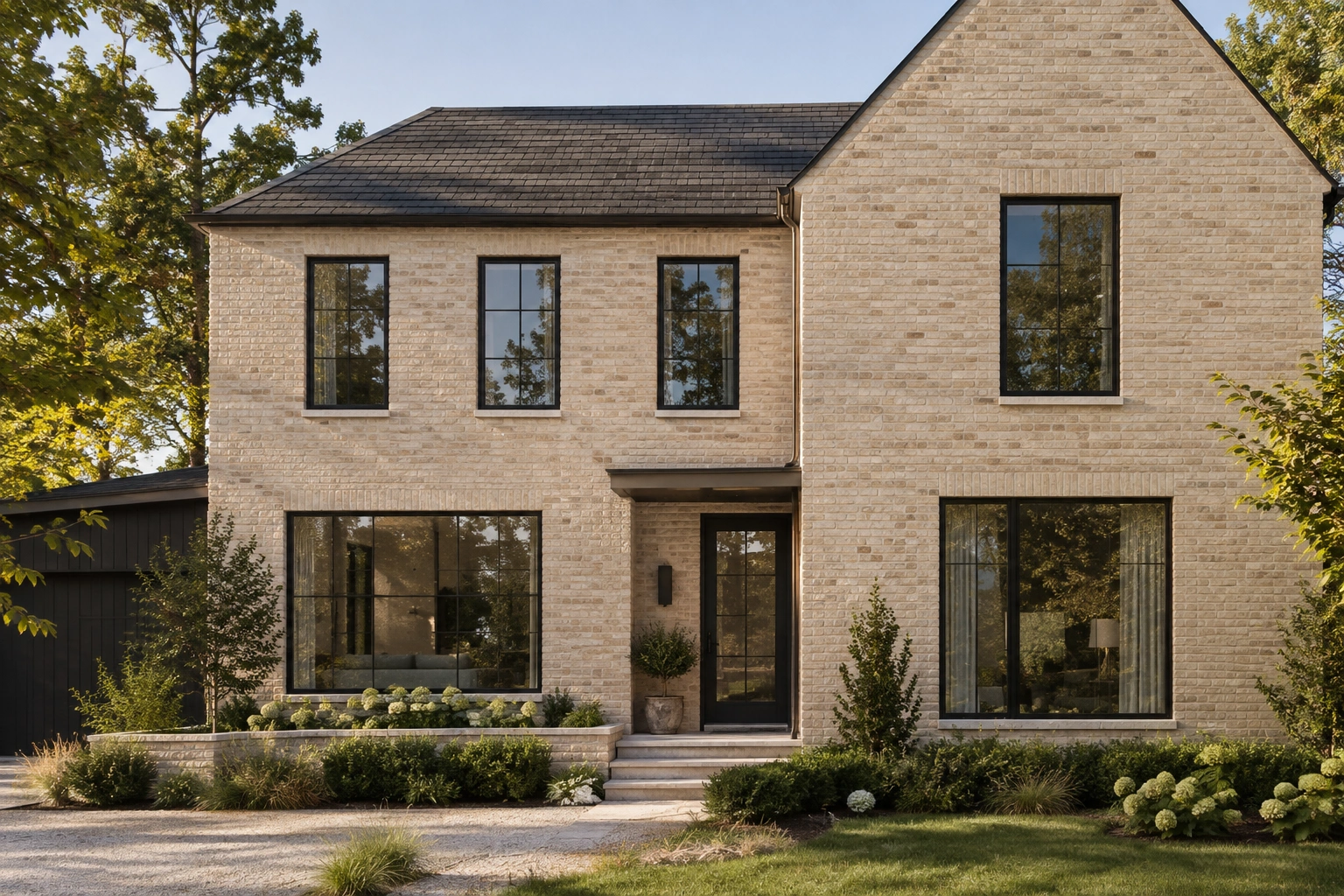
Light tan, cream, and buff brick work well with narrow black frames because the difference in value makes the windows easy to read without requiring heavy decorative trim.
This treatment tends to suit simpler facades where the windows themselves are part of the architectural design.
Slim frames usually create a different effect from broad black casing. The first emphasizes the openings; the second can make each window appear larger and heavier. That distinction matters when you’re deciding how much dark color the facade can handle.
7. White or Cream Brick With Matte Black Accents
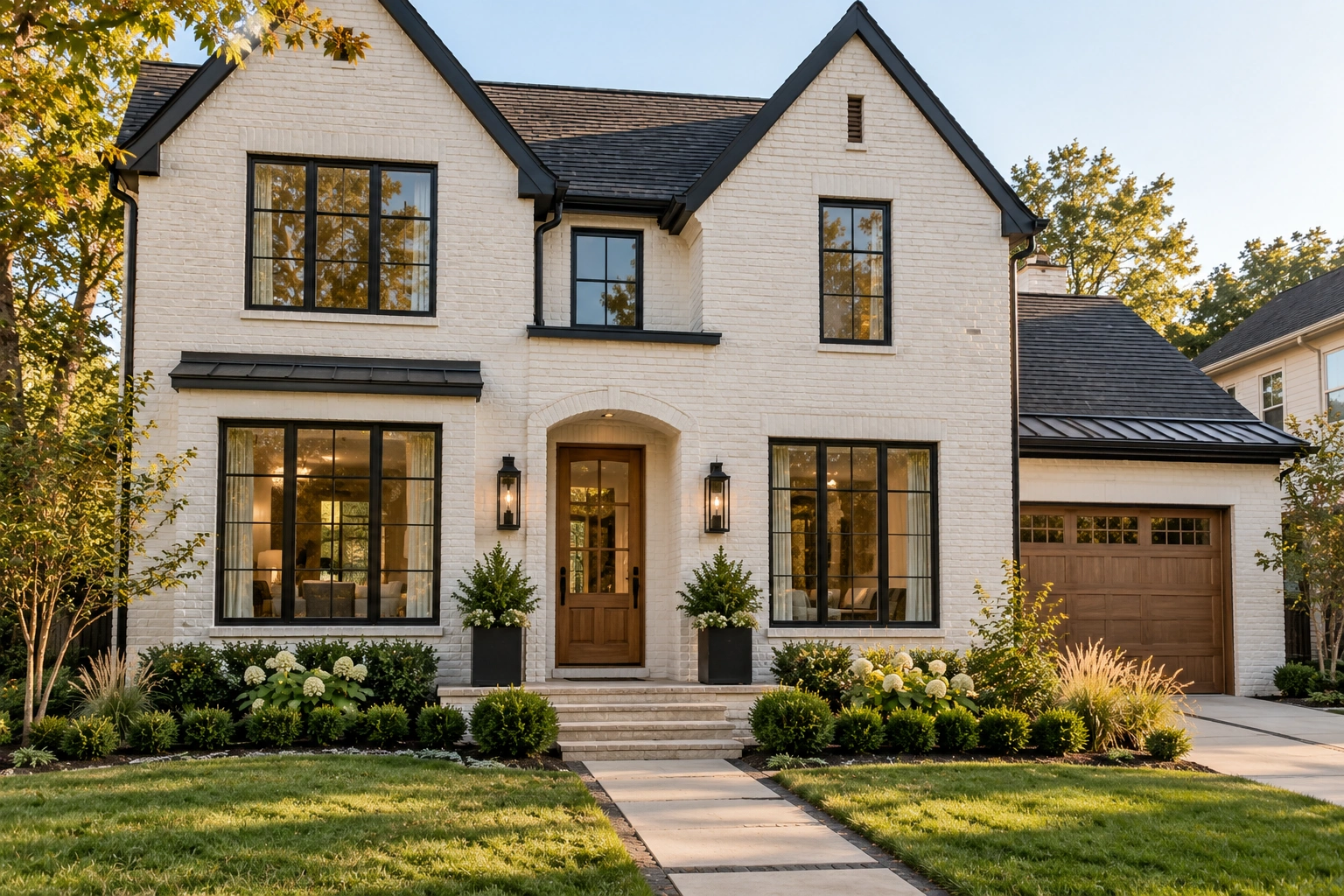
White or cream brick creates one of the strongest backgrounds for black detailing.
Windows, doors, sconces, railings, and selected roofline elements can all work within this palette, but contrast still needs control. A white brick house doesn’t require every visible detail to become black.
Natural wood at the entry, softer landscaping, or a warm garage door can keep the exterior from feeling overly graphic.
If the brick is currently natural masonry, remember that painting it white is a separate decision from changing the trim. You don’t need to repaint the brick just to use dark accents.
8. Brick With Black Fascia, Gutters, and Downspouts
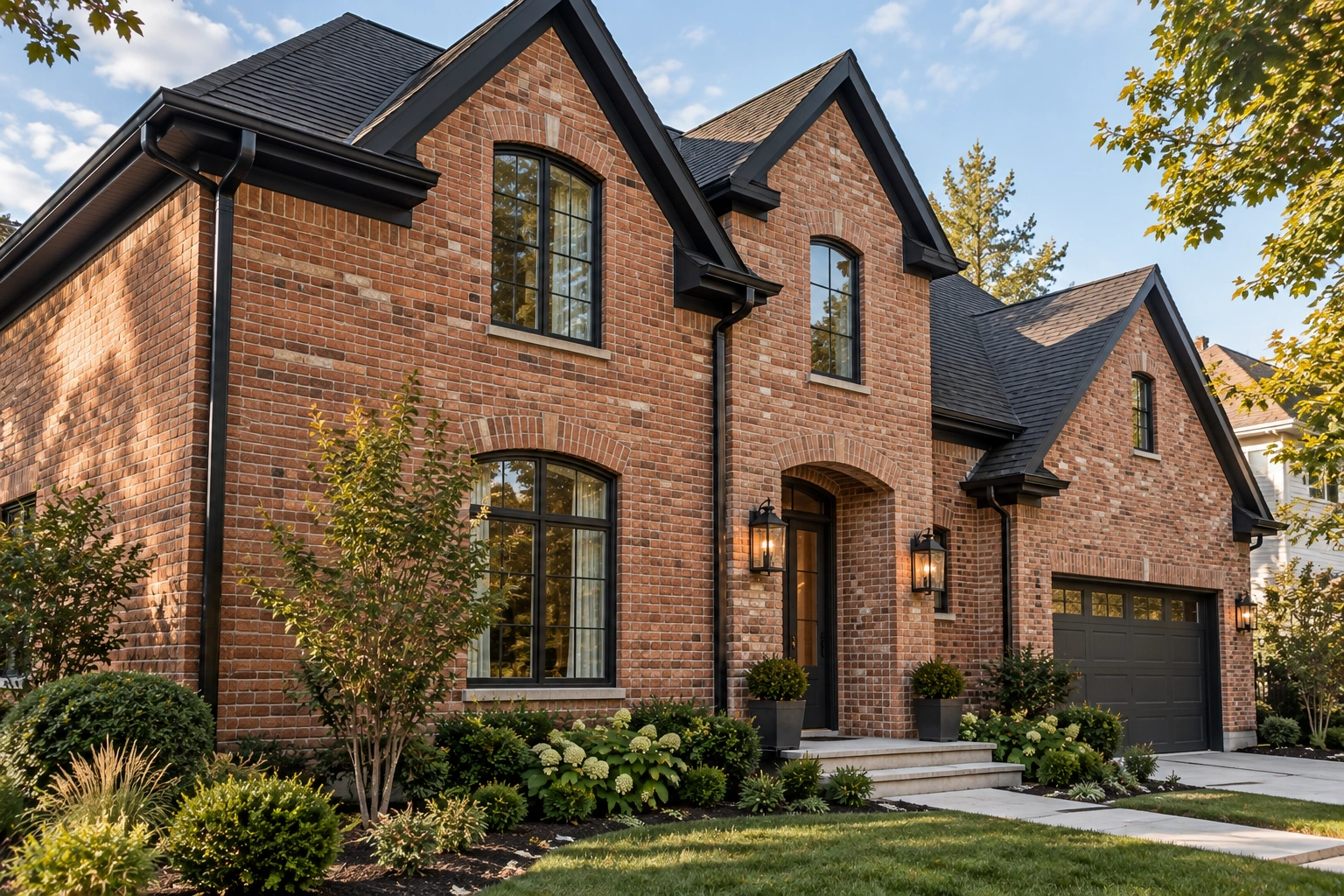
Darkening the upper edge of the house can connect the brick visually to a dark roof.
Black fascia and gutters can create a defined roofline, particularly when the roof already reads as charcoal or black. Downspouts require a little more thought because they run vertically across the brick and can become quite noticeable.
A useful rule is to judge gutters and downspouts from normal street distance, not only from a close-up sample. What seems subtle near the wall may create a strong line when you step back.
9. Black Windows With a Natural Wood Front Door
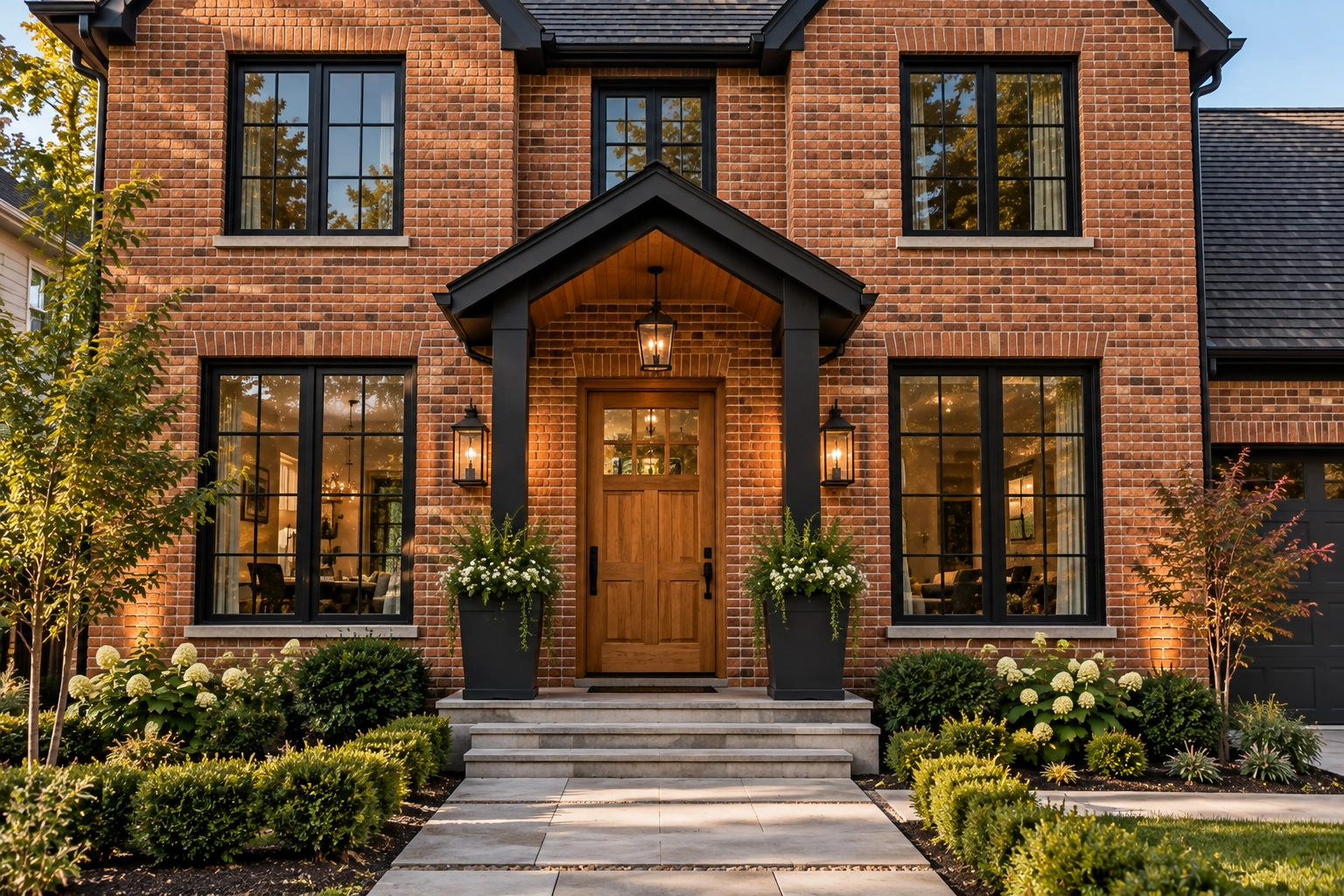
Brick, black, and natural wood can create a useful balance between contrast and warmth.
Black windows provide structure, while a wood-toned door prevents the entry from becoming another heavy dark rectangle. This combination works especially well when the brick itself has warm brown, red, or orange notes.
The wood doesn’t need to match the brick exactly. It simply needs to feel comfortable beside the masonry and other fixed exterior colors.
10. Brick Ranch House With Selective Black Accents
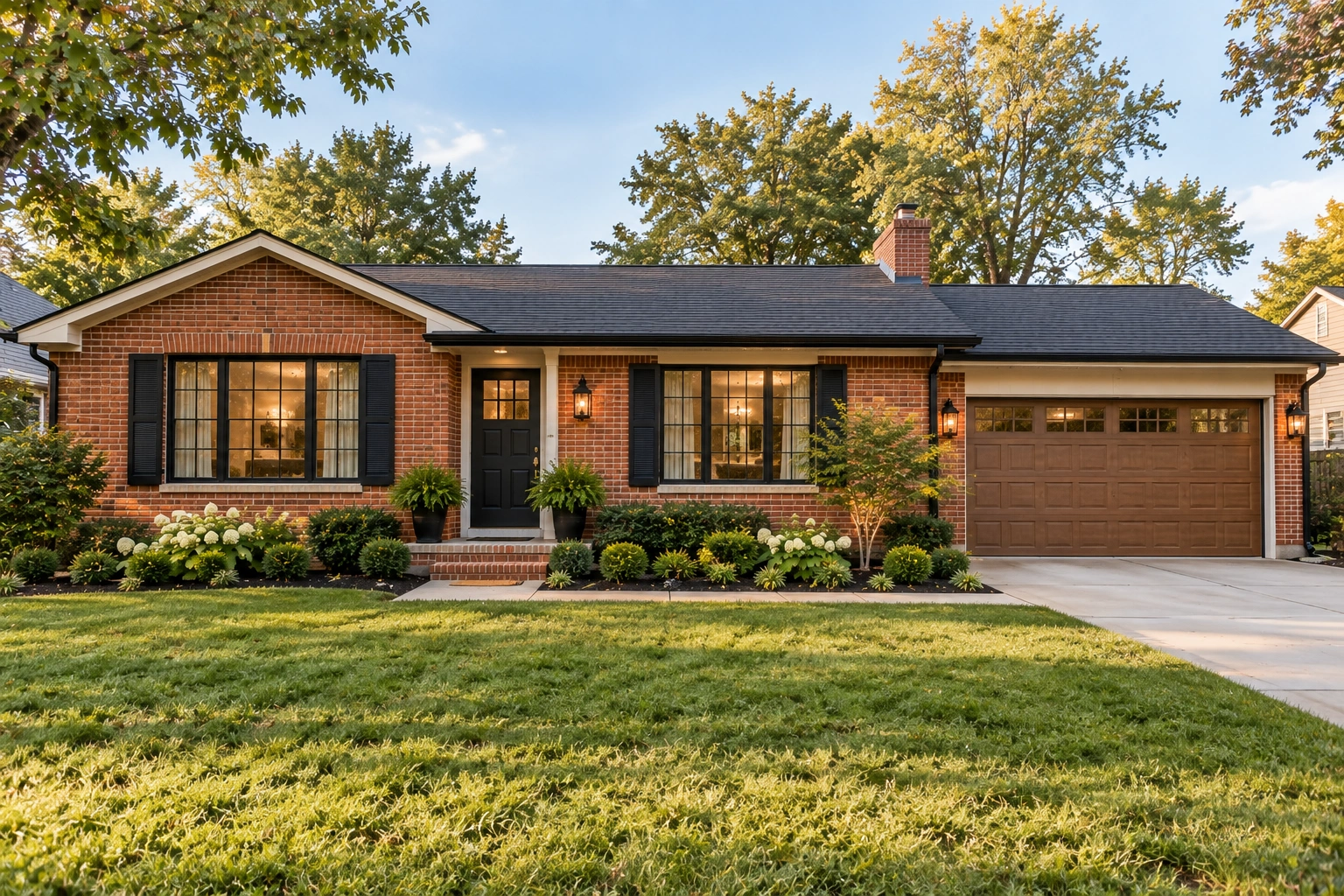
Ranch homes often have long horizontal rooflines and prominent garages, so covering every fascia board, garage door, window surround, and gutter in black can make the house feel visually stretched or heavy.
A more selective approach may work better.
Consider concentrating the dark color on the front door, shutters, window frames, exterior lighting, or a few roofline elements. If the garage door is already the largest feature on the front elevation, keeping it closer to the brick or siding color can stop it from becoming the main focal point.
11. Colonial or Tudor Brick With Architecture-Focused Black Details
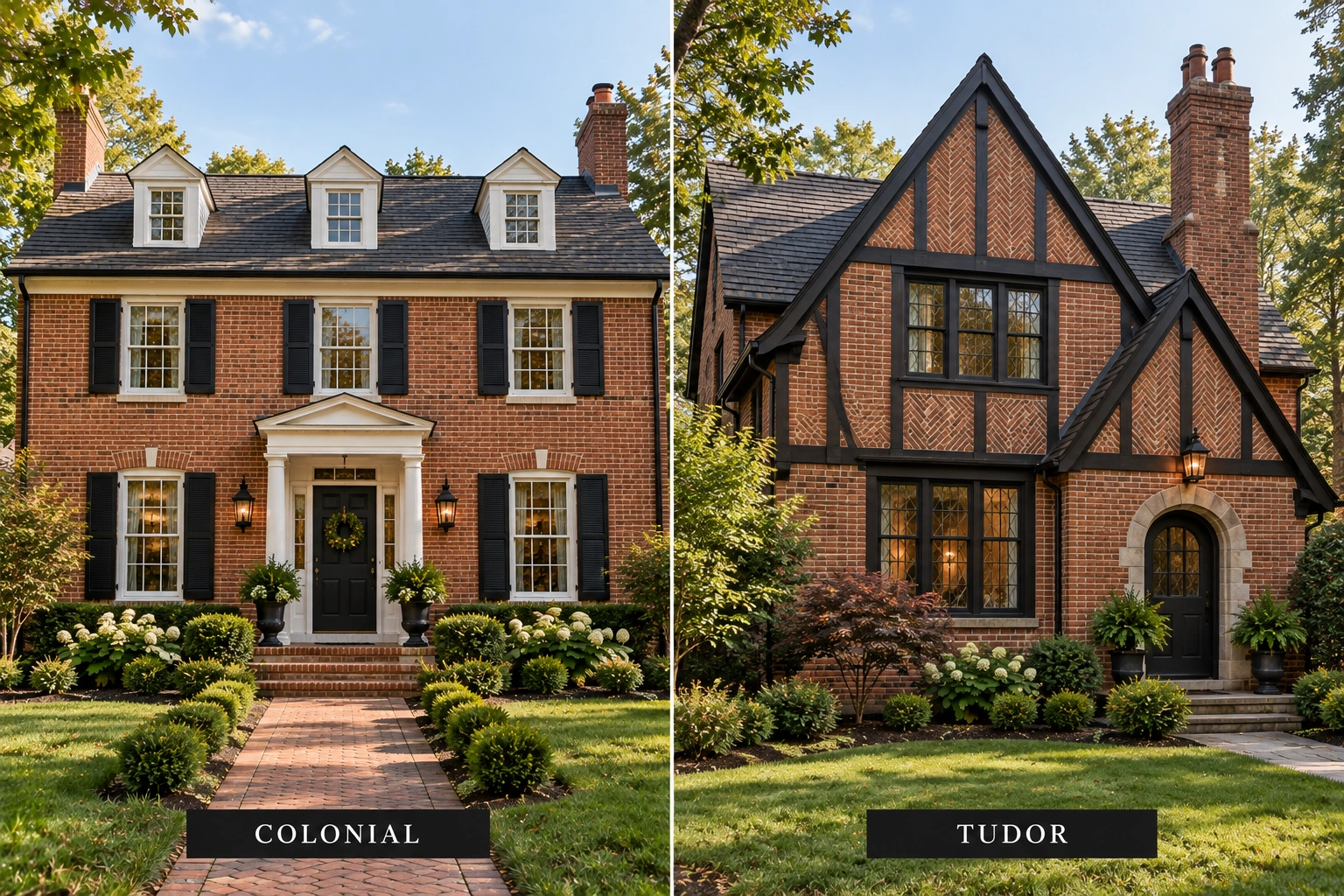
Traditional architecture benefits from using dark color where the building already provides a reason for it.
On a Colonial, black shutters and an entry door can reinforce symmetry. On a Tudor-style exterior, darker trim can emphasize existing beams, gables, or steep roof forms.
The idea isn’t to make an older house look artificially contemporary. It’s to use the darker palette to clarify the architecture that is already there.
That usually creates a more convincing result than outlining every edge simply because black is part of the color scheme.
12. Brick With Black Siding or Metal for a Mixed-Material Exterior
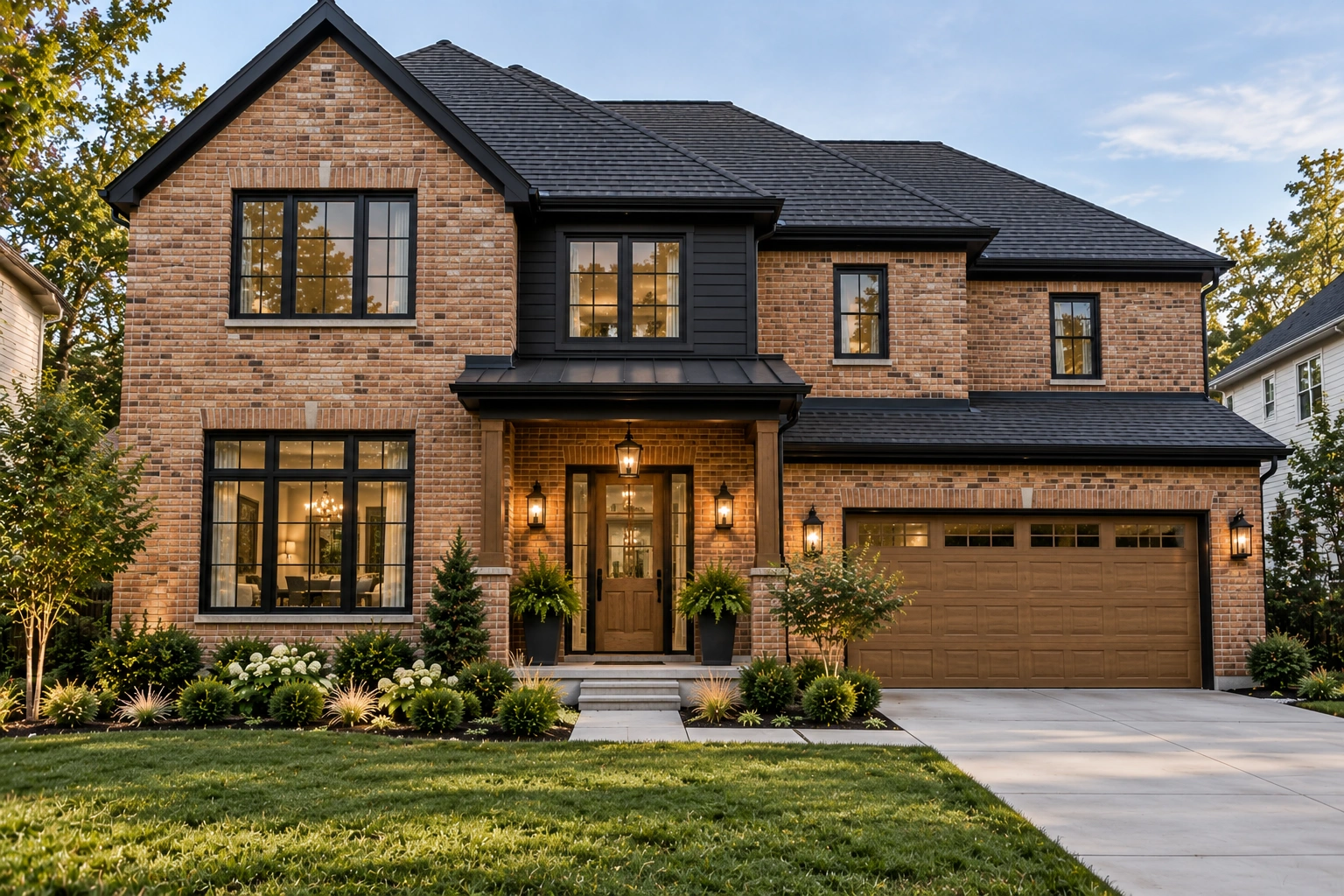
Contemporary brick homes often combine masonry with siding, metal, wood, or large areas of glass.
Using black on one secondary material can create a stronger composition than relying on dozens of small black details. For example, a section of dark siding can visually connect black window frames and the roof while allowing the brick to remain the dominant warm material.
This approach depends heavily on proportion. A large dark section changes the facade much more than black hardware or lighting, so it should be considered as part of the entire elevation.
Which Parts of a Brick House Should Be Black?
Black works best on the parts of a brick exterior that benefit from definition or already relate to another dark feature. Windows, doors, shutters, roofline details, lighting, and railings are common choices. Large surfaces such as garage doors deserve more caution because they carry much more visual weight.
Windows, Doors, and Shutters
These are usually the easiest places to create controlled contrast.
A dark front door makes a natural focal point. Shutters can frame windows on traditional homes, while black window frames can create cleaner lines on contemporary architecture.
They don’t all need to match. A brick house with black windows and a natural wood door, for example, can feel more balanced than one where every opening is dark.
Fascia, Soffits, Gutters, and Downspouts
Fascia is the board running along the roof edge, while soffits cover the underside of the roof overhang. These areas can carry dark color well when they relate to the roof.
Still, turning the entire roofline black can create a strong horizontal band. On low-profile homes such as ranches, that effect can be more noticeable.
Use the roof and overall proportions as your guide rather than assuming all upper trim should match.
Garage Doors, Railings, Lighting, and Smaller Accents
Smaller accents are useful for repeating black without making the facade feel overloaded. Sconces, railings, house numbers, and hardware can connect larger dark elements.
Garage doors behave differently because of their size. A double black garage door may become the most noticeable feature on the front of the house.
That can be intentional, but it shouldn’t happen by accident.
Match Black Trim to the Color and Undertone of Your Brick
Brick isn’t one flat color. A wall may contain red, orange, brown, cream, gray, or burgundy tones, while the mortar creates another color that repeats across the entire facade.
That’s why the same dark trim can look comfortable on one brick house and severe on another.
Red and Orange Brick
Classic red brick usually handles dark accents well, particularly when darker tones already appear in the brick or roof.
Brighter orange-red masonry may benefit from a softer black, charcoal, bronze, or another warmer dark. That reduces the risk of creating a harsh warm-versus-cool contrast.
Brown, Burgundy, and Dark Brick
Dark brick already has substantial visual weight, so black trim may create less obvious contrast.
In these cases, look at whether the dark trim actually defines the architecture or simply blends into the masonry. A warmer dark color, lighter supporting trim, or natural wood may create better separation.
Pale, Tan, Gray, and White Brick
Lighter masonry creates much stronger contrast with black.
That can produce clean architectural definition, but it also means every dark line becomes more noticeable. Slim frames and selective accents may be enough.
With very light brick, don’t assume more contrast is automatically better.
Black, Charcoal, or Dark Bronze: Choose the Right Level of Contrast
“Black” describes a broad family of dark exterior colors, not one exact look.
A true black creates the strongest contrast. Soft black and charcoal can feel slightly less severe, while dark bronze or black-brown may connect more naturally with warm masonry.
Choose by comparing the dark color with the home’s fixed elements:
- Brick and mortar
- Roof
- Existing windows
- Stone or siding
- Garage door
- Permanent metal finishes
The goal isn’t to find the darkest paint. It’s to find a dark tone that belongs with the rest of the exterior.
Can Black Trim Work With White Windows?
Yes. Black trim can work with white windows, but the relationship between the window frame and surrounding casing needs to look intentional. You don’t have to replace functional white windows simply to introduce darker exterior details. Black shutters, doors, gutters, or selective trim can provide contrast while allowing the windows to remain white.
Before painting around a window, look carefully at the layers involved.
The sash holds the glass, the window frame surrounds the sash, and the exterior casing finishes the opening against the wall. Depending on the home, these parts may already be different colors.
One practical option is to keep the casing light so it relates to the white window and use black elsewhere. Another is to use a dark outer surround only when the proportions make the transition feel deliberate.
Create a photo mock-up first. High contrast around every window can look far busier on the whole facade than it does on a small sample.
Coordinate the Trim With the Roof, Mortar, and Other Fixed Exterior Colors
Start with the parts of the house you’re least likely to change.
The roof is one of the largest color fields. Mortar appears repeatedly between every brick. Windows may be factory-finished. Stone, siding, and garage doors may also remain in place for years.
These materials should guide the trim rather than being treated as an afterthought.
For example, black fascia can make sense beneath a dark charcoal roof. The same fascia may feel disconnected if the roof is light brown and nothing else on the house repeats the black.
Mortar deserves particular attention. Light cream mortar can make a brick facade read much lighter than the brick itself, while darker mortar can make the same masonry feel deeper and more unified.
Judge the palette as a complete exterior, not as individual paint swatches.
How to Keep Black Trim From Overpowering the Brick
The easiest way to maintain balance is to let brick remain the dominant material and use dark color to support specific features.
Use Black Selectively Instead of Outlining Everything
Black can emphasize architecture, but it can also exaggerate every line.
Darkening windows, fascia, shutters, gutters, soffits, porch columns, garage doors, railings, and doors all at once may leave the facade with more outlines than focal points.
Choose the features you actually want people to notice.
Repeating black in two or three meaningful places often creates enough connection. A front door, window frames, and exterior lighting may be all the house needs.
Balance Dark Accents With Warm or Lighter Materials
Natural wood, cream, warm white, muted greige, stone, and landscaping can soften a high-contrast brick-and-black palette.
Think of these elements as visual breathing room rather than additional colors that need to compete.
A natural wood entry door is particularly useful when both the brick and dark trim feel strong. It adds warmth without requiring another painted accent color.
Black Trim Mistakes That Can Make a Brick Exterior Feel Unbalanced
Most problems come from treating black as a default rather than a design choice.
Watch for these common mistakes:
- Ignoring the mortar. Its color repeats across the entire wall and affects how light or dark the brick reads.
- Making the garage door the accidental focal point. Large dark areas naturally attract attention.
- Outlining every feature. Too many black borders can make the exterior fragmented.
- Copying an inspiration photo too literally. Different brick, roofs, windows, lighting, and proportions can produce a very different result.
- Assuming every black is interchangeable. Soft black, charcoal, bronze, and true black can behave differently beside warm masonry.
- Forgetting existing window finishes. White windows surrounded by heavy black casing may create more contrast than expected.
- Using black only once. A single isolated dark feature can feel disconnected unless it’s intentionally meant to be the focal point.
The better question isn’t “Where else can I add black?” It’s “Which features deserve more definition?”
Test the Look Before You Commit
Exterior colors change with scale, light, and surroundings. A small paint chip can’t show you how a dark roofline or several black windows will affect the entire house.
Compare Large Samples in Sun and Shade
Place larger samples near the brick and mortar and look at them at different times of day.
Direct sunlight can make colors appear different from covered porches or shaded elevations. Check more than one side of the house if you’re planning to use the same trim color throughout.
Mock Up Different Trim Placements
A simple photo mock-up can help answer questions that color samples can’t.
Compare options such as:
- Black windows only
- Black door and shutters
- Dark fascia with lighter windows
- Black gutters with brick-colored downspouts
- Charcoal instead of pure black
The mock-up doesn’t need to predict the exact paint color perfectly. Its main job is to show how much visual space the dark elements occupy.
Judge the Entire Facade From the Street
Exterior design is experienced from a distance.
After testing colors, step back and look at the house as one composition. Check which feature attracts your eye first, whether the dark details feel evenly distributed, and whether the brick still reads as the main material.
That broader view often catches problems that are easy to miss when focusing on one window or door.
Do You Need to Paint the Brick to Get a More Modern Look?
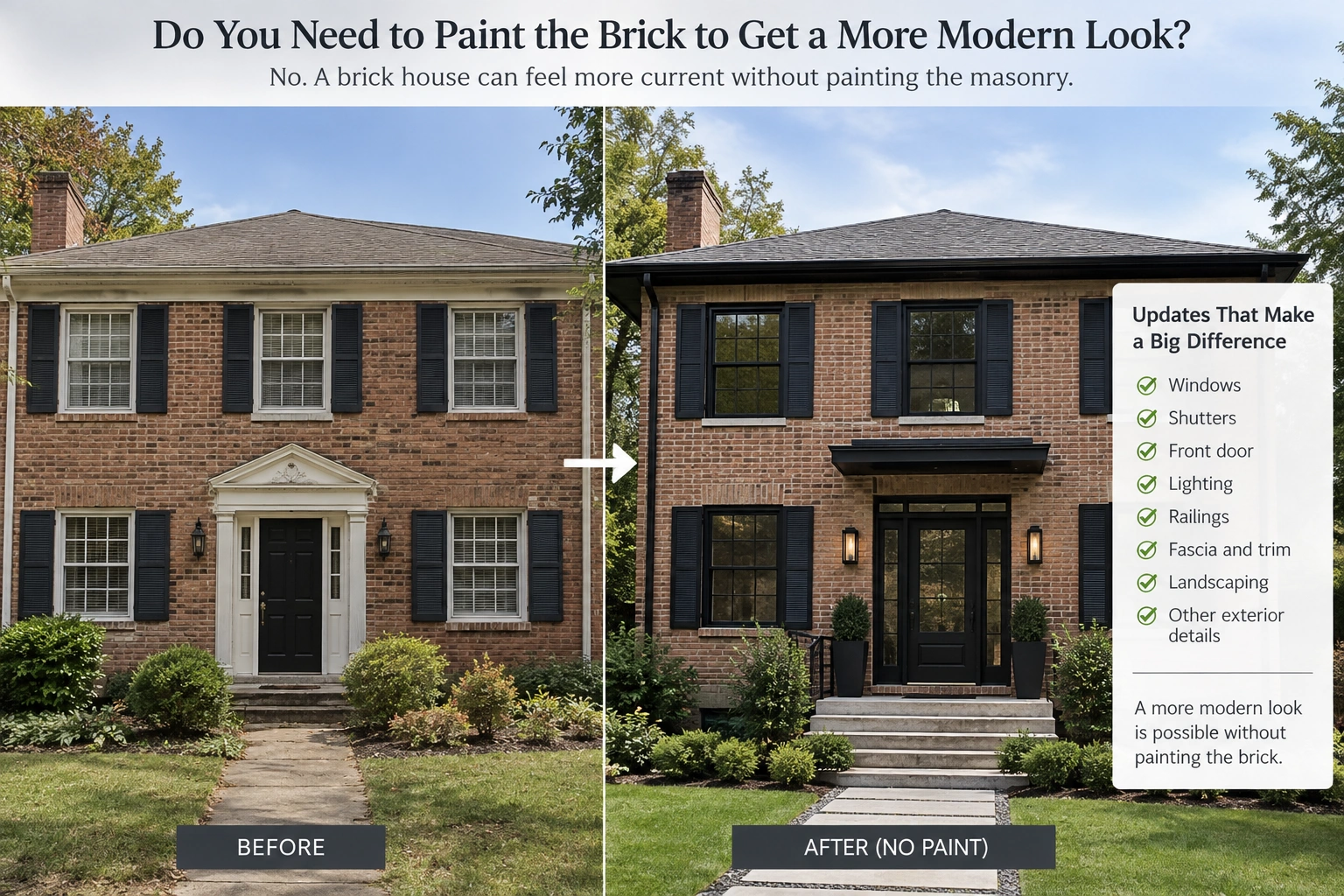
No. A brick house can feel more current without painting the masonry. Updating windows, shutters, a front door, lighting, railings, fascia, or other selected details can change the exterior substantially while preserving the original brick.
That distinction matters because painting brick is a different project from repainting wood or trim.
Natural masonry may already be one of the home’s strongest materials. Before covering it, try visualizing how the house would look with updated surrounding elements first.
If painting the masonry is still part of the plan, treat it as its own project and use products and preparation methods suitable for the particular masonry and existing condition. Historic properties, HOA-controlled homes, or major exterior changes may also require additional approval or guidance.
Frequently Asked Questions
Does black trim go with a red brick house?
Yes, black trim can work well with red brick, especially when the dark color relates to the roof, windows, shutters, or another existing feature. The result depends on the brick’s undertone, mortar, architectural style, and amount of black used. Warm orange-red brick may look better with charcoal or dark bronze than a very stark black.
Should house trim be lighter or darker than brick?
Either can work. Dark trim creates stronger definition around architectural features, while lighter trim usually creates a softer transition. Choose based on the brick, roof, windows, and architecture rather than following a universal light-versus-dark rule.
Are black windows too trendy for a brick house?
Black windows appear on both traditional and contemporary architecture, so their success depends more on the house than on the trend itself. Simple black frames can suit some brick facades for a long time, while oversized grids or excessive dark detailing may feel more style-specific. Focus on architectural fit rather than trend labels.
Should gutters and downspouts match black trim?
They can, particularly when black gutters connect visually with a dark roof or fascia. Downspouts deserve separate consideration because they run vertically across the brick. Sometimes matching them to the brick or nearby wall color makes them less noticeable.
What color front door works with brick and black trim?
Black is one option, but it isn’t the only one. Natural wood can add warmth, while cream, muted green, or another color drawn from the brick may create a softer focal point. The best choice depends on whether you want the door to blend into the dark accents or stand apart from them.
Final Thoughts
A balanced brick house with black trim is less about using more black and more about putting dark color in the right places.
Start with what the house already gives you: brick and mortar, roof, windows, architecture, and proportions. Then choose the features that deserve stronger definition. On some homes that’s black windows and a door; on others, charcoal shutters, dark fascia, or a few smaller accents will be enough.
The strongest exterior usually feels coordinated rather than heavily outlined—and it should still let the brick do what it does best: bring texture, depth, and warmth to the house.
Disclaimer
Topmodrenhouse content is provided for general informational purposes only. Every home, budget, preference, and situation is different. For safety-sensitive work, major installations or repairs, structural concerns, electrical, plumbing, HVAC, legal, or significant property decisions, consult an appropriately qualified professional.