Shoes by the front door have a way of multiplying. One pair becomes two, then a whole household’s worth, until opening the door means stepping around a pile.
A small entryway makes the problem worse, because there is nowhere for the pile to go. The fix is not a bigger entryway. It’s storage that fits the space you actually have, plus a simple system for what stays by the door. The small entryway shoe storage ideas below focus on that combination: furniture that works in tight spaces, and habits that keep it working.
What Good Entryway Shoe Storage Looks Like
Good entryway shoe storage does three things. It hides the mess, it keeps pairs together, and it leaves the door swing and the walkway clear. If a solution fails any of those three, it will stop being used, no matter how nice it looks.
Ideas That Work Best in Small Entryways
The four ideas below are the ones that solve the problem for most small entryways. Each one is explained in full, because getting the details right is what makes the difference between storage you use every day and storage that becomes another pile.
1. A slim shoe cabinet with doors
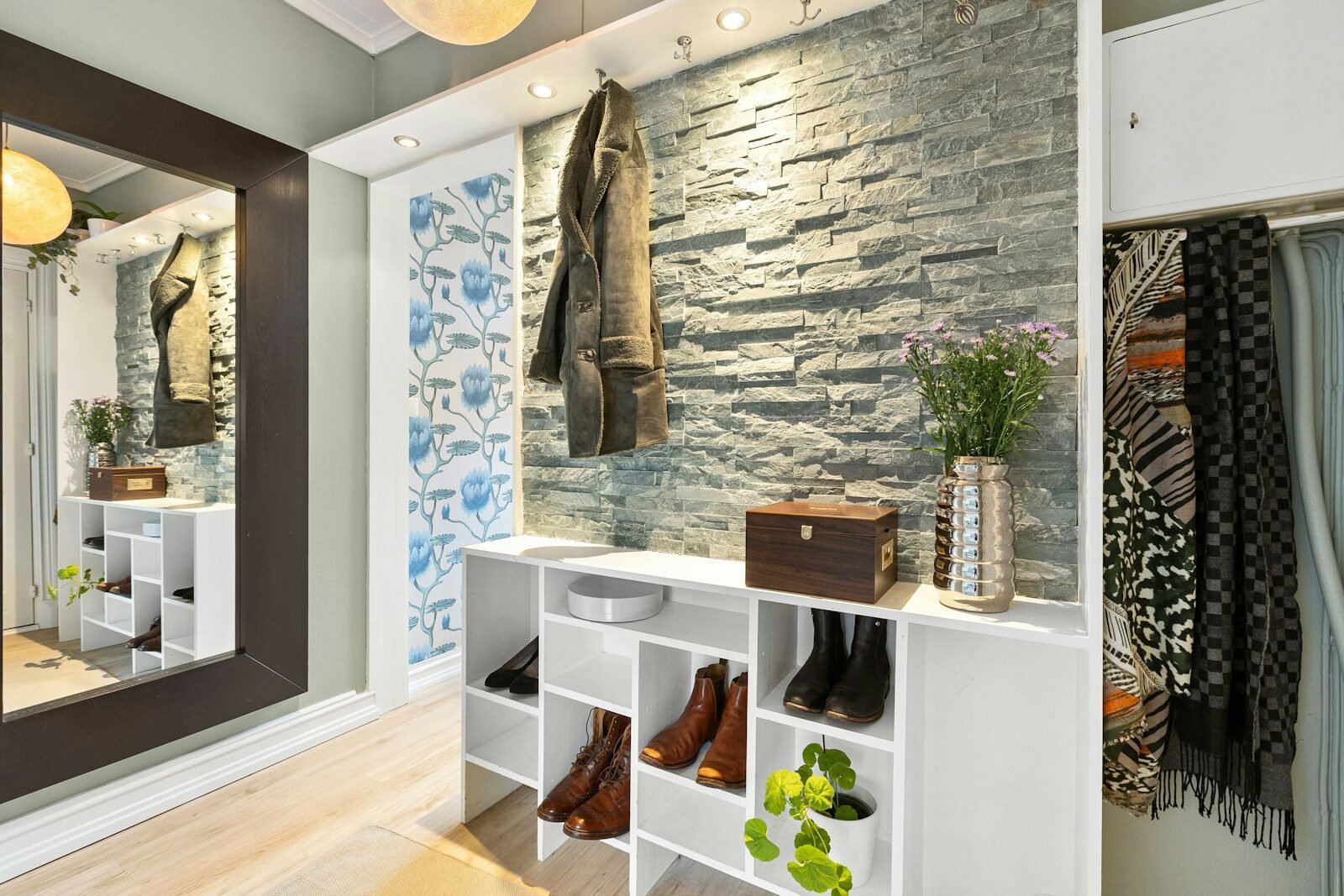 A slim shoe cabinet is often the best starting point for a small entryway, and the reason is simple: it hides everything behind doors while taking up very little floor space. Unlike an open rack, it turns a row of shoes into a piece of furniture, so the entry looks tidy even when the shoes inside are not perfectly arranged.
Look for a cabinet that sits close to the wall, with doors that open without hitting the front door swing. Many slim cabinets use tilted shelves inside, which let shoes sit at an angle and take up less depth than flat shelves. That shallow shape is what makes them work in narrow halls where a regular cabinet would block the walkway.
The top of the cabinet matters just as much as the inside. It becomes the natural drop zone for keys, mail, and sunglasses, which keeps those small items from ending up on the floor too. Keep the top mostly clear, with just a small tray or bowl, so it stays useful instead of becoming another cluttered surface.
One detail people forget is airflow. Shoes that go straight from outside into a closed cabinet can trap dampness and smell. If the cabinet has ventilation slots or gaps, use them. If it does not, leave the doors open for a while after wet or muddy shoes go in, and let damp pairs dry before they go back inside. A cabinet only works as daily storage if it stays fresh inside.
2. A storage bench you can sit on
A bench solves two problems at once: somewhere to sit while putting shoes on, and somewhere to store them. That combination matters more than it sounds, especially in households with kids or older family members, where balancing on one foot by the door is a daily struggle.
The most useful benches have storage built underneath, either as open cubbies or as baskets that slide in and out. Baskets hide mismatched shoes and make cleanup fast, since tidying means sliding a basket back into place rather than lining up pairs. Cubbies work better if you like seeing each pair at a glance, but they need a little more upkeep to stay neat.
Size is the thing to get right. A bench should fit its wall without eating into the walkway, and it should not block the door from opening fully. Before buying, check how far the door swings and how much clear floor you need to walk past comfortably. A bench that forces everyone to squeeze past it will be resented, not used.
A bench also gives you a landing spot for bags and coats on the way in, which takes pressure off the rest of the entry. If the bench has a lower shelf or a boot tray underneath, wet shoes have a place to go that is not the rug.
3. Go vertical when floor space runs out
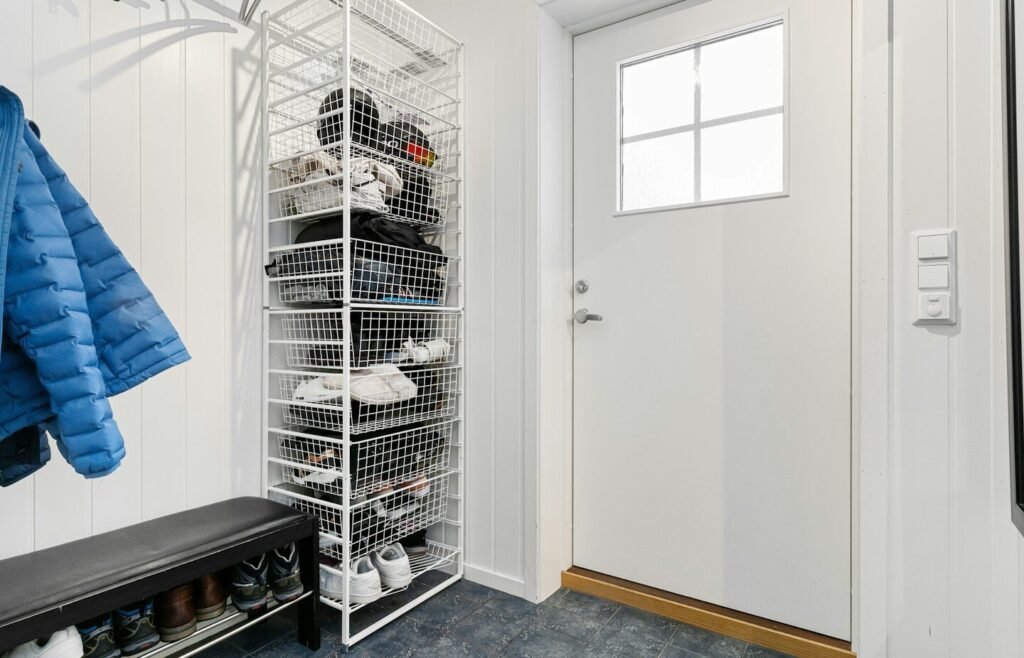
When there is no floor space left, the only direction left is up. Small entryways usually have more wall than floor, and that wall space is often wasted. A tall, narrow cabinet, a set of wall-mounted shelves, or a rack that hangs over the door can hold daily pairs without touching the floor at all.
The trick is to put daily shoes where hands can reach them easily, and move seasonal or rarely worn pairs higher up. Shoes you grab every morning should sit between knee and shoulder height. Anything above that becomes storage you forget about, which is fine for the pairs you only wear a few times a year.
Wall-mounted options need solid fixing. Use proper wall anchors for the wall type, and check that shelves sit level before loading them. Keep shelves clear of light switches, thermostats, and heater vents, since blocking those creates new problems. If you rent and can’t drill, an over-door rack gives you vertical storage without holes in the wall, though you should check that the door still closes properly with it in place.
Vertical storage also changes how the entry feels. Drawing the eye upward makes a narrow space feel taller, and keeping the floor visible makes it feel wider. That visual effect is a real benefit in a small entry, not just a side effect.
4. Keep only daily shoes by the door
This is the system that makes all the furniture above work long term. No cabinet or bench, however well chosen, can hold every pair a household owns. The entry should hold only the shoes people actually wear day to day, and everything else should live somewhere else, like a bedroom closet or a hall cupboard.
A simple rule works well: one daily pair per person by the door, plus one spare pair for bad weather or a change of plans. When a new pair comes in, an old pair moves out to longer-term storage. That one-in, one-out habit stops the slow buildup that turns any storage system back into a pile.
Seasonal swaps help too. Heavy boots live by the door in winter and move away in summer, when sandals and light shoes take their place. Doing that swap twice a year takes a few minutes and frees a surprising amount of space. A small basket near the door can catch overflow during the swap, so stray pairs have somewhere to go instead of the floor.
This point sounds less exciting than new furniture, but it is the one that decides whether the entry stays tidy after the first month. Furniture gives shoes a home. The daily-pairs rule decides how many shoes are competing for that home.
Other Quick Ideas
These ideas are worth knowing, but they work best as support for the four main ones above rather than as the whole solution.
- Stackable shoe racks: cheap and flexible, and easy to fit into a closet or behind a door. Open racks show everything, so they suit hidden spots better than the main entry wall.
- Shoe baskets: one basket per person, slid under a bench or onto a low shelf, makes tidying a one-minute job.
- A boot tray by the door: catches rain and mud before it reaches the floor, and gives wet shoes a defined place to dry.
- An over-door organizer: useful on a closet or bedroom door when the entry itself has no spare wall.
- Hooks for small items: bags, umbrellas, and dog leashes on hooks free up floor space that shoes would otherwise compete for.
Measure Before You Buy
Measure the wall width, the depth you can spare, and how far the front door swings open. Leave enough clear floor to walk past comfortably, and note which side the hinges sit on, since that decides where a cabinet or bench can go without blocking the door. A few minutes with a tape measure prevents the most common mistake: furniture that looks right online and blocks the door at home.
Mistakes to Avoid
- A cabinet so deep it blocks the door swing or narrows the walkway.
- All open racks and no doors, which leaves dust and visual clutter on show.
- No ventilation for damp shoes, which leads to smell and moisture inside closed storage.
- Storage that blocks a heater vent, a light switch, or the thermostat.
- Buying for every pair you own instead of the pairs you wear daily.
FAQs
How many pairs should live by the door?
One daily pair per person, plus one spare pair for bad weather, is a good starting point. Everything else belongs in longer-term storage. If the entry starts overflowing, the answer is usually fewer pairs by the door, not bigger furniture.
What if there is no entryway at all?
Many apartments open straight into a living room, with no hallway to work with. In that case, create a zone instead of a room: a slim cabinet or bench just inside the door, plus a washable rug to mark the landing area. The rug signals where shoes belong, and the cabinet gives them a home, even without walls.
How do I handle wet or muddy shoes?
Give them a defined spot right at the door, like a boot tray with a raised edge, and let them dry before they go into closed storage. Wipe the tray down regularly so mud does not build up. Closed cabinets keep shoes hidden, but they are not the right place for soaking-wet pairs.
Should shoes be hidden or on display?
Hidden suits most small entries, because closed doors turn clutter into furniture. Display works only if you keep the pairs on show tidy and limited to a few good-looking ones. When in doubt, hide the bulk and display nothing you would not want guests to see.
Conclusion
A tidy small entryway comes down to two things: furniture that fits the space, and a rule about which shoes live there. Pick one of the main ideas above, measure before you buy, and keep only daily pairs by the door. Done that way, small entryway shoe storage ideas stop being a list to browse and start being a system that holds up every day.