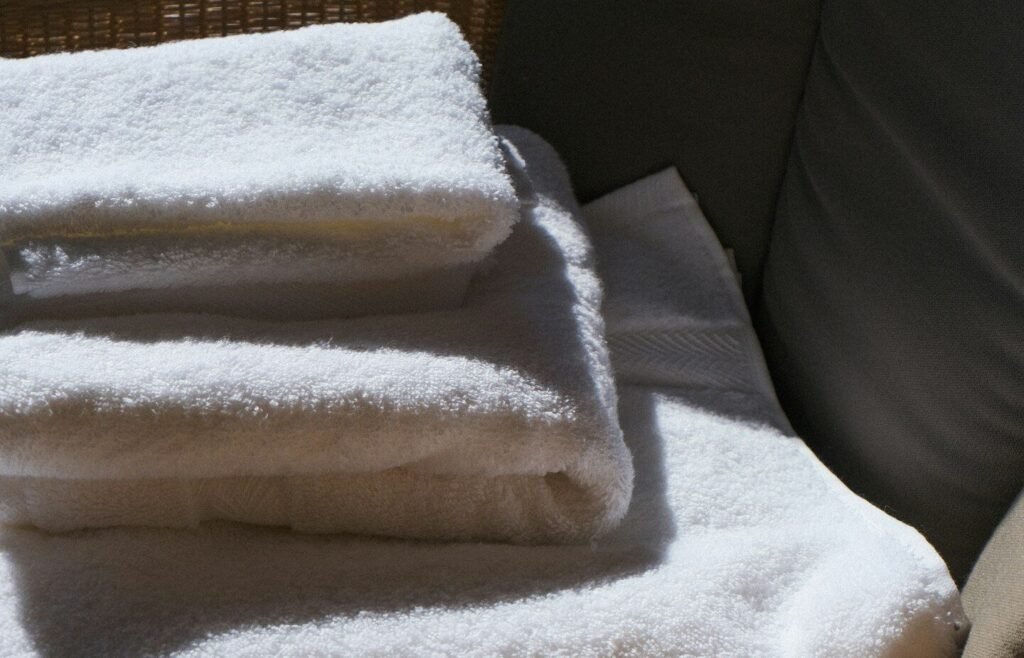
Towels pile up faster than almost anything else in a bathroom. One set in use, one in the wash, and a few spares on a shelf can turn a small bathroom into a crowded one, even when everything else is clean.
The problem is rarely the number of towels. It is the lack of a fixed place for each one. The towel storage ideas below focus on that fix: wall space, rolling, a fixed home for each towel, and a simple split between daily towels and spares.
What Good Towel Storage Looks Like
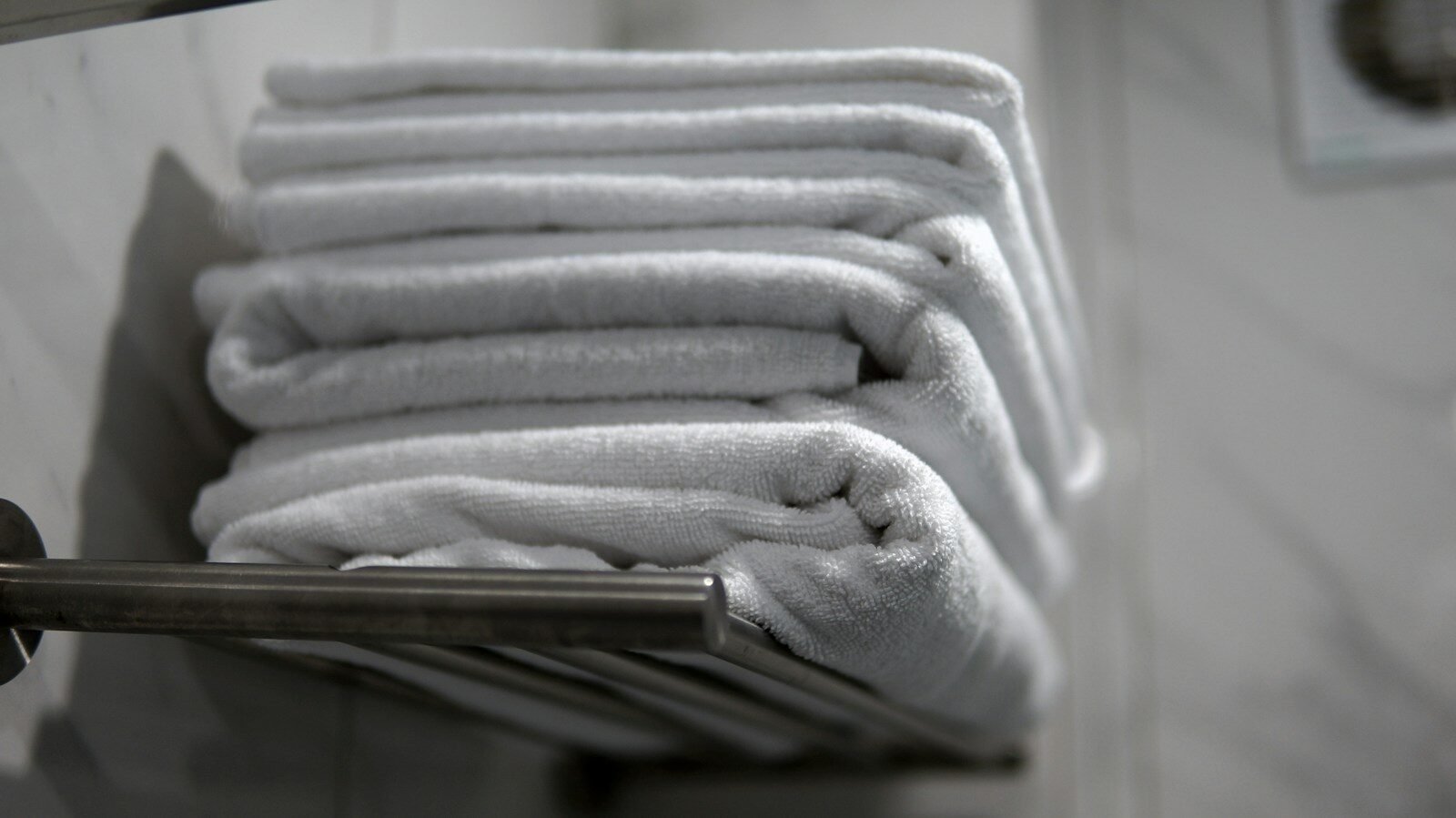
Good towel storage does three things. It keeps towels dry, it keeps them within reach where they are used, and it keeps the bathroom looking calm instead of crowded. If a solution fails any of those three, it will stop being used, no matter how neat it looks on the first day.
Dryness matters most. Towels that stay damp develop a musty smell and wear out faster, so airflow around each towel counts as much as the rack or shelf itself. Any plan that stacks towels tightly into a closed, damp cupboard is working against itself.
Ideas That Work in Most Bathrooms
The five points below solve the problem for most bathrooms. Each one is explained in full, because getting the details right is what makes the difference between storage you use every day and storage that becomes another pile.
1. Use the wall before you use the floor
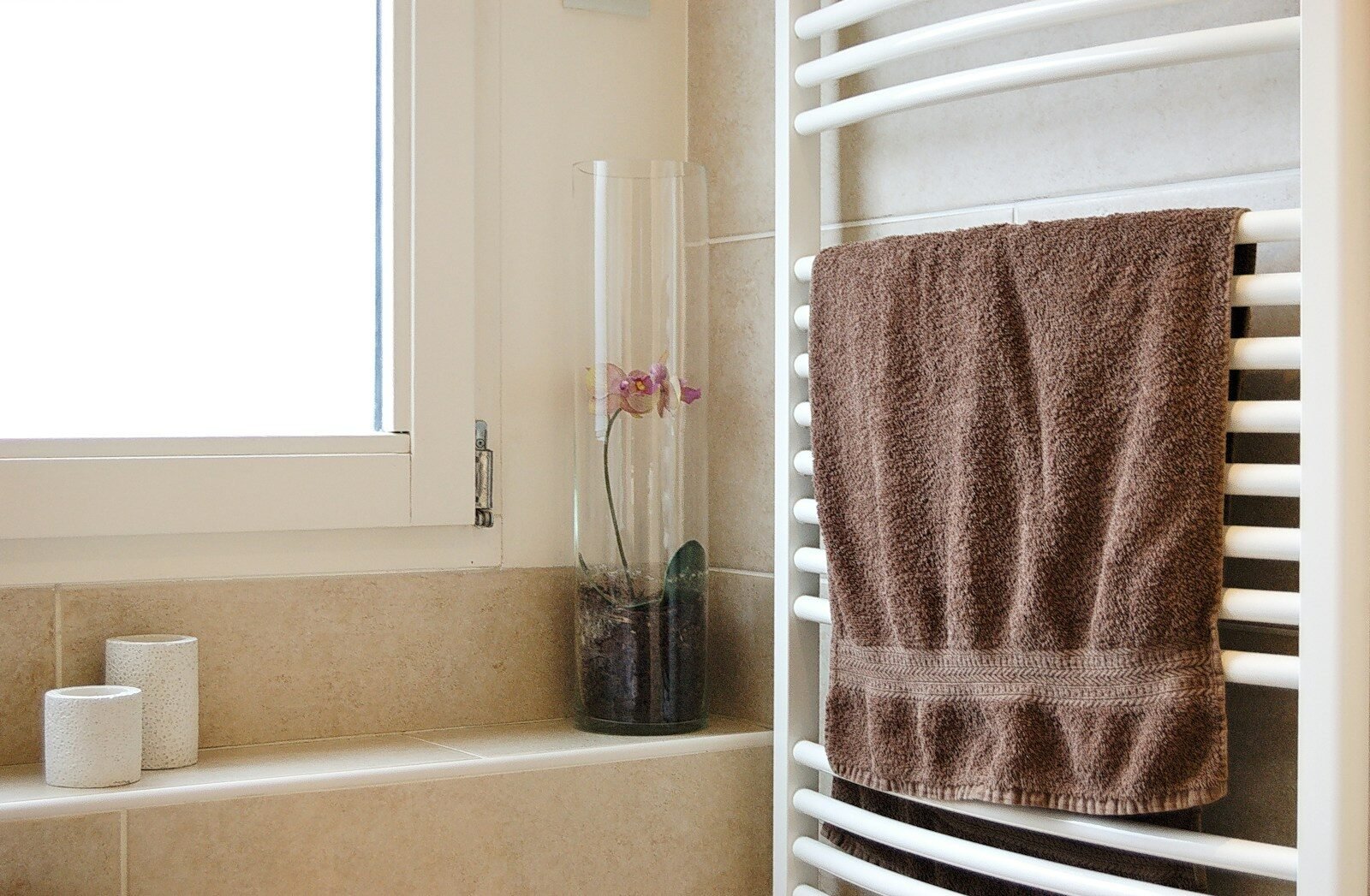
Bathrooms usually have more wall than floor, and that wall space is often wasted. A towel bar, a row of hooks, or a ring on the wall holds daily towels without taking any floor space at all, which matters most in small bathrooms where every bit of floor is needed for moving around.
Give each person their own hook or section of bar. Shared hooks lead to shared piles, and shared piles lead to damp towels that no one claims. One hook per person, with enough space between hooks for air to move, keeps towels dry and makes it obvious whose towel is whose.
Height matters. Bars and hooks should sit where hands reach them easily without stretching: around shoulder height for adults, lower for children. A hook placed too high becomes decoration, and a bar placed behind the door is only useful if the door can still open fully with towels on it.
Avoid hanging several towels on a single hook or layering them over each other on one bar. Towels dried in layers stay damp in the middle, and damp towels are the ones that start to smell. Spread each towel out on its own hook or bar, and give it room to breathe.
2. Roll towels when shelf space is tight
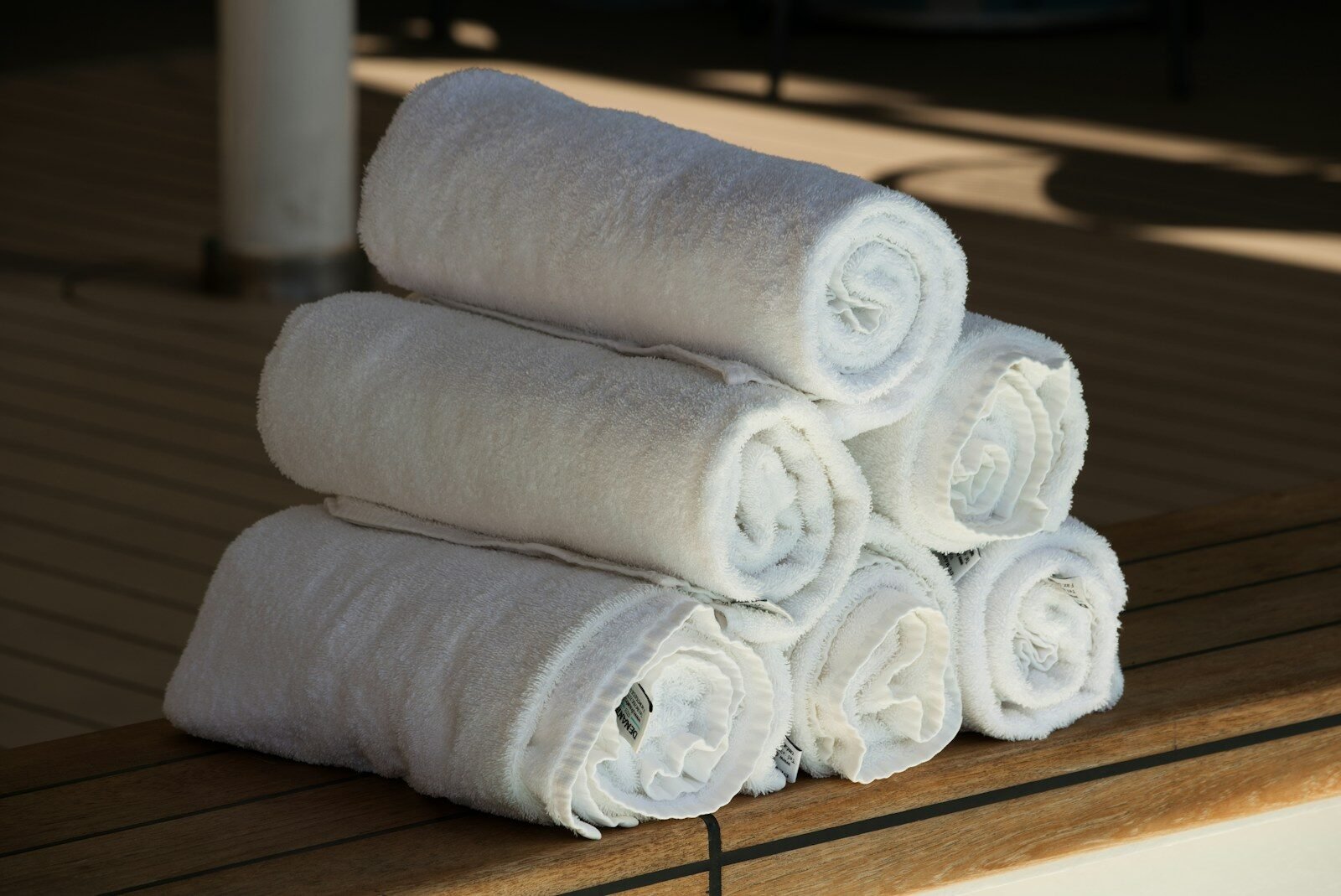
Folding works well on deep shelves, but rolled towels suit tight spaces better. A rolled towel takes up less depth than a folded stack, fits neatly into baskets and cubbies, and lets you see each towel at a glance instead of digging through a pile to find the one you want.
Rolling is simple. Fold the towel in half lengthwise, then roll it firmly from one short end to the other. The result is a compact roll that stands upright in a basket or sits in a row on an open shelf. Hand towels and washcloths roll the same way, just smaller, and fit into a small basket of their own.
Keep one rolled set per person where possible, and place the basket or shelf where towels are actually used: near the shower for bath towels, near the basin for hand towels. A basket that lives in another room will not get used, no matter how tidy it looks.
Rolled towels also make it easy to see when you are running low. An empty space in the basket is a clear signal to bring a fresh set from spare storage, before the last towel is already in the wash.
3. Give every towel a fixed home

A towel with no fixed home ends up on the floor, draped over the shower door, or folded over the nearest chair. That is how bathrooms get messy even when there is enough storage in the room: the storage exists, but no one knows which towel belongs where.
Assign one spot per towel type. Bath towels go in one place, hand towels in another, and washcloths in a third. The spot can be a basket, a shelf section, or a hook, but it should be the same spot every time, so putting a towel away takes no thought at all.
One basket per person works well in shared bathrooms, since it ends the quiet argument about whose towel is whose. One basket per towel type works better in single-person bathrooms, where sorting by type is simpler than sorting by owner. Either way, the rule is the same: a towel goes back to its own spot, not to the nearest empty surface.
When a spot is full, something must move out. A new towel coming into the bathroom means an old one goes to the wash or to spare storage. That one-in, one-out habit stops the slow buildup that turns any storage system back into a pile.
4. Keep daily towels close and spares somewhere else
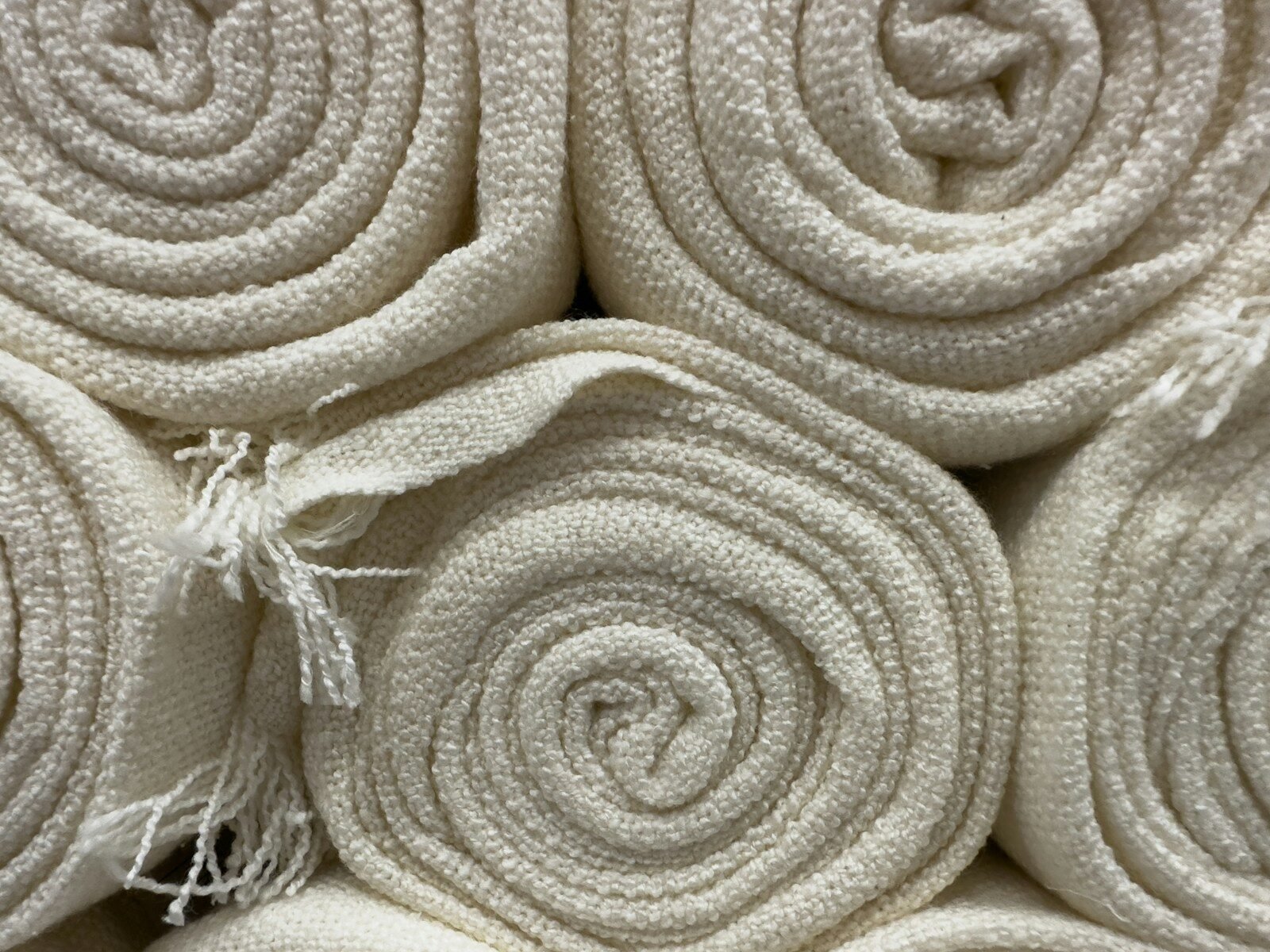
No bathroom, however well planned, can hold every towel a household owns. The bathroom should hold only the towels people actually use day to day, and everything else should live somewhere else, like a linen closet, a bedroom cupboard, or a shelf in the hallway.
A simple rule works well: one bath towel per person in the bathroom, plus a hand towel and a washcloth each. Guest towels, seasonal sets, and bulk buys stay in spare storage until they are needed. When a fresh towel comes in, the used one goes to the wash, not back onto the pile.
Spare storage deserves the same care as the bathroom itself. Towels stored long-term should be clean, fully dry, and kept where air can move around them. A sealed plastic box in a damp corner will give spares the same musty smell as a damp bathroom pile, so choose a dry spot and leave the container lid ajar or use a breathable basket.
Rotating spares helps too. Use the oldest set first and place freshly washed towels underneath or behind the ones already stored. That way no set sits forgotten at the bottom for months while the same few towels do all the work.
5. Use baskets and bins to hide the mess
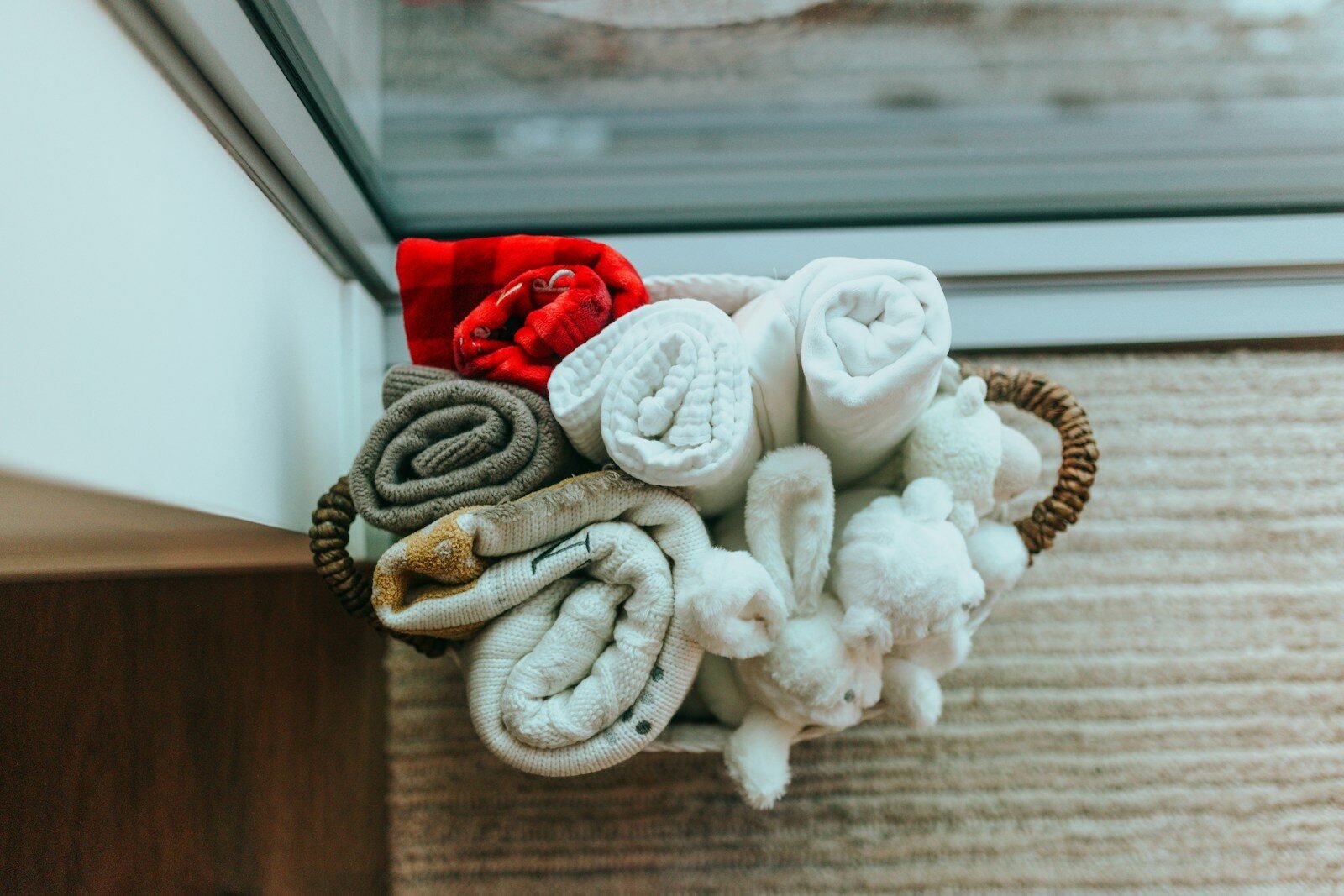
Open shelves look tidy only when everything on them matches. A mix of towel sizes, colours, and fold styles on an open shelf reads as clutter, even when each towel is clean. Baskets fix that by turning a mixed pile into a single neat unit.
Choose baskets that handle humidity. Woven baskets with a washable liner, wire baskets, and plastic bins all work, as long as they can be wiped down and do not trap dampness. Avoid unlined fabric baskets in the wettest spots, since they hold moisture against the towels inside.
Use one basket for clean spares, one for washcloths, and one for hand towels if the space allows. The point is not to own many baskets, but to give each group its own container so tidying means sliding a basket back into place rather than refolding a pile.
Keep cleaning cloths separate from bath towels. A small bin under the sink for cleaning cloths stops them from mixing with the towels people dry themselves with, and it keeps the bathroom tidier without any extra effort.
Other Quick Ideas

- An over-door rack for extra hanging space without drilling holes.
- A towel ladder leaning against the wall for daily towels in a larger bathroom.
- Hooks inside a cabinet door for hand towels, out of sight but within reach.
- A second towel bar near the shower so wet towels do not travel across the room.
- A heated towel rail, where one is already fitted, to help towels dry between uses.
Mistakes to Avoid
- Stacking towels so deep that the bottom ones never dry.
- Hanging several towels on one hook where air cannot reach them.
- Storing towels in a damp, closed cupboard with no airflow.
- Keeping every towel ever bought in the bathroom at once.
- Folding thick towels onto narrow shelves where they slip off.
FAQs
How many towels should live in the bathroom?
One bath towel per person in use, plus a hand towel and a washcloth each, is a good starting point. Everything else belongs in longer-term storage. If the bathroom starts overflowing, the answer is usually fewer towels in the room, not bigger furniture.
How do I keep towels from smelling musty?
Airflow is the main fix. Hang towels spread out, not bunched, and let them dry fully between uses. Wash towels regularly, and avoid leaving damp towels in a closed bin or a pile. Running the bathroom fan or opening a window after showers also helps.
What if there is no linen closet?
Use the space you have: a tall narrow cabinet, baskets on top of a wardrobe, or a shelf above the bathroom door for spares. A single basket per person on an open shelf can hold a full spare set without a closet.
Should towels be hidden or on display?
Hidden suits most bathrooms, because closed doors turn clutter into furniture. Display works only if the towels on show are neatly rolled or folded and limited to a few matching sets. When in doubt, hide the bulk and display a small rolled set.
Conclusion
A tidy bathroom comes down to two things: a fixed place for each towel, and a rule about which towels live in the room. Pick one of the main points above, start with the wall space you already have, and keep only daily towels close at hand. Done that way, towel storage ideas stop being a list to browse and start being a system that holds up every day.