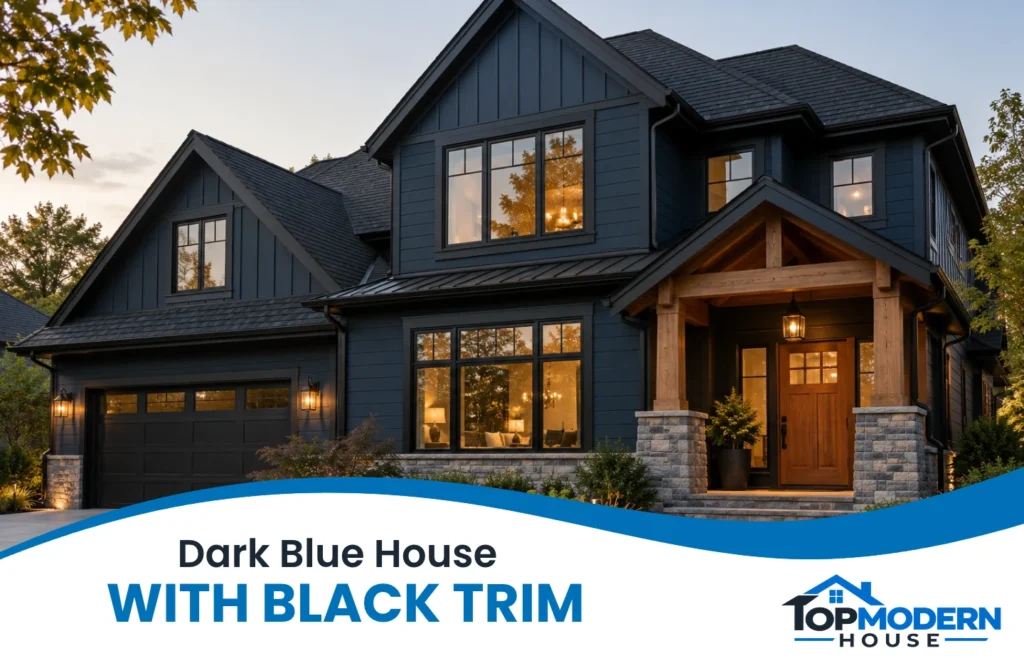
A dark blue house with black trim can look crisp, grounded, and sophisticated, but the combination needs enough separation to keep the exterior from turning into one dark mass.
The strongest versions don’t rely on color alone. They use architecture, windows, roofing, wood, stone, lighting, and landscaping to create contrast in different ways.
The ideas below show how to use the palette across different home styles, followed by practical guidance for adapting it to an existing house rather than simply copying an inspiration photo.
Short Definition
A dark blue house with black trim pairs deep navy, slate, or blue-gray siding with black architectural accents for a bold exterior, while lighter or warmer details help maintain contrast and visual balance.
Topmodrenhouse Mission Statement
Topmodrenhouse helps homeowners, renters, and home lovers make practical, stylish, and informed choices for more comfortable, functional, and enjoyable living spaces.
Quick Exterior Planning Checklist
- Check the undertones of the existing roof, brick, and stone first.
- Test dark blue samples in sun, shade, and different times of day.
- Decide which features actually need black rather than using it everywhere.
- Treat existing white windows as part of the palette instead of automatically replacing them.
- Consider the visual weight of large black elements such as garage doors or roofing.
- Add relief with natural wood, lighter masonry, warm metals, landscaping, or exterior lighting.
- Verify product and siding-manufacturer guidance before painting existing vinyl a substantially darker color.
17 Dark Blue House With Black Trim Ideas
1. Navy Siding With Matte Black Window Frames
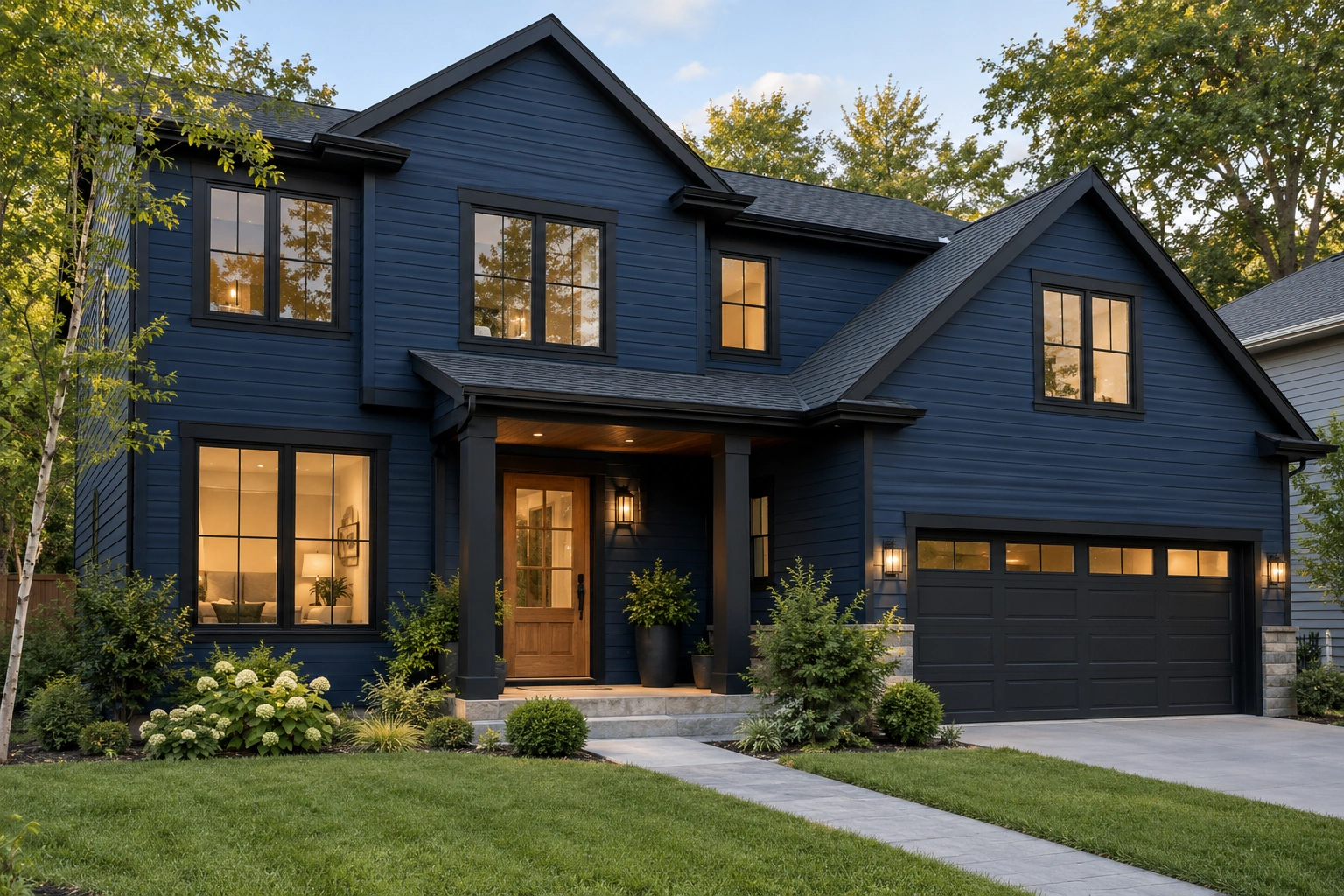
Navy lap siding paired with black-framed windows gives a house clean definition without requiring every piece of trim to be black.
This combination works especially well on contemporary homes and simple two-story façades where repeated window shapes become part of the design. A wood front door or lighter walkway can keep the exterior from feeling overly cool.
2. Dark Blue Siding, Black Trim, and White Windows
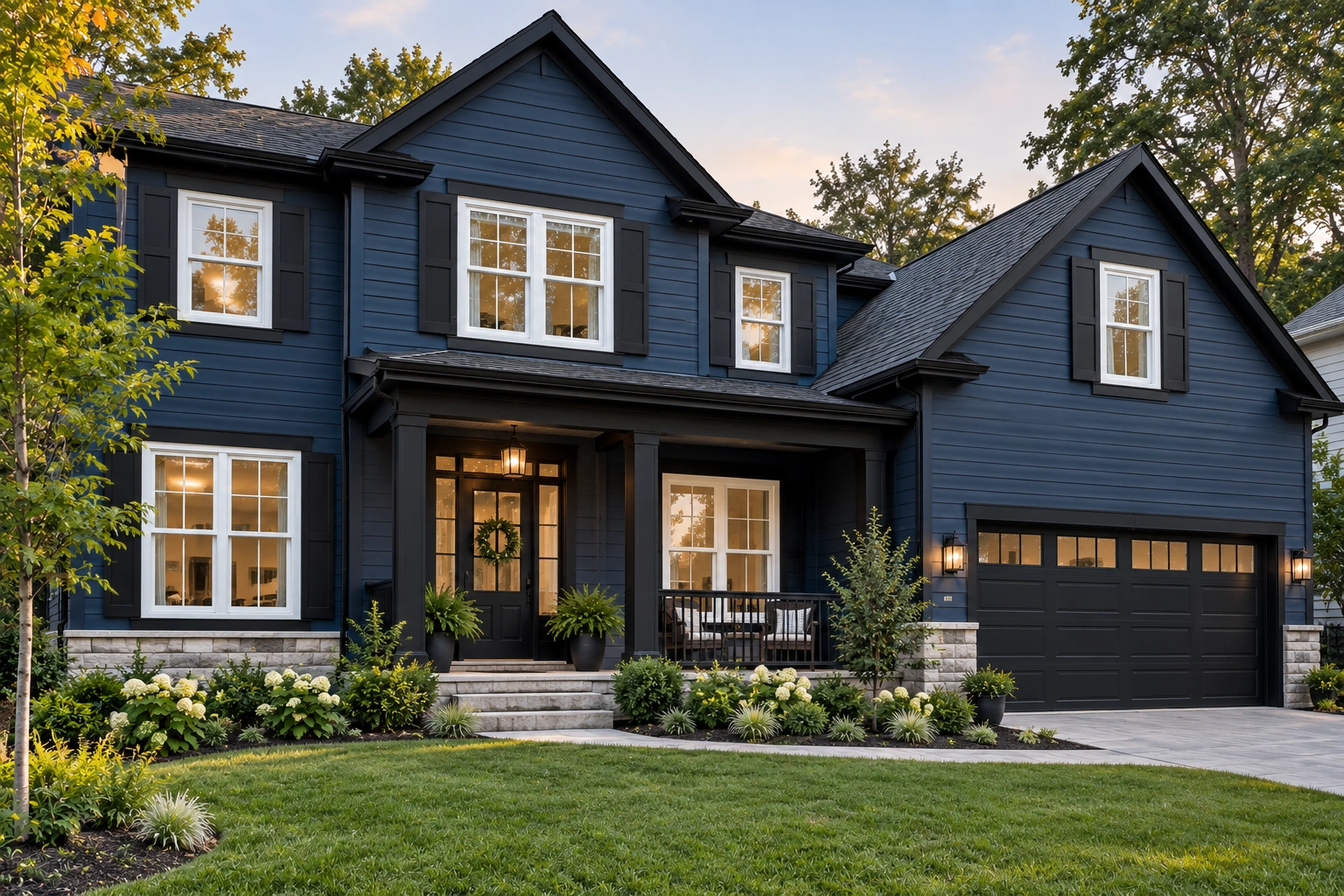
Existing white windows don’t automatically rule out black trim.
Use the white window frames as a deliberate layer of light contrast, then place black on the outer casing, shutters, fascia, railings, or nearby hardware. The three-color approach can actually create more depth than an entirely dark window assembly.
3. Navy Blue With Black Trim and a Natural Wood Front Door
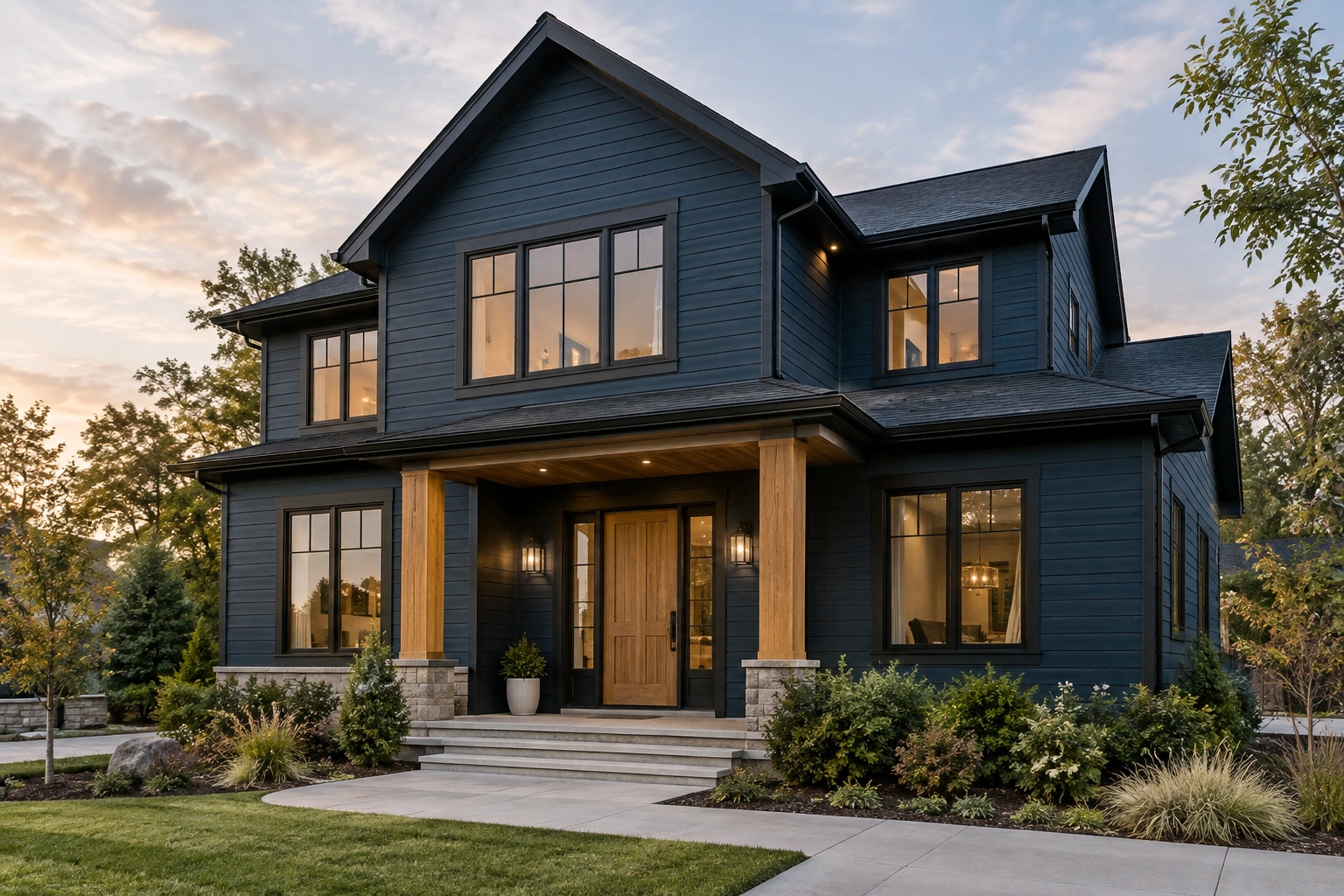
A warm wood front door is one of the easiest ways to soften navy siding and black details.
The door becomes a natural focal point while the dark colors form a quieter background. Cedar-toned porch posts or a small amount of matching wood elsewhere can help the entry feel intentional without turning the exterior into a mix of competing materials.
4. Dark Blue Modern Farmhouse With Black Fascia and Railings
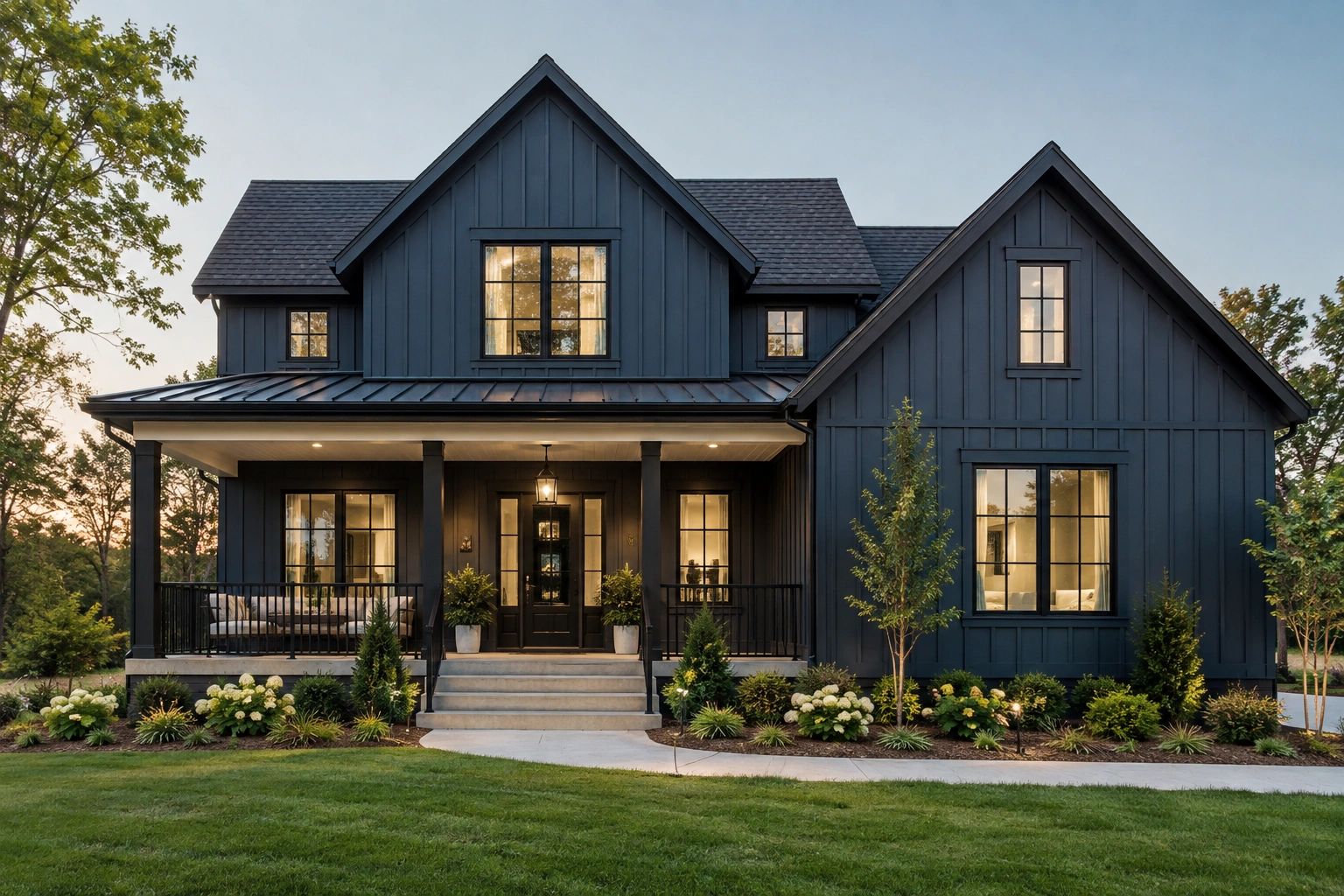
A modern farmhouse can carry stronger black accents because its architecture usually relies on simple lines and larger shapes.
Try deep blue board-and-batten siding with black fascia, porch railings, and selected window details. Keeping some soffits, windows, or porch surfaces lighter can prevent the roofline from feeling too heavy.
5. Slate Blue Craftsman With Black Trim, Stone, and Cedar
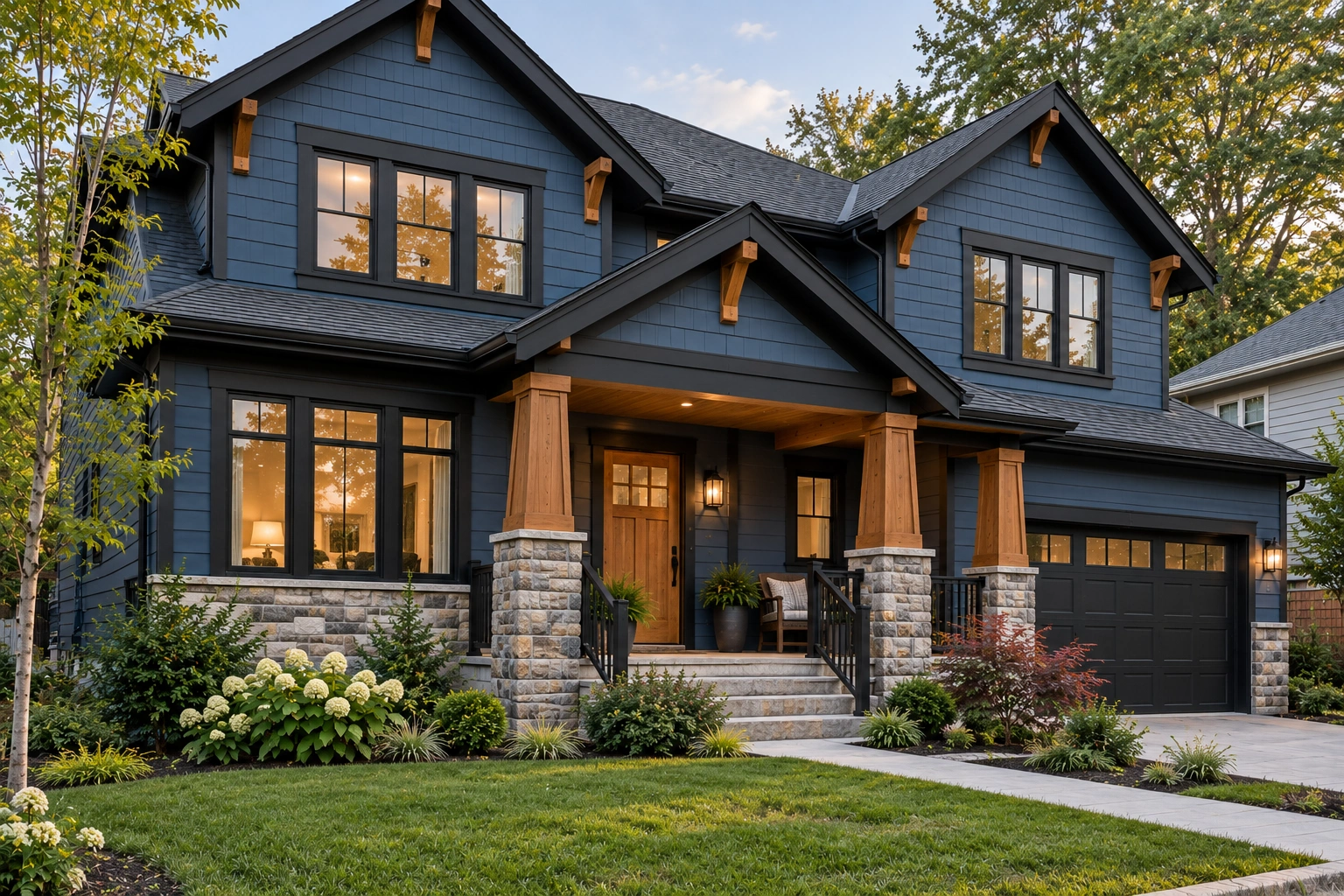
Craftsman homes already have strong material character, so the color palette doesn’t need to do all the work.
Slate blue siding provides more visible separation from black than an almost-black navy. Warm stone at the foundation and cedar around the porch can connect the darker paint colors to the home’s traditional detailing.
6. Deep Blue Ranch House With a Black Garage Door
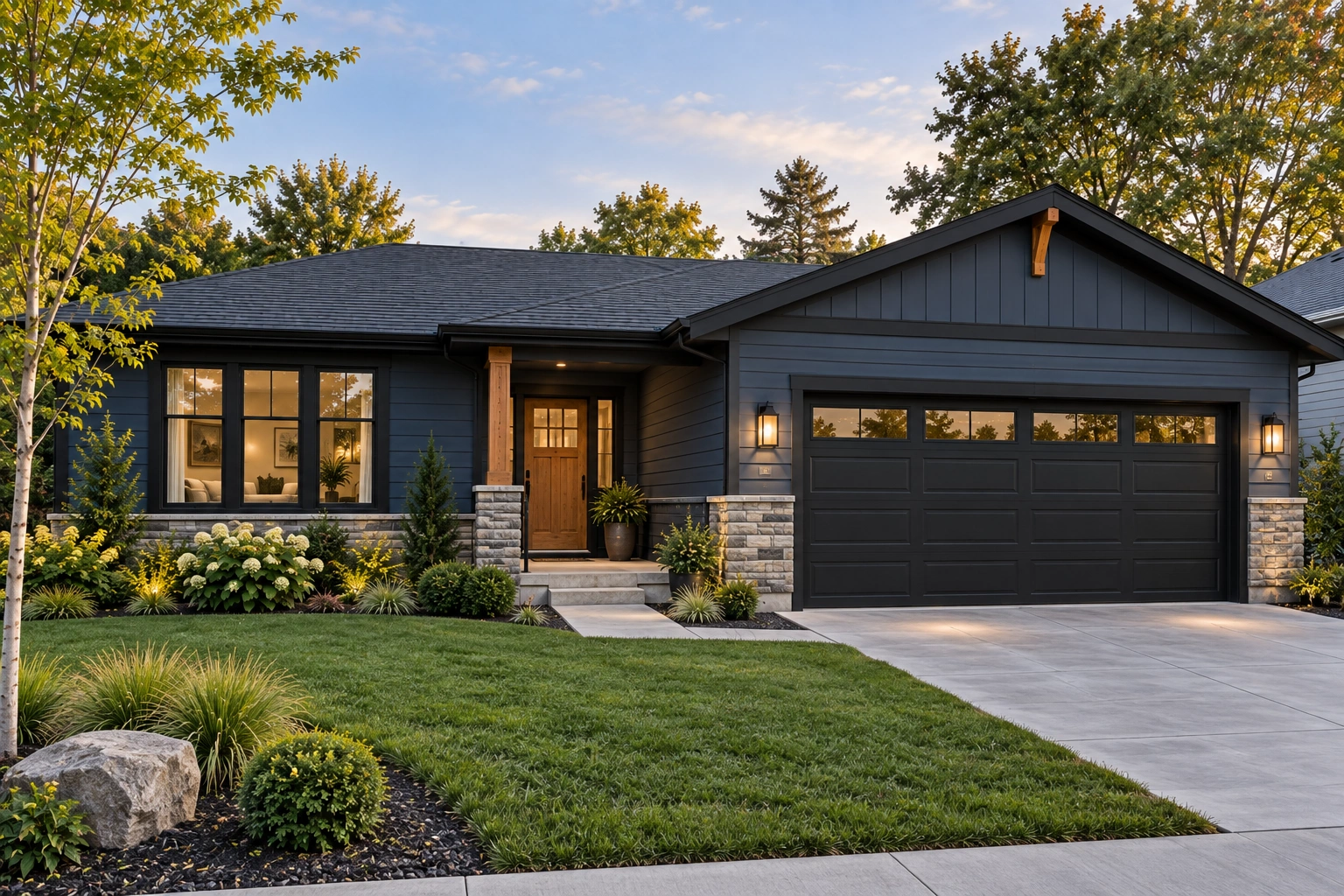
A dark blue ranch house with black trim can look especially sharp because the long, low profile gives black details room to repeat horizontally.
Pay attention to the garage door, though. On a garage-forward façade, a large black door carries far more visual weight than black lights or window trim. Lighter concrete, stone, or landscaping can help balance it.
7. Navy Colonial With Black Shutters
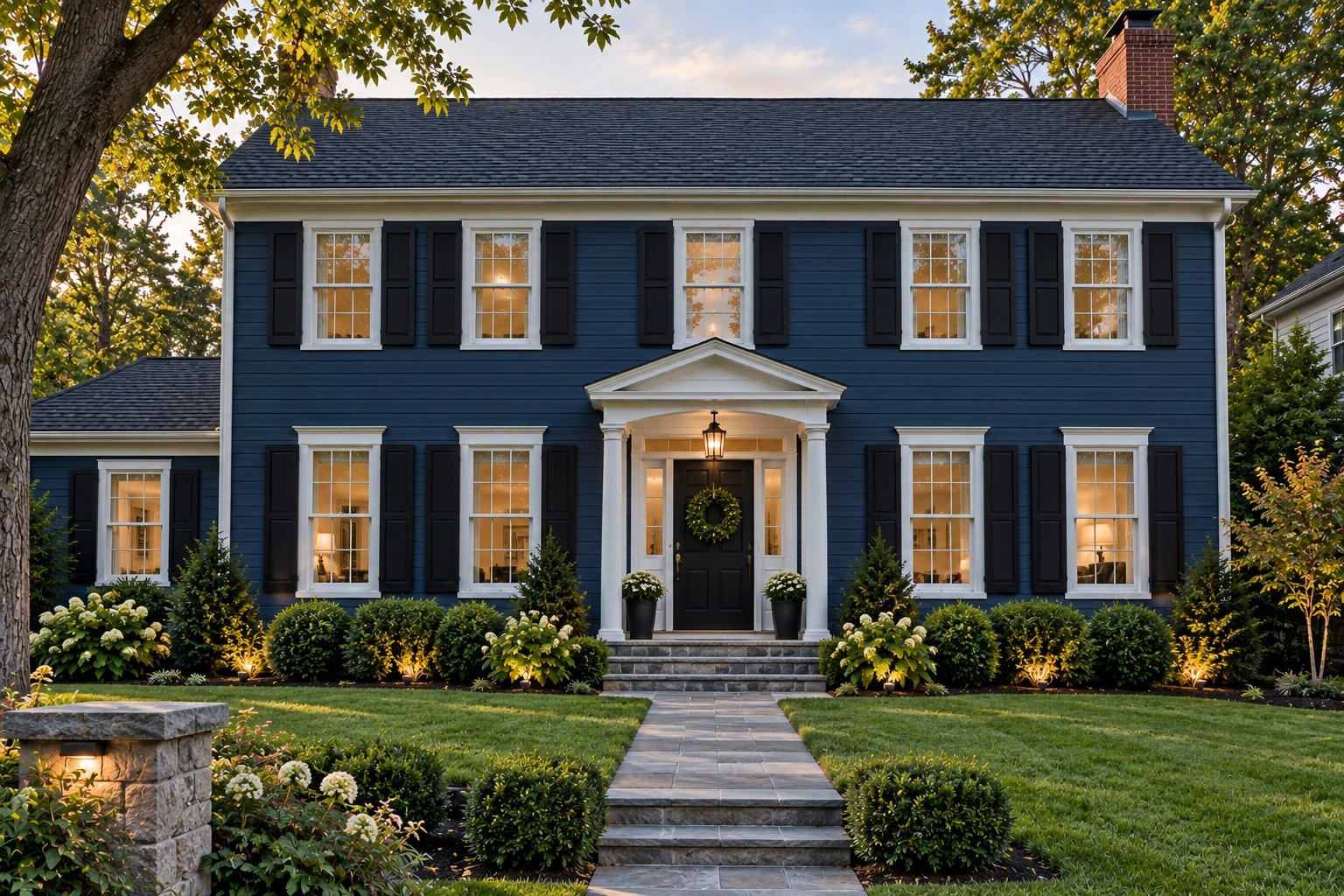
Colonial-style homes often benefit from restraint.
Instead of turning every trim board black, use navy siding with black shutters and perhaps a coordinated front door. Keeping window surrounds or other architectural details lighter can preserve the symmetrical features that give the house its character.
8. Coastal Dark Blue Cottage With Subtle Black Accents
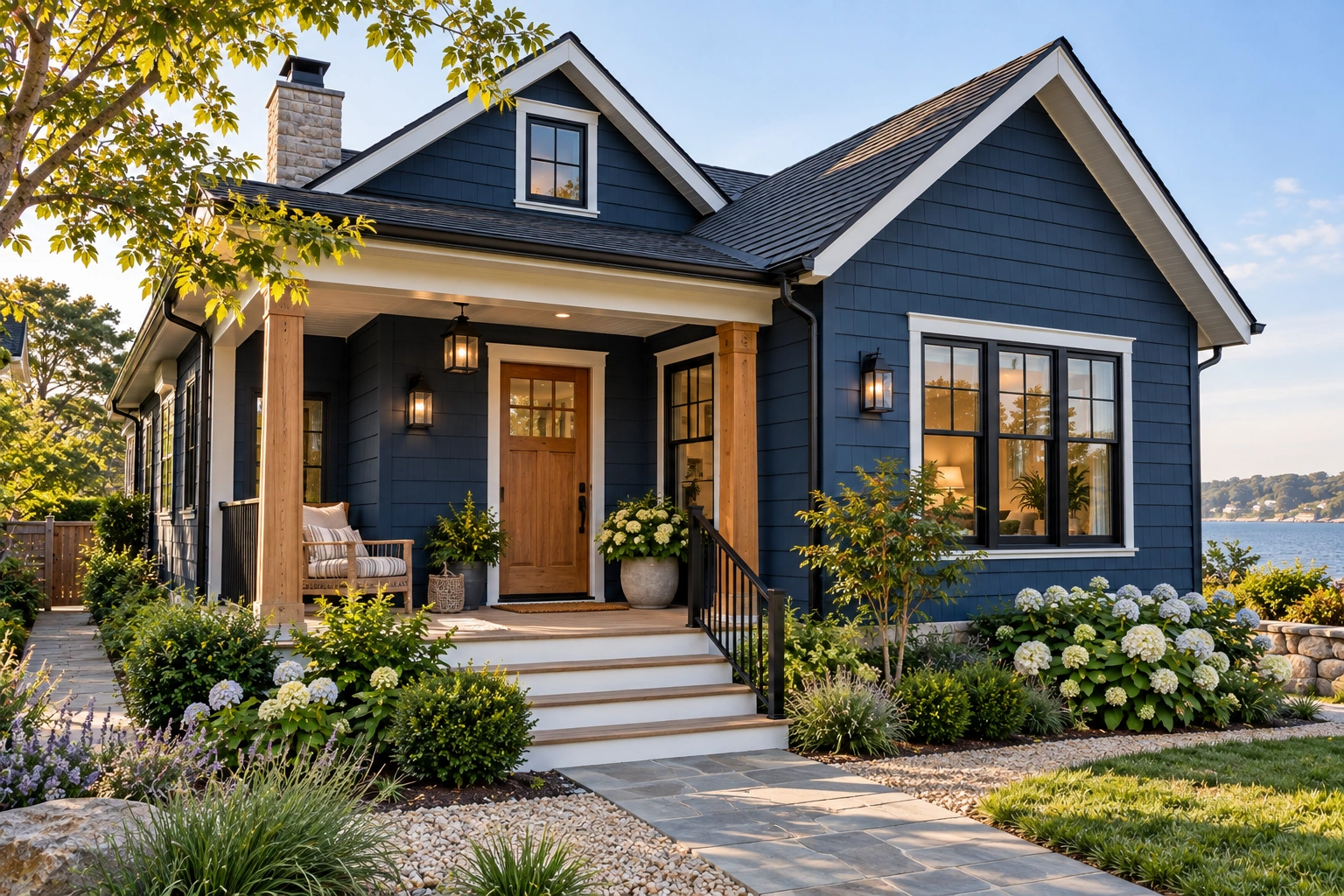
A cottage doesn’t need heavy black trim to use the color combination effectively.
Dark blue siding can be paired with slim black window frames, exterior lights, door hardware, or simple metal railings. Lighter porch surfaces, natural wood, and abundant greenery keep the result relaxed rather than severe.
9. Midnight Blue Exterior With a Black Metal Roof
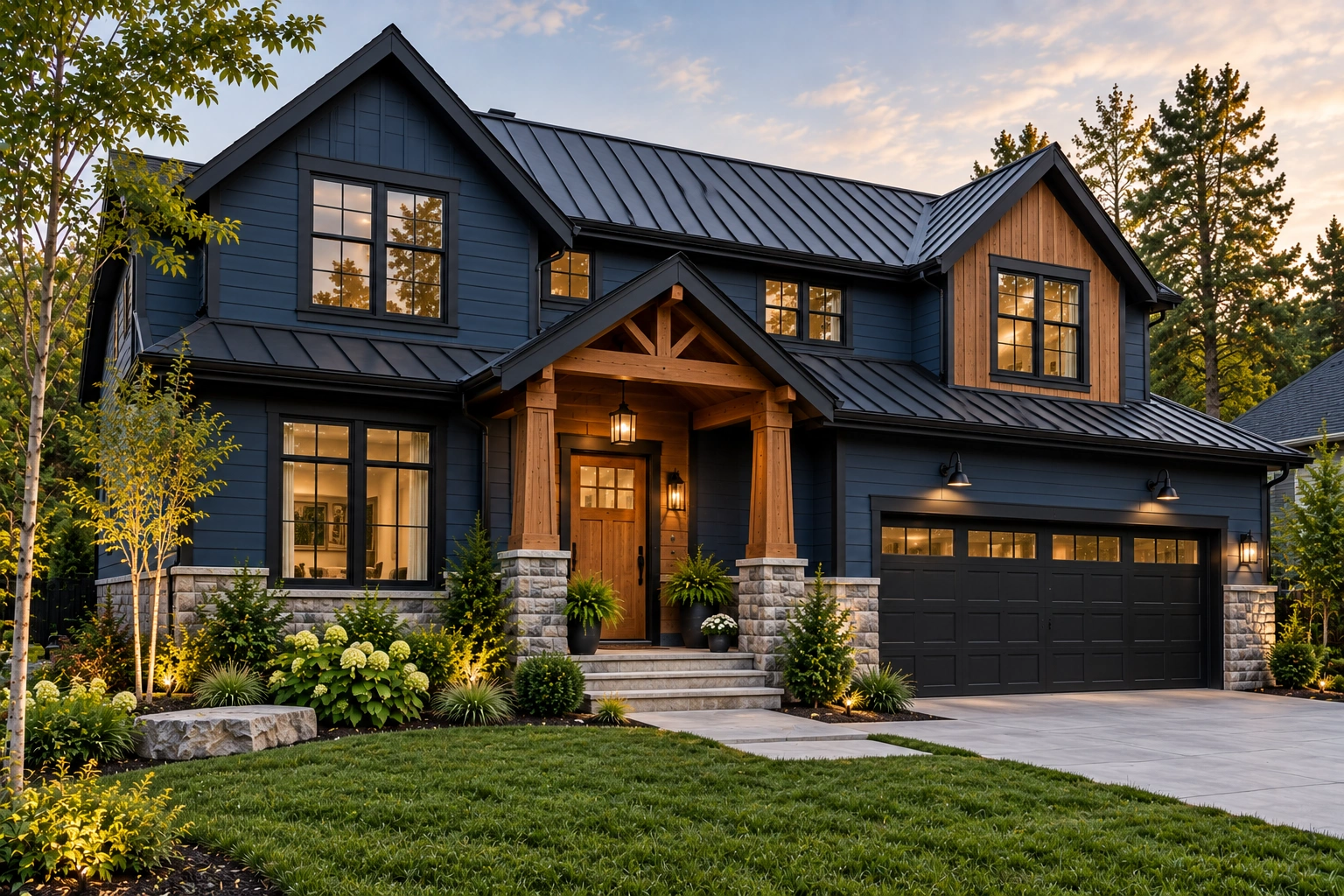
Midnight blue siding and a black roof create a low-contrast, almost monochromatic exterior.
That can suit a simple modern or cabin-inspired home, but the combination needs relief elsewhere. Wood siding sections, lighter stone, windows, or a brighter entry area can stop the roof and walls from visually blending together.
10. Blue-Gray Siding With Black Trim for Softer Contrast
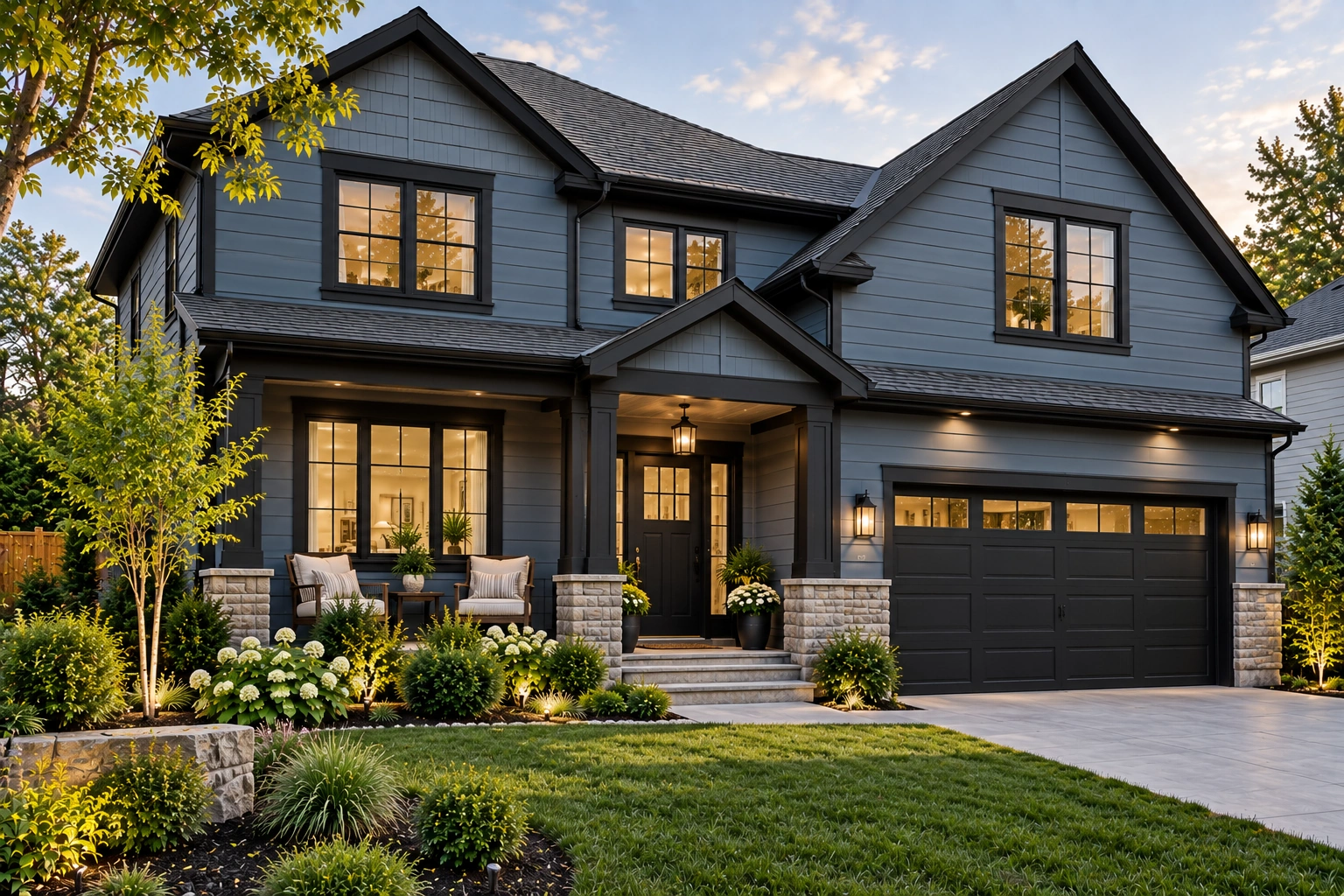
Blue-gray is a useful option for homeowners who like black trim but don’t want an extremely dark façade.
The slightly lighter body color gives black windows, fascia, and doors clearer definition. It can also work well with gray roofing or stone, provided the undertones sit comfortably together.
11. Dark Blue Stucco With Black Window Frames
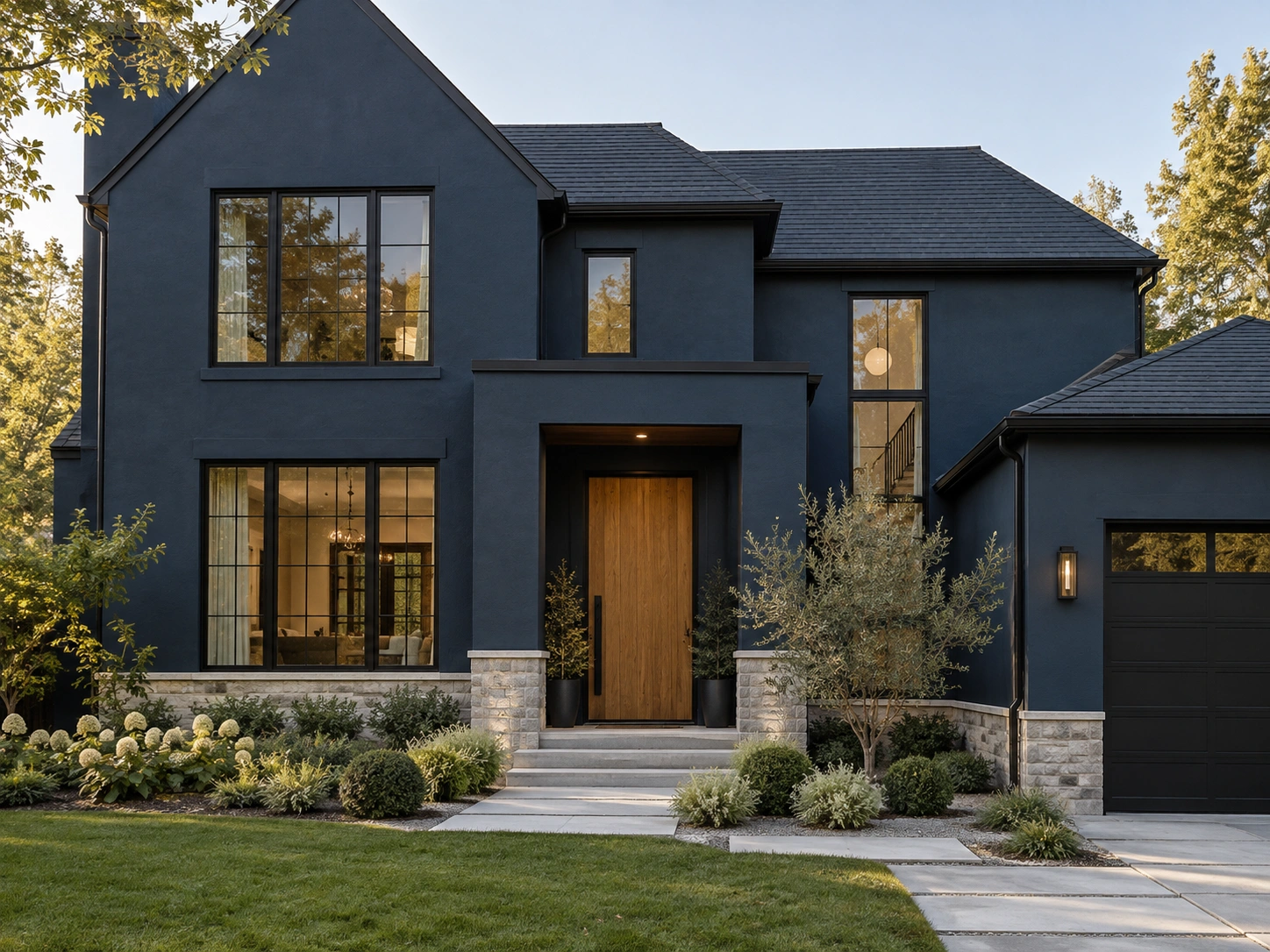
Smooth stucco and black-framed windows create a cleaner look than heavily detailed trim.
On this type of exterior, the blue itself can provide most of the visual interest. Keep the number of additional accent colors limited and use texture from landscaping, masonry, or a wood door instead.
12. Navy Siding With Black Railings and Warm Porch Lighting
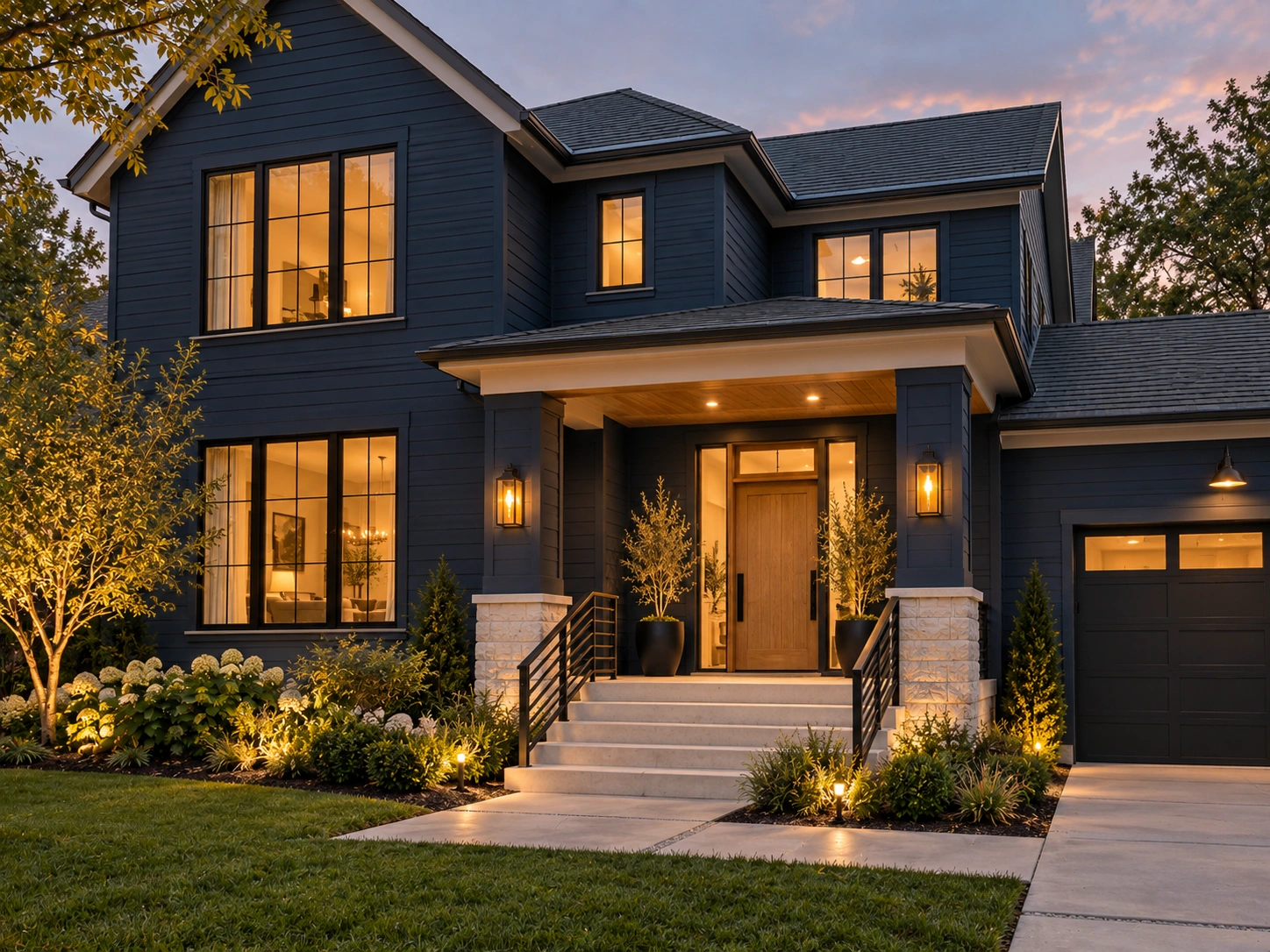
Black railings are a practical way to introduce the dark accent without outlining every window and roof edge.
Pair them with navy siding and warm-looking porch fixtures so the entry doesn’t disappear after sunset. Light-colored steps or porch flooring can add another useful break between the dark surfaces.
13. Dark Blue and Black With Copper or Bronze Accents
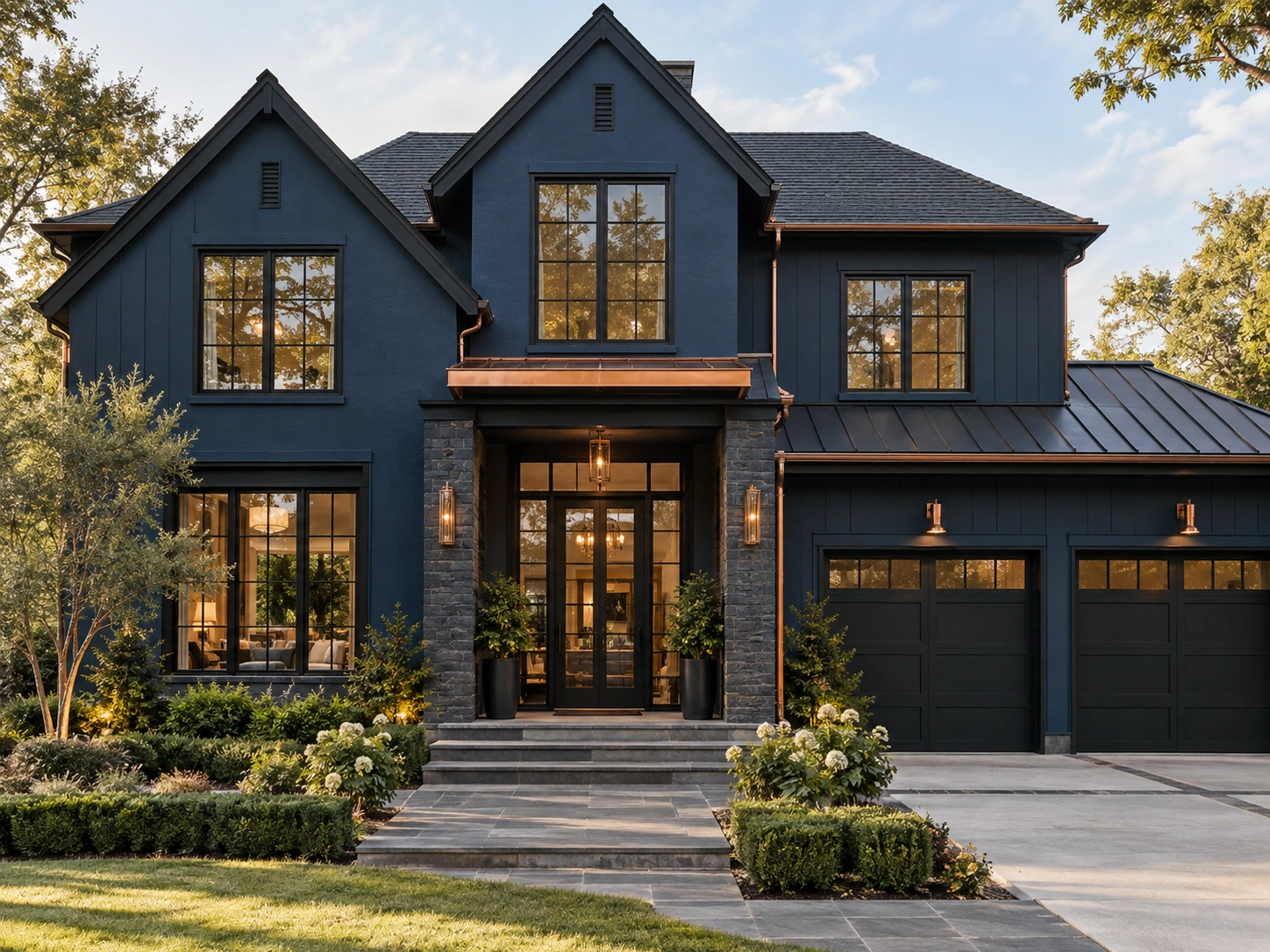
Warm metals can make a cool blue-and-black palette feel less severe.
Copper-toned gutters, bronze lights, or warm metallic door hardware can provide a small amount of contrast without introducing another major color. Use these finishes selectively so they read as repeated details rather than isolated decoration.
14. Navy Siding With Black Trim and Gray Stone
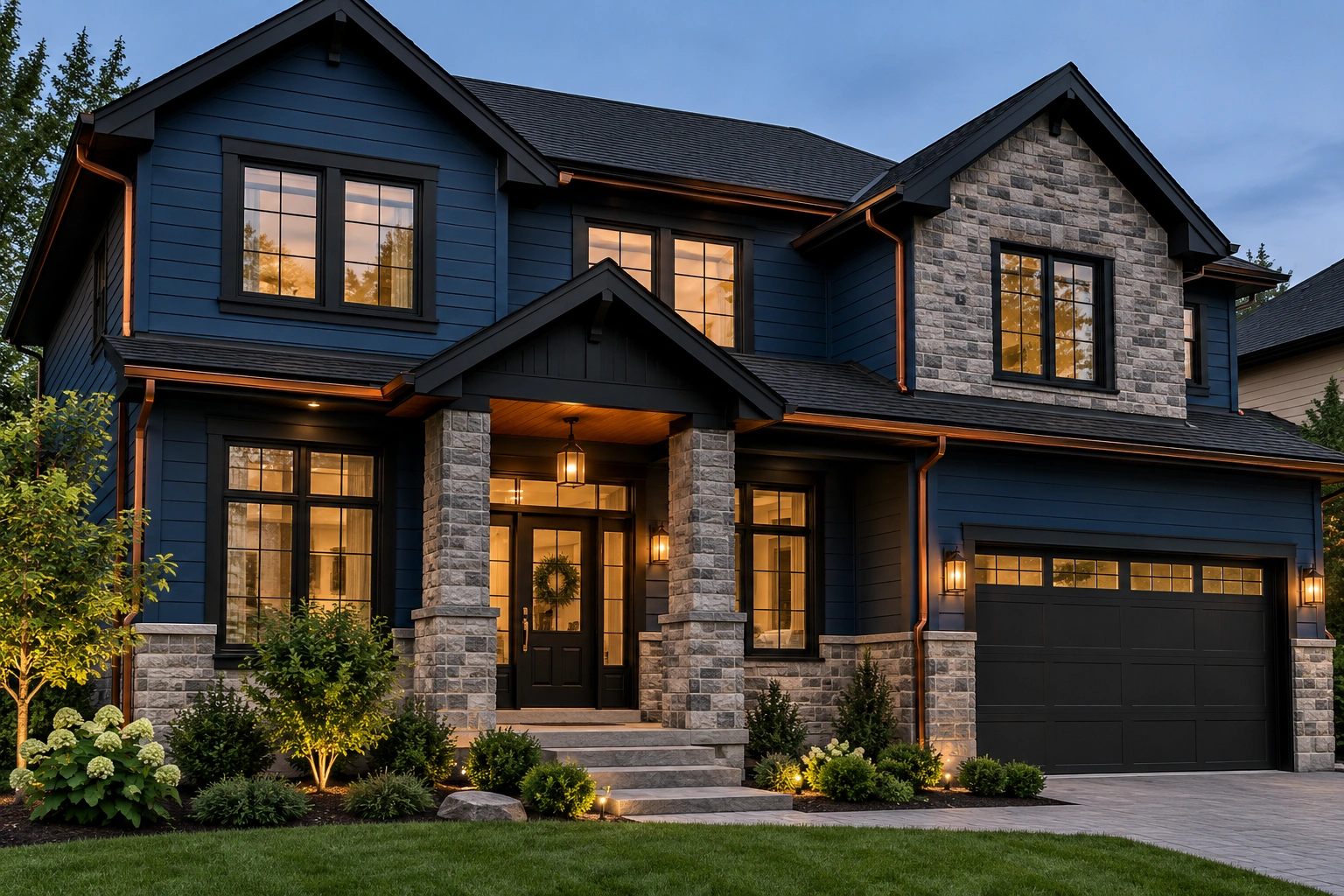
Gray stone can bridge the gap between navy siding and black architectural details.
This works particularly well when the stone contains several neutral tones rather than one strong competing color. Use the masonry as a fixed part of the palette and choose the blue around it, not the other way around.
15. Dark Blue and Black With Warm White Details
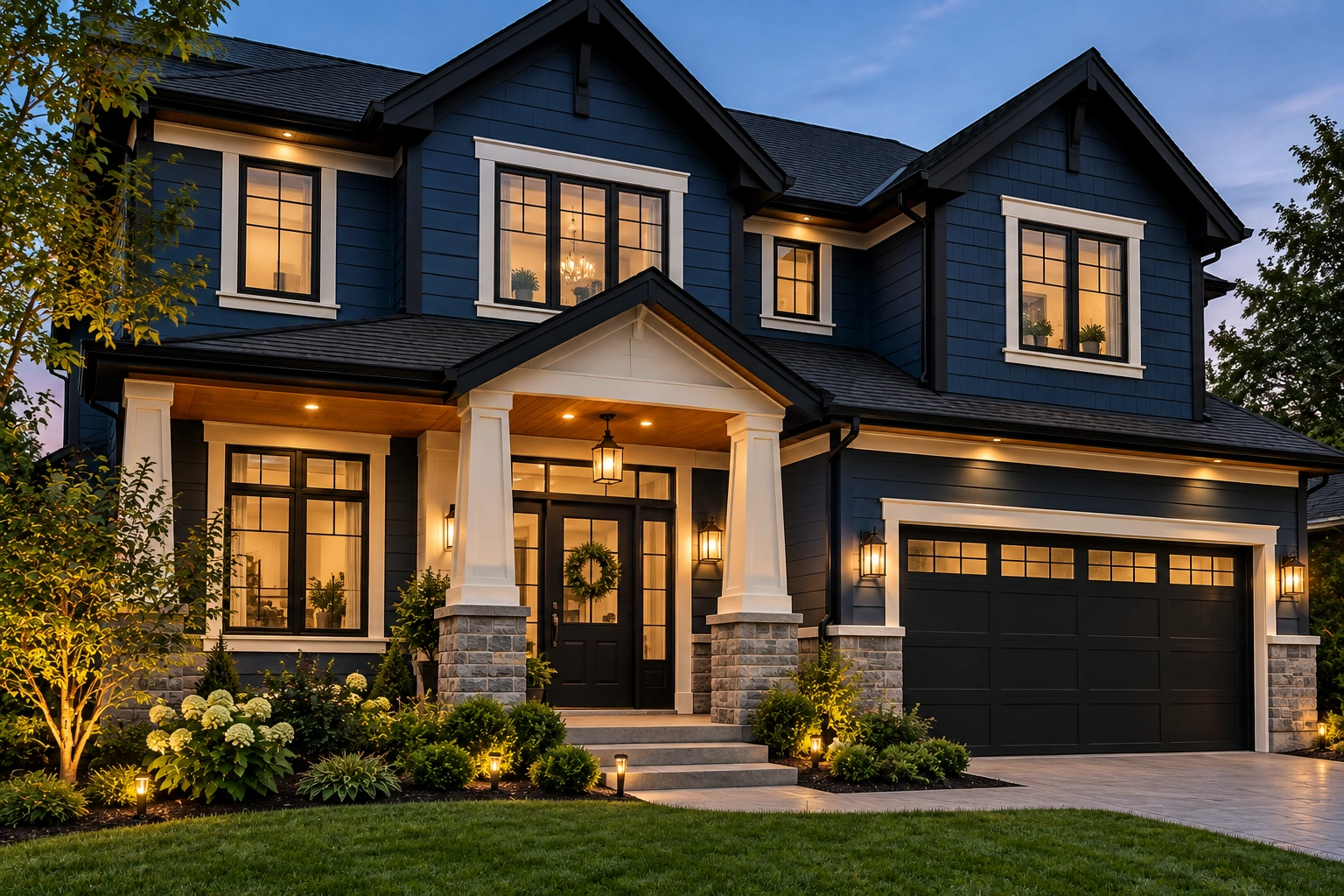
Not every surface has to follow the two-color scheme.
Warm white around selected windows, porch ceilings, columns, or entry details can create breathing room between navy siding and black accents. This approach is useful on houses with deeper porches or detailed façades where an all-dark treatment may hide too much architectural definition.
16. Dark Blue House With Black Trim and an Accent Front Door
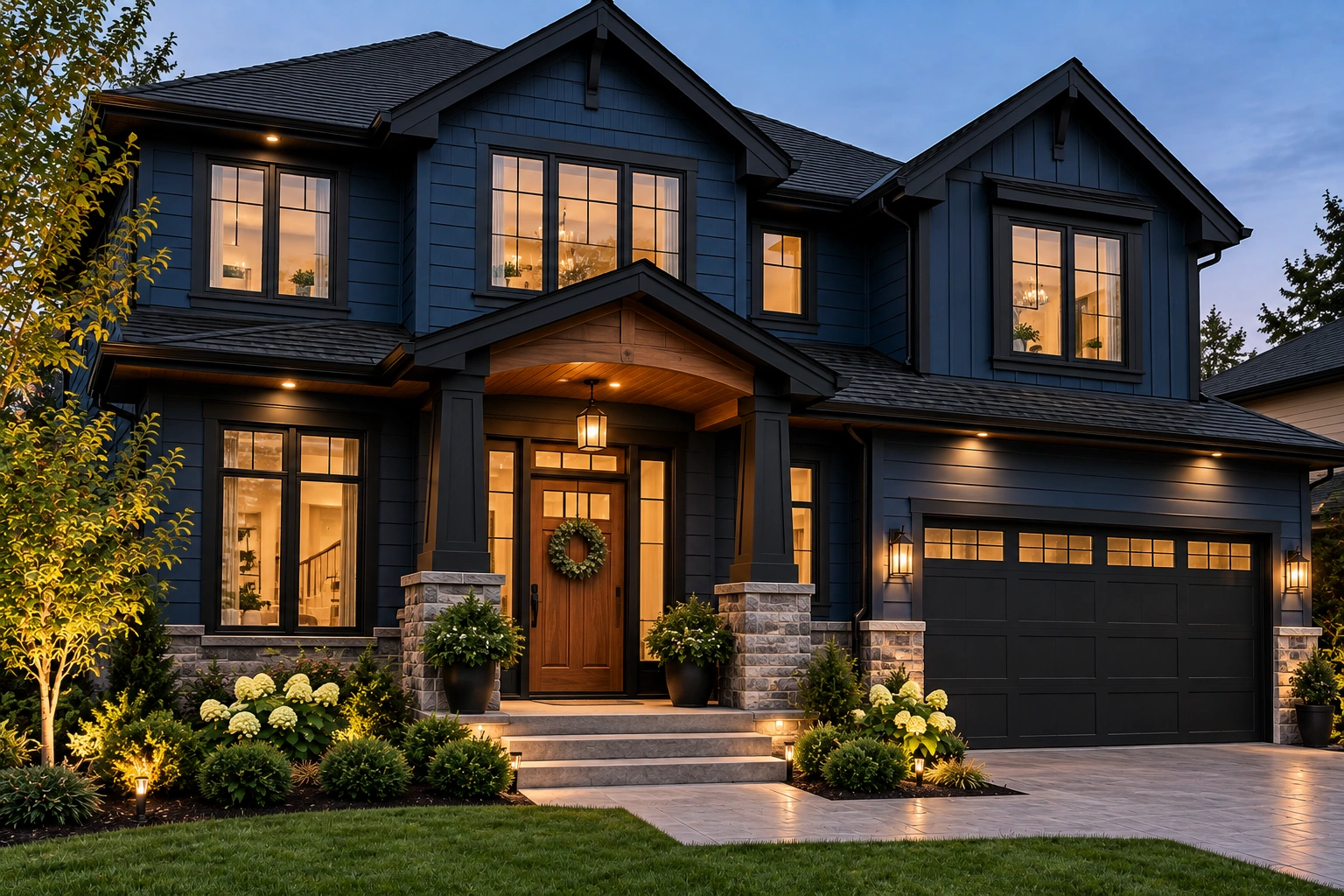
The front door is a logical place for controlled color.
Natural wood is an easy option, but muted brick red, burgundy, warm cream, or another restrained accent can also work depending on the roof and masonry. The goal isn’t to add a random third color; it’s to give the entrance enough presence against the darker background.
17. Dark Blue and Black Framed by Green Landscaping
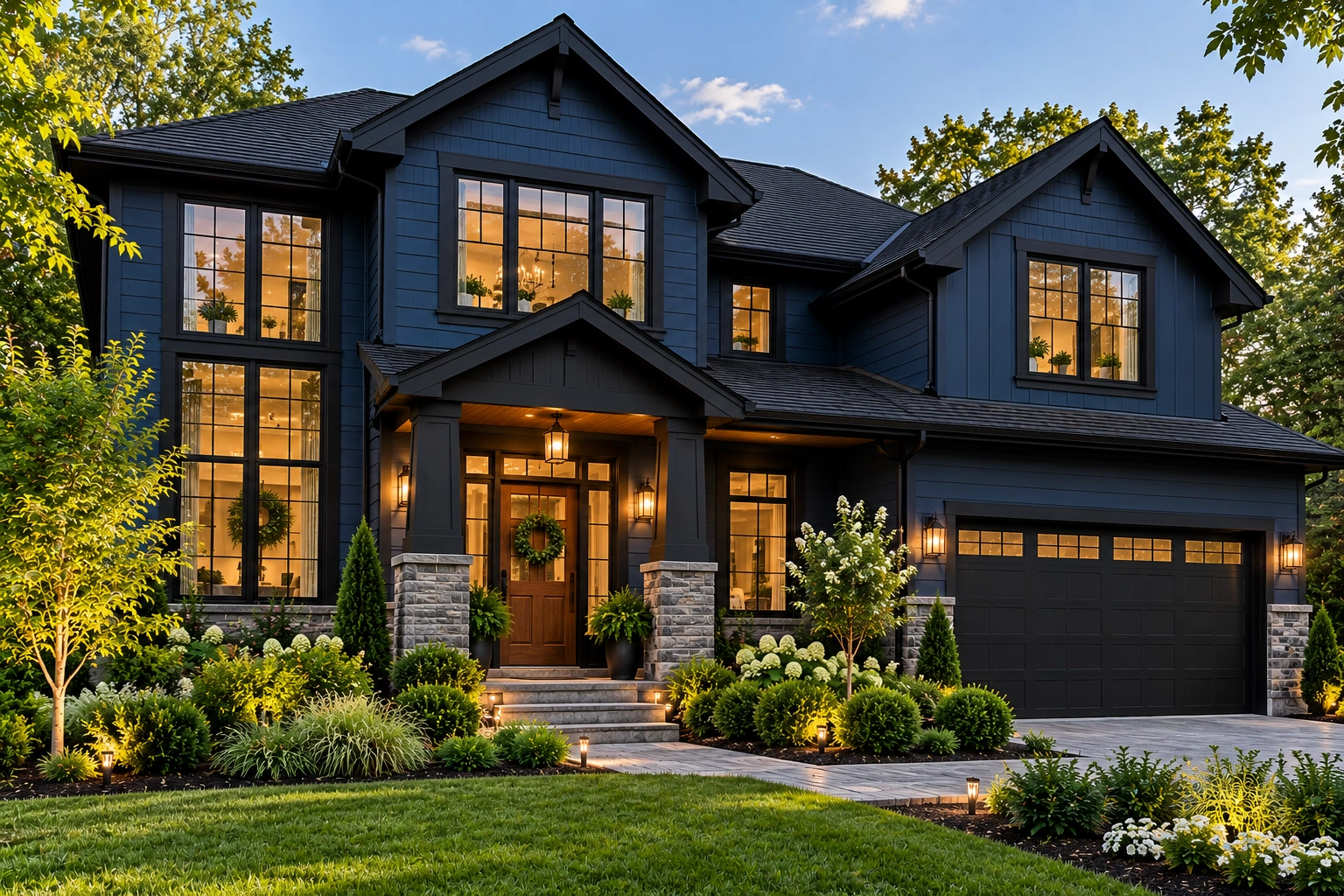
Landscaping matters more with dark exteriors because plants provide natural contrast across large wall surfaces.
Bright green shrubs, ornamental grasses, small trees, and lighter flowers can keep a navy-and-black façade from feeling flat. Even a simple dark exterior often feels more balanced once the surrounding landscape is considered as part of the palette.
How to Keep Dark Blue and Black From Looking Too Dark
The easiest way to keep a blue-and-black exterior balanced is to avoid making every major surface dark. Use black selectively, then introduce visual relief through natural wood, lighter masonry, white windows, warm metals, landscaping, or light-colored hardscape. The goal is contrast between materials and shapes, not simply between paint colors.
Add Warmth With Natural Wood
Wood is particularly useful because it changes both color and texture.
A cedar-toned door, porch beam, soffit, or column can interrupt large dark surfaces without making the house feel busy. One or two repeated wood elements usually look more deliberate than scattered wood accents in several different tones.
Use Light Stone, White, or Cream Selectively
Light accents don’t have to dominate the exterior.
A stone foundation, white window frames, cream entry surround, or pale porch ceiling may provide enough separation to let the dark blue and black remain the main story.
Let Landscaping and Exterior Lighting Add Contrast
During the day, greenery softens the edges of a dark façade. At night, well-placed entry and porch lighting can keep black doors, railings, and recesses from disappearing into the siding.
Think about the house in both daylight and evening conditions.
Choose the Right Dark Blue for Your House
Dark blue isn’t one single exterior color. Navy, slate, blue-gray, indigo, and midnight blue can behave very differently next to black.
The darker the siding becomes, the less visual separation you’ll usually see between the body color and black accents.
Navy for a Classic, Versatile Look
A recognizable navy gives black trim enough contrast to remain visible while still creating a deep exterior palette.
It can adapt to modern, farmhouse, Colonial, and Craftsman homes depending on the supporting materials.
Slate or Blue-Gray for Softer Contrast
Slate and blue-gray shades create clearer separation from black and often sit comfortably beside gray stone or charcoal roofing.
They’re worth considering when true navy feels too saturated or too dark for the architecture.
Midnight Blue for a More Monochromatic Exterior
Very deep blue can read almost black in shade or from a distance.
That makes it useful for minimalist homes where a low-contrast exterior is intentional, but it needs careful sampling. If the black trim disappears completely, consider a slightly lighter body color or use texture to create definition.
Where Should You Use Black on a Dark Blue Exterior?
Black works best when it reinforces important architectural lines rather than covering every piece of trim. Window frames, fascia, shutters, railings, garage doors, and hardware can all carry black, but they don’t need to appear together. Choose a few repeated elements so the exterior feels connected rather than uniformly dark.
Windows, Fascia, and Rooflines
Black windows can create a strong rhythm across the façade. Black fascia can connect those windows visually to a dark or charcoal roof.
On highly detailed houses, though, painting every roofline component black can make smaller features disappear. Preserve contrast where the architecture needs it.
Shutters, Railings, Garage Doors, and Hardware
Smaller black accents are easier to control.
A railing or shutter adds less visual weight than a full black garage door. Before choosing black for a large surface, step back and consider how much of the front elevation that element occupies.
What Accent Colors and Materials Work With Dark Blue and Black?
Warm wood, light or medium gray stone, warm white, brick, copper, bronze, and restrained natural tones can all support a dark blue-and-black exterior. The best accent is usually one that already relates to the home’s architecture or permanent materials rather than a color introduced only for decoration.
Natural Wood and Warm Metals
Wood doors, cedar beams, bronze fixtures, and copper-toned details can warm an otherwise cool palette.
Keep the finishes related. Too many different wood stains and metal colors can make the exterior feel less coordinated.
Stone, Brick, and Light Neutrals
Existing stone and brick should guide the palette rather than be treated as background.
Look closely at their undertones. A blue that works beside cool gray stone may not feel the same beside warm red or brown brick.
Front Door Colors That Fit the Palette
Natural wood is a reliable choice because it creates warmth without competing with the siding.
Black can work when the entry has enough surrounding contrast. A coordinated blue creates a quieter look, while muted warm colors can make the entrance more noticeable.
Can White Windows Work With Dark Blue Siding and Black Trim?
Yes. White windows can work well with dark blue siding and black trim when they are treated as an intentional third color. Instead of trying to hide them, use the white frames to provide light contrast and repeat black on selected outer trim, shutters, railings, roofline details, or hardware so the three colors feel connected.
This is especially useful for existing homes where good windows don’t need to be replaced simply to match an inspiration photo.
The key is repetition. One isolated white feature can look accidental; several consistent white window frames usually read as part of the architecture.
Match the Dark Blue and Black Palette to Your Home’s Architecture
The amount of black that works visually depends partly on the architecture.
Modern, Farmhouse, and Ranch Homes
Simple façades often tolerate stronger dark-on-dark treatment because they rely on proportion and large shapes rather than small decorative details.
Black windows, fascia, garage doors, and railings can work together, but you still need to consider which element dominates the front view.
Craftsman, Colonial, and Cottage Homes
More detailed homes often benefit from greater separation between features.
Rather than covering every bracket, casing, column, and trim board in black, choose the details you want to emphasize. Lighter trim, wood, stone, or existing white windows can preserve the layers that give these styles their character.
Coordinate the Roof, Stone, Brick, and Garage Door Before Choosing Paint
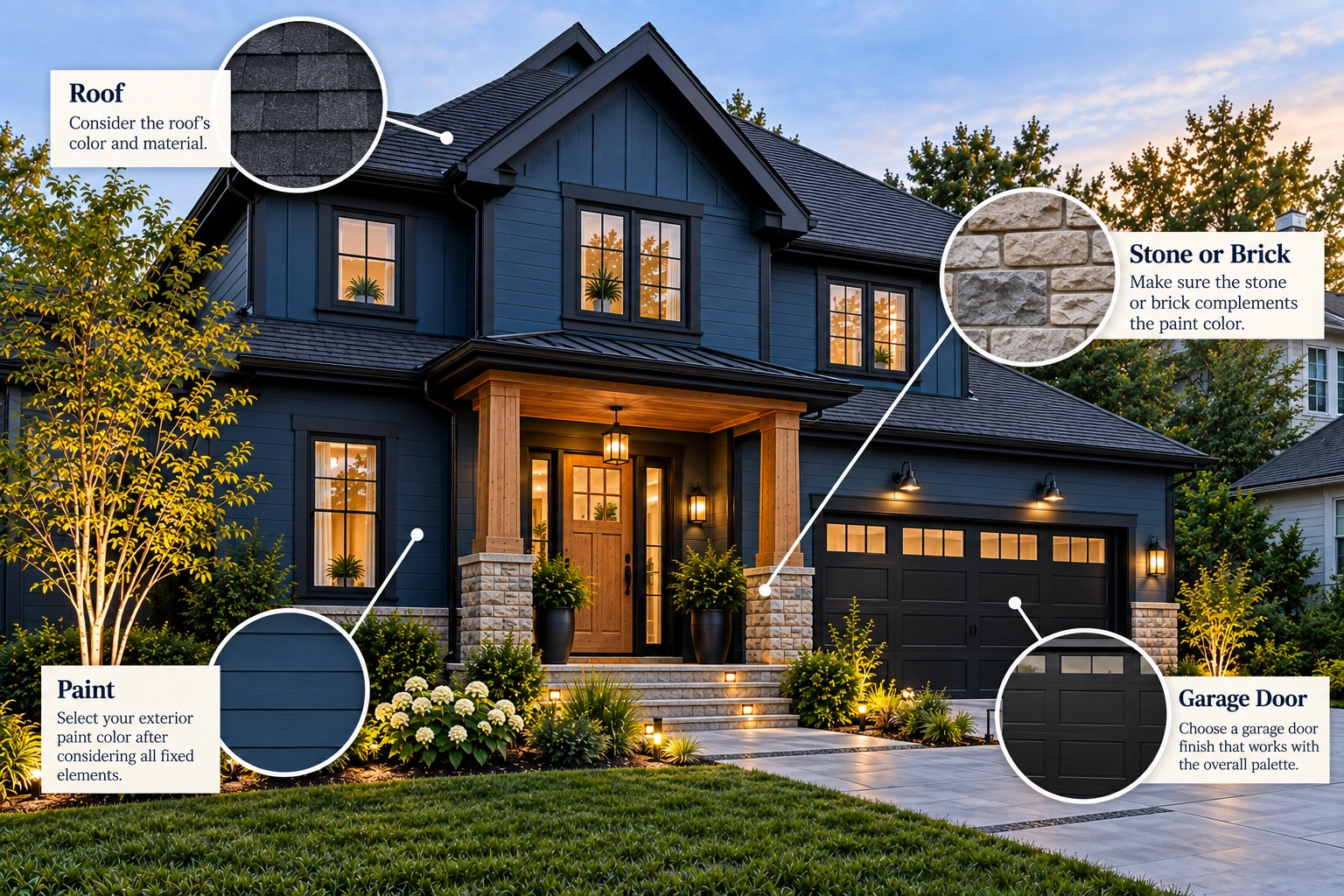
Permanent or expensive-to-change elements should come first in the color decision.
Start With the Roof Color and Undertone
A black or charcoal roof naturally supports the palette, but that’s not the only workable option.
Look at whether the existing roof leans cool gray, warm brown, red, or another direction. The siding should make sense beside it in real daylight.
Treat Brick and Stone as Part of the Palette
Brick and stone contain more color variation than they may seem to from a distance.
Place blue samples directly beside them. This makes undertone conflicts much easier to spot before an entire wall is painted.
Consider the Visual Weight of a Large Garage Door
A front-facing two-car garage door can occupy a major portion of the façade.
Painting it black may create a strong architectural block. That may suit a modern home, while another house may benefit from a garage door closer to the siding color so the entry remains the main focal point.
Test the Exterior Colors Before You Commit
Exterior colors should be judged on the house, not just on a phone screen or tiny color chip.
Check the Color in Sun, Shade, and Different Times of Day
A navy that feels balanced in bright afternoon light may appear much darker on a shaded north-facing wall.
Benjamin Moore recommends taking physical color samples outdoors and observing them throughout the day because shadows and sunlight change how an exterior color appears.
Compare Samples Against Existing Exterior Materials
Test the color near the roof, windows, brick, stone, porch flooring, and other materials that will remain.
Move the sample to more than one side of the house where practical. Exterior lighting conditions can vary significantly from one elevation to another.
A Practical Note About Painting Existing Vinyl Siding Dark Blue
Painting existing vinyl siding a substantially darker color isn’t only a styling decision.
Dark coatings can absorb more solar heat, and some vinyl siding can warp or buckle when repainted darker than its original color. Sherwin-Williams advises checking the siding manufacturer’s guidance and using coatings or color systems specifically intended for vinyl when appropriate.
That means a dark blue exterior that works easily on fiber-cement siding or painted wood may require additional product checks on vinyl.
If the siding is damaged, distorted, or its warranty requirements are unclear, confirm the appropriate approach before painting.
Common Mistakes to Avoid With Dark Blue Siding and Black Trim
Using Black on Every Exterior Detail
Black is most effective when it has a job.
Using it on windows, fascia, shutters, garage doors, railings, gutters, columns, and every piece of trim at once can remove the contrast that made the idea appealing in the first place.
Ignoring the Roof, Windows, Brick, or Stone
Paint is usually easier to change than roofing, masonry, or windows.
Build the new palette around the expensive fixed elements unless those materials are already scheduled for replacement.
Choosing the Color From a Screen or Tiny Sample
Digital visualizers are useful for narrowing choices, but they can’t reproduce your home’s exact daylight, reflections, landscaping, or surrounding materials.
Move from the screen to physical samples before committing.
Picking a Blue That Is Too Close to the Black Trim
A very deep blue isn’t automatically wrong, but it creates a different effect.
If you want the black trim to visibly outline windows and rooflines, choose enough value contrast for those details to remain readable from the street.
Small Details That Make a Dark Blue and Black Exterior Feel Finished
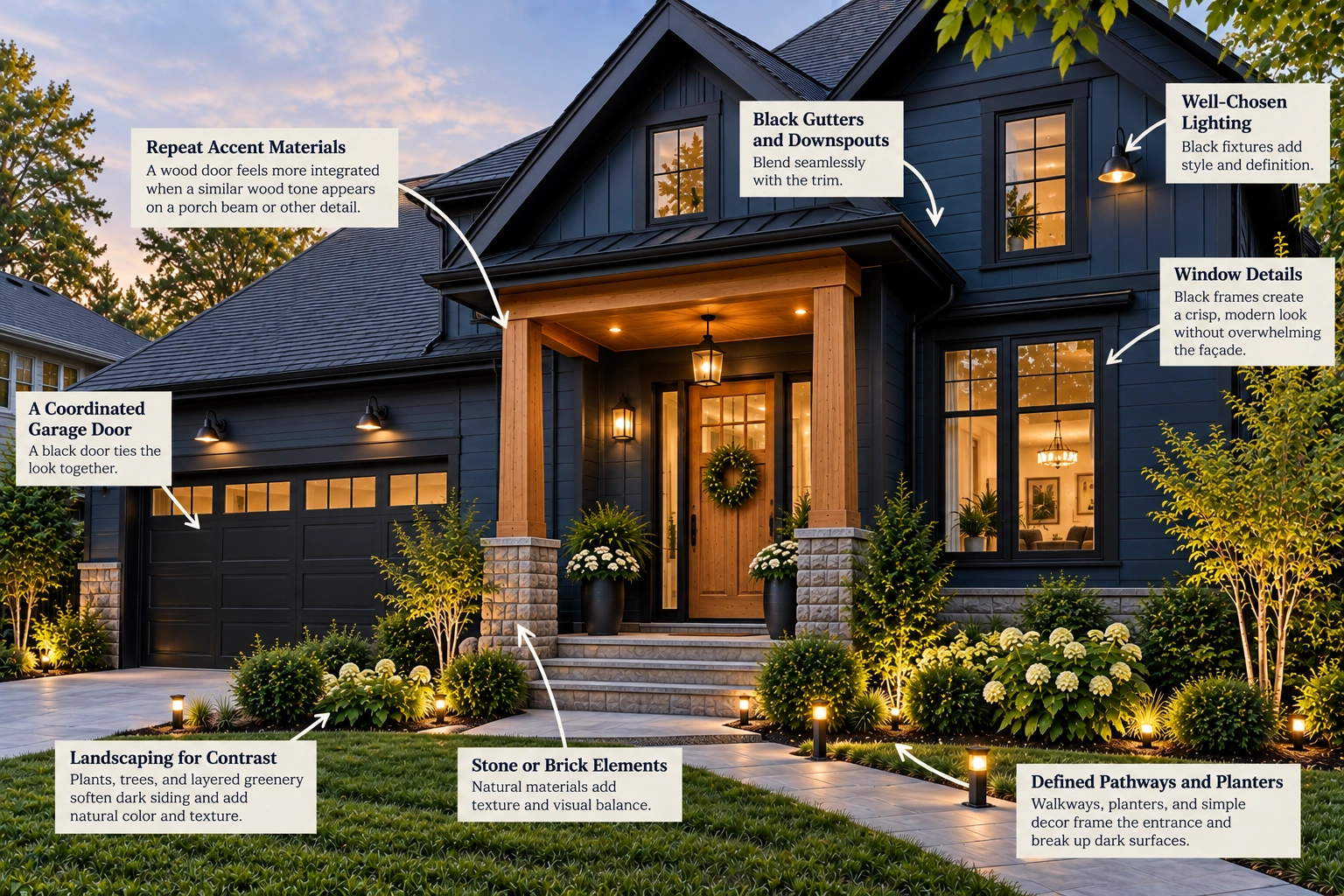
The final layer isn’t another paint color. It’s usually repetition and restraint.
Repeat Accent Materials Instead of Adding More Colors
A wood door feels more integrated when a similar wood tone appears on a porch beam or small architectural detail.
The same principle applies to black. Repeating it on a few related features creates cohesion without making every surface identical.
Use Lighting and Landscaping to Break Up Dark Surfaces
Dark walls provide a strong backdrop for plants, pathways, planters, and exterior lighting.
Use these elements to frame the entrance, soften large areas of siding, and create contrast where the architecture itself doesn’t provide much.
Frequently Asked Questions
What color trim goes with a dark blue house?
Black creates a bold, lower-contrast look, while white or warm white provides much stronger separation. Soft gray, wood tones, and other restrained neutrals can also work. The right choice depends on the roof, windows, masonry, architectural style, and how much definition you want around the home’s details.
Does black trim look good with dark blue siding?
Yes, black trim can look cohesive with dark blue siding, particularly when it emphasizes windows, rooflines, shutters, or other repeated features. The combination works best when the façade also has enough variation through wood, masonry, lighter windows, landscaping, or another material to prevent the exterior from feeling visually flat.
Should exterior trim be lighter or darker than siding?
Neither is automatically better. Lighter trim creates stronger separation and tends to highlight architectural details. Darker trim produces a more unified, contemporary appearance. On detailed homes, stronger contrast may preserve features more clearly; simple architecture can often carry a darker, more monochromatic treatment.
What front door color works with a dark blue house and black trim?
Natural wood is a strong choice because it adds warmth against the cool dark palette. Black or matching blue can create a quieter, more cohesive entrance, while muted warm colors such as brick red or burgundy can add controlled contrast when they coordinate with the roof and masonry.
What roof color works with a dark blue house?
Black and charcoal are common pairings, but the existing roof’s undertone matters more than following one formula. Gray, brown, or mixed-color roofing may also work if the blue siding relates well to those tones. Compare exterior samples directly against the actual roof before choosing the final color.
How do you keep a dark exterior from looking too dark?
Limit the largest dark surfaces and create relief with natural wood, light stone, white windows, warm neutrals, landscaping, exterior lighting, or lighter hardscape. You don’t need all of these at once. One or two consistently repeated balancing elements are often enough to keep a dark blue-and-black exterior from feeling heavy.
Final Thoughts
A successful dark blue house with black trim isn’t simply a matter of choosing two dark paint colors. The result depends on where the black appears, how much contrast the blue provides, and how both colors relate to the roof, windows, masonry, architecture, and surroundings.
Use the 17 ideas as starting points rather than fixed formulas. Once the permanent features of the house are accounted for and the colors are tested in real daylight, it’s much easier to create a bold exterior that still feels balanced and intentional.
Disclaimer
Topmodrenhouse content is provided for general informational purposes only. Individual homes, preferences, budgets, materials, and circumstances vary. For safety, installation, repair, legal, structural, electrical, plumbing, HVAC, or major property decisions, consult a qualified professional when appropriate.