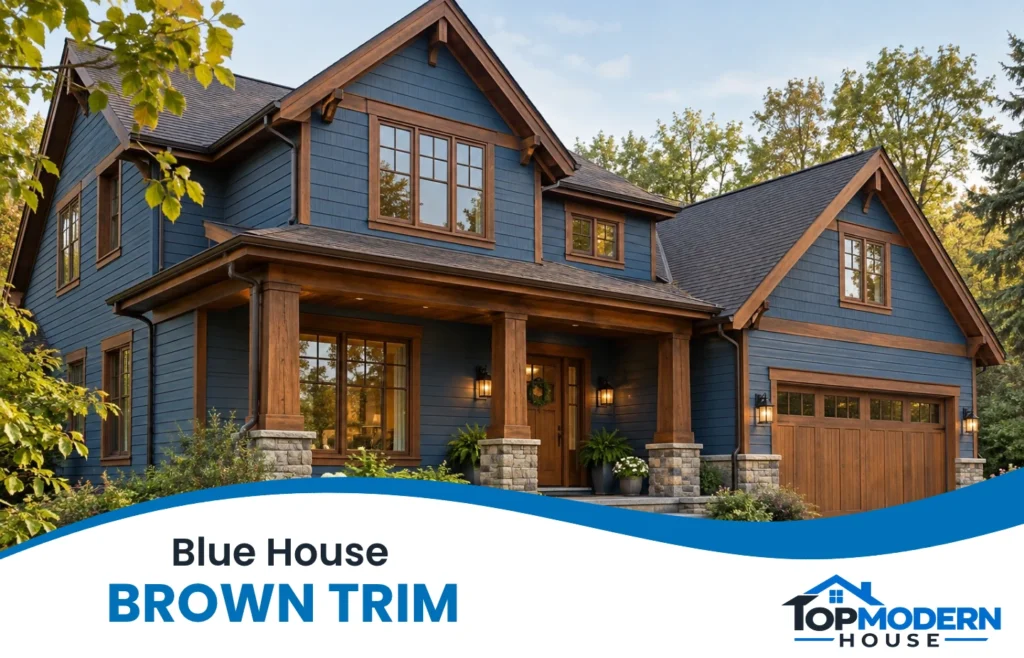
A blue house with brown trim can feel calm, grounded, and welcoming, but the result depends heavily on the shades and where the brown appears. Deep navy beside dark chocolate trim creates a very different exterior from soft blue siding paired with warm cedar or weathered wood.
The strongest combinations treat the entire exterior as one palette. Roof shingles, stone, brick, windows, garage doors, porch details, and landscaping all influence how the blue and brown read from the street.
The ideas below show several ways to use the combination without making the house feel overly dark, busy, or dated.
Short Definition
A blue house with brown trim combines cool blue siding with warm painted or natural wood accents, helping homeowners create contrast, soften darker exteriors, and coordinate doors, roofs, stone, and architectural details.
Topmodrenhouse Mission Statement
Topmodrenhouse helps homeowners, renters, and home lovers make practical, stylish, comfortable, and well-informed choices for the spaces they live in.
Quick Exterior Color Checklist
- Start with fixed elements such as the roof, stone, brick, and window frames.
- Choose a blue depth that suits the home’s size, style, and surroundings.
- Decide whether the brown will come from paint, stain, or natural wood.
- Use dark brown selectively if the siding is already navy or deep blue.
- Check whether white, cream, black, or stone is needed for visual separation.
- Compare large color samples outdoors in both sun and shade before committing.
12 Blue House With Brown Trim Ideas
1. Navy Blue With Warm Cedar Trim

Deep navy siding and cedar-toned wood create a strong cool-and-warm contrast without requiring a bright accent color.
Cedar works especially well on porch posts, gable details, entry surrounds, or selected siding panels because the visible grain gives the brown more depth than flat paint. Keeping some areas neutral can prevent both colors from becoming visually heavy.
This approach suits Craftsman, modern rustic, and contemporary homes particularly well.
2. Light Blue With Dark Brown Window and Porch Trim

A light blue house with brown trim offers more contrast than a navy-and-brown scheme. Dark window casings, porch rails, or beams can give a pale exterior clearer architectural definition.
The key is restraint. Dark brown around every edge can overpower soft blue siding, especially on a small façade. Concentrating the brown around windows, doors, and major porch elements usually creates a cleaner result.
3. Slate Blue With Walnut-Toned Wood Accents

Slate blue is useful when bright or coastal-looking blue feels too strong. Its muted character pairs naturally with medium walnut-colored wood.
Try the brown on shutters, porch columns, a front door, or selected gable details. Gray stone can also work well nearby because it connects with the cooler side of slate blue without competing with the warmer wood.
The result tends to feel more subdued than a high-contrast navy exterior.
4. Deep Blue With Brown Porch Posts and Beams
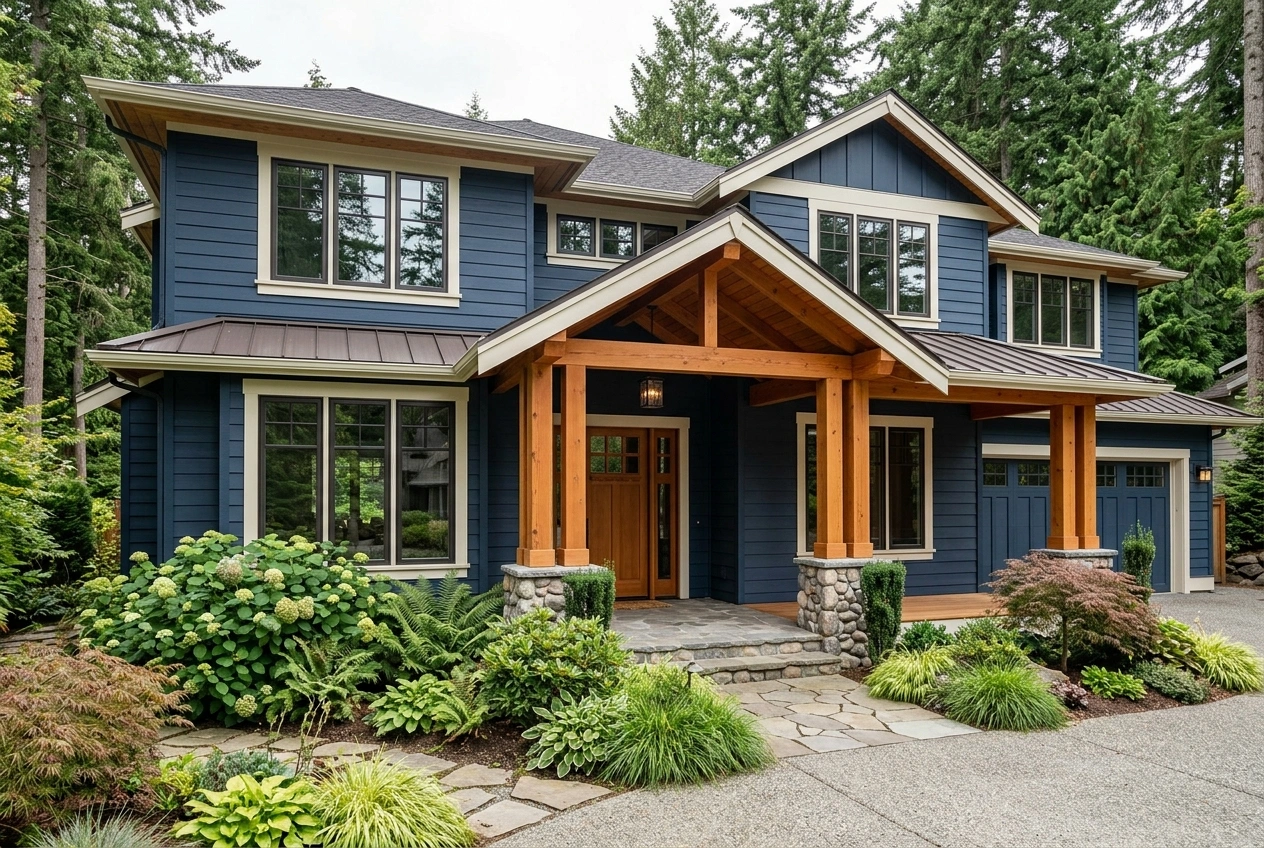
Brown doesn’t need to outline the entire house.On a porch, stained posts and exposed beams can introduce enough warmth to balance deep blue siding while leaving window trim, fascia, or soffits in a lighter neutral.
This is a practical choice for homeowners who like blue and natural wood but worry that full brown trim will make the exterior too dark.
5. Blue Siding With a Natural Wood Garage Door

A garage door often occupies a large part of the front elevation, so its finish has a major effect on the overall palette.
Pairing medium or dark blue siding with a natural wood garage door can make the brown feel intentional even when relatively little brown appears elsewhere. Repeating a similar wood tone on the front door or a few porch details can help the garage feel connected to the rest of the house.
Avoid adding several unrelated wood tones, which can make the exterior look pieced together.
6. Blue With Brown Trim and a Brown Roof

An existing brown roof can become part of the design rather than something the siding has to fight against.
Blue siding provides a cooler contrast, while smaller brown accents can visually connect the body of the house with the roof. The trim does not need to match the shingles exactly. In fact, slight variation often looks more natural than attempting a precise color match.
For a roof with noticeable warm or reddish undertones, compare blue samples beside it before committing.
7. Blue With Brown Trim and a Charcoal Roof

Brown trim can still work when the roof is gray or charcoal.Here, the roof acts as a neutral upper layer, the blue forms the main body color, and brown adds warmth around doors, porches, shutters, or other architectural details.
This combination is useful when you want brown to feel like an accent rather than the dominant secondary color.
8. Navy Blue, Brown, and Warm White
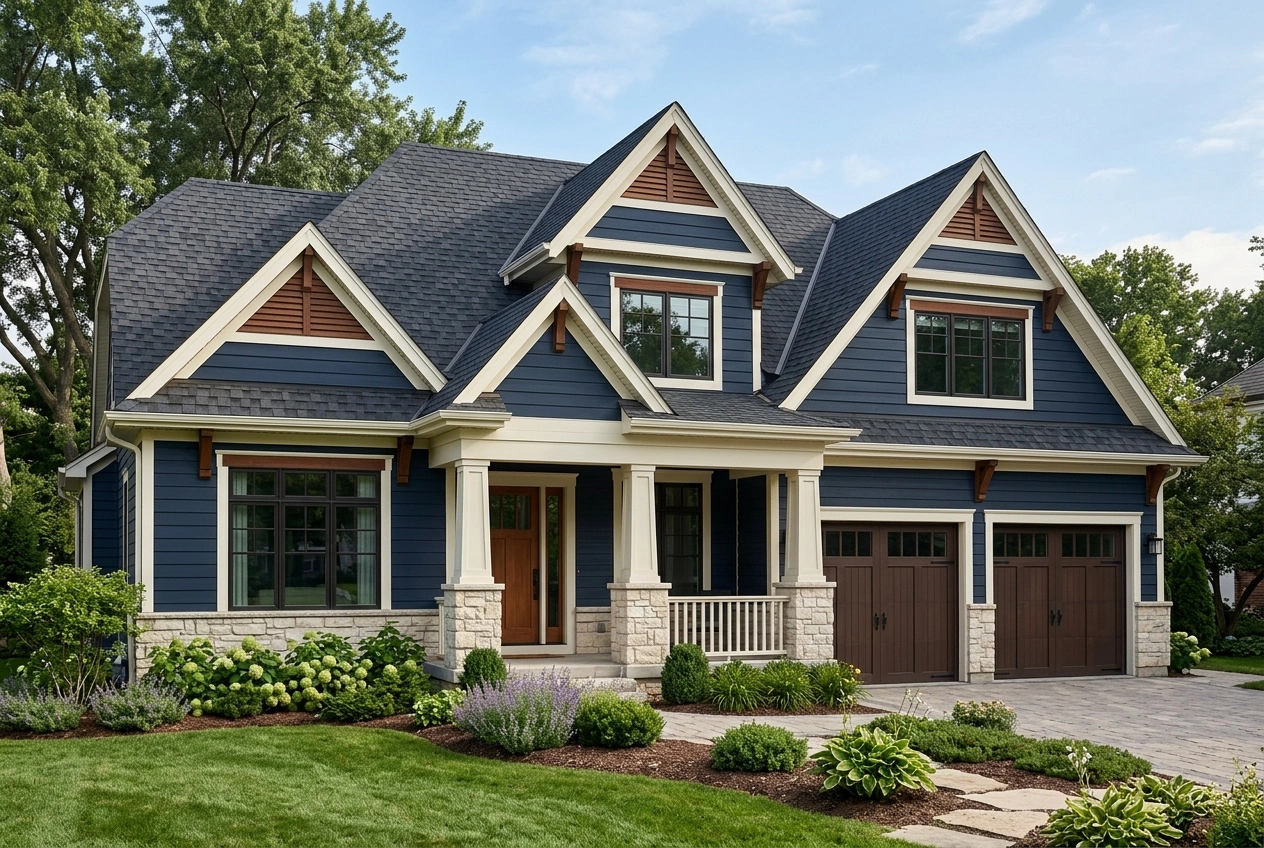
Navy and dark brown together can lose definition from a distance because both colors carry considerable visual weight.
Warm white or soft cream can provide separation around selected windows, porch columns, fascia, or entry details. The lighter color gives the eye somewhere to rest without replacing the brown as the main warm accent.
Use the light color selectively. Too much white can shift the house toward a conventional blue-and-white palette and make the brown feel incidental.
9. Blue With Brown Shutters and a Wood Front Door

Shutters and the front door are natural places to introduce brown without committing to brown trim across the entire façade.
On medium or muted blue siding, dark brown shutters can add definition while a wood door creates a warmer focal point at the entrance.
Make sure decorative shutters suit the scale and style of the windows. An exterior generally looks more convincing when details feel connected to the architecture rather than added only for color.
10. Blue Board-and-Batten With Selective Wood Accents

Vertical board-and-batten siding already creates strong visual lines, so brown does not need to appear everywhere.
A wood front door, porch ceiling, support posts, or small gable feature may be enough to soften a medium or dark blue façade. This limited approach works especially well on modern farmhouse and contemporary exteriors where clean surfaces are part of the appeal.
Keeping the number of accent materials low also helps the architecture remain the focus.
11. Blue With Brown Trim and Stone Details

Stone can bridge blue siding and brown accents when it contains a mixture of gray, beige, tan, or earthy tones.
For example, slate blue siding, medium brown wood, and gray-beige stone can feel more connected than blue and brown used alone. The stone adds another texture without necessarily introducing another obvious paint color.
Before choosing the blue, look at the dominant tones in the stone from several feet away. Small individual stone colors matter less than the overall effect.
12. Muted Blue With Weathered Brown Accents
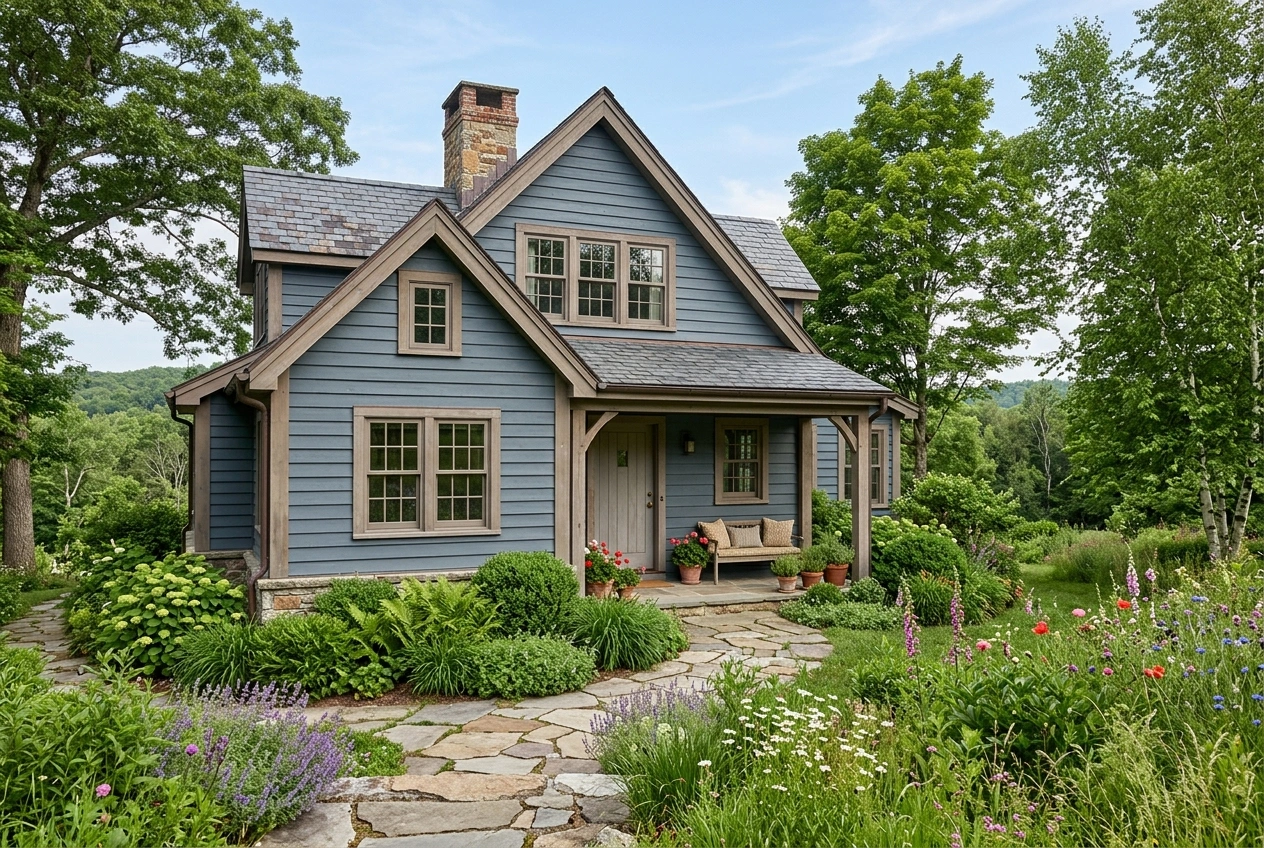
Not every brown needs to be deep or richly stained.Weathered wood, taupe-brown, and softer brown-gray finishes can pair well with muted blue siding for a quieter exterior. This combination is especially useful on cottages, ranch homes, and houses surrounded by mature landscaping where very dark trim might feel unnecessarily sharp.
The lower contrast also makes the color scheme feel less dependent on bold architectural detailing.
How to Choose the Right Brown for Blue Siding
The right brown depends on both the depth of the blue and the materials already on the house. A useful starting point is to decide how much contrast you want.
Warm Brown vs. Muted or Gray-Brown
Warm browns such as cedar, chestnut, and walnut-like tones create a clearer temperature contrast against cool blue siding. They work well when you want wood elements to stand out.
Muted brown or gray-brown tones create a quieter transition. These are worth considering when the house already has gray stone, charcoal roofing, or other cool neutral materials.
Undertones matter more than the label on a paint chip. Two colors called “navy” and “brown” can still clash if one pulls strongly purple or green while the other leans heavily red or orange.
Light Natural Wood vs. Dark Brown Trim
Lighter wood gives dark blue siding more separation and makes grain easier to notice from a distance. Dark brown creates a heavier, more architectural effect.
With light blue siding, the opposite is often true: dark brown creates crisp definition, while pale wood produces a softer transition.
Neither approach is automatically better. The choice should depend on the amount of contrast the façade needs.
Painted Brown Trim or Natural Wood?
Painted brown trim gives you more control over the exact color and produces a clean, uniform finish. It can work well on window surrounds, shutters, fascia, and other details where a consistent appearance matters.
Natural or stained wood contributes color and texture at the same time. Grain, knots, and natural variation make it read differently from solid brown paint, even when the overall tone is similar.
Wood also changes with exposure and age, and maintenance needs depend on the species, finish, and local conditions. That makes it worth thinking beyond the initial color when deciding where natural wood belongs.
How Much Brown Should You Use Without Making the House Too Dark?
The darker the blue, the more carefully brown should be distributed. Navy siding surrounded by dark brown windows, fascia, shutters, doors, and garage doors can cause architectural details to blend together.
Use Brown as a Small Accent
A wood front door, shutters, or a few gable details can be enough to warm up an otherwise cool blue exterior.
This works well when the house already has another strong material, such as stone or brick.
Use Brown to Highlight Architectural Details
Porch beams, columns, brackets, and entry surrounds are good candidates when you want the brown to emphasize the structure of the house.
Repeated in two or three intentional places, the color feels connected without taking over the façade.
Use Brown as a Larger Material Feature
A large wood garage door or section of wood cladding can act as the main brown element.
When brown occupies this much visual space, other trim can usually remain blue, cream, white, charcoal, or another restrained neutral instead of repeating brown everywhere.
Coordinate the Blue and Brown With the Roof and Existing Materials
The roof, stone, brick, window frames, and hardscape are part of the exterior palette whether you plan to change them or not. Start with those fixed elements before finalizing the siding and trim.
Working With a Brown Roof
A brown roof does not require matching brown trim. Look instead for a compatible relationship between the roof, trim, and blue siding.
Using a slightly different brown on wood or painted accents can create dimension while still keeping the palette connected.
Working With a Gray or Charcoal Roof
Gray and charcoal roofing can give blue siding a cooler foundation. Brown accents then add warmth lower on the façade.
This three-part combination often works best when the brown is repeated deliberately rather than scattered across unrelated details.
Coordinating Stone, Brick, and Window Colors
Stone and brick can contain several undertones at once. Step back and identify the color that dominates visually rather than trying to match every individual variation.
Window frames matter too. Black, white, bronze, and brown windows can each change how surrounding trim should be handled.
Should You Add White, Cream, Black, or Stone?
A third color or material can help, but it should have a job.
White or Cream for a Lighter Break
White or warm cream can separate dark blue from dark brown and make porch or window details easier to read.
Cream usually creates a softer transition, while bright white produces stronger contrast.
Black for Controlled Contrast
Black can work on light fixtures, railings, window frames, or small hardware details. With navy and dark brown already present, however, use it sparingly so the exterior doesn’t become unnecessarily dark.
Stone for Natural Texture
Stone provides variation without relying entirely on paint. Gray stone can reinforce blue tones, while beige or brown stone can connect more directly with wood accents.
The existing stone should guide the palette rather than being treated as an afterthought.
How to Keep a Blue and Brown Exterior From Looking Dated
Blue and brown are not automatically modern or dated. The effect depends more on proportion, materials, and architectural fit than on the two color names themselves.
Keep the palette controlled. Natural wood used on a porch, entry, or garage door usually feels more intentional than placing heavy dark brown around every available edge.
Let the architecture guide the placement. A Craftsman home may comfortably carry visible wood posts and brackets, while a simpler contemporary façade may look cleaner with brown limited to one or two large features.
Avoid adding extra accent colors simply because individual elements feel unfinished. A tighter palette usually creates a more coherent exterior.
Common Blue and Brown Exterior Mistakes to Avoid
Choosing Blue and Brown Without Checking Their Undertones
A cool gray-blue and an orange-heavy brown may create more contrast than expected. Compare the actual samples together rather than choosing each color independently.
Making Every Exterior Detail Dark Brown
Brown loses its impact when it appears on every window, gutter, fascia board, door, shutter, and porch detail.
Choose the architectural elements you want to emphasize and let some supporting surfaces stay quieter.
Trying to Match the Roof Too Exactly
A brown roof and brown trim can coordinate without being identical. Slight differences in depth and texture often make the exterior look more natural.
Ignoring Stone, Brick, Windows, and Other Fixed Colors
A blue house brown trim combination that works well in an inspiration photo may look completely different beside your own stonework, roof, windows, or driveway.
Treat those permanent elements as part of the decision from the beginning.
Test the Colors on Your House Before You Commit
Exterior paint can look noticeably different outside than it does on a phone screen or small sample card. Test potential blue and brown combinations directly against the house whenever possible.
View Samples in Sun and Shade
Look at the colors at different points during the day. Direct sunlight may make the blue appear lighter, while shade can deepen both blue and brown.
Testing larger samples also makes undertone differences easier to notice.
Judge the Colors Beside the Roof and Masonry
Place samples where you can see them with the roof, brick, stone, windows, and other surfaces that will remain.
This is more useful than judging a blue sample against a blank wall because the finished house will never be viewed in isolation.
FAQs
What color front door goes with a blue house and brown trim?
A natural wood door is one of the easiest options because it reinforces the brown without introducing another major color. A coordinated brown, warm cream, muted red, or other restrained accent can also work depending on the roof, masonry, and architectural style.
The door should feel connected to the complete exterior palette rather than selected as a separate statement.
Should brown trim match a brown roof?
No. Brown trim and a brown roof can coordinate without matching exactly. Focus on compatible undertones and overall balance instead.
A slightly lighter or warmer wood accent can actually prevent the exterior from becoming flat when the roof is already dark brown.
Can you use white with blue siding and brown trim?
Yes. White or cream can provide visual separation, particularly when both the siding and brown accents are dark.
Use it on selected features such as window frames, porch columns, fascia, or entry details rather than automatically applying it to every trim surface.
What color should the gutters, fascia, and soffits be?
These elements can match the roof, siding, trim, or a quieter neutral depending on how visible they are.
On a dark blue and brown exterior, keeping gutters and soffits visually restrained often works better than creating another strong outline around the roof. Consider how the whole roof edge reads from the street before deciding.
Can blue siding and brown trim work on a modern house?
Yes. The combination can suit modern architecture when the brown is used in clean, deliberate areas such as a wood entry, garage door, vertical cladding section, or structural porch feature.
Simpler material transitions and fewer small brown details generally create a cleaner modern appearance.
Bringing the Blue and Brown Exterior Together
A successful blue-and-brown exterior isn’t about finding one supposedly ideal shade of each color. It’s about building a palette around the house you already have.
Start with the roof, masonry, windows, and other fixed materials. Then decide how light or dark the blue should be, whether the brown should come from paint or natural wood, and how much of it the architecture actually needs.
Once those pieces work together, blue siding and brown trim can create an exterior that feels warm, balanced, and deliberately designed rather than simply color-matched.
Disclaimer
This content is for general informational purposes only. Every home, budget, preference, and situation is different. For safety-sensitive work, major repairs, installations, structural changes, legal matters, or electrical, plumbing, HVAC, and roofing decisions, consult an appropriately qualified professional.