
A dark olive green house with black trim can look grounded, modern, and closely connected to the landscape, but the combination needs some restraint. Both colors carry visual weight, so simply painting the siding olive and every other surface black can leave the exterior looking flatter and heavier than expected.
The strongest versions of this palette use black selectively, then bring in wood, stone, lighter hardscaping, warm lighting, or existing architectural materials to create separation. The ideas below show different ways to build that balance while working with the roof, windows, garage, masonry, and other parts of a real home.
Short Definition
A dark olive green house with black trim uses an earthy green exterior with dark architectural accents to create contrast, define features, and build a balanced, nature-inspired exterior color scheme.
Topmodrenhouse Mission Statement
Topmodrenhouse helps homeowners, renters, and home lovers make practical, stylish, and informed choices that create more comfortable and functional living spaces.
Quick Exterior Planning Checklist
- Compare olive samples with the existing roof, brick, and stone.
- Decide which features should stand out in black.
- Test true black against softer charcoal options.
- Check large paint samples in sun and shade.
- Consider how white or black window frames affect the palette.
- Use wood, stone, or lighter hardscaping to break up dark surfaces.
- Decide whether the garage door should stand out or visually recede.
- Confirm dark paint compatibility with the existing siding material.
17 Dark Olive Green House With Black Trim Ideas
1. Dark Olive Green With Matte Black Window Frames
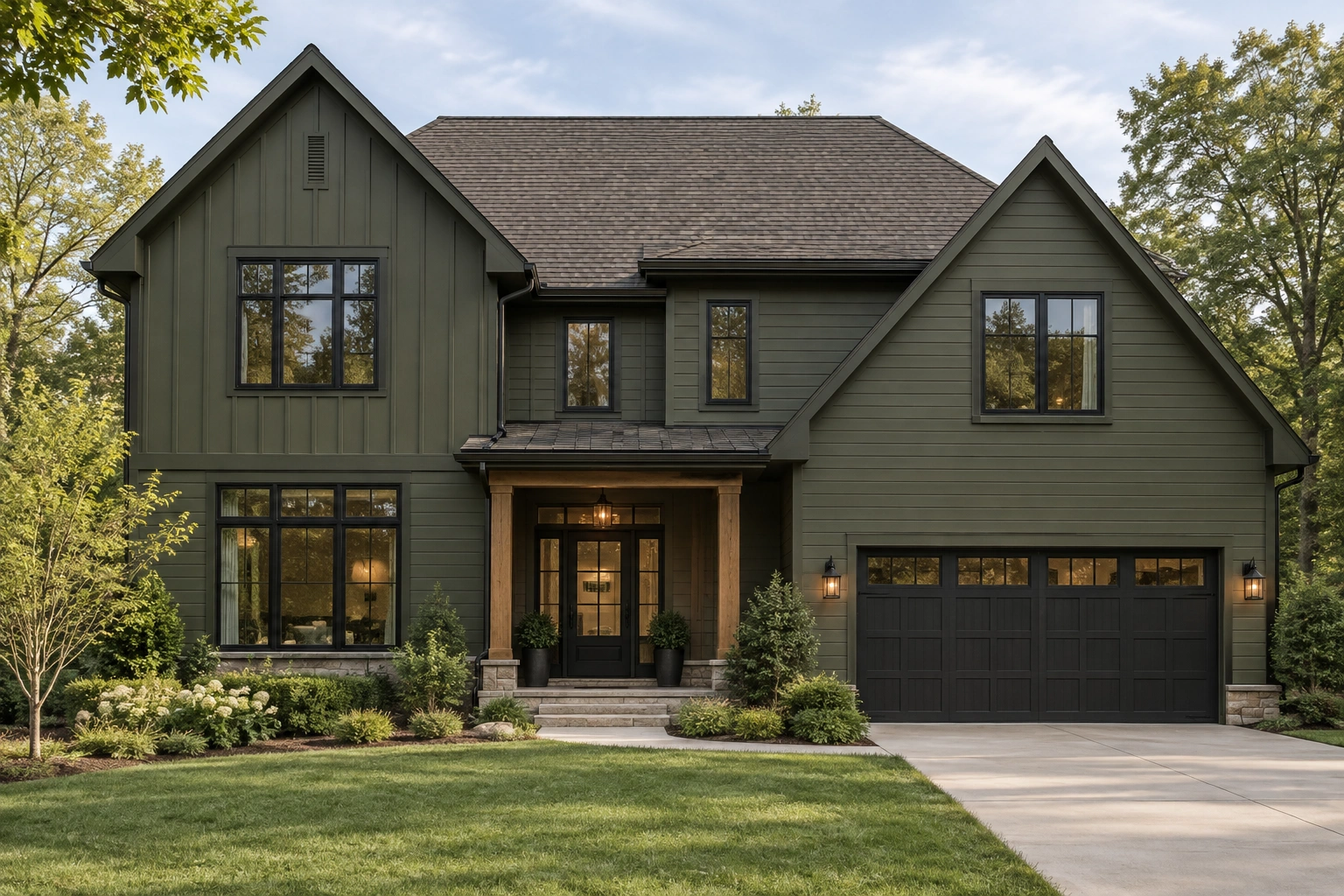
Black window frames give olive siding a clean edge without requiring black across the entire facade. This approach works particularly well on homes with simple window layouts because each opening becomes a deliberate architectural feature.
Keep surrounding trim relatively narrow if you want the windows to stand out without making the elevation feel outlined in black.
2. Olive Green With Black Trim and a Natural Wood Front Door

A wood front door is one of the easiest ways to soften a dark green-and-black exterior. Medium and warm wood tones create a visual bridge between earthy olive siding and sharper black accents.
This combination is especially useful when black is already present on the windows, lighting, or roofline and the entry needs some warmth.
3. Dark Olive Green With Black Trim and Light Stone
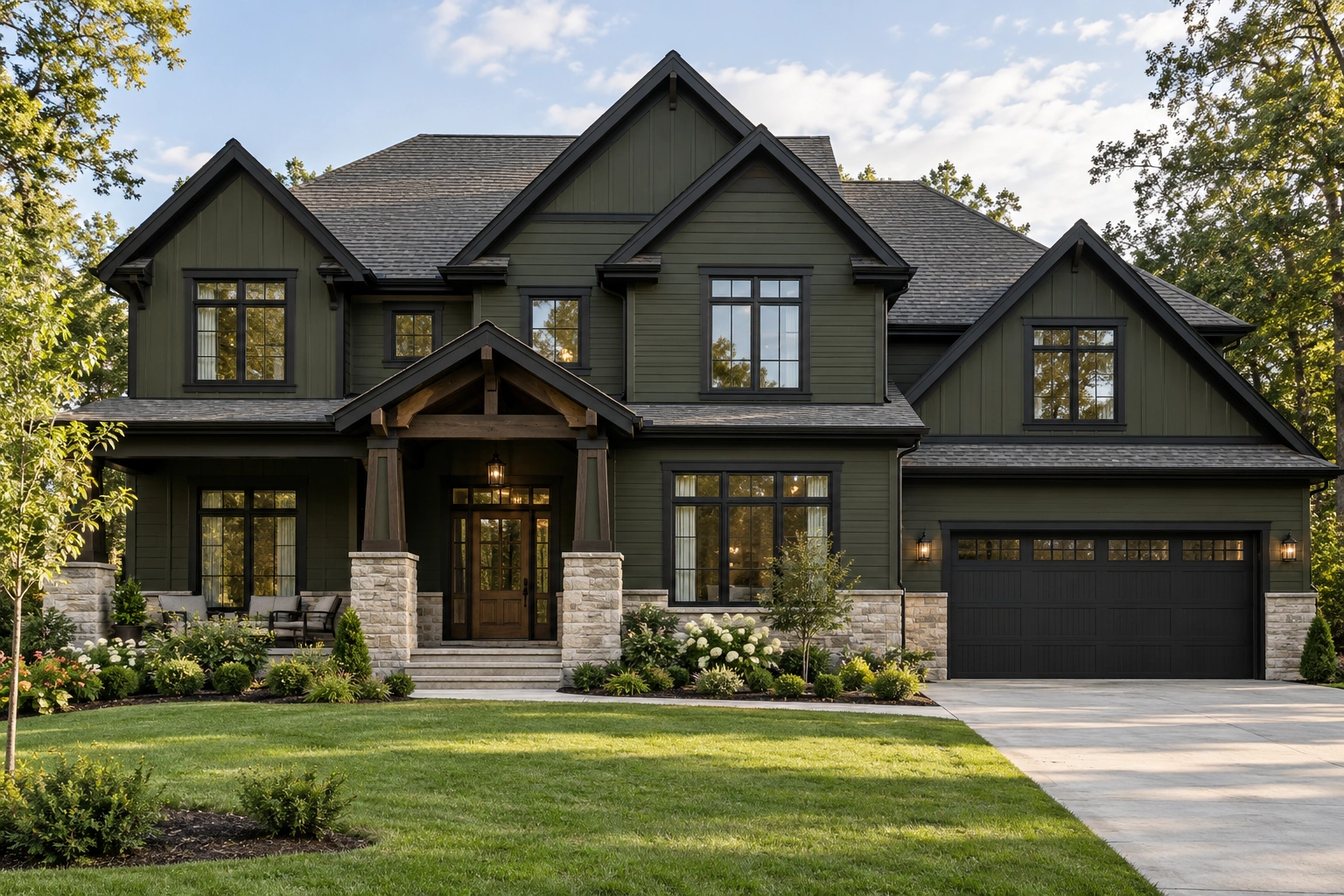
Light gray, cream, or softly varied stone can prevent the lower half of a dark facade from feeling too dense. Use stone around porch bases, foundation areas, columns, or an entry feature rather than trying to cover every surface.
The contrast works best when the stone already relates to the roof or hardscaping.
4. Olive Green Board-and-Batten With Black Accents
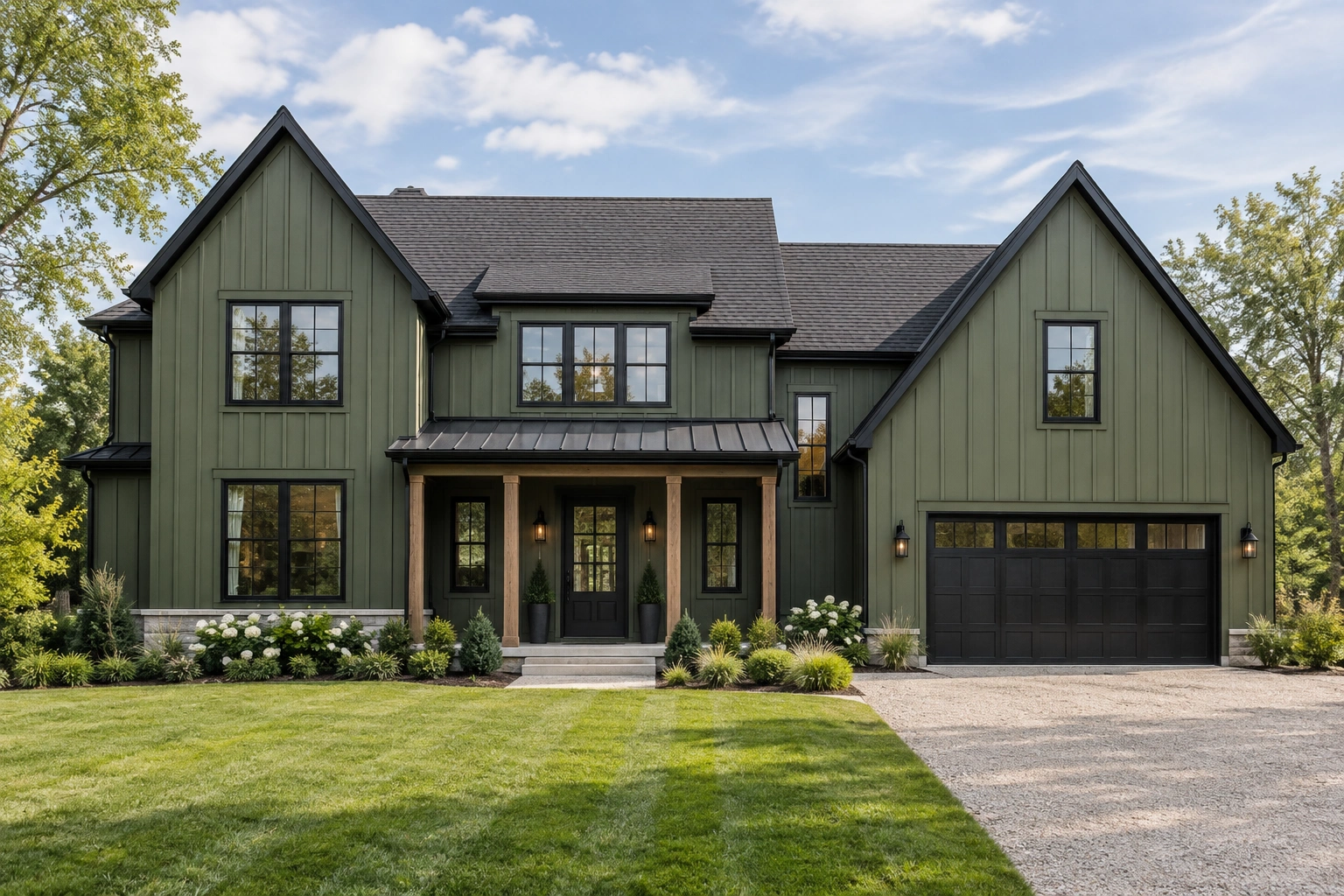
Vertical board-and-batten siding gives dark olive green enough texture to remain visually interesting even with a limited color palette. Black windows, lights, and roof details can then provide clean definition.
This is a natural fit for modern farmhouse-inspired homes, but the same idea can work on contemporary additions and simplified cottage exteriors.
5. Dark Olive Green Ranch House With Black Windows
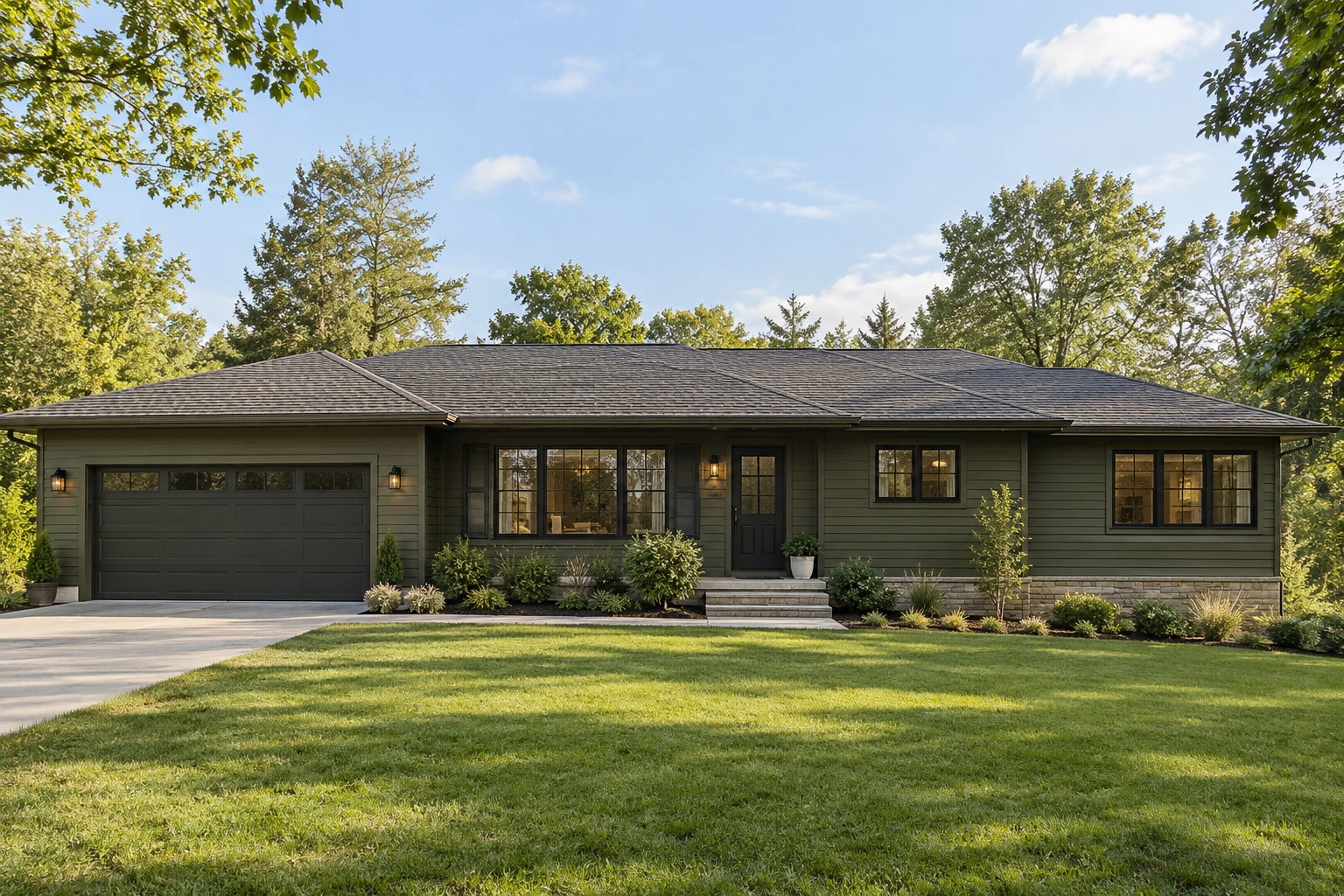
A ranch house usually has a long, low facade, so too much black can quickly dominate it. Olive siding with black windows and a restrained black front door often creates enough contrast without turning every fascia board, gutter, and garage surface into an accent.
Keeping some larger elements quieter helps the architecture feel wider rather than busier.
6. Olive Green Craftsman With Black Trim and Wood Columns
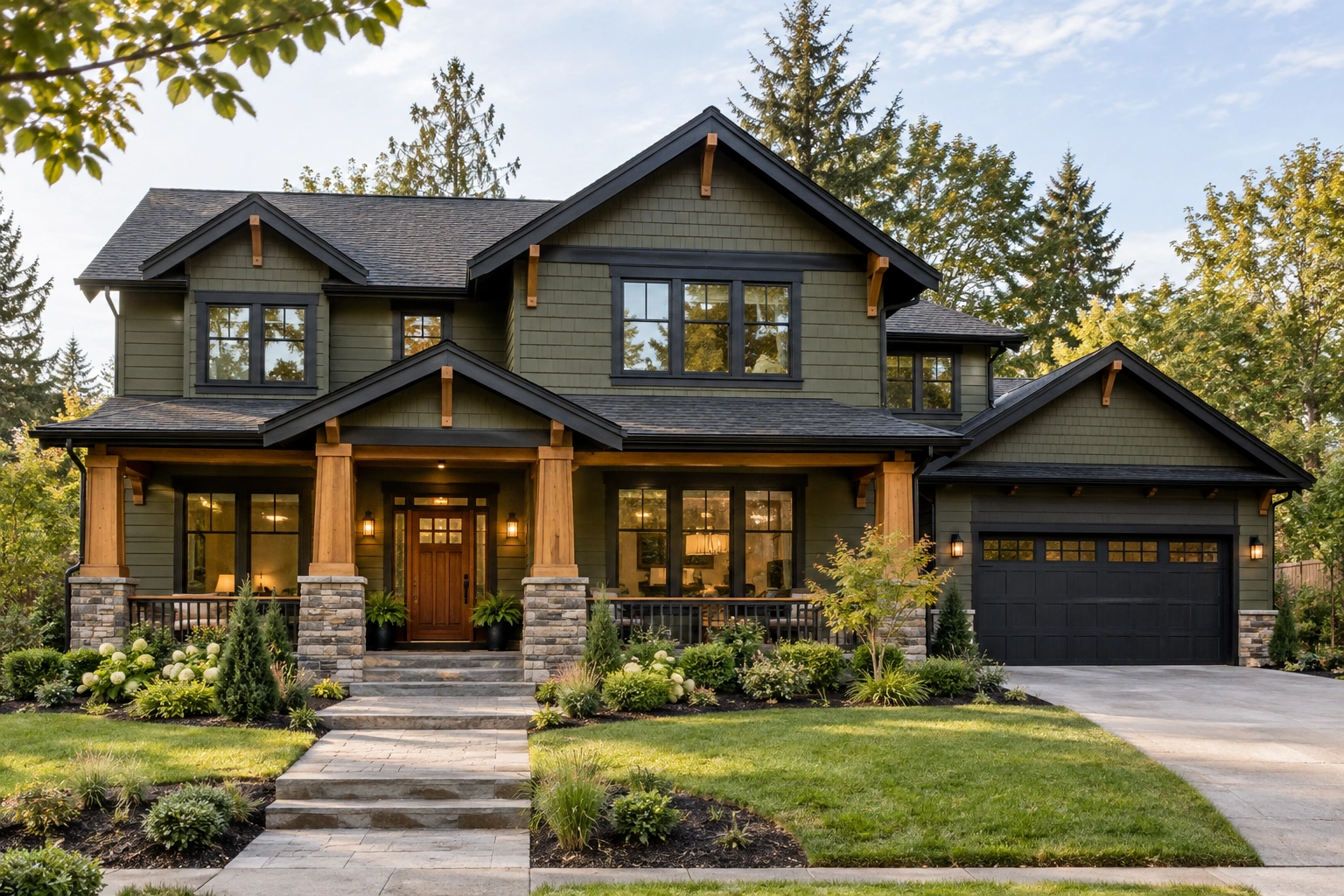
Craftsman homes already benefit from visible structure and layered materials. Dark olive siding can provide the base, black can emphasize windows and selected trim, and wood porch columns can keep the combination from becoming overly severe.
Stone porch bases can add another natural texture without introducing a competing paint color.
7. Dark Olive Green With Black Trim and White Windows
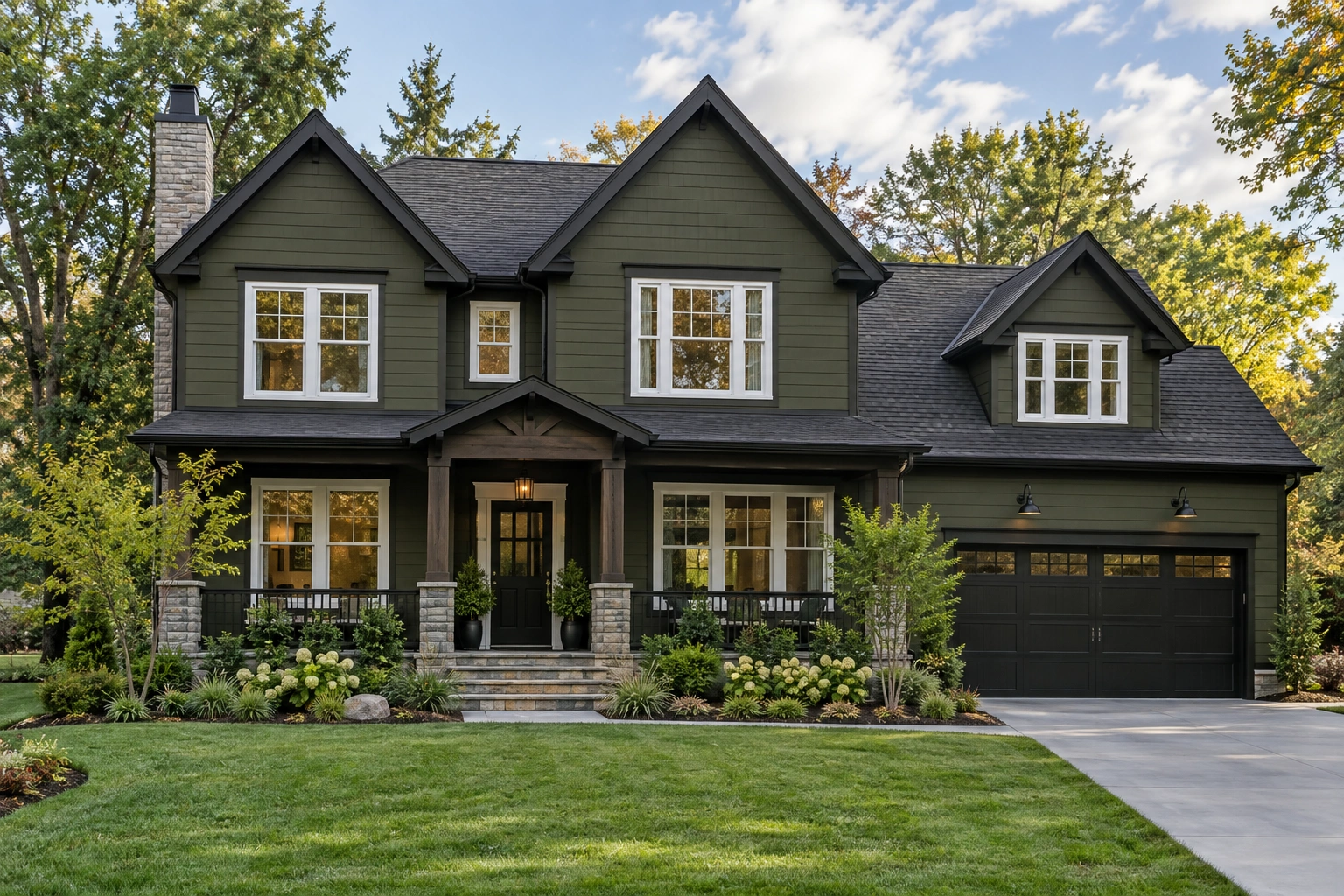
Existing white windows don’t automatically rule out this palette. Instead of trying to disguise them, treat white as an intentional third color.
Black fascia, exterior lights, railings, or larger trim elements can create enough dark repetition that the white windows look deliberate rather than leftover.
8. Olive Green Exterior With a Black Front Door
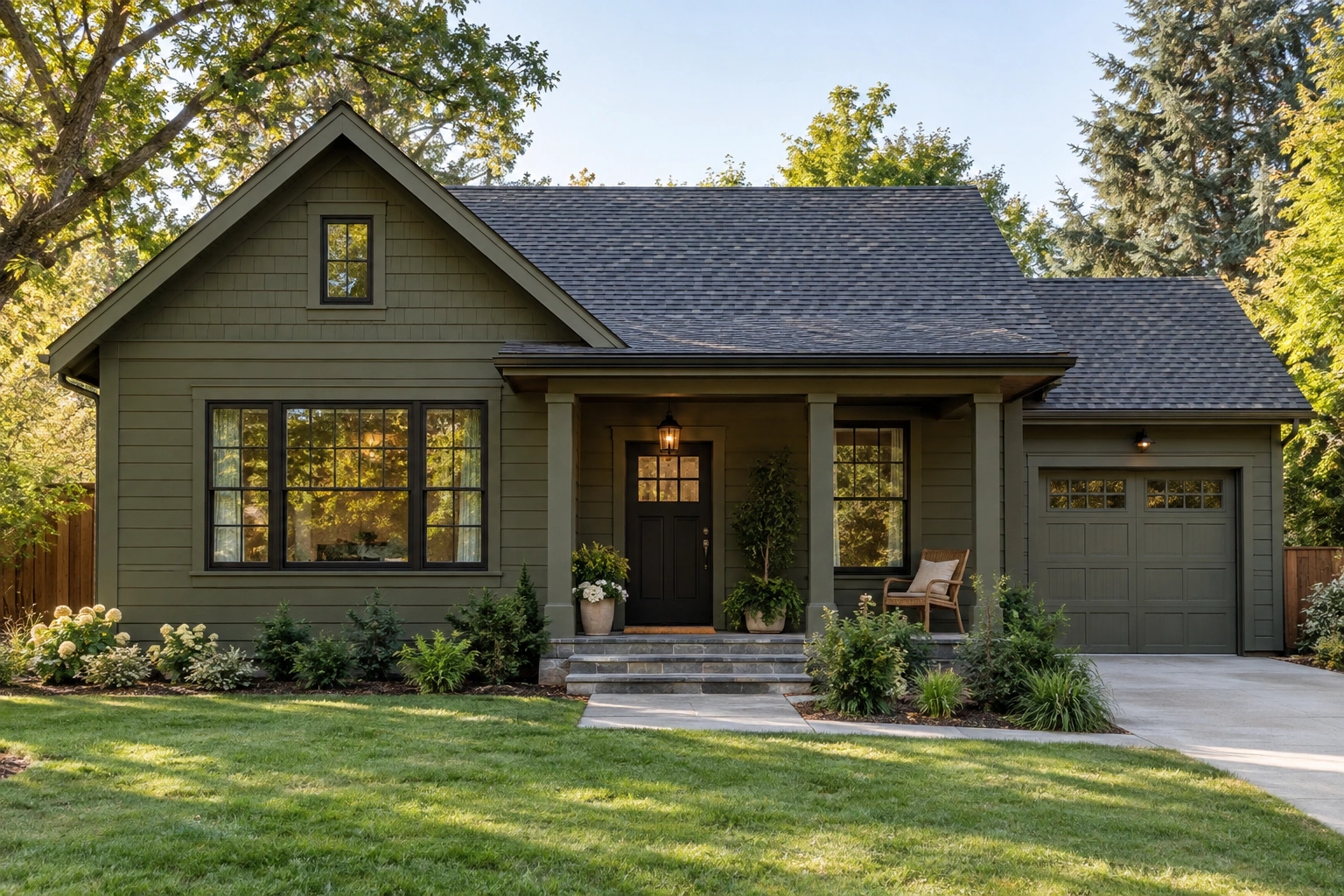
For a simpler exterior, the front door can carry most of the black accent. Olive siding stays dominant while the dark entry creates a clear focal point.
This is particularly useful on smaller homes where black windows, gutters, shutters, doors, and garage panels together would be too much.
9. Dark Olive Green With Black Porch Railings

Black railings introduce contrast without outlining the entire house. Against olive siding, thin metal or simple painted railings can look crisp while allowing the porch itself to remain visually open.
Warm wood flooring, lighter steps, or stone nearby can stop the porch from becoming one dark block.
10. Olive Green With Black Gutters and Fascia
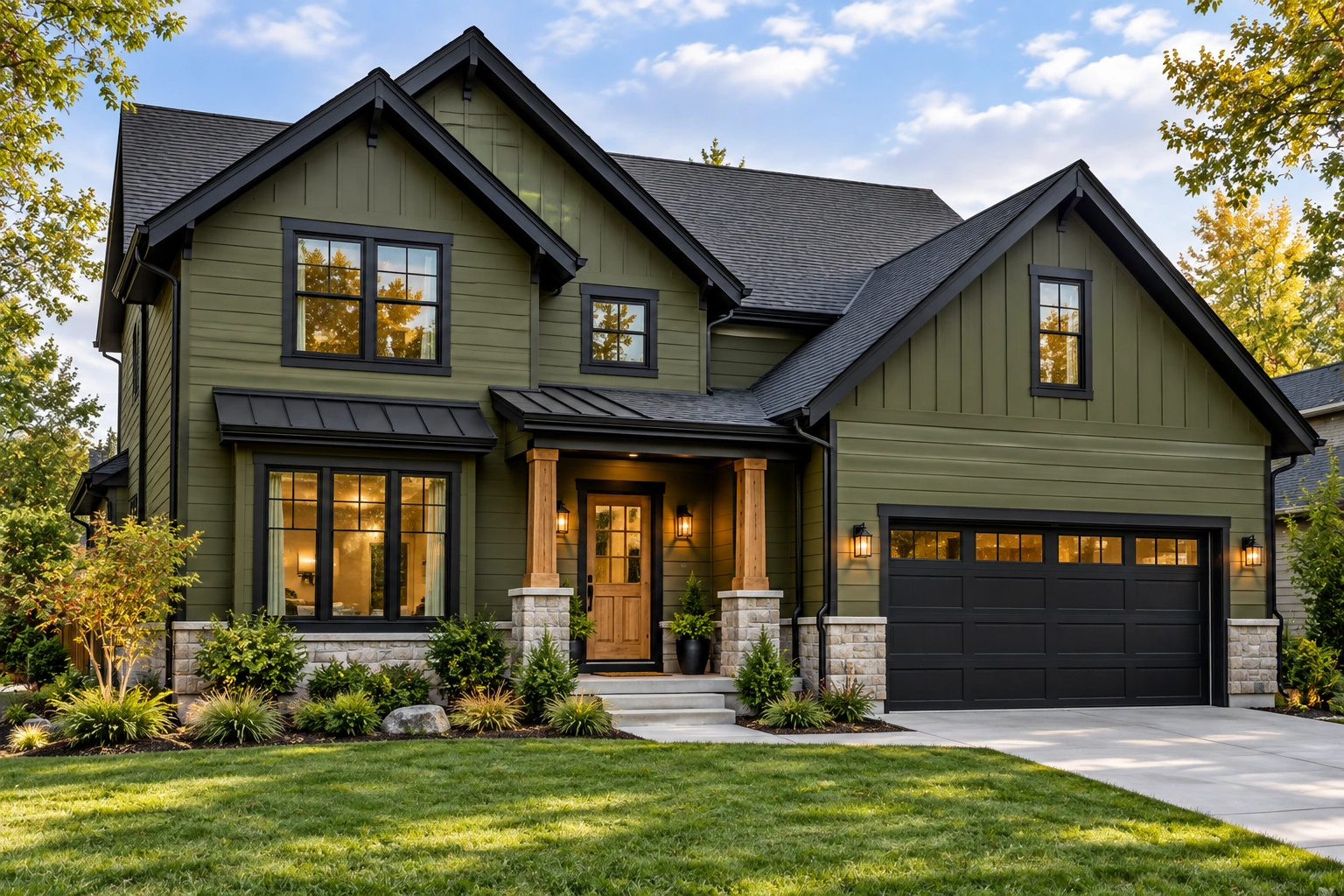
Black gutters and fascia can visually connect a dark roof to olive siding, but they work best when the roofline is worth emphasizing. On a simple gable or clean contemporary roof, this can sharpen the home’s silhouette.
On a complicated roof with many downspouts, painting every drainage component black may draw attention to parts you’d rather keep quiet.
11. Dark Olive Green With a Black Metal Porch Roof
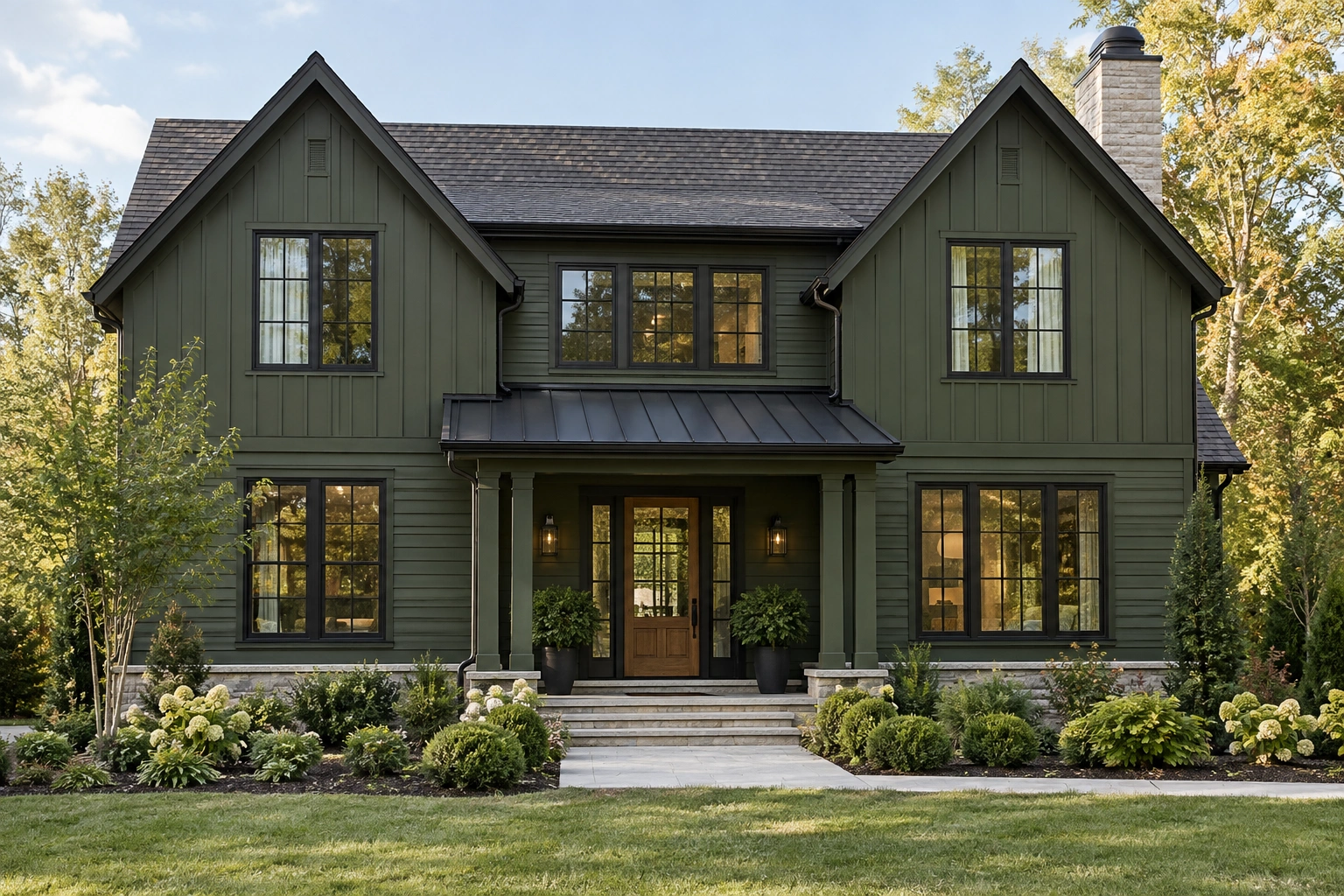
A small black metal roof over an entry or porch gives the palette a strong architectural anchor without requiring a black roof across the entire house.
Because metal can read strongly against muted olive, repeat black somewhere else—such as lighting, window frames, or door hardware—so the canopy doesn’t feel isolated.
12. Olive Green With a Dark Roof and Warm Wood Details
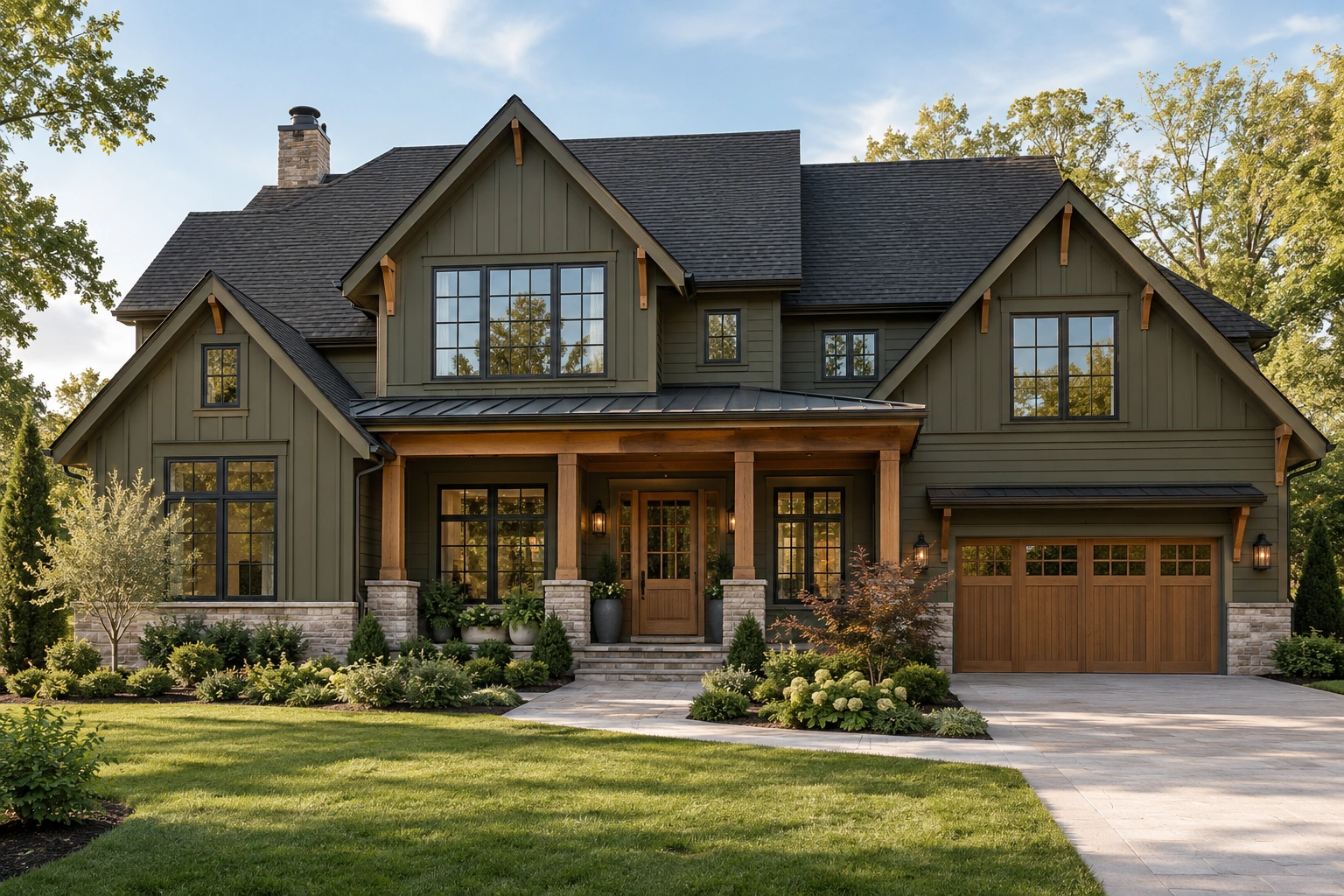
A dark roof can work naturally with olive siding, but the exterior may need something warmer between those two deep areas. Wood doors, porch ceilings, beams, or columns can provide that middle layer.
The result feels more balanced than relying on olive and black alone from roof to foundation.
13. Dark Olive Green With Black Trim and Existing Brick
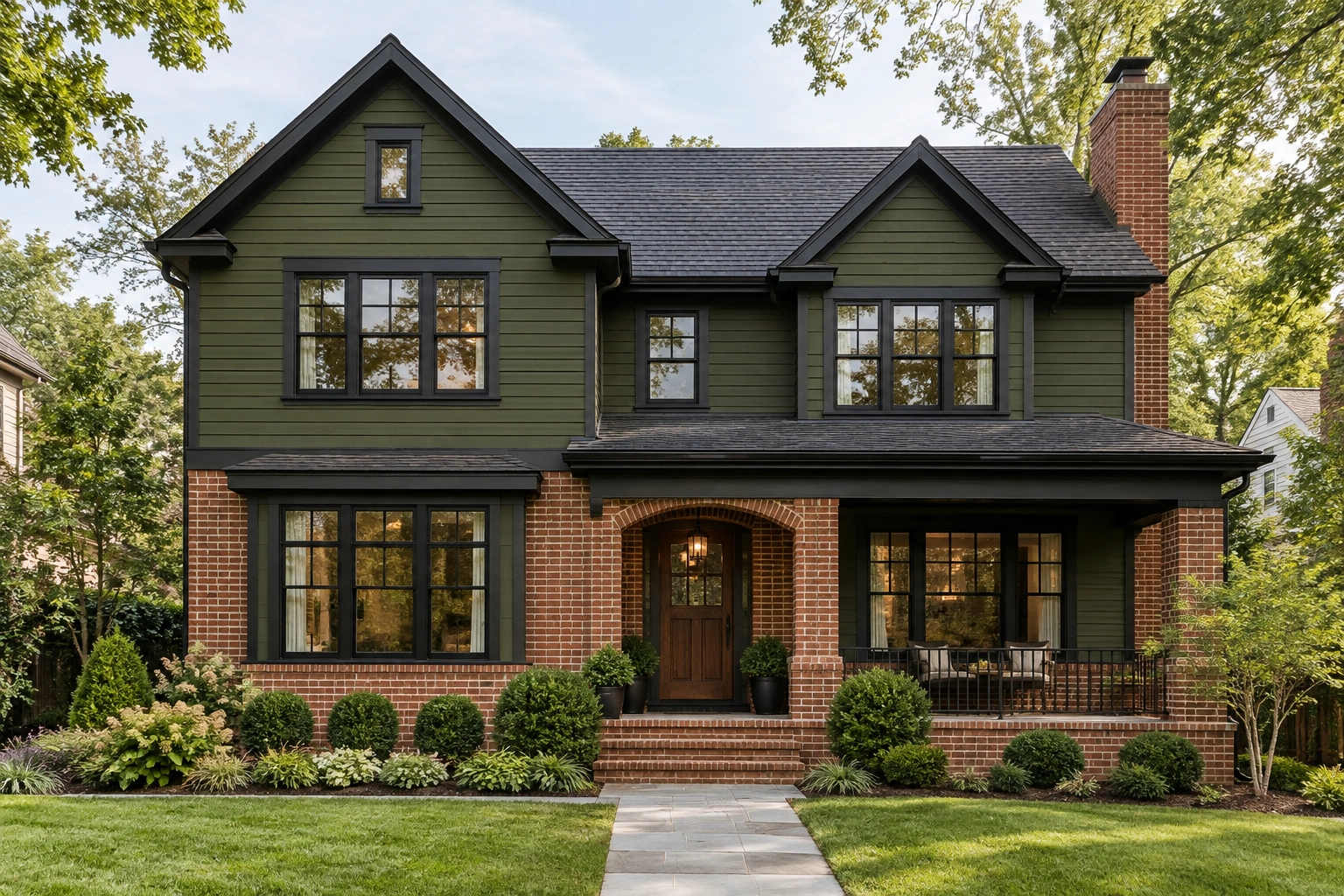
Brick doesn’t need to be painted simply to make an olive exterior work. Warm red, brown, or muted brick can add depth if the chosen olive has compatible undertones.
Before committing, place a large green sample beside the brick. A shade that looks earthy on its own can appear unexpectedly yellow, gray, or cool next to existing masonry.
14. Olive Green With Black Trim and a Softer Garage Door Color
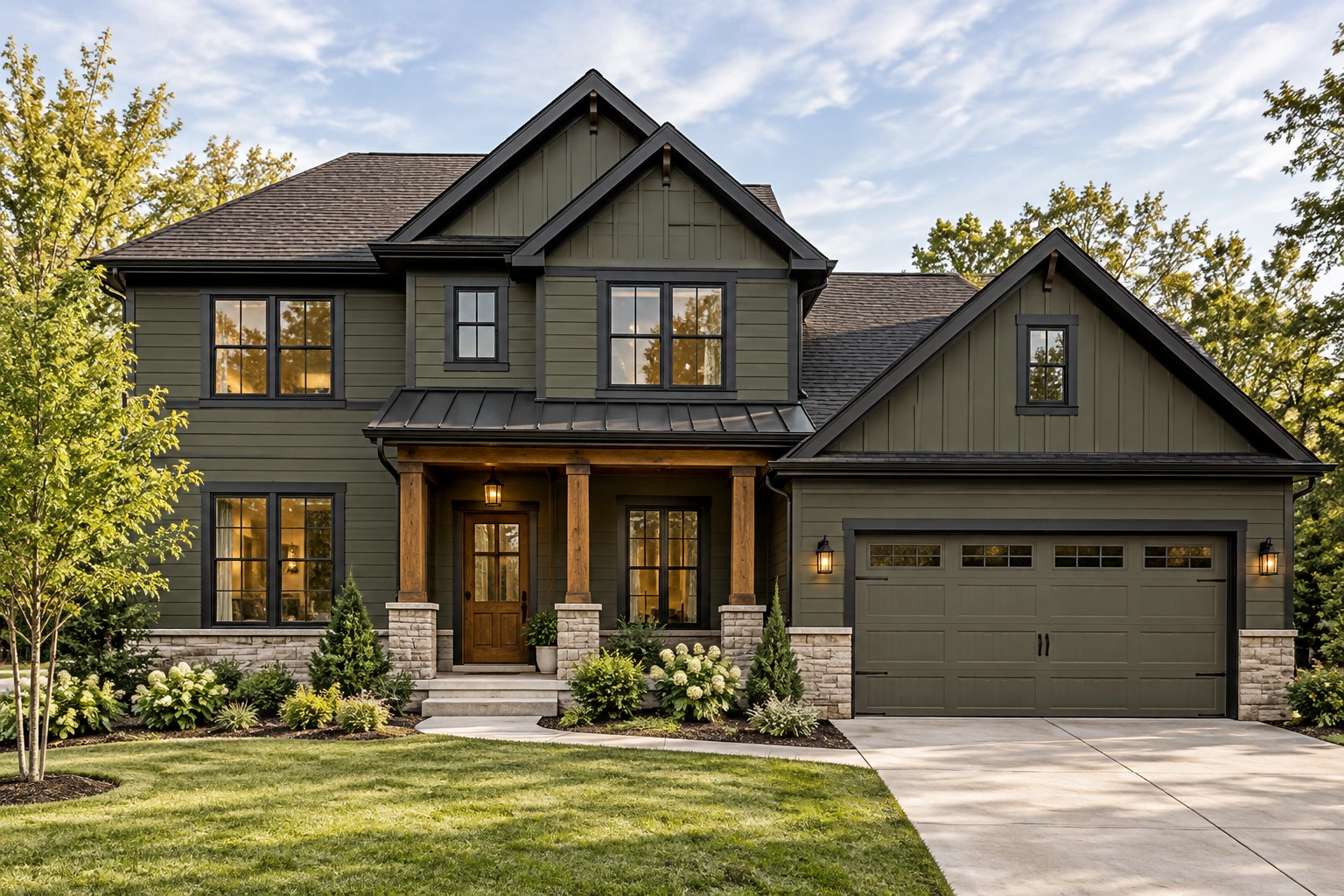
A large black garage door can become the first thing you notice on a front-facing garage. If that’s not the goal, consider keeping the garage closer to the siding color or using a softer charcoal rather than a sharp black.
Black can then remain on windows, lights, or smaller architectural details where it adds definition without overpowering the entrance.
15. Dark Olive Green With Black Trim and Warm Exterior Lighting
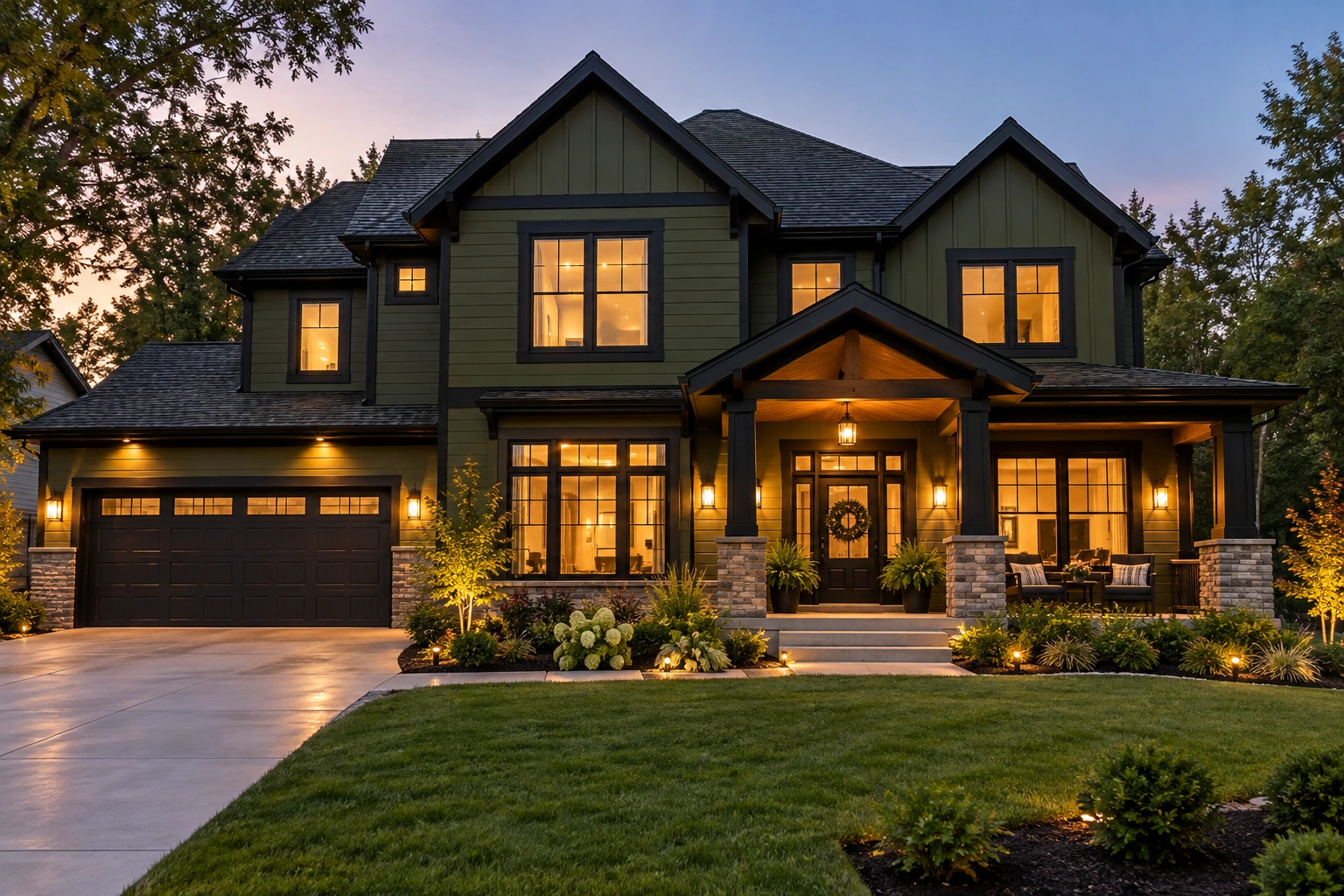
Dark exteriors change character after sunset. Warm-looking porch and wall lighting can make an olive-and-black facade feel more welcoming while also bringing the entry and walkway back into focus.
Pay particular attention to deep porches, where dark paint and heavy shade can make architectural details disappear at night.
16. Olive Green and Black Framed by Lighter Landscaping
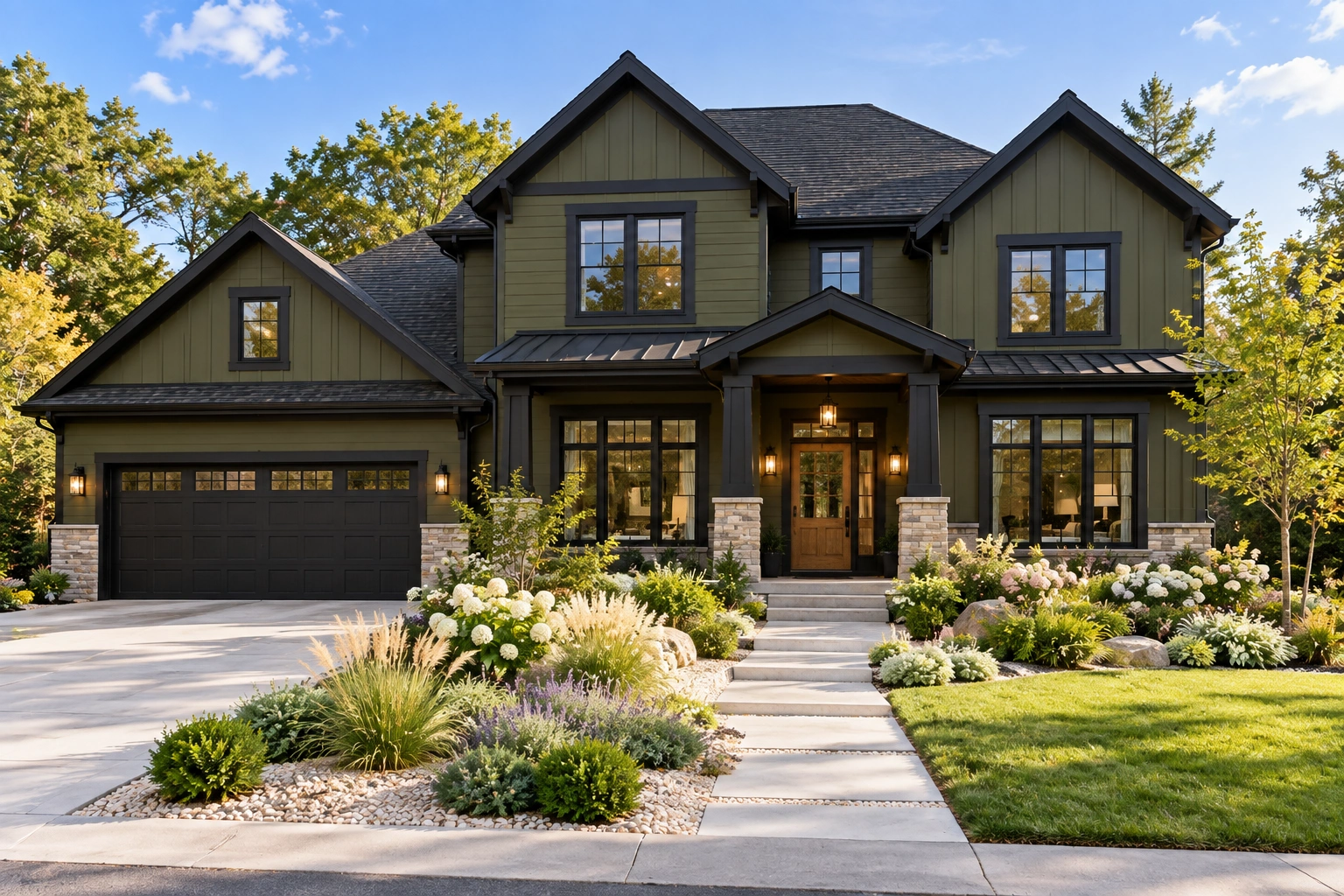
Dense green planting can sometimes cause olive siding to visually blend into the yard. Lighter flowers, pale gravel, concrete paths, ornamental grasses, and varied foliage can create useful separation.
The goal isn’t to avoid greenery but to give the exterior different textures and values around it.
17. Dark Olive Green With Black Trim and Mixed Natural Materials
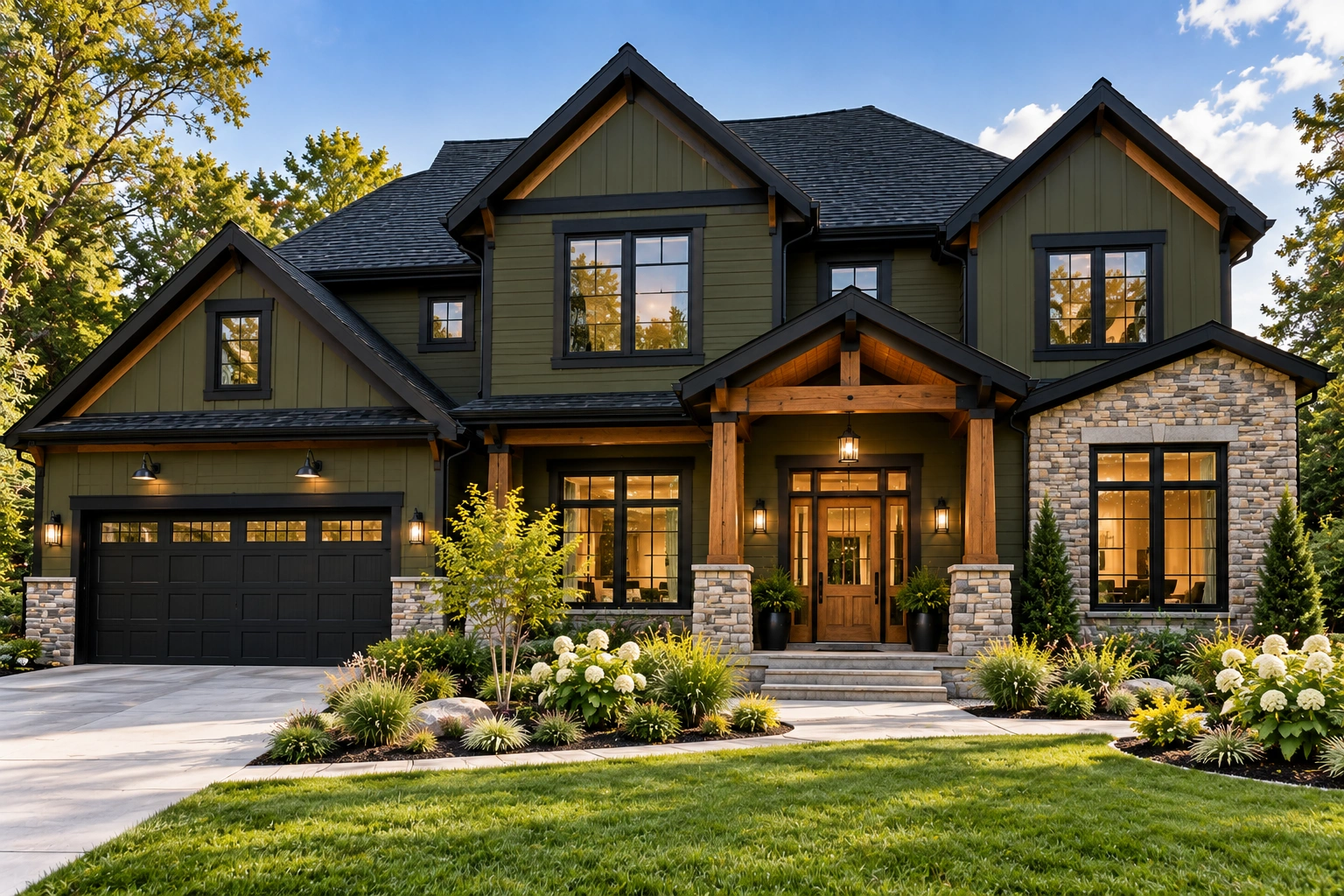
For a more layered exterior, combine olive siding and black accents with two restrained natural materials, such as wood and stone.
This works best when each material has a clear job: olive as the main field color, black for definition, wood for warmth, and stone for texture. Too many competing finishes can make the facade look fragmented.
How to Keep Olive Green and Black From Looking Too Dark
Dark olive green and black can work together without making a house feel gloomy, but the black needs to be controlled. Use it to define important architectural features rather than automatically applying it to every available surface.
Use Black to Define the Architecture, Not Cover It
Start with elements that naturally benefit from definition: window frames, a front door, railings, selected fascia, or lighting.
Then step back. A narrow window frame has far less visual weight than a double garage door, so two surfaces painted the same black won’t have the same impact.
Break Up the Palette With Wood, Stone, or a Lighter Neutral
Natural wood, pale stone, warm off-white, or light concrete can create a middle or lighter value between olive and black.
You don’t need all of them. One supporting material repeated in two or three places usually looks more intentional than several unrelated accents.
Let Landscaping and Hardscaping Add Contrast
Exterior color doesn’t stop at the siding. Driveways, paths, retaining walls, mulch, planting, and porch surfaces all affect how dark paint reads.
A heavily shaded house surrounded by dense evergreen planting may need more light contrast than the same paint scheme on an open, sunny lot.
Match the Color Scheme to the Parts of the House You Cannot Easily Change

The roof, brick, stone, windows, and major hardscaping should influence the paint choice before decorative details do. These fixed elements are usually more difficult or expensive to change than siding color.
Start With the Roof Color
A charcoal or black roof may support a darker olive easily, while a warm brown or multicolored roof may call for an olive with warmer undertones.
The roof doesn’t need to match the trim. It simply needs to look related to the overall palette rather than like a separate design decision.
Check the Olive Against Existing Brick or Stone
Place exterior paint samples directly beside masonry rather than judging the colors separately. Brick and stone often contain several undertones that become more obvious once a large green surface sits next to them.
Work With Black or White Window Frames
Black windows naturally reinforce the trim color. White windows can still work, but they should look intentional.
Repeating a small amount of light color elsewhere—or simply keeping black to larger framing elements—can prevent white window sashes from looking disconnected.
Decide Whether the Garage Door Should Stand Out or Recede
A garage door can cover more visual area than all the window trim combined. Black makes it prominent; a siding-related green or softer neutral helps it recede.
Make this choice based on the architecture, not simply because black appears elsewhere.
Choose the Right Olive Green and Black for Your Exterior
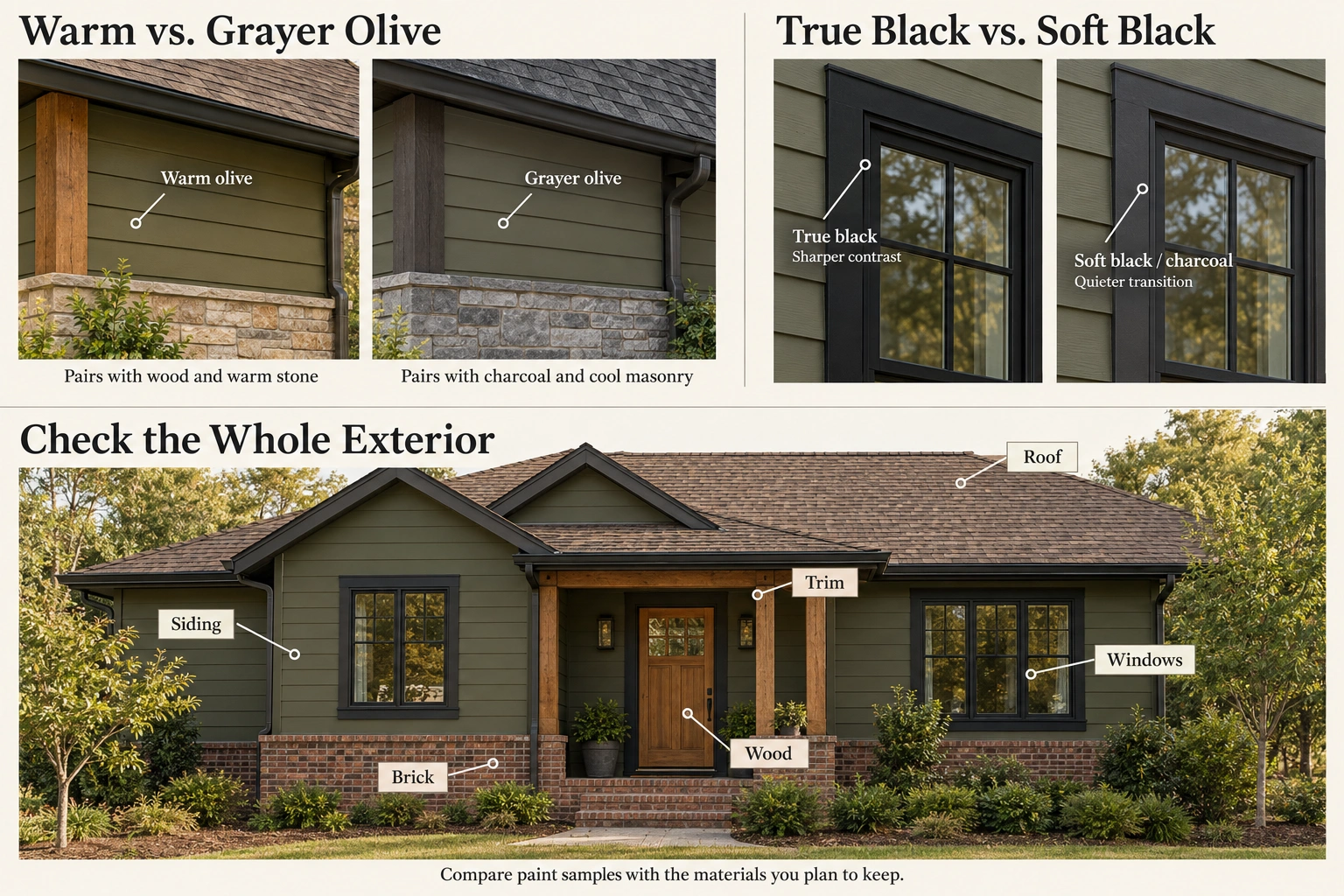
The words “olive green” and “black” describe broad color families, not one fixed combination. Undertone and depth matter.
Warm Olive vs. Cooler, Grayer Olive
Some olives lean warmer and slightly yellow, while others feel grayer and more muted. Warm versions may relate naturally to wood, brown roofing, and warm stone. Grayer olives can sit more comfortably beside charcoal roofs, cooler masonry, or contemporary finishes.
Neither is automatically better. The surrounding materials should make the decision.
True Black vs. Soft Black or Charcoal
True black creates sharper architectural contrast. A softened black or charcoal produces a quieter transition and may suit traditional homes, weathered stone, or muted olive siding better.
Try both before assuming the darkest option will look the most polished.
Consider How the Colors Relate to the Roof and Masonry
A paint pairing can look excellent on a sample board and wrong once it’s placed between a warm roof and red-brown brick.
Evaluate the whole group together: siding, trim, roof, windows, stone or brick, and any wood you plan to keep.
How to Test Dark Olive Green Before Painting the House
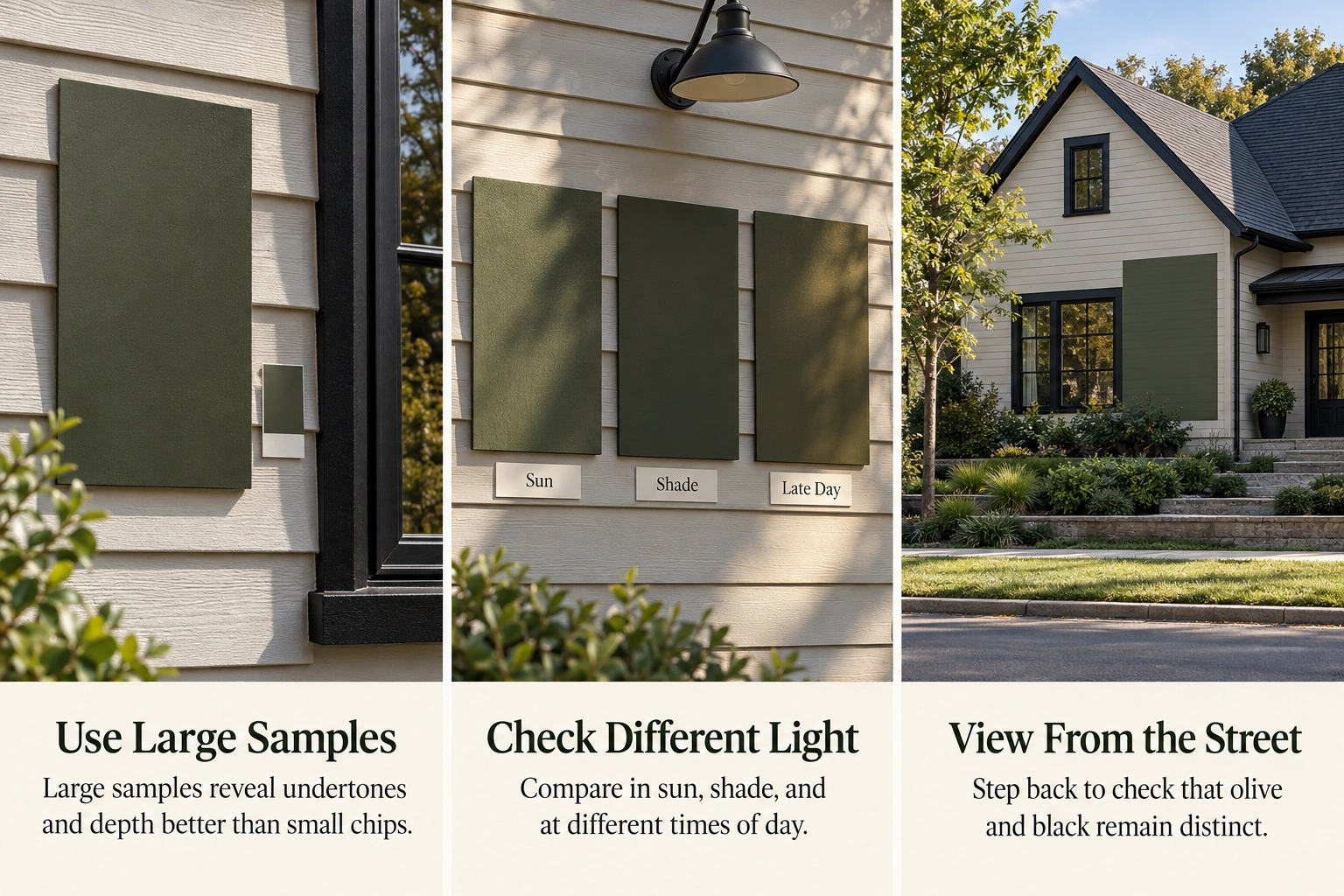
Test dark olive green outdoors on a large enough area to see how it behaves in real conditions. Look at the sample in direct sun, shade, and different times of day, then compare it from the street against the roof, windows, masonry, and landscaping.
Use Large Exterior Samples
Small chips are useful for narrowing choices, but they don’t show how a dark green will feel across an entire wall.
A larger sample makes undertones and depth easier to judge.
Check the Color in Sun, Shade, and Different Times of Day
Dark greens can look noticeably deeper on shaded elevations and more colorful under bright light. Check more than one side of the house if possible.
View the Sample From the Street, Not Just Up Close
Exterior colors are usually experienced from a distance. Stand where a visitor or passerby would normally see the house and judge whether the olive and black remain distinct.
What Paint Finish Works With Olive Siding and Black Trim?
Exterior siding usually benefits from a finish that doesn’t create excessive glare across large wall areas, while trim can handle somewhat more sheen when you want architectural details to read clearly.
The right choice still depends on the paint product, siding material, surface condition, and manufacturer recommendations. Don’t select sheen independently of the coating system you’re actually using.
Dark Olive Green Paint Colors Worth Sampling
Paint names are useful starting points, not shortcuts around testing. Colors that appear similar online can behave very differently beside your roof and masonry.
A few options worth putting on a sample list include:
- Sherwin-Williams Ripe Olive SW 6209 for a deep olive direction
- Benjamin Moore Backwoods 469 for a dark, muted green direction
- Sherwin-Williams Tricorn Black SW 6258 for a strong black contrast
- Benjamin Moore Iron Mountain 2134-30 when you want to explore a softer dark accent
Compare samples on the house rather than choosing a combination from a screen.
Common Mistakes With a Dark Olive Green and Black Exterior
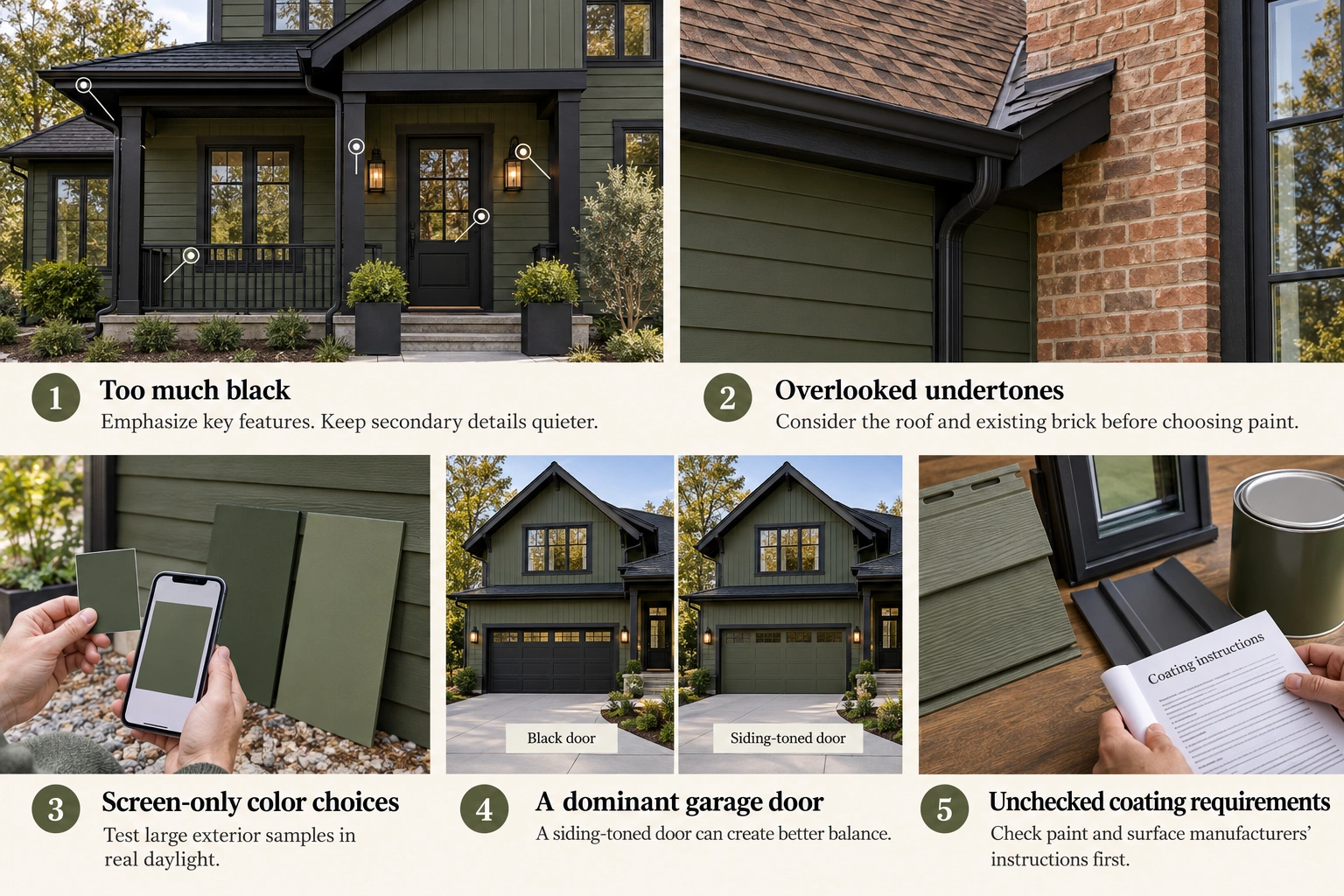
Making Every Exterior Feature Black
More black doesn’t automatically create a more cohesive design. Decide which architectural features deserve emphasis and let secondary elements stay quieter.
Ignoring Roof and Masonry Undertones
The siding and trim may look compatible with each other but still fight with a warm roof or existing brick. Fixed materials need to be part of the color decision from the beginning.
Choosing Paint From a Screen or Small Chip Alone
Screens change color, and small chips don’t show scale. Use digital inspiration to narrow the field, then rely on real exterior samples.
Making the Garage Door the Unintended Focal Point
Before painting a large garage door black, ask whether you actually want attention pulled toward it. On some homes, keeping it closer to the siding color produces better balance.
Using a Very Dark Color Without Checking the Siding Requirements
Not every siding or factory-finished surface should automatically receive any dark exterior coating. Check the paint and siding manufacturer’s instructions, particularly with vinyl, specialty cladding, factory-finished windows, or metal components.
Is Dark Olive Green With Black Trim Right for Your House?
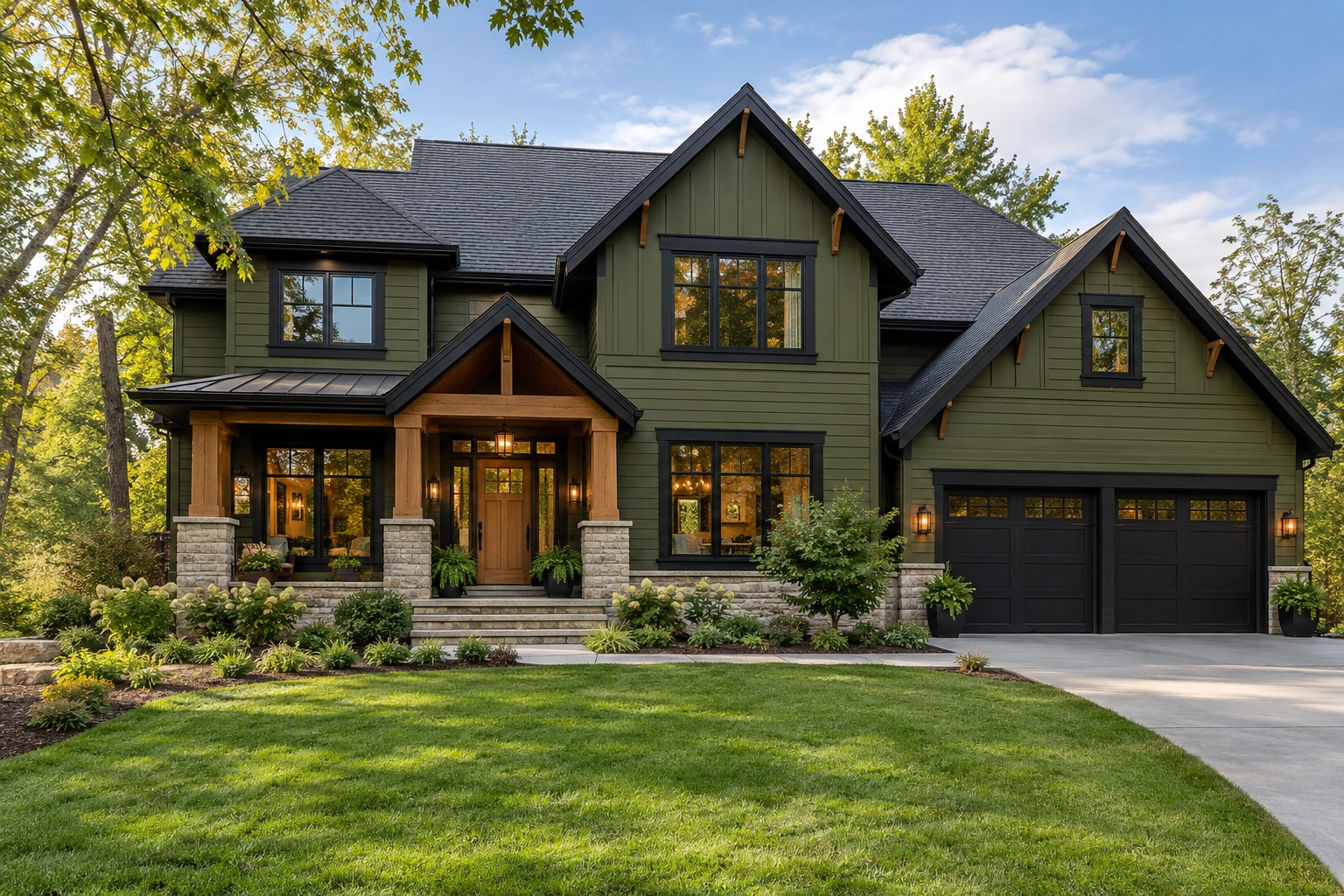
Dark olive green with black trim is a strong option when the house has architectural features worth defining and enough variation in materials, light, or landscaping to keep the exterior from becoming one dark mass.
It may be less convincing when the roof, masonry, porch, and other major fixed elements are already very dark. In that situation, a softer olive, charcoal instead of true black, or a lighter supporting material can create better separation.
The best decision is usually the one that works with what the house already has rather than forcing the property to match an inspiration photo.
Frequently Asked Questions
Does dark olive green look good with black trim?
Yes. Dark olive green and black can work especially well when black is used to define windows, doors, rooflines, railings, or other architectural features. Because both colors are dark, the exterior usually benefits from some lighter or warmer contrast through wood, stone, hardscaping, white windows, or landscaping.
What color roof goes with a dark olive green house?
Black, charcoal, gray, brown, and mixed-tone roofs can all work with olive green depending on their undertones. Treat the existing roof as a fixed design element and select the olive beside it rather than choosing the siding color first and hoping the roof will coordinate.
What front door color works with olive green and black trim?
Black creates a cohesive, restrained look, while natural wood can warm the palette and make the entry more noticeable. Warm cream, muted red, or another restrained accent can also work when it relates to the roof, brick, stone, or surrounding materials.
Can a dark olive green house have white windows?
Yes. White windows can provide helpful contrast against olive siding and black trim. Instead of treating them as a flaw, make them look intentional by keeping the rest of the palette controlled and repeating lighter tones in stone, steps, porch surfaces, or other small details where appropriate.
Should gutters and downspouts match black trim?
They can, but they don’t have to. Black gutters may strengthen a dark roofline, while black downspouts can draw attention to drainage runs. Decide whether each component should become part of the architecture or visually blend into the siding.
Is true black or charcoal better with olive green?
Neither is universally better. True black gives the facade sharper contrast and a more graphic appearance. Charcoal or soft black creates a quieter transition and can be easier to combine with traditional architecture, warm masonry, or an olive that already reads very dark.
Does olive green work with brick or stone?
Yes, provided the undertones relate well. Olive often pairs naturally with earthy brick and stone, but the exact shade matters. Test the green beside the existing masonry because the same paint can appear warmer, cooler, or grayer depending on what’s next to it.
Final Thoughts
A dark olive green house with black trim looks most convincing when the colors support the architecture instead of competing with it. Use olive as the main field color, place black where it adds useful definition, and let the roof, windows, masonry, wood, lighting, and landscape influence the final balance.
The combination doesn’t need more drama. It needs thoughtful placement, real-world paint testing, and enough contrast to let each part of the house remain visible.
Disclaimer
This content is for general informational purposes only. Every home, budget, preference, material, and situation is different. For safety-sensitive work, major repairs, installations, structural changes, electrical, plumbing, HVAC, legal, or significant property decisions, consult an appropriate qualified professional.