
A brown house with black trim can feel warm and well-defined, but the result depends on where the dark colors go. Slim black window surrounds create a different effect from black garage doors, deep fascia boards, and a shaded porch painted dark from floor to ceiling.
The combination works across light brown siding, chocolate paint, natural cedar, and brown brick. The key is giving each color a purpose while allowing the roof, masonry, and entry to work together.
These 12 ideas offer different ways to find that balance—including options that keep your existing siding, windows, or roof.
Short Definition
A brown house with black trim pairs brown siding or masonry with black architectural details. Homeowners choose this exterior palette to define windows, doors, and rooflines while retaining the warmth of brown materials.
Topmodrenhouse Mission Statement
Topmodrenhouse helps homeowners, renters, and home lovers make informed choices for practical, comfortable, and stylish living spaces.
12 Brown House With Black Trim Ideas
1. Light Brown Siding With Slim Black Trim
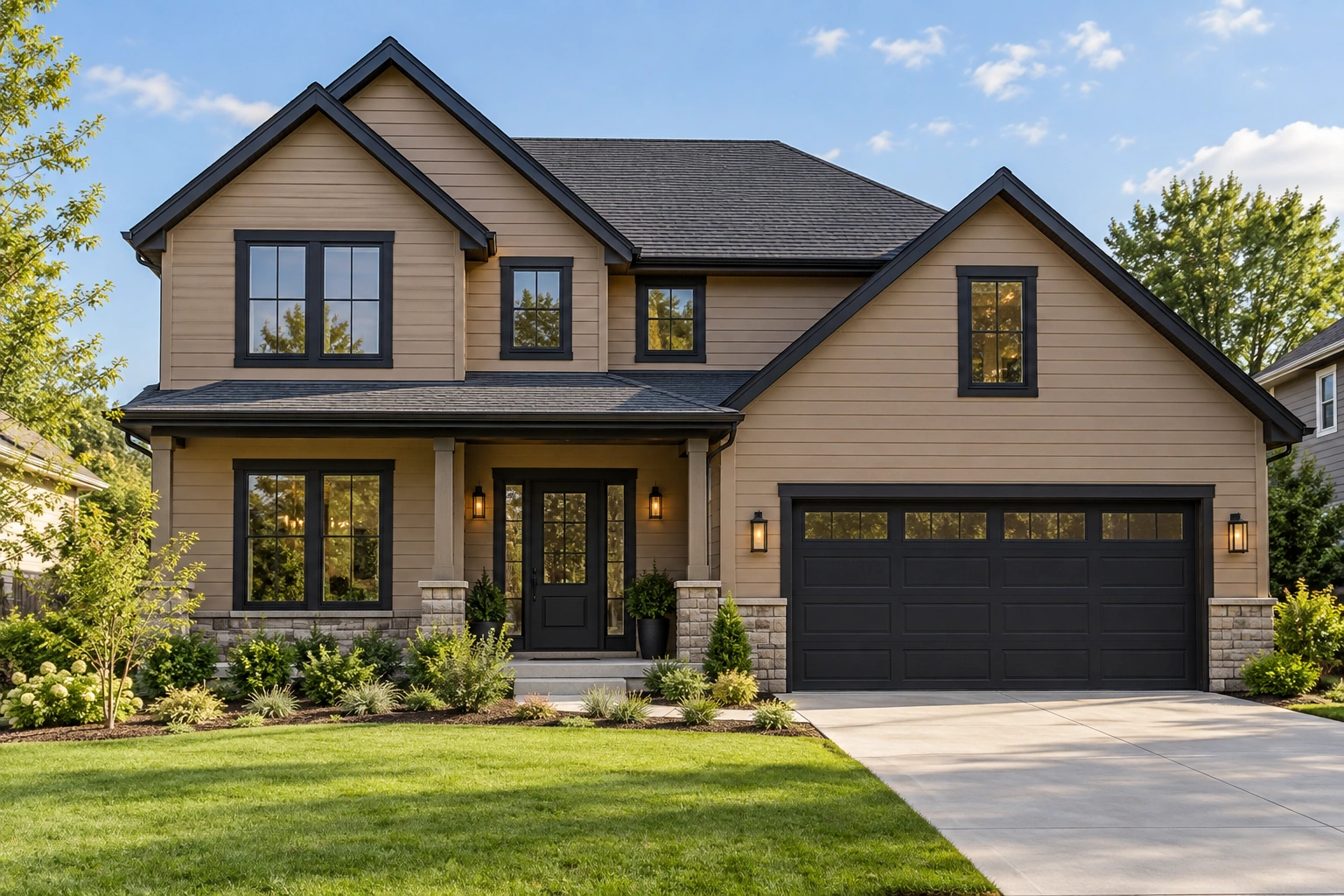
Light brown siding gives black trim room to stand out. Picture sandy-brown lap siding with narrow black window surrounds and a matching front-door frame: the outlines provide definition while the larger wall surfaces keep the exterior relatively light.
Keep corner boards close to the siding color when you want the windows to attract attention. Outlining every corner in black can make a small facade feel unnecessarily divided.
2. Chocolate Brown Siding With a Light Stone Base

A chocolate brown exterior can benefit from a lighter material at ground level. Cream, sandy beige, or pale gray-brown stone introduces contrast beneath dark walls and black trim.
Use existing stone as the starting point for the paint selection. Compare brown samples beside several stones and the mortar, since a mixed stone surface rarely contains just one color. Adding new cladding is a larger project; this idea is especially useful when the stone is already there.
3. Natural Cedar With Black Window Surrounds

Cedar’s visible grain brings variation to a brown exterior with black accents. Restrained window surrounds give that texture a clear boundary without covering the house in competing details.
Choose the finish around the wood’s actual appearance. A reddish cedar sample and a muted brown stain can lead to quite different palettes. For an existing cedar home, assess its current finish and condition before deciding whether a color change is necessary.
4. Unpainted Brown Brick With Selective Black Accents

Brown brick can remain the main feature while black accents update the surrounding details. Consider window casing, an entry door, or porch metalwork rather than assuming the masonry needs paint.
Look at the brick from the sidewalk. Individual reddish, tan, or charcoal bricks blend differently at that distance. Where the masonry already has substantial variation, fewer accent colors can help the facade feel more coordinated.
5. A Brown Ranch With a Defined Black Roofline

On a ranch house, a black fascia—the board along the roof edge—can emphasize the long horizontal shape. Repeating black around selected windows helps connect the roofline to the walls below.
Be more cautious with the broad underside of the eaves. Painting the fascia and soffit black creates a larger dark area than painting the fascia alone. A lighter soffit offers a less heavy-looking option.
6. Brown Board-and-Batten With Simple Black Details
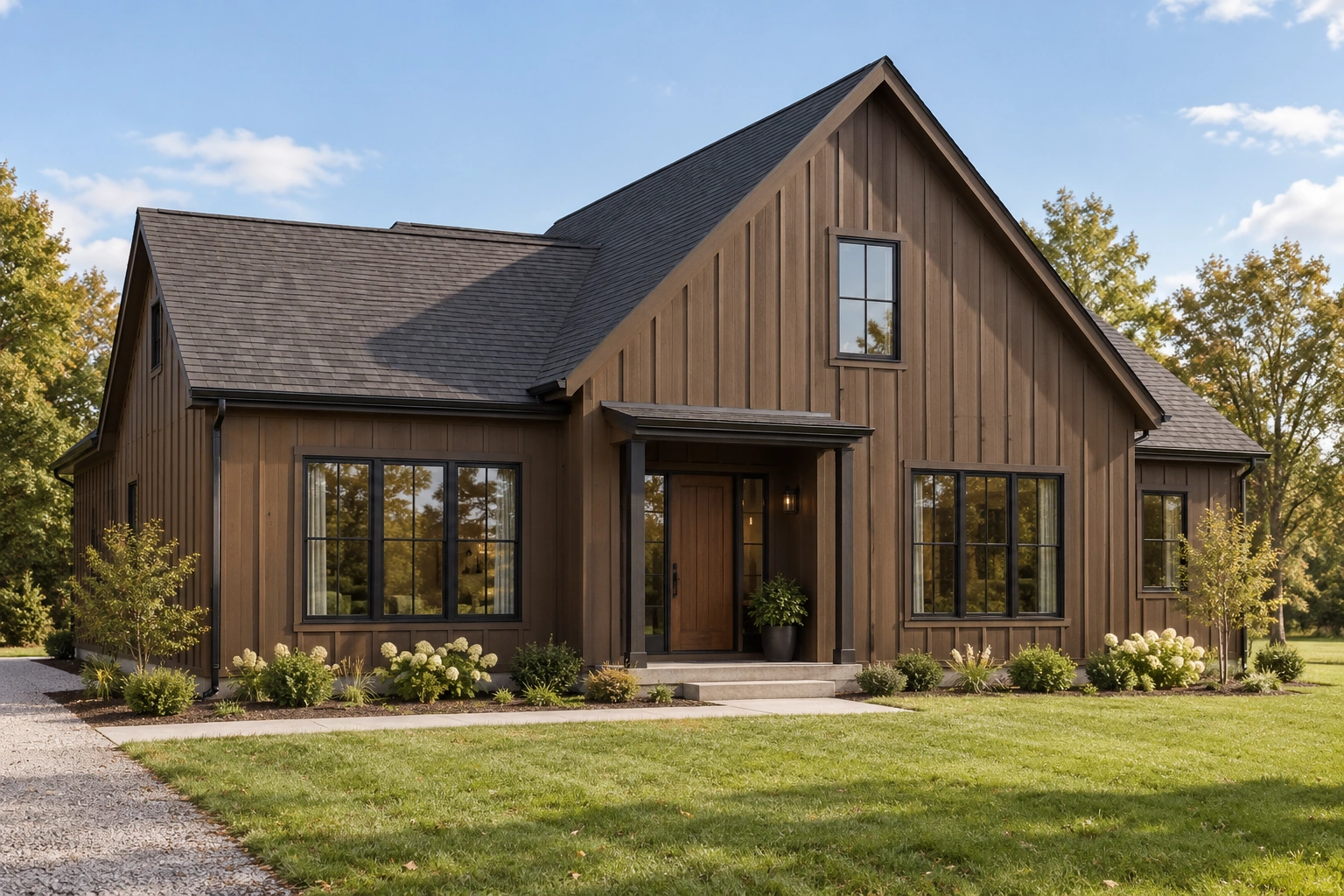
Brown board-and-batten siding already creates a strong vertical pattern. Black windows and a restrained entry surround can complement it without introducing another stripe at every board.
Keeping the battens the same brown as the wall lets their shadows provide the texture. This approach suits a modern brown exterior where the siding pattern is prominent and the trim has a supporting role.
7. Brown Stucco With a Lighter Entry Recess
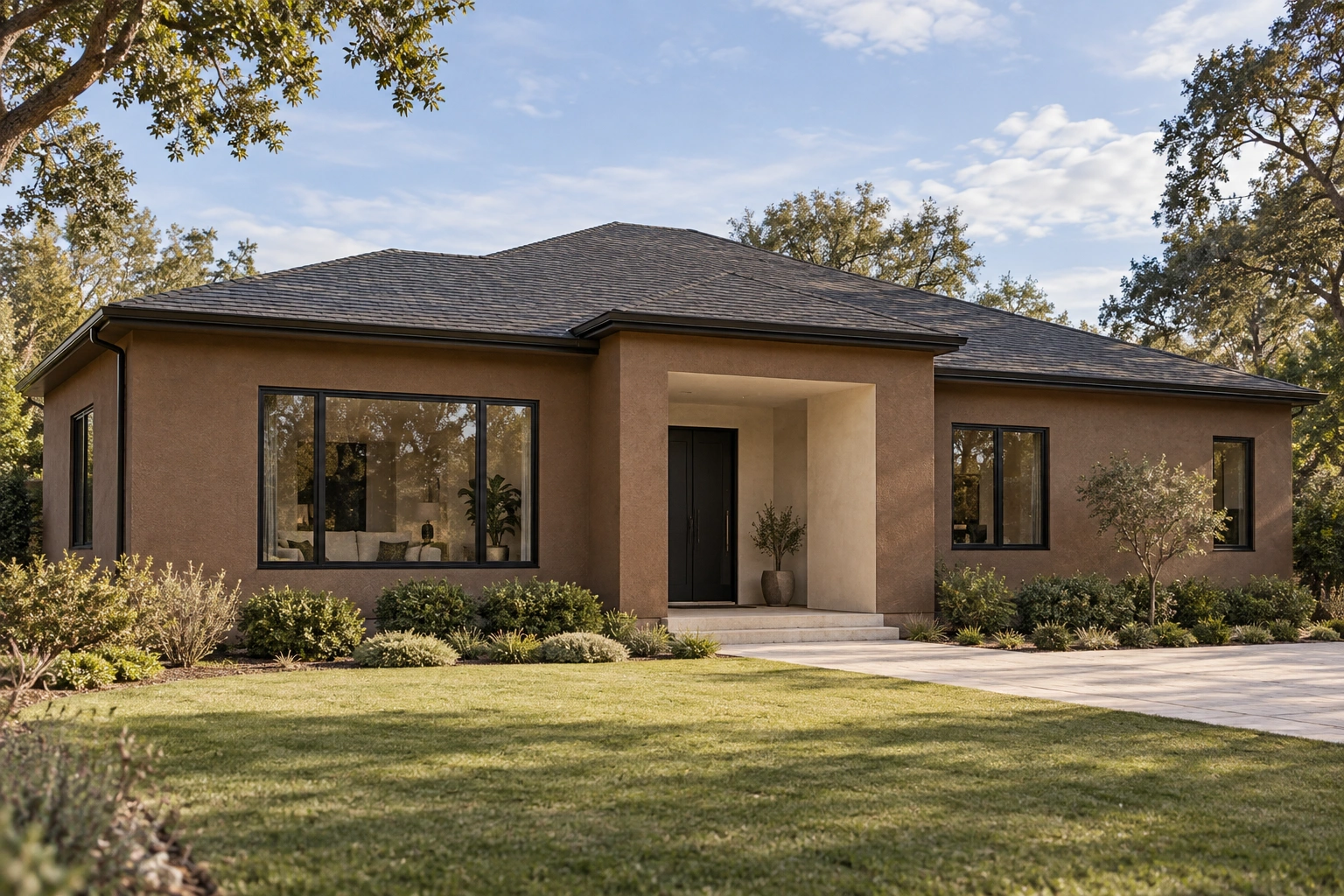
A recessed entrance can look considerably darker than the main walls. Pairing brown stucco and black trim with a lighter entry recess helps distinguish the doorway.
Consider a warm off-white or pale neutral drawn from nearby stone or paving. Test it inside the recess, where it will actually appear. A sample that looks gentle in open daylight may look quite different under a deep overhang.
8. Brown Shingles With Understated Black Trim

Shingle siding brings small, repeated shapes across the facade. Simple black window trim can frame those shapes without competing with them.
Keep additional decoration selective, particularly where the house already has dormers, brackets, or patterned masonry. Matching every architectural detail in black may make the exterior busier. Let the shingles provide most of the texture and use dark accents to identify a few important features.
9. Dark Brown Siding With a Light Porch Ceiling
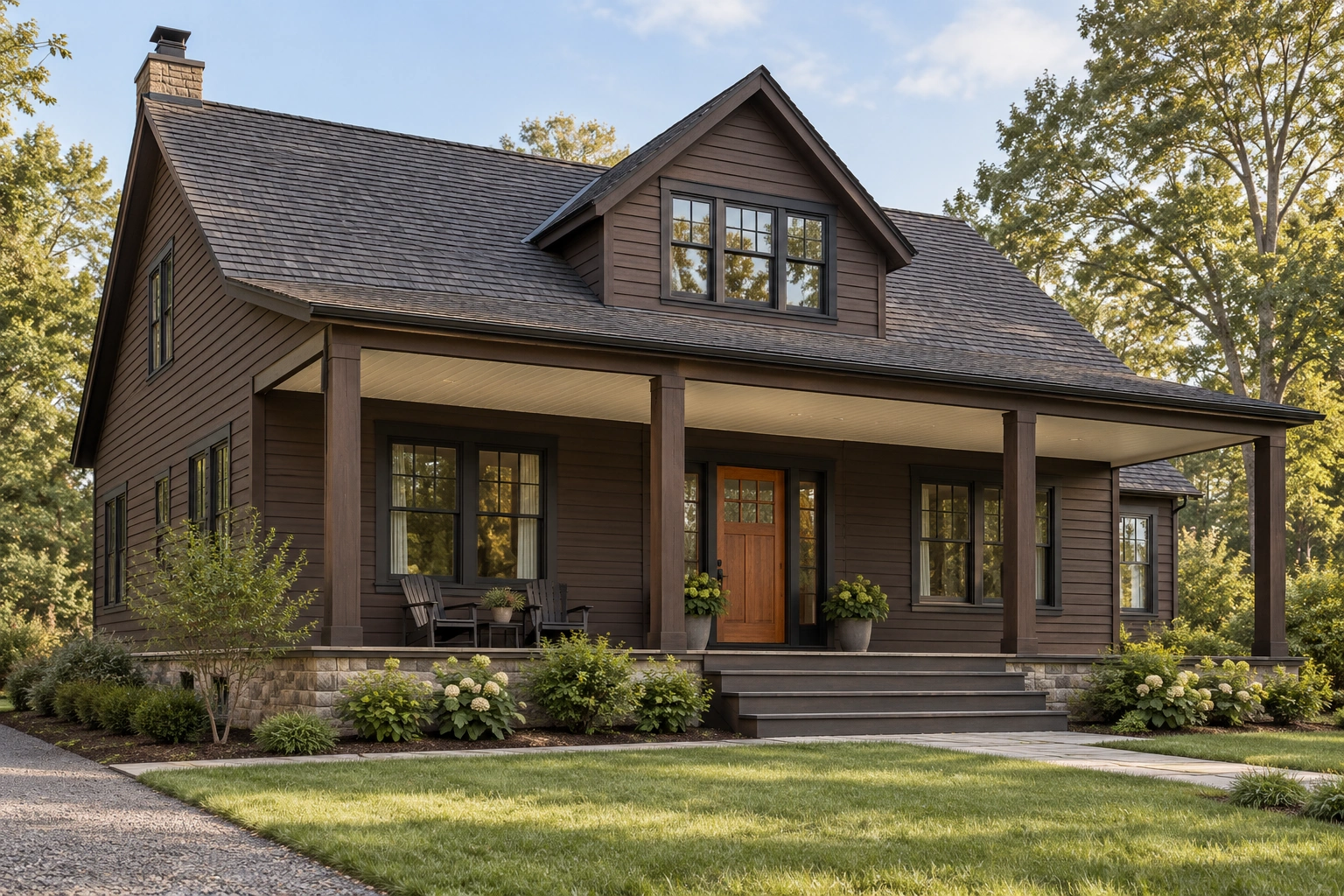
A lighter porch ceiling offers relief within a dark brown and black palette. It is particularly useful when dark walls, flooring, and furniture already surround the entrance.
Choose the ceiling color alongside the door and porch posts. Warm white, cream, or a pale neutral are options to sample. The aim is a coordinated lighter surface overhead, rather than another strong accent competing with the front door.
10. Black Trim Paired With a Wood-Toned Front Door

A wood-toned door can become the focal point of an otherwise restrained exterior. Against deep brown siding, a noticeably lighter wood tone is more likely to remain visible than another dark brown finish.
Compare the door sample with any existing wood porch posts or garage doors. They don’t need identical grain or coloring, but a very orange finish may draw more attention than you intended beside muted brown siding.
11. A Brown Exterior With a Garage Door That Blends In

A large black garage door can dominate the front of a house. For a facade where the garage occupies much of the street view, consider a door color closer to the brown siding.
Black window trim and smaller entry details can still establish the color scheme. This gives the front entrance a better chance to stand out. Test the garage color as a large area in a mockup before treating it as just another accent.
12. A Brown Split-Level Unified by Black Accents
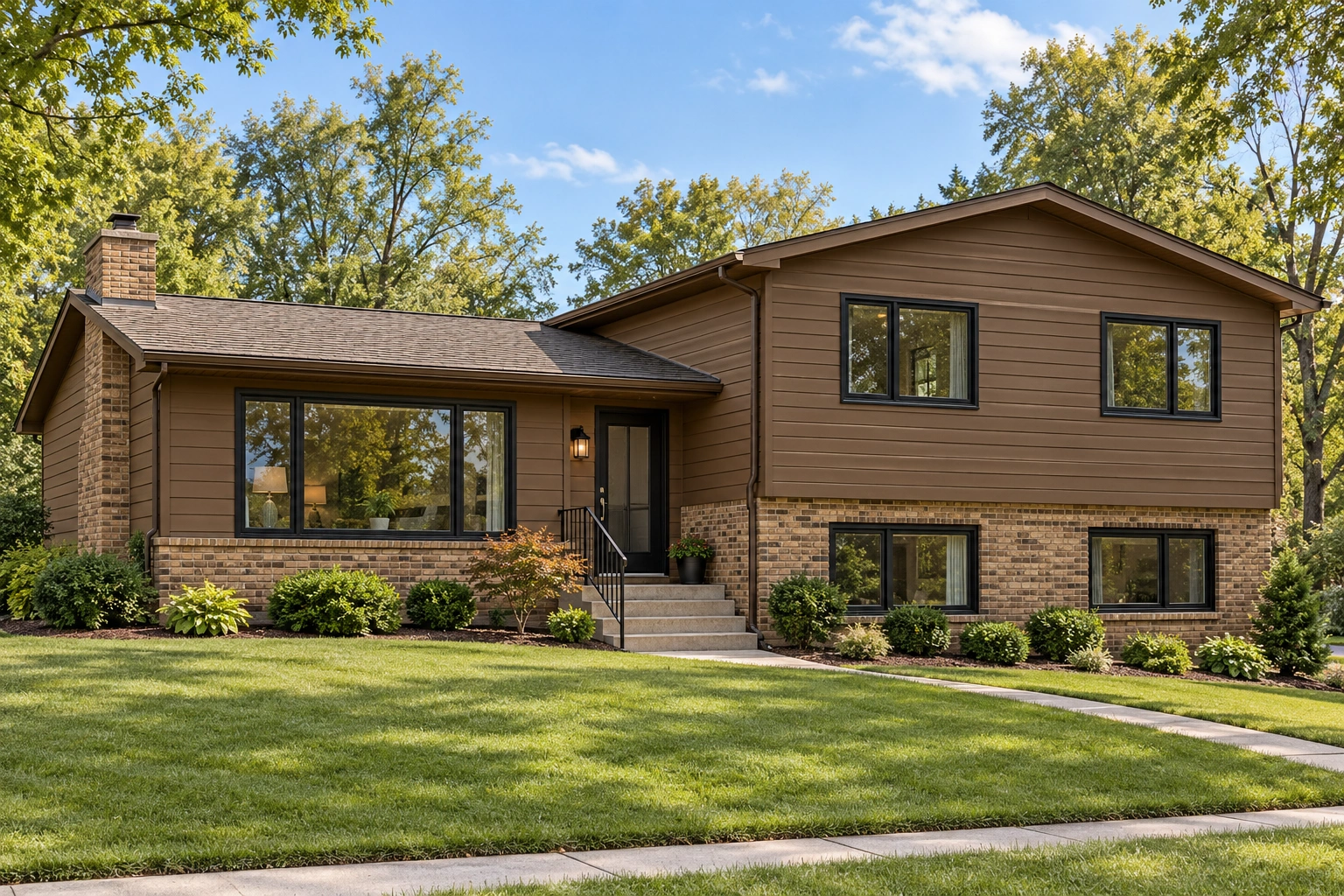
Split-level homes often combine different materials and wall heights. Repeating black at selected windows, railings, or roof edges can help those sections feel connected.
Keep the repetition consistent but selective. For example, coordinate window surrounds across both levels while allowing brown siding and masonry to retain their differences. Avoid adding dark horizontal bands unless you want to emphasize the separation between floors.
How Do You Keep Brown Siding and Black Trim From Looking Too Dark?
Keep black concentrated on selected details, preserve some lighter surfaces, and check the combination in the home’s actual light. Dark brown and black may create subtle separation rather than strong contrast, especially beneath trees or deep eaves. The amount and placement of each color matter as much as the shades themselves.
Start by identifying the darkest part of the facade. A recessed entrance may need a different treatment from a sunny wall, even when both use the same siding.
Texture can add interest, but it doesn’t automatically lighten a palette. Dark stone, dark wood, and black trim can still read as one large dark area from the street.
Also consider the undertone—the underlying reddish, golden, gray, or other cast within a color. Compare a neutral black and a softer charcoal beside your brown samples rather than assuming one will suit every exterior.
For a noticeably brighter outline, a brown house with white trim is an alternative worth comparing. Choose the amount of contrast you actually want before committing to black.
Coordinate Black Trim With Your Roof, Windows, and Doors
Start With the Existing Roof, Brick, and Stone
Begin with the finishes you plan to keep. A roof, stone chimney, or brick facade usually gives you less flexibility than repaintable trim.
Place proposed colors beside those materials instead of judging individual swatches separately. A simple planning table helps:
| Exterior element | What to assess |
| Roof | Overall color from the street and any visible color variation |
| Brick or stone | Dominant tones, lighter patches, and mortar color |
| Siding | Brown depth, undertone, texture, and current condition |
| Windows | Frame color and whether the finish will remain |
| Doors | Whether they should blend in or become focal points |
There’s no need to replace a serviceable roof simply to repeat black trim. Evaluate how the existing roof participates in the whole palette.
Decide Which Window and Roofline Details Should Be Black
Black window frames and black window trim are different things. The frame belongs to the window unit; the casing or surrounding trim borders it on the wall. Painting the casing won’t change a white window frame.
Likewise, the fascia runs along the roof edge, while the soffit covers the underside of the eaves. Gutters sit along that edge but remain separate components.
These surfaces don’t all need to match. Black fascia can connect visually with black windows while a lighter soffit provides contrast underneath. Downspouts can match the wall when you prefer them to attract less attention.
Coordinate the Front Door and Garage Without Matching Everything
Decide which door should attract attention. A black front door can repeat the trim, while a lighter wood tone or a muted painted color can distinguish the entrance.
A recessed black door may blend into its shaded surroundings. Test the proposed color from the approach to the house, not just beside the doorway.
Treat the garage separately because of its size. Coordinating it with the siding may suit your priorities better than matching the front door. Repeating a color is useful only when you also like the resulting emphasis.
Test Your Exterior Colors and Avoid Common Mistakes
Physical samples help reveal differences that screen images miss. Benjamin Moore recommends evaluating exterior colors under different lighting conditions because shade, sunlight, and the home’s orientation affect their appearance.
Use this sequence before buying the full quantity:
- Sample the brown and black together. Include a sample of any proposed lighter accent.
- Position them beside retained finishes. Check the roof where practical, plus brick, stone, and window frames.
- Review different locations and times. Include a shaded area and a brighter wall.
- Step back to the street. Check whether the trim remains visible and which feature attracts attention first.
- Confirm the intended finish. Compare the paint sheen with nearby factory-finished components.
Use sample products according to their instructions; a color-testing product may not be intended as a permanent exterior coating.
Digital mockups are useful for comparing where black goes, but they cannot confirm the real paint match. Avoid choosing solely from a photograph or assuming two products called “black” will look identical.
Keep the project scope realistic, too. Updating compatible trim and a door may deliver the change you want without replacing windows or siding.
Check Material Requirements Before Painting Trim Black

Whether trim can be painted black depends on its material, existing finish, and manufacturer’s requirements. A color that looks right in a mockup may need a particular coating system—or may be unsuitable for that product.
For vinyl siding, Sherwin-Williams warns that darker paint can cause warping or buckling and provides approved VinylSafe color options for suitable substrates. This is not permission to use any black paint on vinyl.
Cellular PVC also requires care. AZEK’s guidance distinguishes lighter colors, approved vinyl-palette colors, and special coating systems for dark or custom colors. Check the instructions for the exact trim product rather than applying a universal rule.
Before repainting factory-finished windows, metalwork, or garage doors, confirm coating compatibility and warranty conditions with the manufacturer.
For a pre-1978 US home, disturbing old paint can create lead hazards. Consult EPA lead-safe renovation guidance and consider a lead-safe certified contractor. Use qualified help for difficult-access roofline work or damaged trim rather than treating these as simple color changes.
Frequently Asked Questions
Can I Keep White Windows and Add Black Trim?
Yes. White window frames can remain inside black surrounding trim, creating a three-color combination with brown siding. The white will still be visible, so include it deliberately in your palette. A mockup can help you judge whether the layered outlines suit the size and style of your windows.
Can Black Trim Work With a Brown Roof?
Yes, black trim can work with a brown roof when the roof, siding, and masonry form a coordinated palette. Compare samples against the roof’s actual coloring rather than the word “brown.” Repeating black selectively around windows or the entry can establish the accent without requiring a black roof.
Will a Brown House With Black Trim Look Dated?
No color combination is guaranteed to stay fashionable. Its lasting appeal depends partly on how comfortably it fits the architecture and your preferences. Restrained accents and coordination with existing materials can make the choice feel considered. Avoid replacing sound features solely to reproduce a look from a trend photograph.
Choose a Balanced Look That Fits Your Home
Start with the idea closest to your home’s materials and proportions. Identify what will stay, choose where black adds useful definition, and check whether the entry or other large surfaces need a lighter touch.
Test the complete palette before committing. A balanced exterior comes from coordinated choices across the whole house, with enough contrast to show the details you want people to notice.
Disclaimer
This content is for general informational purposes only. Homes, needs, preferences, budgets, and circumstances vary. Follow manufacturer instructions and seek qualified professional advice for safety, installation, repairs, structural, electrical, plumbing, HVAC, legal, or major property decisions.