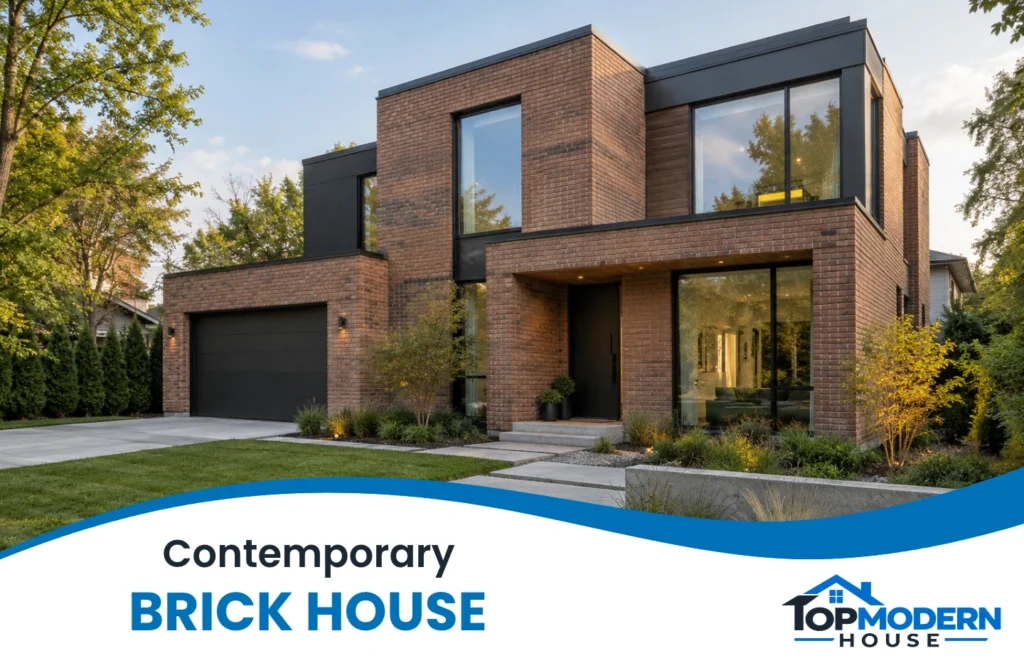
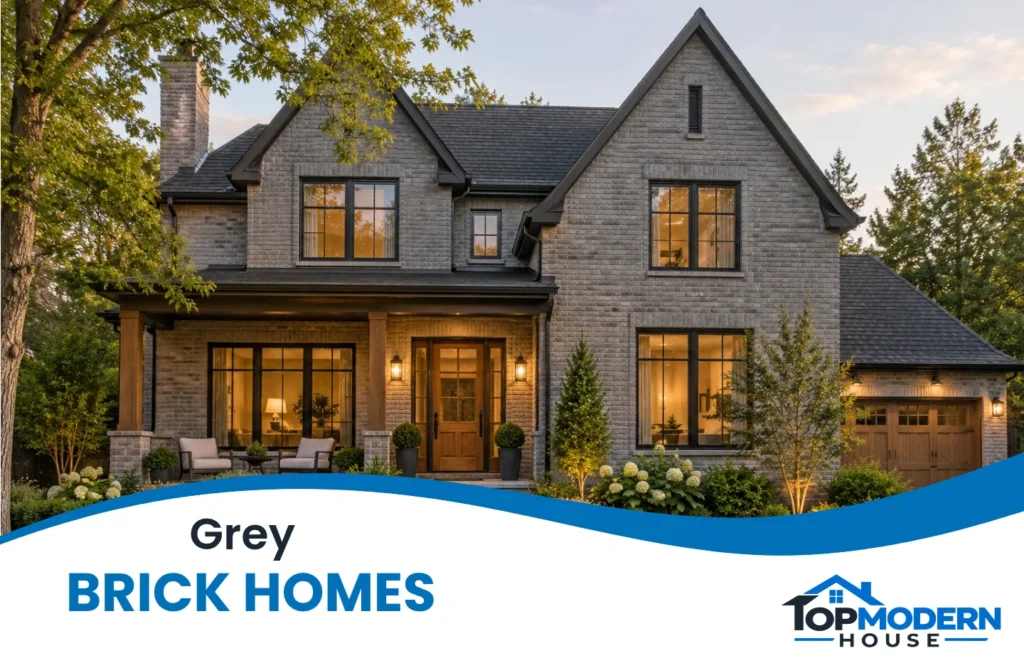
Grey brick gives a house texture and character, but the surrounding details determine whether it feels welcoming. A cold-looking entrance, mismatched trim, or an oversized dark garage door can distract from otherwise attractive masonry.
The most inviting grey brick homes combine thoughtful contrast with touches of warmth: a wood door, compatible trim, soft entrance lighting, or planting that connects the house to its setting. You don’t need to change everything at once.
These twelve ideas offer starting points for existing homes and new builds, followed by practical checks to help you choose a look that suits your materials, budget, and maintenance preferences.
Short Definition
Grey brick homes feature exterior brickwork in grey tones, either supplied in that color or finished afterward. Homeowners explore these exteriors for ideas on coordinating trim, doors, materials, and landscaping.
Topmodrenhouse Mission Statement
Topmodrenhouse helps homeowners, renters, and home lovers make informed, practical choices for comfortable, welcoming spaces that reflect their style and budget.
Quick Exterior Planning Checklist
- Identify the brick’s color variation and mortar tone.
- Start with the roof, windows, and siding you’re keeping.
- Choose one priority: contrast, warmth, greenery, or entrance definition.
- Compare physical samples together in sunlight and shade.
- Distinguish simple accent updates from permanent masonry changes.
- Check material suitability and maintenance before committing.
12 Exterior Ideas That Bring Out the Character of Grey Brick
1. Frame Grey Brick With Soft White Trim

Soft white trim can brighten window openings and give grey brick a clear outline. Against a light gray brick house, it creates gentle separation; against charcoal, the contrast becomes more pronounced.
Compare the proposed white with window frames that will remain. A creamy trim sample beside bright white vinyl windows may make the difference more noticeable than expected.
For a modest refresh, start with existing painted trim around the entrance. There’s no need to introduce white on every edge of the house.
2. Use Dark Accents to Define Architectural Details

Black, charcoal, and deep bronze can draw attention to attractive window shapes, porch railings, or an entrance canopy. A gray brick house with black trim works best when the dark elements support the architecture.
Be selective about what receives emphasis. Painting a broad garage door black may make it the most prominent feature on a small facade.
Try darker accents around the front entrance first, then assess the balance from the street. Existing white windows can remain part of the scheme.
3. Give the Front Door a Welcoming Color
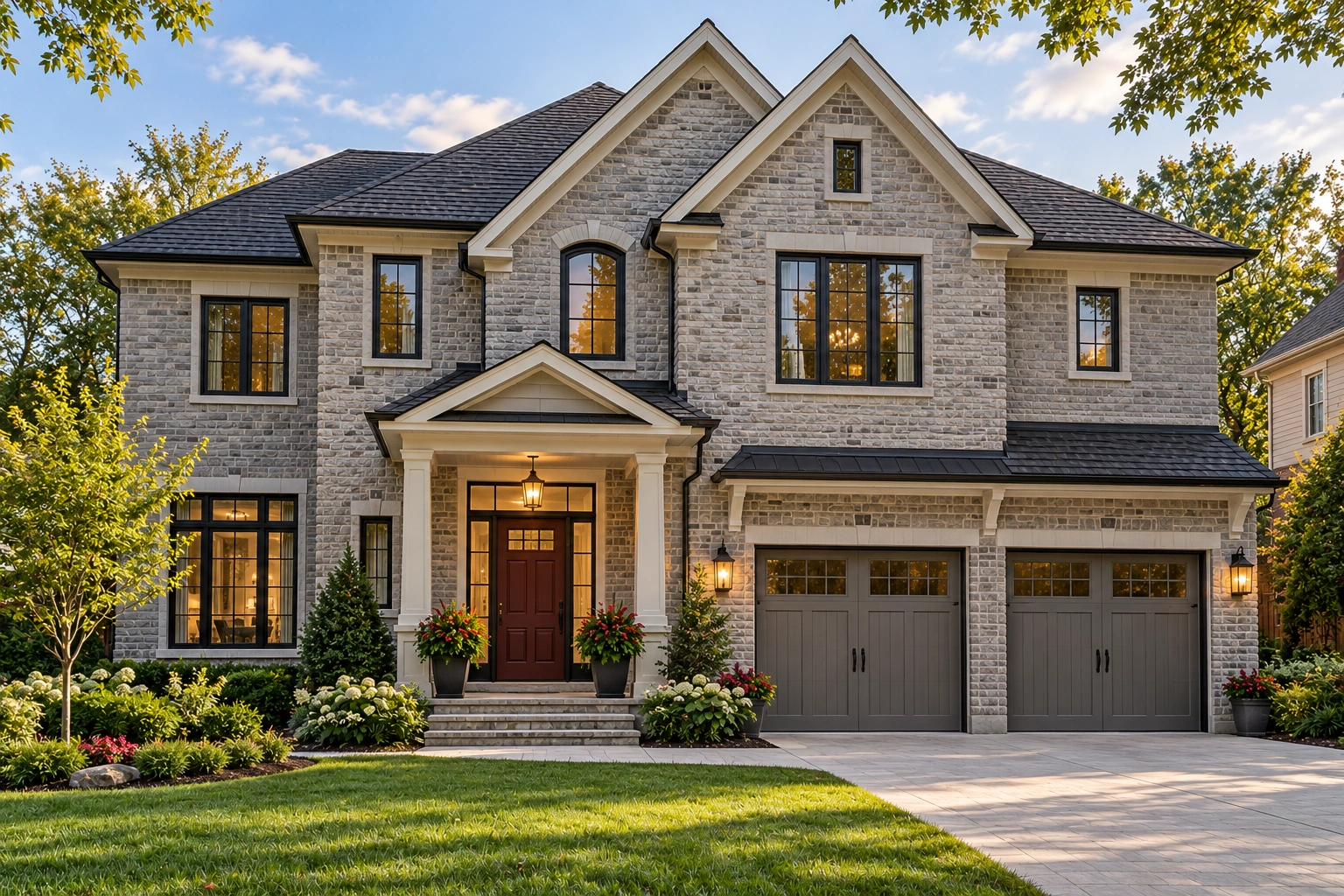
A colored front door creates a clear destination within a neutral exterior. Muted green, deep blue, burgundy, or an earthy red are useful possibilities to sample alongside grey brick.
Let the surrounding materials guide the choice. A grey-and-brown brick blend may suggest a different door color than silvery brick beside white siding.
On a house with an attached garage, reserving the stronger accent for the front door can help the entrance stand out. Repeat the color sparingly, perhaps in a planter, rather than across every accessory.
4. Bring Warmth to the Entrance With Wood

Wood introduces color and grain that can soften a grey brick exterior. A timber door, porch ceiling, or bench provides a focused place to use it without covering large areas.
For example, a charcoal facade could pair with a medium-brown door and simple planting. That combination adds warmth while allowing the brick texture to remain visible.
Consider upkeep before choosing exposed wood. Ask about the finish’s suitability for the location and expected maintenance. Structural porch-post changes need appropriate professional input.
5. Coordinate Grey Brick With Existing Siding

Grey brick can work with white, greige, or darker siding when the colors relate to the rest of the house. Begin with the siding and windows you intend to keep.
On a mostly white-sided house with a grey brick lower section, repeating a compatible trim color across both materials can create continuity. The front door can then provide a separate focal point.
Avoid choosing colors from an inspiration photo with very different proportions. A small dark siding accent will have a different effect when extended across an entire second story.
6. Choose Stone Accents That Complement the Brick

Stone can add depth around an entrance or porch base, but it introduces another pattern and color range. Compare the materials together before committing.
Look for a shared tone rather than an exact match. Grey brick with warm flecks might connect with stone containing similar taupe or brown notes.
Where the brick already has strong variation, a quieter stone may be easier to coordinate. Existing stone can also guide new trim and door colors; adding more masonry isn’t necessary to make the exterior feel complete.
7. Let a Varied Grey Brick Blend Add Depth

For new construction or planned recladding, a blend containing several grey tones can provide interest across a broad wall. Some blends include brown, buff, or near-charcoal variation.
Review a panel containing multiple bricks rather than judging one sample. Check how the overall blend reads from a distance and how individual colors appear up close.
A lively brick blend often needs fewer competing finishes. Simple trim and a restrained entrance palette can let the masonry carry the design.
8. Use Mortar Color to Create Contrast or Continuity
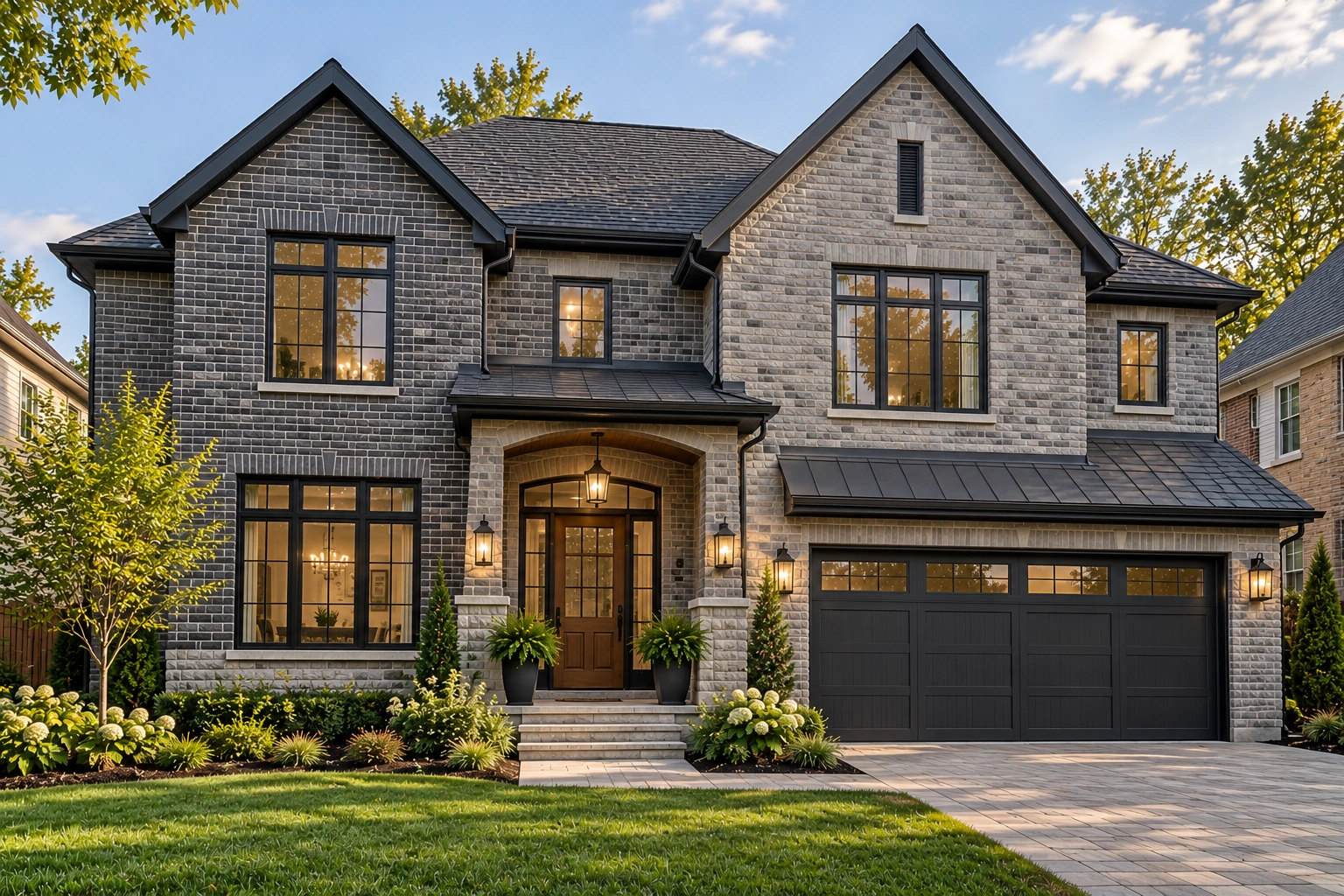
Mortar—the material filling the joints between bricks—helps determine how strongly the brick pattern stands out. Similar brick and mortar colors create a quieter appearance; contrasting joints make individual units more noticeable.
For a new build, compare sample panels using the proposed brick and mortar together. Pale mortar can create a pronounced grid against dark brick, which may or may not suit the intended look.
For an existing house, treat sound mortar as part of the palette. Changing joints is a masonry project, not a routine decorating update.
9. Make the Porch Feel Comfortable and Usable

A welcoming porch needs enough space to function. A compact chair, bench, or pair of planters can suggest everyday use without crowding the door.
On a narrow porch, one well-sized piece often works better than a complete furniture set. Check door movement and the route people use while carrying groceries or packages.
Choose outdoor furnishings that relate to the exterior. Wood, muted upholstery, or a restrained accent color can soften grey brick while keeping the entrance calm and practical.
10. Add a Soft Evening Glow Around the Entrance
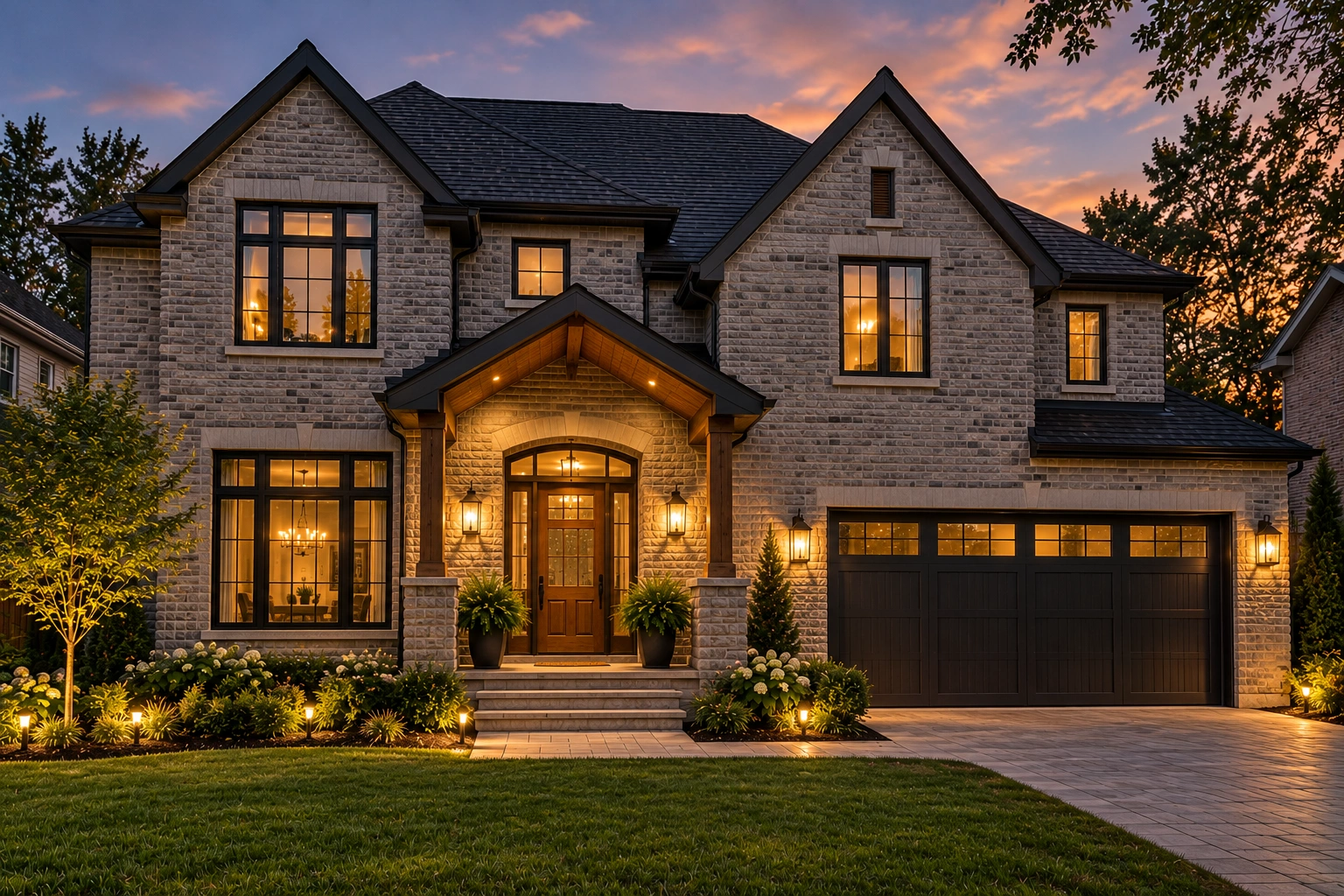
Entrance lighting can make brick texture and door details more visible after dark. Fixtures with a warm-looking light can also help a shaded porch feel more inviting.
Consider where the light falls, not just the fixture’s appearance. It should illuminate the entrance without creating uncomfortable glare from the walkway or nearby windows.
Coordinate finishes with existing hardware where practical. Have a qualified electrician handle new hardwired fixtures or relocated wiring, and select fittings suitable for their outdoor exposure.
11. Soften the Facade With Layered Planting
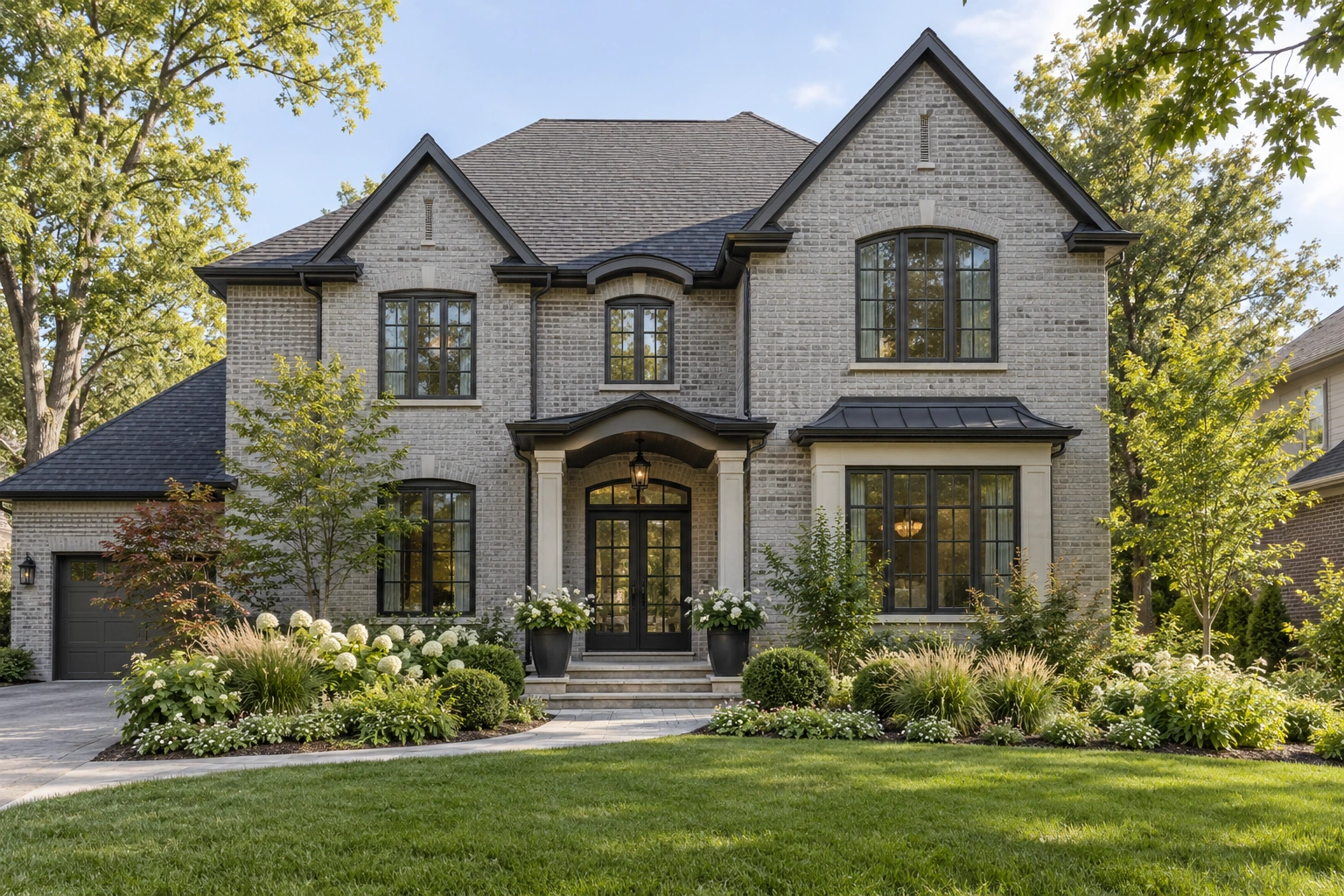
Planting introduces softer shapes around the straight lines of brickwork. A combination of shrubs, lower plants, and seasonal containers can give the exterior depth without hiding it.
Choose plants for local growing conditions, available sunlight, and mature size. A small nursery shrub may eventually cover a window or crowd the approach.
Keep the entrance visually open. On a small ranch, a restrained planting bed and one accent near the door may provide enough greenery without requiring an extensive landscape redesign.
12. Connect the Walkway to the Home’s Color Palette

The walkway helps connect the street or driveway to the entrance. Its color can repeat a tone from the brick, mortar, roof, or porch.
Existing concrete may already work well with grey masonry. Planting along the approach or coordinating nearby planters can make it feel more intentional without replacing the paving.
Where replacement is planned, compare paving samples beside the house. Strongly patterned brick, stone accents, and a busy walkway can compete; a simpler surface may give the exterior more balance.
How to Adapt These Ideas to Your Home
Start With the Brick, Roof, and Windows You’re Keeping
Useful grey brick house color schemes begin with the largest retained surfaces. Roof shingles, window frames, siding, and paving all influence which accents will look connected.
Examine several bricks and the mortar. An undertone is the subtle color beneath the main impression of grey; your brick may lean toward blue, green, brown, or beige.
Then identify the actual problem. Does the entrance disappear? Is the trim disconnected from the windows? Does the facade need greenery more than another color? Choosing one priority helps keep the project focused.
Match the Changes to Your Home’s Style and Project Scope
Borrow the useful relationship from an inspiration image rather than copying every feature. A modern grey brick house with expansive glazing might inspire a wood-and-charcoal palette for a small ranch without requiring new windows.
Separate manageable refreshes from larger commitments:
- Smaller changes: Door color, porch furnishings, containers, and suitable replacement lights.
- Planned renovation choices: Siding, paving, substantial wood detailing, or an altered entrance.
- New-build decisions: Brick blend, mortar selection, and integrated material combinations.
Consider ongoing care alongside appearance. A simpler palette with fewer exposed finishes may suit your routine better than an exterior requiring several different maintenance tasks.
Check Materials and Samples Before You Commit
Know Whether You’re Choosing Grey Brick or Changing Its Finish
Grey-colored brick products and brick coated grey are different routes to a similar appearance. Selecting brick for a new wall involves choosing the material itself; changing existing brick introduces questions about surface condition, compatibility, permanence, and future upkeep.
Paint, masonry stain, and limewash are not interchangeable treatments. The Brick Industry Association’s guidance distinguishes these finishes and recommends evaluating the wall assembly and treatment suitability before application.
A paint-color name only identifies a color. Confirm that the actual product and preparation method suit the masonry.
Compare Brick, Mortar, and Accent Samples Together
Screens and printed images are useful for narrowing choices, but physical samples should guide the final decision. Brick manufacturers also caution that displayed colors may differ from actual brick and mortar.
For new masonry, review an installed sample panel. For trim and door colors, place sample boards beside the brick and retained finishes. Check them vertically in sunlight and shade, then step back to assess the whole combination.
Avoid applying exploratory coatings directly to sound, unpainted brick until the treatment has been assessed.
Address Masonry Problems Before Cosmetic Changes
Flaking brick faces, failing joints, or recurring white deposits deserve investigation before a decorative finish. Covering the surface doesn’t resolve the underlying cause.
BIA recommends evaluating and repairing masonry problems and addressing water penetration or excess moisture before applying treatments. It also notes that some finishes are difficult to reverse and introduce ongoing maintenance
Ask a qualified masonry professional to assess concerning conditions. Follow the relevant material and coating manufacturers’ instructions rather than assuming that any product described as breathable is suitable.
Frequently Asked Questions
Can You Buy Grey Bricks Without Painting Them?
Yes. Manufacturers offer grey brick products, including different textures and shades, so an onsite paint coating isn’t necessary to obtain the color. Check physical samples, the product specification, and local availability before choosing. Manufacturer catalogs are a starting point, but the finished wall should be judged with its proposed mortar.
Does Grey Brick Work With a Brown Roof?
Yes, grey brick can work with a brown roof, particularly when the masonry includes warm grey, taupe, or brown variation. Compare the actual materials before selecting accents. A compatible wood tone or muted trim color may connect them, while a strongly blue-grey addition could make their differences more noticeable.
How Can I Make a Grey Brick Exterior More Welcoming on a Small Budget?
Focus on the entrance and what already works. Tidying the approach, rearranging porch furniture, adding a suitable planter, or refreshing a paintable front door can improve the overall impression without changing the masonry. Choose one coordinated improvement first, and reserve funds for any repairs the exterior needs.
Start With the Change Your Exterior Needs Most
A welcoming exterior comes from details that work together. Identify what feels missing—definition, warmth, greenery, or a clearer entrance—and choose the smallest useful change.
Keep sound materials, compare samples, and make permanent decisions carefully. One considered improvement can give the rest of your exterior a clear direction.
Disclaimer
This content is for general informational purposes only. Homes, needs, preferences, budgets, and situations vary. Seek qualified advice for safety, installation, repairs, structural, electrical, plumbing, HVAC, legal, or major property decisions, and follow applicable manufacturer guidance.