A backyard that sits empty most of the year is not a design problem. It is a use problem. Most yards fail because they were never planned around a real activity — a morning coffee, a family dinner, or a quiet evening outside.
The outdoor living space ideas in this guide focus on that fix. They cover zones, shade, seating, lighting, and fire features, plus the small-yard adjustments and mistakes that decide whether a space gets used or ignored.
What Is an Outdoor Living Space?
An outdoor living space is an area of your yard or patio set up for everyday activities — relaxing, dining, cooking, or gathering — with the same basic comforts as an indoor room: seating, shade, light, and a clear purpose.
It doesn’t require a large yard or a full renovation. A small patio with a rug, two chairs, and shade can work as well as a large deck, as long as each part has a job to do.
Start With How You Will Use the Space
Before buying anything, decide what the space is for. A yard built for quiet mornings needs different furniture than one built for weekend dinners. Pick one main use, then one secondary use, and let everything else follow from that choice.
This single decision prevents the most common waste: buying furniture and features that look good but never get used.
The Main Ideas, Explained
The five points below carry the most weight. Get these right, and the rest of the space falls into place.
Divide the yard into zones
An outdoor area without zones feels like an empty lot with furniture in it. Zones give each part a job: one place to sit and talk, one place to eat, one place to cook. You don’t need walls. A rug, a change in flooring, a row of planters, or the way chairs face each other can mark a zone clearly.
Keep the dining zone near the kitchen door so carrying food stays short. Put the relaxing zone where the view or the evening sun is best. Leave clear paths between zones so people can move without stepping around chairs. When zones are clear, the whole yard feels larger because every part has a reason to exist.
Build shade in layers
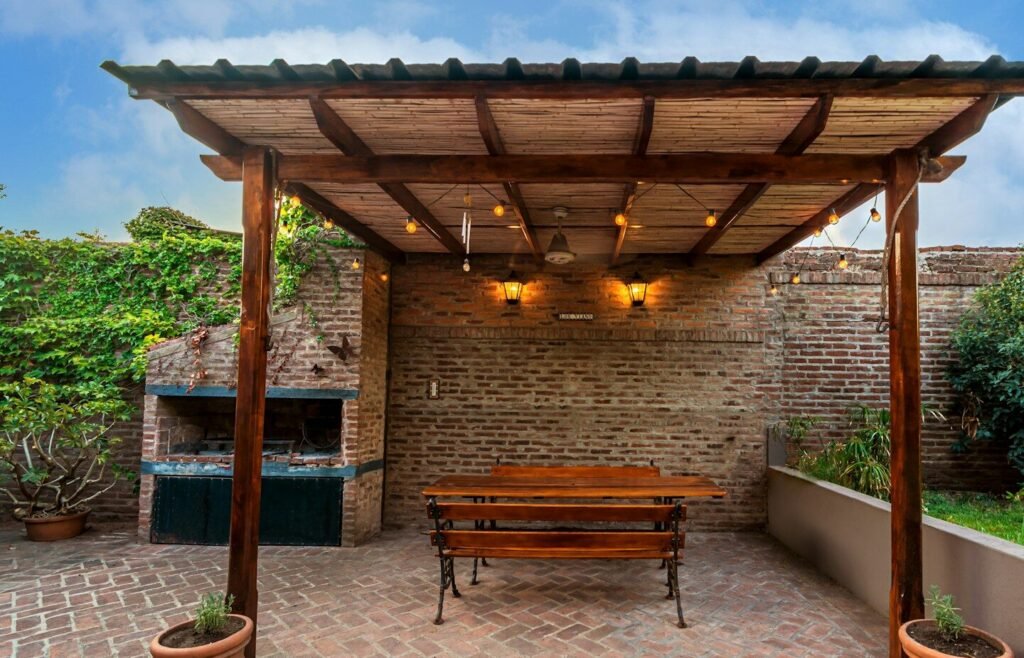
Shade decides whether a yard gets used during the day. One umbrella over a table helps, but layered shade works better: a pergola or awning for the main seating area, an umbrella that moves with the sun, and plants or screens that block low afternoon sun from the side.
Think about shade at different times of day, not just midday. Morning coffee needs eastern cover, while evening meals need western cover. Retractable options help here, since they let you open the sky again at night. Whatever you choose, make sure the structure is properly anchored, and for larger builds like pergolas or roofed covers, have a professional check the work.
Choose seating for comfort and weather
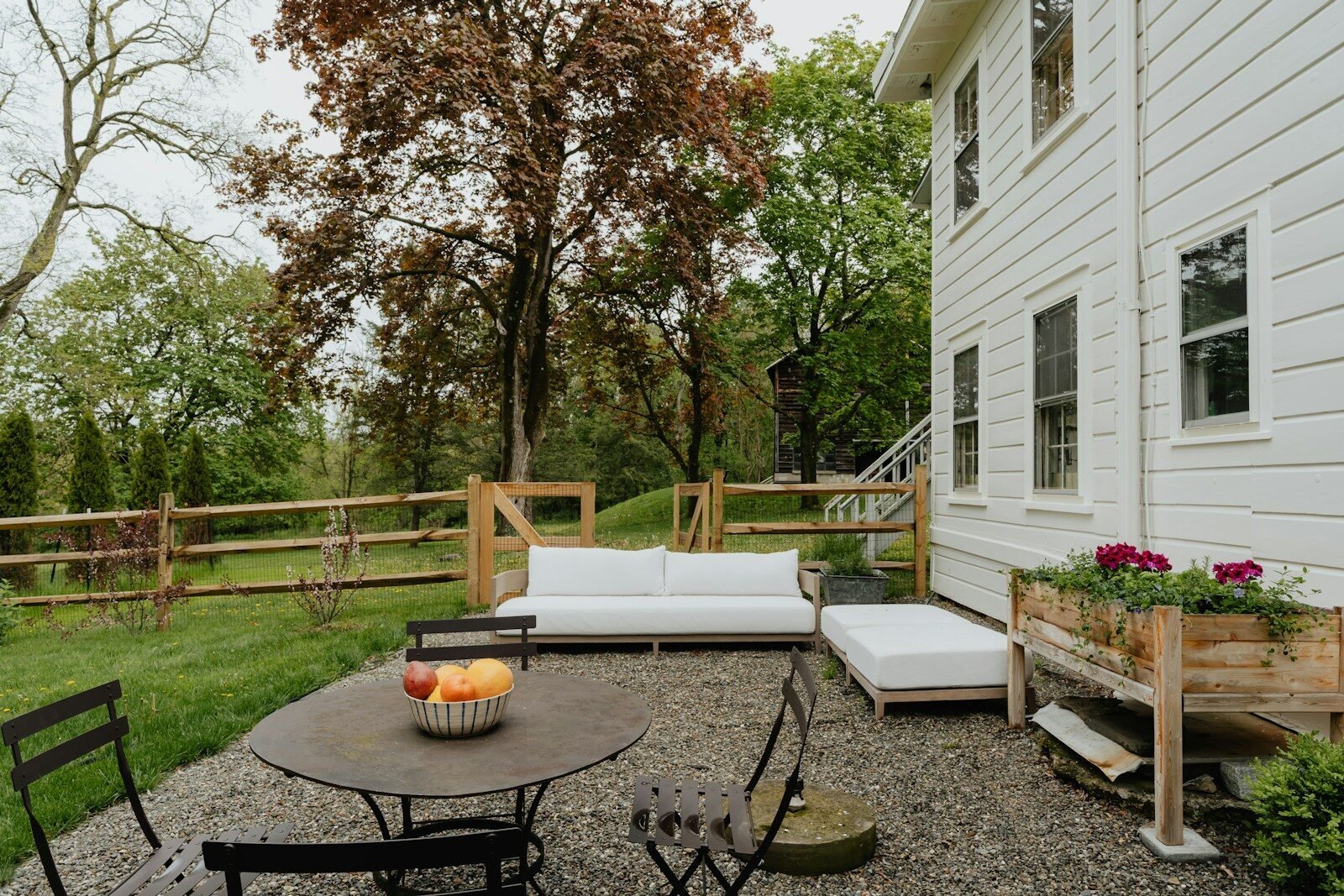 Seating is where comfort lives or dies. Deep chairs with weather-resistant cushions invite people to stay, while hard, shallow chairs send them back inside. Look for frames that handle rain and sun, and cushion covers you can remove and wash.
Mix seating types instead of buying one matching set. A sofa or sectional for lounging, upright chairs for dining, and a bench or stool that moves where it is needed covers more situations than a single set. Measure first, and leave room to walk around each piece. Furniture that fits the space always looks better than furniture that fills it.
Layer the lighting for evenings
A yard without lighting closes at sunset. Layered lighting keeps it open: string lights or a pendant over the seating area for general glow, path lights along walkways for safety, and lanterns on tables for a softer feel. Solar options work well for paths and accents because they need no wiring.
Keep the light warm and low rather than bright and harsh. Bright white floodlights make a yard feel like a parking lot. For any wired lighting, outdoor outlets, or fixtures near water, use a licensed electrician and weather-rated fittings. Good lighting is both a simple way to extend the season and an easy safety upgrade.
Add a fire feature as the gathering point
Few features change how a yard is used as much as a fire pit or outdoor fireplace. It gives people a reason to stay outside on cool evenings and a natural place to gather around. A portable fire bowl suits small yards and renters, while a built-in feature suits larger spaces and permanent setups.
Place it with care. Keep it clear of overhanging branches, fences, and flammable surfaces, and check local fire rules before you buy or build. For gas-fed features, installation belongs to a licensed professional. Wood-burning options need a safe surface underneath and a way to store wood away from the house.
More Ideas in Brief
- An outdoor dining setup near the kitchen door with an easy-to-clean table.
- A large outdoor rug under the seating area so all front legs sit on it.
- Planters and greenery to soften edges and add privacy.
- A storage bench or deck box for cushions, toys, and tools.
- A clear path from the house to each zone, lit at night.
- A small water feature or bird bath for sound and movement.
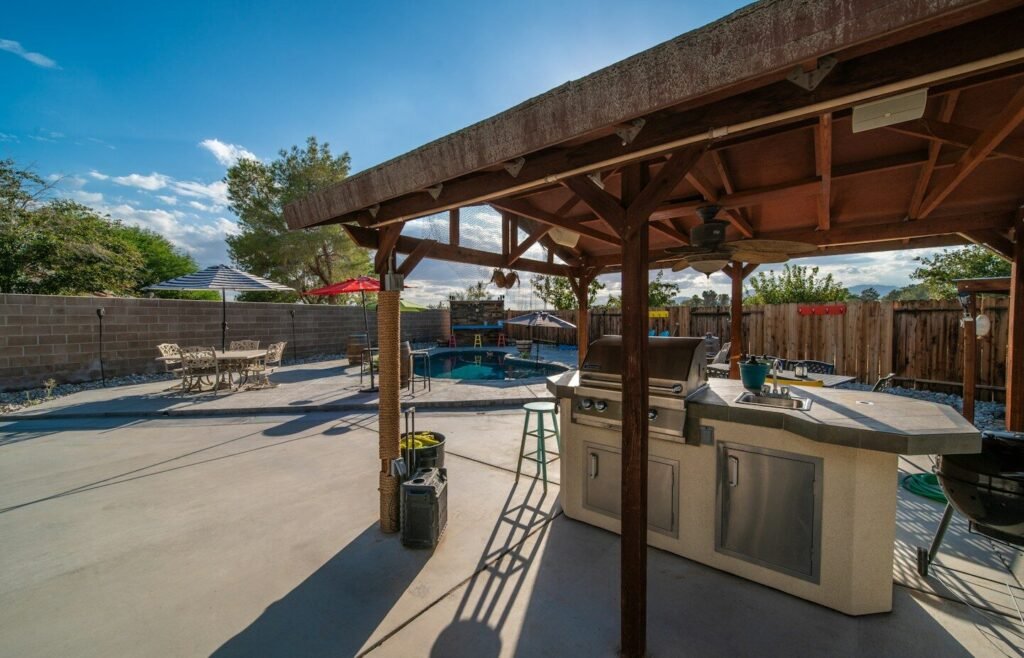
- A simple grill station with prep space and a landing spot for hot food.
- Privacy screens or tall plants where neighbors overlook the yard.
Small Yards Need a Different Approach
Small yards punish oversized choices. Measure the space before buying anything, and choose furniture that does two jobs, like a bench with storage or a table that folds away.
Use fewer, larger plants instead of many small pots, which tend to look cluttered. One rug, large enough for the seating to sit on, makes the whole area read as a room rather than a leftover strip.
Mistakes That Waste Money and Space
- Buying furniture before measuring the space.
- Adding too many features at once, which crowds the yard.
- Ignoring drainage, so patios flood and beds stay soggy.
- Forgetting storage, so cushions and tools end up piled in view.
- Skipping lighting, which makes the yard unusable after dark.
- Planting without checking how large plants grow.
Safety Notes Before You Build
Outdoor projects touch systems that deserve respect. Electrical wiring, gas lines, and anything structural — such as deck footings, roofed covers, or retaining walls — should be handled or checked by licensed professionals.
Follow the manufacturer’s instructions for grills and heaters, keep heat sources clear of structures and plants, and check local rules for fire features and building permits before starting work.
FAQs
How much space do I need for an outdoor living area?
You need enough room for seating and a path around it, not a large yard. A small patio or balcony can work if you choose compact, multi-purpose furniture and one clear use for the space. Measure first, then buy furniture that fits with room to walk around it.
What is the best shade option for a patio?
It depends on your sun and budget. A fixed pergola or awning suits a main seating area used daily, while a large umbrella or shade sail suits a smaller space or a lower budget. Layering two options covers more times of day than any single one.
How do I keep outdoor furniture looking good?
Choose weather-resistant frames and removable, washable cushion covers. Store cushions in a deck box or shed during heavy rain and winter, and clean frames with mild soap and water. Covers help, but airflow matters too, so avoid sealing damp cushions in plastic.
Can I use my outdoor space in winter?
Yes, with the right setup. A fire feature, wind protection, and warm throws extend the season in many climates. In cold or snowy regions, store soft furnishings indoors and choose furniture that handles freeze and thaw without cracking.
Conclusion
These outdoor living space ideas share one rule: plan around how you will actually use the yard. Zones, layered shade, comfortable seating, evening lighting, and a gathering point do more than any single purchase. Start with one zone, use it for a few weeks, and add the next piece only when you know it will earn its place.