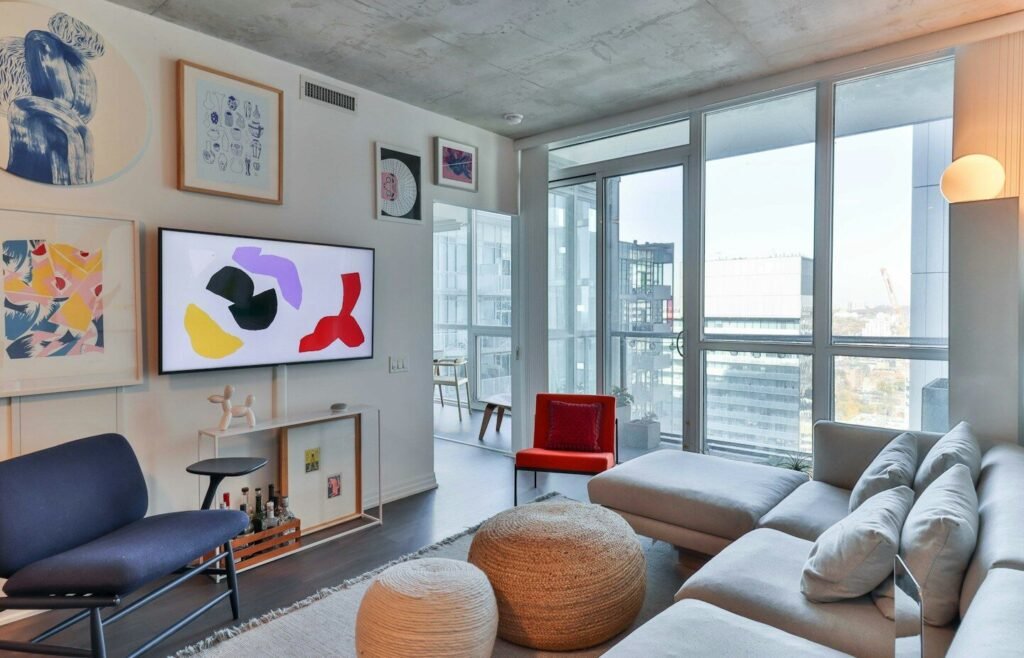
A modern apartment can look sharp in photos and still feel cold when you actually live in it. Bare walls, hard surfaces, and matching furniture can leave a place feeling more like a showroom than a home.
The fix is not more stuff. It is choosing the right few moves: a calm base, one strong piece per room, warm light, real texture, and storage that hides the mess. This guide covers how to style a modern apartment around those moves, with quick wins and room-by-room notes to finish the job.
What “Modern” Means in Apartment Styling
Modern here does not mean bare, white, or expensive. It means clean lines, simple shapes, furniture that earns its place, and a calm base you can warm up with texture and light.
If your apartment already has plain walls and simple furniture, you are most of the way there. The rest of this guide is about adding the warmth and personality that keep modern from feeling cold.
The Main Moves That Change Everything
These five points do most of the work. Get them right and the smaller details almost take care of themselves.
1. Start with a calm neutral base, then add warmth
Every well-styled modern apartment starts with a quiet background. Walls in warm white, soft beige, or light grey give the eye somewhere to rest and make the whole place feel larger and calmer. Avoid whites with a cold blue undertone, which can make a room feel stark, especially in low light.
Once the base is calm, add warmth in small, repeated doses. Pick one accent color you like — olive, terracotta, deep green, or navy — and repeat it in two or three places: cushions, a throw, a piece of art. Repeating one shade ties rooms together without any need for bold feature walls.
A common guideline designers use is to keep roughly 60 percent of a room neutral, 30 percent a secondary tone, and 10 percent accent. You don’t need to measure it. Just check that the neutral is clearly doing most of the work and the accent is not fighting it.
2. Let one large piece anchor each room
Small furniture scattered around a room is the fastest way to make an apartment feel unsettled. Instead, give each room one large piece that grounds it: a proper sofa in the living room, a bed with a real headboard in the bedroom, a table you can actually sit at in the dining corner.
Place that anchor against the main wall or in the natural focal spot, and let smaller pieces support it rather than compete with it. A rug that sits under the front legs of the sofa, a floor lamp beside an armchair, and a coffee table within easy reach all help the room read as one arrangement instead of separate objects.
Scale matters more than style here. A sofa that is too small for the wall behind it will look lost, while one that fits the wall makes the whole room feel planned. Leave enough walking space around it — tight paths make even a nice room feel cramped.
3. Layer your lighting instead of relying on one ceiling light
Nothing flattens a modern apartment faster than a single bright ceiling light. It kills shadows, washes out texture, and makes evenings feel like an office.
Use three layers instead. General light comes from the ceiling or a tall floor lamp and covers the room. Task light sits where you actually do things: a reading lamp by the sofa, a small lamp on a desk, a light over the kitchen counter. Accent light is the soft glow that makes a room feel finished in the evening: a warm table lamp, a candle-style light on a shelf, or a lamp behind a plant.
Keep the light warm in living areas and bedrooms, and put living-area lamps on dimmers where you can. Renters don’t need wiring changes to get this effect — plug-in floor and table lamps do the job, and battery or plug-in strip lights can warm up a dark shelf. For any work that involves your apartment’s wiring, hire a licensed electrician rather than attempting it yourself.
4. Use texture to keep modern from feeling cold
Modern rooms go cold when everything is smooth, hard, and the same finish. Texture is what fixes that, and it costs far less than new furniture.
Mix materials that feel different to the eye and the hand: a wool or cotton throw over a leather or fabric sofa, linen cushions beside a velvet one, a wooden tray on a metal side table, a woven basket for blankets. A large rug with some pile underfoot changes a hard-floored room more than almost any other single item.
Plants do similar work. A tall plant in a corner softens straight lines, and a few smaller ones on shelves break up flat surfaces. If real plants don’t survive in your light, good-quality faux plants give the same visual softness.
The rule is simple: if a room looks flat in a photo, it probably needs more texture, not more objects.
5. Give everything a closed home with smart storage
Modern styling only works when clutter has somewhere to go, because open surfaces are part of the look. Closed storage should come first: cabinets, drawers, boxes, and baskets that hide the everyday mess.
Choose furniture that stores as well as it looks. A bed with drawers underneath, a coffee table with a shelf, an ottoman that opens, and a TV bench with doors all remove clutter without adding bulk. In small apartments, use the walls: a tall narrow bookcase, hooks inside a closet door, and a shelf above a doorway all add storage without taking floor space.
Then set one rule for surfaces: only things you use daily or truly love stay out. Everything else goes behind a door. An entryway drop zone — one hook, one small tray, one basket — stops bags and keys from spreading through the apartment.
Quick Wins Worth Trying
- Hang a large mirror opposite a window to bounce daylight deeper into the room.
- Hang curtains high and wide so windows look taller and let in more light.
- Hang art at eye level, roughly where you naturally look when standing.
- Group decor in odd numbers — three objects read as a set, two can look like a pair of bookends.
- Add one plant to every room you spend time in.
- Match your hardware finishes (black, brass, or chrome) so details feel intentional.
- Use one rug style or color family across open-plan areas to tie them together.
Room-by-Room Notes
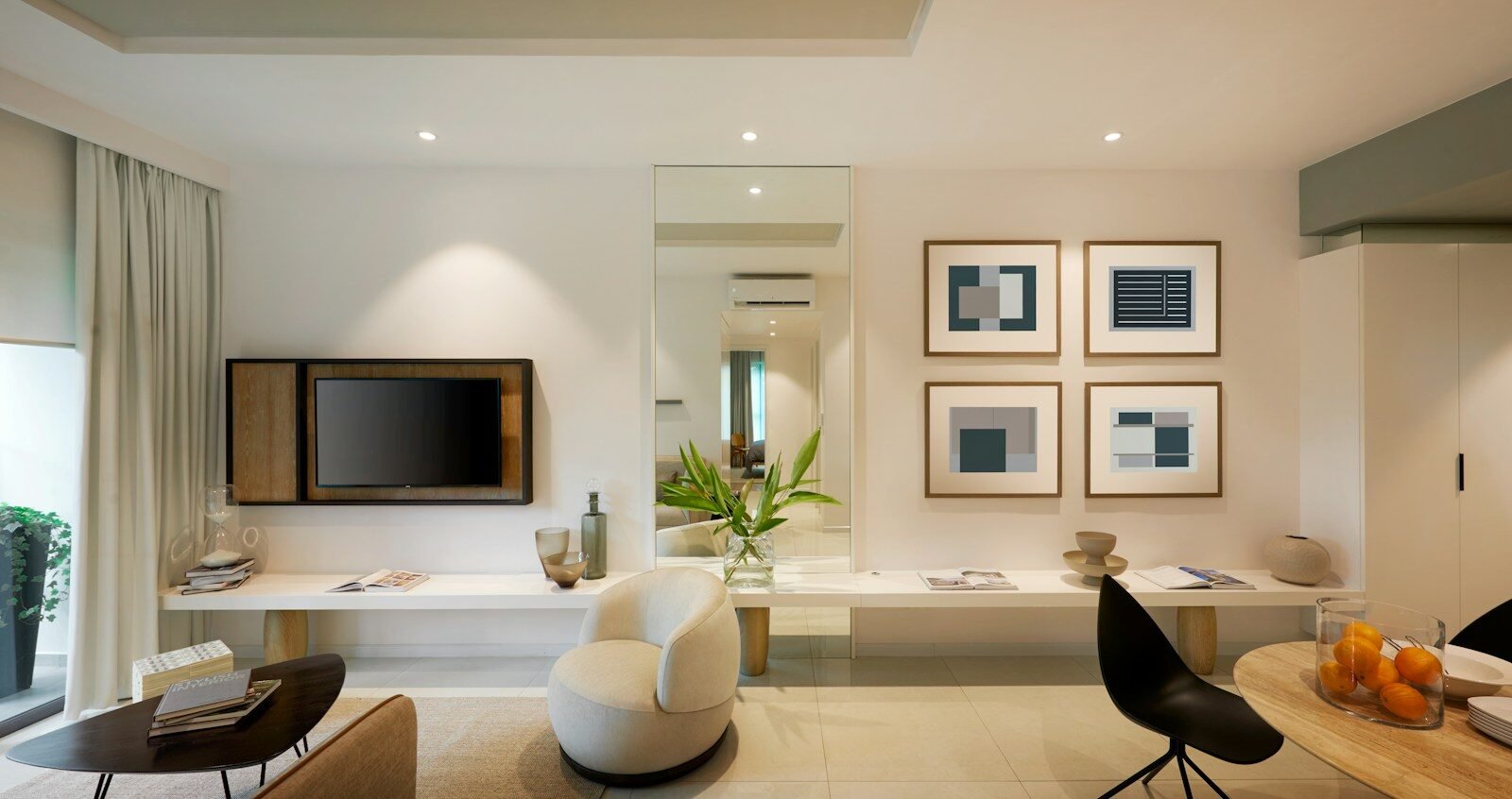 Living room: anchor with the sofa, add one rug, one floor lamp, and one large piece of art. Keep the coffee table mostly clear.
Bedroom: dress the bed properly — layered bedding is the whole room’s styling in one move — and add warm bedside lamps instead of a ceiling light.
Kitchen and dining corner: clear counters, one small plant, and a pendant or table lamp over the table do more than new accessories.
Entryway: a mirror, a hook, and a small tray are enough. This is the first thing you see coming home, so keep it clear.
Bathroom: matching towels, one plant that likes humidity, and a tidy counter change the room without any renovation.
Mistakes That Make Modern Apartments Feel Cold
- Painting or furnishing everything in cold white with no warm material to balance it.
- Buying furniture that is too small for the room and letting it float without an anchor.
- Buying a full matching set from one collection, which reads like a showroom.
- Filling shelves with many small decorations instead of a few larger pieces.
- Leaving one harsh ceiling light as the only light source.
- Pushing tall furniture in front of windows and blocking daylight.
FAQs
Can I style a modern apartment on a low budget?
Yes. Start with what you already own: rearrange furniture around one anchor piece, clear surfaces, and add warmth with a rug, a throw, and warm lamps. Paint is the cheapest big change where your lease allows it, and removable wallpaper or art can do similar work where it doesn’t.
I’m renting and can’t paint. What still works?
Almost everything in this guide. Rugs, curtains, lamps, mirrors, plants, removable hooks, and freestanding furniture all change a room without touching the walls. Peel-and-stick wallpaper and removable decals can add pattern, and they come down cleanly when you move out.
How do I keep a modern apartment from looking cluttered?
Give every item a closed home and keep surfaces mostly clear. If something has no place, it either needs storage or needs to leave. One large decor piece beats five small ones, and a weekly five-minute reset of surfaces keeps the look intact.
How many colors should I use?
One neutral base, one secondary tone, and one accent are enough for most apartments. Repeat the accent in a few places rather than adding new colors in every room, and the whole apartment will feel connected.
What if my apartment is very small?
Use the same moves, just smaller: one anchor piece per room, a light palette, mirrors, and furniture that stores things. Avoid pushing everything against the walls — pulling the sofa a few inches out and using a rug to define the seating area can actually make a small room feel larger, not smaller.
Conclusion
Learning how to style a modern apartment comes down to a calm base, one strong piece per room, layered warm light, real texture, and storage that hides the rest. Get those five moves right and the apartment stops feeling like a showroom and starts feeling like home. Start with the room you spend the most time in, change one thing this weekend, and build from there.