
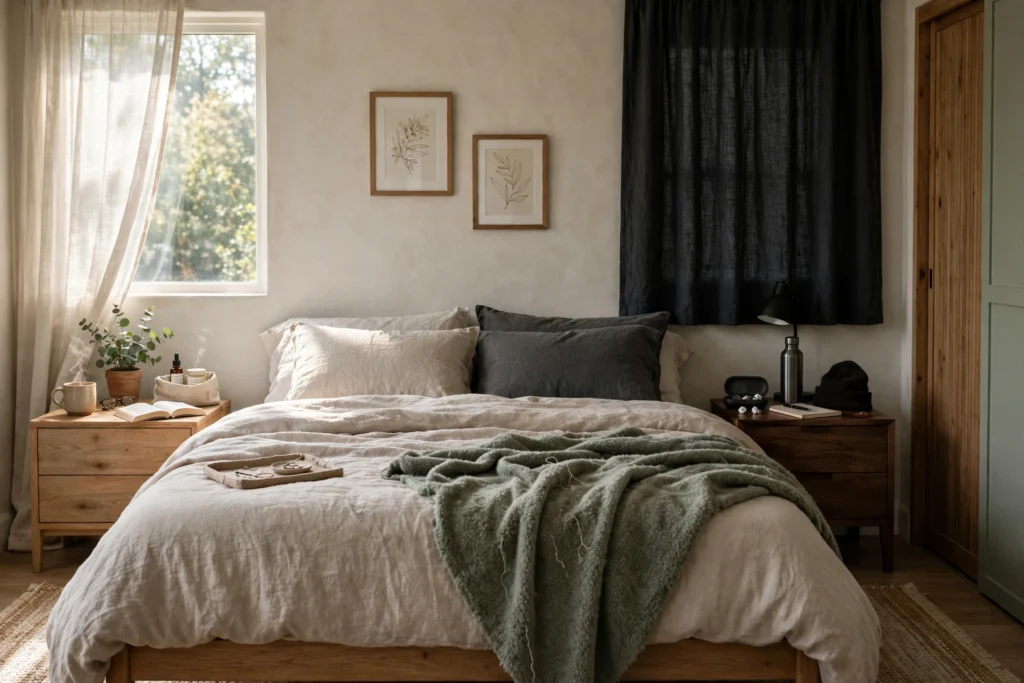
Sharing a bedroom means sharing more than a bed. You share closet space, morning routines, light preferences, and ideas about what feels restful. When those preferences differ, decorating can turn into a quiet tug-of-war.
The goal is not for one person to win. It’s to build a room that feels calm for both of you, with space for each person’s habits and tastes. That usually takes a bit of conversation, a few compromises, and choices that work in daily life, not just in a photo.
Start by talking about how you actually use the room. Do you read in bed while the other person sleeps? Does one of you get up early and need a dark room, while the other likes morning light? Those answers matter more than any single trend.
Find a Shared Style Before You Shop

It’s tempting to start with shopping, but a short style conversation first will save you returns and frustration. Each of you can pick three words for the room you want. Words like calm, warm, simple, cozy, modern, or natural give you a starting point without locking you into one exact look.
Look for overlap. You might both choose calm and warm, even if one of you leans modern and the other leans traditional. That overlap becomes your base. From there, you can add personal touches in smaller doses, rather than letting two very different styles compete.
Photos help, too. Save a few images you both like and a few you don’t. Often, the images you reject tell you just as much as the ones you love. A pattern one person finds busy, a color the other finds cold, or a headboard that feels too tall are useful clues.
Agree on a Color Palette You Both Can Live With

Color sets the mood of a bedroom more than almost anything else. Soft neutrals, muted blues, warm grays, sage greens, and gentle earth tones tend to feel restful and suit a wide range of tastes.
Pick one main wall color, one bedding color family, and one or two accent colors. That limit keeps the room from feeling scattered. For example, warm white walls, linen-colored bedding, and terracotta or deep green accents can feel warm without being loud.
Test paint in the room, not just on a small card at the store. Paint a large swatch on the wall and look at it in daylight, at dusk, and with lamps on. Colors shift a lot with light, and a shade that looked soft in the store can feel cold or pink at home.
Build the Bed Around Comfort, Not Just Looks

The bed is the center of the room, and comfort differences show up there first. One partner may sleep warm while the other feels cold. One may like a firm mattress, the other a softer one. Those are real needs, not small preferences.
Separate bedding can solve a surprising number of sleep disagreements. Two lighter duvets or top sheets, instead of one shared heavy comforter, let each person adjust warmth without waking the other. It looks tidy if the duvets are in matching or coordinating covers, and it feels much more comfortable at night.
Pillows are another easy compromise. You don’t need matching pillows if your sleep needs differ. Choose pillow types that suit each sleeper, then use matching pillowcases or shams on top for a unified look during the day.
Give Each Person a Side That Works

Even in a shared room, each person needs a side that functions for them. That starts with the nightstand. Each side should have room for a lamp, a phone charger, a glass of water, and whatever you reach for at night.
If space is tight, a small shelf, a wall-mounted ledge, or a narrow table can work better than a bulky nightstand that crowds the bed. Wall-mounted reading lights free up surface space and let each person control their own light without disturbing the other.
Closet and drawer space deserves the same attention. Unequal storage is a common source of friction. Measure what you both own, then divide space by need rather than by habit. A small dresser for one person, a closet section for the other, or labeled bins inside a shared closet can keep things fair and calm.
A chair, a small bench, or a spot to lay out tomorrow’s clothes can also help. It gives each person a place for morning routines without piling clothes on the bed or a chair that was meant for sitting.
Lighting for Early Risers and Night Owls
Lighting is one of the most common bedroom disagreements. One partner may want to read late, while the other wants darkness to sleep. Good lighting design can respect both needs.
Dimmable overhead lights are a solid starting point. They let you brighten the room for cleaning or getting dressed, then lower the light for winding down. Separate bedside lamps, with their own switches, give each person control over their side.
If one of you reads in bed, a focused reading light that points down at the book, rather than out into the room, is kinder to the sleeping partner. Clip-on lights, wall sconces with adjustable arms, and small bedside lamps with shades that direct light downward all help.

Storage That Keeps the Room Calm

Clutter makes a bedroom feel tense, even when the decor is lovely. Storage that fits your habits is more useful than storage that just looks tidy in a photo.
Start with the spots where clutter collects. Is it laundry, books, chargers, shoes, or paperwork? Each type of clutter needs a different home. A lidded basket for laundry, a small tray for chargers, and a closed bin for shoes can prevent piles from spreading.
Under-bed storage works well for seasonal clothes, extra bedding, or items you use rarely. Choose bins that slide easily and have lids to keep dust out. If you use the space often, open baskets may be easier, but they can look messy if they are not kept neat.
In the closet, matching hangers, a second hanging rod, or shelf dividers can make shared space feel more orderly. You don’t need a full closet system to see a difference. A few simple organizers, chosen for what you actually store, often do the job.
Make Room for Both Personalities

A shared bedroom should still feel personal. The trick is to give each person’s taste a clear, contained place, rather than letting it spread across the whole room.
Artwork is a good place to start. Choose one or two larger pieces together for the main wall, then let each person pick a smaller piece for their side of the room. That way, the room feels shared, but not generic.
Books, photos, and small collections can live on a nightstand, a shelf, or a dresser top that belongs to one person. Framing photos in similar frames, or using a consistent color for small items, can keep personal displays from looking scattered.
Hobbies need a plan, too. If one of you likes to journal, knit, or sketch in bed, a small basket or tray for supplies keeps the hobby close without taking over the room. If the other prefers a clear, minimal bedside, that boundary is worth respecting.
Talk about what “personal” means to each of you. For some people, it’s color and pattern. For others, it’s a favorite chair, a scent, or a soft throw. Naming those things early makes it easier to include them without guesswork.
Common Mistakes Couples Make When Decorating
One common mistake is decorating for guests instead of for yourselves. A bedroom that looks impressive but feels stiff will not help you rest. Choose comfort first, then polish the look around it.
Another mistake is buying everything as a matching set. A full matching bedroom set can feel flat and impersonal. Mixing a wood bed frame with different nightstands, or pairing simple bedding with a patterned throw, often feels more natural and more personal.
Skipping the conversation about budget is another trap. Set a shared budget before you shop, and agree on where to spend more and where to save. A good mattress and good lighting are usually worth more investment than decorative items you may change later.
It’s also easy to forget about sound and temperature. A noisy fan, a drafty window, or a room that runs hot can undo even the nicest decor. Check window seals, consider heavier curtains for drafty windows, and talk about sleep temperature before you choose heavy bedding.
Finally, don’t try to finish everything at once. Live in the room for a few weeks with the basics in place. You will learn what you actually miss, whether it’s a reading light, more drawer space, or a softer rug, and you can add those pieces with more confidence.
How to Handle Different Tastes Without a Standoff
When tastes clash, it helps to separate the room into layers. The largest surfaces, like walls, floors, and the bed frame, should reflect what you both agree on. Smaller layers, like pillows, art, and throws, can reflect individual taste.
Try a simple test: each person picks one item they love and one item they dislike, then talk about why. Often, the dislike is about a specific color, pattern size, or material, not the whole style. Changing one detail can turn a rejected idea into a shared one.
Trade-offs help, too. One person might choose the wall color while the other chooses the bedding. Or one person picks the main art while the other picks the lamps. Taking turns keeps the process fair and prevents one voice from dominating.
If you reach a true deadlock, pause and live with a neutral placeholder for a while. A plain white duvet cover, a simple curtain, or a blank wall is easier to live with than a choice one person resents. You can revisit the decision later with fresh eyes.
Conclusion
A bedroom that works for two people is built on shared comfort, fair storage, and lighting that respects different schedules. It does not require matching tastes in every detail. It requires a calm base, a few personal touches, and choices that hold up in daily life.
Talk through color, bedding, and storage together, test ideas in real light, and leave room to adjust as you live in the space. With that approach, bedroom decorating ideas for couples become less about compromise and more about building a room you both look forward to coming home to.
Disclaimer: This content is for general informational purposes only. Individual homes, needs, preferences, budgets, and situations may vary. For safety, installation, repair, legal, structural, electrical, plumbing, HVAC, or major property decisions, consider advice from a qualified professional before acting.