A kitchen window does more than let daylight in. It shapes how the room feels in the morning, how pleasant dishwashing feels, and whether the space looks open or closed in. It also affects privacy, cleaning, and how counters and seating work around it.
The best plan usually starts with how you use the kitchen. Do you cook facing a wall, stand at the sink for long stretches, or eat breakfast near a sunny corner? Those habits point to different shapes, heights, and treatments, and they help you avoid a look that does not suit daily life. Good kitchen window ideas start with those habits, not with a style picked from a photo alone.
Windows Over the Sink

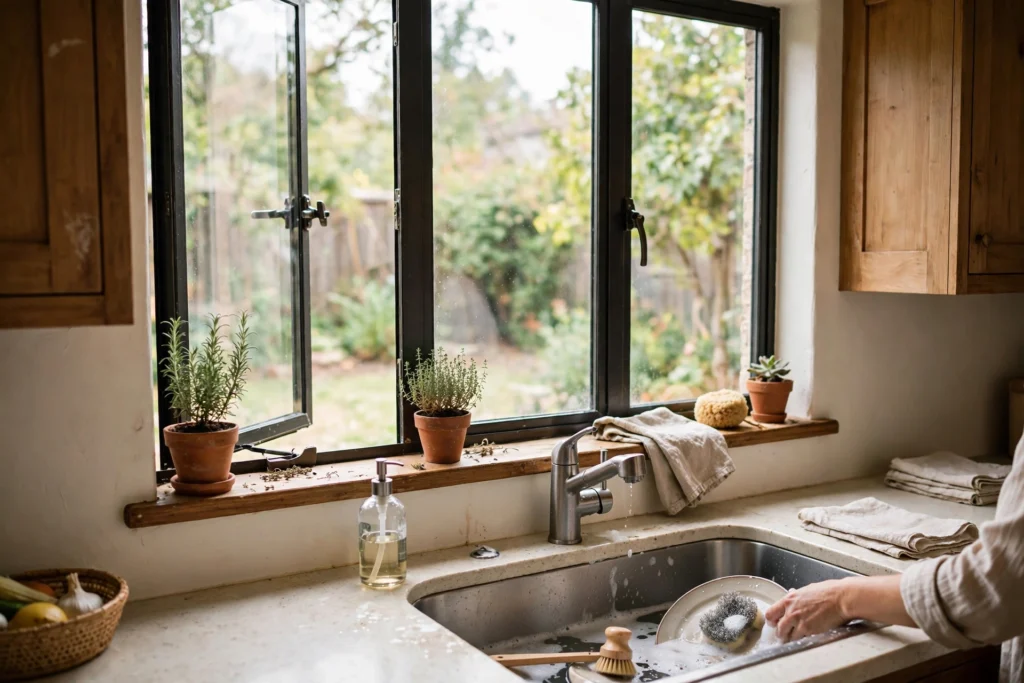
A sink window is one of the most useful spots in a kitchen. It gives you a pleasant view while you wash dishes, and it brings daylight right where you need it for rinsing and wiping counters.
A wide, low window works well here because it keeps the view at eye level while you stand at the sink. A narrower window can still work if centered over the faucet.
Think about the faucet before you settle on a design. A tall gooseneck faucet needs clearance if the window opens inward, so a sliding window or a fixed window with a vent nearby often makes more sense.
Keep the sill clear enough for daily use. A small soap dish, a sponge holder, or one small plant is plenty. A crowded sill blocks light and can trap moisture against the frame.
Garden Windows

A garden window extends outward from the wall, creating a small glass box with a deep sill. That extra depth makes it a natural place for herbs, small potted plants, and a few items you reach for while cooking.
Herbs such as basil, mint, parsley, and chives often do well here because they get light from several sides. Keep pots in trays so water does not sit on the sill, and rotate them every week or so so growth stays even.
A couple of jars or a small vase can look tidy here, but leave room between items so you can wipe the glass without moving everything.
One trade-off is cleaning. A garden window has more glass, including side panels that can be awkward to reach. Wipe the panels during regular cleaning so grime does not build up.
Bay Windows

A bay window creates a small nook that can change how a kitchen feels. It pulls the eye outward, adds a sense of width, and often becomes a natural spot for a breakfast table or a bench.
A built-in bench under a bay window can add storage as well as seating. Use the space below for cookbooks or linens, and choose washable cushions.
If you prefer a table, a round or oval table often fits the curve of the bay best. It leaves room to walk around the chairs. A pendant light over the table can warm the corner in the evening without blocking the daytime view.
Bay windows need thoughtful treatments because they have three or more panels. Individual shades on each panel usually work better, since you can open the center for a view while keeping a side partly closed for glare.
Small and High Windows
Not every kitchen has room for a large window, and not every wall can take one. Small and high windows can still bring in useful daylight while leaving wall space for cabinets, shelves, or a range hood.
A high horizontal window above a counter or backsplash is a good example. It lets in daylight and sky views without taking away storage below. It also suits a kitchen facing a close neighbor, since the view is mostly sky.
A small window near a prep area can make that corner feel less closed in. Even a modest opening changes the light at the counter for reading recipes and checking food.
For high windows, choose a style you can open and close without a struggle. A crank handle or simple rod helps. If you cannot reach it safely, a fixed window may be better than one you rarely open.
Window Treatments That Work in a Kitchen
Kitchen window treatments need to handle steam, grease, splashes, and frequent use. The right choice is usually the one you can clean, lift, and adjust without thinking too hard about it.
Blinds
Blinds give you fine control over light and privacy. You can tilt the slats to block a direct view while still letting daylight through, which helps for windows facing a street or a neighbor.
Faux wood blinds often hold up better than real wood in a humid kitchen, since they resist warping from steam. Wipe slats with a damp cloth every few weeks. If blinds sit close to the stove, keep them clear of heat and open flames.
Shades
Shades are a simple, tidy option for many kitchens. Roller shades roll up fully for a clear view, while light-filtering shades keep a room bright without harsh glare.
Choose a fabric that can be spot-cleaned, and check the care label before you buy. A shade that needs dry cleaning may not be practical above a sink or near a cooking area.

Cafe Curtains
Cafe curtains cover only the lower half of a window, which makes them a good fit for privacy without losing daylight. They work well over a sink, on a street-facing window, or in a breakfast nook where you want a softer look.
Use a lightweight cotton or linen blend that can be washed at home. Hang the rod at the midpoint of the window or slightly above it, and keep the hem clear of the counter so it does not soak up splashes.
Privacy Versus Light
Every kitchen window involves a balance between privacy and light. A clear window facing a quiet backyard can stay uncovered most of the time, while a window facing a sidewalk or a close neighbor may need a treatment you can adjust through the day.
Check the window at different times. A treatment that works at noon may leave the room exposed after dark, when indoor lights make it easy to see in.
Layering can solve this without blocking daylight. A sheer shade or light-filtering roller shade can soften the view during the day, while a blind can close fully at night. Frosted film on the lower part of a window is another option if the lower view is not important.
If one window is covered for privacy, another window or glass door may still bring in light. Keeping one daylight source open usually keeps the kitchen from feeling closed in.
Plants on the Sill

Plants can make a kitchen window feel alive, but they need the right conditions to stay healthy. Light, water, and air flow matter more than the number of plants you own.
Herbs are practical because you can use them while cooking. Basil likes steady light, mint grows fast and may need trimming, and parsley handles a little less direct sun. Start with two or three plants.
Succulents suit a sunny sill and need less water. Pothos and spider plants suit softer light, but still need drainage.
Keep plants away from cold drafts and heat vents. Use a tray or cork mat to protect wood sills, and if a plant struggles, try moving it before adding more water.
Cleaning and Upkeep
Kitchen windows collect grease, steam, and dust faster than windows in other rooms. A short, regular routine keeps them clear without turning cleaning into a large project.
Wipe frames and sills with a damp cloth once a week, and clean the glass every few weeks or when you notice film. Warm water with a small amount of dish soap usually works. Dry with a lint-free cloth or squeegee to avoid streaks.
Check tracks, hinges, and handles. Crumbs and grease can make windows hard to open, and a soft brush plus a drop of window lubricant can help stiff hardware.
Check seals and caulk once or twice a year for cracks or peeling, and note fog between panes, which can signal a failed seal. Early fixes are usually easier than later moisture damage.
Mistakes to Avoid
A few common mistakes can make even a lovely window harder to live with. Avoiding them at the start saves time and daily frustration.
One mistake is choosing a treatment that is hard to clean. Long drapes near a stove collect grease, and delicate fabrics above a sink may stain. Washable usually beats formal here.
Blocking the window with tall items is another mistake. A tall plant or stack of books on the sill can cut light. Keep the center open, and place taller items to the side.
Poor lighting placement is also common. A pendant hung too low can block the view, while a light far from the sink leaves the work area dim at night. Test the height at night too.
Finally, do not cover a window problem with decor. If a window sticks, leaks, or fogs, get it checked first.
When to Get Professional Help
Some changes are simple, such as swapping a shade or adding a cafe curtain. Structural changes are different, and they are worth professional help.
Enlarging, moving, or adding a window can affect framing, wiring, plumbing, and the exterior wall. A contractor can check load-bearing walls, local rules, and weatherproofing.
A professional can also help with water damage, rot around the frame, or a window that will not close. Fixing the frame or wall first often prevents repeat problems.
Before work starts, ask about the timeline, dust protection, and what happens if hidden damage is found. Clear answers help you plan meals while work is underway.
Conclusion
The right kitchen window is the one that fits how you cook, clean, and gather. A sink window can make daily chores more pleasant, a garden window can hold herbs within reach, and a bay window can turn a corner into a favorite seating spot. Small and high windows can add light without losing storage, and the right treatment can balance privacy with daylight.
Start with one window and one change, such as a washable shade, a clearer sill, or a plant that suits the light. Small, practical steps often make the biggest difference, and they help you see what works before you plan a larger change. With light, care, and a little planning, these kitchen window ideas can make the room feel brighter and easier to use every day.
Disclaimer:
This content is for general informational purposes only. Individual homes, needs, preferences, budgets, and situations may vary. For safety, installation, repair, structural, electrical, plumbing, or major property decisions, consider getting advice from a qualified professional before starting work.