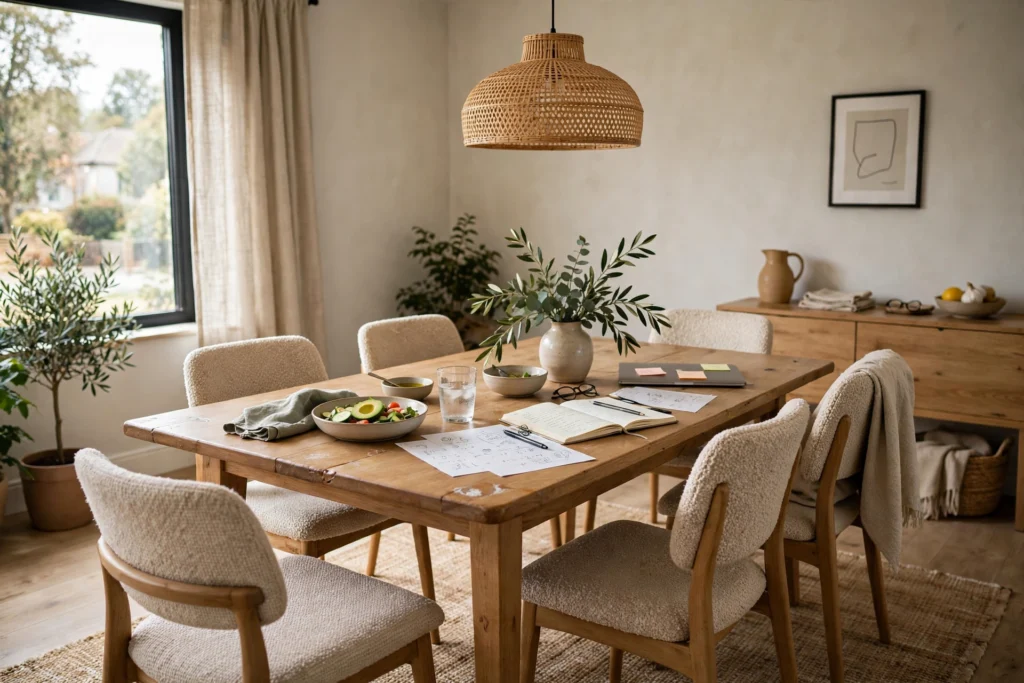
A dining room works best when it feels welcoming on a normal Tuesday, not just on a holiday. You want a table that fits your household, chairs you can sit in for a while, and lighting that makes food and conversation feel relaxed.
These modern dining room ideas work best when you start with how you eat at home. Do you eat together each night, host friends on weekends, or use the table for homework and work during the day? Your answers will help you choose a size, a shape, and a layout that fits real life.
You do not need to replace everything at once. A new light fixture, a rug that fits the table, or better chairs can change how the room feels. Build from what you already have and add pieces as your needs become clear.
Start With the Table and the Room Around It

Measure the room before you shop for a table. Leave enough space to pull chairs out and walk behind seated guests. A good rule to keep in mind is to allow comfortable clearance on each side, so no one feels squeezed against a wall.
Shape matters, too. A rectangular table often works well in a long room and seats more people along the sides. A round table can suit a square room and makes conversation easier, since everyone can see each other. An oval table can soften a rectangular room while still seating a group.
Think about how many people you seat most of the time, not just on rare occasions. A table that seats eight every day can feel empty for a household of three. An extendable table can be a smart middle ground, giving you extra seats when guests visit without taking up space all week.
Check the table height and how it relates to your chairs. Most dining tables and chairs are made to work together, but seat height, apron depth, and leg placement can affect comfort. Sit at the table if you can, and make sure your knees fit comfortably underneath.
Choose Chairs for Comfort, Not Just Looks

Chairs make a big difference in whether people linger after a meal. Look for a seat that supports you without feeling stiff, and a back that feels steady. If you host long dinners, padded seats or a slight curve in the back can help.
Mixing chairs can add character without looking messy. You might pair simple side chairs with two armchairs at the ends of the table. Keep a shared element, such as a wood tone, a fabric color, or a similar leg shape, so the mix feels planned.
Test the weight and sturdiness of chairs before you buy. Light chairs are easier to move for cleaning, but very light chairs can feel unstable. Check joints, legs, and any cushions for signs of solid construction, especially for chairs that will be used daily.
Consider care, too. Fabric chairs can feel warm and soft, but they may stain more easily in a home with kids or frequent spills. Leather, wood, or chairs with removable covers can be easier to wipe down. Choose what fits your household and your willingness to clean.
Use Lighting to Set the Mood

Lighting often defines a dining room more than any other single choice. A pendant or chandelier over the table creates a focal point and gives you light right where you need it. Hang it high enough that it does not block sightlines across the table.
A dimmer is one of the most useful additions in a dining room. It lets you brighten the light for homework or board games and lower it for dinner. For any wiring or dimmer work, ask a licensed electrician rather than trying to change wiring yourself.
Layer other light sources around the room as well. A small lamp on a sideboard, wall sconces, or candles can soften the space in the evening. Keep the main table light as the focus, and use the other lights to fill in shadows.
Warm-toned bulbs tend to feel more inviting for meals than very cool, bright bulbs. If you use candles, place them safely away from curtains, paper, and children’s reach, and never leave them burning unattended.
Pick Materials That Age Well

Modern dining rooms often mix wood, metal, glass, and fabric. A wood table brings warmth, while metal legs or a stone top can add a cleaner, more current feel. Mixed materials can keep the room from feeling flat or overly matched.
Think about daily wear before you fall for a finish. A soft wood top can dent and scratch more easily than a harder surface. Glass tops show fingerprints and need frequent wiping. A finish that can be touched up or cleaned easily may serve you better than one that looks flawless only in a photo.
Rugs under a dining table need care in sizing. A rug should be large enough that chairs stay on it when pulled out. A rug that is too small can catch chair legs and make it hard to move. Low-pile rugs are often easier to clean and slide chairs across than thick, plush rugs.
If you have pets or young children, choose materials you can live with. Spills happen, and a table or chair that can handle a quick wipe will cause less stress than one that needs special treatment every time.
Add Storage That Keeps the Table Clear
A dining room stays more inviting when everyday clutter has a home. A sideboard, buffet, or simple cabinet can hold table linens, serving dishes, candles, and board games. Keep items you use often within easy reach and seasonal items higher or further back.

Open shelving can look light and airy, but it needs regular tidying to stay neat. Closed storage hides a mix of items and can help the room feel calmer. Choose the option that matches how much time you want to spend keeping shelves styled.
A bar cart or a small trolley can work well if you entertain often. It keeps drinks and glasses in one place and can be moved aside when you need more room. Keep it stocked lightly so it does not become another cluttered surface.
Wall storage can help in a smaller dining area. A narrow shelf for art or a few dishes can add interest without taking floor space. Keep heavier items low and secure shelves to the wall following the maker’s guidance.
Make Small Dining Spaces Work Harder

Small dining rooms and eat-in kitchens can still feel comfortable with the right choices. A round table or a drop-leaf table can save space while still seating your household. Benches can also help, since they tuck under the table when not in use.
Light colors on walls and a mirror placed to reflect light can help a small space feel more open. You do not need an all-white room, but keeping large surfaces light often helps. A single bold art piece can add interest without crowding the walls.
Keep the center of the table simple. A small vase, a bowl, or a short candle arrangement leaves room for plates and serving dishes. Tall centerpieces can block conversation and get moved aside during meals, so choose lower pieces for everyday use.
Use the wall space around the table wisely. Hooks for bags, a slim console, or a small piece of art can make the area feel finished. Avoid adding bulky furniture that blocks paths to the kitchen or living area.
Common Mistakes to Avoid

One common mistake is choosing a table that is too large for the room. A big table can look inviting in a store, but it can make your dining room hard to move through at home. Measure first, tape out the size on the floor if it helps, and live with that outline for a day or two.
Another mistake is hanging lighting too low or too high. A fixture that hangs too low can block views and feel in the way. One that hangs too high can leave the table dim and the room feeling unfinished. Check the height from the table surface and adjust before you finalize the install.
Rushing to match every piece is another trap. A dining set where table, chairs, sideboard, and light all match exactly can feel flat. Mixing one or two elements, such as chair style or metal finish, often makes the room feel more personal and lived-in.
Ignoring sound and comfort is easy to overlook. Hard floors, bare walls, and a glass table can make a room echo during lively meals. A rug, curtains, upholstered chairs, or soft wall art can absorb some sound and make conversation easier.
Buying and Decision Considerations
Before you buy, check measurements for doorways and hallways, not just the dining room. A table that fits the room still needs to get into your home. Keep a list of measurements on your phone when you shop.
Look at how pieces are joined and finished. Sturdy legs, smooth drawer slides, and even finishes tend to last longer under daily use. You do not need the highest-priced option, but a well-made piece often costs less over time than replacing a weak one quickly.
Think about your budget in stages. You might start with the table and chairs, then add lighting, then storage. Spreading out purchases lets you test what works and avoid buying pieces you do not need.
When you compare modern dining room ideas, save images that appeal to you and note what you like about each one. You may notice you keep choosing warm wood, black metal, or simple lines. Those patterns can guide you toward a style you will enjoy for years.
If your plans include moving walls, adding built-ins, or changing electrical work, talk to a qualified professional first. They can check structure, safety, and local rules, especially in older homes. Professional help is worth it for work that affects safety.
Putting It All Together
Start with the table size and shape that fits your room and household. Add chairs you enjoy sitting in, lighting you can adjust, and storage that keeps the table clear. Then layer in color, texture, and art in small amounts.
Live with each change before you add the next. A new rug may change how the table looks, or a new light may make wall color feel warmer. Small steps help you avoid costly changes later.
Keep the room flexible. A dining room that works for weeknight meals, homework, and weekend guests will get used more often than a room saved only for special occasions. Comfort and ease matter more than a strict theme.
Conclusion
A modern dining room does not need to be formal or fussy to feel good. Choose a table that fits, chairs that invite people to stay, and lighting that adapts to the moment. With steady, practical choices, your dining room can become a place you use and enjoy every day.
Disclaimer:
This content is for general informational purposes only. Individual homes, needs, preferences, budgets, and situations may vary. For safety, installation, repair, structural, electrical, plumbing, HVAC, legal, or major property decisions, please seek advice from a qualified professional before acting.