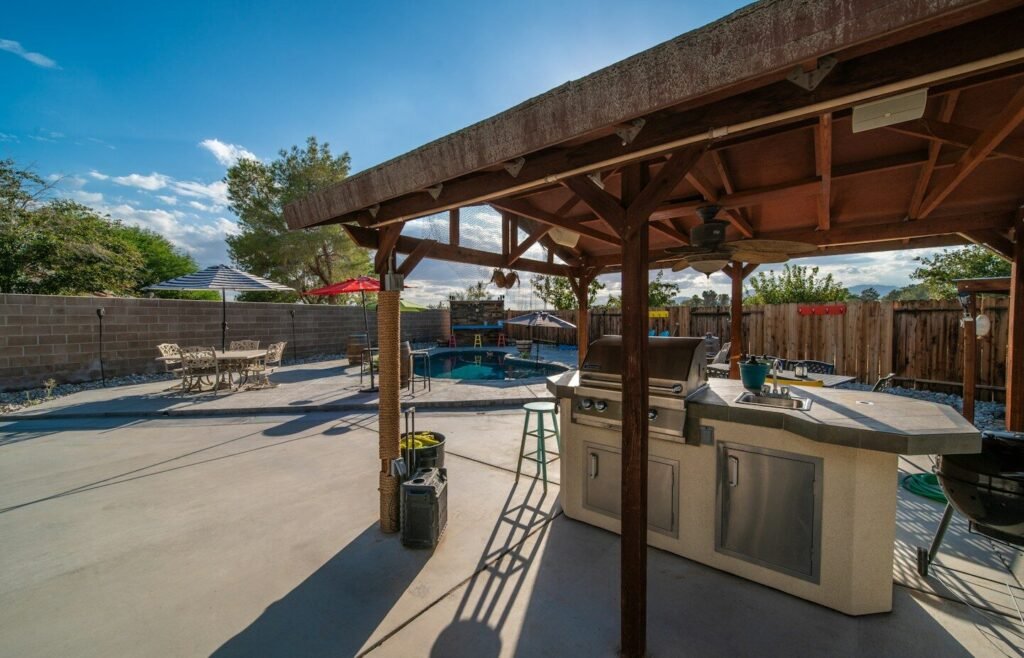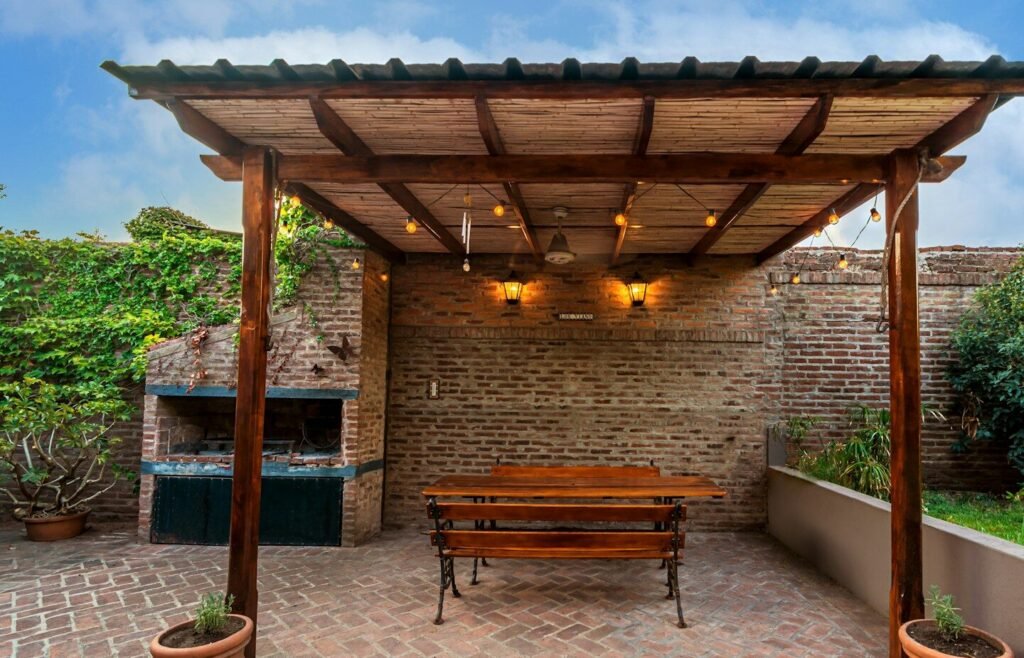
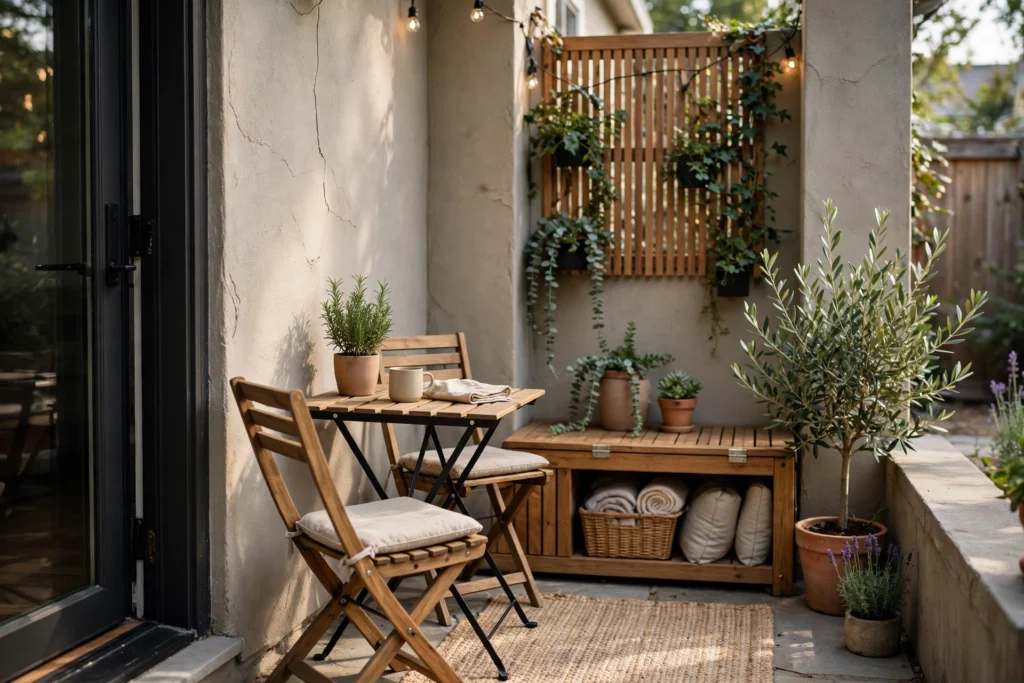
A tiny patio can feel like an afterthought when it is filled with oversized furniture and clutter. The most useful small patio ideas focus on scale, flexibility, and a few well-chosen details, so a compact space feels intentional, comfortable, and easy to use every day.
You don’t need to expand the patio to enjoy it more. You need furniture that fits, storage that hides clutter, plants that add life without blocking movement, and a layout that leaves room to sit, stand, and step outside without squeezing past obstacles.

Measure First, Then Choose Furniture
Start with honest measurements. Measure the patio’s length and width, note door swings, steps, drains, and any fixed features such as railings or air-conditioning units. Then measure furniture before you buy it, including how far chairs pull out and how much room you need to walk around a table.
In a compact space, a bistro set for two often works better than a four-person dining set that leaves no room to move. A bench against a wall saves space because it doesn’t need clearance behind it, and it can double as storage if it has a lift-up seat. Folding chairs and a fold-down wall table are useful for gatherings, since you can bring them out only when you need them.
Choose light, movable pieces over heavy, fixed furniture. When you can shift a chair into shade, pull a table closer to the door, or clear the patio for a larger group, the space adapts to daily life instead of locking you into one layout.

Create Zones Without Walls
Even a tiny patio benefits from zones, but they should be soft and flexible. A rug can mark a seating area, a planter can edge a garden corner, and a small side table can define a reading spot, all without building walls or screens that shrink the space.
Keep the main route clear. The path from the back door to the garden gate or steps should stay open and wide enough for one person carrying something. If furniture, pots, or storage block that route, the patio will feel cramped even when it is tidy.
A change in surface or colour can also suggest zones without taking space. A rug over pavers, a wooden deck tile area for seating, or a gravel corner for pots can separate uses visually while keeping the patio open and connected.

Use Walls, Railings, and Vertical Space
When floor space is limited, walls and railings become valuable. Wall planters, hanging pots, and a trellis with a climbing plant add greenery without taking a single square foot of floor. A wall-mounted shelf can hold lanterns, herbs, or small pots, and a fold-down table can serve as a dining spot that disappears when not in use.
Choose vertical features that suit the patio’s light and wind. A trellis in a windy, exposed spot needs strong fixings, while hanging baskets in full sun need frequent watering. Keep vertical planting away from doorways and windows you open often, so plants don’t block airflow or drip onto seating.
A mirror on a wall is sometimes suggested for tiny patios, but use it with care. It can reflect plants and sky and make the space feel larger, yet it can also reflect a blank wall or confuse birds. Place it only where it reflects greenery or open sky, and fix it securely.
Pick a Simple, Light Surface and Colour Palette
Busy patterns and dark colours can make a tiny patio feel smaller. Large, light-toned pavers, a simple concrete finish, or pale deck tiles tend to open up the space. A single surface across the patio looks calmer than several competing materials in a small area.
Colour should come from a few accents, not from every surface. Choose two or three colours for cushions, pots, and a rug, and repeat them in small doses. This repetition makes the patio feel designed, while too many colours and patterns can feel chaotic in a compact space.
Keep the patio clean, since dirt and clutter show more in a small area. Sweep regularly, wipe furniture, and remove dead leaves from pots and drains. A tidy tiny patio almost always feels larger than a messy one, even with the same furniture.

Add Plants That Earn Their Place
In a tiny patio, every plant should earn its space. Choose plants that give colour, scent, structure, or food, and that suit the patio’s light levels. Herbs near a dining table, a tall grass in a corner pot, and a trailing plant on a shelf can add a lot of life without filling the floor.
Large pots work better than many small ones in a tiny space. One or two large pots anchor the patio and need less frequent watering than a collection of small pots that dry out quickly. Group pots in a corner or along one edge, leaving the centre open for seating and movement.
Avoid plants that grow wide and block paths, and avoid thorny plants near narrow walkways. Prune regularly, and repot plants that outgrow their containers before they become root-bound and hard to water.

Lighting and Shade for a Compact Space
Shade and lighting make a tiny patio usable for more hours, but they need to fit the scale. A cantilever umbrella can shade a bistro table without a centre pole taking up table space, while a retractable awning or a shade sail can cover the patio without permanent posts in the middle of the area.

For lighting, a few warm, low-level lights work better than one bright overhead bulb. String lights along a wall or railing, a lantern on a side table, and a small solar light near steps create a warm glow without glare. Keep lights aimed down and toward seating, not into neighbours’ windows, and use a timer so they switch off when you go inside.
If you add wired lighting or a fan, use fixtures rated for outdoor use and ask a qualified electrician for any new circuits. Solar and battery lights are simpler for a tiny patio, since you can test positions and move them as the layout changes.
Storage That Disappears
Clutter is the enemy of a tiny patio. A bench with storage, a narrow deck box, or a wall-mounted cabinet can hide cushions, tools, and toys without taking much floor space. Place storage where you use it: cushions near seating, garden tools near pots, and cleaning items near the door.
Avoid storing large items on a tiny patio that you rarely use. A bulky grill, a large cooler, or a stack of unused pots can take over the space. Store larger items in a shed or garage when possible, and bring them out only for gatherings.
A simple hook or rail on a wall can hold a watering can, a small tool set, or a lantern, keeping the floor clear. Keep hooks at a height that doesn’t snag clothing or block a path, and check that wall fixings are secure.

Mistakes to Avoid
Buying furniture before measuring is the most common tiny patio mistake. A set that looks compact in a shop can dominate a small patio once chairs are pulled out and people try to move around it. Measure, mark the footprint on the ground, and test the layout before you commit.
Another mistake is filling every corner. A tiny patio needs empty space to feel comfortable. Leave at least one open area where you can stand, stretch, or step outside without navigating furniture and pots.
Ignoring sun and wind patterns is also common. A seating area in harsh afternoon sun or a constant wind tunnel will go unused, no matter how pretty the furniture looks. Spend time on the patio at different hours before you fix the layout.
Finally, don’t forget drainage and cleaning. A tiny patio with poor drainage pools water, grows algae, and becomes slippery. Keep drains clear, sweep regularly, and choose a surface that drains away from the house.
Frequently Asked Questions
What furniture works best on a tiny patio?
Light, movable, and foldable furniture usually works best, such as a bistro set, a bench against a wall, and stackable or folding chairs. Measure furniture with chairs pulled out, and leave a clear path from the door to the garden.
How can I make a tiny patio feel larger?
Keep the layout open, use a simple light surface, choose a limited colour palette, and use vertical planting instead of filling the floor with pots. A tidy patio with a few well-chosen pieces usually feels larger than a crowded one.
Can I have plants on a very small patio?
Yes, if you choose plants that suit the light and use large pots, wall planters, and vertical space. Group pots along one edge or in a corner, and leave the centre open for seating and movement.
What is the best shade for a small patio?
A cantilever umbrella, a retractable awning, or a shade sail often works well because they shade seating without taking up floor space with posts in the middle of the patio. Choose a shade option that suits your wind, sun, and mounting options.
Conclusion
A tiny patio doesn’t need to feel like a compromise. With furniture sized for the space, clear paths, vertical planting, simple colours, and storage that hides clutter, it can become a calm, useful retreat for morning coffee, evening meals, and quiet moments outside. Start with measurements, keep the layout open, and add details in stages based on how you actually use the space.
Disclaimer: This content is for general informational purposes only. Individual homes, needs, preferences, budgets, and situations may vary. For safety, installation, repair, structural, electrical, plumbing, HVAC, legal, or major property decisions, please seek advice from a qualified professional before acting.