A sloped yard can feel like a problem when it is steep, muddy, or hard to mow, but it also offers something flat yards don’t: natural levels, views, and chances to create distinct garden rooms. The best sloped backyard ideas work with the slope, using terraces, steps, planting, and drainage to make the hill safe, stable, and enjoyable.
The first job is not decoration. It is understanding water, soil, and stability, so the garden you build stays in place through rain, frost, and everyday use.
Understand Your Slope Before You Design
Start by looking at how steep the slope is, where water runs, and what the soil is like. A gentle slope may need only planting and a path, while a steep slope may need terraces, retaining walls, and professional advice. Signs of trouble include bare soil washing away after rain, cracks in soil or walls, leaning fences, and water pooling at the bottom near the house.
Note sun and wind patterns too. A south-facing slope warms up early and suits sun-loving plants, while a north-facing slope stays cooler and damper and suits shade plants. A slope that faces prevailing wind may need shelter planting, while a sheltered slope may need airflow to avoid damp, shaded corners.
Check what lies underground and what rules apply. Call your local utility marking service before digging, and check local rules for retaining walls, drainage changes, fences, and structures. Walls over a certain height often need engineering and permits, and drainage changes can affect neighbours, so don’t assume a small wall or a new drain is a simple DIY job.

Manage Water First
Water is the main force on a slope. Rain runs downhill, carrying soil with it, and it can pool at the bottom, erode paths, and undermine walls if it is not guided. Before you plant or build, plan how water will move across the yard.
Simple measures often help: keep gutters and downspouts clear, direct roof water away from the slope’s weakest areas, and avoid bare soil on steep sections. Groundcover plants, mulch held in place by edging or netting, and terraces that break the slope into shorter runs all slow water and reduce erosion.
Drainage features such as swales, French drains, and gravel channels can guide water safely, but they need correct placement and sizing. For persistent erosion, soggy soil at the base, water near foundations, or any slope that feels unstable, get advice from a landscaping or civil professional before you regrade or build. Never divert water onto a neighbour’s property or into a public drain without checking local rules.

Terrace the Slope Into Usable Levels
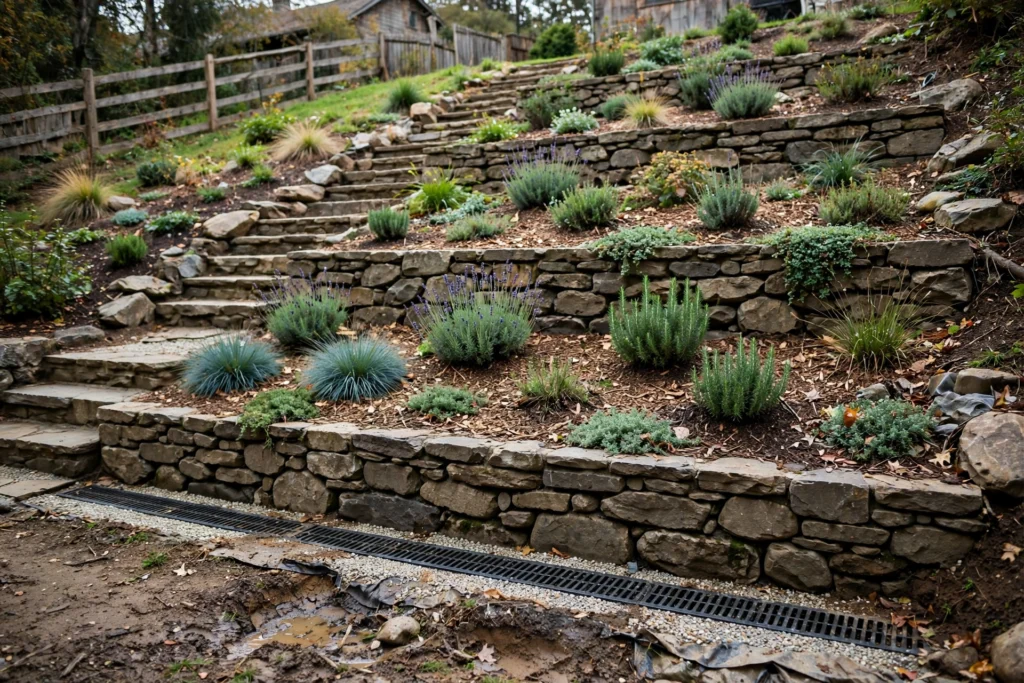
Terracing turns one steep hill into a series of flatter levels, each with its own use. A terrace can hold a seating area, a vegetable bed, a play space, or a garden bed, while the wall or bank between levels gives structure and planting space.
Low terraces, built with timber, stone, or blocks, are often more manageable than one tall wall. They are easier to build safely, they look more natural, and they give you more planting edges. Each terrace should have a level surface, good drainage behind the wall, and a safe way to move between levels, such as steps with a handrail where the change in height requires it.
Retaining walls need proper footings, drainage, and backfill to stay stable. A wall that holds back a large amount of soil, especially on a steep slope or near a house, driveway, or boundary, should be designed and built by a qualified professional. A failed retaining wall can damage property and injure people, so this is not a place to cut corners.
For gentle slopes, you may not need walls at all. Shaped banks, planted with groundcover and shrubs, can stabilise soil and look soft and natural, provided water is managed and plants are suited to the slope’s sun and soil.

Build Safe Steps and Paths
Steps and paths make a sloped yard usable, but they need care to stay safe in rain and frost. Steps should have consistent riser heights, a non-slip surface, and a handrail where the slope or the number of steps makes one sensible. Uneven steps are a tripping hazard, especially at night, so measure and build carefully.
Paths on a slope should follow a gentle, winding route rather than running straight downhill, which can become a water channel and a slippery slide. Switchbacks, landings, and edging help slow water and give walkers a place to pause. Use surfaces with grip, such as textured pavers, gravel with edging, or rough stone, and avoid smooth, polished surfaces on steep paths.
Lighting helps a great deal. Low path lights, step lights, and a light at each landing make evening use safer. Use fixtures rated for outdoor use, and ask a qualified electrician for any new wired lighting, especially near water or on exposed slopes.

Choose Plants That Hold Soil and Suit the Slope
Plants do more than decorate a slope. Their roots hold soil, their leaves break rainfall, and groundcovers reduce erosion between larger plants. Choose plants suited to your slope’s sun, soil, and moisture, and plant in groups rather than single specimens scattered across a bank.
Groundcovers such as creeping juniper, vinca, or low grasses in suitable climates can stabilise a bank quickly, while shrubs with spreading roots add longer-term hold. Ornamental grasses add movement and texture, and they often handle wind and sun well. On sunny, dry slopes, drought-tolerant plants reduce watering needs, while on damp, shaded slopes, ferns and shade shrubs may do better.
Avoid planting large trees on a steep slope without advice, since mature trees add weight, roots can affect walls and drains, and a falling tree on a slope is a serious hazard. Plant trees at a safe distance from walls, paths, and boundaries, and choose species whose mature size suits the space.
Mulch helps new planting establish, but loose mulch on a steep slope can wash away in heavy rain. Use mulch held by edging, jute netting, or groundcover plants, and avoid piling mulch against tree trunks or house walls.

Create Levels for Different Uses
A sloped yard naturally lends itself to different levels for different activities. The flattest area near the house often suits dining and seating, since it needs level ground for tables and chairs. A mid-level terrace can hold a garden bed, a play area, or a quiet seating nook, while the upper level may suit a viewpoint, a wildflower area, or a larger planting bed.
Keep the most-used areas closest to the house and easiest to reach. A vegetable garden at the top of a steep slope may look good, but carrying soil, water, and harvests up and down steps quickly becomes tiring. Place high-maintenance areas where access is easy, and use steeper, less-accessible areas for low-maintenance planting.
Views are a bonus on a slope. A seating area partway up, with a clear sightline over lower planting, can feel special without major construction. Frame the view with low planting that doesn’t block it, and keep the seating area sheltered from wind where possible.
Add Features That Suit a Slope
Water features, rock gardens, and dry creek beds can suit slopes well, since they work with natural water flow rather than against it. A dry creek bed, made from stone and gravel, can guide runoff during rain and look like a garden feature when dry. A rock garden can stabilise a sunny, dry bank and give a home to alpine and drought-tolerant plants.
A slide, play area, or fire pit on a slope needs extra care. Play equipment needs level, stable ground and safe surfacing, while fire features need flat, clear ground, safe distances from plants and structures, and local rule checks. Never place a fire feature on a steep, dry bank where sparks could spread, and always follow maker guidance and local fire rules.
A small deck or viewing platform can level a slope for seating, but it needs proper footings, framing, and rails where height requires them. For decks above ground level or on unstable soil, get professional help with design and construction.

Mistakes to Avoid
Ignoring drainage is the most costly slope mistake. Planting, paving, or building over a slope without a water plan leads to erosion, mud, and damage to walls and paths. Always start with water, soil, and stability, not with decoration.
Building a tall retaining wall without professional design is another risk. A wall that looks solid can fail if drainage, footings, or backfill are wrong, especially after heavy rain or frost. Use low terraces where possible, and get engineering help for taller walls.
Planting a lawn on a steep slope is often frustrating. Mowing is hard and dangerous on steep ground, and grass may not hold soil well during heavy rain. Groundcover, shrubs, and terraced beds are usually safer and easier to maintain on steep sections.
Finally, don’t try to flatten the whole slope at once. Major regrading changes drainage, soil, and stability, and it can affect neighbours and local water flow. Work in stages, terrace gradually, and get advice before large earthworks.
Frequently Asked Questions
How can I make a steep backyard usable?
Break the slope into terraces or planted banks, add safe steps and paths with handrails where needed, and manage drainage before you plant or build. Low terraces and groundcover planting are often more practical than one tall wall or a large lawn on steep ground.
What plants are good for a slope?
Choose groundcovers, shrubs, and grasses suited to your sun, soil, and climate, with roots that help hold soil. Group plants together, avoid bare soil on steep sections, and check mature size so plants don’t block paths or views as they grow.
Do I need a professional for a retaining wall?
For low garden walls, a competent DIY builder may manage with proper guidance, but walls holding back significant soil, walls on steep slopes, or walls near houses, driveways, or boundaries should be designed and built by a qualified professional. Check local permit rules for wall height.
How do I stop soil erosion on a slope?
Slow water with terraces, groundcover, mulch held in place, and drainage features that guide runoff safely. Avoid bare soil, keep gutters clear, and get professional advice for persistent erosion, soggy ground, or signs of slope instability.
Conclusion
A sloped backyard doesn’t need to be flattened to be useful. With water managed first, terraces that create level areas, safe steps and paths, and planting that holds soil and suits the slope, a hill can become a series of garden spaces with views and character. Work in stages, get professional help for walls, drainage, and structures where safety matters, and let the slope shape a garden that feels natural, stable, and easy to enjoy.
Disclaimer: This content is for general informational purposes only. Individual homes, needs, preferences, budgets, and situations may vary. For safety, installation, repair, structural, electrical, plumbing, drainage, or major property decisions, please seek advice from a qualified professional in your area before starting work.