A patio doesn’t have to feel like a slab of stone with a few chairs on it. With the right plants, containers, and layout, patio garden ideas can turn even a small paved area into a green, welcoming space that feels connected to the rest of the yard.
The trick is to treat the patio as a garden room, not just a floor. Plants need light, water, and room to grow, while seating needs clear paths and space to move. When those needs are balanced, the patio becomes a place you enjoy daily, not just a passage to the lawn.
Start With Light, Water, and Access
Before you buy plants, spend a few days noting how much sun the patio gets. A south-facing patio in full sun suits herbs, succulents, and sun-loving flowers, while a north-facing patio in shade suits ferns, hostas, and shade-tolerant shrubs. A patio that gets morning sun and afternoon shade can handle a wider mix, if you place plants accordingly.
Water access shapes plant choices too. Pots dry out faster than garden beds, especially in sun and wind, so a patio garden needs a realistic watering routine. A hose nearby, a watering can you actually use, or drip irrigation for larger pots can make the difference between thriving plants and constant replacements.
Access matters for care. Leave room to reach pots for watering, pruning, and cleaning, and keep a clear path from the house door to seating and to the garden. Plants that block the main route will get knocked, and you will start avoiding the patio rather than enjoying it.

Use Containers as the Building Blocks
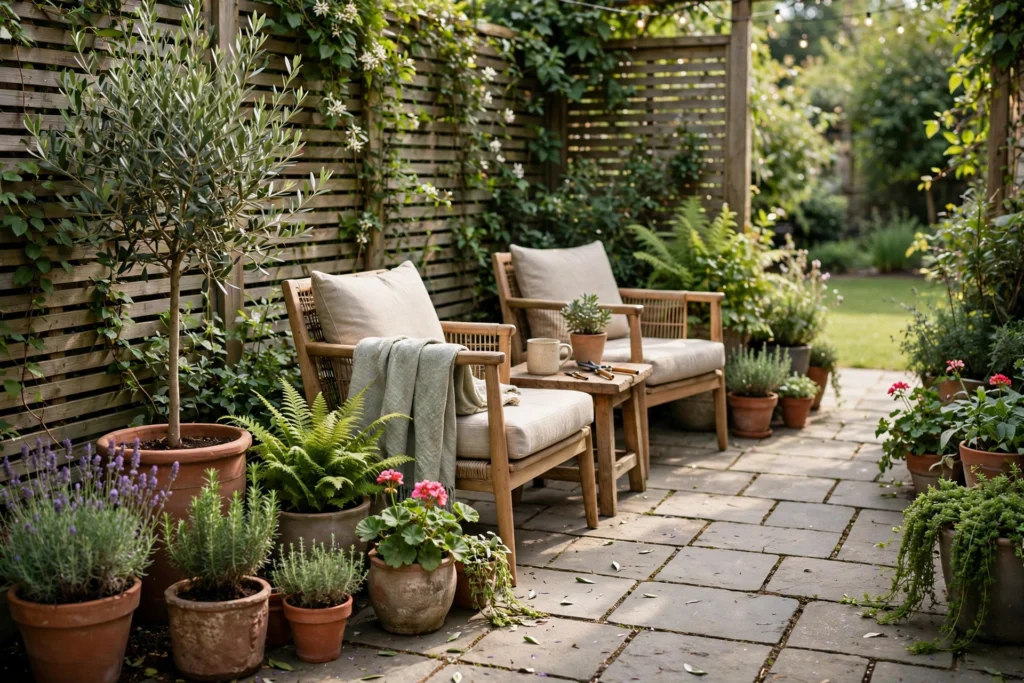
Containers are the heart of most patio gardens because they let you garden on a hard surface without major construction. Large pots anchor corners and give shrubs and small trees room for roots, while medium pots suit perennials and herbs, and small pots add colour on tables and steps.
Choose pots with drainage holes and a saucer, tray, or gravel base so water doesn’t stain the patio or pool under the pot. Heavy pots, such as terracotta or stone, stay stable in wind but are hard to move, so place them carefully the first time. Lightweight pots are easier to rearrange, but they may tip in strong wind unless they are filled with a heavy soil mix and placed in a sheltered spot.
Group pots in clusters of different heights and sizes rather than lining them in a single row along a wall. A tall plant at the back, mid-height plants in the middle, and trailing plants at the front create depth and make the patio feel like a garden, not a plant shop display. Leave gaps between groups so air moves and you can reach each pot for care.

Choose Plants for Pots and Patios
Not all garden plants do well in pots. Look for compact varieties, plants with moderate water needs, and species that tolerate the patio’s light and wind. Herbs such as basil, mint, rosemary, and thyme do well in pots, though mint should stay in its own pot because it spreads aggressively.
For colour, geraniums, petunias, and marigolds suit sunny patios, while begonias, impatiens, and fuchsias suit shade, depending on your climate. For structure, small evergreen shrubs, ornamental grasses, and dwarf conifers give year-round shape. For scent, lavender, jasmine in a pot, and scented herbs near seating add fragrance without taking much space.
Edible patio gardens are practical too. Tomatoes in compact varieties, salad leaves, chillies, and strawberries can all grow in pots, provided they get enough sun and regular water and feeding. Start with a few edibles you will actually eat, and add more only when the routine feels manageable.
Check mature size before you buy. A shrub that looks tidy in a nursery pot can outgrow its container in a season or two, becoming root-bound and hard to water. Read labels, ask at the nursery, and plan to repot or prune as plants grow.

Add Vertical and Hanging Gardens
Vertical planting is a smart way to add greenery without losing floor space. A trellis against a wall or fence can support climbing plants, while wall planters, hanging baskets, and tiered plant stands add layers of colour at eye level.
Climbers need support and care. Jasmine, clematis, and climbing roses can soften a wall, but they need pruning and a sturdy trellis that won’t pull away from the wall as they grow. Avoid climbers that damage masonry or that grow so vigorously they block windows, gutters, or paths.
Hanging baskets suit trailing plants and strawberries, but they dry out quickly in sun and wind. Water them often in summer, and hang them where drips won’t fall onto seating or electrical fittings. Wall planters need secure fixings and a watering plan, since they also dry out faster than ground beds.
A simple vertical herb garden near the kitchen door is a useful starting point. It keeps herbs within reach for cooking, uses wall space that would otherwise stay bare, and is easy to water and harvest daily.

Blend Seating and Planting
The best patio gardens don’t separate plants from seating. They weave them together, so you sit among greenery rather than beside a row of pots. Place a large pot near a chair corner, a planter behind a bench, and a low herb pot on a side table where you can brush it as you sit down.

Keep seating areas clear enough to move chairs and stretch out. A pot that forces you to squeeze past a table will get knocked over, and a trailing plant that drapes over a chair can feel messy rather than lush. Aim for greenery at the edges of seating, with open space in the centre where people gather.
A rug, a few cushions, and a small table can make a planted patio feel like an outdoor room, but keep fabrics outdoor-rated and easy to clean. Leaves, soil, and pollen will find their way onto cushions, so removable covers are a practical choice.
Watering, Feeding, and Seasonal Care
Patio pots need more attention than garden beds. Check soil moisture by pushing a finger into the top inch or two of soil. If it feels dry, water thoroughly until water drains from the bottom, then let the pot drain before returning it to a saucer. Avoid leaving pots sitting in water for long periods, since soggy roots rot quickly.
Feed container plants during the growing season with a balanced liquid feed or slow-release granules, following label directions. Pots lose nutrients faster than beds because watering washes them out, so regular feeding helps plants stay healthy and colourful.
Seasonal care keeps a patio garden looking good year-round. In spring, prune winter damage, refresh top soil, and repot plants that have outgrown their containers. In summer, water more often, deadhead flowers, and trim plants that block paths. In autumn, move tender plants to shelter, clean pots, and remove fallen leaves from drains. In winter, protect pots from frost by grouping them near a wall, wrapping tender pots, and raising them slightly off cold, wet surfaces.

Mistakes to Avoid
Overcrowding is the most common patio garden mistake. Too many pots make watering, pruning, and cleaning hard, and the patio starts to feel like an obstacle course. Start with fewer, larger pots, and add more only when you can care for them easily.
Choosing plants for looks alone, without checking light, water, and mature size, is another issue. A sun-loving plant in deep shade will grow leggy and weak, while a shade plant in full sun will scorch. Match plants to the patio’s conditions, not just to a photo.
Ignoring drainage is also costly. Pots without drainage holes, saucers that stay full, and soil that stays soggy all lead to root rot and stained patios. Check drainage when you pot plants, and empty saucers after heavy watering or rain.
Finally, don’t forget the patio surface itself. Soil spills, leaf stains, and algae on damp, shaded patios can make the space slippery. Sweep regularly, clean spills promptly, and keep gutters and drains clear so water doesn’t pool on the patio.
Frequently Asked Questions
What plants grow best in pots on a patio?
It depends on light, but herbs, compact shrubs, ornamental grasses, and seasonal flowers suited to your sun or shade levels usually do well. Choose compact varieties, pots with drainage, and a soil mix made for containers rather than garden soil alone.
How often should I water patio pots?
Check soil moisture regularly, since pots dry out faster than beds, especially in sun and wind. In summer, many pots need watering daily or every other day, while in cooler weather they may need far less. Water thoroughly when the top soil feels dry, and let excess water drain away.
Can I grow vegetables on a patio?
Yes, compact tomatoes, salad leaves, herbs, chillies, and strawberries often grow well in pots, provided they get enough sun and regular water and feeding. Start with a few crops you enjoy eating, and use large enough pots for root growth.
How do I keep a patio garden tidy?
Group pots in clusters, leave clear paths, prune regularly, remove dead flowers and leaves, and clean soil spills promptly. A simple routine, such as a weekly check for watering, deadheading, and tidying, keeps the patio looking cared for without a large time commitment.
Conclusion
A patio garden works best when plants, seating, and care routines fit together. Choose containers and plants for your light and watering habits, use vertical space where floor space is tight, and keep paths clear so the patio stays easy to use. With a few well-chosen pots and a steady care routine, a paved patio can feel green, calm, and welcoming through every season.
Disclaimer:
This content is for general informational purposes only. Individual homes, needs, preferences, budgets, and situations may vary, and plant suitability depends on local climate, light, and growing conditions. For safety, installation, repair, structural, electrical, plumbing, HVAC, or major property decisions, seek advice from a qualified professional.