Midcentury modern kitchens still feel fresh today. Flat front cabinets, warm wood, simple shapes, and a calm colour palette can make a room feel both retro and current, without turning it into a time capsule.
The appeal is in the balance. Clean lines keep the room orderly, while warm wood and soft colour keep it from feeling cold. With a few thoughtful choices, the look can work in a period home or a new build.
What Defines the Look

Clean lines and simple shapes
Midcentury design values straight lines, simple rectangles, and open space. Cabinets have flat fronts with no raised panels or heavy trim. Hardware is minimal, often a slim bar pull or a small round knob, and sometimes the doors open with a simple touch latch.
The layout often stays open and uncluttered. A simple galley, an L shape with an island, or a one wall plan with a dining area can all work. What matters is that each run of cabinets has a clear purpose, and walkways stay open and easy to use.
Warm wood as the anchor
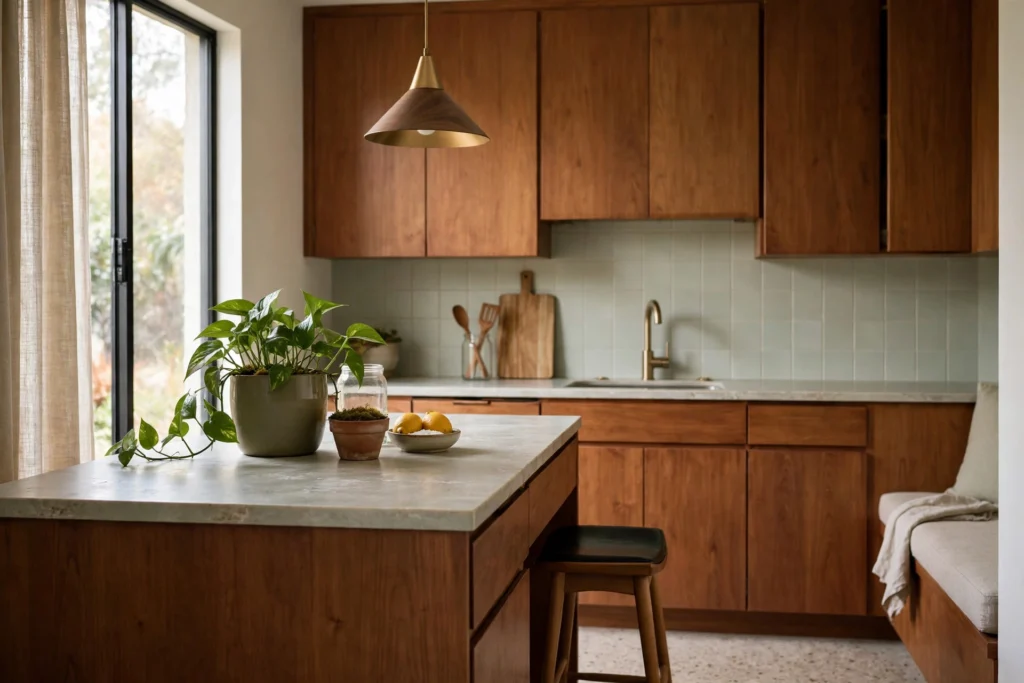
Wood is the heart of the look. Teak, walnut, and oak tones can bring warmth and a sense of history to the room. Use wood for the main cabinets, an island front, or open shelving, and let it be the star rather than mixing in too many competing materials.
An open, uncluttered feel
The room should feel calm and airy. Keep counters mostly clear, store small appliances out of sight, and let a few well chosen pieces, such as a wooden bowl, a ceramic vase, or a vintage style clock, carry the character. Less really is more here.
Colours That Work With Warm Wood

A soft, nature based palette
Midcentury colours often come from nature. Mustard yellow, olive green, burnt orange, warm brown, and soft teal can all sit happily next to warm wood. Use them in small doses, such as bar stools, a pendant shade, or a piece of art, rather than on every surface.
For the main surfaces, keep things calm. Soft white, warm grey, and pale beige can let the wood lead, while a darker accent wall in olive or charcoal can add depth without overwhelming the room.
How to test colour before you commit
Paint large sample boards and move them around the room at different times of day. Wood tones can change how a colour reads, and morning light can look very different from evening light. Live with the samples for a few days before you decide.
Cabinets and Hardware
Flat front cabinets
Flat front cabinets are the signature of the style. Choose slab doors in a warm wood tone, or in a painted finish such as soft white, warm grey, or muted green. Keep the grain simple and consistent, so the doors read as calm planes rather than busy patterns.
If you want a little texture, consider a subtle vertical grain or a gentle matte finish. Avoid heavy gloss, as it can make the room feel more decorative and less calm. The finish should feel smooth and quiet, not shiny.
Simple hardware choices
Hardware should be quiet and functional. Slim bar pulls in brass, black, or brushed nickel can suit the era, while small round knobs can work on upper cabinets or drawers. Keep the finish consistent, and avoid mixing too many metals in one room.
Countertops and Backsplash
Countertops that stay calm
Choose counters that support the wood rather than competing with it. Light quartz style surfaces, soft white stone, or pale concrete looks can keep the room bright and calm. Keep veining subtle, and avoid bold patterns that fight with the wood grain.
Butcher block can also work, especially on an island or a baking area. It adds warmth and a craft feel, and it pairs well with the wood cabinets. Just be ready for the regular care that wood counters need.
Backsplash ideas with character

The backsplash is a good place for a little personality. Small square tiles, a simple subway tile in a soft colour, or a geometric pattern in muted tones can all nod to the era. Keep the grout colour close to the tile, so the pattern stays gentle.
Lighting for Warmth and Function
Good light keeps the room warm and usable. Start with bright task light over counters and the stove, then add softer light for evenings. A mix of pendants, under cabinet lights, and a ceiling light can give you that range.
Pendant lights over an island or table
Pendants are a classic midcentury feature. Globe shades, cone shades, or simple drum shades in brass, black, or warm white can suit the style. Hang them in a neat row over an island, or as a pair over a dining table, and keep the cords simple.
Choose a warm white bulb, and avoid harsh blue white light that can make wood look flat. Dimmers are worth adding, so you can shift from bright prep light to a softer evening glow.
Under cabinet and ceiling light
Under cabinet lights can make the counter brighter for chopping and reading recipes. A simple flush mount or a set of recessed lights can handle general light. Keep the fixtures simple, so they do not pull attention from the wood and the pendants.
Flooring That Fits the Era
Wood floors suit the style well, especially warm oak tones with a soft finish. They can tie the cabinets to the rest of the home, and they age gracefully. Keep the tone close to the cabinets, or a little lighter, so the room does not feel too dark.
Tile can also work when you want an easy clean surface. Look for simple shapes, soft colours, and a matte finish. A classic checkerboard in muted tones, or a simple terrazzo look, can nod to the era without feeling like a costume.

Blending Vintage Style With Current Appliances

Keeping appliances quiet in the design
Modern appliances can sit happily in a midcentury kitchen when they stay quiet. Choose clean lines, muted finishes, and simple controls. Stainless steel, black, or white can all work, depending on the rest of the room.
Panel ready appliances can help too. A fridge or dishwasher with panels that match the cabinets can disappear into the run, leaving the wood and the lines to lead. That keeps the room calm, even with full modern function behind the fronts.
Small vintage touches that still work
A few vintage style pieces can add charm without hurting function. A retro style kettle, a simple wall clock, a wooden stool, or a piece of era art can all fit. Keep them small and useful, so they feel like part of daily life rather than a display.
Layout Tips for Everyday Use

Plan the layout around how you actually cook. Keep the sink, stove, and fridge in a comfortable triangle, and store the tools you use most near the spot where you use them. A clear path between those three points makes daily cooking much easier.
In a smaller kitchen, use vertical space well. Tall cabinets, hooks inside doors, and a rail near the stove can free up counter space. Keep walkways clear, and check that doors and drawers can open fully without blocking the path.
Mistakes to Avoid
Too much retro in one room can feel like a set rather than a home. Pick a few era details you love, and let the rest of the room stay calm and current. That balance is what keeps the look fresh rather than dated.
Dark wood everywhere can close the room in, especially in a small or dim space. If you love deep walnut, use it on the lower cabinets or the island, and keep upper cabinets light. That contrast can add depth while keeping the room bright.
Ignoring task lighting is another common misstep. Warm wood needs good light to show its colour, and counters need bright light for safe prep. Add light over the counters and the stove, and test it at night before you finish the plan.
When to Get Professional Help
Some changes are worth a professional eye. Moving plumbing or gas, changing the paint on load bearing walls, or rewiring for new lights can all need permits and skilled work. A designer or contractor can help you plan those changes safely.
Even for cosmetic updates, a short consult can help. A designer can check your colour plan against your wood tones, suggest hardware that fits the era, and help you avoid costly mistakes. That advice can pay for itself in a smoother project.
Bringing It All Together
Start with the wood, then build the room around it. Flat front cabinets, a calm palette, simple hardware, and warm light can set the tone, while a few vintage touches add personality. Keep counters clear, walkways open, and storage close to where you use it, and the room can feel both retro and ready for daily life.
Disclaimer:
This content is for general informational purposes only. Individual homes, needs, preferences, budgets, and situations may vary. For safety, installation, repair, structural, electrical, plumbing, HVAC, or major property decisions, please seek advice from a qualified professional before starting work.