
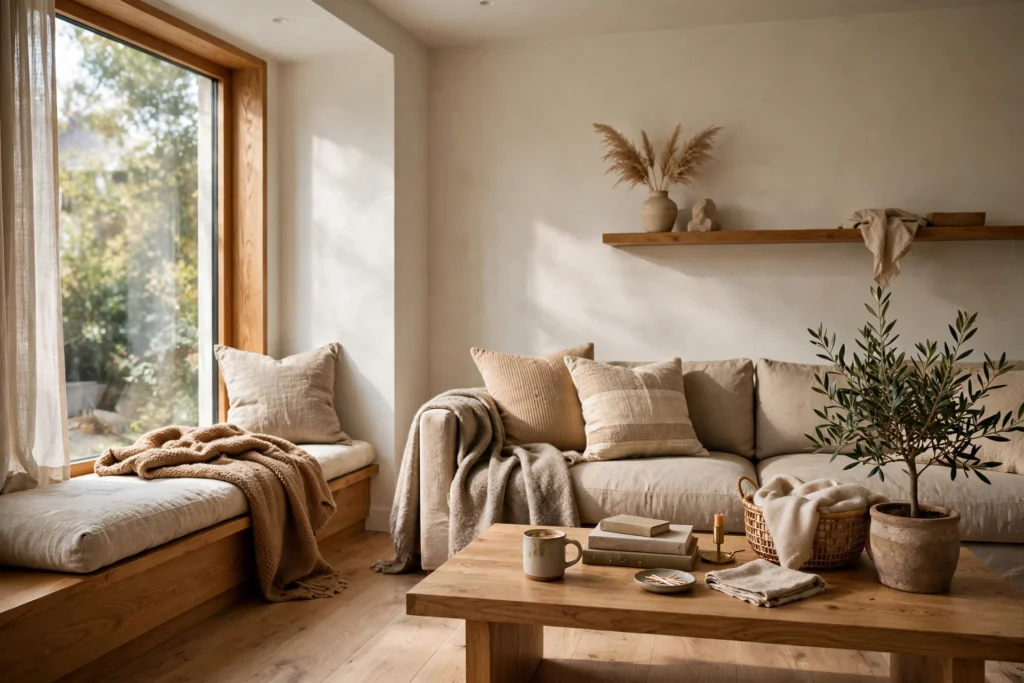
A calm home does not have to feel empty, and a bright home does not have to feel cold. The best modern rooms find a middle ground. They leave room to breathe, they let light do a lot of the work, and they still feel warm enough for everyday life.
Modern style is often confused with bare white rooms and furniture you are afraid to sit on. That version is hard to live with. A more useful version keeps the clean lines and open feel, then adds soft textures, warm wood, and pieces you actually use. The result looks current without feeling like a showroom.
This guide walks through the choices that matter most: light, color, furniture, layout, and materials. You will also find honest trade-offs, common mistakes, and answers to questions homeowners ask most often.
What Makes a Modern Room Feel Calm

A house interior modern style tends to favor clear shapes, uncluttered surfaces, and a restrained color palette. That does not mean every room must look the same. It means each room has a clear purpose, and extra items have a place to go.
Start by looking at what you already own. Keep the pieces that work well and feel good to use. Let go of duplicates, broken items, and decor that only collects dust. A room often feels calmer after you remove a few things, not after you buy more.
Balance matters more than matching. A low sofa, a simple coffee table, and one larger piece of art can anchor a living room. In a bedroom, a comfortable bed, good lighting, and one calm focal point are often enough. When every surface competes for attention, the eye has nowhere to rest.
Keep the Lines Simple
Choose furniture with straight or gently curved lines rather than heavy carving or busy patterns. Simple shapes are easier to mix, and they age well as trends change. A plain dining table, for example, can work with different chairs over time.
Give Each Room One Focal Point
A focal point helps a room feel settled. It could be a fireplace, a large window, a piece of art, or a well-chosen rug. Other items should support that focus, not fight it.
Light Comes First

Light changes how color, size, and mood read in a room. Before choosing paint or furniture, spend a few days noticing how sunlight moves through your home. Morning light in a kitchen feels different from late afternoon light in a living room.
Use window treatments that give you control. Sheer curtains soften bright sun while still letting light through. A heavier curtain or blind can add privacy at night. Layering both options gives you flexibility through the day.
Artificial lighting should work in layers too. Overhead light is useful for cleaning and general tasks, but it can feel harsh on its own. Add table lamps, floor lamps, or wall lights for reading and relaxing in the evening. Warm-toned bulbs usually feel more inviting in living areas and bedrooms, while cooler, brighter light can suit a workspace or kitchen task area.
For any work involving new wiring, recessed lights, or moving outlets, hire a licensed electrician. Good lighting is worth doing safely, and a professional can help you avoid overloaded circuits and awkward switch placement.
Color That Feels Bright Without Feeling Stark

White walls are a common starting point, but not all whites look the same. Some lean warm, some lean cool, and the light in your room will shift how they appear. Test paint samples on the wall and look at them in morning and evening light before you commit.
Warm neutrals such as soft beige, warm gray, and pale greige can make a room feel welcoming. Cool neutrals can feel fresh in a sunny room, but they may feel chilly in a north-facing space with limited daylight. Your room’s light should guide the choice, not a paint name alone.
Add color in layers you can change. Pillows, throws, art, and plants bring life without a full repaint. A muted green, dusty blue, or warm terracotta can work well against neutral walls. Keep the palette limited to two or three main colors so the room stays calm.
Furniture That Works for Real Life

Modern furniture should be comfortable first. A sofa that looks sleek but offers no support will not get used, and a dining chair that hurts after twenty minutes will push meals elsewhere. Sit on pieces before you buy when you can, and think about how your household actually lives.
Scale is just as important as style. Oversized furniture can crowd a small room, while tiny pieces can look lost in a large one. Measure your room, doorways, and stairways before ordering. Leave enough space to walk around furniture comfortably and to open doors and drawers fully.
Multipurpose pieces help in smaller homes. A bench with storage, a coffee table with a lower shelf, or a dining table that extends for guests can make a room more useful without adding bulk. Choose storage that closes, so everyday clutter stays out of sight.
Living Room Layout Ideas
Place seating so conversation feels natural. Chairs and a sofa facing each other, or arranged around a coffee table, usually work better than lining everything against the walls and facing a screen. Leave a clear path through the room so no one has to squeeze past furniture.
A rug can define the seating area. Ideally, the front legs of the sofa and chairs rest on the rug, which helps the group feel connected. A rug that is too small can make the arrangement feel scattered, even when the furniture itself is well chosen.
Bedroom and Dining Room Basics
In a bedroom, keep nightstands clear and lighting within easy reach. A simple headboard, good bedding, and a soft rug beside the bed can make the room feel finished without much decor. Avoid filling the room with extra chairs or dressers that block movement.
Materials and Texture Add Warmth

Modern rooms can feel cold when they rely only on smooth, hard surfaces. Texture solves that problem. Mix wood, fabric, stone, metal, and plants so the room feels layered rather than flat.
Wood brings warmth right away. It can appear in flooring, a table, shelving, or small accents such as frames and bowls. Lighter woods tend to feel airy, while darker woods feel richer and more grounded. Either can work, as long as the tone fits the rest of the room.
Soft materials matter too. Linen curtains, a wool throw, cotton bedding, and a woven rug all soften hard edges. These pieces are also easy to wash or swap with the seasons, which makes them practical as well as comfortable.
Metal and glass add a clean contrast. A black metal frame, a brass lamp, or a glass vase can sharpen a room without dominating it. Use these accents sparingly. One or two metal finishes usually look more settled than a mix of many.
Trade-Offs Worth Thinking Through

Open shelving looks light and airy, but it needs regular tidying to stay that way. Closed cabinets hide clutter and are easier to maintain, though they can feel heavier. A mix often works best: open shelves for a few favorite items, closed storage for the rest.
Light colors show dirt more easily, especially in homes with kids or pets. Washable fabrics, removable covers, and rugs that can be cleaned help a lot. Darker tones hide wear better, but they can make a small room feel smaller. Think about your daily routine, not just how a room photographs.
Mistakes to Avoid

One common mistake is buying everything at once. A room filled in a single weekend can feel stiff and disconnected. Live with the main pieces for a while, then add art, lighting, and textiles once you know how you use the space.
Poor lighting is another frequent problem. A single overhead light rarely flatters a room. Add lamps at different heights, and make sure reading spots and work areas have enough light for the task.
Ignoring storage is also easy to do. Without a place for shoes, mail, chargers, and cleaning supplies, even a well-designed room will look messy. Plan storage near where items are used, and keep it simple enough that everyone in the household will actually use it.
Finally, avoid skipping safety for style. Do not overload outlets, cover vents, or place flammable items near heat sources to achieve a look. For plumbing, gas, electrical, or structural changes, bring in a licensed professional. A safe home is the foundation of a calm one.
Frequently Asked Questions
Can a house interior modern style work in an older home?
Yes, in most cases. Older homes often have details worth keeping, such as trim, hardwood floors, or original windows. Pair those features with simpler furniture and a calm palette, rather than removing everything historic. The contrast between old architecture and clean furnishings can feel warm and interesting.
How do I make a modern room feel less cold?
Add texture, wood, and warm light. A woven rug, linen curtains, a wooden table, and lamps with warm-toned bulbs can soften a room quickly. Plants and personal items also help. Focus on touch and warmth, not just how the room looks.
Do modern interiors have to be all white?
No. White is a useful base, but warm neutrals, soft greens, blues, and earthy tones all fit modern style. The key is restraint. Choose a limited palette and repeat it through the home so rooms feel connected.
How can I update my home without a full remodel?
Start with paint, lighting, and textiles. Clear clutter, improve window treatments, swap harsh overhead lighting for layered lamps, and add a rug or curtains in a calm color. These changes often shift the feel of a room more than new furniture does.
What should I prioritize if my budget is limited?
Prioritize lighting, paint, and one comfortable main piece per room, such as a sofa or bed. Those choices affect daily comfort the most. Decor and smaller accents can wait, and they are easier to add gradually as you find pieces you truly like.
Conclusion
A calm, bright modern home comes from thoughtful choices, not a long shopping list. Let light lead, keep colors restrained, choose furniture that fits your life, and add warmth through wood, fabric, and plants. Take your time, avoid the common mistakes above, and let each room settle before you add more. The result will be a home that looks current and feels easy to live in every day.
Disclaimer: This content is for general informational purposes only. Individual homes, needs, preferences, budgets, and situations may vary. For safety, installation, repair, legal, structural, electrical, plumbing, HVAC, or major property decisions, please seek advice from a qualified professional before acting.