A pool changes how a yard works. It adds water, splash, sun, and constant foot traffic in wet feet, so poolside landscaping ideas need to balance looks with safety, drainage, and plants that can handle chlorine, heat, and reflected light. A well-planned pool surround feels like a retreat, not a slippery, high-maintenance border.
The goal is a space that is comfortable to walk on, simple to keep clean, and pleasant to sit beside, whether you swim every day or mainly use the pool for weekend gatherings.
Start With Safety and Access
Safety shapes every poolside decision. Paths and decks should be slip-resistant when wet, and routes from the house to the pool should be clear, level where possible, and free of tripping hazards. Keep toys, hoses, and plant pots out of main walkways, and make sure gates and fences meet local pool safety rules.
Check local rules early, since pool fencing, gate latching, alarms, and setbacks vary by area. Don’t rely on planting alone for safety. A hedge is not a substitute for a compliant fence and a self-closing gate, and it can hide a child or a pet from view if it grows too dense near the pool edge.
Lighting matters too. Steps, pool edges, and paths need to be visible after dark. Use fixtures rated for outdoor and, where relevant, wet locations, and ask a qualified professional for any electrical work near water. Never adapt indoor lights for poolside use.

Choose Surfaces That Handle Water and Bare Feet
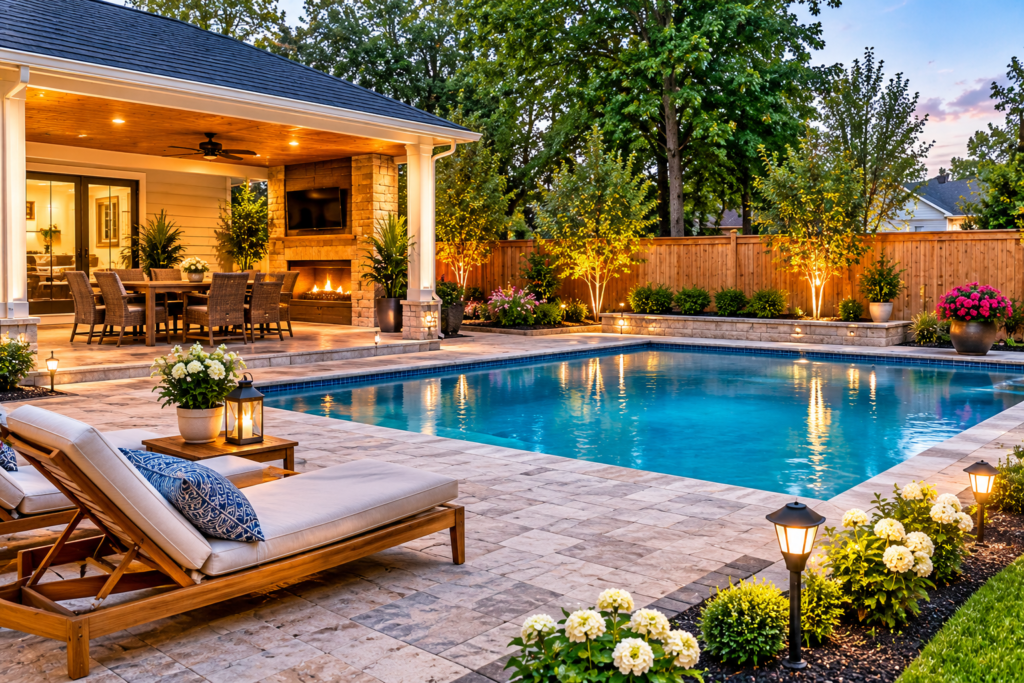
Pool decks get wet, hot, and heavily used, so surface choice matters more here than in a regular garden. Textured concrete, pavers with a non-slip finish, and natural stone with a honed or textured surface are common choices because they offer grip and can handle splash. Smooth, polished stone and glossy tiles can become slippery and very hot in sun, so test samples wet and in full sun before you commit.
Heat is a real issue. Dark surfaces absorb sun and can burn bare feet on a hot afternoon, while very light surfaces can glare. Mid-tone, textured materials often strike a useful balance, and shade from a pergola, umbrella, or tree can cool a deck without making it damp.
Drainage is critical. Pool decks should slope gently away from the pool and the house, so splash and rain don’t pool on walking areas or run back into the pool. Deck drains, gravel strips, and proper grading help, but major drainage or deck work near a pool structure should be planned with a professional who understands pool construction and local codes.

Pick Plants That Can Handle Splash and Sun
Not every plant likes life beside a pool. Splash water, reflected heat from decking, and wind across open water can stress leaves and roots. Choose plants known for heat tolerance in your climate, and avoid species that drop large amounts of leaves, flowers, or fruit into the water, since they clog filters and increase cleaning.
Good poolside plants often include ornamental grasses, agaves and other structural succulents in warm climates, palms where they are hardy, and sturdy shrubs such as oleander or pittosporum in suitable regions. In cooler climates, ornamental grasses, daylilies, and hardy shrubs may be better choices. Your local nursery can confirm what survives winter in your area and what handles your soil.
Avoid plants with thorns, sharp leaves, or heavy pollen near seating and walkways. Thorny shrubs beside a narrow pool path are a hazard for bare legs and swimsuits, and messy fruit trees over a pool create constant cleaning work. Also avoid plants with invasive roots near the pool shell, pipes, and decking. Bamboo in a contained planter can work, but bamboo planted directly in the ground near a pool can spread and damage surfaces.

Create Shade and Privacy Without Blocking Airflow
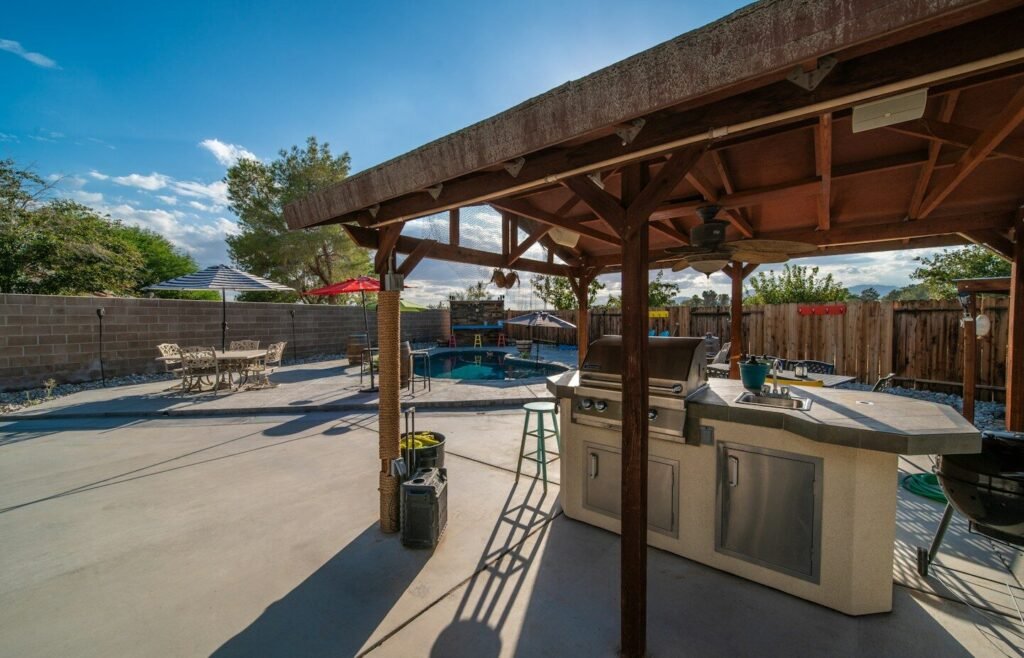
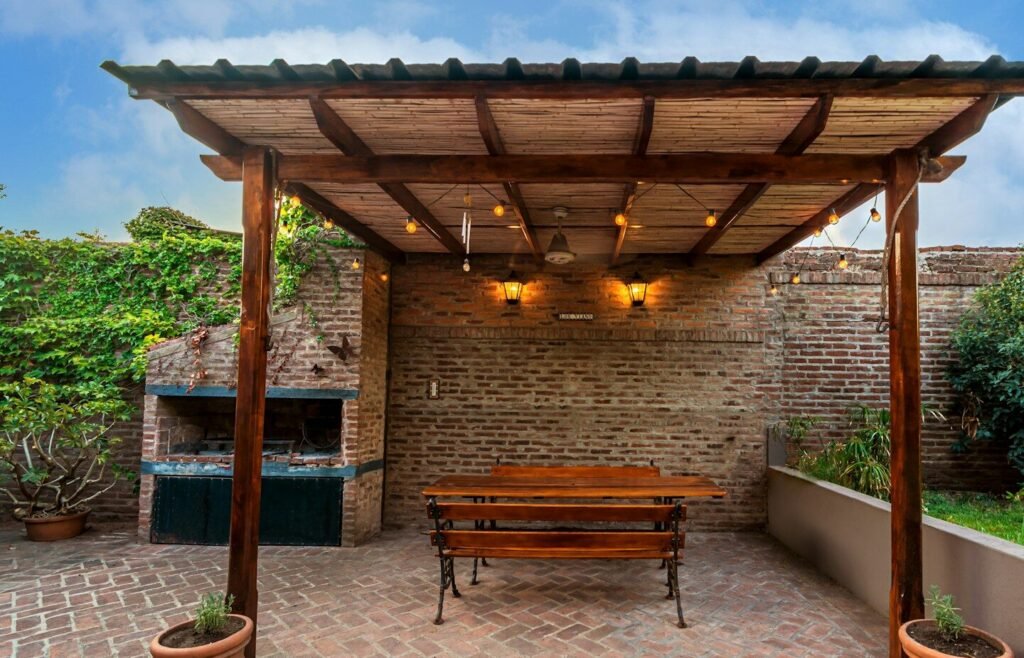
Shade makes a pool area usable through the hottest part of the day. A pergola over a seating area gives partial shade and a place for lights or a fan, while a large umbrella can be moved to follow the sun. Shade sails offer flexible cover for odd shapes, but they need strong, well-anchored posts and a plan for storms.
Trees can give excellent shade, but placement matters. A tree planted too close to the pool will drop leaves into the water, shade the pool when you might want sun, and send roots toward pipes and the pool shell. Plant trees at a distance that accounts for mature canopy and root spread, and choose species with less messy leaf drop where possible.
Privacy can come from a fence, a hedge, or a row of tall planters. A solid fence gives immediate privacy but can trap heat and block breezes. A hedge or a slatted screen lets air move while softening views. Layered planting, with tall shrubs behind lower plants, often feels more natural than a single tall wall of greenery.

Plan Seating, Storage, and Everyday Comfort
Poolside seating should handle wet towels, sunscreen, and frequent moves. Lounge chairs with quick-drying fabric, a small side table for drinks, and a shaded spot for reading make the area inviting. Avoid heavy, absorbent cushions that stay damp for days, since they wear out faster and can develop odours.
Storage keeps the pool area tidy and safe. A deck box for towels, toys, and pool chemicals should be separate from general storage, and pool chemicals need a cool, dry, locked spot away from children and pets, following label instructions. Never store chemicals beside the pool edge where they can spill into the water.
A simple outdoor shower or a hose rinse station near the pool can reduce dirt and grass tracked into the water, and it gives swimmers a place to rinse off before going inside. Place it where runoff drains away from the pool and the house, and choose a surface that stays safe when wet.
Towel hooks, a small bench for changing shoes, and a shaded spot for bags and phones are small details that make pool days smoother. They also keep clutter off walkways, which is a safety benefit as much as a comfort one.

Add Colour and Texture Without Extra Cleaning
Colour beside a pool can come from plants, pots, cushions, and deck details, rather than from messy flowering trees over the water. Large pots with grasses, succulents, or seasonal flowers near seating areas add colour where you see it most, without dropping debris into the pool.

Use pots with drainage and a saucer or gravel tray, and place them where they won’t be knocked into walkways. Group pots in odd numbers and varied heights for a natural look, and leave gaps for airflow so the area doesn’t feel crowded.
Texture helps a pool area feel designed rather than flat. A stone wall, a timber screen, a gravel border, or a tiled feature wall can add interest, but keep textures safe to touch and easy to clean. Rough stone near a narrow walkway can scrape skin, so place textured features where people won’t brush against them constantly.
Manage Water, Runoff, and Plant Care
Pool areas create a lot of splash and runoff, so beds beside a pool need plants and soil that drain well. Raised beds or mounded planting can help in flat yards, and gravel mulch can reduce mud splash onto decks. Avoid fine bark mulch right beside the pool, since it floats and blows into the water easily.
Watering needs care too. Overwatering beds near a pool can wash soil onto the deck, while underwatering in reflected heat can stress plants quickly. Drip irrigation or soaker hoses deliver water to roots with less splash, and a simple timer can keep watering consistent during hot spells.
Check plants regularly for salt or chlorine stress, especially if pool water splashes onto leaves often. Rinsing foliage with fresh water after heavy splashing can help, and replacing a struggling plant with a tougher species is often better than nursing a poor match for years.

Mistakes to Avoid
Planting messy trees over the pool is one of the most common mistakes. It looks lovely for a short season, but the cleaning burden, filter strain, and leaf stains on decking quickly outweigh the benefit. Keep large, messy trees well away from the water.
Another mistake is choosing a deck surface for looks alone. A glossy, dark surface may photograph well, but it can be slippery and hot under bare feet. Always test samples wet, in sun, and with bare feet if possible.
Skipping shade is another issue. A pool area with no shade forces everyone to retreat indoors at midday, which defeats the purpose of the space. Even one shaded seating area makes the pool usable for longer stretches.
Finally, don’t crowd the pool edge with pots, furniture, and planters. Swimmers need room to get in and out safely, and rescuers need clear access around the pool. Keep a clear band around the water, and place furniture and plants just beyond it.
Frequently Asked Questions
What plants are best around a pool?
Choose heat-tolerant, low-mess plants suited to your climate, such as ornamental grasses, palms where hardy, and sturdy shrubs that don’t drop heavy fruit or flowers into the water. Avoid thorny plants near paths and species with invasive roots near the pool shell.
How can I make a pool deck less slippery?
Use textured, non-slip surfaces, keep the deck clean of algae and sunscreen residue, and make sure water drains away rather than pooling. Replace worn or polished sections that have become slick, and keep walkways clear of toys and towels.
Should I plant trees near a pool?
Trees can give valuable shade, but plant them at a distance that accounts for mature size, leaf drop, and root spread. Avoid messy species directly over the pool, and check that roots won’t reach pipes, decking, or the pool structure.
How do I keep pool landscaping low maintenance?
Use tough plants, gravel or stone mulch near the pool, drip irrigation, and surfaces that are easy to sweep and wash. Group plants with similar water needs together, and avoid species that need frequent pruning or produce constant debris.
Conclusion
Poolside landscaping works best when safety, drainage, and plant toughness come first, and decoration follows. A slip-resistant deck, clear access, shade for seating, and plants that handle sun and splash will keep the area inviting through the swimming season. With those basics in place, you can add colour and comfort in stages, knowing the space will stay clean, safe, and easy to enjoy.
Disclaimer:
This content is for general informational purposes only. Individual homes, needs, preferences, budgets, and situations may vary. For safety, installation, repair, legal, structural, electrical, plumbing, HVAC, or major property decisions, please seek advice from a qualified professional.