
A dark blue house with cedar accents gets its character from where the wood goes. Cedar around an entrance draws attention to the front door; the same material spread across windows, gables, and garage doors can leave several features competing for attention.
Start with one area you want to highlight, then choose supporting details around it. These 15 ideas show different ways to combine navy siding and cedar, followed by guidance on coordinating colors, planning the work, and keeping the finished exterior manageable.
Short Definition
A dark blue house with cedar accents combines deep blue exterior walls with cedar details on features such as porches, gables, or entryways. The pairing introduces wood texture and warmth while highlighting selected architectural features.
Topmodrenhouse Mission Statement
Topmodrenhouse helps homeowners, renters, and home lovers make informed, practical choices for comfortable, stylish spaces that fit everyday life.
Quick Exterior Planning Checklist
- Choose one main cedar feature before adding smaller accents.
- Coordinate with the roof, windows, and masonry you’ll keep.
- Compare blue paint, finished cedar, and trim samples together.
- Check the palette in sunlight and shade.
- Decide whether to retain warm wood tones or allow weathering.
- Include installation requirements and maintenance access in your budget.
15 Cedar Accent Ideas for a Dark Blue House
1. Frame a Recessed Entry with Cedar
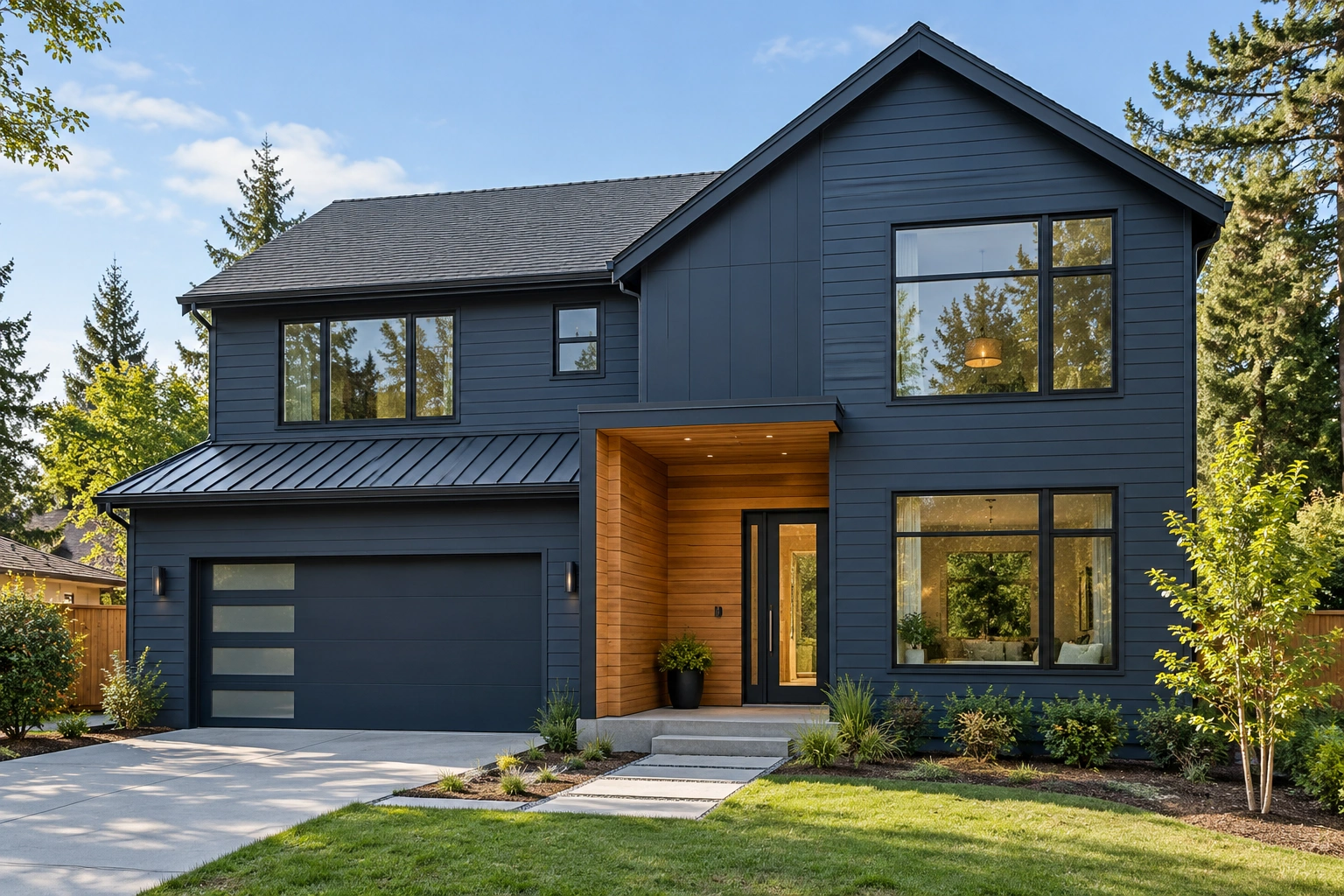
Line the walls inside a recessed entrance with cedar while keeping the surrounding facade dark blue. The change in material helps define a doorway tucked beneath an overhang.
This suits contemporary homes with simple openings. Keep nearby trim restrained, and test the wood finish inside the recess: a sample viewed in full sunlight won’t show how it looks in that shaded position.
2. Repeat Cedar Wraps Across Porch Posts

Cedar wraps can introduce a steady rhythm along a blue-sided porch. They’re especially useful when the existing posts already give the front elevation a clear, orderly structure.
Choose proportions that suit the porch; oversized wraps may crowd a shallow entrance. Decorative wrapping also doesn’t establish a post’s structural condition or capacity, so assess existing supports before covering them.
3. Warm Up a Covered Porch with a Cedar Ceiling

A cedar porch ceiling places the wood overhead, leaving the walls and railings visually quieter. It’s worth considering when you like natural wood but don’t want it around every window.
On a farmhouse or cottage, pair it with blue siding and simple painted posts. Look at the proposed finish from the walkway as well as underneath the porch to judge its visibility.
4. Highlight a Front Gable with Cedar Shingles
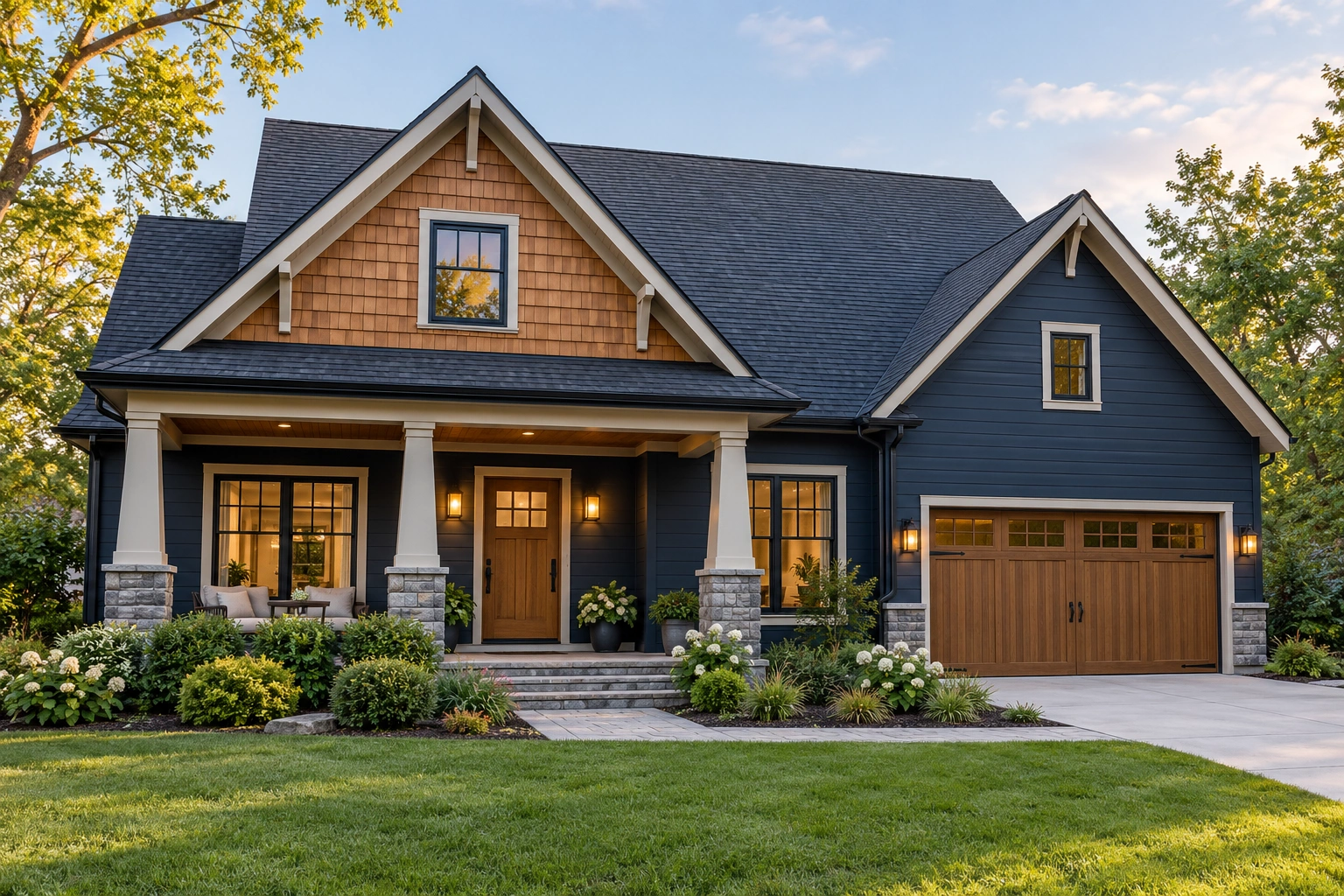
Use cedar shingles within one front-facing gable—the triangular wall beneath a pitched roof—to introduce texture above smoother blue lap siding.
This can suit Craftsman and cottage architecture. Keep neighboring gables simpler so the texture has a clear role. Remember that gable cladding is wall siding, not cedar roofing, and consider access for future maintenance before selecting the finish.
5. Add Vertical Cedar Beside the Front Door

A narrow wall of vertical cedar can identify the entrance on a modern facade. Against horizontal blue siding, the change in direction gives the doorway emphasis without adding another paint color.
End the cedar at a natural boundary, such as an inside corner or projecting wall. An arbitrary strip through the middle of an uninterrupted elevation may look disconnected.
6. Break Up a Wide Facade with a Cedar-Clad Bay

On a broad ranch or contemporary home, cedar cladding can distinguish an existing projecting bay from the surrounding blue walls.
Following the bay’s edges gives the material change a reason to be there. Keep nearby window trim simple, and avoid extending cedar across unrelated sections just to make both sides of the house match.
7. Make a Cedar Garage Door the Main Wood Accent

A street-facing garage offers a large surface for wood grain. On a garage-front ranch, a cedar door can become the main accent, with a smaller wood detail near the entrance providing a connection.
Consider whether you want the garage to attract that much attention. Verify whether the selected door is solid wood, cedar-clad, or a manufactured wood-look product, and have the complete door system professionally specified.
8. Add Cedar Shutters That Fit the Windows

Cedar shutters can bring repeated warmth to a traditional blue exterior without changing the main siding.
Check their relationship to the windows: very narrow shutters beside wide glazing often look unrelated to the opening. Use them selectively on suitable windows rather than treating every window as needing a pair. Functional shutters require appropriate sizing and hardware.
9. Frame One Picture Window with Cedar
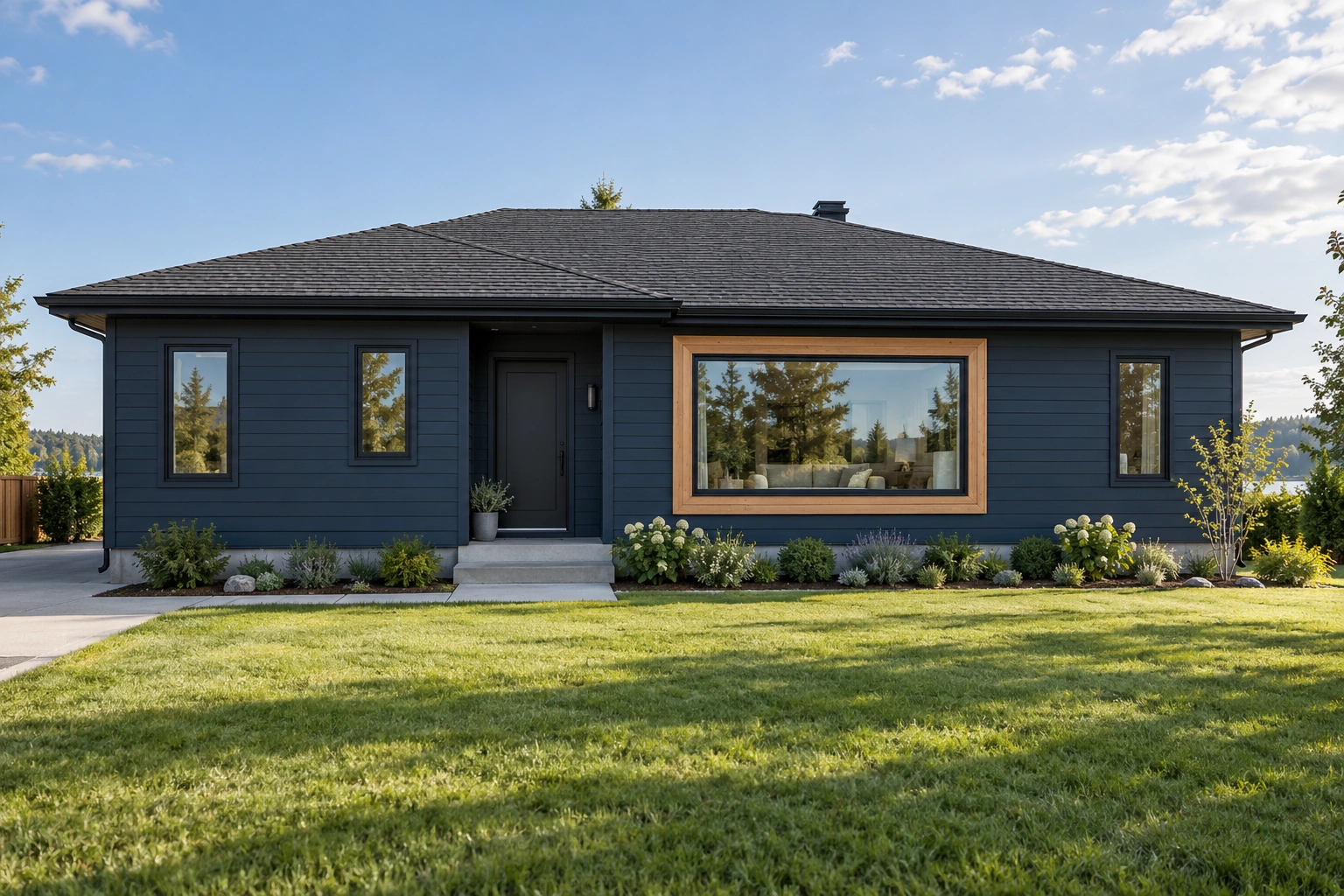
A cedar surround can make a prominent picture window the feature of an otherwise restrained elevation. This approach works particularly well on a simple ranch or contemporary home.
Keep the surround in proportion to the glass and nearby trim. Window casing is separate from the window frame itself; changing the casing shouldn’t become an improvised alteration to the window’s installation.
10. Introduce Smaller Accents with Cedar Window Boxes

Window boxes offer a smaller-scale way to repeat cedar beneath selected windows. Against navy siding, they also create a place for planting to soften the facade.
Choose boxes that relate to the window width. Before installation, account for their filled weight, suitable mounting, drainage, and watering access. A decorative detail shouldn’t create a difficult maintenance spot.
11. Add Privacy with a Cedar Porch Screen
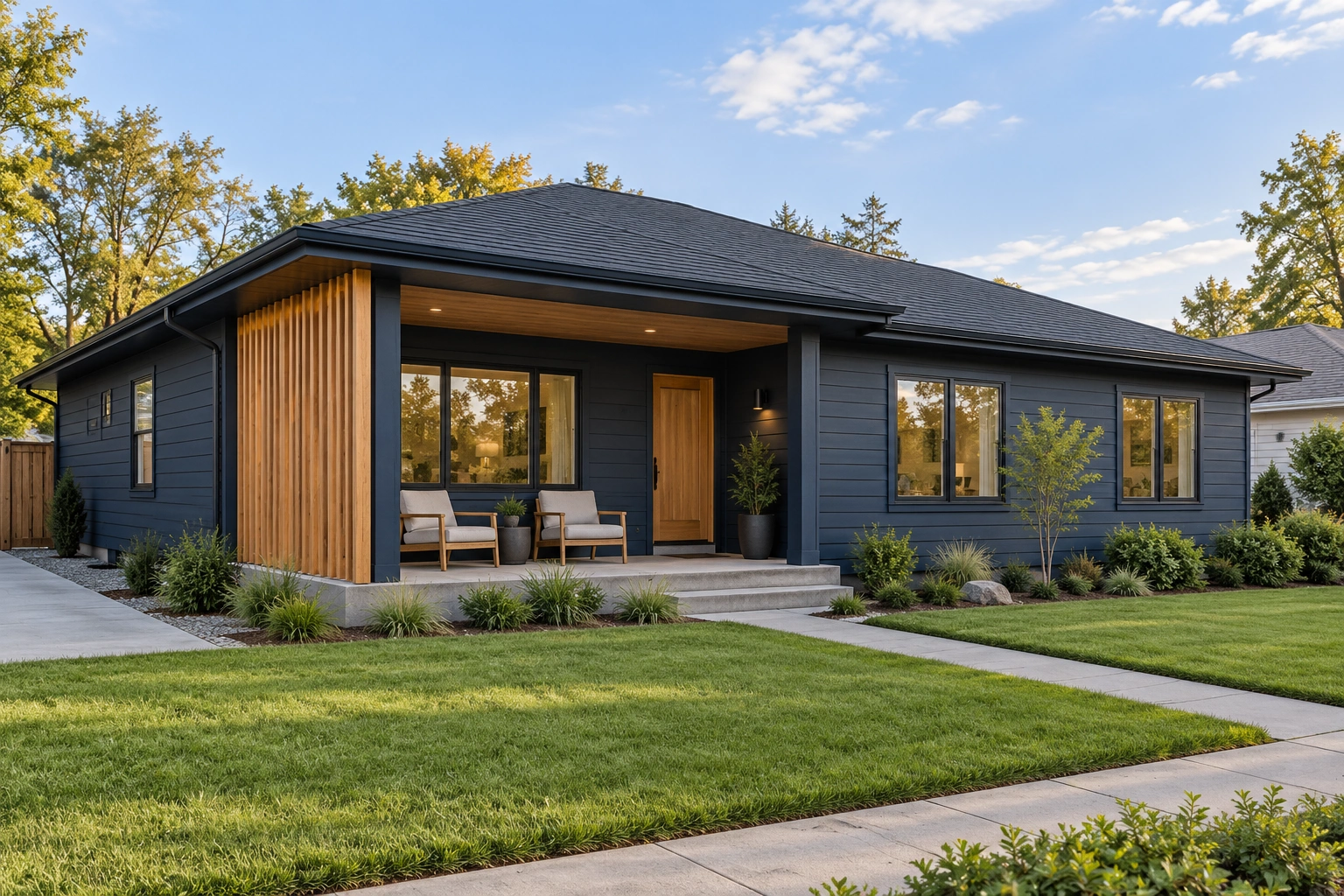
Vertical cedar slats can define one side of a porch while adding a wood element against blue siding. This is useful where seating faces a neighboring property or an exposed approach.
Decide which view you want to screen before choosing the layout. Compare the proposed spacing from both sides so the screen provides useful privacy without making the porch feel unnecessarily enclosed.
12. Connect the House to a Cedar Fence and Gate

A cedar gate or short front fence can extend the exterior palette toward the street. It’s a useful option when the house itself has few suitable places for wood cladding.
Keep the fence finish related to any cedar at the entrance. Check applicable boundary, height, and neighborhood requirements before committing to the design.
13. Carry the Wood Tone onto a Front Deck
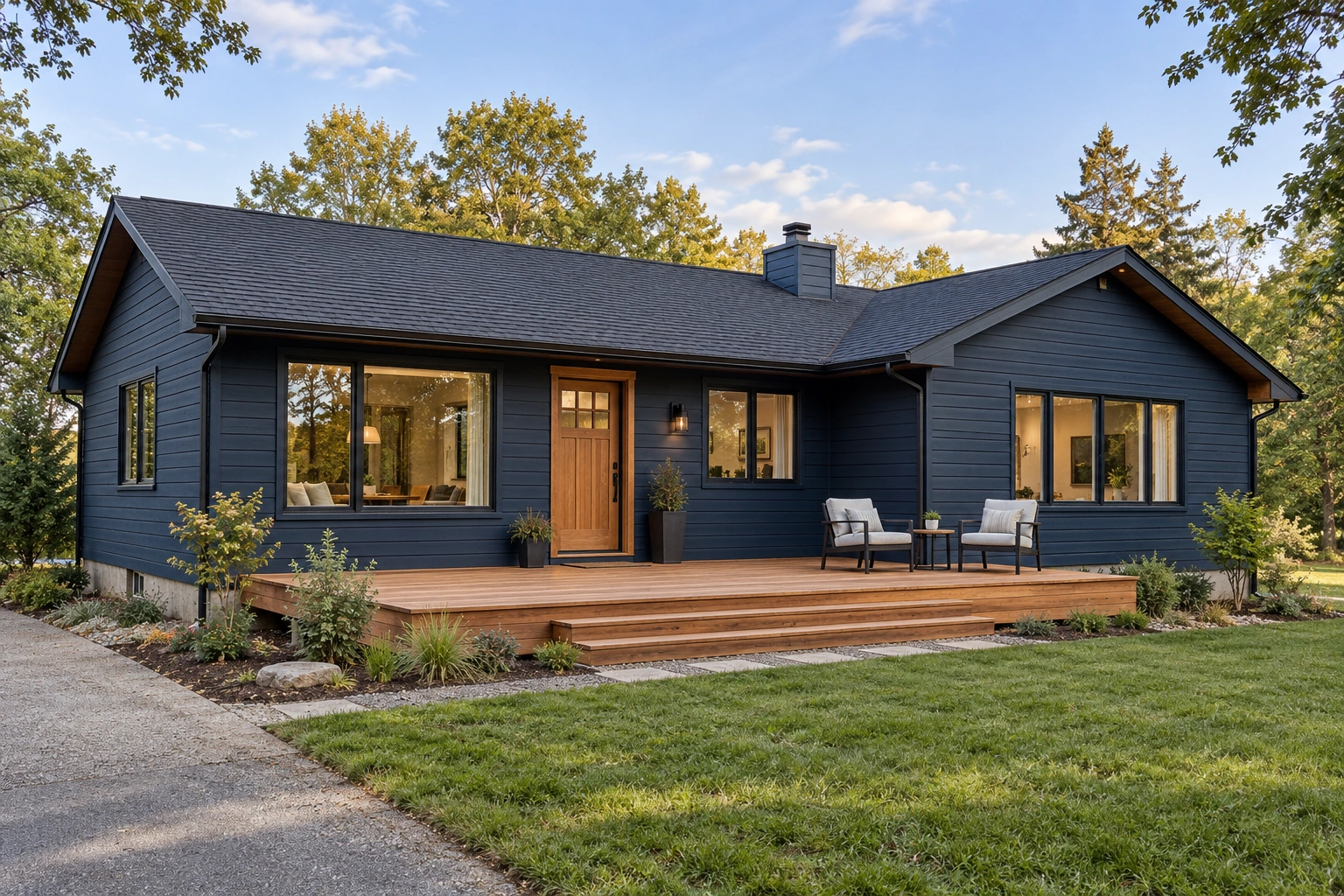
A cedar deck can connect a blue exterior with an outdoor seating area, especially on a low ranch or cottage. Keep surrounding railings and furniture relatively simple so the deck remains part of the house’s composition.
Treat the walking surface as a separate finishing decision. Real Cedar notes that foot traffic and horizontal weather exposure make deck finishing more demanding than siding applications.
14. Pair a Blue Patio Wall with a Cedar Pergola

A cedar pergola can give a rear or side patio a defined setting against dark blue siding. This moves the accent toward the outdoor space you use, rather than concentrating every improvement on the street elevation.
Align its scale with the patio and nearby openings. An attached pergola needs appropriate design and connections; its appearance alone doesn’t establish a suitable installation.
15. Define the Entrance with a Cedar-Clad Canopy

A cedar-clad entrance canopy creates a concentrated accent on a house without a full porch. Unlike a recessed entry, it projects outward and gives the doorway a more visible outline.
Keep its dimensions related to the door and surrounding windows. Have the support, roof detail, and connection to the house assessed professionally, with the cedar treated as part of the finish design.
How to Balance Dark Blue, Cedar, and Trim
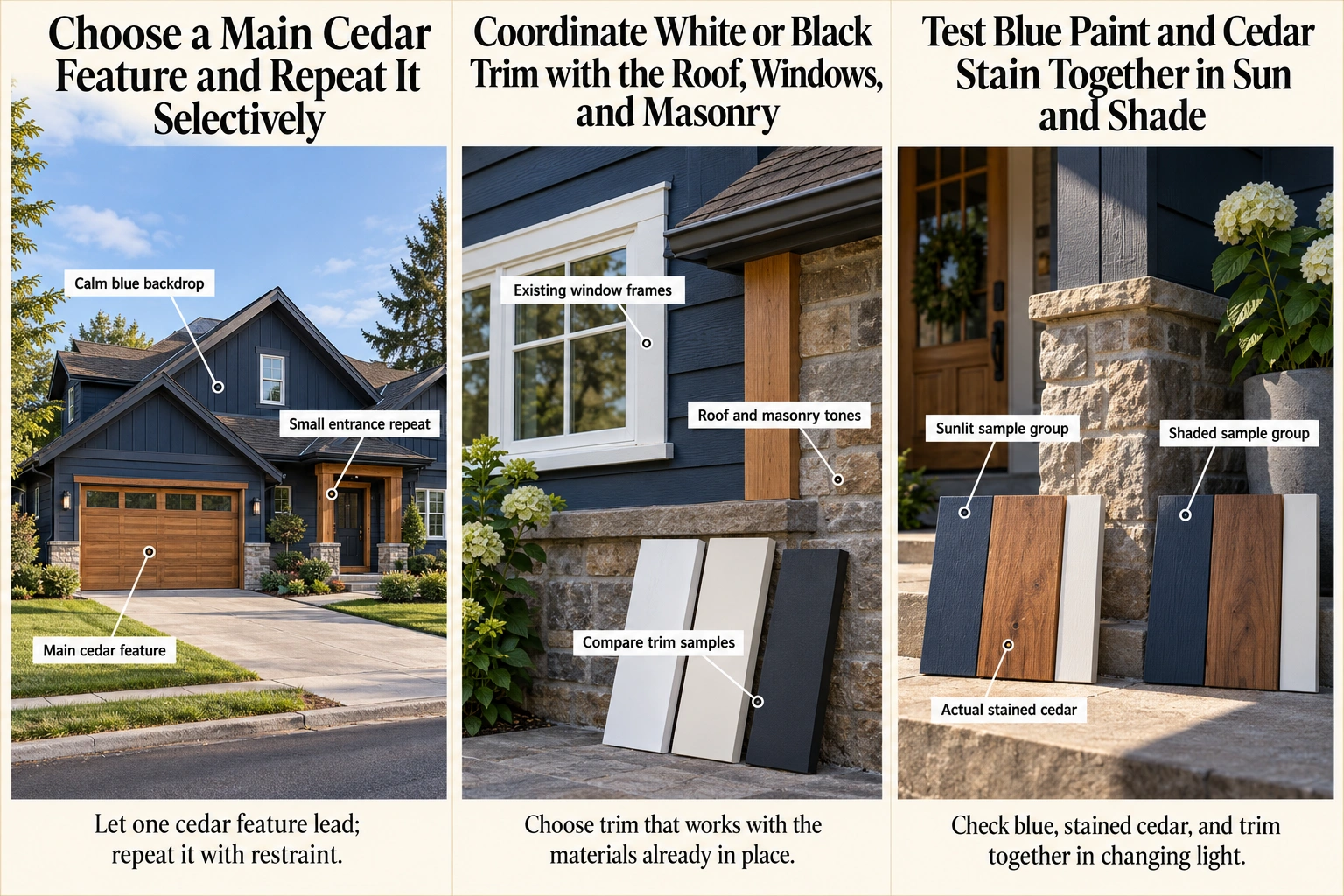
A balanced exterior gives each material a clear role. Blue can cover the main walls, cedar can highlight a chosen feature, and trim can define openings. The right distribution depends on your home’s shape and existing finishes; there’s no single percentage of cedar that suits every facade.
Choose a Main Cedar Feature and Repeat It Selectively
Stand across the street and decide where you want attention to land. A broad garage door, central porch, and tall gable each create a different emphasis.
For example, a cedar garage door may need only a modest connection at the entrance. A porch-front Craftsman could instead use repeated cedar posts while keeping the garage painted.
Resist adding wood to every available surface. Repetition helps when it connects features; too many separate accents can make the house harder to read.
Coordinate White or Black Trim with the Roof, Windows, and Masonry
Choose trim alongside the materials that will remain. Existing white window frames, brown roof shingles, or multicolored stone should influence the palette.
| Trim direction | Effect to consider | What to check |
| White | Clearly outlines windows and roof details | Whether the contrast feels too sharp beside existing masonry |
| Warm off-white | Offers a softer transition around warm wood tones | Whether it appears too yellow against the blue |
| Black | Creates a darker, more restrained outline | Whether important details disappear in shaded areas |
A dark blue house with black trim doesn’t necessarily need black on every feature. Likewise, white windows don’t require every porch element to be white.
Test Blue Paint and Cedar Stain Together in Sun and Shade
Compare the blue, finished cedar, and trim as one group. Use actual cedar samples with the intended stain rather than assuming an unfinished board represents the final result.
Benjamin Moore Hale Navy HC-154 and Sherwin-Williams Naval SW 6244 are two named blues to consider sampling. Their suitability still depends on the house and the coating system; Benjamin Moore specifically cautions that screen representations can differ from actual paint.
View samples beside the roof or masonry, near the entrance, and on shaded and sunlit walls. This helps catch a blue that looks brighter than expected or a wood finish that introduces more orange than you want.
Plan the Project Around Your Budget and Existing Exterior

Compare Small Updates with Larger Cladding Projects
Price the work behind the visible feature. Window boxes and a full cedar-clad bay involve very different scopes, but size alone doesn’t determine cost.
Ask estimates to distinguish materials, preparation, removal, installation, finishing, and access equipment. High gables or complicated transitions can require more work than their surface area suggests.
A smaller, well-positioned accent may achieve your design goal without expanding the project across the whole facade.
Distinguish Real Cedar from Wood-Look Alternatives
“Cedar” may describe actual wood, a stain color, or the appearance of a manufactured product. Confirm what you’re buying.
Real cedar offers natural grain variation. Wood-look alternatives have their own finish, installation, repair, and warranty requirements. Compare physical samples and maintenance instructions rather than assuming an alternative is maintenance-free.
Choose according to the feature’s visibility, your preferred appearance, and the care you’re willing to undertake.
Check Siding Compatibility and Installation Requirements
Before choosing a dark coating for existing siding, verify compatibility with both the siding and paint manufacturers. Vinyl requires particular attention: Sherwin-Williams offers a specific VinylSafe color system, so selecting an ordinary navy formula isn’t enough to establish suitability.
For added cladding, window surrounds, and overhead features, have the installer explain attachment, water-management details, and any affected ventilation. Structural changes deserve assessment before decorative work begins.
Plan for Cedar Weathering and Maintenance
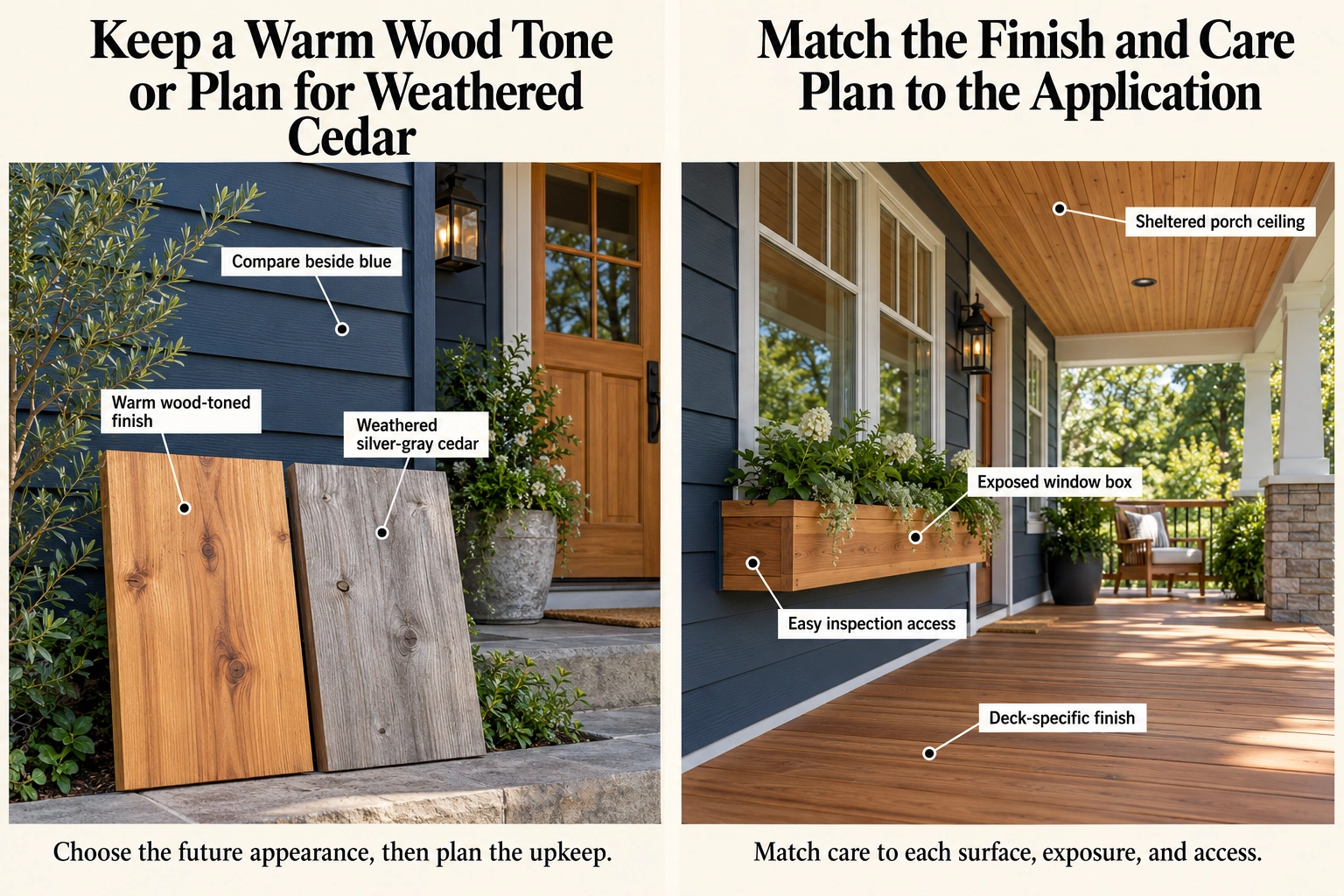
Keep a Warm Wood Tone or Plan for Weathered Cedar
Cedar’s initial appearance isn’t a permanent color specification. Decide whether your palette depends on retaining a wood-toned finish or allowing a weathered appearance.
Real Cedar’s guidance treats natural weathering as an option that still depends on appropriate design, installation, and routine maintenance. It also distinguishes several finish types, including transparent, semi-transparent, and opaque systems.
Look at the intended future appearance alongside the blue. A finish chosen for its warm color creates a different design commitment from cedar intended to weather.
Match the Finish and Care Plan to the Application
Specify a finish appropriate to the wood, exposure, and use. A porch ceiling, window box, and deck shouldn’t automatically receive the same treatment.
Follow the selected product’s preparation and maintenance instructions. Ask how you’ll recognize when attention is needed rather than relying on one refinishing interval for every surface.
Maintenance access belongs in the design decision too. An accent you can inspect from the ground is easier to monitor than one high above a sloping driveway.
Frequently Asked Questions
Is Dark Blue a Good Exterior Color for a Small House?
Dark blue can suit a small house, particularly when the palette stays restrained and the entrance remains easy to identify. Consider roof color, shade, and the amount of visible siding. One focused cedar feature may provide enough warmth without dividing a compact facade into numerous contrasting sections.
What Front Door Color Works with Dark Blue Siding and Cedar Accents?
A wood-toned door can connect with nearby cedar, while a painted navy or charcoal door can let the cedar surround take priority. Warm white is another option where light trim already appears. Compare the actual door sample with the cedar finish; two wood tones don’t need to match exactly, but should look intentional together.
Can Cedar Accents Work with Existing Red Brick?
Cedar accents can work with red brick when the blue, wood finish, and trim are selected around the masonry. Compare samples against both brick and mortar. With strongly orange brick, consider a less orange cedar finish and limit additional accent colors so the facade doesn’t become visually crowded.
Choose the Cedar Detail That Fits Your Home
Choose one feature worth highlighting, then build the palette around the roof, windows, and masonry you’ll keep. Test finished samples together before ordering materials.
The most useful idea is the one that suits your home’s proportions and your willingness to maintain it. A carefully placed cedar detail can give navy siding the warmth you want without making every part of the exterior compete for attention.
Disclaimer
This content is for general informational purposes only. Homes, needs, preferences, budgets, and situations vary. Consult a qualified professional for safety, installation, repair, structural, electrical, plumbing, HVAC, legal, or major property decisions.