
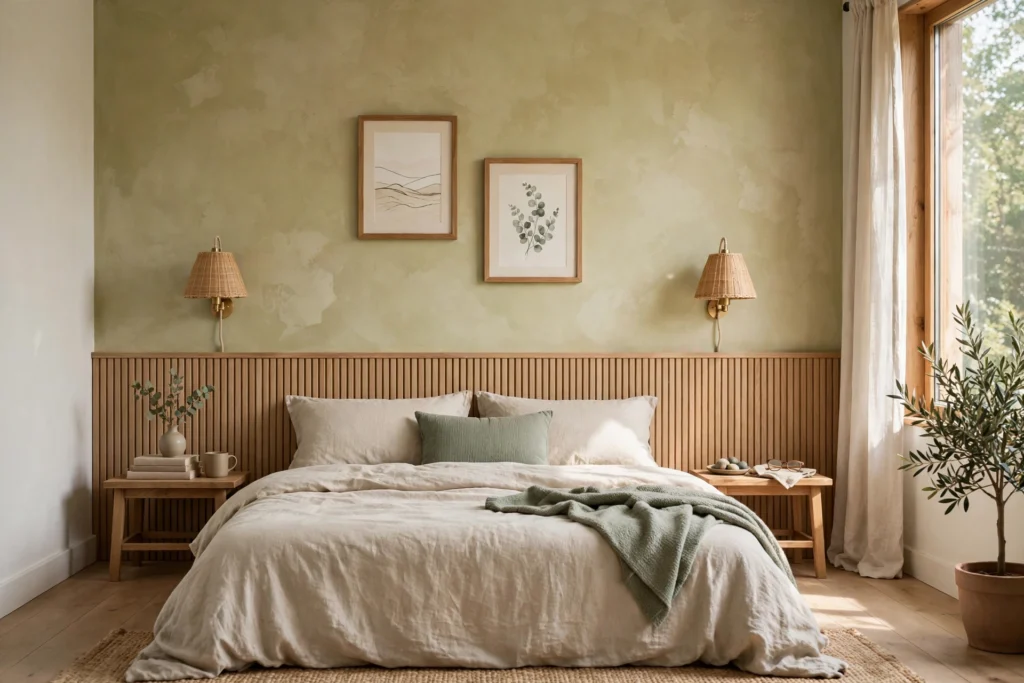
The walls in a bedroom set the mood for the whole room. They are the first thing you see in the morning and the last thing you notice at night, so even a small change there can shift how restful the space feels.
You don’t need to redo every wall to get that effect. In most bedrooms, one main wall does most of the work. That’s often the wall behind the bed, or the wall you face when you walk in. Start there, and let the other walls stay quieter.
Think about how you use the room, too. A bedroom used mainly for sleep and reading calls for a calmer approach than a bedroom that also serves as a workspace or dressing area. Let function guide the look, and the room will feel more settled over time.
Start With the Main Wall

Walk into your bedroom and notice where your eyes land first. That’s usually the best place for a focal point. For many people, that’s the headboard wall, since the bed already anchors the room.
A clear focal point helps the rest of the room feel organized. Without one, art, shelves, and decor can end up scattered, and no single area feels intentional. With one, you can keep side walls simple and still have a room that feels finished.
Before you hang or paint anything, check the practical side. Note where outlets, light switches, vents, and doors sit on that wall. A beautiful arrangement that blocks a vent or covers a switch you use every day will quickly become annoying. Plan around those fixed points from the start.
Also consider light. Look at paint samples and art in both daylight and evening light before you commit, since colors can shift a lot between the two.
Paint and Color Choices

Paint is often the simplest way to change a bedroom wall, and it doesn’t require new furniture. One accent wall in a deeper or softer tone can add depth, while keeping the other walls in a lighter shade keeps the room feeling open.
Choose a color you enjoy living with, not just one that looks good in a photo. Soft greens, warm neutrals, dusty blues, and gentle earth tones tend to feel calm in bedrooms. Deeper tones can feel cozy, especially behind a bed, but they also make a wall feel closer, so they suit larger rooms or a single wall better than all four walls.
Test before you commit. Paint a large sample board or a section of wall, and live with it for a few days. Check it in the morning, in the afternoon, and under your bedside lamps. A color that feels soothing at noon can feel too dark or too cool at night.
If painting feels like a big step, consider a half-wall effect or a simple color block behind the bed. Both can add interest without overwhelming the room.
For renters, removable wallpaper and large fabric panels can offer a similar change without permanent paint. Always check your lease first, and test a small, hidden area to see how a product removes from your walls.
Gallery Walls and Personal Art

A gallery wall is a flexible way to bring personality into a bedroom. Family photos, travel prints, sketches, and simple abstract pieces can all work together if they share a loose theme, such as a similar color palette or frame finish.
Keep the layout balanced rather than random. Lay the pieces on the floor first, and try a grid for a tidy look or a looser cluster for a more relaxed feel. Leave consistent spacing between frames, and step back often to check the overall shape. A gallery that forms a rough rectangle or oval usually looks calmer than one that sprawls in every direction.
Mix sizes, but include at least one larger piece to anchor the group. Without an anchor, a wall of only small frames can look busy. With one larger piece, the eye has a place to start, and the smaller pieces feel like supporting details.
Hang art at a height that suits how you’ll see it. Over a dresser or nightstand, the bottom of the frame should sit a comfortable distance above the furniture, not so high that it feels disconnected. In a bedroom, art seen mainly from the bed can sit a bit lower than art in a hallway.
Shelves, Mirrors, and Decorative Storage

Wall shelves can add both storage and display space in a bedroom, especially when dresser and nightstand space is limited. A single shelf above a desk, or a pair of shelves beside the bed, can hold books, a small plant, a candle, and a photo without crowding the floor.
Keep shelves light and edited. A shelf with a few items and some breathing room looks intentional, while a shelf packed from end to end can feel like clutter, even if every item is nice on its own. Leave space for the items you actually reach for, like a current book or a charging spot, rather than filling every inch with decor.
Mirrors are another useful wall choice. A mirror opposite or near a window can bounce light around the room and make a small bedroom feel more open. A full-length mirror on a wall near the closet is practical for getting dressed, and a smaller decorative mirror can work above a dresser.
Hang mirrors securely, especially larger ones. Use hardware suited to the weight and your wall type, and ask for help when a mirror is heavy or awkward to hold. For very large or wall-mounted pieces, a professional installer can advise on safe placement and fixings.
Wall-mounted lights are worth considering, too. Sconces beside the bed free up nightstand space and give softer light for reading. For any new wired lighting, hire a licensed electrician rather than attempting electrical work yourself.
Make the Headboard Wall Stand Out

The wall behind the bed offers a natural place for a stronger design choice, since the bed already draws attention there. You don’t need an expensive headboard to make it work.
A simple upholstered headboard, a wooden panel, or a row of cushions hung as a soft headboard can all soften the wall and make the bed feel more finished. Choose a height that suits your pillows and how you sit up in bed. A headboard that’s too low can disappear behind pillows, while one that’s very tall can dominate a small room.
Fabric wall hangings, woven pieces, or a large textile can also work behind a bed. They add texture and warmth, and they are often lighter than framed art. Make sure any hanging is secure and kept clear of lamps, candles, or other heat sources.
Another option is a painted or wallpapered panel behind the bed, framed by simple trim or left as a clean color block. This creates a backdrop that looks deliberate, even with a simple bed frame. Keep the rest of the walls calm so the headboard wall stays the focus.
Texture, Wallpaper, and Natural Materials

Texture can make a bedroom wall feel warm without adding color or pattern. Wood slats, woven hangings, fabric panels, and grasscloth-style wallpaper each add depth in a different way, and they can soften the hard surfaces of a room.
Removable wallpaper is a good middle ground for many homes. It lets you try a pattern on one wall, and it can be changed later without repainting the whole room. Choose a pattern with a scale that suits your room. Very large patterns can overwhelm a small bedroom, while very small, busy patterns can feel restless up close.
If you use wood, fabric, or other textured materials on a wall, think about cleaning and upkeep. Textured surfaces collect dust more easily than smooth painted walls, so choose materials you can dust or wipe as needed.
Balance is key with texture. One textured wall, plus smooth bedding and simple curtains, usually feels calm. Texture on every wall, plus patterned bedding and busy curtains, can feel crowded. Let one element lead, and keep the others simpler.
Common Mistakes to Avoid

One common mistake is hanging everything too high. Art placed close to the ceiling, with a large empty gap above the furniture, can make a wall feel disconnected. Step back and check the relationship between the art and the furniture below it, not just the wall on its own.
Another mistake is using too many competing ideas on one wall. A gallery, shelves, a mirror, and a bold wallpaper pattern all fighting for attention can make a bedroom feel unsettled. Pick one main idea per wall, and let the others support it or move to a different wall.
Scale is also easy to get wrong. A tiny frame on a large empty wall can look lost, while an oversized piece above a small nightstand can feel heavy. Measure the wall and the furniture, and compare the size of the piece to both before you hang it.
Finally, avoid rushing into permanent changes. Paint, wallpaper, and large wall installations are harder to undo than a framed print or a shelf. Live with a sample, a test arrangement, or a temporary option first, especially for a bold color or pattern.
Buying and Decision Trade-Offs
When you shop for wall decor, think about longevity and flexibility. A framed print you love, a well-made mirror, and simple shelves tend to last through several bedding and paint changes. A very trend-specific piece may feel dated sooner, so weigh how long you expect to keep it.
Material and weight matter for safety and upkeep. Glass frames, heavy mirrors, and solid wood shelves need secure fixings and the right wall anchors. Lighter canvas prints, fabric pieces, and small frames are easier to move and rearrange, which is helpful if you like to refresh the room often.
Cost is another trade-off. You can mix higher-cost anchor pieces with lower-cost accents, such as prints, cushion covers, or small plants. That mix lets you update the look without replacing everything, and it keeps the budget focused on pieces you’ll see and use every day.
Consider maintenance, too. Wallpaper in a sunny room may fade over time, and fabric hangings may need occasional cleaning. Choose options that fit how much upkeep you realistically want to do.
For structural changes, built-in shelving, or anything involving wiring or plumbing inside a wall, get professional advice. A contractor or licensed tradesperson can check wall structure, advise on safe fixings, and help you avoid damage to wiring or pipes hidden behind the surface.
Ideas That Suit Different Bedroom Sizes
In a small bedroom, keep wall decor simple and light in color where possible. One larger piece, a mirror to reflect light, and a single shelf often work better than several small decorations. Leave some empty wall space, since that breathing room helps a small room feel less crowded.
In a larger bedroom, you have more room to play with scale. A wider gallery, a pair of shelves, or a larger headboard wall treatment can fill the space without feeling sparse. Still, avoid filling every wall just because you can.
These bedroom wall ideas work best when they match your daily routine, your light, and your furniture. A wall that looks good and supports how you actually use the room will feel right for much longer than a wall chosen only for a photo.
A Simple Way to Begin
Start with the main wall, choose one idea, and test it before you commit. Hang a sample arrangement, try a paint swatch, or lean a large frame against the wall for a few days.
Notice how the room feels in the morning and at night, and adjust from there. Small, thoughtful changes to your bedroom walls can make the whole room feel calmer, more personal, and easier to relax in, without a full renovation.
Disclaimer:
This content is for general informational purposes only. Individual homes, needs, preferences, budgets, and situations may vary. For safety, installation, repair, legal, structural, electrical, plumbing, HVAC, or major property decisions, seek advice from a qualified professional before acting.