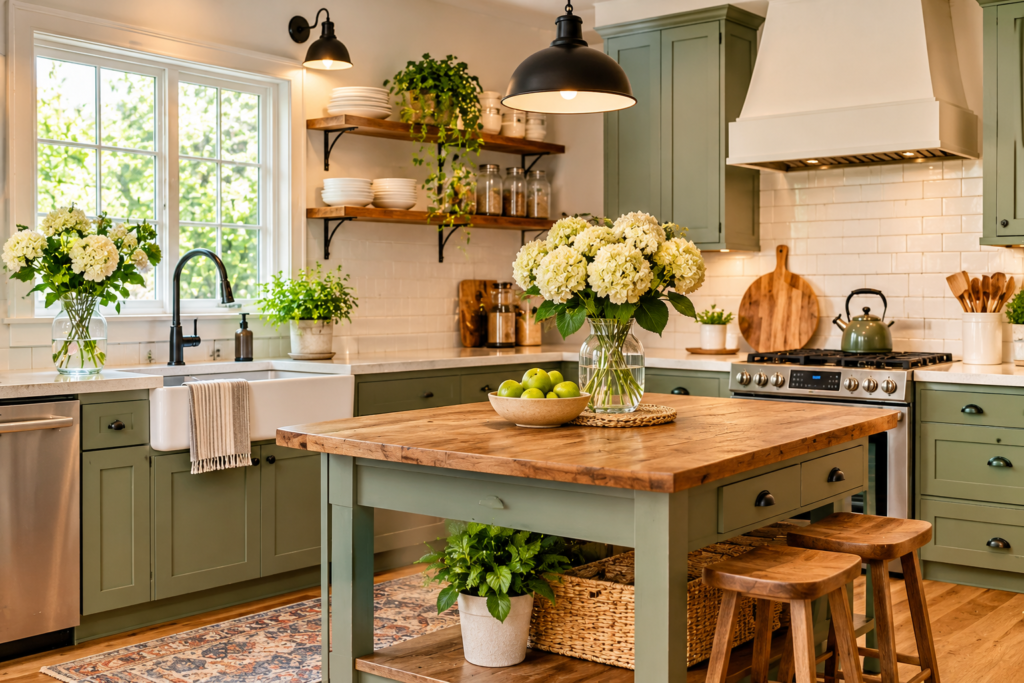
A cottage kitchen has a relaxed, collected feel. It looks like it grew over time, with painted wood, soft colour, and details that invite you to stay a little longer. Nothing feels too polished or too formal, and the room still works well for everyday cooking.
The charm comes from balance. You want warmth and personality, but you also want clear counters, good light, and storage that makes sense. Each choice should support the way you actually live in the room, not just how it looks in a photo.
What Gives a Room Its Cottage Character
Cottage style is less about one exact look and more about a feeling. Think painted cabinets with simple hardware, natural wood, soft colours, and a few vintage style details that feel familiar rather than fussy.
Texture does a lot of the work. Beadboard, a wood cutting board left out on the counter, linen towels, and a ceramic bowl can add warmth without adding clutter. When textures repeat gently around the room, the space feels settled and calm.
Painted Cabinets and Soft Colour

Painted cabinets are one of the clearest signs of a cottage style kitchen. Soft white, warm cream, sage green, pale blue, and gentle grey all work well, especially when the paint has a soft, matte or satin finish rather than a high shine.
Colour choice can change how the room feels at different times of day. A warm white can keep a north facing room from feeling cold, while sage green can bring a calm, garden like quality to a bright room. Test a colour on a large board and move it around the room before you commit.
Beadboard, Wood, and Vintage Style Details

Beadboard adds instant cottage character. It works on a backsplash, an island panel, a pantry door, or a section of wall. Painted the same colour as the cabinets, it blends in softly. Painted white against a coloured wall, it becomes a gentle feature.
Wood keeps the room from feeling too smooth or too new. A butcher block section of counter, open wood shelves, a wooden stool, or a farmhouse table can bring warmth and a sense of age. Mix wood tones carefully, and let one or two warm tones lead.
Vintage style details work best when they are useful. An old style faucet, a simple apron front sink, glass front cabinets, or a wall hook for aprons and towels can all feel at home here. The goal is charm you can use, not decoration that gets in the way.
Countertops That Suit the Look

Butcher block is a natural fit here. It feels warm, it pairs well with painted cabinets, and it suits baking, chopping, and everyday prep. It does need regular care, so it works best for cooks who do not mind wiping and oiling it from time to time.
Light stone or quartz style counters offer a calmer, more practical surface. Soft white, cream, or pale grey can brighten the room and make it easier to see what you are doing. Keep veining soft and simple, so the counter supports the room rather than competing with it.
Flooring That Can Handle Real Life
These are lived in rooms, so flooring needs to cope with spills, muddy shoes, and dropped pans. Wood floors bring warmth and age gracefully, especially wider planks with a soft finish. They can mark over time, and many people accept that as part of the character.
Tile is a practical choice when you want an easy clean surface. Look for simple shapes, soft colours, and a matte finish. A classic subway tile, a small square tile, or a gentle stone look can all fit, as long as the pattern stays calm and the grout colour stays close to the tile.
Lighting That Keeps the Room Warm
Good light makes the room feel welcoming at any hour. Start with bright, even light for cooking, then add softer light for evenings. A mix of ceiling light, task light, and a warm pendant can give you that range.
Pendants over an island or table work well in this style. Glass shades, enamel shades, or simple metal shades in soft white, cream, or muted green can suit painted cabinets and wood. Hang them high enough to see across the room, and keep the shades simple so they do not block the view.
Under cabinet lights are worth the effort. They light the counter where you chop and read recipes, and they make the room feel warm after dark. Choose a warm white tone, and avoid a harsh blue white light that can make soft colours look cold.

Open Shelves Without the Clutter

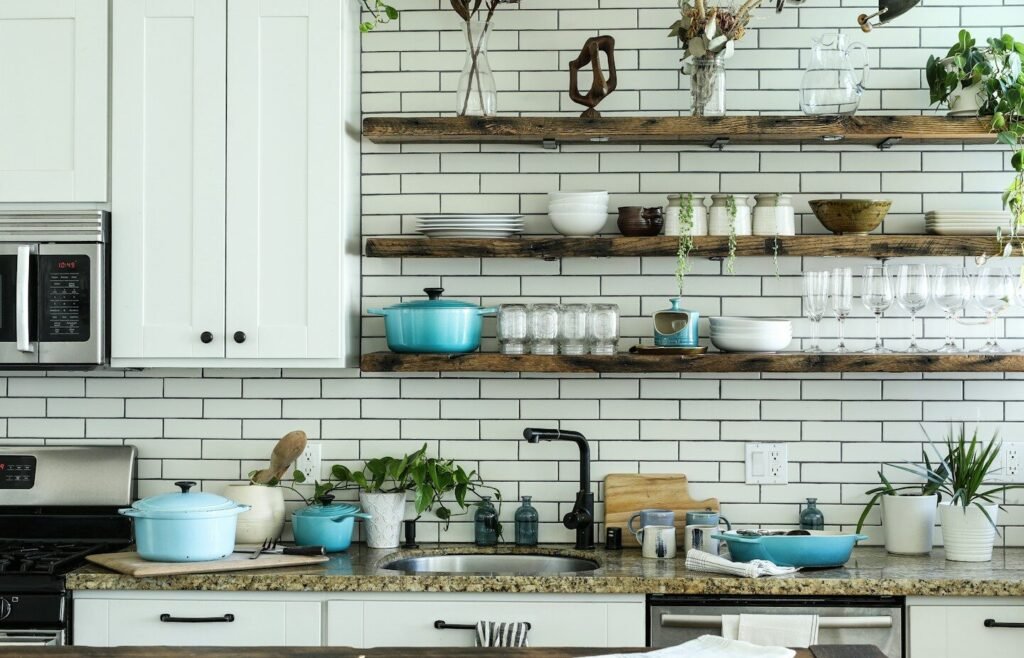
Open shelves are a signature cottage feature, but they work best with a clear plan. Use them for items you reach for every day, such as plates, bowls, glasses, and mugs. When shelves hold daily items, they stay tidy because they are used often.
Keep the look calm by grouping similar items together. Stack white plates in one spot, place glasses in a neat row, and keep wood boards together. Leave a little breathing room at the ends of each shelf, so the display does not feel packed from edge to edge.
If open shelves feel like too much upkeep, try a mix. Keep one or two open shelves for daily dishes, and keep the rest behind closed doors. That way you get the open, airy feel without having to style every shelf every week.
Storage That Works Behind the Charm
Cottage charm should not mean hunting for a pan lid. Deep drawers for pots, a tall pantry for dry goods, and a drawer near the stove for cooking tools can make daily cooking much easier. Think about where you stand when you need each item, and store it close to that spot.
Small rooms benefit from using vertical space. Hooks inside a pantry door, a rail for utensils near the stove, and a shelf above a doorway for rarely used items can free up counter space. Keep the items you use most at easy reach, and move seasonal items higher up.
Keeping It Warm Without Feeling Cluttered
Warmth here comes from layers, not from filling every surface. A wood board, a linen towel, a plant on the windowsill, and a bowl of fruit can be enough. When each layer has space around it, the room feels warm and calm at the same time.
Edit as you go. If a surface feels busy, remove one item and live with the change for a few days. Often the room feels better with less, and you can move the extra item to another spot where it will be noticed and used.
Keep one clear stretch of counter if you can. A clear spot for prep, coffee, or homework makes the room feel more usable, even when the rest of the space is full of life. That clear spot is often what makes a busy room feel peaceful.
Modern Comforts That Still Fit the Look

A cottage kitchen can be fully modern behind its soft look. A quiet dishwasher, a good range, a fridge with panels that match the cabinets, and soft close drawers can all fit, as long as the visible details stay simple and warm.
Choose appliances with clean lines and muted finishes. White, cream, black, or stainless steel can all work, depending on the rest of the room. Avoid too many shiny, high tech surfaces in one spot, as they can pull attention away from the wood and paint.
Farmhouse touches, such as a large sink, a simple table, or a vintage style faucet, can sit happily next to modern comforts. The link is the material and colour. When wood, paint, and metal tones repeat, old and new feel like they belong in the same room.
Mistakes to Avoid
A few common missteps can make the room feel less welcoming than planned. Watch for these as you plan, and adjust early while changes are still easy.
- Too many patterns at once can make the room feel busy. Pick one main pattern, such as a simple stripe or a soft floral, and keep other patterns quiet.
- Dark, heavy cabinets in a small, dim room can close the space in. If you love a deeper colour, use it on an island or a lower run of cabinets, and keep upper cabinets light.
- Open shelves packed with items you rarely use can collect dust and look cluttered. Save open shelves for daily items, and store the rest behind doors.
- Poor task lighting can make cooking harder, even in a pretty room. Add light over counters and the stove, and test it at night before you finish the plan.
- Too much decor on counters can leave no room to cook. Keep counters mostly clear, and let one or two useful items, such as a board or a crock of tools, do the decorating.
- Ignoring walkways can make a lovely room hard to use. Check that doors, drawers, and appliances can open fully, and that two people can pass without squeezing past each other.
Bringing the Look Together

Start with a calm base, then add cottage details one layer at a time. Painted cabinets, beadboard, wood, and soft colour can set the tone, while good light and clear storage keep the room working well.
Let the room reflect how you live. A space used for family breakfasts will need a sturdy table and easy reach dishes. A space used for baking will need clear counters and room for trays. When the plan follows daily life, the cottage look feels natural rather than staged.
Conclusion
A cottage kitchen works best when warmth and usefulness sit side by side. Painted cabinets, beadboard, wood, and soft colours can give the room its character, while clear counters, good light, and simple storage keep it easy to live in.
Keep the palette calm, choose details you will actually use, and leave room to breathe. With those habits in place, the room can stay welcoming, practical, and full of quiet charm for years to come.
Disclaimer:
This content is for general informational purposes only. Individual homes, needs, preferences, budgets, and situations may vary. For safety, installation, repair, structural, electrical, plumbing, HVAC, or major property decisions, please seek advice from a qualified professional before starting work.