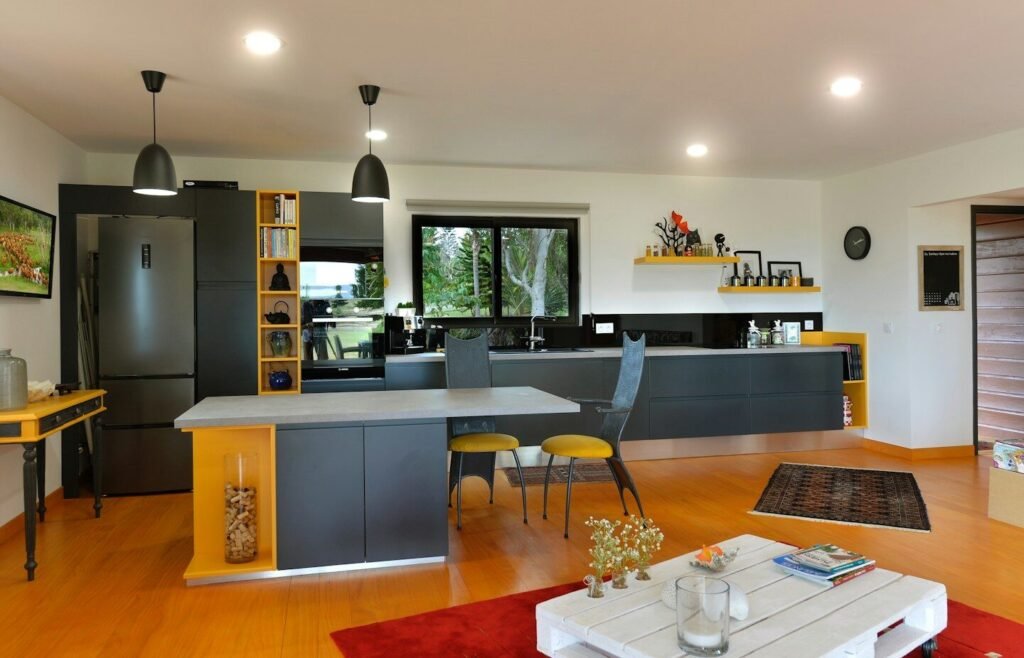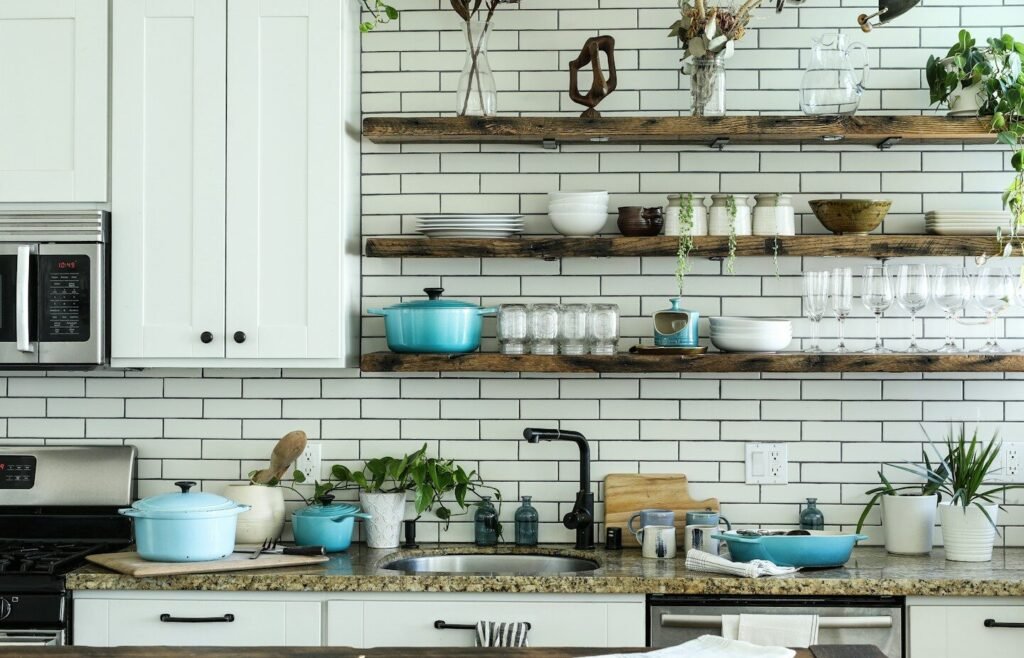
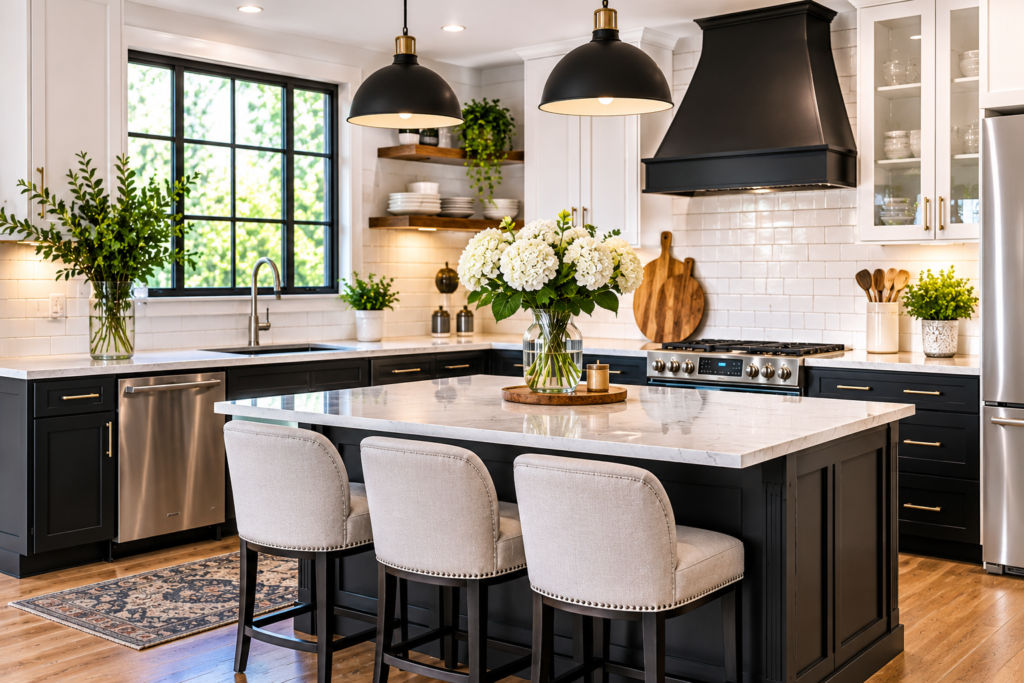
Black and white has stayed popular in kitchens for a good reason. It feels clean without feeling cold, and it works with farmhouse, modern, traditional, and transitional styles. You can keep it simple, or add texture and warmth so it feels like home.
These black and white kitchen ideas work because the two colors give you clear contrast. White opens up a room and reflects light. Black adds depth, grounds the space, and helps details stand out. The trick is balance, so neither color takes over.
Before you choose paint, tile, or hardware, think about how much natural light your kitchen gets. A bright room with large windows can handle more black. A smaller or north-facing room usually needs more white to stay comfortable and inviting.
Why Black and White Works So Well
A two-color palette makes decisions easier. You do not have to match five different finishes or worry that a new rug will clash with the cabinets. Black and white gives you a steady base, and then you can change smaller items over time.
This palette also ages well. A monochrome kitchen still looks current years later, even as other trends fade. You can refresh it with new bar stools, a different runner, or new pendant lights without redoing the whole room.
Kitchen contrast also helps you see the layout more clearly. A dark island stands out against light cabinets. White upper cabinets feel lighter than a full wall of dark wood. That visual structure can make a busy kitchen feel calmer.
Finding the Right Balance
Most successful black and white kitchens follow a simple rule: one color leads, and the other supports it. A common split is about two-thirds white and one-third black, though the exact mix depends on your room and your taste.
Start with the largest surfaces first. Cabinets, countertops, and flooring cover the most space, so they set the tone. Once those are settled, smaller choices like hardware, faucets, and light fixtures become much easier.
One of the simplest black and white kitchen ideas is to keep the room mostly white and use black as an accent. Black bar stools, black window frames, black hardware, and a black range hood can give you plenty of contrast without darkening the room.
If you love a bolder look, flip that approach in a bright kitchen. Black lower cabinets with white uppers can feel grounded and fresh. Just keep the ceiling, backsplash, or countertops light so the room does not feel heavy from above.
Cabinets: The Biggest Decision

Cabinets shape the whole kitchen, so this choice deserves the most thought. White cabinets are a good starting point for many homes because they brighten the room and work with almost any countertop. Choose a finish that wipes clean without much fuss, since white shows crumbs and smudges more easily.
Black cabinets can look rich and tailored, especially with simple door styles and clean hardware. They work best when the rest of the room has enough light and breathing room. In a very small kitchen, a full wall of black cabinets can make the space feel closed in.
Mixing Black and White Cabinets
A mixed layout often gives you the best of both. Try white cabinets on the upper walls and black cabinets below. The white uppers keep the room feeling open, while the dark lowers hide scuffs near the floor and anchor the design.
Another option is to keep the main cabinets white and make one section black. A tall pantry wall, a coffee station, or a bank of cabinets around the range can become a quiet focal point. Because the black area is limited, it adds interest without overwhelming the room.
Hardware is a small detail with a big effect. Black pulls on white cabinets tie the two colors together and feel practical for daily use. Brass-toned pulls on black cabinets add warmth and a softer finish, and repeating that finish once or twice elsewhere helps the room feel planned.
The Island as a Focal Point

A black island in a mostly white kitchen is a classic move. It creates a natural gathering spot and gives the eye somewhere to land. It also hides wear well, which matters in a spot used for homework, meal prep, and casual meals.
If your island is large, consider a white or light countertop on top of a black base. The light top keeps the work surface bright and easy to see, while the dark base keeps the island from blending into the rest of the cabinets. Add wood stools to soften the contrast and make the seating area feel relaxed.
Countertops and Backsplash
Countertops are where black and white kitchens can feel either calm or busy. A white countertop with soft gray veining often works well with both black and white cabinets. It brightens the work area and pairs easily with a simple backsplash.
Black countertops can look sleek, especially on white cabinets. They do show dust, water spots, and crumbs more readily, so they need regular wiping. In a household that cooks often, a honed or matte finish may feel more forgiving than a very glossy one.

For the backsplash, white subway tile is a reliable choice. It adds texture without adding a new color, and it works with black grout for a sharper look or white grout for a softer one. Black grout can highlight the tile pattern, but it also makes the wall feel busier.
If you want a black backsplash, keep it to a smaller area. A black tile strip behind the range, for example, can create a focal point without darkening the whole wall. Pair it with white cabinets and good task lighting so the cooking area stays bright.
Flooring That Ties It Together
Flooring often gets decided last, but it has a large effect on how black and white feels. Light wood floors warm up a monochrome kitchen and keep it from feeling clinical. They also work well with both black and white cabinets.
Checkerboard Floors, Used With Care
Checkerboard flooring is one of the most recognizable patterns in a black and white kitchen. It can feel cheerful and vintage, especially in a farmhouse or cottage-style home. It also adds a lot of visual energy, so it works best when the rest of the room stays fairly simple.
If you choose checkerboard floors, keep cabinets and countertops mostly solid. A busy backsplash on top of a busy floor can feel overwhelming. Smaller checkerboard tiles tend to feel more traditional, while larger tiles feel more modern and a little calmer.
Stripes and Other Patterns
Stripes can work in small doses. A striped runner, striped chair cushions, or a striped towel can add movement without a permanent commitment. These items are easy to change if you want a quieter look later.
For a permanent stripe, keep the width and contrast gentle. Thin, soft stripes feel more relaxed than thick, high-contrast bands, and it helps to limit stripes to one wall so the pattern reads as an accent. Pick one pattern as the main feature and let the rest of the room stay simple.
Adding Warmth With Wood and Brass-Toned Accents

Black and white alone can feel cool, especially in winter or in a room with little sunlight. Wood is often the easiest way to warm it up. A butcher-block section of countertop, open wood shelves, wood bar stools, or a wood range hood cover can soften the contrast.
You do not need a lot of wood to make a difference. Even a few wooden bowls, a cutting board left on the counter, or a wood tray near the sink can add a natural tone. The goal is warmth, not a new color scheme.
Brass-toned accents work in a similar way. A brass-toned faucet, light fixture, or cabinet pull adds a warm glow against black and white. Keep the finish muted rather than shiny if you want a calm look, since brushed or aged tones tend to blend more easily.
Lighting for a Monochrome Kitchen

Good lighting is essential in a black and white kitchen because dark surfaces absorb light. Start with general ceiling lighting that spreads evenly across the room, then add task lighting where you work.
Under-cabinet lights make white countertops easier to use and keep black lower cabinets from casting shadows on the work surface. Pendant lights over an island give you focused light and a chance to add a warm finish. Dimmers help too, because they let you lower the light for dinner and raise it for cooking.
Small Kitchens and Dark Rooms

Small kitchens can still use black and white well, but the balance shifts. Keep most surfaces white, use black for hardware, fixtures, and a few accents, and let the floor stay light. Glass-front upper cabinets or open shelving can also help a small room feel less boxed in.
In a dark room, avoid a large amount of black on the walls or upper cabinets. Instead, put black lower down, where it grounds the room without blocking light. White upper cabinets, a white backsplash, and a light ceiling will do most of the work to brighten the space.
Mistakes to Avoid
- Using too much black in a dark or windowless room, which can make the space feel smaller and harder to work in.
- Pairing a busy checkerboard floor with a busy backsplash, so no surface gets a chance to rest.
- Choosing stark white and jet black with no warm tones, which can feel cold instead of calm.
- Forgetting under-cabinet lighting, especially over dark counters or near black lower cabinets.
- Mixing too many hardware finishes, which can make a simple palette feel scattered.
- Adding stripes, checks, and geometric patterns all at once, rather than letting one pattern lead.
Among all black and white kitchen ideas, the ones that last tend to be the simplest. A clear balance, one pattern at a time, and a little warmth usually beat a room full of bold choices competing for attention.
Final Thoughts
A black and white kitchen does not need to feel stark or formal. With the right balance, thoughtful lighting, and a touch of wood or brass-toned warmth, it can feel calm, practical, and welcoming for everyday life. Keep the larger surfaces simple, let one pattern lead, and save black for the places where it adds depth rather than darkness.
That steady approach gives you a kitchen that works for cooking, gathering, and relaxing, and one that still feels fresh long after the update is done.
Disclaimer:
This content is for general informational purposes only. Individual homes, needs, preferences, budgets, and situations may vary. For safety, installation, repair, structural, electrical, plumbing, HVAC, or other major property decisions, please seek advice from a qualified professional before proceeding.