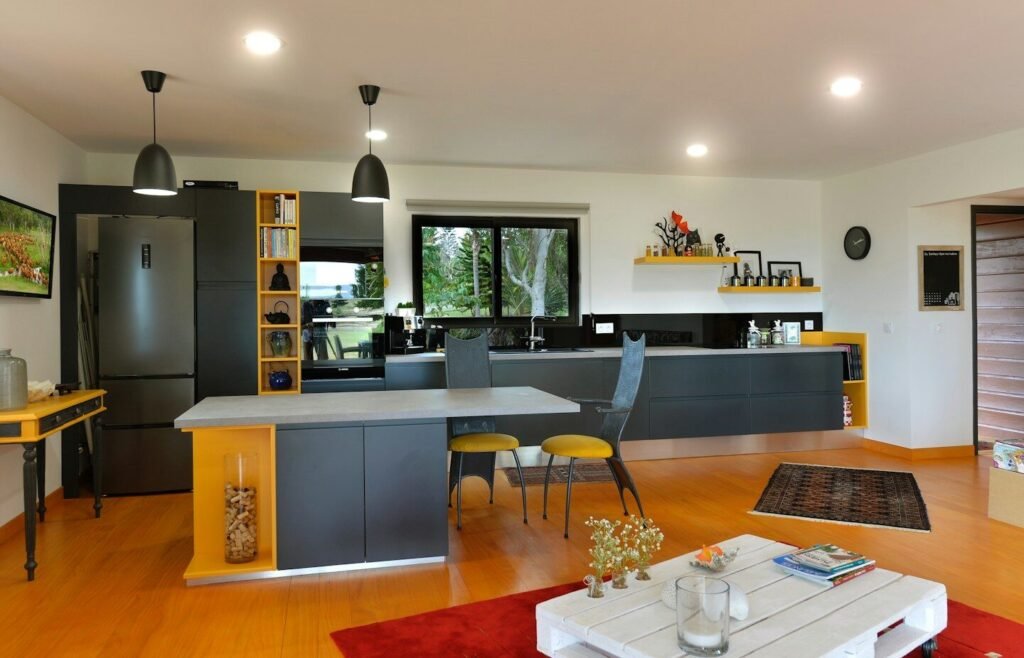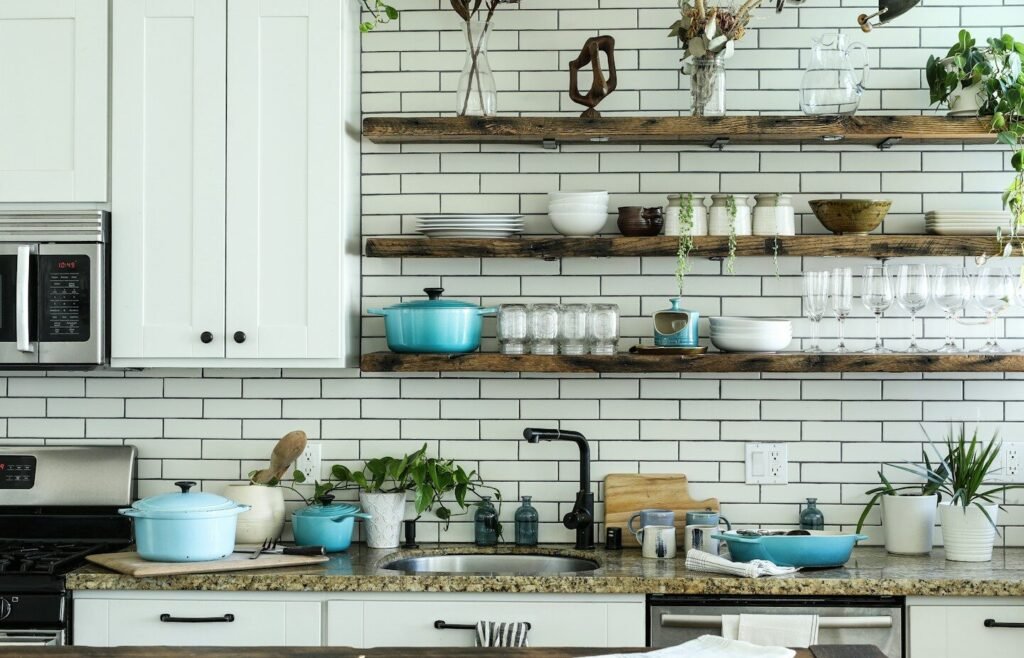
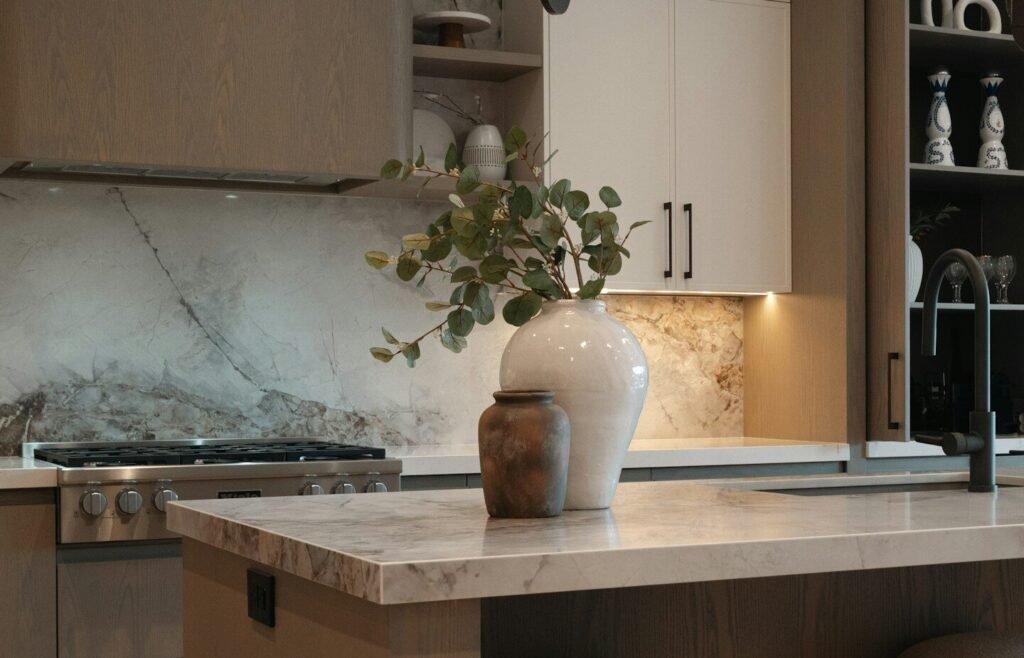
A kitchen island is the hardest-working surface in many homes. It is where breakfast is eaten, homework is spread out, vegetables are chopped, and guests gather with a cup of coffee. Because it sits in the middle of the room, it also draws the eye more than any other spot. The kitchen island decor ideas in this guide focus on styling that looks good without getting in the way of cooking, seating, or cleanup. The goal is an island that feels finished and welcoming, not one crowded with objects that must be moved every time a meal is made.
Start With How the Island Is Used
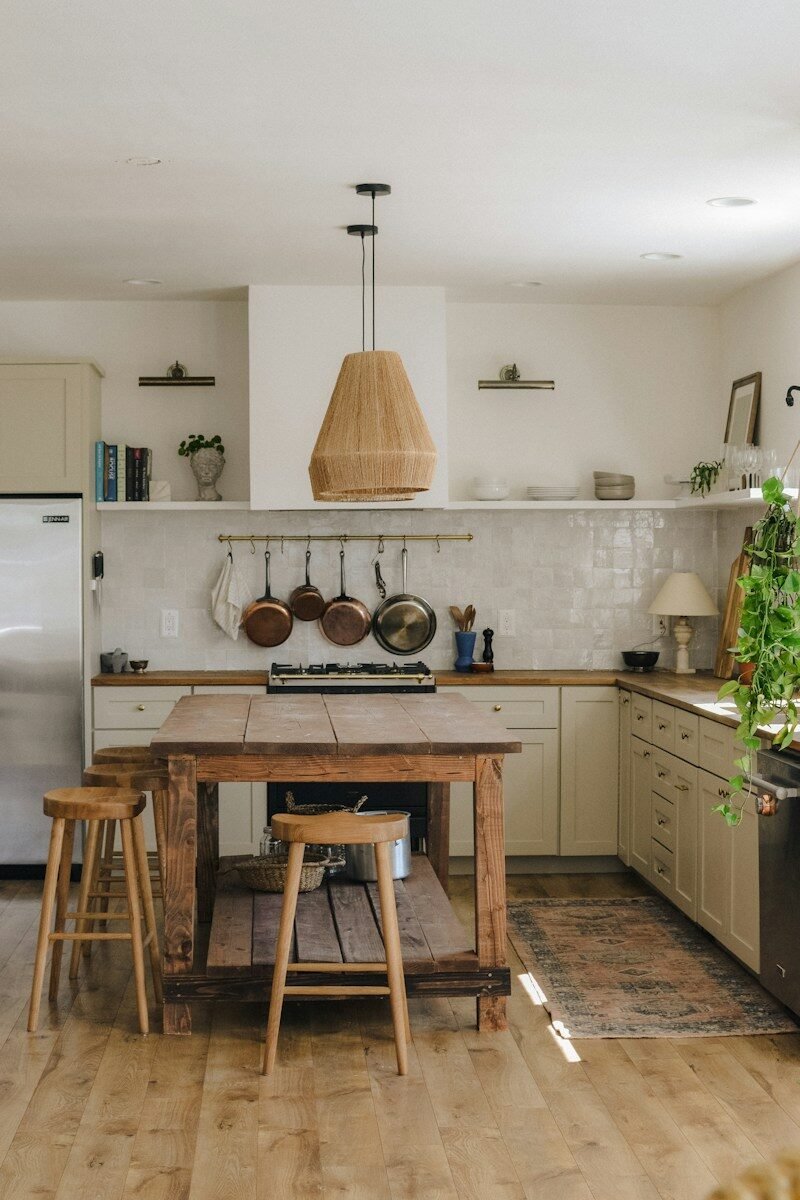
Before buying anything decorative, watch how the island is actually used for a week. Notice where people sit, where bags and keys land, where chopping happens, and where dirty dishes pile up. Those patterns decide what belongs on the island and what does not.
If the island is mainly a breakfast spot, keep one end clear for plates and elbows, and put any styling toward the other end. If it is a prep surface, leave the middle open and use the ends for a small tray or a plant. If children do homework there, a tidy basket for supplies beats a tall display that blocks sightlines across the room.
Storage matters here too. An island with drawers and shelves can hold the items that would otherwise clutter the top: placemats, a fruit bowl, cookbooks, or a charging cable. When the surface only holds what is used daily, decorating becomes easy, because there is actual space for a few chosen pieces.
One useful rule is to keep at least half of the island top clear at all times. That sounds strict, but it protects the island’s real job. A styled island that cannot hold a cutting board or a serving dish has stopped being a kitchen surface and become a display shelf. Aim for a look that survives a busy evening: a tray that can slide aside, a plant that does not shed, and nothing fragile within elbow range.
Lighting Above the Island Does Most of the Work
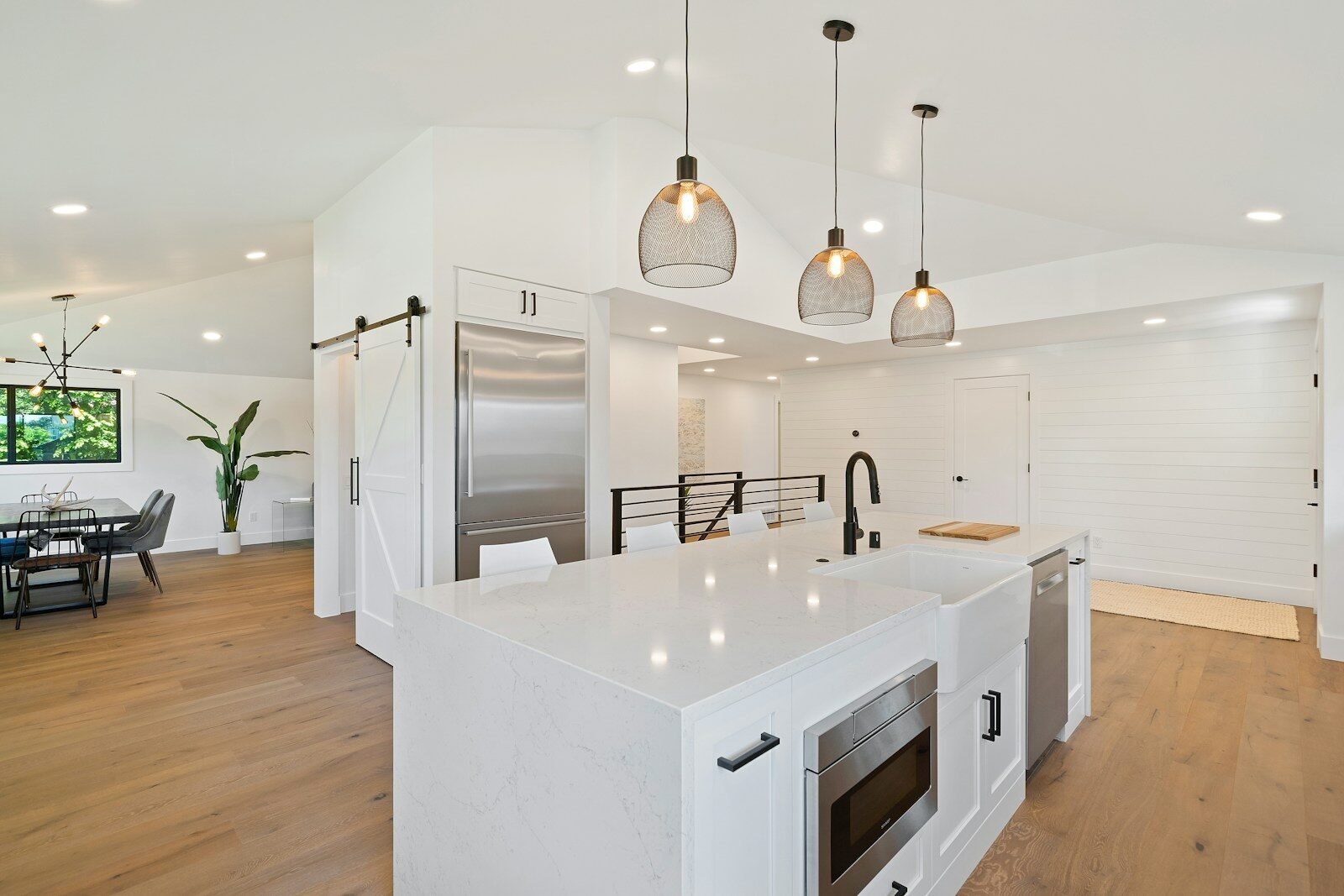
Nothing changes an island’s look faster than the lighting above it. Pendant lights, in particular, act as both decoration and task lighting, and they frame the island even when nothing else is on it.
For a standard island, two or three pendants spaced evenly usually look balanced. A very long island can carry three, while a small one often looks best with two or even one larger fixture. Hang them high enough that nobody bumps their head or blocks the view across the room when seated — roughly at a height where the bottom of the fixture sits well above eye level for a standing person, and above the sightline of someone sitting at the island.
Choose a style that matches the kitchen rather than fighting it. Glass pendants keep a small kitchen feeling open. Metal shades suit a more industrial or farmhouse look. Woven or rattan shades soften a modern kitchen and add texture. The finish should repeat something already in the room — the faucet, the cabinet hardware, or the stools — so the lights feel chosen, not random.
If new wiring is needed, hire a licensed electrician. Moving a light fixture or adding a dimmer involves mains wiring, and mistakes there are dangerous and expensive to fix. A dimmer is worth considering, though: bright light for cooking, softer light for evening meals, all from the same fixtures.
Choose a Centerpiece That Earns Its Place
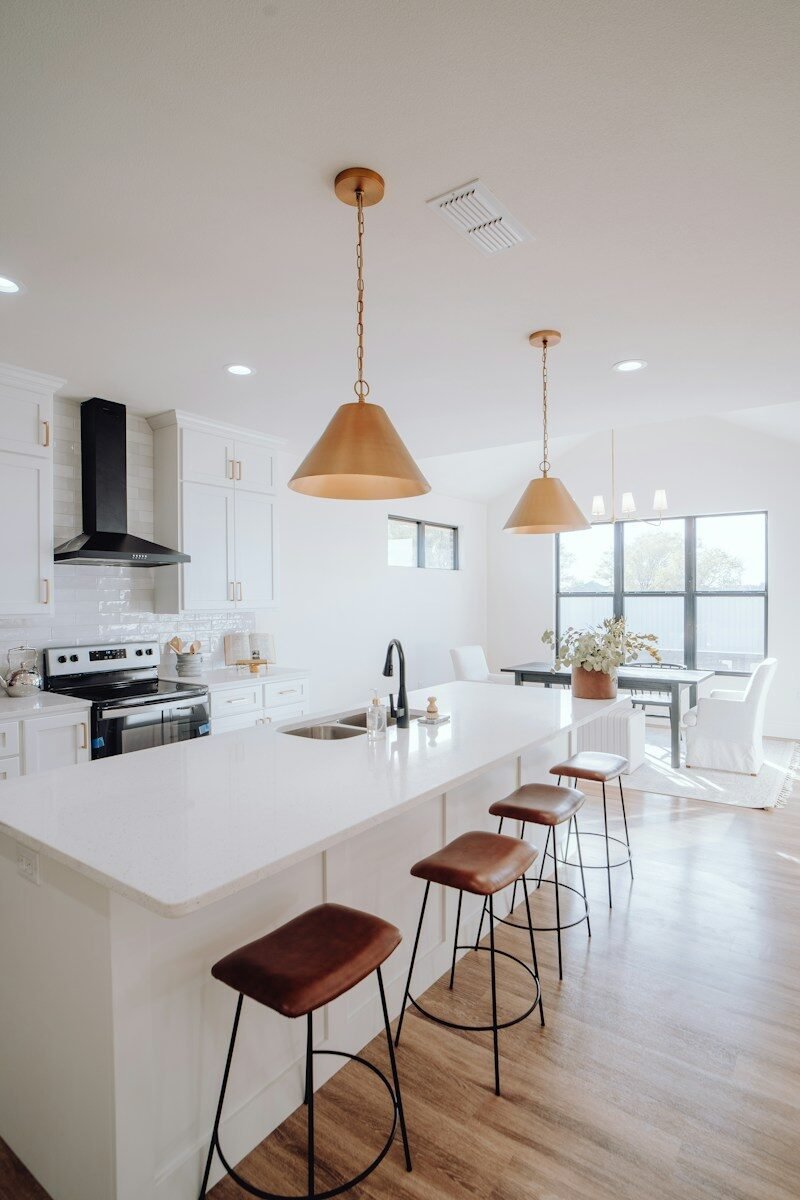
Every island benefits from one clear focal point, and only one. Two or three competing displays make the surface look busy, while a single well-chosen piece gives the eye somewhere to rest.
A low bowl of fruit is the classic choice for a reason: it is useful, it adds color, and it changes with the seasons. A wooden board with a small vase and a candle works the same way, as long as the grouping stays low enough not to block conversation across the island. Fresh herbs in a pot are another practical option — they look alive, smell good, and can be snipped into cooking.
What to avoid matters as much as what to choose. Tall flower arrangements look lovely in photos but block faces across the island and get knocked over. Large collections of jars, bottles, or ornaments collect grease and dust near a cooking area and take too long to clean. Anything very fragile or valuable is a poor fit for a surface where pots, pans, and elbows are in constant motion.
A tray is the simplest way to make a centerpiece look intentional. It gathers small items into one shape, protects the countertop, and can be lifted away in one move when the island needs to become a full work surface. Choose a tray that fits the island’s scale — a tiny tray on a long island looks lost, while an oversized one eats the workspace.
Tie the Island to the Rest of the Room
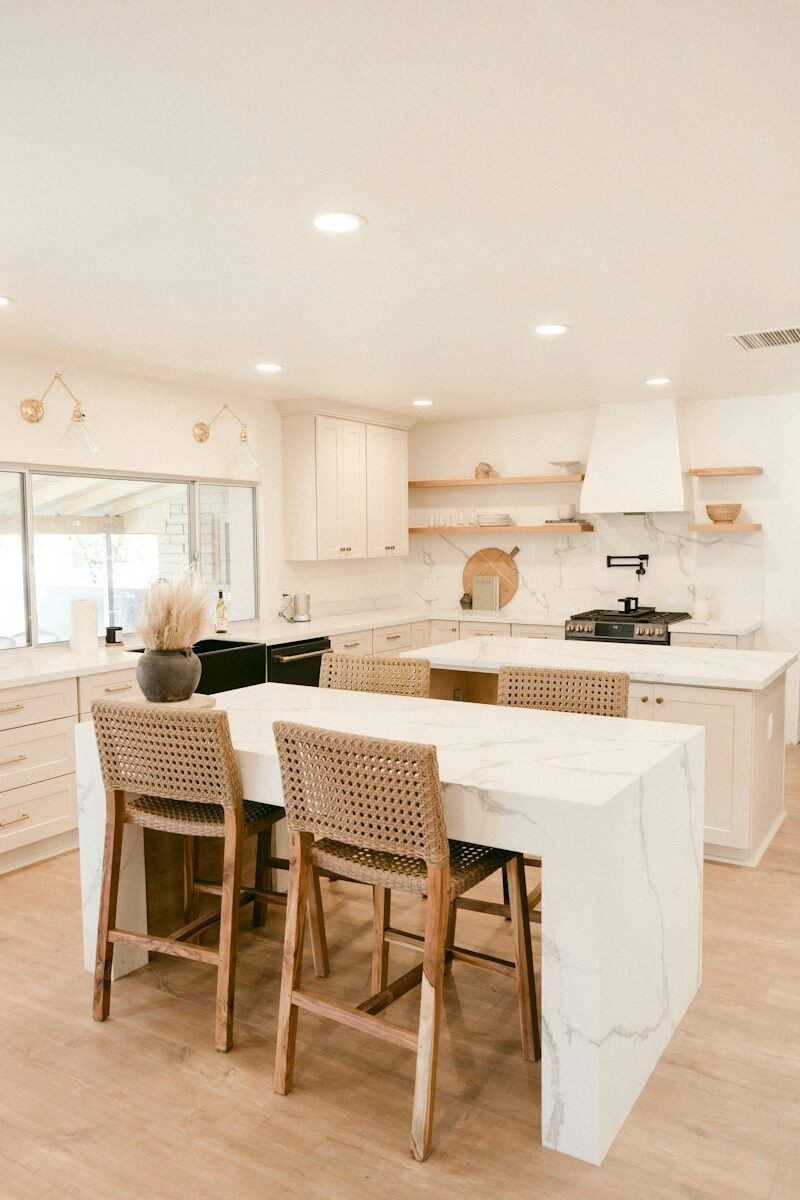
An island looks best when it feels connected to the kitchen around it, not like a separate piece of furniture dropped into the middle. Color and material are the easiest ways to build that connection.
If the cabinets are painted, the island can either match them or carry a complementary tone — a deeper shade of the same color family, or a wood tone that echoes the floor. Matching stools, a runner, or a tea towel in a related color can quietly repeat the island’s accent and pull the room together.
Texture helps too. A wooden chopping board, a linen runner, a ceramic bowl, and a metal fruit stand each add a different surface, and together they keep the island from looking flat. The trick is to stop at three or four textures. More than that, and the island starts to look like a shop display rather than a working kitchen.
Keep the palette calm. Kitchens already hold a lot of visual information: appliances, jars, utensils, and food packaging. A restrained set of colors on the island — two or three at most — lets the room breathe. Bright color can come from a bowl of fruit or a small plant, which can be changed easily, rather than from permanent fixtures that are hard to undo.
Let the Island Change With the Seasons
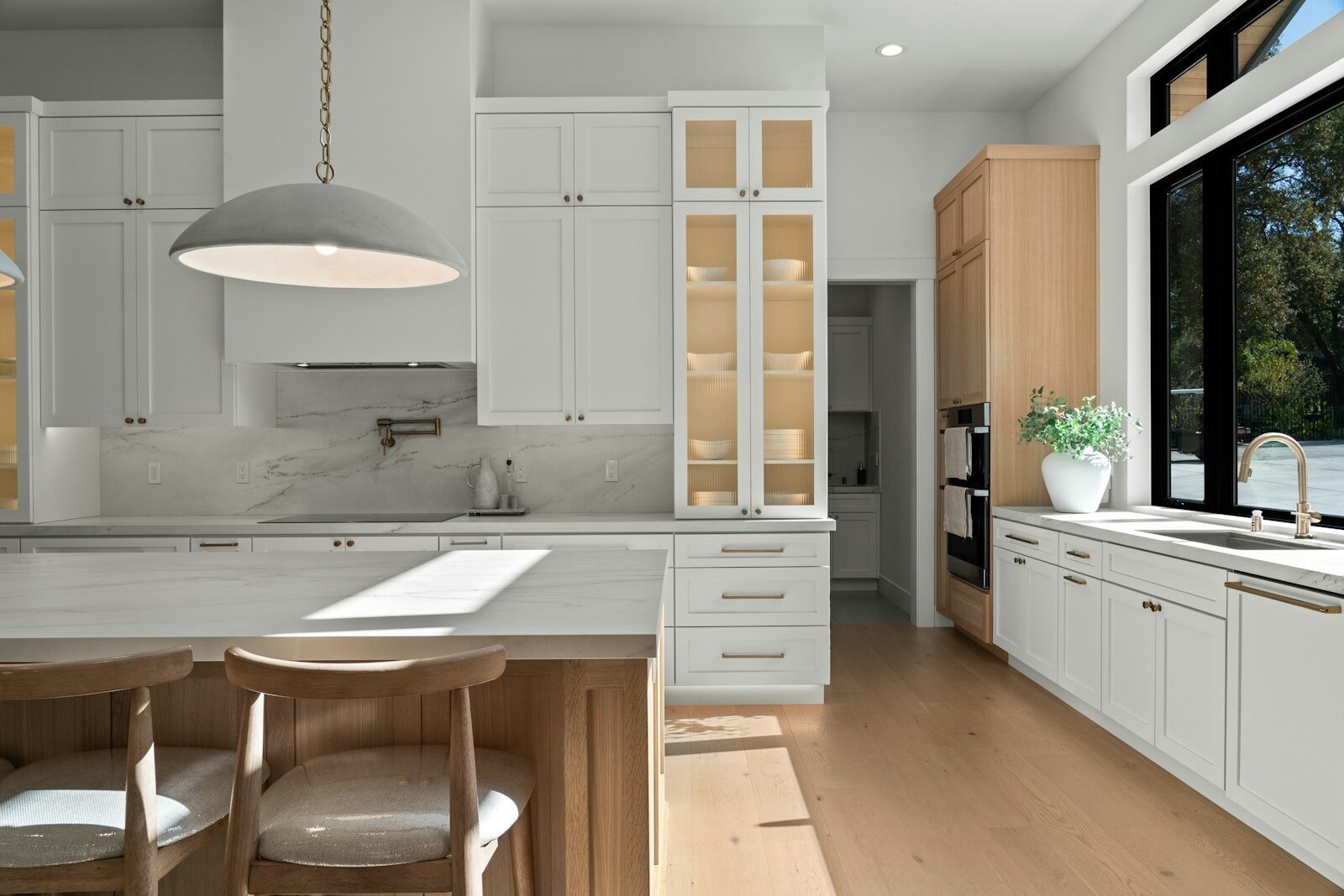
One of the pleasures of styling an island is that it does not have to stay the same all year. Small, cheap swaps keep the kitchen feeling fresh without any renovation.
In spring and summer, a small vase of greenery or a bowl of citrus suits the season. In autumn, a wooden board with a candle and a few natural pieces warms the room. In winter, a simple evergreen sprig or a bowl of nuts fits the mood. These swaps cost little and take minutes, and they give the island a cared-for feel.
The same idea applies to everyday items. A pretty soap dispenser near the sink end, a folded linen towel, or a small dish for keys can all count as styling, because they are used daily and chosen with care. The best island styling often looks less like decoration and more like a kitchen that is well kept.
When swapping items, use the moment to wipe the surface and check what has crept onto the island that does not belong there. A regular clear-out — once a week is enough — keeps the island from slowly filling up with mail, chargers, and half-empty shopping bags.
Smaller Touches Worth Knowing
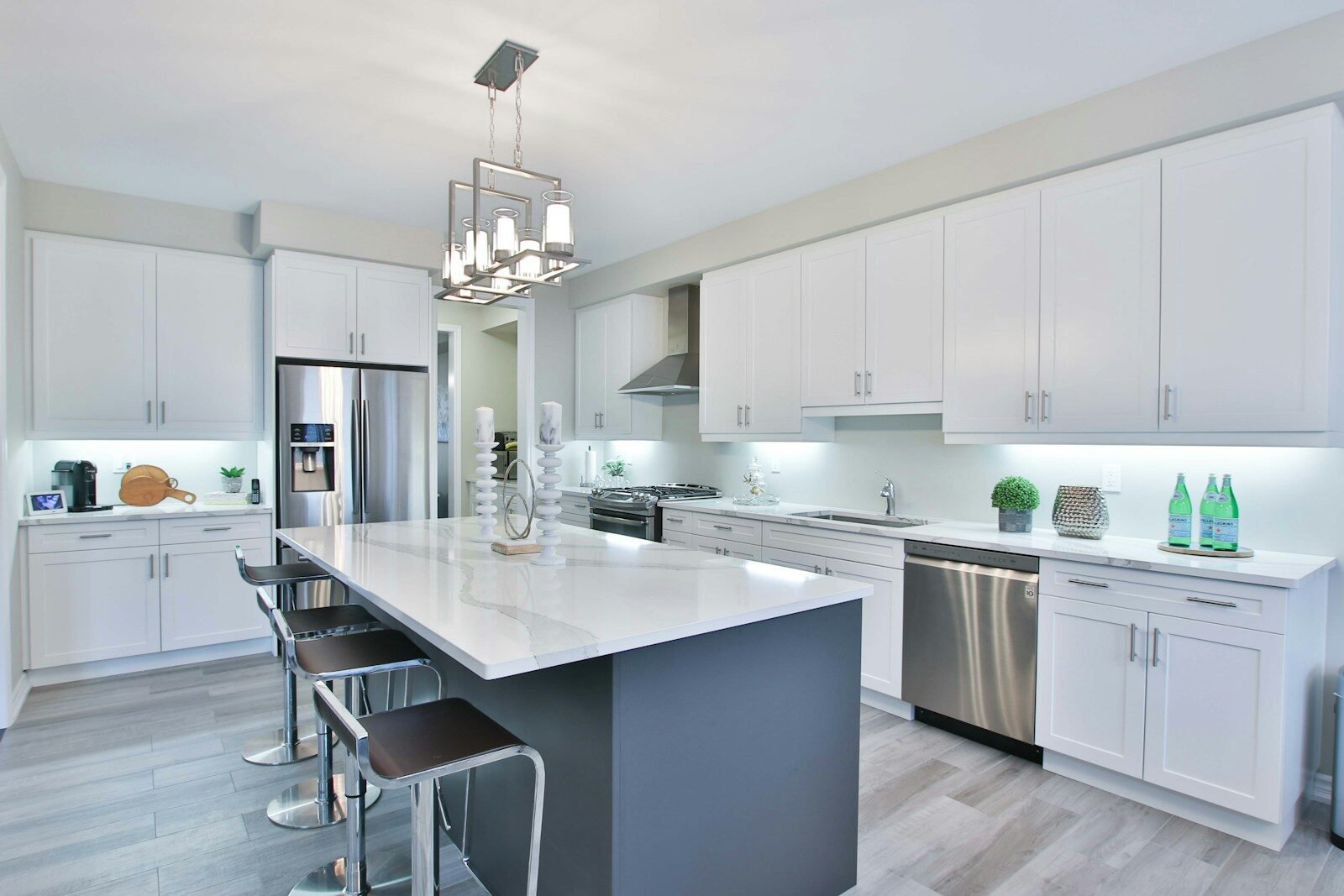
A few brief points round out the picture. For a small island, less is more: a single plant or a small tray is plenty, and anything more will crowd the workspace. If the island has open shelving, style the shelves lightly too — a few bowls or books, with space between them, rather than shelves packed tight.
Plants suit islands well, but choose varieties that tolerate kitchen heat and humidity, and keep them in pots with saucers so watering does not mark the countertop. Trays, as mentioned, are the easiest styling tool of all: one tray, a few items, done.
Safety deserves a line of its own. Keep candles away from curtains, paper towels, and anything flammable, and never leave a burning candle unattended. Keep knives and heavy items away from the island edge where they can be knocked off. If the island includes a cooktop, sink, or gas connection, any change to plumbing, gas, or electrical work should be done by a licensed professional, and hot surfaces need clear space around them.
A well-styled island is not about owning more things. It is about choosing a few pieces that suit how the kitchen is used, keeping the workspace clear, and letting the room’s own colors and materials do most of the work. Done gradually, one change at a time, kitchen island decor ideas turn an ordinary island into the warm center of the kitchen: a place for cooking, eating, and gathering that still looks good when the meal is over and the dishes are done.
Disclaimer: This article is for general information only and is not professional advice. For electrical, gas, plumbing, or structural work, consult a licensed professional.