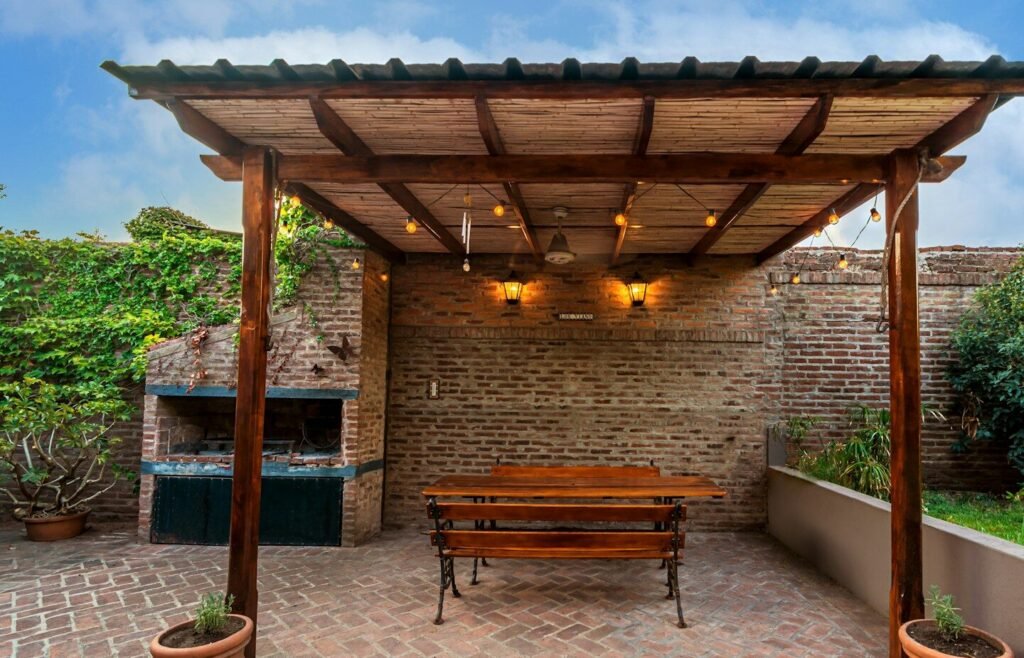
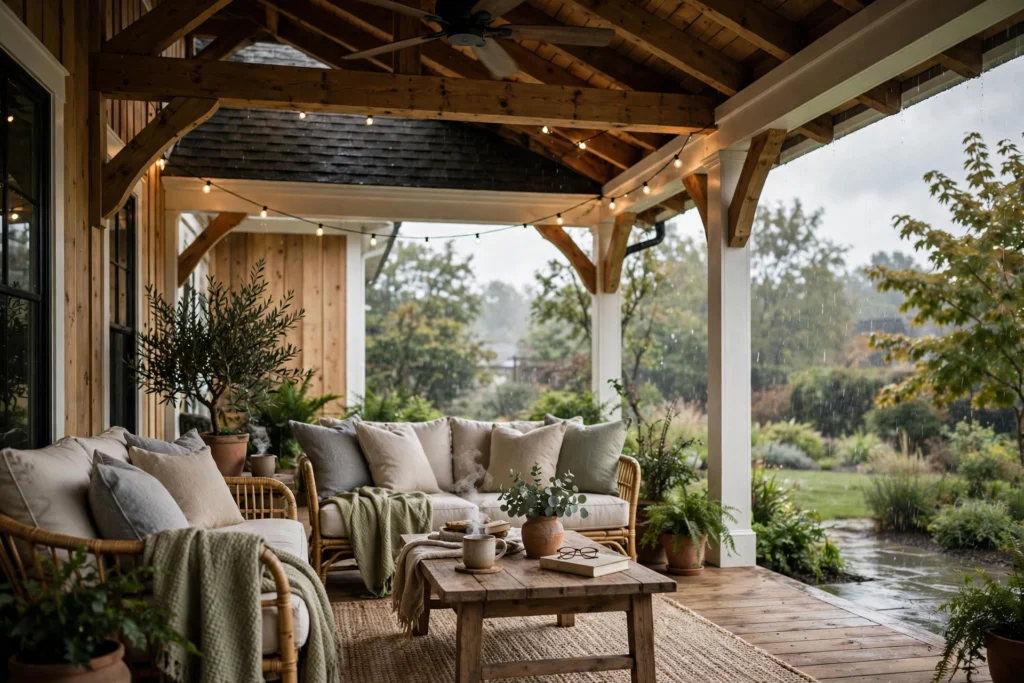
A covered back porch extends your home into the yard, giving you a place to sit outside during light rain, hot sun, and cool evenings. The best covered back porch ideas balance shelter with light and airflow, so the porch feels open and welcoming rather than dark and closed in.
Whether you are planning a new roof structure or refreshing an existing porch, the same principles apply: protect the space from weather, keep it bright and comfortable, and furnish it for how you actually spend time outside.
Decide What the Cover Needs to Do
Start by defining the job of the cover. Some homeowners want full rain protection for dining and reading. Others want partial shade that still lets sun and breeze through. A solid roof gives the most protection and supports lights, fans, and heaters, but it also blocks light into rooms behind the porch.
A pergola with a retractable canopy or a louvered roof offers flexibility, letting you open the cover on pleasant days and close it when rain or harsh sun arrives. These systems cost more and need proper installation and drainage, but they suit yards where light into the house matters.
Consider wind and snow as well as rain. A porch roof must handle local weather loads, and a cover that is too light or poorly anchored can fail in a storm. For any roof structure attached to the house, or any work that changes drainage, framing, or electrical systems, get professional design and installation help. This is not a job to guess at, since a failed roof can damage the house and injure people below it.

Keep Light and Airflow in the Design
A covered porch can easily become dark if the roof is low, solid, and deep. To keep it bright, use a lighter roof colour underneath, add skylights or clear panels where they suit the structure, and keep the porch depth in proportion to the house. A very deep, solid porch may shade the rooms behind it for much of the day.
Airflow matters just as much. A porch that traps heat feels uncomfortable in summer, even in shade. Open sides, a ceiling fan rated for outdoor use, and gaps that let breezes through help. If you add screens for insects, choose a mesh that still allows air to move, and keep at least one side open or vented so the space doesn’t feel sealed.
Paint or stain the ceiling in a light tone to reflect light, and consider recessed or wall lights that can be dimmed in the evening. A porch that is bright by day and softly lit at night will get used far more than one that feels gloomy at both times.

Choose Flooring That Handles Weather
Porch flooring sits in a middle zone: it is covered, but it still gets rain blown in, wet shoes, and temperature changes. Concrete, tile rated for outdoor use, composite decking, and sealed wood are common choices, each with trade-offs.
Concrete is steady and easy to clean, and it can be stained or scored for a finished look. Outdoor tile gives many style options, but it needs a slip-resistant finish and proper grout for exterior use. Composite decking resists rot and splinters, though it can get hot in direct sun at the edges of the cover. Natural wood looks warm but needs regular sealing and care to avoid splinters and rot.
Whatever you choose, make sure the floor slopes slightly away from the house and that water doesn’t pool near doors or walls. Keep a mat at the door for wet shoes, and sweep leaves and debris regularly so drains and gaps stay clear.

Furnish for Comfort Through the Seasons
Covered porch furniture can be softer and more varied than furniture left fully exposed, but it still needs to handle humidity and occasional rain. Look for frames that resist rust, cushions with outdoor fabric and removable covers, and pieces that are easy to move when you want to rearrange the space.
A mix of seating works well: a sofa or loveseat for relaxing, upright chairs for dining, and a small table for drinks and books. A rocking chair or a swing can add a classic porch feel, but check weight limits, mounting, and clearance so the swing doesn’t hit walls, railings, or plants.
Storage helps a porch stay tidy. A bench with storage, a small cabinet, or a deck box for cushions keeps the space ready to use and protects fabric during storms. If you leave cushions out year-round, check them for dampness and mildew, especially in humid climates.

Add Heating, Fans, and Lighting for Longer Use
A ceiling fan rated for damp or wet locations, depending on exposure, can make a covered porch comfortable on warm days by moving air without the noise of a portable fan. For cooler evenings, a patio heater or an outdoor fireplace can extend the season, but placement and safety rules matter.
Heaters need clear space from ceilings, walls, furniture, and fabrics, and they must be used exactly as the maker directs. Never use an indoor heater outside, and never use a fuel-burning heater in an enclosed porch without proper ventilation and guidance. When adding gas, electric, or built-in heating, ask a qualified professional to install and check it.
Lighting should layer soft sources. Wall lights, a pendant over a dining table, and lanterns on side tables create a warm evening glow. Put lights on a dimmer when you can, and use warm tones for relaxing areas. For new wiring, outlets, or fixtures, use a qualified electrician and fixtures rated for outdoor or damp locations as appropriate.

Use Screens, Curtains, and Panels Wisely
Screens can turn a covered porch into a bug-free room for much of the year. Fixed screens give a clean look and steady protection, while retractable screens can be lowered only when needed, preserving open views on pleasant days. Screens need frames that stay square and mesh that is easy to clean and repair.

Outdoor curtains add softness and can block low sun or a neighbour’s view, but they need to handle wind and rain. Choose fabric made for outdoor use, hang curtains on a sturdy rod or track, and tie them back in storms so they don’t whip against furniture or tear. In winter, store fabric curtains dry to avoid mildew.
Clear panels or shutters can extend use into cooler months, but they also trap heat and moisture if the porch is closed up completely. Leave ventilation, especially if you use a heater, and check local rules for enclosed porches, since a fully enclosed space may be treated differently for permits and taxes.
Decorate Without Crowding the Space
A covered porch feels best when decoration is simple and personal. A rug rated for outdoor use anchors seating, while a few cushions and a throw add colour. Plants in pots soften corners and can handle the porch’s light levels if you choose species that suit shade or partial sun.
Hang one or two pieces of outdoor-safe art or a mirror where it won’t reflect harsh sun into seating. Avoid filling every wall and surface, since a crowded porch feels smaller and harder to clean. Leave a clear path from the house door to the yard steps, and keep furniture away from railings where children might climb.
Seasonal changes can refresh the porch without a redesign. Swap cushion covers, add a lantern in autumn, or bring out a small table for summer drinks. These small changes keep the space feeling current without a large budget.

Mistakes to Avoid
Building a cover that is too low or too deep is a common mistake. A low roof feels oppressive and blocks light, while a very deep roof can darken interior rooms. Work with the house’s proportions and, for new structures, get professional help with height, pitch, and drainage.
Ignoring drainage is another issue. A porch roof must direct water away from the house and the porch floor, with gutters and downspouts that don’t dump water onto walkways or foundations. Check gutters regularly, especially after storms and leaf fall.
Over-enclosing the porch too quickly can also backfire. Screens, curtains, and panels that block all airflow make the space hot in summer and damp in winter. Keep ventilation in mind, and add enclosure in stages so you can test how the porch feels through seasons.
Finally, don’t furnish a new porch all at once. Live with the basic seating for a few weeks, notice where sun, wind, and rain reach, and then add rugs, heaters, or screens based on what you actually need.
Frequently Asked Questions
What is the best roof for a covered back porch?
A solid roof gives the most weather protection and supports lights and fans, while a louvered or retractable cover gives flexibility for sun and airflow. The right choice depends on your climate, budget, house structure, and how much light you want to keep in rooms behind the porch.
How can I keep a covered porch from feeling dark?
Use a light ceiling colour, keep the porch depth in proportion to the house, add skylights or clear panels where the structure allows, and use layered lighting in the evening. Open sides and light-coloured flooring also help reflect available light.
Can I add a ceiling fan to a covered porch?
Yes, if the fan is rated for outdoor use in your porch’s exposure level and it is installed safely with proper support and wiring. A qualified electrician can confirm whether your porch needs a damp-rated or wet-rated fan.
Do I need a permit for a covered porch?
Often yes, especially for a new roof structure attached to the house, changes to drainage, or an enclosed porch. Rules vary by area, so check with your local building office before you build or hire a contractor.
Conclusion
A covered back porch works best when shelter, light, and airflow stay in balance. Choose a cover that suits your weather and your house, keep the floor and drainage practical, and furnish the space for real daily use rather than for a photo. With those basics handled, a covered porch can become a calm, useful extension of your home through more of the year.
Disclaimer:
This content is for general informational purposes only. Individual homes, needs, preferences, budgets, and situations may vary. For safety, installation, repair, legal, structural, electrical, plumbing, HVAC, or major property decisions, seek advice from a qualified professional in your area before acting.